
Volkswagen Amarok vs Mercedes X Class: Which Premium Pickup Wins?

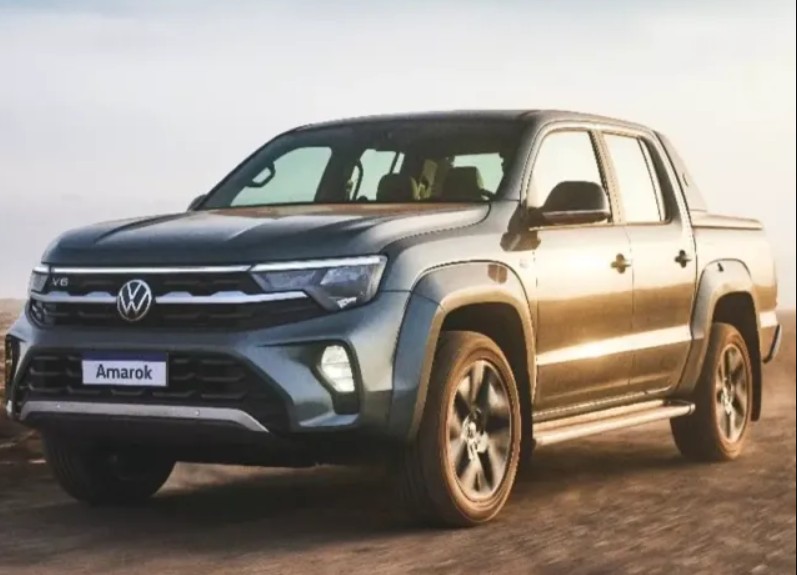
The Volkswagen Amarok vs Mercedes X Class comparison is one of those pickup battles that looks simple until we get beneath the sheet metal. Both trucks aimed to prove that a working pickup could also feel refined, powerful, and genuinely desirable. Yet they approached that goal from noticeably different directions.
The Amarok became known for blending strong diesel engines, confident road manners, and a surprisingly car-like cabin with legitimate load-hauling ability. The Mercedes-Benz X-Class tried to push the same idea further, wrapping serious pickup hardware in Mercedes styling, luxury touches, and, in its flagship form, a muscular V6 diesel.
There is also an important difference today: the X-Class is no longer in production. Mercedes ended production in May 2020 after relatively modest global sales, meaning buyers now encounter it exclusively on the used market. The Amarok, meanwhile, remains an active Volkswagen nameplate, although the exact model sold varies by region. Volkswagen has even confirmed another South America-focused Amarok successor for 2027.
So which truck makes more sense? Is the Mercedes badge enough to beat the Amarok's well-rounded character, or does Volkswagen deliver the smarter package? Let's dig in.
Content in this publication
- Volkswagen Amarok vs Mercedes X Class at a Glance
- Understanding the Two Pickups
- Which Pickup Looks Better?
- Volkswagen Amarok vs Mercedes X Class Interior
- Engine Performance: Where Things Get Interesting
- Amarok V6 Performance
- Mercedes X 350 d V6 Performance
- Four-Cylinder Versions Tell a Different Story
- Transmission Comparison
- On-Road Comfort and Handling
- Off-Road Performance
- Towing Ability
- Payload and Work Capability
- Fuel Economy
- Reliability: Amarok vs X-Class
- Maintenance and Running Costs
- Technology and Features
- Safety
- Practicality and Everyday Use
- Resale Value and Depreciation
- The X-Class's Nissan Connection: Problem or Advantage?
- Is the Amarok Basically a Ford Ranger?
- Volkswagen Amarok vs Mercedes X Class for Families
- Which Is Better for Work?
- Which Is Better for Lifestyle Buyers?
- Which Is Better for Long-Term Ownership?
- Used Volkswagen Amarok vs Used Mercedes X Class
- Who Should Buy the Volkswagen Amarok?
- Who Should Buy the Mercedes X-Class?
- Volkswagen Amarok vs Mercedes X Class: Our Final Verdict
- Frequently Asked Questions
- Conclusion
Volkswagen Amarok vs Mercedes X Class at a Glance
Before we start pulling these trucks apart piece by piece, here's the broad picture.
| Category | Volkswagen Amarok | Mercedes-Benz X-Class |
|---|---|---|
| Overall character | Premium but practical pickup | Luxury-focused lifestyle pickup |
| Engine highlight | V6 diesel on key versions | X 350 d 3.0 V6 diesel |
| Driving feel | Strong, stable, composed | Refined and SUV-like |
| Interior | Functional to premium | More prestige-oriented |
| Off-road ability | Very capable | Very capable |
| Towing | Strong, version dependent | Strong, version dependent |
| Availability | New or used, depending on market | Used only |
| Ownership appeal | Practical long-term choice | More exclusive |
| Main advantage | Overall versatility | Premium image and rarity |
| Main drawback | Specification varies greatly by generation | Discontinued model |
Neither truck is simply a farm tool wearing polished alloy wheels. Both were developed for buyers who might tow machinery on Friday, tackle muddy tracks on Saturday, and arrive at a restaurant on Saturday night without feeling like they've driven there in agricultural equipment.
That dual personality sits at the heart of this comparison.
Understanding the Two Pickups
The Volkswagen Amarok Philosophy
Volkswagen entered the pickup arena with a clear idea: build something tough enough to compete with established workhorses while bringing passenger-car refinement into the equation.
That formula worked rather well.
The Amarok developed a reputation for feeling planted on the road, especially in V6 form, while still offering a proper load bed and genuine four-wheel-drive capability. Depending on generation and market, buyers can find four-cylinder diesels, V6 diesels, manual or automatic transmissions, and different four-wheel-drive systems.
That variation matters. An older Amarok 2.0 TDI and a newer V6 Amarok can feel like members of the same family but not identical twins.
The Mercedes-Benz X-Class Philosophy
Mercedes aimed higher up the luxury ladder.
The X-Class was introduced in 2017 and shared important architecture with the Nissan Navara, although Mercedes carried out its own tuning and added distinctive styling, equipment, and engineering changes.
Some buyers dismissed it as merely an expensive Navara. That's too simplistic.
Yes, the Nissan connection was real. But Mercedes worked hard to give the X-Class its own character. At the top of the range, the X 350 d went even further with a Mercedes 3.0-liter V6 diesel producing 258 PS and 550 Nm of torque.
Unfortunately for Mercedes, premium positioning also meant premium pricing. The market never embraced the X-Class in sufficient numbers, and its unusually short production run ended in 2020.
Which Pickup Looks Better?
Design is subjective, but these trucks send different messages before we even turn the key.
Amarok Exterior Design
The Amarok tends to look muscular without trying too hard.
Its proportions are broad and purposeful, and higher-spec versions add enough chrome, larger wheels, and premium detailing to look expensive without completely abandoning their commercial roots.
Older V6 Amaroks have aged particularly well. They don't scream for attention, yet their wide stance gives them an almost bulldog-like confidence.
Newer Amarok variants are more dramatic. Their fronts are bolder, lighting is sharper, and the overall design leans further toward the modern lifestyle-pickup market.
Mercedes X-Class Exterior Design
The X-Class plays the prestige card harder.
Look at it from the front and there is little uncertainty about which manufacturer wanted its badge to dominate the conversation. The large Mercedes star and familiar grille architecture create an immediate connection with the brand's SUVs.
From some angles, the underlying pickup proportions reveal themselves, but the overall result is handsome.
Our Styling Verdict
If we want understated strength, we'd choose the Amarok.
If we want our pickup to attract attention outside a hotel or restaurant, the X-Class has more theatre.
Winner for understated design: Amarok.
Winner for prestige: X-Class.
Volkswagen Amarok vs Mercedes X Class Interior
This is where lifestyle pickups either justify their price or get exposed.
A premium badge means very little when the cabin feels like a toolbox.
Inside the Amarok
The Amarok generally strikes a good balance between durability and comfort.
Controls tend to be logically positioned, driving ergonomics are straightforward, and higher trim levels can feel impressively upscale. There is still an underlying sense that the interior was designed to survive dirty boots, work gloves, children, camping equipment, and everyday abuse.
That's not a criticism.
For a pickup, practicality is part of luxury.
The Amarok feels like a good pair of expensive hiking boots: comfortable enough for daily use but not so delicate that we're afraid of getting them dirty.
Inside the Mercedes X-Class
The X-Class naturally tries to create a stronger sense of occasion.
Circular air vents, Mercedes-style controls, premium trim options, and familiar design cues help the cabin distance itself from an ordinary commercial vehicle.
Yet expectations matter.
Someone climbing from a Mercedes E-Class into an X-Class may still notice harder materials and pickup-truck compromises. Someone upgrading from a traditional work ute, however, could find it impressively sophisticated.
Which Interior Is Better?
For pure badge appeal and atmosphere, the Mercedes wins.
For functional ergonomics and an easier-to-live-with personality, we'd lean toward the Volkswagen.
The X-Class feels more like the truck we want to show people. The Amarok feels more like the truck we want to use.
Engine Performance: Where Things Get Interesting
Now we reach one of the juiciest parts of the Volkswagen Amarok vs Mercedes X Class battle.
Both trucks became particularly appealing with six-cylinder diesel power.
Amarok V6 Performance
V6-powered Amaroks earned enthusiastic followings because they combined substantial torque with unexpectedly strong acceleration.
Instead of feeling like a commercial vehicle slowly gathering momentum, a V6 Amarok can surge forward with real authority.
Overtaking becomes easier. Highway gradients become less intimidating. Towing feels less stressful.
And that effortless nature is exactly what we want from a large diesel pickup.
The exact output depends on model year and market, so buyers should compare the specifications of the individual vehicle rather than assuming every Amarok V6 produces the same figures.
Mercedes X 350 d V6 Performance
The X 350 d is the version enthusiasts usually want.
Its 3.0-liter V6 diesel produced 258 PS and 550 Nm, paired with a seven-speed automatic transmission and permanent four-wheel drive.
Those numbers still look healthy today.
More importantly, the engine changed the character of the X-Class. Instead of feeling like a premium pickup powered by an ordinary commercial engine, the X 350 d finally had the muscular drivetrain many buyers expected from a Mercedes bearing such a substantial price tag.
Which Is Faster?
Specific acceleration figures vary by Amarok version, so there isn't one universal winner.
Against comparable V6 Amaroks, the Mercedes is competitive, but Volkswagen's stronger V6 variants are hardly intimidated.
Our takeaway?
Buy either with a healthy six-cylinder diesel and you'll rarely complain about a shortage of pulling power.
Four-Cylinder Versions Tell a Different Story
Not everyone needs a V6.
Earlier X-Class models included four-cylinder diesel options, while Amarok buyers have also had access to multiple four-cylinder configurations over the years.
These engines generally make more sense for buyers focused on fuel costs, commercial operation, or purchase price.
But if we're shopping specifically because we want the premium experience these trucks promise, the V6 versions are much more compelling.
A luxury pickup with a powerful V6 feels coherent. Strip away the big engine and some of the magic disappears.
Transmission Comparison
Automatic gearboxes suit both trucks beautifully.
They reinforce the relaxed character that distinguishes these vehicles from old-school pickups where driving could sometimes resemble operating construction machinery.
The Mercedes X 350 d uses a seven-speed automatic, while various Amarok generations have used different automatic transmissions.
The key consideration for used buyers isn't simply the number of gears. Maintenance history matters far more.
A beautifully shifting gearbox with documented fluid servicing is worth more to us than a neglected transmission surrounded by shiny bodywork.
When test-driving either vehicle, pay attention to:
- hesitation when selecting Drive or Reverse;
- harsh changes under moderate acceleration;
- shuddering at low speed;
- delayed downshifts;
- warning lights;
- evidence of correct transmission servicing.
One neglected drivetrain can erase any bargain we thought we'd found.
On-Road Comfort and Handling
Pickups have improved enormously over the years, but physics never takes a holiday.
A tall body, ladder-frame construction, large tires, and a rear axle designed to handle weight will always influence how a truck behaves.
Still, both of these pickups do an admirable job.
How the Amarok Drives
The Amarok's biggest strength has traditionally been composure.
Steering feels reassuring, highway stability is strong, and the truck tends to inspire confidence when covering long distances.
It doesn't magically become a Golf with a cargo bed attached, but the gap between commercial vehicle and passenger SUV feels surprisingly narrow.
That makes the Amarok easy to recommend for owners who spend most of their week on pavement but genuinely need pickup capability.
How the X-Class Drives
The Mercedes feels impressively settled for a dual-cab pickup.
Its suspension setup contributes to a more sophisticated ride than some traditional leaf-sprung competitors, especially when the load bed is empty.
That's important because empty pickups can become bouncy over broken surfaces, almost like they're constantly reminding us that they were designed to carry another several hundred kilograms.
The X-Class masks that sensation fairly well.
Road Comfort Winner
This category is close.
The Mercedes offers an appropriately polished ride, while the Amarok provides a convincing blend of refinement and control.
You may be interested in reading Ram 1500 vs F-150: Which Full-Size Truck Is Better?
For long-distance touring, we'd happily drive either.
Off-Road Performance
Luxury doesn't mean these pickups are frightened of mud.
Both can tackle difficult terrain when properly equipped.
But remember: off-road performance depends heavily on more than badges and horsepower.
Tires can completely transform a pickup. So can ground clearance, differential hardware, traction-control calibration, driver experience, and even tire pressure.
Amarok Off-Road Ability
Amarok four-wheel-drive models have demonstrated genuine competence across gravel, sand, mud, and rough tracks.
Some versions prioritize convenience with permanent or electronically managed four-wheel drive, while others use more traditional selectable systems.
The advantage is confidence.
The Amarok rarely feels like a delicate lifestyle toy pretending to be adventurous.
X-Class Off-Road Ability
The X-Class also has legitimate off-road credentials.
The X 350 d combines permanent four-wheel drive with additional off-road hardware and driving aids. Published specifications for the model include a 28.8-degree approach angle and 24-degree departure angle, although figures can vary depending on configuration.
That makes it far more than a Mercedes SUV impersonator with a load tray.
Which Is Better Off Road?
We'd call this a conditional draw.
For serious off-road use, we'd choose based on the specific version, tire setup, underbody protection, differential equipment, and condition rather than simply choosing Amarok or X-Class.
A well-prepared Amarok on proper all-terrain tires will embarrass a showroom-fresh X-Class on road tires, and vice versa.
Towing Ability
Towing is one of the strongest reasons to buy either truck.
Depending on specification and market homologation, both can offer substantial braked towing capacities suitable for caravans, trailers, boats, and work equipment.
However, maximum advertised towing capacity shouldn't be the only number we examine.
We also need to consider:
- gross vehicle mass;
- gross combination mass;
- tow-ball download;
- payload remaining once passengers are aboard;
- accessories;
- local towing regulations;
- trailer-brake requirements.
That last bit often gets overlooked.
A pickup might technically tow a heavy trailer, but once we load four adults, camping gear, a canopy, tools, and accessories, another legal limit could become the real constraint.
Which Truck Would We Choose for Towing?
For regular heavy towing, a V6 version of either truck makes sense.
The effortless torque reduces the feeling that we're constantly asking the engine for everything it has.
The Amarok gets a slight practical advantage because finding a suitable example, specialist knowledge, and model-specific aftermarket equipment may be easier in markets where it sold strongly.
Payload and Work Capability
Here's where image meets reality.
Would we actually throw concrete bags into the back of a Mercedes?
We could.
Whether we'd want to is another matter.
Both pickups were designed to perform genuine work, although payload ratings vary considerably by configuration.
The X-Class's luxury positioning can psychologically discourage owners from treating it like a construction-site vehicle, while lower- and mid-grade Amaroks often feel more naturally suited to mixed commercial and personal use.
If our pickup spends Monday through Friday earning money, the Amarok is easier to justify.
Fuel Economy
Fuel consumption varies dramatically with engine, drivetrain, tires, load, towing, speed, terrain, and driving style.
Broadly speaking, four-cylinder diesels should be easier on fuel than the larger V6 engines.
But here's the catch: a smaller engine working hard isn't always dramatically more economical in real-world conditions.
When towing or driving through hilly terrain, a larger diesel can often maintain speed with less effort.
We wouldn't buy an Amarok V6 or X 350 d because we're obsessed with squeezing every last kilometer from a liter of diesel. We'd buy one because torque, refinement, and effortless performance matter.
Efficiency becomes part of the equation, not the whole equation.
Reliability: Amarok vs X-Class
Reliability is complicated because we're comparing vehicles of different ages, engines, specifications, and maintenance histories.
On the used market, condition often matters more than reputation.
A meticulously maintained 150,000-km truck can be a safer purchase than a neglected 70,000-km truck.
Volkswagen Amarok Reliability Considerations
Used Amaroks should be inspected carefully for maintenance quality, drivetrain condition, cooling-system issues, diesel-emissions equipment, suspension wear, leaks, and evidence of hard towing or off-road abuse.
Service records are gold.
We'd rather buy a slightly higher-mileage Amarok with a thick folder of invoices than a mysterious low-mileage example whose owner can't remember when anything was serviced.
Mercedes X-Class Reliability Considerations
The X-Class adds another consideration: rarity.
The model's production run lasted only from 2017 to 2020.
Its Nissan-related architecture can sometimes be helpful from a mechanical perspective, but Mercedes-specific bodywork, trim, electronics, and V6-related components may not be as convenient or inexpensive to source as parts for more common pickups.
That doesn't make the X-Class unreliable.
It simply means we'd investigate parts availability before buying one, particularly if we live far from major cities.
Maintenance and Running Costs
Here's where the Amarok begins pulling ahead for pragmatic buyers.
The Mercedes may appear surprisingly affordable on the used market compared with what it cost new, but depreciation doesn't automatically make maintenance cheap.
Luxury vehicles often depreciate faster than the price of their replacement parts.
A discounted X-Class is still a Mercedes when certain components need replacing.
The Amarok isn't necessarily inexpensive to maintain either, especially with a V6 engine and sophisticated drivetrain. But its broader pickup-market presence may make independent servicing and parts sourcing simpler in many regions.
What Should We Inspect Before Buying Either?
Our pre-purchase checklist would include:
- Complete service records.
- Cold-start behavior.
- Transmission operation.
- Four-wheel-drive engagement.
- Suspension knocks.
- Differential and transfer-case leaks.
- Uneven tire wear.
- Diesel particulate filter history.
- Signs of ECU tuning.
- Tow-bar wear suggesting frequent heavy towing.
- Underbody damage.
- Corrosion in harsh climates.
- Previous accident repairs.
- Electrical accessories.
- Diagnostic fault-code scan.
We'd also pay for an independent inspection.
On expensive diesel pickups, a few hundred dollars spent before purchase can prevent a repair bill that looks like a telephone number.
Technology and Features
This category depends heavily on trim level and year.
Higher-spec Amaroks can offer modern infotainment, digital displays, driver-assistance systems, premium audio, cameras, parking aids, heated seats, and advanced lighting.
The X-Class also offered a respectable equipment list, particularly in upper trims, but its cabin technology reflects its late-2010s production period.
That's unavoidable.
Technology ages quickly.
A six- or eight-year-old luxury infotainment system can sometimes feel older than a brand-new system in a much cheaper vehicle.
So buyers who prioritize smartphone connectivity, large touchscreens, advanced cameras, and modern active-safety systems may find newer Amaroks much more appealing.
Safety
Both pickups were developed in an era when pickup safety was becoming increasingly sophisticated.
Depending on version, equipment may include autonomous emergency braking, lane-related assistance, parking sensors, cameras, stability control, multiple airbags, and other systems.
But specifications vary significantly between countries.
Never assume that a safety feature listed on an Australian X-Class, for example, automatically appeared on a European, South African, or Latin American version.
Check the exact VIN and equipment list.
Practicality and Everyday Use
How do these trucks behave when we're not towing horses across a mountain?
Surprisingly well.
Both provide double-cab seating suitable for family use, although rear-seat comfort still doesn't equal a large SUV.
Parking can also be an adventure.
These are substantial vehicles. Tight underground garages quickly turn into spatial-awareness exams, and urban parallel parking can make us appreciate parking sensors more than any horsepower figure.
The load bed, however, transforms everyday usefulness.
Furniture? Easy.
Bicycles? No problem.
Camping equipment? Throw it in.
Muddy dog? Suddenly a pickup makes tremendous sense.
That's the beauty of vehicles like these. They can be ridiculous in a cramped city center yet wonderfully useful the moment life becomes messy.
Resale Value and Depreciation
The X-Class presents an interesting contradiction.
Its discontinuation hurt the original business case but gave the vehicle something the Amarok doesn't possess to the same extent: rarity.
You may be interested in readingRam 1500 vs F-150: Which Full-Size Truck Is Better?You may be interested in reading
Ram 1500 vs Toyota Tundra: Which Full-Size Truck Wins?Only a relatively small number were sold globally. Mercedes sold around 15,300 units in 2019 before ending production the following year.
Could desirable X 350 d examples eventually become collectible?
Possibly.
But we wouldn't buy one purely as an investment.
Cars are expensive objects to store, insure, maintain, and repair. Rarity doesn't guarantee appreciation.
The Amarok, by contrast, has a much longer market history and broader owner base. That can make resale demand easier to understand.
The X-Class's Nissan Connection: Problem or Advantage?
We can't discuss the X-Class without addressing the elephant standing next to the pickup.
Yes, the Mercedes-Benz X-Class shares its fundamental architecture with the Nissan Navara.
Does that automatically make it a "Navara with a Mercedes badge"?
No.
Platform sharing is common throughout the automotive industry. Modern vehicles routinely share engines, transmissions, chassis components, electronics, and factories while delivering very different ownership experiences.
What hurt Mercedes was perception.
Buyers paying premium money expected something uniquely Mercedes from bumper to bumper.
The flagship X 350 d helped answer that criticism with its Mercedes V6 powertrain, but the model never had enough time to completely establish its own identity.
Ironically, today the shared engineering can make the X-Class more interesting. We get an unusual mixture of proven pickup foundations and Mercedes luxury ambition.
Is the Amarok Basically a Ford Ranger?
Current Amarok discussions often raise a similar question.
The newer global Amarok was developed through Volkswagen's cooperation with Ford and is closely related to the Ranger.
That doesn't automatically make it "just a Ranger" any more than shared X-Class architecture made every Mercedes identical to a Navara.
Manufacturers can change styling, suspension calibration, interiors, powertrain combinations, software, equipment, and brand positioning while sharing expensive underlying architecture.
The bigger point is simple: platform sharing isn't inherently bad.
Execution matters.
Volkswagen Amarok vs Mercedes X Class for Families
For family duty, we'd lean toward a newer Amarok.
Why?
Availability of newer safety technology, newer infotainment, easier replacement sourcing, and the possibility of buying a vehicle still within a newer ownership ecosystem all help.
The Mercedes remains comfortable and distinctive, but we're now dealing exclusively with used examples at least several years old.
Families planning long-distance travel may appreciate the reassurance of owning a truck with a broader current-market footprint.
Which Is Better for Work?
Amarok.
The Volkswagen feels more natural as a mixed-purpose vehicle.
It can still look smart enough for business meetings while being easier to mentally justify when loading equipment into the bed.
The Mercedes can perform real work too, but buying an X-Class specifically to batter it around a jobsite seems like purchasing an expensive watch to time concrete drying.
Possible? Absolutely.
Optimal? Probably not.
Which Is Better for Lifestyle Buyers?
Now the Mercedes becomes much more interesting.
An X 350 d in excellent condition offers something unusual: muscular diesel performance, legitimate pickup utility, Mercedes branding, and increasing rarity.
It has personality.
We see hundreds of conventional pickups and barely notice them. A clean X-Class can still make enthusiasts look twice.
For someone who wants a weekend vehicle, tow rig, adventure truck, or distinctive daily driver, that's worth something.
Which Is Better for Long-Term Ownership?
We'd choose the Amarok.
Not because the X-Class is inherently a poor vehicle, but because discontinued low-volume vehicles introduce additional uncertainty.
Body panels, model-specific trim, electronics, and certain specialized components aren't things we want to discover are difficult to source after an accident or mechanical failure.
The Amarok's stronger continuing market presence makes the ownership equation less exotic.
Sometimes boring practicality wins.
And when we're talking about a vehicle costing thousands to maintain, boring can be beautiful.
Used Volkswagen Amarok vs Used Mercedes X Class
This is probably the fairest modern comparison because many shoppers considering an X-Class are also looking at used Amaroks.
Forget the badges for a moment.
Compare condition.
A perfect X-Class is better than an abused Amarok. A perfect Amarok is better than a neglected X-Class.
We would rank priorities like this:
service history > mechanical condition > accident history > specification > mileage > cosmetic condition > badge.
That order may save us a fortune.
Shiny paint is seductive. Maintenance invoices are romantic only to mechanics, but they're far more valuable.
Who Should Buy the Volkswagen Amarok?
Choose the Amarok if we want:
- a pickup for regular daily use;
- strong towing capability;
- good highway comfort;
- easier long-term ownership;
- wider model choice;
- a more work-friendly personality;
- newer technology on recent examples;
- strong V6 performance on suitable models;
- a pickup that balances lifestyle and utility.
The Amarok is the rational all-rounder.
It does a little bit of everything without constantly reminding us how special it thinks it is.
Who Should Buy the Mercedes X-Class?
Choose the X-Class if we want:
- something uncommon;
- Mercedes styling and prestige;
- a premium cabin atmosphere;
- strong refinement;
- impressive V6 performance in X 350 d form;
- legitimate four-wheel-drive ability;
- an interesting enthusiast vehicle;
- a pickup that stands apart from the crowd.
The X-Class isn't the logical choice.
That's partly why it's appealing.
Some vehicles are interesting precisely because the spreadsheet doesn't explain them.
Volkswagen Amarok vs Mercedes X Class: Our Final Verdict
The Volkswagen Amarok wins this comparison for most buyers.
It offers the stronger all-round ownership proposition, particularly when we consider long-term practicality, model availability, work capability, newer examples, parts support, and everyday usability.
But the Mercedes-Benz X-Class isn't a loser.
Far from it.
The X 350 d remains a fascinating pickup. Its 258 PS, 550 Nm V6 diesel gives it the performance and mechanical character that a Mercedes-branded truck deserved. Its short production life also makes it increasingly unusual.
So our decision comes down to personality.
If we want the pickup equivalent of a dependable Swiss Army knife, buy the Amarok.
If we want something more unusual—a premium pickup that arrived ambitiously, disappeared quickly, and now carries a hint of automotive curiosity—the X-Class has undeniable charm.
The Volkswagen is easier to recommend with our heads.
The Mercedes is easier to desire with our hearts.
And isn't that what makes this comparison interesting?
Frequently Asked Questions
1. Is the Volkswagen Amarok better than the Mercedes X-Class?
For most buyers, yes. The Amarok is generally the more practical long-term choice because it has broader market presence, newer versions available in many regions, strong towing capability, and an extensive ownership community. The X-Class becomes more appealing if exclusivity, Mercedes styling, and rarity matter more.
Not exactly. The X-Class shares its underlying platform with the Nissan Navara, but Mercedes introduced its own styling, tuning, equipment, and other changes. The flagship X 350 d also used a 3.0-liter V6 diesel producing 258 PS and 550 Nm. Calling it simply a rebadged Navara ignores meaningful differences, although the shared architecture unquestionably influenced buyer perception.
3. Why was the Mercedes X-Class discontinued?
Mercedes confirmed that X-Class production would end in May 2020 after the truck became a relatively low-volume niche product. Approximately 15,300 units were sold globally during 2019. High pricing and competition in the established pickup market made the business case difficult.
4. Which is better for towing, Amarok or X-Class?
Both can be excellent towing vehicles when correctly specified, particularly V6 diesel versions. Exact legal towing capacities differ by model, year, configuration, and country. We would focus not only on the advertised maximum trailer weight but also payload, gross combination mass, tow-ball load, passenger weight, and local regulations.
5. Is a used Mercedes X-Class worth buying today?
Yes, if we find an excellent example with comprehensive service history and have confirmed local parts and servicing support. The X 350 d is particularly appealing because of its V6 diesel performance. However, buyers should remember that the X-Class has been out of production since 2020, making the Amarok the safer choice for buyers prioritizing uncomplicated long-term ownership.
Conclusion
The Volkswagen Amarok vs Mercedes X Class contest proves that two pickups can chase the same premium audience without feeling identical.
The Amarok is the better all-rounder. It combines toughness, comfort, towing ability, road manners, and everyday practicality in a package that makes sense whether we're commuting during the week or disappearing into the countryside on Sunday.
The X-Class is more eccentric.
It emerged from an ambitious attempt to inject genuine Mercedes prestige into the midsize pickup market, lived for only a few years, and disappeared before it could fully establish itself. Production officially ended in May 2020.
Yet that short life has made it more intriguing rather than irrelevant.
If we're shopping rationally, we'd put the Amarok first.
If we find a beautifully maintained X 350 d at the right price, however, we'd understand perfectly why someone might ignore the rational choice.
You may be interested in readingRam 1500 vs F-150: Which Full-Size Truck Is Better?You may be interested in reading
Ram 1500 vs Toyota Tundra: Which Full-Size Truck Wins?You may be interested in reading
Ram 1500 vs 2500 vs 3500: Which Ram Truck Is Right for You?Sometimes the truck we remember isn't the truck that wins every category.
It's the one that makes us turn around for another look after we've parked it.
If you want to know other articles similar to Volkswagen Amarok vs Mercedes X Class: Which Premium Pickup Wins? you can visit the category Models.
How to Identify Your Ford Fiesta Model
Toyota RAV4 Engine Oil Capacity: Complete Guide

Vauxhall Corsa Models: Complete Guide to Generations, Trims and Versions (1993–2026)
Kia Sportage Trim Levels: Complete 2027 Comparison
Toyota Corolla Cross vs RAV4: Which SUV Is Better?
Haval Jolion vs Omoda C5: Which SUV Is Better?
Leave a Reply
More content of your interest