
Ram 1500 vs Toyota Tundra: Which Full-Size Truck Wins?

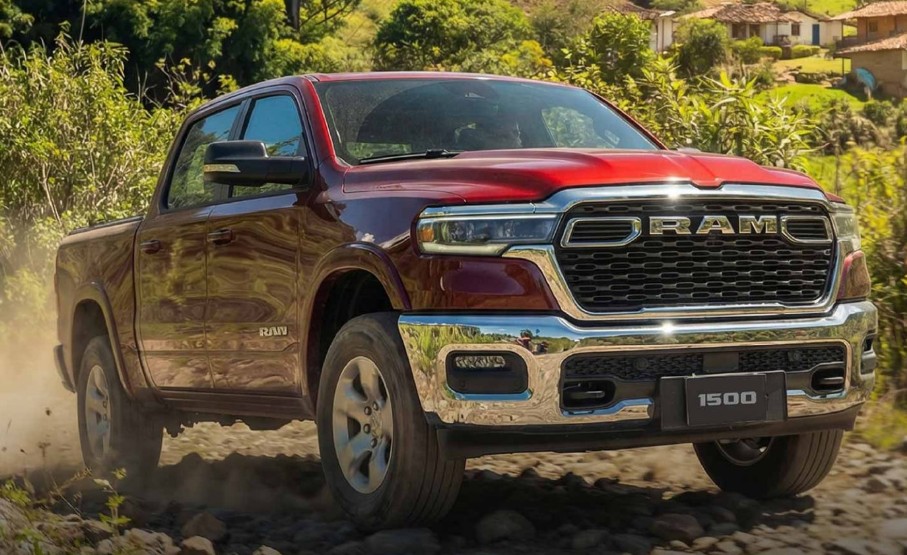
Choosing between the Ram 1500 vs Toyota Tundra is a little like choosing between two heavyweight fighters who win in completely different ways. Both are full-size pickups. Both can tow serious weight, carry a family, haul gear, and tackle dirt roads. Yet once we look beyond the badges and oversized grilles, their personalities split rather dramatically.
The Ram 1500 leans heavily into refinement, engine variety, cabin comfort, and customization. The Toyota Tundra counters with muscular turbocharged power, an available hybrid powertrain, serious towing capability, and Toyota's distinctive approach to rugged truck design.
For the current 2026 models, Toyota advertises a maximum 12,000-pound towing capacity, while Ram lists a maximum 11,610 pounds. Ram, however, reaches a higher maximum payload figure of 2,360 pounds, compared with the Tundra's 1,850 pounds. Those headline numbers already tell us something important: there isn't one universal winner.
So which truck deserves our money?
That depends on what we expect it to do Monday through Sunday. Let's dig in.
Content in this publication
- Ram 1500 vs Toyota Tundra at a Glance
- Ram 1500 vs Toyota Tundra Engines
- Which Truck Is More Powerful?
- Ram 1500 vs Toyota Tundra Towing Capacity
- Ram 1500 vs Toyota Tundra Payload
- Ride Quality and Everyday Comfort
- Interior Quality: Ram 1500 vs Tundra
- Technology and Infotainment
- Bed Sizes and Cargo Practicality
- Off-Road Capability
- Fuel Economy
- Ram 1500 vs Tundra Reliability
- Which Truck Is Better for Daily Driving?
- Which Truck Is Better for Work?
- Ram 1500 vs Toyota Tundra for Families
- Ram 1500 vs Tundra Price and Value
- Ram 1500 Pros and Cons
- Toyota Tundra Pros and Cons
- Ram 1500 vs Toyota Tundra: Which Should We Buy?
- Final Verdict: Ram 1500 vs Toyota Tundra
- Frequently Asked Questions
Ram 1500 vs Toyota Tundra at a Glance
Before disappearing into engines, trim levels, towing equipment, and suspension designs, here's the broad picture.
| Category | Ram 1500 | Toyota Tundra |
|---|---|---|
| Maximum available horsepower | 540 hp | 437 hp |
| Maximum available torque | 521 lb-ft | 583 lb-ft |
| Maximum towing capacity | 11,610 lb | 12,000 lb |
| Maximum payload | 2,360 lb | 1,850 lb |
| Available V8 | Yes | No |
| Available hybrid | Mild-hybrid eTorque systems | i-FORCE MAX full hybrid |
| Transmission | 8-speed automatic | 10-speed automatic |
| Rear suspension | Coil springs | Multi-link coil springs |
| Best suited to | Comfort, engine choice, payload | Towing, hybrid torque, ruggedness |
Figures vary by drivetrain, configuration, trim, equipment, passengers, and cargo. Ram's maximum 11,610-pound towing rating comes from the standard-output 3.0-liter Hurricane configuration, while Toyota advertises up to 12,000 pounds for the Tundra.
On paper, then, Toyota narrowly wins maximum towing while Ram wins maximum horsepower and payload. But buying a truck purely from maximum numbers is like choosing hiking boots based only on the thickness of the sole. There's much more happening underneath.
Ram 1500 vs Toyota Tundra Engines
Powertrain choice may be the biggest philosophical difference between these trucks.
Ram provides considerably more variety. Toyota keeps the menu tighter and builds its lineup around variations of its twin-turbocharged V6.
Ram 1500 Engine Choices
For 2026, the Ram 1500 offers an unusually broad powertrain lineup.
The available engines include the 3.6-liter Pentastar V6 with eTorque, standard-output 3.0-liter Hurricane inline-six, high-output 3.0-liter Hurricane inline-six, and returning 5.7-liter HEMI V8 with eTorque.
That matters because two Ram buyers can build radically different trucks.
The Pentastar V6 produces 305 horsepower and 269 lb-ft of torque. The regular Hurricane jumps to 420 horsepower and 469 lb-ft, while the high-output Hurricane climbs dramatically to 540 horsepower and 521 lb-ft. Ram's returning 5.7-liter HEMI produces 395 horsepower and 410 lb-ft.
Why the Hurricane Engine Changes the Comparison
The Hurricane inline-six fundamentally changes the Ram-versus-Tundra conversation.
Years ago, comparing these pickups might have meant talking primarily about naturally aspirated V8 engines. Today, turbocharging dominates.
The standard Hurricane already develops considerable low-end torque. Move to the high-output version and 540 horsepower gives the Ram substantially more peak power than Toyota's strongest Tundra.
It's the engine for someone who looks at a normal truck and quietly thinks, "Yes, but what if it were much faster?"
Toyota Tundra Engine Choices
The 2026 Tundra takes a different road.
Toyota's regular i-FORCE twin-turbo V6 produces 389 horsepower and 479 lb-ft of torque. The available i-FORCE MAX hybrid produces 437 horsepower and 583 lb-ft. Both work with a 10-speed automatic transmission.
That 583-lb-ft torque figure deserves attention.
Although the hybrid Tundra produces less horsepower than the 540-hp Hurricane Ram, it generates considerably more maximum torque. And torque arrives at a relatively low 2,400 rpm, according to Toyota.
The Tundra Hybrid Isn't Just About Fuel Economy
Seeing the word "hybrid" may make us picture a truck engineered primarily to sip fuel.
That's not really the Tundra i-FORCE MAX philosophy.
Toyota integrates an electric motor generator between the engine and transmission. The setup is designed to supplement the twin-turbo V6 with additional power and torque while also providing regeneration and limited electric operation.
In other words, the electric motor behaves more like a muscular teammate than a penny-pinching accountant.
Which Truck Is More Powerful?
If horsepower is our scoreboard, Ram wins.
The high-output Hurricane's 540 horsepower puts significant daylight between it and the 437-hp i-FORCE MAX Tundra.
If maximum torque matters more, however, Toyota wins. The hybrid Tundra produces 583 lb-ft against the high-output Ram's 521 lb-ft.
That creates an interesting split.
Ram feels like the performance-oriented choice at the top of the range. Toyota's hybrid feels engineered around a thick surge of usable torque.
For ordinary driving, either has far more muscle than most owners will regularly need.
Ram 1500 vs Toyota Tundra Towing Capacity
Here's where truck buyers often pull out the calculators.
The 2026 Toyota Tundra can tow up to 12,000 pounds, while the 2026 Ram 1500 reaches up to 11,610 pounds when properly configured.
Toyota therefore wins the headline towing contest by 390 pounds.
That's a victory, but not necessarily a reason to automatically buy the Tundra.
Maximum Ratings Aren't Every Truck's Rating
This distinction matters enormously.
A truck advertised with an 11,000- or 12,000-pound maximum does not mean every cab, trim, drivetrain, axle, and engine combination can tow that amount.
For example, Ram lists the high-output Hurricane at up to 10,000 pounds, while its standard-output Hurricane provides the Ram 1500's higher tow rating. Ram's HEMI ratings also differ between 4x2 and 4x4 configurations.
Adding passengers, accessories, cargo, and heavier luxury equipment can also affect what a particular vehicle can safely carry and tow.
Who Should Pick the Tundra for Towing?
We'd lean toward the Tundra if maximum conventional towing ability is near the top of our priorities.
Its strong twin-turbo torque, available hybrid powertrain, Tow/Haul programming, and 12,000-pound maximum rating make it an appealing platform for boats, recreational trailers, and equipment.
Toyota also makes a tow hitch and 7/4-pin connector standard across the 2026 lineup, including the SR.
Who Should Pick the Ram for Towing?
The Ram remains extremely capable and may actually be preferable for buyers who want strong towing capability combined with a softer everyday personality.
The standard Hurricane's maximum 11,610-pound rating is close enough to Toyota's 12,000 pounds that most recreational towing buyers shouldn't choose purely from that 390-pound difference.
Check the rating of the exact vehicle sitting in front of us, not merely the number in an advertisement.
Ram 1500 vs Toyota Tundra Payload
Now the advantage swings heavily toward Ram.
Ram advertises a maximum payload of 2,360 pounds, while Toyota quotes 1,850 pounds for the Tundra.
That's a substantial difference.
Payload includes more than whatever we throw into the bed. People, accessories, tools, hitch weight, and other cargo all contribute to the truck's load.
For anyone hauling heavy material regularly, payload can therefore matter just as much as towing capacity.
Ram Is the Better Choice for Maximum Payload
Interestingly, Ram's highest payload rating belongs to the 3.6-liter Pentastar V6 4x2 configuration rather than the fire-breathing high-output Hurricane.
Ram lists up to 2,360 pounds for that setup.
It illustrates an important lesson about full-size pickups: the fanciest or most powerful version isn't automatically the hardest-working configuration.
Luxury equipment has weight. Four-wheel-drive hardware has weight. Bigger engines and performance components have weight.
Sometimes the simpler truck carries more.
Ride Quality and Everyday Comfort
This category has long been one of Ram's strongest arguments.
Full-size trucks aren't merely construction-site equipment anymore. Plenty of owners commute in them, road-trip with children, drive to restaurants, sit in traffic, and never put a pallet of bricks in the bed.
For that buyer, ride quality becomes enormously important.
You may be interested in reading Ram 1500 vs 2500 vs 3500: Which Ram Truck Is Right for You?
Why the Ram 1500 Feels So Refined
Ram's coil-spring rear suspension has helped establish the 1500 as one of the smoother-riding pickups in the segment.
Instead of constantly reminding us that we're piloting several thousand pounds of truck, it generally tries to isolate occupants from the road.
With the right trim, the impression approaches a luxury SUV that happens to have a bed attached behind the cabin.
Rough pavement still feels like rough pavement—physics hasn't retired—but the Ram's calm character makes long drives easier to enjoy.
The Tundra Has Become Much More Sophisticated
Toyota deserves credit here because the current-generation Tundra also uses a multi-link rear suspension with coil springs rather than the older leaf-spring configuration. Toyota specifically highlights the design for ride comfort, towing stability, and handling.
The result is a far more modern Tundra than the trucks many buyers remember from a decade ago.
It remains somewhat more rugged in personality than the Ram, but describing the modern Tundra as crude would be unfair.
Interior Quality: Ram 1500 vs Tundra
Open the doors and the rivalry changes again.
Ram 1500 Interior
Ram has spent years turning its upper trims into rolling lounges.
Materials, screen integration, seat design, storage, switchgear, and trim details can become genuinely upscale as we climb through the lineup.
The difference between a work-oriented Tradesman and a premium Tungsten is enormous.
That's both a strength and a warning.
The best Ram cabins are spectacular, but we shouldn't assume an entry-level truck automatically looks like the glamorous version in a commercial.
Ram Wins the Luxury Contest
If we're shopping near the expensive end of these lineups, Ram has the stronger luxury personality.
It feels less like Toyota asked, "How nice can a pickup become?" and more like Ram asked, "How much pickup can we hide inside a luxury cabin?"
That's a subtle difference, but we'll notice it from the driver's seat.
Toyota Tundra Interior
The Tundra interior feels tougher and more architectural.
Large controls, chunky shapes, prominent screens, and a horizontal dashboard give it the visual weight we expect from a full-size truck.
Higher trims can still feel genuinely premium, but Toyota doesn't disguise the vehicle's working-truck roots quite as aggressively.
For some buyers, that's preferable.
A pickup doesn't always need to pretend it's a private jet.
Technology and Infotainment
Both trucks offer the sort of technology that would have sounded absurd in pickups 15 years ago.
Large touchscreens, digital instrument displays, smartphone integration, camera systems, driver-assistance technology, premium audio, towing tools, and numerous convenience features can be found depending on trim.
Ram claims more than 50 combined available inches of digital display area across the 2026 Ram 1500's available screens.
Still, screen acreage isn't everything.
Good infotainment needs to respond quickly, place common functions where we expect them, and avoid turning routine actions into a treasure hunt.
Ram Feels More Tech-Luxury Focused
Ram's interior technology blends especially well with its premium-truck identity.
If we love screens, configurable displays, and gadget-heavy cabins, it's difficult to ignore.
Toyota Keeps Things Truck-Like
Toyota also provides modern technology but wraps it in a cabin that still visually communicates "pickup."
Some drivers will find that easier to live with.
When bouncing down a dirt track wearing gloves, giant digital minimalism isn't always what we're craving.
Bed Sizes and Cargo Practicality
Toyota offers Tundra beds measuring approximately 5.5, 6.5, and 8.1 feet, depending on configuration. The standard composite construction is another noteworthy difference; Toyota promotes it as resistant to dents, impacts, dings, and rust.
Ram also provides multiple bed and cab configurations, allowing shoppers to prioritize passenger room or cargo length.
The Tundra Composite Bed Is a Genuine Advantage
A composite bed won't automatically make the Tundra better for every contractor or weekend DIY enthusiast, but it removes some concerns associated with painted steel surfaces.
Throwing muddy equipment, lumber, camping gear, or landscaping supplies into the back feels a little less precious.
Ram counters with excellent bed utility options of its own, including clever storage solutions depending on configuration.
Our winner therefore depends more on how we use the bed than on raw cubic measurements.
Off-Road Capability
This contest becomes particularly entertaining when we look at the rugged versions.
Toyota has built substantial recognition around TRD-branded off-road trucks, while Ram offers off-road-focused models including Rebel and the high-performance RHO.
Toyota Tundra TRD Pro
The Tundra TRD Pro is the obvious choice for buyers who want Toyota's most purpose-built off-road personality.
It combines the truck's rugged foundation with specialized suspension and equipment intended for rough terrain.
It's less about showing up at the trailhead and more about looking as though the trailhead owes it money.
Ram 1500 RHO
The RHO takes a more aggressive performance approach.
Its high-output Hurricane engine produces 540 horsepower and 521 lb-ft, and Ram claims a 0–60 mph time of 4.6 seconds. Its hardware includes Bilstein Black Hawk e2 shocks, an active transfer case, Dana 60 rear axle, and multiple drive modes.
That's astonishing speed for something capable of splashing through mud.
Which Is Better Off-Road?
For conventional adventure-oriented trail use, the Tundra TRD ecosystem has tremendous appeal.
For high-speed off-road performance and outright horsepower, the RHO is far more outrageous.
Think hiking boot versus motocross boot. Both belong outside. They're just planning very different afternoons.
Fuel Economy
Fuel consumption in a full-size truck depends heavily on engine, drivetrain, tires, axle ratio, driving conditions, and configuration.
Still, Ram's standard Hurricane offers a promising blend of performance and efficiency. Ram publishes manufacturer-estimated figures as high as 18 mpg city/25 mpg highway in 4x2 form for the standard Hurricane, while the Pentastar V6 4x2 is listed at 20/25 mpg.
The Tundra's i-FORCE MAX adds hybridization, but again, its purpose goes beyond maximizing economy. Much of its value lies in torque and power delivery.
Don't Buy the Hybrid Tundra Expecting Prius Consumption
This sounds obvious, yet it's worth emphasizing.
We're still moving a large, aerodynamically stubborn full-size pickup.
Hybrid assistance cannot repeal wind resistance.
It can improve how power is generated and used, but anyone expecting compact-car fuel bills from a Tundra will be disappointed.
Ram 1500 vs Tundra Reliability
Reliability is where discussions around these trucks often become emotionally charged.
Toyota has one of the strongest long-term reliability reputations in the automotive world. Older Tundras, especially V8-powered generations, developed an almost mythical durability image.
However, we shouldn't automatically transfer every assumption about an old naturally aspirated Tundra onto a modern twin-turbo, electronically complex truck.
Likewise, we shouldn't judge every modern Ram based purely on anecdotes about older Chrysler products.
You may be interested in readingRam 1500 vs 2500 vs 3500: Which Ram Truck Is Right for You?You may be interested in reading
Ram 1500 vs Tacoma: Which Truck Is Better?Modern Trucks Are More Complex
Today's Ram and Tundra contain turbochargers, sophisticated electronics, advanced transmissions, driver-assistance systems, numerous control modules, and—in some configurations—electrification.
That complexity can make long-term ownership different from what buyers experienced with simpler trucks 15 or 20 years ago.
When buying used, service history and individual condition matter enormously.
When buying new, warranty coverage matters too.
Ram currently promotes a 10-year/100,000-mile limited powertrain warranty on select 2026 Ram trucks and vans, which adds an interesting ownership consideration.
Which Truck Is Better for Daily Driving?
For pure everyday comfort, we'd give the advantage to the Ram 1500.
The cabin can be more luxurious, the ride is exceptionally composed for a pickup, and the available engine lineup lets us choose between sensible and completely unnecessary levels of performance.
That's exactly what many truck buyers want.
The Tundra remains comfortable enough for commuting, but its personality feels slightly more utilitarian.
If we're spending 90% of our time on pavement and only occasionally towing or hauling, the Ram makes a persuasive case.
Which Truck Is Better for Work?
This one's closer than it appears.
The Tundra delivers the higher maximum towing rating.
Ram delivers the higher maximum payload.
So we need to define "work."
Carrying heavy loads in the bed? Ram.
Pulling a heavier trailer within manufacturer limits? Tundra.
Using the truck as a mobile office while driving hundreds of highway miles? We'd favor Ram.
Wanting a relatively straightforward, muscular truck with a durable composite bed? The Tundra looks increasingly attractive.
Ram 1500 vs Toyota Tundra for Families
A crew-cab full-size truck can function surprisingly well as family transportation.
There's loads of rear-seat room, generous storage, commanding visibility, and plenty of space for luggage.
The trade-off is obvious: these are enormous vehicles.
Parking garages become puzzles. Narrow city streets suddenly feel several inches narrower. A casual grocery run can resemble docking a small ship.
Ram Gets Our Family-Vehicle Vote
For family-focused use, the Ram's smooth ride and upscale cabin give it an edge.
A well-optioned Ram 1500 can make a six-hour highway drive feel remarkably civilized.
The Tundra remains entirely viable, especially for families who camp, tow, explore rural areas, or simply prefer Toyota's styling and character.
Ram 1500 vs Tundra Price and Value
The 2026 Toyota Tundra has a published starting MSRP of $41,260, while Ram lists a starting MSRP of $42,025 for the 2026 Ram 1500 at the time of writing. Actual transaction prices, incentives, destination charges, regional differences, and configurations can alter the comparison considerably.
The difference at entry level is therefore relatively small.
What happens farther up the trim ladder is much more interesting.
Both pickups can become expensive very quickly.
Start checking boxes for four-wheel drive, premium interiors, larger wheels, advanced driver assistance, panoramic roofs, upgraded audio, off-road packages, and powerful engines, and yesterday's work truck begins wearing a luxury-car price tag.
Don't Compare Base Prices Alone
The fair comparison is configuration versus configuration.
A base Tundra against a loaded Ram tells us almost nothing.
Build both trucks around the same mission first:
- Crew cab or extended cab
- 4x2 or 4x4
- Desired bed length
- Required towing capacity
- Required payload
- Engine preference
- Off-road equipment
- Comfort features
Then compare the real prices.
That's when value becomes meaningful.
Ram 1500 Pros and Cons
The Ram's greatest strength is versatility.
It can be a basic workhorse, a quiet family hauler, a luxury pickup, or an absurdly quick off-road machine depending on how we configure it.
Major advantages include:
- Up to 540 horsepower
- Excellent ride comfort
- Broad engine selection
- Available HEMI V8
- High 2,360-pound maximum payload
- Extremely upscale higher trims
- Strong infotainment and display options
- Impressive Hurricane engine performance
Its compromises include a slightly lower maximum towing figure than the Tundra, potentially high prices on premium versions, and the complexity that comes with feature-heavy modern trucks.
Toyota Tundra Pros and Cons
The Tundra follows a more focused recipe.
Its strongest arguments are:
- Up to 12,000 pounds of towing capacity
- 583 lb-ft from the i-FORCE MAX hybrid
- Strong twin-turbo V6 performance
- Available hybrid powertrain
- Composite bed
- Modern coil-spring rear suspension
- Strong off-road identity
- Toyota brand appeal
The biggest compromises are its lower maximum payload versus Ram, lack of a V8 option, and fewer powertrain choices.
For traditionalists who equate a full-size pickup with a burbling V8, the current Tundra may require an adjustment.
Ram 1500 vs Toyota Tundra: Which Should We Buy?
After all the specifications, trim levels, suspension hardware, and marketing claims, our answer is surprisingly simple.
Choose the Ram 1500 if we care most about ride quality, interior luxury, engine variety, maximum horsepower, payload capacity, or the availability of a traditional HEMI V8.
Choose the Toyota Tundra if our priorities lean toward maximum towing capacity, massive hybrid torque, Toyota's truck philosophy, a composite bed, or TRD-style adventure capability.
Choose the Ram 1500 If...
We would put the Ram first if:
- The truck doubles as our everyday family vehicle.
- Interior comfort matters almost as much as capability.
- We want more engine choices.
- We regularly carry substantial payload.
- We want up to 540 horsepower.
- We still want the option of a HEMI V8.
Choose the Toyota Tundra If...
The Tundra makes more sense if:
- Maximum towing capacity matters.
- We want 583 lb-ft of hybrid-assisted torque.
- We like Toyota's truck design and ownership ecosystem.
- We prefer a composite bed.
- Off-road-oriented TRD models appeal to us.
- We want a powerful truck without shopping through numerous engine families.
Final Verdict: Ram 1500 vs Toyota Tundra
There is no knockout punch in the Ram 1500 vs Toyota Tundra battle.
The Ram 1500 is our pick for overall comfort and versatility. It offers more powertrain personalities, a higher maximum payload rating, exceptional cabin refinement, and up to 540 horsepower. For someone using a pickup as both a serious truck and an everyday vehicle, that breadth is difficult to beat.
The Toyota Tundra is our pick for buyers prioritizing towing and hybrid torque. Its 12,000-pound maximum towing figure edges Ram's 11,610 pounds, while the i-FORCE MAX's 583 lb-ft gives it a muscular low-rpm character.
If we had to reduce the comparison to one sentence, we'd put it this way:
The Ram 1500 feels like the more polished all-rounder, while the Toyota Tundra feels like the more focused heavy-duty adventurer.
Neither answer is wrong.
The better truck is the one whose strengths line up with what we'll actually do after the showroom lights disappear.
Frequently Asked Questions
Is the Ram 1500 better than the Toyota Tundra?
The Ram 1500 is better for buyers prioritizing ride comfort, interior refinement, engine variety, horsepower, and maximum payload. The Toyota Tundra has advantages in maximum towing capacity and hybrid torque. Neither is universally superior, so the better choice depends on how the truck will be used.
Which can tow more, Ram 1500 or Toyota Tundra?
For 2026 models, the Toyota Tundra has the higher advertised maximum. Toyota lists up to 12,000 pounds, while Ram advertises up to 11,610 pounds for the Ram 1500 when properly equipped. Exact ratings vary considerably by configuration.
Which has more horsepower, Ram 1500 or Tundra?
The Ram 1500 wins maximum horsepower. Its available high-output 3.0-liter Hurricane produces 540 horsepower, compared with 437 horsepower from Toyota's i-FORCE MAX hybrid. Toyota counters with more maximum torque: 583 lb-ft versus 521 lb-ft from the high-output Hurricane.
Does the Toyota Tundra have a V8 engine?
The current 2026 Toyota Tundra does not offer a V8. Its lineup centers on an i-FORCE twin-turbo V6 and available i-FORCE MAX hybrid twin-turbo V6. The 2026 Ram 1500, by comparison, again offers an available 5.7-liter HEMI V8 alongside its V6 and Hurricane inline-six engines.
You may be interested in readingRam 1500 vs 2500 vs 3500: Which Ram Truck Is Right for You?You may be interested in reading
Ram 1500 vs Tacoma: Which Truck Is Better?You may be interested in reading
Ram 1500 vs Sierra 1500: Which Full-Size Truck Wins?Which is better for daily driving, Ram 1500 or Tundra?
We give the advantage to the Ram 1500. Its suspension tuning, quiet cabin, premium trim options, and comfortable seating make it feel unusually civilized for a full-size pickup. The Tundra is still a capable daily driver, but its overall personality is a little more rugged and truck-focused.
If you want to know other articles similar to Ram 1500 vs Toyota Tundra: Which Full-Size Truck Wins? you can visit the category Models.
How to Identify Your Ford Fiesta Model
Toyota RAV4 Engine Oil Capacity: Complete Guide

Vauxhall Corsa Models: Complete Guide to Generations, Trims and Versions (1993–2026)
Kia Sportage Trim Levels: Complete 2027 Comparison
Toyota Corolla Cross vs RAV4: Which SUV Is Better?
Haval Jolion vs Omoda C5: Which SUV Is Better?
Leave a Reply
More content of your interest