
Ram 1500 vs 2500 vs 3500: Which Ram Truck Is Right for You?

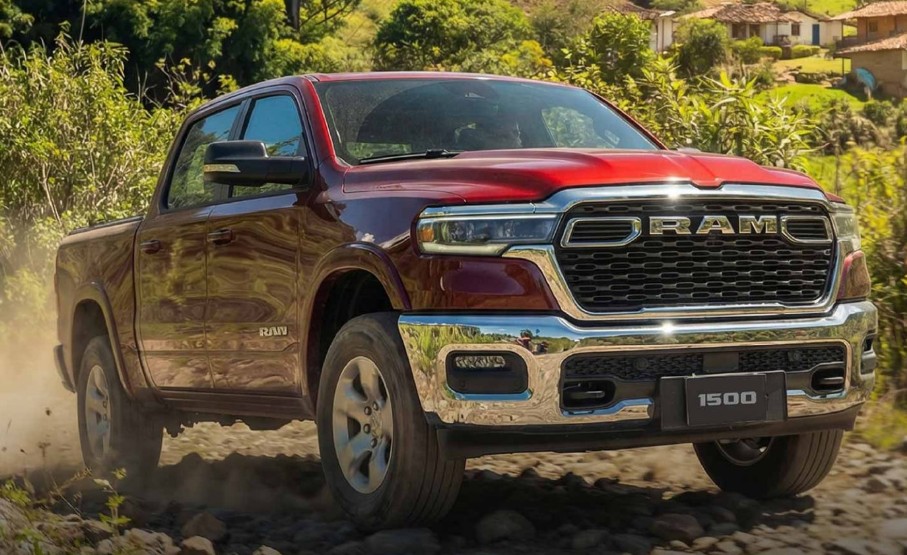
Choosing between the Ram 1500 vs 2500 vs 3500 sounds simple until we actually start comparing them. They share the same family name, wear similarly bold styling, and can all haul a trailer or fill a bed with gear. But beneath the sheet metal, these trucks live surprisingly different lives.
Think of the Ram 1500 as the comfortable all-rounder, the Ram 2500 as the bridge between everyday pickup and serious workhorse, and the Ram 3500 as the heavyweight built for jobs that would make a half-ton truck sweat.
For most drivers, simply buying the biggest Ram available isn't necessarily the smartest move. More capability also brings additional weight, a firmer ride, potentially higher running costs, and dimensions that can make a grocery-store parking lot feel like an obstacle course.
So, which Ram should we actually buy?
In this guide, we'll compare the Ram 1500, Ram 2500, and Ram 3500 across engines, towing, payload, comfort, daily usability, diesel performance, hauling ability, and overall value. For reference, current capability figures below are based primarily on the 2026 U.S.-market Ram lineup, and exact ratings vary considerably by cab, bed, drivetrain, axle ratio, engine, and equipment.
Content in this publication
- Ram 1500 vs 2500 vs 3500 at a Glance
- What Do Ram 1500, 2500, and 3500 Actually Mean?
- Ram 1500 vs 2500 vs 3500 Engine Options
- Ram 1500 vs 2500 vs 3500 Towing Capacity
- Ram 2500 Towing Capacity
- Ram 3500 Towing Capacity
- Ram 1500 vs 2500 vs 3500 Payload Capacity
- Ram 2500 vs 3500: The Difference Most Buyers Miss
- Which Ram Has the Best Ride Quality?
- Which Is Best for Daily Driving?
- Ram 1500 vs 2500 vs 3500 Fuel Economy
- Gas vs Diesel: Which Should We Choose?
- Which Ram Is Best for a Fifth-Wheel Camper?
- Ram 1500 vs 2500 vs 3500 for Work
- Ram 1500 vs 2500 vs 3500 Bed and Cab Considerations
- Ram 1500 vs 2500 vs 3500 Off-Road
- Is the Ram 2500 Worth It Over the 1500?
- Is the Ram 3500 Worth It Over the 2500?
- Ram 1500 vs 2500 vs 3500: Pros and Cons
- Who Should Buy the Ram 1500?
- Who Should Buy the Ram 2500?
- Who Should Buy the Ram 3500?
- Which Ram Is the Best Overall?
- Final Verdict: Ram 1500 vs 2500 vs 3500
- Frequently Asked Questions
Ram 1500 vs 2500 vs 3500 at a Glance
Before digging into the details, here's the simplest way to understand these three trucks.
| Category | Ram 1500 | Ram 2500 | Ram 3500 |
|---|---|---|---|
| Truck class | Light-duty | Heavy-duty | Heavy-duty |
| Best for | Daily driving and moderate towing | Serious towing and work | Maximum towing and payload |
| Max towing* | Up to 11,610 lb | Up to 20,000 lb | Up to 36,610 lb |
| Max payload* | Up to 2,360 lb | Up to 3,930 lb | Up to 7,590 lb |
| Diesel available | No Cummins diesel | 6.7L Cummins | 6.7L Cummins |
| Gas V8 available | 5.7L HEMI | 6.4L HEMI | 6.4L HEMI |
| Daily comfort | Excellent | Good | Work-oriented |
| Heavy fifth-wheel towing | Limited | Capable | Excellent |
*Maximum figures require specific configurations and equipment.
Ram rates the 2026 Ram 1500 for as much as 11,610 pounds of towing and 2,360 pounds of payload, while the Ram 2500 reaches 20,000 pounds of towing and up to 3,930 pounds of gas-engine payload. At the top of the family, the Ram 3500 can reach a massive 36,610-pound maximum diesel towing rating and up to 7,590 pounds of gas-engine payload.
Those numbers tell us something important: the jump from 1500 to 2500 is significant, but the jump from 2500 to a properly configured 3500 can be enormous.
What Do Ram 1500, 2500, and 3500 Actually Mean?
The numbers aren't engine sizes. Instead, they roughly identify the truck's duty class.
The Ram 1500 is a light-duty or half-ton pickup. It's designed around the needs of everyday pickup owners: commuting, family trips, home improvement, recreational towing, and occasional work.
The Ram 2500 and 3500 belong to Ram's Heavy Duty lineup. They use stronger frames, heavier-duty suspension components, more substantial axles, and powertrains designed to operate under greater loads.
Ram 1500: The Everyday Pickup
The Ram 1500 is where most private buyers should begin.
It provides substantial capability without abandoning passenger-car-like comfort. A properly configured 1500 can already tow boats, utility trailers, campers, and many travel trailers.
That makes it the Swiss Army knife of this comparison.
We don't have to operate a construction company or tow a fifth-wheel every weekend to justify owning one.
Ram 2500: The Middle Ground
The 2500 steps into genuine heavy-duty territory.
It makes sense when our trailers become too heavy for a half-ton pickup or when we're regularly carrying substantial loads in the bed.
Perhaps the biggest reason buyers move from the 1500 to the 2500 is access to the 6.7-liter Cummins turbo-diesel inline-six.
For 2026, Ram says the available diesel produces 430 horsepower and 1,075 lb-ft of torque, and the Ram 2500 can tow as much as 20,000 pounds when appropriately configured.
That's a major leap.
Ram 3500: The Heavy Hauler
The Ram 3500 is where capability becomes the main character.
If the 1500 is an SUV wearing work boots, the 3500 is a piece of industrial equipment that happens to have heated seats and cupholders.
Its purpose becomes obvious when we're dealing with:
- Large fifth-wheel RVs
- Gooseneck equipment trailers
- Horse trailers
- Commercial hauling
- Heavy slide-in campers
- Construction equipment
- Large agricultural trailers
The 3500's available high-output Cummins provides 1,075 lb-ft of torque, while properly configured diesel models can tow up to 36,610 pounds.
That's more than three times the maximum towing capacity of the Ram 1500.
Ram 1500 vs 2500 vs 3500 Engine Options
Engines are one of the clearest dividing lines.
Ram 1500 Engines
The 2026 Ram 1500 offers several powertrains, including the familiar 3.6-liter Pentastar V6, twin-turbocharged 3.0-liter Hurricane inline-six engines, and the returning 5.7-liter HEMI V8 on selected versions.
The standard-output Hurricane develops 420 hp and 469 lb-ft, while the High-Output version produces up to 540 hp and 521 lb-ft. The returning 5.7-liter HEMI is rated at 395 hp and 410 lb-ft.
That's an interesting twist.
The light-duty Ram can actually offer considerably more horsepower than its heavy-duty brothers. But horsepower isn't the whole story.
Heavy-duty trucks are about sustained load capacity, low-speed torque, chassis strength, cooling, braking, and durability—not simply acceleration.
Ram 2500 Engines
The 2500 simplifies the menu.
Two major choices dominate:
6.4L HEMI V8
The 6.4-liter gasoline HEMI develops 405 horsepower and 429 lb-ft of torque.
For buyers who don't rack up huge towing mileage, the gas engine can make tremendous sense. It's generally simpler, avoids diesel emissions-system complexity, and still gives the 2500 serious capability.
6.7L Cummins Turbo Diesel
The available high-output Cummins generates 430 horsepower and 1,075 lb-ft of torque in the 2026 Ram Heavy Duty lineup.
That torque figure changes the personality of the truck.
Hook up a substantial trailer and the diesel doesn't need to scream its way uphill. The enormous low-end torque makes pulling weight feel more relaxed.
Ram 3500 Engines
The Ram 3500 essentially takes the same heavy-duty engine philosophy and pairs it with a chassis capable of carrying and towing far more weight.
Its 6.4-liter HEMI V8 is rated at 405 hp and 429 lb-ft, while the available high-output Cummins produces 430 hp and 1,075 lb-ft.
The question isn't therefore whether the 2500 and 3500 have wildly different engines.
The real question is: how much weight can the rest of the truck safely support?
Ram 1500 vs 2500 vs 3500 Towing Capacity
This is where the family hierarchy becomes crystal clear.
Ram 1500 Towing Capacity
Maximum towing reaches 11,610 pounds with the standard-output 3.0-liter Hurricane when properly equipped.
That's plenty for many recreational owners.
We could tow many:
- Medium travel trailers
- Boats
- Utility trailers
- Car trailers
- Small-to-medium campers
- ATVs and side-by-sides
And because we aren't driving a heavy-duty chassis every day, we retain the Ram 1500's more civilized driving experience.
When 11,000 Pounds Isn't Really 11,000 Pounds
Maximum tow ratings require context.
Passengers, cargo, accessories, hitch weight, and trailer tongue weight all consume available vehicle capacity. A truck rated to tow roughly 11,000 pounds isn't automatically the ideal choice for every 11,000-pound trailer.
Payload frequently becomes the limiting factor first.
That's why trailer shoppers should look beyond the big number printed in the brochure.
Ram 2500 Towing Capacity
The 2500 raises maximum towing to approximately 20,000 pounds with the Cummins diesel, while Ram lists maximum gasoline towing at roughly 17,750 pounds depending on configuration.
Suddenly, larger travel trailers, equipment trailers, and certain fifth-wheel RVs enter the picture.
This is where the 2500 finds its sweet spot.
We gain much of the serious towing hardware associated with the 3500 without necessarily needing the most extreme truck in the lineup.
Ram 2500 Diesel vs Gas for Towing
For occasional towing, we wouldn't automatically dismiss the HEMI.
It can tow substantial loads and might make more financial sense for lower-mileage owners.
If we're towing heavy trailers frequently, however, the Cummins' gigantic torque reserve, available exhaust braking, and diesel characteristics become far more attractive.
Ram 3500 Towing Capacity
Now we enter another universe.
Ram lists a maximum available diesel towing capacity of 36,610 pounds for the 2026 Ram 3500 when properly configured. Gas-engine towing peaks at about 18,150 pounds.
You may be interested in reading Ram 1500 vs Tacoma: Which Truck Is Better?
That enormous difference reveals exactly why the Cummins-powered 3500 exists.
It's built to move serious mass.
A large fifth-wheel RV can quickly push beyond the comfortable payload and towing territory of smaller pickups. The 3500 provides the additional rear-axle, chassis, suspension, and payload headroom these applications demand.
Ram 1500 vs 2500 vs 3500 Payload Capacity
Towing numbers tend to steal the spotlight, but payload is often more important.
Payload includes essentially everything we add to the truck: passengers, cargo, tools, accessories, and trailer tongue or pin weight.
Ram 1500 Payload
Maximum payload reaches 2,360 pounds with the Pentastar V6 in the appropriate configuration.
That's impressive for a light-duty truck, but remember that highly equipped crew-cab models often have lower real-world payload ratings than the theoretical maximum.
Always check the certification label on the specific truck we're buying.
Ram 2500 Payload
The 2500 significantly raises the ceiling.
Ram lists up to 3,930 pounds of maximum gas-engine payload for 2026. Diesel configurations sacrifice some payload because the Cummins engine and associated hardware add weight.
This is an important point many buyers overlook.
Diesel doesn't automatically mean "better at everything."
If maximum bed payload matters more than huge towing torque, a gasoline heavy-duty pickup can actually have an advantage.
Ram 3500 Payload
The 3500 is the payload king.
Ram quotes up to 7,590 pounds of maximum payload with the 6.4-liter HEMI gas engine. Diesel models can offer up to 6,050 pounds, depending on configuration.
That massive payload capacity explains why the 3500 is such a natural match for heavy fifth-wheel pin weights and commercial applications.
Ram 2500 vs 3500: The Difference Most Buyers Miss
At first glance, buyers sometimes think the Ram 3500 is just a 2500 with a higher badge.
Not quite.
The 3500 is engineered to support much greater loads, and certain configurations are available with dual rear wheels.
That's crucial.
Single Rear Wheel vs Dual Rear Wheel
A single-rear-wheel 3500 keeps the traditional pickup appearance and is easier to live with.
A dual-rear-wheel—or dually—3500 adds two extra rear tires.
Why?
More rear tires provide greater load-carrying capacity and stability when hauling enormous loads.
But there's a trade-off. A dually is wider, heavier, more awkward in tight parking spaces, and requires buying six tires rather than four when replacement time arrives.
For somebody towing a giant fifth-wheel, that's a small price to pay.
For somebody whose heaviest weekly load is a Costco run, it's absurd overkill.
Which Ram Has the Best Ride Quality?
The Ram 1500 wins.
This shouldn't surprise us.
Its suspension is designed with a much stronger emphasis on unladen comfort. Around town, over expansion joints, and on rough roads, it generally feels more polished and less like a piece of commercial machinery.
The 2500 is noticeably heavier and firmer.
The 3500 can be firmer again, particularly when unloaded, because a suspension designed to support several thousand pounds cannot simultaneously behave like a luxury sedan with nothing in the bed.
Once heavily loaded, however, the equation changes.
Heavy-duty trucks often feel more settled when carrying the weight they were designed to handle.
Which Is Best for Daily Driving?
For commuting, school runs, errands, and road trips, we'd choose the Ram 1500 almost every time unless towing requirements demand something larger.
It's easier to:
- Park
- Maneuver
- Fit into garages
- Drive through city traffic
- Live with when unloaded
- Fuel on a daily basis
The 2500 remains surprisingly usable considering its capability, particularly in crew-cab form.
But physics doesn't disappear.
It's a bigger, heavier truck.
The 3500 makes the least sense as a pure commuter unless we genuinely require its capability elsewhere.
Driving a dually through a crowded urban parking structure can feel like threading a sofa through a hallway.
Ram 1500 vs 2500 vs 3500 Fuel Economy
The Ram 1500 naturally has the advantage here.
For example, Ram lists manufacturer-estimated figures of 20 mpg city and 25 mpg highway for a 4x2 Pentastar V6 configuration, while a standard-output Hurricane 4x2 is listed at 18/25 mpg. Ratings vary by configuration.
Heavy-duty trucks operate in a different regulatory and efficiency environment, and comparing fuel economy directly isn't always straightforward.
More importantly, real-world fuel consumption varies enormously based on:
- Trailer weight
- Terrain
- Driving speed
- Engine
- Axle ratio
- Cab configuration
- Tire size
- Idle time
An unloaded Ram 1500 is generally the economical choice.
Under a heavy trailer, the calculation becomes more nuanced. A Cummins-powered heavy-duty truck may operate more comfortably and efficiently under loads that make a gasoline half-ton work extremely hard.
Gas vs Diesel: Which Should We Choose?
The diesel badge carries plenty of emotional appeal, but buying a diesel simply because it sounds tougher isn't always wise.
Choose Gas If…
We'd lean gasoline when we:
- Drive relatively low annual mileage
- Rarely tow near maximum capacity
- Mostly make short trips
- Want a lower-complexity powertrain
- Prioritize payload
- Don't need huge low-end towing torque
Choose Diesel If…
Diesel makes more sense when we:
- Regularly tow heavy trailers
- Drive substantial highway mileage
- Tow through mountainous terrain
- Want maximum towing capacity
- Appreciate strong exhaust-braking capability
- Need enormous low-rpm torque
In other words, buy the diesel because our workload justifies it—not because the Cummins badge looks cool on the fender.
Which Ram Is Best for a Fifth-Wheel Camper?
Here's where payload calculations matter enormously.
A fifth-wheel places a substantial percentage of its total weight directly over the truck's rear axle.
That pin weight can consume payload surprisingly quickly.
For smaller fifth-wheels, certain Ram 2500 configurations may work. But as trailer size and pin weight grow, the Ram 3500 becomes the safer and more logical direction, especially when a dual-rear-wheel model is appropriate.
The 1500 isn't where we'd begin when shopping for serious fifth-wheel duty.
Ram 1500 vs 2500 vs 3500 for Work
Different jobs call for different hammers.
Light Construction and Trades
A Ram 1500 can be excellent for contractors carrying tools, visiting job sites, and occasionally towing moderate trailers.
Why pay the everyday penalty of a heavy-duty truck if we're nowhere near the 1500's limits?
Heavy Construction and Equipment
The Ram 2500 becomes compelling when trailers and equipment get heavier.
It offers heavy-duty chassis engineering while remaining relatively manageable for everyday use.
You may be interested in readingRam 1500 vs Tacoma: Which Truck Is Better?You may be interested in reading
Ram 1500 vs Sierra 1500: Which Full-Size Truck Wins?Commercial and Extreme Hauling
For large equipment, goosenecks, heavy trailers, or substantial payload, we'd move toward the 3500.
Ram also offers integrated fifth-wheel/gooseneck hardware and towing technologies in its Heavy Duty lineup, further underlining their purpose-built nature.
Ram 1500 vs 2500 vs 3500 Bed and Cab Considerations
Bigger isn't merely about towing.
The configuration we choose changes capability dramatically.
The 2026 Ram 1500 offers a maximum bed cargo length of 76.3 inches, or roughly 6 feet 4 inches, while the Ram 2500 Crew Cab can be configured with an 8-foot bed measuring 98.3 inches.
Long-bed heavy-duty configurations are attractive for:
- Fifth-wheel towing
- Construction materials
- Tool storage
- Commercial hauling
- Large fuel tanks
But an 8-foot-bed Crew Cab is a seriously long vehicle.
Measure the garage before falling in love.
Ram 1500 vs 2500 vs 3500 Off-Road
Here's an interesting twist: bigger isn't necessarily better off-road.
For recreational trails, the Ram 1500's lower weight and more manageable dimensions can actually be advantages.
A heavy-duty truck provides strength and durability but carries considerably more mass. Narrow trails, soft sand, and tight switchbacks don't care about our tow rating.
If our priority is recreational off-roading rather than pulling heavy trailers, we'd generally favor a properly configured Ram 1500.
Heavy-duty models make more sense when off-road access is part of the job rather than the primary hobby.
Is the Ram 2500 Worth It Over the 1500?
Yes—when we need its capability.
That's the entire answer.
The 2500 makes perfect sense if our trailer routinely pushes beyond comfortable half-ton territory, if payload is becoming restrictive, or if we want the Cummins diesel.
Otherwise, the Ram 1500 is usually the more pleasant truck to own.
Buying capacity we never use is like wearing mountaineering boots to walk around the mall. They'll certainly handle the task, but we'd be paying for capability that adds inconvenience everywhere else.
Is the Ram 3500 Worth It Over the 2500?
The case for the 3500 becomes stronger as tongue or pin weight rises.
If we're buying a large fifth-wheel or routinely hauling extremely heavy loads, moving directly to the 3500 may provide valuable payload headroom.
That's especially relevant because trailers have a funny habit of getting bigger.
People rarely finish a five-year RV journey saying, "I wish we'd bought a smaller camper."
If we're already near a 2500's payload limits with today's trailer, a 3500 can provide more flexibility for passengers, cargo, future trailer upgrades, and additional equipment.
Ram 1500 vs 2500 vs 3500: Pros and Cons
Ram 1500 Pros
The 1500 gives us the best overall combination of comfort, capability, efficiency, maneuverability, and everyday usability.
Its weaknesses emerge mainly when towing or payload requirements become genuinely heavy.
Ram 2500 Pros
The 2500 dramatically increases working capability while remaining reasonably practical.
Its Cummins option is a major attraction, and its 20,000-pound maximum towing capability covers a large range of recreational and professional needs.
The downside is that we're now driving a genuine heavy-duty truck every day.
Ram 3500 Pros
The 3500 offers astonishing capability.
Maximum diesel towing of 36,610 pounds and gas payload approaching 7,590 pounds place it in another league.
The price we pay comes through size, weight, ride stiffness, operating expense, and reduced urban convenience.
Who Should Buy the Ram 1500?
Buy the Ram 1500 if our typical life involves commuting, family use, recreational towing, home projects, and occasional work.
It's especially suitable for drivers towing travel trailers, boats, and utility trailers comfortably within its ratings.
For the majority of pickup buyers, this is the sweet spot.
Who Should Buy the Ram 2500?
Buy the Ram 2500 if towing is no longer an occasional side mission.
It's ideal for people pulling substantial RVs, equipment trailers, horse trailers, or heavy work loads without needing the extreme payload potential of the 3500.
It's arguably the most interesting compromise in this comparison.
We get serious heavy-duty engineering and optional Cummins power without automatically moving to the biggest truck in the parking lot.
Who Should Buy the Ram 3500?
Buy the Ram 3500 when the numbers demand it.
Large fifth-wheel campers, gooseneck trailers, commercial equipment, and serious payload are its territory.
If we're comparing trucks purely because we like the muscular appearance, the 3500 is probably unnecessary.
If we're calculating pin weights, axle ratings, equipment weight, and trailer combinations before breakfast, we've probably found our truck.
Which Ram Is the Best Overall?
There's no universal winner because these trucks aren't really competing for exactly the same job.
For most private owners, we'd take the Ram 1500. It delivers more than enough capability for everyday pickup duties while remaining comfortable enough to serve as the family vehicle.
For regular heavy towing, the Ram 2500 may be the smartest balance. A maximum tow rating around 20,000 pounds with the diesel gives it enormous flexibility without stepping fully into 3500 territory.
For maximum payload, fifth-wheel towing, and commercial hauling, the Ram 3500 wins decisively.
The key is not asking, "Which truck is strongest?"
That's easy.
The 3500.
The better question is, "What's the smallest Ram that comfortably handles everything we genuinely expect it to do?"
That's usually where the smartest purchase lives.
Final Verdict: Ram 1500 vs 2500 vs 3500
The Ram lineup works almost like three levels of the same tool.
The Ram 1500 handles normal pickup life beautifully. It can tow more than 11,000 pounds in the right configuration, offers powerful Hurricane engines and an available HEMI V8, yet remains refined enough for everyday commuting.
The Ram 2500 turns the capability dial substantially higher. With available Cummins power and up to 20,000 pounds of towing, it's the natural upgrade when a 1500 begins running out of breathing room.
The Ram 3500 is the specialist. Properly equipped, its maximum diesel towing capacity stretches beyond 36,000 pounds, while its enormous payload capacity makes it the obvious candidate for substantial fifth-wheel and commercial work.
So don't buy by ego. Buy by numbers.
Calculate the loaded trailer weight, tongue or pin weight, passengers, cargo, and equipment we'll actually carry. Then leave ourselves some useful capacity in reserve.
Do that, and the decision becomes remarkably straightforward.
Frequently Asked Questions
1. What is the main difference between Ram 1500, 2500, and 3500?
The Ram 1500 is a light-duty pickup designed primarily for everyday driving and moderate hauling or towing. The Ram 2500 is a heavy-duty truck with substantially greater towing and payload capability, while the Ram 3500 is designed for maximum payload and extremely heavy trailers. The 2500 and 3500 also offer the 6.7-liter Cummins turbo diesel.
2. Is a Ram 2500 better than a Ram 1500?
Not automatically. The 2500 is stronger for heavy towing and hauling, but the 1500 generally provides better everyday comfort, maneuverability, and fuel economy. If we're comfortably within the 1500's payload and towing limits, moving to a 2500 may provide capability we don't actually need.
3. Should I buy a Ram 2500 or 3500 for a fifth-wheel?
It depends on the fifth-wheel's loaded weight and, critically, its pin weight. Smaller trailers may work with appropriately configured 2500 models. Larger fifth-wheels can consume payload quickly, making a Ram 3500—sometimes a dual-rear-wheel version—the more appropriate choice. Always verify the specific truck's GVWR, payload label, axle ratings, and towing configuration.
You may be interested in readingRam 1500 vs Tacoma: Which Truck Is Better?You may be interested in reading
Ram 1500 vs Sierra 1500: Which Full-Size Truck Wins?You may be interested in reading
Ram 1500 or Similar: Which Full-Size Truck Should We Choose?4. Does the Ram 3500 tow more than the Ram 2500?
Yes. For 2026, Ram lists maximum diesel towing at up to 20,000 pounds for the Ram 2500 and as much as 36,610 pounds for the Ram 3500, provided each truck is configured appropriately.
5. Is the Ram 3500 too big for daily driving?
It can certainly be daily-driven, especially in single-rear-wheel form, but most drivers who don't need its payload or towing capability will find the Ram 1500 easier and more comfortable to live with. A long-bed or dual-rear-wheel 3500 becomes particularly cumbersome in garages, narrow streets, and crowded parking areas.
If you want to know other articles similar to Ram 1500 vs 2500 vs 3500: Which Ram Truck Is Right for You? you can visit the category Models.
How to Identify Your Ford Fiesta Model
Toyota RAV4 Engine Oil Capacity: Complete Guide

Vauxhall Corsa Models: Complete Guide to Generations, Trims and Versions (1993–2026)
Kia Sportage Trim Levels: Complete 2027 Comparison
Toyota Corolla Cross vs RAV4: Which SUV Is Better?
Haval Jolion vs Omoda C5: Which SUV Is Better?
Leave a Reply
More content of your interest