
Ram 1500 vs F-150: Which Full-Size Truck Is Better?

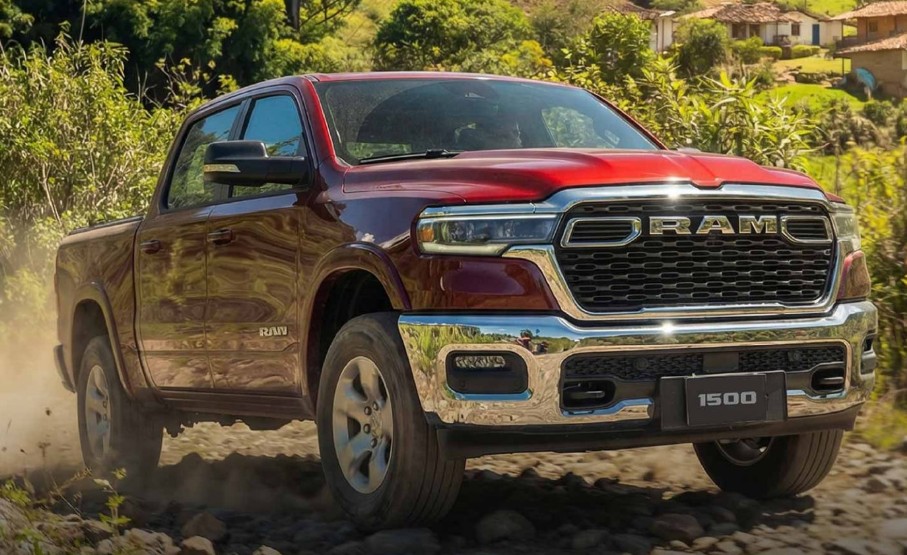
Few pickup-truck comparisons generate as much debate as Ram 1500 vs F-150. Both trucks are deeply established in the full-size segment, both can tow serious weight, both offer luxurious cabins, and both can be configured as anything from a straightforward work vehicle to a six-figure-style luxury pickup.
Yet they approach the job differently.
The Ford F-150 tends to feel like the Swiss Army knife of pickups. Ford offers numerous engines, cab and bed combinations, clever towing technology, hybrid power, onboard electricity, and enormous capability when properly configured.
The Ram 1500, meanwhile, often takes the smoother, more refined path. It combines muscular engines with an upscale cabin and comfortable road manners that make it surprisingly easy to live with every day.
For the 2026 model year, the rivalry gets even more interesting. The HEMI V8 is available again in the Ram 1500 lineup, while Ford continues offering EcoBoost V6, V8, hybrid, and high-performance configurations.
So which truck should we put in the driveway?
Let's compare them where it actually matters.
Content in this publication
- Ram 1500 vs F-150 Quick Verdict
- 2026 Ram 1500 vs Ford F-150 Specifications
- Ram 1500 vs F-150 Engine Options
- Which Truck Is Faster?
- Ram 1500 vs F-150 Towing Capacity
- Ram 1500 vs F-150 Payload Capacity
- Ram 1500 vs F-150 Ride Quality
- Ram 1500 vs F-150 Interior Quality
- Technology Comparison
- Ram 1500 vs F-150 Fuel Economy
- Bed Sizes and Cab Configurations
- Ram 1500 vs F-150 Off-Road Performance
- Ram 1500 vs F-150 Reliability
- Ram 1500 vs F-150 for Daily Driving
- Ram 1500 vs F-150 for Work
- Ram 1500 vs F-150 for Towing a Travel Trailer
- Ram 1500 vs F-150 Luxury Models
- Ram 1500 vs F-150 Safety and Driver Assistance
- Which Truck Offers Better Value?
- Advantages of the Ram 1500
- Advantages of the Ford F-150
- Ram 1500 or F-150: Which Should We Buy?
- Final Verdict: Ram 1500 vs F-150
- Frequently Asked Questions
Ram 1500 vs F-150 Quick Verdict
If we want maximum towing capability, broad configuration choices, hybrid availability, and useful job-site technology, the Ford F-150 has the overall advantage.
If comfort, interior refinement, smooth highway manners, and strong gasoline-engine performance matter more, the Ram 1500 is arguably the more pleasant everyday truck.
The numbers help explain the difference. Ford lists a maximum available towing capacity of 13,500 pounds and maximum payload of 2,440 pounds for the 2026 F-150. Ram lists up to 11,610 pounds of towing and 2,360 pounds of payload for the 2026 Ram 1500. Both figures depend heavily on engine, drivetrain, axle ratio, cab, bed, equipment, passengers, and cargo.
Neither truck is universally better. The better question is: better for what?
2026 Ram 1500 vs Ford F-150 Specifications
Here is the basic picture before we dig deeper.
| Category | 2026 Ram 1500 | 2026 Ford F-150 |
|---|---|---|
| Max towing | 11,610 lb | 13,500 lb |
| Max payload | 2,360 lb | 2,440 lb |
| Available V8 | 5.7L HEMI V8 | 5.0L V8 |
| Turbo option | 3.0L Hurricane I6 | 2.7L/3.5L EcoBoost V6 |
| Hybrid available | No conventional full hybrid | Yes, PowerBoost |
| Max mainstream output | 540 hp Hurricane HO | Varies by performance model |
| Transmission | 8-speed automatic | 10-speed automatic |
| Regular Cab availability | More limited lineup | Yes |
| Long 8-foot bed option | No | Yes on certain configurations |
| Best personality | Comfort and refinement | Utility and versatility |
Ford's advantage in configurations is easy to underestimate. Buyers can combine different engines, cab styles, bed lengths, drivetrains, trims, and specialty packages in ways that make the F-150 almost several different trucks wearing the same badge.
Ram offers plenty of variety too, but its strengths are concentrated more heavily around Crew Cab buyers who want a comfortable daily driver.
Ram 1500 vs F-150 Engine Options
The engine battle is one of the most interesting parts of this comparison because Ford and Ram have taken very different approaches.
Ram 1500 Engine Choices
The 2026 Ram 1500 offers the familiar 3.6-liter Pentastar V6 with eTorque, two versions of the 3.0-liter Hurricane inline-six, and the returning 5.7-liter HEMI V8 with eTorque.
The standard-output Hurricane produces up to 420 horsepower and 469 lb-ft of torque, while the high-output Hurricane reaches an impressive 540 horsepower and 521 lb-ft. The HEMI V8 makes 395 horsepower and 410 lb-ft.
That makes the Ram's engine lineup unusually appealing for buyers who prioritize effortless acceleration.
The Hurricane does not need huge displacement to feel powerful. It delivers torque quickly, and in higher-output form the Ram accelerates more like a performance SUV than an old-school pickup.
The Return of the HEMI Matters
Not every truck buyer chooses an engine by spreadsheet.
The HEMI has character.
Its exhaust note, familiar naturally aspirated response, and V8 personality remain attractive to buyers who simply enjoy traditional American truck engines. Ram bringing it back gives shoppers an option that sits emotionally somewhere between the basic Pentastar and the technically impressive Hurricane.
Ford F-150 Engine Choices
Ford arguably wins for sheer powertrain variety.
The lineup includes the 2.7-liter EcoBoost V6, 3.5-liter EcoBoost V6, 5.0-liter V8, and 3.5-liter PowerBoost full-hybrid V6, plus performance-oriented engines in trucks such as the Raptor.
The 2.7-liter EcoBoost produces 325 horsepower and 400 lb-ft of torque, while Ford lists the regular 3.5-liter EcoBoost at 382 horsepower and 500 lb-ft in certain 2026 configurations. The naturally aspirated 5.0-liter V8 generates 400 horsepower and 410 lb-ft.
Then there is the PowerBoost hybrid, producing 430 horsepower and 578 lb-ft of torque while combining strong towing performance with the ability to supply electricity through Ford's Pro Power Onboard system.
For buyers who want one truck to commute, tow, power tools, and potentially reduce fuel use, that hybrid is an important advantage.
Which Truck Is Faster?
Comparing acceleration becomes tricky because both trucks offer dramatically different engines.
A Ram 1500 equipped with the 540-horsepower high-output Hurricane feels genuinely quick. In the off-road-focused Ram 1500 RHO, that engine produces 540 horsepower and 521 lb-ft and can propel the truck from 0 to 60 mph in a claimed 4.6 seconds.
Ford counters with Raptor variants that push the F-150 into genuine high-performance territory.
For ordinary trims, however, the difference is smaller than the headline horsepower numbers suggest. Both manufacturers offer engines with enough torque to make merging, passing, and trailer pulling feel easy.
Ram Feels More Effortless
The Hurricane's broad torque delivery makes the Ram feel muscular without needing a huge throttle input.
Think of it like an elevator rather than a staircase. Push the pedal and speed simply arrives.
Ford Gives Us More Personalities
The F-150 lineup can feel completely different depending on the engine.
The 2.7 EcoBoost is responsive and sensible. The 5.0 V8 delivers classic naturally aspirated behavior. The 3.5 EcoBoost prioritizes torque and towing. The PowerBoost adds electrification.
Ford essentially lets us choose what kind of F-150 we want.
Ram 1500 vs F-150 Towing Capacity
Here Ford lands one of its clearest punches.
A properly equipped 2026 Ford F-150 can tow up to 13,500 pounds using the 3.5-liter EcoBoost V6.
The 2026 Ram 1500 reaches up to 11,610 pounds, achieved with the standard-output 3.0-liter Hurricane in a properly configured 4x2 model.
That roughly 1,900-pound gap can matter if we regularly pull large travel trailers, equipment trailers, or boats.
However, maximum ratings deserve context.
Most trucks sitting at dealerships are not configured to achieve the maximum advertised number. Crew cabs, four-wheel drive, luxury equipment, large wheels, passengers, and cargo can all reduce real-world capacity.
The door-jamb payload label and vehicle-specific towing documentation matter more than the billboard number.
Ford Has the Better Towing Technology
Ford also deserves credit for making towing easier.
Available systems such as Pro Trailer Backup Assist, Pro Trailer Hitch Assist, and Trailer Reverse Guidance can reduce the stress of connecting and maneuvering a trailer. Several of these systems are offered across mainstream F-150 trims rather than being reserved exclusively for ultra-expensive versions.
Ram offers useful towing technology too, including Trailer Hitch Line-Up Assist, telescopic trailer mirrors, and available camera systems.
Both trucks can make trailer duty less intimidating, but Ford currently feels more comprehensive.
Ram 1500 vs F-150 Payload Capacity
Payload is less glamorous than horsepower, yet it can become the limiting factor long before towing capacity does.
Ford lists up to 2,440 pounds of maximum payload for the 2026 F-150. Ram reaches 2,360 pounds.
The difference is relatively small at maximum specification.
Once again, individual configurations matter enormously. A luxurious four-wheel-drive Crew Cab may carry substantially less than the brochure maximum.
Why should we care?
Because payload includes virtually everything placed on or inside the truck: passengers, luggage, tools, bed cargo, accessories, and trailer tongue weight.
A 9,000-pound trailer with around 900 pounds resting on the hitch can consume a huge chunk of a half-ton truck's available payload before anyone climbs inside.
Ram 1500 vs F-150 Ride Quality
Here the balance swings toward Ram.
The Ram 1500 has long been one of the smoothest-riding full-size pickups, largely because of its coil-spring rear suspension rather than the traditional leaf-spring setup used by many rivals.
On broken pavement, the Ram generally feels calmer and more composed when the bed is empty.
Road imperfections arrive as muted bumps rather than sharp kicks through the cabin.
You may be interested in reading Ram 1500 vs Toyota Tundra: Which Full-Size Truck Wins?
The Ram Drives More Like a Large SUV
This is where Ram's engineering philosophy becomes obvious.
Most privately owned pickups spend far more time carrying people than hauling maximum payload. Ram seems designed around that reality.
Its steering is manageable, highway stability is excellent, and the suspension can isolate occupants from the hopping sensation that empty pickups traditionally produce.
Available air suspension pushes the experience even further.
The F-150 Still Rides Well
We should not interpret this as the Ford being uncomfortable.
Modern F-150s are substantially more refined than trucks from a decade or two ago. On the highway, the Ford settles into a relaxed rhythm and remains perfectly suitable for road trips.
But if our priority is pure unloaded ride comfort, we would choose the Ram.
Ram 1500 vs F-150 Interior Quality
Walk into a well-equipped Ram 1500 and the cabin immediately explains why the truck has earned such a strong reputation for interior design.
Large displays, attractive materials, thoughtful storage, comfortable seats, and upscale trim treatments make premium Ram models feel closer to luxury SUVs than traditional pickups.
High-end Limited and Tungsten versions can become genuinely lavish.
Ram Wins for Luxury Ambience
Ram tends to hide the work-truck bones better.
Switchgear has substantial weight, storage areas are intelligently integrated, and the dashboard design has a strong horizontal flow.
If we use the truck as a family vehicle every day, those details matter.
Ten minutes at a dealership may make both interiors seem good. Four hours into a highway trip is where the Ram starts earning its reputation.
Ford Wins for Functional Design
The F-150 interior is less about creating a lounge and more about turning the truck into a mobile workspace.
Ford offers features such as a console work surface, large digital screens, clever storage areas, and Pro Power Onboard electrical capability on certain configurations. Its 2026 models can also offer a head-up display and BlueCruise hands-free highway driving.
Ford's cabin asks, “What do you need to accomplish today?”
Ram's cabin asks, “Would you like to be more comfortable while doing it?”
Neither philosophy is wrong.
Technology Comparison
Modern pickups have become rolling technology platforms.
Ford equips the F-150 with a 12-inch center touchscreen across much of the lineup, supported by SYNC 4 connectivity. Higher trims offer additional driver assistance, head-up display functionality, upgraded audio, and BlueCruise hands-free highway driving.
Ram counters with an available suite of large digital displays and an increasingly sophisticated Uconnect interface. Ram states that more than 50 combined inches of available digital display area can be fitted to the 2026 Ram 1500 depending on configuration.
Ford's Killer Feature Is Pro Power Onboard
This may be the single most practical technological distinction between them.
The PowerBoost F-150 can function almost like a mobile generator.
Available Pro Power Onboard configurations can supply meaningful electrical output for tools, appliances, recreational equipment, or emergency use. Ford lists up to 7.2 kW on suitable hybrid configurations.
For contractors, campers, or homeowners dealing with power outages, this is not just a gimmick.
It can change how the truck is used.
Ram 1500 vs F-150 Fuel Economy
Fuel economy varies dramatically by engine, drivetrain, tires, axle ratio, and driving conditions, so blanket statements can mislead.
Ram's manufacturer estimates for 4x4 models include up to 19 mpg city and 24 mpg highway with the 3.6-liter Pentastar V6 eTorque, while the standard-output 3.0-liter Hurricane is estimated at 17/24 mpg in 4x4 form.
Rear-wheel-drive versions can do slightly better; Ram lists the 3.0-liter Hurricane 4x2 at up to 18/25 mpg.
Ford's biggest strategic advantage is the availability of the PowerBoost hybrid. The hybrid system is not designed merely as an economy car powertrain transplanted into a truck—it also adds torque, towing ability, and electrical functionality.
Which one costs less to fuel in reality?
That will depend heavily on the exact engine and how we drive it. Stop-and-go commuting favors hybrid technology more than long highway towing does.
Bed Sizes and Cab Configurations
Ford wins this category clearly.
The F-150 can still be configured like a traditional commercial pickup, with Regular Cab, SuperCab, and SuperCrew layouts plus multiple bed lengths. On the F-150 XL, for example, Ford offers a Regular Cab with a 6.5- or 8-foot bed, SuperCab with a 6.5-foot bed, and SuperCrew with 5.5- or 6.5-foot beds.
Ram's lineup is more centered around Quad Cab and Crew Cab configurations.
The maximum Ram 1500 bed length is approximately 6 feet 4 inches, according to Ram.
That distinction matters to contractors and buyers who regularly transport lumber, ladders, building materials, or oversized equipment.
For traditional truck versatility, Ford remains harder to beat.
Ram 1500 vs F-150 Off-Road Performance
Neither brand treats off-road driving as an afterthought.
Ford offers configurations such as the Tremor and Raptor, while Ram counters with models including the Rebel and RHO.
The F-150 Raptor has become almost a category of its own. Its wide stance, long-travel suspension, powerful engine choices, and desert-running capability make it more specialized than a normal off-road package.
The Ram RHO answers with its 540-horsepower high-output Hurricane, performance suspension, Dana 60 rear axle, full-time active transfer case, and multiple selectable drive modes.
Which Is Better Off Road?
For extreme high-speed off-road performance, Ford's Raptor family has the deeper pedigree.
For buyers wanting a muscular everyday truck with serious dirt-road ability, the Ram Rebel and RHO remain compelling.
But here's the practical reality: most buyers do not need either truck's maximum off-road potential.
A regular 4x4 F-150 or Ram 1500 with appropriate tires can already handle muddy trails, snow, campsites, and rough access roads that would stop ordinary cars.
Ram 1500 vs F-150 Reliability
Reliability comparisons between modern trucks require nuance.
Neither model exists as a single mechanical package. An F-150 with a naturally aspirated V8 is mechanically different from a PowerBoost hybrid. Likewise, a Ram with the Pentastar V6 is substantially different from a high-output Hurricane.
More technology generally means more potential complexity.
Turbochargers, hybrid systems, air suspension, active driver-assistance hardware, electronic locking systems, and large infotainment displays all bring benefits, but they also add systems that can eventually require repair.
Simpler Configurations May Be Better Long-Term Bets
If we plan to keep either truck beyond 150,000 miles, we would avoid choosing features merely because they exist.
Buy the engine, drivetrain, suspension, and electronics that genuinely improve how the truck will be used.
Someone who never tows 10,000 pounds probably does not need to configure a truck around maximum towing.
Someone who never drives off road probably does not need specialized off-road suspension.
Complexity should earn its place.
Ram 1500 vs F-150 for Daily Driving
For daily driving alone, we lean toward the Ram 1500.
Its combination of ride comfort, quietness, seating, interior design, and powerful Hurricane engines makes it exceptionally easy to live with.
You may be interested in readingRam 1500 vs Toyota Tundra: Which Full-Size Truck Wins?You may be interested in reading
Ram 1500 vs 2500 vs 3500: Which Ram Truck Is Right for You?It feels less like equipment we tolerate between jobs and more like a vehicle we would deliberately choose for a weekend road trip.
The F-150 remains comfortable, but its strongest characteristics reveal themselves when there is work to do.
Ram 1500 vs F-150 for Work
For dedicated work use, the Ford takes the lead.
Why?
Because Ford offers more body configurations, an available eight-foot bed, excellent maximum towing and payload figures, sophisticated trailer-assistance systems, and onboard electricity.
The 2026 F-150's 13,500-pound maximum towing rating and 2,440-pound maximum payload give it stronger headline capability than the Ram.
A contractor who needs a Regular Cab long-bed truck has choices with Ford that Ram simply does not emphasize in the 1500 lineup.
Ram 1500 vs F-150 for Towing a Travel Trailer
For serious travel-trailer towing, we would generally choose the F-150 with the 3.5-liter EcoBoost, provided the specific truck has enough payload capacity.
Its 13,500-pound theoretical maximum is impressive, but payload remains critical.
Never select a tow vehicle by advertised trailer capacity alone.
When shopping, our most important checks should be:
- Vehicle-specific payload rating on the driver's door jamb
- Gross Vehicle Weight Rating
- Gross Combined Weight Rating
- Trailer tongue weight
- Passenger and cargo weight
- Hitch rating
- Axle ratio
- Correct towing package and cooling equipment
A heavier-duty truck may ultimately be wiser if the trailer consistently pushes the upper end of half-ton capability.
Ram 1500 vs F-150 Luxury Models
Luxury pickups are strange machines when we think about them.
We can load furniture into the bed on Saturday and arrive at a formal dinner the same evening surrounded by leather, premium speakers, panoramic glass, heated seats, giant screens, and sophisticated driver assistance.
Both brands understand that market.
Ford offers upscale King Ranch and Platinum versions, while Ram's Limited and Tungsten trims pursue the luxury buyer aggressively.
Ram Makes the Stronger Luxury Impression
At the expensive end, we still think Ram delivers the more convincing luxury atmosphere.
The F-150 is technologically sophisticated and extremely comfortable, but it never completely stops reminding us that it was engineered first as a working pickup.
The Ram tries harder to erase that boundary.
For some buyers, that distinction alone could settle the entire comparison.
Ram 1500 vs F-150 Safety and Driver Assistance
Both pickups offer extensive active safety systems.
Ford's available Co-Pilot360 technology can include adaptive cruise control, lane-centering assistance, blind-spot monitoring with trailer coverage, automatic emergency braking, and other features depending on trim. BlueCruise adds available hands-free highway driving on compatible roads and eligible models.
Ram also offers modern driver-assistance features, surround-view cameras, trailer-focused technology, and advanced cruise functionality depending on configuration.
We would compare the exact trims being purchased rather than assuming every feature is standard.
A base truck and a flagship truck can have dramatically different equipment even though the grille says the same model name.
Which Truck Offers Better Value?
Value depends heavily on trim.
At the work-truck level, Ford's vast configuration menu makes it easier to build exactly the truck required without paying for unnecessary luxury equipment.
In midrange trims, the competition becomes much closer.
Higher up, Ram's interior refinement can make its price easier to justify for buyers treating their truck as a primary family vehicle.
We should also consider resale value, financing incentives, insurance, maintenance costs, dealer availability, and local labor rates.
The best purchase price is not always the lowest ownership cost.
Advantages of the Ram 1500
The Ram's appeal is easiest to understand after spending time inside it.
Its key strengths include ride comfort, interior refinement, strong Hurricane engines, the return of an available HEMI V8, excellent Crew Cab usability, and luxury trims that genuinely feel special.
Ram also backs select 2026 trucks with a newly advertised 10-year/100,000-mile limited powertrain warranty, subject to Ram's specific terms and eligibility conditions.
For private buyers who spend most of their time commuting and occasionally tow, the Ram's personality makes a lot of sense.
Advantages of the Ford F-150
The F-150 wins through versatility.
It can be a basic work truck, long-bed fleet pickup, luxurious family hauler, hybrid generator on wheels, towing machine, or desert-running performance vehicle.
Maximum towing reaches 13,500 pounds, payload reaches 2,440 pounds, and Ford provides one of the broadest cab, engine, and bed selections in the segment.
Pro Power Onboard, trailer-assistance technology, BlueCruise, and the PowerBoost hybrid make the F-150 particularly attractive to buyers who actually intend to exploit their truck's technology.
Ram 1500 or F-150: Which Should We Buy?
Choose the Ram 1500 if comfort, smoothness, interior quality, strong acceleration, and everyday refinement sit at the top of the priority list.
Choose the Ford F-150 if maximum towing, payload, cab and bed flexibility, hybrid availability, onboard power, and work-oriented technology matter more.
For us, the overall contest narrowly goes to the F-150 because it can solve more problems for more buyers.
But that does not automatically make it the truck we would rather drive every morning.
The Ram has an ease and polish that numbers struggle to communicate.
In other words, Ford wins the spreadsheet.
Ram may win the road trip.
Final Verdict: Ram 1500 vs F-150
The Ram 1500 vs F-150 battle does not produce a loser.
It produces two interpretations of what a modern full-size pickup should be.
Ford treats the truck like a platform. Configure it, modify it, tow with it, work from it, power equipment with it, or turn it into an off-road monster.
Ram treats the truck more like a premium vehicle that happens to possess serious capability.
For pure capability and versatility, our pick is the Ford F-150.
For comfort and premium everyday driving, we would take the Ram 1500.
The smartest choice comes down to how the truck will spend 90% of its life—not the extreme scenario we imagine happening once a year.
Frequently Asked Questions
Is a Ram 1500 better than an F-150?
The Ram 1500 is arguably better for buyers prioritizing ride comfort, cabin refinement, and a premium daily-driving experience. The F-150 is stronger for maximum towing, configuration flexibility, hybrid technology, onboard power, and commercial use.
Which can tow more, Ram 1500 or F-150?
The 2026 Ford F-150 can tow up to 13,500 pounds when properly equipped, compared with up to 11,610 pounds for the 2026 Ram 1500. Actual capacity varies by configuration.
Which has more payload, F-150 or Ram 1500?
The Ford F-150 has the higher maximum rating. Ford lists up to 2,440 pounds, while Ram lists up to 2,360 pounds for the 2026 Ram 1500.
Which truck has the better interior?
We give the Ram 1500 the advantage for overall interior atmosphere and luxury feel. Ford's cabin is excellent, but its greatest strengths are functional features such as workspace solutions, towing technology, and available Pro Power Onboard electricity.
Which is better for everyday driving, Ram 1500 or F-150?
For mostly commuting, family travel, and occasional hauling, the Ram 1500 is our preferred choice because of its comfortable ride and refined cabin. For mixed work, towing, and recreational use, the F-150's broader capability makes it the more versatile all-rounder.
You may be interested in readingRam 1500 vs Toyota Tundra: Which Full-Size Truck Wins?You may be interested in reading
Ram 1500 vs 2500 vs 3500: Which Ram Truck Is Right for You?You may be interested in reading
Ram 1500 vs Tacoma: Which Truck Is Better?If you want to know other articles similar to Ram 1500 vs F-150: Which Full-Size Truck Is Better? you can visit the category Models.
How to Identify Your Ford Fiesta Model
Toyota RAV4 Engine Oil Capacity: Complete Guide

Vauxhall Corsa Models: Complete Guide to Generations, Trims and Versions (1993–2026)
Kia Sportage Trim Levels: Complete 2027 Comparison
Toyota Corolla Cross vs RAV4: Which SUV Is Better?
Haval Jolion vs Omoda C5: Which SUV Is Better?
Leave a Reply
More content of your interest