
VW Amarok vs Ford Ranger 2025: Which Pickup Is the Better Buy?

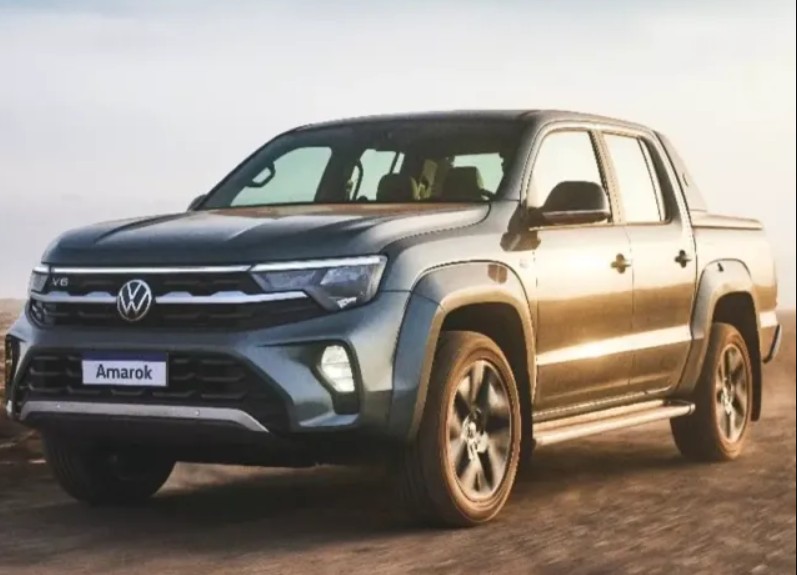
The VW Amarok vs Ford Ranger 2025 comparison is more interesting than the badges on their grilles might suggest. These two pickups are closely related underneath, yet Volkswagen and Ford have worked hard to give each truck its own character. Think of them as siblings who grew up in the same house but developed completely different wardrobes, personalities, and ideas about what makes a good weekend.
The second-generation Volkswagen Amarok shares its basic platform and plenty of engineering with the current-generation Ford Ranger. That relationship immediately raises an obvious question: if the foundations are so similar, why should we choose one over the other?
That's where things become interesting.
Styling, trim strategy, cabin presentation, suspension tuning, equipment, dealer support, pricing, and the way each truck makes us feel from behind the wheel can separate them more than their shared DNA suggests.
For 2025 buyers looking for a double-cab pickup capable of commuting during the week, towing on Saturday, and disappearing down a dirt road on Sunday, both deserve serious consideration.
Let's put them head-to-head.
Content in this publication
- VW Amarok vs Ford Ranger 2025 at a Glance
- Are the VW Amarok and Ford Ranger Basically the Same Truck?
- Exterior Design: Amarok Elegance vs Ranger Muscle
- 2025 VW Amarok vs Ford Ranger Interior
- VW Amarok vs Ford Ranger 2025 Engine Options
- Amarok vs Ranger Performance
- VW Amarok vs Ford Ranger Towing Capacity
- Off-Road Capability
- Ride Comfort and Everyday Driving
- Technology and Infotainment
- Safety and Driver Assistance
- Practicality and Load Bed
- Fuel Economy
- Amarok vs Ranger Reliability
- Servicing and Ownership Costs
- Price and Value for Money
- Why Choose the 2025 Volkswagen Amarok?
- Why Choose the 2025 Ford Ranger?
- VW Amarok vs Ford Ranger 2025: Which Is Better for Work?
- Which Is Better for Families?
- Which Is Better for Off-Road Adventures?
- VW Amarok vs Ford Ranger 2025: Pros and Cons
- Who Should Buy the Amarok?
- Who Should Buy the Ranger?
- Our Verdict: VW Amarok vs Ford Ranger 2025
- Frequently Asked Questions
- Closing Thoughts
VW Amarok vs Ford Ranger 2025 at a Glance
Before getting buried in specifications, we should understand what each pickup is trying to accomplish.
The 2025 Ford Ranger is the broader proposition. Depending on the market, Ford offers an extensive selection of models, engines, accessories, and specialist versions. The Ranger can be configured as a practical work truck, comfortable family pickup, serious off-roader, or high-performance lifestyle machine.
The 2025 Volkswagen Amarok generally takes a more focused approach. It combines the tough pickup foundations of the Ranger platform with Volkswagen styling and a cabin intended to feel a little more distinctive.
In simple terms:
- Choose the Amarok if design, exclusivity, and Volkswagen's interpretation of the platform appeal to you.
- Choose the Ranger if model choice, accessories, specialist off-road versions, and a huge pickup ecosystem matter more.
- Compare equivalent trim levels carefully because equipment and engines vary considerably between countries.
- Don't assume they drive identically simply because they share important mechanical components.
There's no automatic winner. The better truck depends heavily on what we're actually going to do with it.
Are the VW Amarok and Ford Ranger Basically the Same Truck?
Yes and no.
That's probably the most accurate answer.
The current Amarok was developed through cooperation between Volkswagen and Ford and is closely related to the Ranger. The two share fundamental architecture and several mechanical components.
Yet calling the Amarok merely a Ranger wearing a Volkswagen badge oversimplifies things.
Platform sharing is hardly unusual in the automotive industry. Manufacturers routinely share engines, transmissions, architectures, and factories while creating products aimed at different buyers.
Volkswagen has given the Amarok its own exterior design language, trim hierarchy, equipment combinations, interior details, and brand character.
The Ford Ranger remains unmistakably a Ford.
Walk toward the two vehicles in a parking lot and few people will confuse them.
Why the Shared Platform Can Actually Be an Advantage
Some buyers hear "shared platform" and immediately assume compromise. We see it differently.
The Ranger platform was designed from the beginning to handle demanding pickup duties. Using an established truck foundation allowed Volkswagen to concentrate on differentiating the Amarok rather than reinventing every nut and bolt.
It can also potentially improve the availability of knowledge and aftermarket solutions surrounding major shared mechanical components, although parts compatibility should never be assumed without checking specific part numbers.
Exterior Design: Amarok Elegance vs Ranger Muscle
Styling might be one of the biggest reasons to pick the Amarok.
Volkswagen's pickup has a cleaner, slightly more European appearance. Its front end, grille treatment, lighting signatures, and body detailing give it a recognizable VW identity.
The Ranger takes another route.
It looks broad, square, muscular, and deliberately truck-like. Ford's C-clamp-inspired lighting design and substantial front end give it considerable road presence.
Which Pickup Looks Better?
That's completely subjective, but we can divide their personalities fairly easily.
The Amarok feels like the truck we might park outside an upscale hotel without it looking remotely out of place.
The Ranger feels ready to arrive covered in mud with a trailer attached.
Both can do either job, of course. We're talking about visual personality rather than capability.
If subtle sophistication matters, we'd lean toward the Amarok.
If bold American-inspired pickup styling gets our attention, the Ranger has the edge.
2025 VW Amarok vs Ford Ranger Interior
Climb inside and the family connection becomes easier to recognize, although each manufacturer adds its own finishing touches.
Both trucks embrace the modern trend toward large digital interfaces. Depending on trim and market, buyers can find digital instrumentation, vertically oriented central touchscreens, smartphone connectivity, advanced driver-assistance systems, multiple cameras, and increasingly sophisticated comfort equipment.
The days when a pickup interior meant acres of hard grey plastic and a basic radio are long gone.
Amarok Cabin Experience
The Volkswagen generally attempts to position itself toward the more refined end of the pickup market.
Higher specifications can feel surprisingly premium for a vehicle that still has a cargo bed behind the cabin. Material choices, seat finishes, dashboard details, and Volkswagen-specific elements help create some separation from its Ford relative.
The Amarok makes particular sense for buyers using their pickup as an everyday vehicle.
Drive to work Monday morning, collect the kids that afternoon, tow equipment later in the week, and head into the countryside on Saturday. It can play all those roles without constantly reminding us that we're sitting in a commercial vehicle.
Ranger Cabin Experience
The Ranger's interior is similarly modern but tends to emphasize functionality alongside technology.
Storage solutions matter enormously in a pickup, and Ford has plenty of experience understanding how owners actually use these vehicles.
Depending on specification, the Ranger can move from straightforward and durable to genuinely luxurious.
That's an important advantage: there's a Ranger for an enormous range of buyers.
Which Has the Better Interior?
At comparable trim levels, this is closer than the badges might lead us to expect.
The Amarok may appeal more to buyers prioritizing visual sophistication and exclusivity, while the Ranger often feels like the more purpose-designed tool.
We wouldn't buy either without sitting in both first. Seat comfort, driving position, touchscreen preferences, and control layouts can matter more after three hours on the road than another decorative trim panel.
VW Amarok vs Ford Ranger 2025 Engine Options
Engine availability is where we need to be careful because the 2025 Amarok and Ranger lineups vary substantially by country.
Diesel remains central to both ranges in many markets. Four-cylinder turbo-diesel engines provide the efficiency and low-speed pulling power expected from working pickups, while V6 diesel availability on selected versions adds considerably more effortless performance.
Some Ranger markets also receive powertrains or performance derivatives that aren't directly mirrored in the Amarok lineup.
Four-Cylinder Diesel: The Sensible Choice
A four-cylinder turbo-diesel will make the most sense for many buyers.
Why?
Because most of us don't spend every day towing the maximum permitted trailer weight up a mountain.
A good four-cylinder diesel balances:
- Useful low-end torque
- Reasonable fuel consumption
- Lower purchase costs than premium engine choices
- Strong everyday usability
- Adequate towing performance
For work fleets and buyers watching operating expenses, it can be the smarter decision.
V6 Diesel: The Engine We Want
Then there's the V6.
A six-cylinder diesel changes the character of a large pickup. Instead of feeling like the engine is constantly being asked to move a heavy vehicle, the extra capacity and torque make acceleration and towing feel more relaxed.
It's like replacing a strong cyclist with a locomotive.
Both can pull the load, but one barely seems bothered by it.
For frequent towing, long-distance highway driving, or simply enjoying effortless acceleration, the V6 deserves serious consideration where offered.
Amarok vs Ranger Performance
Because equivalent Amarok and Ranger variants can use closely related drivetrains, outright performance can be similar.
The differences we're likely to notice come from specification, wheel and tyre combinations, vehicle weight, suspension setup, and calibration rather than some enormous mechanical gulf between the two.
Neither mainstream diesel pickup is trying to behave like a sports car.
And that's fine.
What matters is how confidently it overtakes with passengers aboard, how smoothly the transmission responds, and how easily the engine handles hills while towing.
What About the Ford Ranger Raptor?
Here's where Ford plays a card Volkswagen doesn't directly match.
The Ranger Raptor sits in its own performance-oriented territory in markets where it's sold. Its specialized suspension, aggressive design, chassis changes, and performance focus turn the Ranger into something closer to an off-road performance vehicle than a conventional work pickup.
You may be interested in reading Volkswagen Amarok vs Toyota Hilux: Which Pickup Is Better?
There isn't a direct Amarok equivalent built around precisely the same mission.
If high-speed off-road performance is the priority, the Ranger family has the obvious advantage.
VW Amarok vs Ford Ranger Towing Capacity
Towing is one of the primary reasons people buy vehicles like these.
Properly configured versions of both pickups can offer serious towing capability, with certain markets and configurations commonly reaching around the 3.5-tonne braked-trailer class.
But here's the important bit: maximum advertised towing capacity isn't the whole story.
Payload Matters Just as Much as Towing
Imagine loading five adults into the cabin, placing equipment in the bed, adding accessories, and then connecting a heavy trailer.
Suddenly payload, axle limits, gross vehicle mass, gross combination mass, and tow-ball download become incredibly important.
A truck's brochure towing number doesn't mean we can simultaneously load everything else to its maximum.
Before towing anything substantial, check the specifications for the exact engine, trim, drivetrain, body configuration, and local regulations.
Which Would We Choose for Regular Towing?
For frequent heavy towing, we'd look first at suitably equipped V6 diesel versions where available.
The extra torque makes moving heavy loads more relaxed, especially on steep roads and during highway merging.
After that, we'd compare payload and gross combination limits rather than simply choosing whichever brochure displays the biggest towing number.
Off-Road Capability
A modern pickup needs to handle more than pavement, and both vehicles offer genuine off-road credentials.
Depending on configuration, we can find four-wheel-drive systems, selectable drive modes, hill-descent assistance, locking differentials, underbody protection, and electronic systems designed to manage loose or slippery surfaces.
Ford Ranger Off Road
The Ranger has an enormous advantage in one area: ecosystem.
There are countless accessories and upgrades available for Rangers around the world. Bull bars, suspension systems, canopies, snorkels, roof platforms, underbody protection, recovery equipment—the list feels endless.
Ford also offers more aggressively off-road-oriented Ranger variants in certain markets.
For somebody building a dedicated adventure vehicle, that matters.
VW Amarok Off Road
The Amarok is no pavement princess.
Its Ranger-derived foundations mean it can tackle genuine off-road use, and appropriate versions have the hardware needed for serious recreational driving.
The difference is more about range depth.
Volkswagen doesn't necessarily offer the same enormous ladder of specialist variants that Ford does.
For ordinary trails, farms, snow, gravel, muddy tracks, and camping trips, though, the Amarok should be far more capable than many owners will ever need.
Ride Comfort and Everyday Driving
This category deserves more attention than it usually receives.
We're not crossing deserts every Tuesday.
Most pickups spend much of their lives on normal roads, which means steering, visibility, ride quality, parking ease, seat comfort, and cabin noise matter tremendously.
Modern Rangers and Amaroks are much more civilized than old-school pickups, but physics hasn't disappeared. These are still tall, heavy vehicles with cargo-carrying rear suspensions.
An unloaded pickup can feel firmer and busier over broken roads than a family SUV.
Which Feels More Like an SUV?
Higher-end Amarok models can make a particularly convincing case as SUV alternatives thanks to their cabin presentation and equipment.
The Ranger isn't far behind.
In fact, premium Ranger trims can be impressively comfortable.
Our decision here would come down to a back-to-back test drive. Drive both over rough urban pavement, a highway section, and a tight parking area.
That's more revealing than staring at twenty specification tables.
Technology and Infotainment
Technology has become a major battlefield for modern pickups.
Depending on version, the Amarok and Ranger can offer large touchscreens, digital instrument displays, navigation, wireless smartphone integration, charging solutions, parking sensors, surround-view cameras, and connected features.
The shared engineering relationship means there are obvious similarities in the underlying technology.
Do Big Screens Make Them Better?
Sometimes.
Large screens look fantastic in a showroom, but a truck should remain easy to operate while bouncing down a dirt road wearing work gloves.
Physical shortcuts and intuitive menus matter.
Before buying, we'd spend ten minutes performing ordinary tasks: change the temperature, connect a phone, activate a camera, adjust driver assistance, and find vehicle settings.
If those simple jobs feel annoying while parked, they won't magically improve on the road.
Safety and Driver Assistance
Modern pickups are increasingly expected to deliver passenger-car levels of active safety.
Equipment varies, but contemporary Amarok and Ranger models may offer features such as autonomous emergency braking, adaptive cruise control, blind-spot monitoring, lane assistance, parking technology, traffic-sign recognition, and multiple cameras depending on trim and region.
That's excellent news for families moving from SUVs into pickups.
Still, we should compare exact specifications rather than assuming similarly priced models include identical safety equipment.
Practicality and Load Bed
A pickup lives or dies by practicality.
Both vehicles provide useful double-cab accommodation combined with a cargo bed capable of carrying tools, outdoor equipment, luggage, bikes, camping gear, or work supplies.
The Ranger's popularity gives it a particularly strong accessory market.
Want drawers? Easy.
A canopy? Plenty.
A roller cover? No problem.
A complete touring conversion that looks ready to cross a continent? Somebody has probably already designed one.
Rear-Seat Space
Double-cab pickups have improved enormously, but rear passengers still don't always get SUV-like comfort.
If we're regularly carrying adults, we'd test the rear seat personally.
Check knee room, seat-base angle, headroom, door opening, child-seat access, and USB or charging availability.
Families shouldn't assume "five seats" means five people will be equally comfortable on a six-hour trip.
Fuel Economy
Neither the Amarok nor Ranger is a lightweight economy car, so expectations should remain realistic.
Four-cylinder diesel versions will generally be the logical choice when minimizing fuel use is a priority, while larger engines trade some efficiency for additional performance and effortless torque.
Real-world consumption depends heavily on:
- Engine and transmission
- Two-wheel drive or four-wheel drive
- Tyres and wheel size
- Vehicle load
- Towing
- Accessories
- Traffic
- Terrain
- Driving style
Add all-terrain tyres, a roof rack, heavy accessories, and a trailer and the official consumption figure quickly becomes little more than a distant memory.
Amarok vs Ranger Reliability
This is one category where sweeping claims should make us suspicious.
A vehicle's reliability depends on engine choice, transmission, maintenance, use, manufacturing updates, and individual history.
The current Amarok's mechanical relationship with the Ranger means some components and potential ownership considerations overlap, but that doesn't make reliability completely identical.
The Advantage of a Widely Used Platform
There is something reassuring about buying into a widely used vehicle architecture.
As more Rangers and Amaroks accumulate mileage, workshops develop familiarity with the platform and common diagnostic knowledge expands.
For long-term ownership, we'd prioritize maintenance history and correct servicing over internet arguments about which badge is inherently more reliable.
You may be interested in readingVolkswagen Amarok vs Toyota Hilux: Which Pickup Is Better?You may be interested in reading
Volkswagen Amarok vs Mercedes X Class: Which Premium Pickup Wins?Used Buyers Should Remember This
A pickup with 100,000 km of gentle highway driving may be healthier than one with 50,000 km spent towing heavy equipment through mud.
Usage history matters enormously.
Inspect the underbody, suspension, tyres, tow equipment, drivetrain, service records, and signs of off-road damage before buying used.
Servicing and Ownership Costs
The Ranger's enormous sales footprint can be an advantage when it comes to dealer familiarity, aftermarket support, accessories, and independent workshop experience.
Volkswagen counters with its own established dealer network and may appeal to owners already comfortable with VW servicing.
Costs vary too much between countries to crown a universal winner.
We should request actual quotes for scheduled maintenance, insurance, tyres, extended warranties, and common replacement items before signing anything.
A cheap purchase price can lose its shine quickly if ownership costs bite later.
Price and Value for Money
Pricing may ultimately decide the VW Amarok vs Ford Ranger 2025 battle.
Instead of comparing entry prices, compare like-for-like vehicles.
Match:
- Engine
- Transmission
- Drivetrain
- Cab configuration
- Safety technology
- Towing equipment
- Wheels and tyres
- Interior features
- Warranty coverage
- Included servicing
- Dealer incentives
A Ranger that appears cheaper may simply have less equipment. An Amarok that costs more may include features we'd otherwise add as options—or vice versa.
Value lives in the details.
Why Choose the 2025 Volkswagen Amarok?
The Amarok makes the strongest argument for buyers who like the Ranger's excellent basic formula but want something less common and visually different.
Its major strengths include distinctive Volkswagen styling, a refined image, strong available diesel performance, substantial towing potential in suitable configurations, modern technology, and a cabin that can feel surprisingly sophisticated.
There's also an emotional factor.
Not everyone wants the most popular truck in the parking lot.
Sometimes individuality matters.
Why Choose the 2025 Ford Ranger?
The Ranger's strength is breadth.
Ford has built an entire universe around this pickup. Depending on the market, buyers can choose from straightforward work-focused versions through luxurious models and specialized off-road derivatives.
Then there's the aftermarket.
Few pickups are easier to personalize for work, touring, camping, towing, or off-road adventures.
If we want to buy a truck today and gradually transform it over the next five years, the Ranger is exceptionally compelling.
VW Amarok vs Ford Ranger 2025: Which Is Better for Work?
For pure commercial use, the Ranger probably has the advantage.
Not because the Amarok can't work—it absolutely can—but because the Ranger range tends to provide more configurations and enjoys massive commercial-market support.
Fleet operators value things like parts availability, accessories, service coverage, payload, downtime, and acquisition cost.
Those practical considerations can outweigh leather seats and styling.
Which Is Better for Families?
Now the Amarok fights back.
A high-spec Amarok combines pickup utility with an appealing cabin and distinctive exterior design, making it a compelling dual-purpose family vehicle.
But premium Ranger models can perform the same trick.
For family use, we'd prioritize rear-seat comfort, safety equipment, parking cameras, ride quality, and cabin storage over maximum payload.
Remember the vehicle's size, too.
A large double-cab pickup can feel like a cruise ship when squeezing into an old underground car park.
Which Is Better for Off-Road Adventures?
For mainstream recreational off-roading, either can be excellent when properly configured.
For serious modification or specialized off-road performance, the Ranger takes the lead.
Its aftermarket is enormous, and versions such as the Raptor demonstrate how far Ford is willing to push the Ranger platform.
The Amarok feels more like the sophisticated adventurer.
The Ranger feels like the adventurer who already packed recovery boards, three spare lights, a compressor, and enough camping equipment to survive a small apocalypse.
VW Amarok vs Ford Ranger 2025: Pros and Cons
Volkswagen Amarok Pros
- Distinctive styling
- Refined overall presentation
- Strong diesel engine choices in many markets
- Serious towing capability in appropriate configurations
- Modern cabin technology
- Genuine off-road ability
- Less common than the Ranger in many regions
Volkswagen Amarok Cons
- Smaller model range in some markets
- Fewer extreme specialist variants
- Aftermarket ecosystem may be narrower
- Higher trims can become expensive
- Shared Ranger foundations may reduce its appeal to buyers wanting a completely unique Volkswagen
Ford Ranger Pros
- Huge range of configurations in many markets
- Excellent aftermarket support
- Strong towing capability
- Multiple engine choices
- Modern interior
- Proven pickup practicality
- Specialist versions available
- Strong appeal for work and recreational use
Ford Ranger Cons
- Very common in some markets
- Premium versions can become expensive
- Large dimensions aren't ideal for crowded cities
- Unloaded ride remains pickup-like
- Extensive trim choices can make comparison shopping complicated
Who Should Buy the Amarok?
We'd choose the Amarok if we wanted a pickup that felt slightly more distinctive and premium without sacrificing genuine truck capability.
It's particularly attractive for someone moving from a European SUV into a pickup.
You still get the commanding driving position, technology, comfort, and polished appearance, but now there's a useful cargo bed behind you.
Who Should Buy the Ranger?
We'd choose the Ranger if versatility came first.
It can be a workhorse, family vehicle, tow rig, camping platform, off-road toy, or something combining all five.
The sheer range of configurations and accessories means it's easier to build a Ranger around a very specific lifestyle.
That's difficult to ignore.
Our Verdict: VW Amarok vs Ford Ranger 2025
So, which truck wins?
For most buyers, there isn't a dramatic difference in fundamental capability between comparable versions because these pickups share significant engineering DNA. The decision comes down to how each manufacturer packages that foundation.
The 2025 Volkswagen Amarok wins our attention with its distinctive styling, polished personality, and slightly more exclusive feel. It's the pickup for someone who wants serious capability but doesn't necessarily want their truck to shout about it.
The 2025 Ford Ranger, meanwhile, wins on breadth. Its enormous model lineup, aftermarket ecosystem, specialist derivatives, and work-focused heritage make it incredibly difficult to beat as an all-round pickup.
If we're buying primarily for work, extensive modification, or serious recreational off-roading, we'd lean toward the Ranger.
If we're buying a pickup as a daily driver and want capability mixed with individuality and a more Volkswagen-flavored presentation, the Amarok becomes extremely tempting.
The funny part?
Choosing between them is a little like choosing between two restaurants using ingredients from the same supplier. The foundations might be related, but presentation, atmosphere, menu, and experience still determine which one we'd rather visit.
The smartest approach is therefore simple: identify equivalent engine and trim combinations, compare their actual prices and equipment, then drive both.
The badge might attract us to the showroom.
The better truck is the one we'd still want to drive home after the test drive.
Frequently Asked Questions
1. Is the 2025 VW Amarok the same as the Ford Ranger?
No. The current Volkswagen Amarok is closely related to the Ford Ranger and shares important architecture and mechanical components with it, but Volkswagen gives the Amarok its own exterior styling, trim structure, equipment combinations, and brand identity. They are closely related pickups rather than completely identical vehicles.
2. Which is better, the VW Amarok or Ford Ranger 2025?
The Ranger is arguably the stronger choice for buyers prioritizing model variety, aftermarket accessories, commercial use, and specialized off-road versions. The Amarok may suit buyers who value distinctive styling, refinement, and a less common alternative built on closely related foundations.
3. Is the VW Amarok good for towing?
Yes. Properly specified Amarok models are designed for substantial towing duties, and selected configurations in some markets operate in the roughly 3.5-tonne braked-trailer category. Exact limits depend on the engine, drivetrain, specification, local regulations, and vehicle configuration, so always check the official rating for the individual vehicle.
4. Which is better off road, Amarok or Ranger?
Both can be highly capable off road, particularly in properly equipped four-wheel-drive specifications. The Ranger has an advantage for buyers seeking specialized off-road variants or extensive modifications because its aftermarket ecosystem is enormous. For ordinary recreational off-roading, however, a suitable Amarok is a serious performer.
5. Should I buy an Amarok V6 or Ranger V6?
If both V6 versions are available in your market, compare equipment, price, warranty, payload, towing limits, servicing, tyres, and dealer support rather than choosing solely by engine output. Their closely related mechanical foundations mean the surrounding specification and ownership package can become the deciding factors.
Closing Thoughts
The VW Amarok vs Ford Ranger 2025 contest proves that shared engineering doesn't automatically produce identical vehicles. Ford supplies an exceptionally versatile pickup foundation, while Volkswagen wraps its interpretation around that foundation and creates something with its own personality.
The Ranger remains the Swiss Army knife. It's available in numerous forms, has enormous aftermarket support, and can be adapted to almost any pickup-related mission.
The Amarok is the tailored hiking boot: polished enough for everyday life but still prepared to get dirty when the road disappears.
Neither approach is wrong.
For us, the Ranger makes the strongest rational argument because of its extraordinary versatility and ecosystem. Yet the Amarok can easily become the truck we'd choose with our hearts—particularly in a well-equipped V6 specification.
You may be interested in readingVolkswagen Amarok vs Toyota Hilux: Which Pickup Is Better?You may be interested in reading
Volkswagen Amarok vs Mercedes X Class: Which Premium Pickup Wins?You may be interested in reading
 Ram 1500 vs F-150: Which Full-Size Truck Is Better?
And when two trucks are this closely matched, sometimes that's exactly how the final decision gets made.
If you want to know other articles similar to VW Amarok vs Ford Ranger 2025: Which Pickup Is the Better Buy? you can visit the category Models.
How to Identify Your Ford Fiesta Model
Toyota RAV4 Engine Oil Capacity: Complete Guide

Vauxhall Corsa Models: Complete Guide to Generations, Trims and Versions (1993–2026)
Kia Sportage Trim Levels: Complete 2027 Comparison
Toyota Corolla Cross vs RAV4: Which SUV Is Better?
Haval Jolion vs Omoda C5: Which SUV Is Better?
Leave a Reply
More content of your interest