
Toyota Sequoia vs Lexus GX: Which SUV Should We Buy?

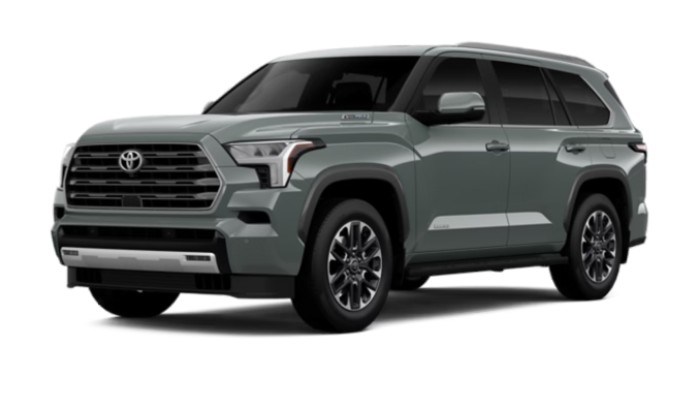
The Toyota Sequoia vs Lexus GX comparison is more interesting than it first appears. Both SUVs come from the Toyota family, both use rugged body-on-frame construction, both can tow serious weight, and both are capable of traveling far beyond paved suburban streets. Yet once we spend time looking at what each SUV is actually designed to do, their personalities begin to separate.
The Sequoia is the bigger, stronger family hauler. Think of it as a comfortable workhorse wearing hiking boots. It seats more people, delivers substantially more torque, offers better fuel economy thanks to its hybrid powertrain, and can tow slightly more.
The Lexus GX takes a different route. It is smaller, more luxurious, easier to maneuver, and especially convincing when the pavement disappears. The latest GX combines genuine trail hardware with the polished materials, technology, and dealership experience buyers expect from Lexus.
For 2026, the Toyota Sequoia uses a standard i-FORCE MAX twin-turbo V6 hybrid producing 437 horsepower and 583 lb-ft of torque, while Toyota lists maximum towing capacity at approximately 9,500 pounds. The 2026 Lexus GX 550 uses a non-hybrid 3.4-liter twin-turbo V6 producing 349 horsepower and 479 lb-ft, with towing capability reaching 9,096 pounds depending on trim.
So, which one deserves our money? Let's break them down piece by piece.
Content in this publication
- Toyota Sequoia vs Lexus GX at a Glance
- Are the Toyota Sequoia and Lexus GX Really Competitors?
- Exterior Size: The Sequoia Is the Bigger Machine
- Engine and Performance
- Fuel Economy: Sequoia's Hybrid System Pays Off
- Towing Capacity: Surprisingly Close
- Off-Road Capability: Lexus GX Strikes Back
- Interior Space and Passenger Capacity
- Cargo Space: Sequoia Wins for Big Families
- Luxury and Interior Quality: GX Takes the Crown
- Technology and Infotainment
- Safety Technology
- Ride Comfort and Daily Driving
- Toyota Sequoia vs Lexus GX Reliability
- Maintenance and Ownership Costs
- Price and Value
- Toyota Sequoia TRD Pro vs Lexus GX Overtrail
- Which SUV Is Better for Snow?
- Which SUV Is Better for Families?
- Which SUV Is Better for Luxury Buyers?
- Which SUV Is Easier to Drive Every Day?
- Who Should Buy the Toyota Sequoia?
- Who Should Buy the Lexus GX?
- Toyota Sequoia vs Lexus GX: Our Final Verdict
- Frequently Asked Questions
Toyota Sequoia vs Lexus GX at a Glance
Before digging into the details, here is the basic difference.
| Category | Toyota Sequoia | Lexus GX |
|---|---|---|
| Vehicle type | Full-size SUV | Midsize luxury SUV |
| Engine | Twin-turbo V6 hybrid | Twin-turbo V6 |
| Horsepower | 437 hp | 349 hp |
| Torque | 583 lb-ft | 479 lb-ft |
| Transmission | 10-speed automatic | 10-speed automatic |
| Seating | Up to 8 | Up to 7 |
| Maximum towing | Around 9,500 lb | Up to 9,096 lb |
| Maximum cargo space | 86.9 cu ft | Smaller overall |
| Main advantage | Space, power, efficiency | Luxury, maneuverability, off-road ability |
| Best suited to | Large families and towing | Luxury and adventurous driving |
Toyota confirms that the 2026 Sequoia can accommodate as many as eight occupants and offers up to 86.9 cubic feet of maximum cargo room with the rear seats folded. Lexus, meanwhile, offers seating for up to seven in Premium, Premium+, Luxury, and Luxury+ versions of the GX.
Already, we can see that we're not comparing identical twins. They're more like two brothers who grew up in the same house and developed completely different hobbies.
Are the Toyota Sequoia and Lexus GX Really Competitors?
Yes—and no.
Someone shopping purely by vehicle size would probably compare the Sequoia with SUVs such as the Chevrolet Tahoe, Ford Expedition, or Nissan Armada. The GX sits below the Lexus LX and competes more naturally with rugged luxury SUVs.
But shoppers frequently cross-shop the Sequoia and GX because their prices overlap.
The 2026 Sequoia starts at $65,725 MSRP, according to Toyota. Lexus lists the 2026 GX 550 Premium at $68,335 including delivery, processing, and handling, with higher trims climbing beyond $80,000.
That creates a fascinating dilemma.
Do we spend roughly the same money on a bigger Toyota, or buy a smaller SUV wearing a Lexus badge?
The answer depends almost entirely on how we'll use it.
Exterior Size: The Sequoia Is the Bigger Machine
Park these SUVs side by side and the difference becomes obvious.
The Toyota Sequoia is a true full-size SUV. It measures roughly 208 inches long, giving it the footprint buyers expect from a three-row American-style family hauler. Toyota lists an overall width of about 79.8 inches and a wheelbase of 122 inches.
The GX is considerably shorter, at roughly 197 inches long in the current generation.
That difference sounds modest on paper, but around town it matters.
Why the GX's Smaller Footprint Helps
Imagine squeezing into a busy parking garage, navigating an older downtown neighborhood, or turning around on a narrow mountain road.
Here, the GX feels more naturally sized.
The Sequoia's extra length becomes valuable once we fill the cabin with passengers, luggage, sports equipment, camping gear, or groceries. But we pay for that room every time we encounter a tight parking space.
The GX strikes a sweeter balance for buyers who want rugged SUV capability without feeling as though they're steering a small yacht.
Why the Sequoia's Extra Size Still Matters
Space isn't free.
The Sequoia's larger footprint allows Toyota to build a more family-oriented SUV. Up to eight seats are available, compared with seven in the three-row GX configurations.
For families regularly transporting six, seven, or eight people, that difference can settle the argument before we even discuss horsepower.
Engine and Performance
This is one category where Toyota swings a much bigger hammer.
Toyota Sequoia i-FORCE MAX Hybrid
Every 2026 Sequoia uses Toyota's i-FORCE MAX powertrain, combining a twin-turbocharged V6 with hybrid assistance.
Output is:
- 437 horsepower
- 583 lb-ft of torque
- 10-speed automatic transmission
Toyota doesn't use the hybrid system simply to chase maximum fuel economy. The electric assistance contributes substantial low-end torque, which is exactly what we want in a large SUV tasked with accelerating, climbing hills, or towing trailers.
Step on the accelerator and the Sequoia feels appropriately muscular.
It isn't trying to behave like a sports car. Instead, its power arrives like a strong river—smooth, immediate, and difficult to argue with.
Lexus GX 550 Twin-Turbo V6
The GX 550 also employs a 3.4-liter twin-turbocharged V6 connected to a 10-speed automatic.
Its figures are:
- 349 horsepower
- 479 lb-ft of torque
The 2026 GX also comes standard with full-time four-wheel drive.
Those numbers are lower than the Sequoia's, but calling the GX slow would miss the point.
It has plenty of torque for daily driving, towing, and low-speed trail work. The engine feels suited to the GX's mission: controlled capability rather than brute-force acceleration.
Which Engine Is Better?
For sheer output, the Toyota Sequoia wins easily.
It has 88 more horsepower and 104 additional lb-ft of torque.
If we're regularly hauling passengers, climbing grades with a trailer, or simply enjoy effortless acceleration in a big SUV, we'll appreciate the Sequoia's hybrid powertrain.
The GX answers with less complexity from a traditional non-hybrid drivetrain and excellent power delivery for its smaller body.
Fuel Economy: Sequoia's Hybrid System Pays Off
One might assume the smaller Lexus would automatically use less fuel.
Not necessarily.
Toyota advertises the Sequoia at up to an estimated 22 mpg combined, depending on configuration.
Lexus lists the GX's EPA-estimated highway fuel economy at 21 mpg.
That makes the Sequoia surprisingly efficient considering its size and power.
Why the Bigger SUV Can Be More Efficient
The answer is the hybrid system.
Electric assistance allows the Sequoia's gasoline engine to work more efficiently under certain conditions while simultaneously providing torque.
Still, neither SUV should be mistaken for an economy car.
Drive aggressively, add larger off-road tires, spend hours in city traffic, tow a heavy trailer, or load the vehicle with passengers, and fuel use can climb quickly.
But if fuel economy is an important part of our decision between these two specifically, the Sequoia holds the advantage.
Towing Capacity: Surprisingly Close
Here's where things get interesting.
Toyota rates the Sequoia for up to roughly 9,500 pounds, with certain published specifications reaching 9,520 pounds depending on configuration.
The 2026 Lexus GX can tow up to 9,096 pounds in Overtrail trim, while several other versions are rated at 9,063 pounds.
That's impressive for the smaller Lexus.
Toyota Sequoia for Frequent Heavy Towing
We would choose the Sequoia if towing forms a major part of our lifestyle.
Its advantages include stronger torque output, slightly higher maximum towing capacity, a larger overall platform, and family-friendly space inside.
Boats, campers, enclosed trailers, and recreational equipment all fit naturally into the Sequoia's mission.
Lexus GX for Adventure Towing
The GX makes more sense when we're towing something substantial but also want a vehicle that's easier to maneuver once the trailer is disconnected.
A roughly 9,000-pound maximum is serious territory.
The difference between these SUVs isn't as dramatic as their horsepower figures suggest.
Always remember, though, that maximum tow ratings depend on trim, equipment, payload, passengers, trailer configuration, and hitch setup. We should check the rating for the exact vehicle before towing anywhere near its limit.
Off-Road Capability: Lexus GX Strikes Back
If the Sequoia dominates the power conversation, the GX makes its strongest argument once asphalt turns into dirt.
Especially in Overtrail form.
For 2026, Lexus gives GX Overtrail and Overtrail+ models a one-inch suspension lift, bringing minimum running ground clearance to approximately 9.84 inches.
The Overtrail models also receive an electronically controlled locking rear differential.
GX Overtrail Hardware
Depending on specification, the GX offers serious equipment including:
- Full-time four-wheel drive
- Torsen limited-slip locking center differential
- Electronic locking rear differential on Overtrail models
- Electronic Kinetic Dynamic Suspension System
- Multi-Terrain Select
- Crawl Control
- Multi-Terrain Monitor
- Approximately 9.84 inches of minimum running ground clearance on 2026 Overtrail models
Lexus also quotes approach, breakover, and departure angles reaching approximately 26, 24, and 21 degrees respectively.
This isn't a luxury SUV pretending to be rugged for Instagram photos. There is legitimate off-road engineering underneath it.
What About the Sequoia TRD Pro?
The Sequoia isn't helpless away from pavement.
Far from it.
You may be interested in reading Toyota Sequoia vs Sienna: Which Toyota Fits Your Life Better?
TRD Pro versions target buyers who want greater trail capability, and the Sequoia's body-on-frame construction, torque-rich hybrid system, available four-wheel drive, and truck-derived underpinnings provide a solid foundation.
Still, sheer size matters.
On open desert roads or broad trails, the Sequoia can feel unstoppable. On narrow technical routes, the GX's shorter body is easier to place.
Our Off-Road Winner
For serious recreational off-roading, we'd take the Lexus GX Overtrail.
It feels more purpose-built for technical terrain.
Interior Space and Passenger Capacity
Now the Toyota hits back.
The Sequoia can seat up to eight, while Lexus GX three-row models seat up to seven.
Numbers don't tell the entire story, though.
Toyota Sequoia Interior
The Sequoia cabin emphasizes width, passenger space, storage, and flexibility.
Depending on trim, buyers can choose a second-row bench or captain's chairs. Power-folding third-row seats are standard across the 2026 lineup.
Families will appreciate the additional passenger capacity.
The Sequoia also feels like the natural choice when our typical Saturday involves children, backpacks, groceries, sports bags, and one friend who somehow decides to come along at the last minute.
Lexus GX Interior
The GX's cabin focuses more heavily on finish and atmosphere.
The dashboard has a clean horizontal layout, a standard 14-inch multimedia display, wireless Apple CarPlay and Android Auto compatibility, and a 12.3-inch digital multi-information display.
Depending on trim, Lexus offers materials including NuLuxe and semi-aniline leather.
In other words, the GX doesn't try to beat the Sequoia by creating more room.
It tries to make the room we have feel more expensive.
Cargo Space: Sequoia Wins for Big Families
Toyota states that the 2026 Sequoia provides up to 86.9 cubic feet of maximum cargo capacity with the rear seats folded.
It also uses a sliding third row and adjustable cargo shelf system.
That's particularly useful because large three-row SUVs aren't merely passenger carriers. They become moving storage rooms on road trips.
The GX is useful, but it simply doesn't have the same overall cargo footprint.
Which One Would We Want for a Road Trip?
With four or five occupants, either SUV works brilliantly.
With six or seven occupants plus luggage?
We'd rather have the Sequoia.
The additional exterior length and cabin volume begin earning their keep very quickly.
Luxury and Interior Quality: GX Takes the Crown
Here's the easiest category to call.
The Lexus GX feels more upscale.
That's exactly what Lexus designed it to do.
The materials, sound insulation, details, available premium leather, interior presentation, and overall atmosphere push it beyond what we'd expect from a conventional Toyota.
The Sequoia is no bare-bones utility vehicle, though.
Higher trims such as Platinum, 1794 Edition, and Capstone can become genuinely luxurious. Toyota even offers massaging front seats on selected 2026 versions.
Sequoia Capstone vs Lexus GX
This comparison becomes much closer when we look at a high-end Sequoia.
The Capstone includes premium materials and luxury-oriented detailing, while the 1794 Edition uses distinctive Western-inspired design touches, including real American walnut trim.
Yet Lexus still feels more cohesive.
The GX was developed as a luxury SUV from its foundation rather than a mainstream SUV elevated through a premium trim package.
Think of the difference like a very nice business-class lounge versus a boutique hotel.
Both are comfortable. One simply feels more deliberately indulgent.
Technology and Infotainment
Both vehicles feel modern rather than old-school.
Depending on trim, the Sequoia offers Toyota's 14-inch multimedia touchscreen, wireless smartphone integration, digital instrumentation, premium audio options, cameras, towing technology, and numerous convenience features.
The GX provides a standard 14-inch Lexus Interface touchscreen and wireless Apple CarPlay and Android Auto compatibility.
Lexus Keeps Useful Physical Controls
One detail we particularly like about the GX is that Lexus hasn't turned every function into an on-screen scavenger hunt.
Physical controls remain for frequently used features such as climate settings and audio volume.
That's refreshing.
Touchscreens look spectacular in dealership photos, but nobody wants to navigate three menus just to change the temperature while bouncing down a rough road.
Safety Technology
Both SUVs have comprehensive active-safety suites.
The Sequoia features Toyota Safety Sense 2.5, including driver-assistance technologies such as a pre-collision system and Dynamic Radar Cruise Control.
The GX uses Lexus Safety System+ 3.0 across its lineup. Lexus includes technologies such as Pre-Collision System with Pedestrian Detection, Dynamic Radar Cruise Control, Lane Departure Alert with Steering Assist, Road Sign Assist, and Proactive Driving Assist.
The GX technically carries a newer generation of Toyota Group safety technology, which may matter to tech-focused buyers.
Still, we wouldn't choose between these SUVs solely because of the number printed after the safety-system name.
Ride Comfort and Daily Driving
This is where preferences become personal.
Toyota Sequoia on the Road
The Sequoia feels large because it is large.
The commanding seating position is excellent, highway cruising feels natural, and that mountain of torque makes merging easy.
But there's no hiding the dimensions.
Urban parking, narrow streets, and tight garages require more attention.
If we live in a spacious suburb and spend a lot of time on highways, no problem.
If we routinely drive through dense city streets, that size might eventually feel like bringing a refrigerator to a dinner party.
Lexus GX on the Road
The GX is still a substantial body-on-frame SUV, but its shorter dimensions make everyday life easier.
Lexus has also invested heavily in balancing off-road articulation with stable road manners. The GX uses double-wishbone front and multi-link rear suspension, while Adaptive Variable Suspension is available.
It isn't a low-slung luxury crossover, and we shouldn't expect it to drive like one.
But considering its trail capability, the compromise is impressive.
Toyota Sequoia vs Lexus GX Reliability
Toyota and Lexus both carry strong reputations for long-term durability, but we should be careful with sweeping claims about new-generation models.
Why?
Both SUVs now rely on modern twin-turbocharged V6 engines, complex electronics, 10-speed automatic transmissions, and—in the Sequoia's case—a hybrid system.
That's very different from the old naturally aspirated V8 formula many long-time Toyota and Lexus owners remember.
Sequoia Hybrid Complexity
More components theoretically mean more systems that could require attention as vehicles age.
However, Toyota has extensive hybrid experience, and Toyota says hybrid batteries on qualifying newer models are covered for 10 years or 150,000 miles, whichever comes first.
GX Mechanical Simplicity
The GX skips the hybrid system, which may appeal to owners who prioritize mechanical simplicity.
That doesn't mean it's simple in an absolute sense.
Twin turbochargers, sophisticated four-wheel-drive hardware, electronic suspension components, and luxury electronics still make the GX a complicated modern vehicle.
Which One Should Last Longer?
It's too early to confidently declare a long-term durability champion for these current generations based solely on years of field data.
Proper maintenance may ultimately matter far more than whether Toyota or Lexus appears on the grille.
You may be interested in readingToyota Sequoia vs Sienna: Which Toyota Fits Your Life Better?You may be interested in reading
Toyota Sequoia vs GMC Yukon: Which Full-Size SUV Is Better?Maintenance and Ownership Costs
The Sequoia should generally be the more economical vehicle to own from a service and dealership-cost perspective.
Lexus is a premium brand, and luxury ownership tends to bring luxury pricing.
Labor rates, optional equipment, larger premium wheels, luxury interior components, and certain model-specific parts can increase GX ownership costs.
The Sequoia won't be cheap either.
We're talking about a large, heavy SUV with expensive tires, substantial brakes, advanced electronics, turbocharging, and a hybrid powertrain.
Neither belongs in the "budget transportation" category.
Fuel Costs Favor the Sequoia
The Sequoia's stronger efficiency is another ownership advantage.
A few mpg might not sound dramatic until we multiply the difference across thousands of annual miles.
Drivers covering long highway distances could notice it.
Price and Value
This category depends on what we consider valuable.
The Sequoia starts slightly below the GX, yet gives us more horsepower, more torque, more seating capacity, more cargo room, slightly greater maximum towing capability, and hybrid assistance.
From a pure utility-per-dollar perspective, that's difficult to beat.
The GX counters with:
- Lexus-level interior quality
- More manageable exterior dimensions
- Standard full-time 4WD
- Strong off-road hardware
- Premium styling
- More advanced luxury ambience
Neither equation is wrong.
Why the Toyota Sequoia Is the Better Value for Families
We're purchasing more vehicle for the money.
If our priorities are children, luggage, towing, road trips, and practicality, the Sequoia makes its case before we've even left the specification sheet.
Luxury isn't measured in cubic feet.
The GX's appeal comes from how it feels every day—the materials we touch, the cabin atmosphere, the compact-for-its-capability footprint, and the confidence of its full-time four-wheel-drive system.
For some buyers, that's easily worth sacrificing additional space.
Toyota Sequoia TRD Pro vs Lexus GX Overtrail
This might be the most entertaining version of the comparison.
Both trims lean heavily into adventure.
Choose the Sequoia TRD Pro When…
We want substantial power, full-size SUV space, serious towing capability, and a vehicle capable of mixing family duty with off-road weekends.
Its 437-horsepower hybrid powertrain gives it tremendous muscle.
It's the mountain lodge of off-road SUVs: huge, powerful, and ready to bring everybody along.
Choose the GX Overtrail When…
Technical off-roading matters more than maximum interior volume.
For 2026, Overtrail models receive additional suspension height, while Lexus equips them with an electronically controlled locking rear differential and specialized off-road technology.
The GX's shorter dimensions also make it easier to navigate narrow trails.
In this particular battle, we'd choose the GX Overtrail for difficult trails and the Sequoia TRD Pro for adventure travel involving passengers, gear, and towing.
Which SUV Is Better for Snow?
Both can perform extremely well in winter when equipped with appropriate tires.
The GX gets an edge from its standard full-time 4WD system, which continuously manages power through all four wheels.
The Sequoia offers highly capable four-wheel-drive configurations as well, and its considerable weight and torque can be useful when conditions deteriorate.
Still, tires matter enormously.
A GX wearing poor all-season tires isn't magically superior to a properly equipped Sequoia on winter tires.
For buyers living somewhere with frequent snow and ice, our tire choice should be treated as part of the vehicle purchase rather than an afterthought.
Which SUV Is Better for Families?
The Toyota Sequoia.
This isn't particularly close.
Its advantages include:
- Seating for up to eight
- Greater overall interior volume
- More cargo capacity
- Stronger powertrain
- Excellent towing capacity
- Better fuel economy
- Available family-friendly comfort features
The GX works wonderfully for smaller families, particularly those prioritizing luxury.
But once third-row use becomes frequent, the Sequoia's additional space is hard to ignore.
Which SUV Is Better for Luxury Buyers?
The Lexus GX.
Even though premium Sequoia trims can become genuinely upscale, Lexus starts from a different philosophy.
The GX's materials, presentation, interior design, available Mark Levinson audio, semi-aniline leather availability, and Lexus-specific touches create a more premium experience.
If we rarely use the third row and don't need the Sequoia's extra cargo space, buying the Lexus may make more emotional sense.
And vehicle purchases aren't purely mathematical decisions.
Sometimes we simply want to look back at the SUV after parking it.
Which SUV Is Easier to Drive Every Day?
For most drivers, we'd give this one to the Lexus GX.
It's shorter and feels less cumbersome in tight spaces.
The Sequoia remains comfortable and easy to operate for something so large, but physics refuses to disappear just because Toyota fitted cameras and parking sensors.
If our garage is tight, our office parking structure was designed decades ago, or we frequently drive downtown, test-fitting the Sequoia before purchasing is a very good idea.
Who Should Buy the Toyota Sequoia?
The Sequoia makes the most sense if we:
- Regularly carry five or more passengers
- Need maximum cargo versatility
- Tow heavy trailers
- Prefer stronger acceleration and torque
- Want hybrid-assisted fuel efficiency
- Take long family road trips
- Want full-size SUV capability
- Prefer Toyota ownership costs over a luxury brand
There's something refreshingly straightforward about the Sequoia.
It's big because it needs to carry things. It's powerful because it needs to move them. And its hybrid system makes that size somewhat easier to justify at the fuel pump.
Who Should Buy the Lexus GX?
The GX is a better fit if we:
- Prioritize premium cabin materials
- Rarely need seating for eight
- Want a shorter, easier-to-manage SUV
- Spend meaningful time off-road
- Like full-time 4WD
- Prefer luxury-brand styling and amenities
- Are considering the Overtrail for serious adventures
- Want towing capability without buying a full-size SUV
The GX is arguably one of the most unusual luxury vehicles on the market.
Rather than pretending ruggedness through black plastic cladding and fancy drive-mode graphics, it backs its appearance with legitimate mechanical hardware.
Toyota Sequoia vs Lexus GX: Our Final Verdict
So, after comparing the Toyota Sequoia vs Lexus GX, which one would we choose?
For the average family buyer, we'd take the Toyota Sequoia.
It delivers substantially more horsepower and torque, carries as many as eight occupants, provides significantly more cargo flexibility, can tow roughly 9,500 pounds, and manages impressive fuel efficiency for a vehicle of its size thanks to the i-FORCE MAX hybrid system.
It's simply the more useful machine.
But utility isn't everything.
If our household doesn't require maximum passenger space and we'd rather have a more premium SUV with a smaller footprint and serious off-road ability, the Lexus GX may actually be the more satisfying purchase.
The GX Overtrail is particularly appealing. Full-time 4WD, a locking center differential, available locking rear differential, E-KDSS, Multi-Terrain Select, Crawl Control, and nearly 10 inches of minimum running ground clearance on 2026 Overtrail models give it genuine trail credibility.
Think of the Sequoia as a powerful Swiss Army knife built for family adventures. The GX is more like an expensive expedition watch: smaller, beautifully finished, rugged beneath the surface, and designed to make the journey feel special.
Our overall winner: Toyota Sequoia for practicality and value.
Our luxury and off-road winner: Lexus GX.
Neither is objectively better for everyone. The right choice depends on whether we're trying to bring more people and cargo or enjoy more luxury and trail capability.
Frequently Asked Questions
1. Is the Toyota Sequoia bigger than the Lexus GX?
Yes. The Sequoia is a full-size SUV and measures roughly 208 inches long, whereas the current GX is around 197 inches long. The Sequoia also offers greater passenger and cargo capacity, making it better suited to large families.
2. Which has more horsepower, the Toyota Sequoia or Lexus GX?
The Toyota Sequoia is considerably more powerful. Its i-FORCE MAX twin-turbo V6 hybrid produces 437 horsepower and 583 lb-ft of torque. The Lexus GX 550's twin-turbo V6 produces 349 horsepower and 479 lb-ft.
3. Can the Lexus GX tow as much as the Toyota Sequoia?
Almost. The 2026 Toyota Sequoia can tow approximately 9,500 pounds when properly configured, while the Lexus GX reaches 9,096 pounds in GX 550 Overtrail form. For most recreational trailers, either offers substantial capability.
4. Is the Lexus GX better off-road than the Sequoia?
The GX, particularly in Overtrail specification, has an advantage on technical trails because of its smaller dimensions and specialized equipment such as a locking rear differential, E-KDSS, Crawl Control, Multi-Terrain Select, and additional ground clearance. The Sequoia TRD Pro remains highly capable and may be preferable for longer expeditions involving more passengers and cargo.
5. Is the Lexus GX worth buying instead of a Sequoia?
Yes, if luxury, maneuverability, full-time 4WD, and off-road performance matter more to us than maximum cabin space. If we need eight seats, greater cargo capacity, more horsepower, or better fuel efficiency, the Sequoia usually provides greater practical value.
You may be interested in readingToyota Sequoia vs Sienna: Which Toyota Fits Your Life Better?You may be interested in reading
Toyota Sequoia vs GMC Yukon: Which Full-Size SUV Is Better?You may be interested in reading
Toyota Sequoia vs Chevy Suburban: Which Full-Size SUV Is Better?If you want to know other articles similar to Toyota Sequoia vs Lexus GX: Which SUV Should We Buy? you can visit the category Models.
Haval Jolion vs Omoda C5: Which SUV Is Better?
Haval Jolion vs Chery Tiggo 4 Pro: Full Comparison
Haval Jolion vs H6: Which SUV Is Better in 2026?
Haval Jolion vs Toyota Corolla Cross: Which SUV Is Better?
Haval Jolion vs Jaecoo J5: Which SUV Is Better?
Volkswagen T-Cross vs Volkswagen T-Roc: Which Is Better?
Leave a Reply
More content of your interest