
Audi A4 Generations: Complete Guide From B5 to B9

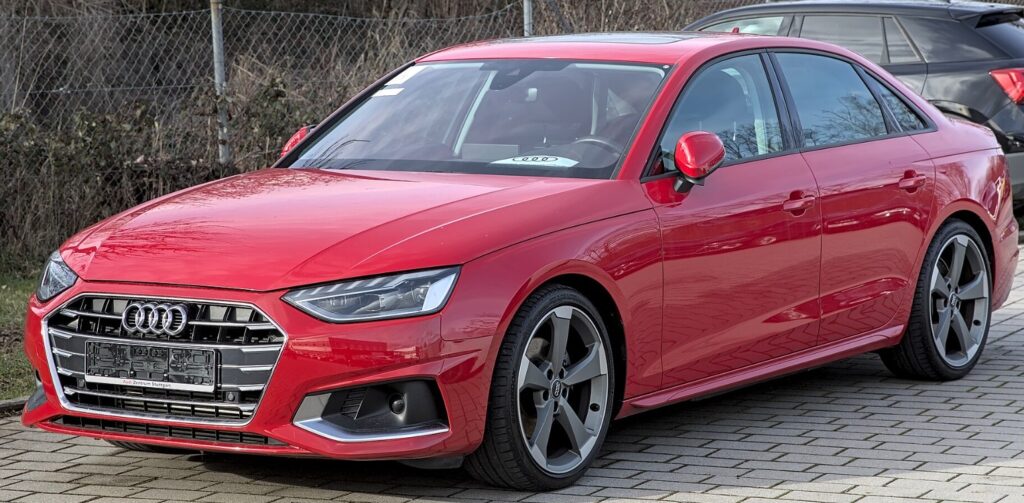
Few compact luxury cars have evolved as consistently as the Audi A4. Since its debut in the mid-1990s, the A4 has grown from a relatively simple German sports sedan into a polished, technology-heavy premium car filled with digital displays, turbocharged engines, advanced driver assistance, and Audi's famous quattro all-wheel-drive system.
Still, understanding Audi A4 generations can be confusing. We constantly see terms such as B5, B6, B7, B8, B8.5, B9, and B9.5. Then there is the newer Audi A5, which effectively continues the combustion-powered A4 lineage under a different badge.
So, how many Audi A4 generations are there, what years does each one cover, and what changed along the way?
Let's break it all down.
Content in this publication
- Audi A4 Generations at a Glance
- What Do Audi B5, B6, B7, B8, and B9 Mean?
- Before the A4: The Audi 80
- First Generation Audi A4 B5: 1994–2001
- Second Generation Audi A4 B6: 2000/2001–2005
- Third Generation Audi A4 B7: 2004/2005–2008
- Fourth Generation Audi A4 B8: 2007/2008–2015/2016
- What Is the Audi A4 B8.5?
- Fifth Generation Audi A4 B9: 2015/2016–2024
- Audi A4 B9.5 Facelift
- Audi A4 Allroad
- Audi A4 Sedan vs Avant
- Which Audi A4 Generation Is Best?
- Which Audi A4 Generation Is Best to Buy Used?
- How Audi A4 Design Changed Through the Generations
- How Audi A4 Interiors Evolved
- How Audi A4 Engines Changed Over Time
- How Quattro Shaped the Audi A4
- Audi A4 Generations Reliability
- What Happened After the Audi A4 B9?
- Why Did Audi Rename the A4 as A5?
- Audi A4 Generations Timeline Explained Simply
- Final Thoughts on Audi A4 Generations
- Frequently Asked Questions About Audi A4 Generations
Audi A4 Generations at a Glance
The Audi A4 arrived in 1994 as the replacement for the Audi 80. Across its traditional lifespan, the model developed through five principal generations.
| Generation | Approximate Years | Main Character |
|---|---|---|
| B5 | 1994–2001 | Original modern A4 |
| B6 | 2000/2001–2005 | More refined and premium |
| B7 | 2004/2005–2008 | Sharper evolution of B6 |
| B8 | 2007/2008–2015/2016 | Larger and more sophisticated |
| B9 | 2015/2016–2024 | Digital and technology-focused |
Exact model years can vary depending on country. European introductions often happened before the same generation officially reached markets such as the United States.
Audi generally recognizes the B9 as the fifth traditional A4 generation.
What Do Audi B5, B6, B7, B8, and B9 Mean?
The B numbers are generation or platform-family designations commonly used to identify different versions of Audi's midsize model.
They aren't trim levels.
A B8 is not simply a better-equipped B7, for example. It represents a newer stage in the A4's development.
Knowing the generation code is extremely useful when researching:
- engines,
- transmissions,
- maintenance,
- common problems,
- replacement parts,
- suspension components,
- interior technology,
- quattro systems,
- and used-car values.
If we know an A4 is a B8.5 rather than merely knowing it was built around 2014, we immediately understand much more about the car.
Before the A4: The Audi 80
The A4 didn't appear out of thin air.
Its direct predecessor was the Audi 80, a model with a history stretching back decades. Audi used B-series designations for different Audi 80 generations, including B1, B2, B3, and B4.
When Audi replaced the B4 Audi 80 with the B5, it also introduced the A4 name.
That transition represented more than clever marketing.
Audi was pushing deeper into premium territory and positioning itself more directly against cars such as the BMW 3 Series and Mercedes-Benz C-Class.
The A4 would eventually become one of Audi's most important global models.
First Generation Audi A4 B5: 1994–2001
The B5 is where the Audi A4 story officially begins.
Introduced in Europe during 1994, it looked noticeably more modern than the outgoing Audi 80. Styling was clean and restrained, with smooth surfaces, compact proportions, and very little unnecessary decoration.
That's part of the reason a tidy B5 still looks attractive today.
It doesn't scream for attention. It simply looks like a properly proportioned German sedan.
Audi also introduced substantial technical improvements.
The B5 used sophisticated multi-link-style front suspension engineering and helped popularize Audi's five-valve-per-cylinder engine technology.
Audi A4 B5 Engines
The B5 was offered with a wide variety of engines depending on country.
One of the most famous was the 1.8T, a turbocharged four-cylinder engine that became enormously important across the Volkswagen Group.
Other options included naturally aspirated petrol engines, V6 units, and TDI diesel engines.
For enthusiasts, the 1.8T remains especially interesting because it combines relatively modest displacement with strong tuning potential.
Quattro all-wheel drive was also widely available.
That became one of the A4's greatest distinguishing features.
While competitors often emphasized rear-wheel-drive handling, Audi offered drivers the security and traction of quattro.
What Made the B5 A4 Special?
The B5 established a formula Audi would repeat for decades:
understated styling + high-quality cabin + turbocharged engines + quattro
It also helped strengthen Audi's reputation internationally.
The A4 suddenly felt like a genuine rival to Germany's established premium sedans rather than simply an alternative.
B5 S4 and RS4
The B5 also produced two legendary performance derivatives.
The B5 S4 used a twin-turbocharged V6 in many markets and developed a reputation as a seriously tuneable sleeper.
It looked discreet.
It wasn't slow.
Then came the B5 RS4 Avant, an even more extreme wagon that helped turn fast Audi estates into enthusiast icons.
This idea—taking a practical family car and giving it ridiculous performance—would become part of Audi's identity.
Second Generation Audi A4 B6: 2000/2001–2005
The B6 Audi A4 represented a clear step upward in refinement.
Compared with the B5, it looked more substantial and luxurious. Its styling became rounder and more formal, and the interior felt increasingly expensive.
This was the period when Audi's cabin quality started becoming one of the brand's strongest weapons.
Buttons felt solid.
Dashboard materials felt premium.
Switchgear had that reassuring German click.
Even today, a well-kept B6 interior can feel surprisingly robust.
Audi A4 B6 Body Styles
Depending on market, Audi offered the B6 in several forms.
These included:
- Sedan
- Avant wagon
- Cabriolet
Both front-wheel-drive and quattro versions were available.
The Avant was particularly appealing because it combined the A4's relatively sporty road manners with genuinely useful cargo capacity.
Audi A4 B6 Engines
Engine availability varied by country, but the familiar 1.8T remained an important choice.
Larger petrol engines included V6 options, while European customers could choose from several TDI diesels.
Audi also experimented with different transmission technologies.
Depending on engine and drivetrain, buyers could encounter:
- manual transmissions,
- conventional automatics,
- and Multitronic continuously variable transmissions.
That variety matters when buying used because two identical-looking B6 A4s can provide very different driving and ownership experiences.
B6 S4 and the V8 Era
Then Audi did something wonderfully excessive.
It fitted the B6 S4 with a 4.2-liter V8.
Putting a large naturally aspirated V8 into a relatively compact luxury car produced exactly the kind of slightly irrational engineering enthusiasts love.
The S4 offered strong acceleration, a rich exhaust note, and quattro traction.
It was discreet on the outside but dramatic underneath.
Third Generation Audi A4 B7: 2004/2005–2008
The B7 is sometimes debated because it wasn't as clean-sheet a redesign as some other generations.
Mechanically, it evolved heavily from the B6.
However, enthusiasts and the market generally treat it as the third Audi A4 generation.
Think of it as the B6 after a serious makeover.
Audi introduced its increasingly prominent single-frame grille, sharpened the exterior, improved technology, and updated engine choices.
The result looked noticeably more modern.
Audi A4 B7 2.0 TFSI
One of the biggest mechanical changes was the arrival of Audi's newer 2.0 TFSI turbocharged direct-injection engine.
This powerplant helped establish the turbocharged 2.0-liter four-cylinder formula Audi would rely on for years.
Compared with the older 1.8T, the 2.0T offered stronger torque and more modern fuel-injection technology.
Several markets also received V6 petrol engines and numerous diesel options.
Audi A4 B7 Technology
Technology was becoming increasingly important during the B7 era.
Features such as:
- navigation,
- Bluetooth,
- upgraded audio,
- parking assistance,
- and increasingly sophisticated electronic systems
began moving the A4 deeper into modern luxury-car territory.
These systems may look dated today, but at the time they helped differentiate premium cars from ordinary family sedans.
B7 RS4: A Modern Classic
The B7 RS4 remains one of Audi's most celebrated performance cars.
It used a high-revving naturally aspirated 4.2-liter V8 producing more than 400 horsepower.
Add quattro and a manual gearbox, and we get something that feels increasingly special in today's world of turbocharged, electrified, automatic performance cars.
Many enthusiasts consider the B7 RS4 one of the high points of analog Audi performance.
Fourth Generation Audi A4 B8: 2007/2008–2015/2016
The B8 Audi A4 represented a much larger leap than the B7.
Audi moved the model onto its Modular Longitudinal Platform architecture.
This changed the proportions considerably.
The front axle moved farther forward, the wheelbase increased, and the overall car became larger and more mature.
The result?
The B8 looked lower, wider, and more sophisticated.
It also provided more cabin space.
Earlier A4 generations could feel genuinely compact.
The B8 felt closer to a full luxury sedan.
Audi improved:
- sound insulation,
- interior space,
- seating comfort,
- dashboard design,
- infotainment,
- and overall refinement.
The car became particularly impressive on long highway journeys.
Rather than behaving like a small sporty sedan trying to impress us constantly, the B8 felt calm and confident.
Audi A4 B8 Engines
The 2.0 TFSI became the core petrol engine in many markets.
Diesel versions remained extremely important in Europe.
Some markets also received V6 engines earlier in the generation.
You may be interested in reading Ford Edge Years to Avoid: The Complete Used-Buyer Guide
Audi continually updated engine efficiency, emissions technology, and power outputs throughout the B8's unusually long production period.
Audi A4 B8 Transmissions
Transmission availability became increasingly complicated.
Depending on market, engine, and drivetrain, B8 models could use:
- manual transmissions,
- Multitronic CVTs,
- S tronic dual-clutch transmissions,
- and Tiptronic conventional automatics.
Used buyers should always identify the exact transmission fitted to a specific vehicle.
Assuming every 2.0T A4 uses the same gearbox can lead to unpleasant surprises.
What Is the Audi A4 B8.5?
The term B8.5 refers to the facelifted B8.
It isn't usually considered a completely separate generation.
Audi revised the exterior styling, including the lights, bumpers, grille, and several smaller details.
The cabin and technology also received updates.
B8.5 models generally look sharper and slightly more contemporary than early B8 examples.
For many used buyers, the B8.5 represents a compelling compromise between traditional Audi design and more modern features.
B8 S4 and Supercharged V6 Power
The B8 S4 marked a major powertrain change.
Audi replaced the previous V8 with a supercharged 3.0-liter V6.
Some enthusiasts initially saw that as a downgrade.
Then they discovered how effective the engine was.
The supercharged V6 produced excellent low-end torque and became popular with tuners because considerable additional performance could be unlocked through software and supporting modifications.
The B8 and B8.5 S4 remain extremely popular among Audi enthusiasts.
Fifth Generation Audi A4 B9: 2015/2016–2024
At first glance, the B9 can look like a heavily updated B8.
Look closer and the differences become much bigger.
Audi substantially redesigned the vehicle while preserving the familiar A4 silhouette.
The B9 placed much greater emphasis on:
- lightweight construction,
- efficiency,
- digital technology,
- connectivity,
- safety systems,
- and aerodynamic refinement.
This was the A4 fully entering the digital age.
Audi A4 B9 Interior
The interior was one of the biggest improvements.
Audi introduced its Virtual Cockpit, allowing drivers to display navigation, vehicle information, and other data directly on a configurable digital instrument cluster.
The dashboard also became cleaner and more horizontal.
Materials remained strong, but the cabin felt less traditional than previous generations.
This was the point where the A4 began transitioning from a mechanical luxury sedan into a digital one.
Audi A4 B9 Engines
Turbocharged four-cylinder engines dominated mainstream petrol versions.
Diesel models remained available in several international markets.
Audi improved fuel economy, emissions, torque delivery, and performance while increasingly combining engines with sophisticated automatic transmissions.
The B9 also emphasized refinement over aggressive sportiness.
It was quiet.
Stable.
Comfortable.
And remarkably composed on highways.
Audi A4 B9 Driving Character
The B9 isn't necessarily the most playful sports sedan in its class.
But that's not really the point.
Audi focused on effortless speed, stability, interior refinement, and all-weather confidence.
A quattro-equipped B9 can feel almost unflappable in poor weather.
Think of it like a well-made winter coat.
It may not be exciting every second, but when conditions become unpleasant, you're very happy to have it.
Audi A4 B9.5 Facelift
Audi introduced a major facelift during the B9's life cycle.
Enthusiasts typically call this version the B9.5.
The updates were significant.
Audi changed:
- headlights,
- taillights,
- bumpers,
- grille,
- exterior sheet metal,
- infotainment,
- and several powertrain technologies.
The result looked considerably more aggressive.
B9 vs B9.5
The easiest differences to spot are visual.
The original B9 looks smoother and somewhat more restrained.
The B9.5 generally features:
- sharper headlights,
- stronger body creases,
- wider-looking grille treatment,
- more aggressive bumpers,
- updated infotainment,
- and newer mild-hybrid systems on many versions.
Inside, Audi moved toward a touchscreen-based MMI interface.
That change divided enthusiasts.
Some preferred the newer technology.
Others missed the physical rotary controller used in earlier cars.
Audi A4 Allroad
The A4 lineup wasn't limited to regular sedans and wagons.
Audi also offered the A4 allroad, essentially a more adventurous version of the Avant.
It combined:
- quattro all-wheel drive,
- increased ride height,
- protective body cladding,
- wagon practicality,
- and car-like road manners.
The allroad sits somewhere between a wagon and crossover.
For drivers who want cargo space without the higher seating position of an SUV, it can be an excellent compromise.
Audi A4 Sedan vs Avant
Across multiple generations, buyers could choose between sedan and Avant body styles in many markets.
The sedan offers the traditional executive-car shape.
The Avant sacrifices very little in driving behavior while adding significantly better cargo flexibility.
That's why Audi wagons have such devoted fans.
We essentially get:
sports sedan manners + wagon practicality + quattro traction
It's difficult not to appreciate that formula.
Unfortunately, Audi hasn't offered every Avant generation in every market.
Availability is especially limited in North America compared with Europe.
Which Audi A4 Generation Is Best?
There isn't one answer for everybody.
The best generation depends on what we value.
Best Audi A4 for Classic Character
The B5 makes the strongest case.
It's compact, understated, mechanical, and increasingly nostalgic.
A clean, original B5 can feel refreshingly simple compared with modern luxury cars.
Finding good examples is becoming harder, though.
Many have been modified or poorly maintained.
Best Audi A4 for Old-School Luxury
The B6 is appealing if we enjoy solid interiors, traditional styling, and relatively simple cabin technology.
It feels substantial without being enormous.
The B6 S4 also offers something modern A4s never will: naturally aspirated V8 character.
Best Audi A4 for Enthusiasts
The answer depends heavily on whether we're discussing standard A4 models or performance derivatives.
The B7 deserves enormous respect because of the RS4.
Meanwhile, the B8 and B8.5 generations are very popular among owners who enjoy tuning.
For regular A4 buyers, a well-maintained facelifted B8 can provide an excellent balance of price, comfort, performance, and technology.
Best Audi A4 for Technology
The B9 and B9.5 clearly win.
They offer more modern:
- infotainment,
- digital instrumentation,
- smartphone integration,
- safety systems,
- lighting technology,
- driver assistance,
- and efficiency.
A well-equipped B9 still feels contemporary today.
Which Audi A4 Generation Is Best to Buy Used?
Condition matters more than generation.
This sounds obvious, but it's especially important with used German luxury cars.
A meticulously maintained older A4 can be a much better purchase than a neglected newer example.
Before buying, we should check:
- complete service history,
- oil-change intervals,
- cooling-system condition,
- transmission servicing,
- suspension wear,
- electronic faults,
- timing-system maintenance,
- accident history,
- modifications,
- and warning lights.
Different engines also carry different maintenance concerns.
Research the exact engine code whenever possible.
Don't simply search for "Audi A4 reliability."
Search for the specific generation, engine, transmission, and model year.
How Audi A4 Design Changed Through the Generations
Looking at every Audi A4 generation together reveals an interesting progression.
The B5 is smooth and understated.
The B6 becomes more rounded and formal.
You may be interested in readingFord Edge Years to Avoid: The Complete Used-Buyer GuideYou may be interested in reading
Ford Edge Competitors: The Best Alternatives to Ford’s Midsize SUVThe B7 introduces Audi's prominent single-frame grille.
The B8 becomes wider, lower, and more athletic.
The B9 sharpens everything again.
The B9.5 turns the aggression up another notch.
Yet the A4 rarely became visually excessive.
Audi generally preferred evolutionary design.
That's why an old A4 usually still looks recognizably related to a new one.
How Audi A4 Interiors Evolved
The interior progression is even more dramatic.
Early B5 models relied on traditional analog gauges, straightforward switches, and small radio displays.
B6 and B7 models improved material quality and introduced increasingly advanced navigation systems.
The B8 brought MMI infotainment deeper into the experience.
Then the B9 introduced Virtual Cockpit and larger digital displays.
By the B9.5 era, touchscreen operation had become central.
In around three decades, the A4 went from buttons and cassette-era thinking to configurable displays and connected digital services.
That's automotive evolution in fast-forward.
How Audi A4 Engines Changed Over Time
Audi's engines tell another interesting story.
Older generations offered a huge variety of configurations.
Across different A4 generations, buyers could find:
- naturally aspirated four-cylinder engines,
- turbocharged four-cylinder engines,
- V6 engines,
- TDI diesels,
- turbocharged diesels,
- and numerous performance derivatives.
Meanwhile, S4 and RS4 models experimented with:
- twin-turbo V6s,
- naturally aspirated V8s,
- supercharged V6s,
- and turbocharged V6s.
Mainstream versions gradually converged around smaller turbocharged engines.
That's a broader industry trend.
Displacement shrank.
Turbocharging increased.
Efficiency improved.
Electronics became more important.
How Quattro Shaped the Audi A4
Quattro deserves its own discussion because it helped distinguish the A4 from its competitors.
BMW traditionally emphasized rear-wheel drive.
Mercedes-Benz did the same for much of its history.
Audi became strongly associated with all-wheel drive.
Not every A4 uses quattro, of course.
Many front-wheel-drive versions exist.
But quattro became central to Audi's image.
It gave the A4 excellent traction in rain, snow, and slippery conditions while also helping performance versions put substantial power onto the road.
For buyers living in challenging climates, that alone made the A4 unusually appealing.
Audi A4 Generations Reliability
There is no single answer to whether Audi A4s are reliable.
Reliability varies considerably by:
- generation,
- engine,
- transmission,
- model year,
- maintenance history,
- mileage,
- and previous ownership.
Older A4s may have simpler electronics but face age-related issues.
Newer versions benefit from improved technology but have more complicated electronic systems.
Certain engines across different generations also have known weak points.
That's why service history should always be taken seriously.
An Audi maintained according to schedule can feel fantastic at high mileage.
One that survived years of neglected oil changes can become a financial trap.
What Happened After the Audi A4 B9?
This is where the A4 timeline becomes unusual.
Audi introduced the next generation of its midsize combustion-powered model under the Audi A5 name rather than calling it the new A4.
The newer car uses Audi's Premium Platform Combustion architecture and effectively succeeds the previous A4 sedan and Avant family.
In enthusiast terminology, the new generation is sometimes associated with the B10 designation.
So, if we're following the engineering family tree, the progression looks roughly like this:
Audi 80 B4 → A4 B5 → A4 B6 → A4 B7 → A4 B8 → A4 B9 → A5 B10-era successor
The badge changed.
The lineage didn't suddenly disappear.
Why Did Audi Rename the A4 as A5?
Audi originally planned to separate combustion and electric vehicles through its numbering strategy.
Odd-numbered names were intended for combustion-powered models, while even numbers would identify electric vehicles.
Under that plan, the traditional combustion-powered A4 successor became the A5.
Audi later revised that naming strategy.
However, already launched models weren't automatically renamed again.
That means the A5 name remains attached to the successor even though Audi changed the broader philosophy behind the naming system.
German engineering is sometimes easier to understand than German product naming.
Audi A4 Generations Timeline Explained Simply
If all the codes are starting to look like alphabet soup, remember this simplified timeline:
B5: the original A4.
B6: more luxurious and refined.
B7: sharper styling and newer engines.
B8: larger platform and greater refinement.
B8.5: facelifted B8.
B9: digital technology and lighter construction.
B9.5: heavily refreshed B9.
B10-era A5: successor to the combustion-powered A4 lineage.
That is the Audi A4 family tree in its simplest form.
Final Thoughts on Audi A4 Generations
The Audi A4's evolution tells us almost as much about the development of the modern luxury car as it does about Audi itself.
The B5 established the identity.
The B6 moved the model further upscale.
The B7 added sharper styling and memorable performance versions.
The B8 transformed the A4 into a larger, more sophisticated executive car.
The B9 embraced digital technology, efficiency, connectivity, and advanced safety systems.
Yet something remained remarkably consistent.
Audi rarely tried to make the A4 the loudest car in the room.
Its strength usually came from balance.
A comfortable cabin.
Solid highway manners.
Strong engines.
Quattro availability.
Clean design.
Quality materials.
It's like a dark tailored suit that keeps getting updated without losing its identity.
For used-car shoppers, however, generation alone shouldn't decide the purchase.
A beautifully maintained B8 may be a much wiser buy than a neglected B9.
Always investigate the exact engine, gearbox, service history, and condition before choosing.
And for enthusiasts?
That's where things get interesting.
Would we rather have the compact simplicity of a B5, the V8 drama of the B6 and B7 era, the polished balance of a B8.5, or the technology of a B9?
There isn't one universally correct answer.
That's part of what makes exploring the different Audi A4 generations so enjoyable.
Frequently Asked Questions About Audi A4 Generations
How many Audi A4 generations are there?
There are five traditional Audi A4 generations: B5, B6, B7, B8, and B9. Facelifted B8.5 and B9.5 models are generally considered updates rather than separate full generations.
What years are the Audi A4 generations?
Broadly, the B5 covers 1994–2001, B6 approximately 2000/2001–2005, B7 around 2004/2005–2008, B8 approximately 2007/2008–2015/2016, and B9 from roughly 2015/2016 through 2024. Exact model years vary between markets.
What is the difference between Audi B8 and B8.5?
The B8.5 is the facelifted version of the B8. It received updated headlights, bumpers, grille styling, interior improvements, and mechanical refinements while retaining the same fundamental platform.
What is the difference between Audi B9 and B9.5?
The B9.5 is a major facelift of the B9. It features revised bodywork, sharper lighting, updated infotainment, touchscreen controls, and mild-hybrid technology on many configurations.
You may be interested in readingFord Edge Years to Avoid: The Complete Used-Buyer GuideYou may be interested in reading
Ford Edge Competitors: The Best Alternatives to Ford’s Midsize SUVYou may be interested in reading
Ford Edge Trim Levels: SE, SEL, ST-Line, Titanium and ST ExplainedDid Audi discontinue the A4?
Audi effectively replaced the combustion-powered A4 with the newer Audi A5 Sedan and A5 Avant. The traditional A4 name therefore ends with the B9-era model in many markets, although its engineering lineage continues through the newer A5 family.
If you want to know other articles similar to Audi A4 Generations: Complete Guide From B5 to B9 you can visit the category Models.
Haval Jolion vs Omoda C5: Which SUV Is Better?
Haval Jolion vs Chery Tiggo 4 Pro: Full Comparison
Haval Jolion vs H6: Which SUV Is Better in 2026?
Haval Jolion vs Toyota Corolla Cross: Which SUV Is Better?
Haval Jolion vs Jaecoo J5: Which SUV Is Better?
Volkswagen T-Cross vs Volkswagen T-Roc: Which Is Better?
Leave a Reply
More content of your interest