
Ford Edge Gas Tank Size: Capacity, Range, and What Owners Should Know

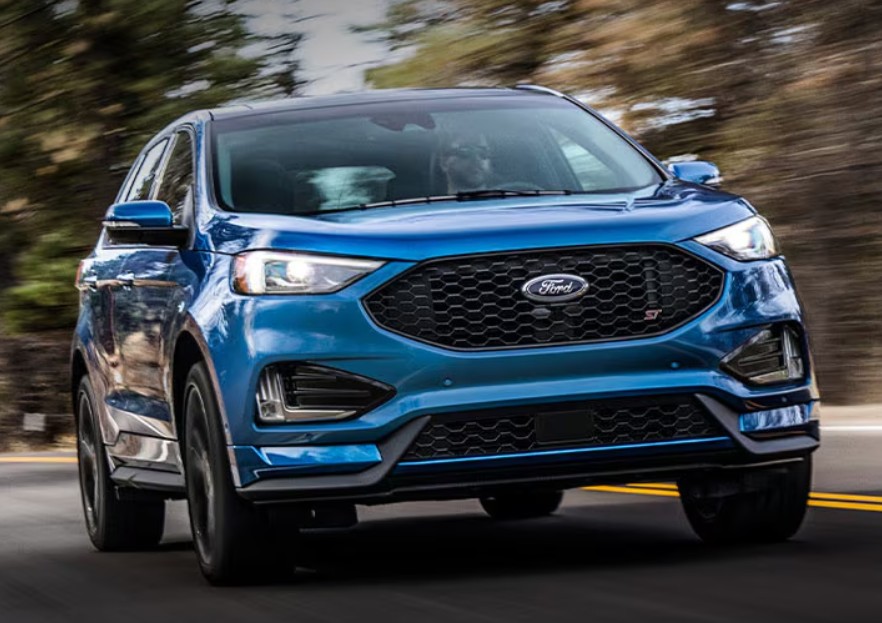
If you're trying to figure out the Ford Edge gas tank size, the quick answer is that most modern Ford Edge models hold roughly 18.4 to 18.5 gallons of fuel, depending mainly on the drivetrain and model year.
That sounds simple enough, right? Mostly, yes. But once we start comparing front-wheel-drive models with all-wheel-drive versions, older generations, fuel economy, and realistic driving range, the picture becomes a little more interesting.
Ford officially listed the 2019 Edge with an 18.4-gallon tank for front-wheel-drive models and an 18.5-gallon tank for AWD models. Ford also used the same 18.4/18.5-gallon arrangement for the 2018 model year.
Meanwhile, Ford documentation for some other markets lists the Edge AWD fuel tank at approximately 70 liters, which converts to about 18.5 U.S. gallons.
So, for most drivers shopping for or already owning a relatively recent Ford Edge, thinking of the tank as an approximately 18.5-gallon reservoir is a practical starting point.
Let's dig deeper into what that actually means at the gas station and on the road.
Content in this publication
- How Big Is the Ford Edge Gas Tank?
- Ford Edge Gas Tank Size in Liters
- Ford Edge Gas Tank Size by Year
- Does the Ford Edge ST Have a Bigger Gas Tank?
- How Far Can a Ford Edge Go on a Full Tank?
- Why Your Ford Edge May Not Travel 500 Miles Per Tank
- Can You Actually Put 18.5 Gallons Into a Ford Edge?
- When Does the Ford Edge Low-Fuel Light Come On?
- How Much Does It Cost to Fill a Ford Edge?
- What Fuel Does the Ford Edge Use?
- Does AWD Change the Ford Edge Gas Tank Size?
- Does a Bigger Fuel Tank Mean Better Range?
- What Affects Ford Edge Driving Range?
- How to Get More Miles From a Ford Edge Tank
- Ford Edge Tank Size Compared With Other SUVs
- Why Does the Gas Pump Stop Before the Tank Seems Full?
- Why Doesn't the Fuel Gauge Immediately Show Full?
- Is an 18.5-Gallon Tank Good for a Midsize SUV?
- Should You Fill Your Ford Edge at Half a Tank?
- Can Ford Edge Tank Capacity Change by Country?
- How to Find Your Exact Ford Edge Fuel Tank Capacity
- How Much Fuel Is Left When the Gauge Says Half?
- What Is the Best Refueling Strategy for a Ford Edge?
- Ford Edge Gas Tank Size: Practical Takeaway
- Conclusion
- Frequently Asked Questions
How Big Is the Ford Edge Gas Tank?
The typical Ford Edge fuel capacity is:
- 18.4 gallons on certain front-wheel-drive configurations
- 18.5 gallons on many all-wheel-drive configurations
- Approximately 70 liters on models sold in markets using metric specifications
Ford's official documentation for the 2019 Edge confirms an 18.4-gallon capacity for FWD models and an 18.5-gallon capacity for AWD versions.
That tiny 0.1-gallon difference isn't going to transform your road-trip strategy. We're talking about less than half a liter. Still, it's useful when we're looking for exact specifications rather than rounding everything to "about 18 gallons."
Ford Edge Fuel Tank Capacity at a Glance
For several commonly encountered Edge models, the numbers look like this:
| Ford Edge configuration | Approximate tank size |
|---|---|
| Ford Edge FWD | 18.4 gallons |
| Ford Edge AWD | 18.5 gallons |
| Ford Edge ST AWD | About 18.5 gallons |
| Metric-market Edge AWD | About 70 liters |
| 70 liters converted | About 18.5 U.S. gallons |
The drivetrain matters because the packaging underneath an SUV changes when Ford adds an AWD system. Sometimes manufacturers compensate by slightly reshaping the tank, which helps explain tiny capacity differences.
Ford Edge Gas Tank Size in Liters
If we're more comfortable thinking in liters, the math becomes easy.
A tank around 18.5 U.S. gallons works out to roughly 70 liters.
Ford has officially listed a 70-liter fuel tank for AWD Edge models in certain international-market documentation.
So when somebody tells us that an Edge has a 70-liter tank while another source says 18.5 gallons, they're essentially describing the same capacity using different units.
18.4 Gallons in Liters
An 18.4-gallon tank is approximately:
69.7 liters
18.5 Gallons in Liters
An 18.5-gallon tank is approximately:
70.0 liters
That explains why international specifications will often simply state 70 L.
Ford Edge Gas Tank Size by Year
The Edge has been around long enough that we shouldn't assume every model year is identical.
Ford introduced the Edge in North America for the 2007 model year, and several generations and powertrain changes followed. Fuel-tank capacity has therefore varied somewhat depending on year, configuration, and market.
For later second-generation models, however, the approximately 18.5-gallon figure became especially common.
2018 Ford Edge Gas Tank Size
Ford's official 2018 specifications list:
FWD: 18.4 gallons
AWD: 18.5 gallons
These figures appear directly in Ford's Edge specification guide.
So if you own a 2018 Edge SEL, Titanium, or Sport, don't automatically assume every version holds exactly the same amount. Check whether yours is FWD or AWD.
2019 Ford Edge Gas Tank Size
The redesigned 2019 Edge followed essentially the same formula.
Ford lists:
18.4 gallons for FWD
18.5 gallons for AWD
That applies to the mainstream 2.0-liter EcoBoost configurations, while Ford's specifications also show the same basic fuel-capacity arrangement around the performance-oriented Edge ST.
Why 2019 Matters
The 2019 model year was significant because Ford refreshed the Edge substantially and introduced the Edge ST as the performance flagship.
Yet despite the more powerful ST's twin-turbocharged 2.7-liter V6, Ford didn't suddenly bolt on an enormous fuel tank.
That's worth remembering: engine power and tank capacity aren't necessarily linked.
A thirstier engine usually gives us shorter range rather than a proportionally larger tank.
Does the Ford Edge ST Have a Bigger Gas Tank?
Not dramatically.
We might expect Ford's sporty Edge ST to have a huge tank because its 2.7-liter EcoBoost V6 produces considerably more power than the standard engine. But vehicle packaging doesn't work like that.
Ford's 2019 specifications list the Edge ST with AWD, and the general Edge fuel-capacity specification remains around 18.5 gallons for AWD configurations.
In other words, the ST's extra performance comes primarily at the expense of fuel consumption and therefore driving range—not through a substantially larger fuel reservoir.
Standard Edge vs Edge ST Fuel Range
Imagine two people leaving the same gas station.
One drives a regular Edge gently along the highway. The other drives an ST and enjoys that turbocharged V6 every time the road opens up.
Both may start with roughly the same amount of gasoline.
The second driver will probably return to a gas pump sooner.
The tank isn't the main difference. Consumption is.
How Far Can a Ford Edge Go on a Full Tank?
This is where fuel-capacity numbers become useful rather than merely technical.
Driving range roughly follows:
Fuel tank capacity × fuel economy = theoretical range
Suppose our Edge holds 18.5 gallons and averages 25 mpg.
18.5 × 25 = approximately 462 miles
Of course, we're not realistically going to use every last drop of gasoline. Driving conditions also rarely match laboratory fuel-economy figures perfectly.
Still, the calculation gives us a useful benchmark.
Ford Edge Highway Range
The 2019 2.0-liter EcoBoost Edge was rated by Ford at up to 29 mpg highway with FWD, while AWD versions were listed at up to 28 mpg highway. Ford listed the Edge ST at 26 mpg highway in its published specifications.
If we combine those figures with tank capacity, theoretical highway range looks roughly like this:
| Configuration | Highway MPG | Tank | Theoretical highway range |
| Edge FWD | 29 mpg | 18.4 gal | ~534 miles |
| Edge AWD | 28 mpg | 18.5 gal | ~518 miles |
| Edge ST AWD | 26 mpg | 18.5 gal | ~481 miles |
Those aren't promises. They're simple capacity-times-economy calculations.
Real-world range can easily fall below them.
Why Your Ford Edge May Not Travel 500 Miles Per Tank
This question trips people up.
They read that their SUV has an 18.5-gallon tank, see a highway fuel-economy figure near 28 mpg, and calculate more than 500 miles.
Then the dashboard predicts 390 miles after filling up.
Is something wrong?
Usually not.
The distance-to-empty computer isn't simply multiplying the advertised MPG figure by the tank's total capacity.
Your Driving History Matters
The Edge estimates remaining range based partly on recent fuel consumption.
If we've spent a week making short city journeys, sitting in traffic, warming the engine, and accelerating aggressively, the predicted range may be substantially lower.
After a long highway trip, it may climb again.
Think of the computer like a cautious travel planner. It looks backward before guessing how far we'll go forward.
Can You Actually Put 18.5 Gallons Into a Ford Edge?
Usually, you shouldn't expect to.
When the fuel gauge reaches empty or the low-fuel warning appears, gasoline normally remains in the tank.
Manufacturers deliberately build a reserve margin into the system.
So an owner with an 18.5-gallon Edge might pull into a station almost empty and refill only 16 or 17 gallons.
That does not necessarily mean the tank is smaller than advertised.
Usable Fuel vs Total Fuel Capacity
This distinction matters.
Total tank capacity refers to how much fuel the tank is designed to contain.
Usable fuel is what we can practically consume before the vehicle reaches an extremely low level.
Some fuel remains around the bottom of the tank and fuel-pump assembly.
Never Try to Verify Capacity by Running the Tank Dry
Running out of gas isn't a clever capacity test.
A modern fuel pump relies partly on fuel for cooling and lubrication. Repeatedly driving until the tank is completely empty can put unnecessary stress on the system.
Besides, there's little glory in discovering your Edge's exact usable capacity while standing beside the highway holding a red gas can.
When Does the Ford Edge Low-Fuel Light Come On?
The exact remaining quantity can vary by vehicle behavior, calibration, slope, and model year.
Rather than treating the warning light as a precise measuring instrument, we should treat it as exactly what Ford intended:
a warning that it's time to refuel.
The distance-to-empty display usually gives us more context, but even that figure remains an estimate.
Don't Treat “0 Miles to Empty” as a Challenge
Some vehicles continue driving after the computer reaches zero.
That doesn't mean we should test how far.
Traffic, hills, weather, or a closed gas station can turn a harmless experiment into a roadside problem surprisingly quickly.
When the Edge starts asking for fuel, give it fuel.
Simple.
How Much Does It Cost to Fill a Ford Edge?
Once we know the Ford Edge gas tank size, calculating a fill-up becomes straightforward.
Use:
Tank capacity × price per gallon
If gasoline costs $3.50 per gallon:
18.5 × $3.50 = $64.75
At $4.00 per gallon:
18.5 × $4.00 = $74.00
At $4.50 per gallon:
18.5 × $4.50 = $83.25
Those numbers assume we are filling a completely empty tank, which rarely happens.
Typical Fill-Ups Are Smaller
Suppose we refuel with approximately three gallons remaining.
We might purchase around 15.5 gallons.
At $3.50 per gallon, that's:
15.5 × $3.50 = $54.25
That figure often resembles actual ownership more closely than multiplying the full tank size by gasoline prices.
What Fuel Does the Ford Edge Use?
Fuel type matters almost as much as fuel capacity.
For example, Ford's 2019 technical specifications list 87-octane minimum for both the 2.0-liter EcoBoost and 2.7-liter EcoBoost engines, while higher octane was recommended for maximum performance. Ford notes that published maximum power figures were achieved using 93-octane fuel.
That distinction can save us money.
Premium fuel may improve performance under certain circumstances, but owners should follow the requirements and recommendations listed for their particular model year and engine rather than assuming every turbocharged engine requires premium gasoline.
Check Your Owner's Manual
Fuel recommendations can change by model year and market.
Always confirm:
- Minimum required octane
- Recommended octane
- Ethanol compatibility
- Fuel-quality recommendations
- Any special requirements for your engine
The fuel-door label may also provide useful information.
Does AWD Change the Ford Edge Gas Tank Size?
On some Edge model years, yes—but barely.
The clearest example is the 2018 and 2019 models.
Ford published:
FWD: 18.4 gallons
AWD: 18.5 gallons
That's only a 0.1-gallon difference.
From an owner's perspective, it's essentially invisible.
At 25 mpg, that additional tenth of a gallon represents only about 2.5 miles of theoretical range.
So don't choose FWD or AWD because of tank capacity.
Choose based on traction requirements, fuel efficiency, climate, driving conditions, and personal preference.
Does a Bigger Fuel Tank Mean Better Range?
Only partly.
Imagine two buckets.
One is slightly larger, but it has a faster leak.
Which lasts longer?
That's roughly how vehicle range works.
A large tank helps, but fuel consumption determines how quickly we empty it.
The Ford Edge ST demonstrates this nicely. It can have roughly similar fuel capacity to a regular Edge, but its more powerful engine can consume gasoline faster.
Fuel Economy Matters More Than 0.1 Gallon of Capacity
Consider:
18.4 gallons × 29 mpg = 533.6 miles
18.5 gallons × 26 mpg = 481 miles
The tank sizes are nearly identical.
Yet theoretical highway range differs by more than 50 miles.
That's why we'd pay far more attention to MPG than to the tiny difference between an 18.4- and 18.5-gallon tank.
What Affects Ford Edge Driving Range?
Real-world fuel range can swing surprisingly far in either direction.
A quiet highway trip on a mild day might make the Edge feel like a long-legged road-trip companion.
Dense winter traffic can make the fuel gauge move like a countdown timer.
Several factors matter:
- Driving speed
- Acceleration habits
- City versus highway driving
- AWD use and drivetrain losses
- Tire pressure
- Tire type
- Outside temperature
- Idling
- Vehicle load
- Roof boxes or roof racks
- Headwinds
- Terrain
- Engine condition
- Fuel quality
- Towing
Let's look at a few of the big ones.
Highway Speed
Aerodynamic drag rises dramatically as speed increases.
That means the difference between cruising calmly and rushing down an interstate isn't just a few minutes—it can show up directly on the fuel gauge.
The Edge isn't a tiny hatchback slicing through the air like a knife. It's a midsize crossover with a large frontal area.
Speed matters.
Cold Weather
Winter can punish fuel economy.
Engines take longer to reach operating temperature, winter gasoline blends can behave differently, tire pressures drop, heaters and defrosters work harder, and drivers may idle the vehicle before moving.
Every little loss takes a sip from the tank.
Together, they can become a gulp.
Short Trips
Short-distance driving is another fuel-economy killer.
If we repeatedly drive only two or three miles, the engine spends much of its operating time warming up.
A 20-mile steady highway commute often produces much better MPG than ten separate two-mile errands.
How to Get More Miles From a Ford Edge Tank
We don't need extreme hypermiling techniques.
A few ordinary habits can stretch the Edge's range meaningfully.
Keep Tire Pressure Correct
Underinflated tires increase rolling resistance.
Think of riding a bicycle with soft tires. Suddenly, every pedal stroke feels heavier.
Cars experience the same basic phenomenon.
Check pressures when the tires are cold and use Ford's recommended figures from the driver's-door placard.
Accelerate Smoothly
Turbocharged engines can provide impressive torque, which makes aggressive acceleration tempting.
But every heavy throttle application asks the engine for more fuel.
Smooth doesn't have to mean painfully slow.
It simply means avoiding unnecessary bursts of acceleration followed by braking.
Remove Unnecessary Roof Accessories
A roof cargo box is fantastic during vacation.
Driving around with an empty one for six months?
Not so much.
Roof-mounted equipment disrupts airflow and can increase fuel consumption, especially at highway speeds.
Reduce Unnecessary Weight
A few small items won't matter.
But constantly hauling hundreds of pounds of tools, gear, or unused cargo eventually adds to the engine's workload.
We don't need to turn our Edge into an empty race car.
Just avoid using the cargo area as permanent storage.
Ford Edge Tank Size Compared With Other SUVs
An approximately 18.5-gallon tank fits comfortably within the midsize crossover world.
Tank capacity alone shouldn't determine which SUV we buy, though.
Competitors may pair smaller tanks with better fuel economy, while larger vehicles may carry more fuel but burn it more quickly.
That's why comparing range is usually more useful than comparing gallons.
What Should We Compare Instead?
When evaluating the Edge against another SUV, consider:
Tank size + MPG + fuel price + annual mileage
That tells us far more about ownership costs than tank capacity by itself.
For example, a vehicle with a 17-gallon tank that averages 30 mpg could travel farther than an SUV with a 20-gallon tank averaging 22 mpg.
The fuel tank is merely the pantry.
Fuel economy tells us how hungry the engine is.
Why Does the Gas Pump Stop Before the Tank Seems Full?
Sometimes Edge owners report the fuel nozzle clicking off early.
One premature click isn't necessarily a vehicle problem.
Gas-station nozzles automatically shut off when their sensing mechanism detects fuel or vapor conditions around the filler neck.
The angle of the nozzle, pump flow rate, vapor behavior, and even the particular gas pump can affect when it clicks.
Try a Different Pump First
If it happens once, don't panic.
Try:
- Reinserting the nozzle properly.
- Pumping at a slightly slower setting.
- Trying another pump.
- Trying another gas station.
If the problem happens repeatedly and you can only add a few gallons despite the gauge showing near empty, then inspection may be warranted.
Don't Keep Topping Off the Tank
Once the nozzle automatically stops during a normal fill, resist repeatedly squeezing in extra gasoline.
Overfilling can interfere with the vehicle's evaporative-emissions system.
We're trying to fill a tank, not pack a suitcase until the zipper breaks.
Why Doesn't the Fuel Gauge Immediately Show Full?
Electronic fuel gauges aren't laboratory instruments.
The sender inside the tank measures fuel level and communicates that information to the vehicle's electronics.
Parking on a steep slope, vehicle movement, calibration, and fuel sloshing can affect readings.
After filling, the gauge should normally register appropriately, but tiny variations aren't unusual.
If it consistently reads significantly below full after a normal fill-up, that's a different story.
Possible causes may include:
- Fuel-level sending unit problems
- Wiring issues
- Instrument-cluster problems
- Tank deformation or damage
- A filling-system issue
Persistent inaccurate readings deserve diagnosis.
Is an 18.5-Gallon Tank Good for a Midsize SUV?
Yes.
It provides a useful balance.
A dramatically larger tank would extend potential range but would also add packaging requirements and extra weight when full.
Gasoline weighs roughly six pounds per U.S. gallon, so an 18.5-gallon tank can carry well over 100 pounds of fuel when filled.
Manufacturers have to juggle range, weight, interior space, crash protection, emissions systems, AWD components, exhaust routing, and manufacturing cost.
An SUV's fuel tank is basically a three-dimensional puzzle piece squeezed underneath everything else.
The Edge's approximately 18.5-gallon capacity is therefore neither unusually tiny nor absurdly large.
It's practical.
Should You Fill Your Ford Edge at Half a Tank?
You don't have to.
Some drivers prefer filling at half a tank. Others wait until the warning appears.
For everyday ownership, keeping the tank comfortably above empty is sensible—particularly if we regularly travel through rural areas, face severe weather, or encounter unpredictable traffic.
When Keeping More Fuel Makes Sense
Consider refueling earlier when:
- Taking a long road trip
- Driving through remote regions
- Expecting snowstorms
- Traveling late at night
- Towing
- Crossing areas with limited fuel stations
- Preparing for severe weather
- Driving in extreme cold
The extra few minutes at the station can buy useful peace of mind.
Can Ford Edge Tank Capacity Change by Country?
Potentially, yes.
Automakers sometimes sell vehicles with different engines, emissions equipment, drivetrain layouts, or hardware depending on market.
That means we should be cautious about assuming a U.S.-market specification automatically applies everywhere.
Ford documentation for Central America, for example, lists an AWD Edge fuel-tank capacity of 70 liters, consistent with roughly 18.5 U.S. gallons.
European-market Edge specifications have also been published using liters rather than gallons, reflecting different engines and market configurations.
Whenever exact capacity matters, the owner's manual for the specific VIN and market remains the safest source.
How to Find Your Exact Ford Edge Fuel Tank Capacity
If we're unsure of our exact model configuration, there are several good ways to verify it.
Check the Owner's Manual
Search the capacities and specifications section.
Identify Your Drivetrain
Determine whether the vehicle is:
- Front-wheel drive
- All-wheel drive
That distinction matters on model years where Ford specifies 18.4 gallons for FWD and 18.5 gallons for AWD.
Confirm the Model Year
Don't rely on a specification from a different Edge generation.
A 2008 Edge and a 2022 Edge shouldn't automatically be assumed to share identical hardware.
Use the VIN
A Ford dealer or reliable VIN lookup can help identify the exact drivetrain, engine, model year, and factory configuration.
That's especially helpful when buying used.
How Much Fuel Is Left When the Gauge Says Half?
Here's another surprisingly tricky question.
With an 18.5-gallon tank, we'd logically assume half means:
9.25 gallons remaining.
Conceptually, yes.
But dashboard fuel gauges aren't always perfectly linear.
Halfway down the gauge doesn't guarantee exactly half the physical fuel remains.
Tank shape matters.
Many automotive tanks have unusual contours designed to fit around suspension components, exhaust systems, driveshafts, and structural sections.
So treat the gauge as a useful indicator rather than laboratory equipment.
What Is the Best Refueling Strategy for a Ford Edge?
For everyday driving, we like the simple approach.
Refuel somewhere between one-quarter and one-eighth of a tank, or sooner whenever circumstances call for it.
That gives us a comfortable buffer without forcing constant gas-station stops.
Road trip coming?
Fill it.
Snowstorm approaching?
Fill it.
Half a tank and gasoline is unusually cheap?
Why not?
Fuel strategy doesn't have to become calculus.
Ford Edge Gas Tank Size: Practical Takeaway
For many recent Ford Edge models, the figure worth remembering is approximately 18.5 gallons, or roughly 70 liters.
Official Ford documentation shows the 2018 and 2019 Edge at 18.4 gallons for FWD models and 18.5 gallons for AWD models.
That's enough fuel to give the Edge respectable road-trip capability, especially when paired with the more efficient 2.0-liter EcoBoost engine.
But the number printed in the specification sheet only tells half the story.
Your actual range depends far more heavily on how efficiently the vehicle burns those gallons.
Drive gently, maintain your tires, reduce unnecessary aerodynamic drag, and a full Edge tank can stretch impressively far.
Push hard into a headwind with a roof box, heavy cargo, freezing weather, and city traffic?
That same 18.5 gallons can disappear surprisingly quickly.
Conclusion
So, how big is the Ford Edge gas tank?
For many modern versions, expect approximately 18.4 to 18.5 gallons, equivalent to roughly 70 liters. The exact figure depends on model year, drivetrain, engine configuration, and market.
Ford's published specifications give us a clear example: the 2018 and 2019 Edge used an 18.4-gallon tank in FWD configurations and an 18.5-gallon tank in AWD configurations.
The 0.1-gallon difference is barely noticeable in everyday life. Fuel economy matters much more.
An efficient Edge cruising gently on the highway may theoretically push toward 500 miles between fills, while city driving, cold temperatures, high speeds, cargo, and aggressive acceleration can shrink that figure significantly.
Our best advice? Know roughly what your Edge holds, but don't obsess over squeezing every last mile from every gallon.
A fuel tank should give us freedom to travel—not a reason to nervously watch the gauge.
Frequently Asked Questions
1. How many gallons does a Ford Edge gas tank hold?
Many recent Ford Edge models hold approximately 18.4 to 18.5 gallons. Ford officially listed 18.4 gallons for FWD and 18.5 gallons for AWD on models such as the 2018 and 2019 Edge.
2. How many liters is the Ford Edge fuel tank?
An 18.5-gallon tank is approximately 70 liters. Ford documentation for certain international-market AWD Edge models also specifies a 70-liter fuel tank.
3. How far can a Ford Edge travel on a full tank?
Depending on engine, drivetrain, driving conditions, and fuel economy, a Ford Edge can potentially travel roughly 350 to more than 500 miles per tank. Highway driving generally produces the greatest range.
4. Does the Ford Edge ST have a bigger fuel tank?
Not significantly. The Edge ST uses AWD and typically has fuel capacity around the same 18.5-gallon range as other AWD Edge configurations. Its stronger engine can consume fuel more quickly, so its range may be shorter despite similar tank capacity.
5. Why can't I put 18.5 gallons into my Ford Edge when the gauge says empty?
Because the vehicle normally still has some fuel remaining when the gauge reaches empty or the low-fuel warning appears. Total tank capacity isn't necessarily the same amount you'll add during a normal gas-station fill.
If you want to know other articles similar to Ford Edge Gas Tank Size: Capacity, Range, and What Owners Should Know you can visit the category Service and Parts.
Nissan Qashqai Fuel Tank Capacity: Complete Guide

Suzuki Swift Fuel Tank Capacity: Complete Guide
Mazda CX-5 Weight (2013–2026): Complete Guide in Pounds and KG
Kia Sportage Dashboard Symbols and Warning Lights

MINI Cooper Weight (2002–2027): Complete Weight Chart & Guide

Toyota RAV4 Engine Sizes: Complete Guide (1994–2026)
Leave a Reply
More content of your interest