
BMW M5 vs Hellcat: Which High-Horsepower Monster Wins?

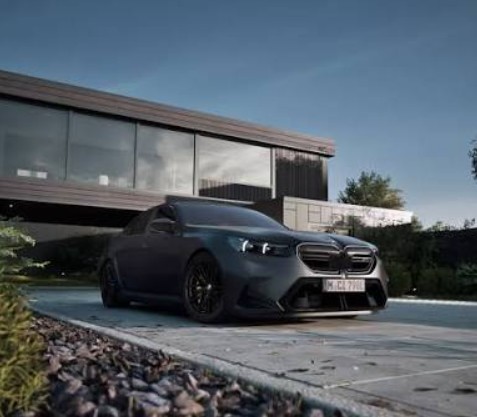
The BMW M5 vs Hellcat debate is one of those automotive comparisons that looks simple until we actually dig into it. Both cars deliver absurd levels of horsepower. Both can embarrass sports cars at a stoplight. Both have V8 engines and personalities large enough to fill an empty parking garage with noise, smoke, and questionable financial decisions.
Yet the BMW M5 and Dodge Challenger SRT Hellcat approach speed from completely different directions.
The M5 is the sophisticated missile. It combines luxury, advanced chassis technology, all-wheel-drive traction, and serious straight-line performance in something that can still carry four adults comfortably.
The Hellcat is more like attaching a supercharger to a thunderstorm.
It prioritizes drama, noise, rear-wheel-drive entertainment, and enormous horsepower. Subtlety was clearly somewhere near the bottom of Dodge's engineering checklist.
So which one is actually faster? Which feels better to drive? And, perhaps more importantly, which one would we rather own?
Let's find out.
Content in this publication
- BMW M5 vs Hellcat at a Glance
- BMW M5 vs Hellcat: Two Philosophies of Going Fast
- Which Hellcat Are We Talking About?
- Engine Comparison: Turbocharging vs Supercharging
- Horsepower: Surprisingly Even
- Torque: The BMW Has the Bigger Number
- BMW M5 vs Hellcat 0-60 MPH
- BMW M5 vs Hellcat From a Roll
- Quarter-Mile Performance
- Weight: The M5's Biggest Weakness
- Handling: BMW Takes the Lead
- Steering Feel and Driver Confidence
- Sound: The Hellcat Wins
- Transmission: Precision or Participation?
- Daily Driving: BMW M5 Wins Easily
- Interior and Technology
- Practicality: M5 by a Landslide
- Fuel Economy: Does Anyone Buying These Cars Care?
- Reliability and Mechanical Complexity
- Modification Potential: Hellcat Territory
- BMW M5 vs Hellcat for Drag Racing
- BMW M5 vs Hellcat for Back Roads
- Which Car Has More Personality?
- Which One Is More Special to Own?
- BMW M5 vs Hellcat: Pros and Cons
- BMW M5 vs Hellcat: Which Is Faster?
- Which One Would We Buy?
- Final Verdict: BMW M5 vs Hellcat
- Frequently Asked Questions
BMW M5 vs Hellcat at a Glance
Before diving deeper, there's an important distinction to make.
The latest BMW M5 is currently a production model, while the traditional Dodge Challenger SRT Hellcat ended production with the 2023 model year. Dodge itself now describes the Challenger models on its website as previous models.
Therefore, this isn't really a same-model-year showroom comparison anymore.
Instead, we're comparing the modern BMW M5 with the most familiar definition of a Hellcat: the supercharged Dodge Challenger SRT Hellcat.
| Specification | BMW M5 | Challenger SRT Hellcat |
|---|---|---|
| Engine | 4.4L twin-turbo V8 + electric motor | 6.2L supercharged HEMI V8 |
| Horsepower | 717 hp | 717 hp |
| Torque | 738 lb-ft | 656 lb-ft |
| Drivetrain | AWD | RWD |
| Transmission | 8-speed automatic | 6-speed manual or 8-speed automatic |
| 0-60 mph | 3.4 sec, BMW estimate | Mid-3-second territory on earlier factory testing |
| Personality | Luxury performance sedan | Traditional American muscle car |
BMW currently rates the M5 at 717 horsepower and 738 lb-ft of torque, with xDrive all-wheel drive and a claimed 0-60 mph time of 3.4 seconds.
Meanwhile, Dodge rated the regular Challenger SRT Hellcat's supercharged 6.2-liter V8 at 717 horsepower and 656 lb-ft of torque in its later years.
Same horsepower.
Completely different experience.
BMW M5 vs Hellcat: Two Philosophies of Going Fast
Put these cars next to each other and their intentions become obvious.
BMW seems to ask:
"How quickly can we move four people while making everything feel effortless?"
Dodge seems to ask:
"How much horsepower can we send through the rear tires before they file a complaint?"
That philosophical difference shapes almost everything about them.
The BMW M5 Is Controlled Violence
The M5 has always occupied a strange little corner of the automotive world.
It looks roughly like a luxury executive sedan but behaves like something considerably more aggressive.
The modern M5 takes that formula even further by combining a twin-turbocharged V8 with electrification. Its hybrid system isn't primarily about turning the M5 into an economy car. Instead, electric assistance helps deliver enormous system output and instant torque.
The result is 717 horsepower.
That's exactly the horsepower figure Dodge quoted for the regular Challenger Hellcat.
But the BMW delivers it differently.
Its acceleration feels calculated, organized, and ruthlessly efficient.
The Hellcat Is Automotive Theater
The Hellcat doesn't hide what it is.
There is a gigantic supercharged V8 under the hood.
There are rear tires waiting to become smoke.
There's a soundtrack that can make a highway tunnel feel like the inside of a drum.
The regular Challenger SRT Hellcat eventually produced 717 horsepower, while stronger versions went significantly further. Dodge rated the Hellcat Redeye at 797 horsepower, while the Super Stock reached 807 horsepower.
That's part of what makes any M5 versus Hellcat conversation complicated.
There isn't just one Hellcat.
Which Hellcat Are We Talking About?
When someone searches for BMW M5 vs Hellcat, they might mean several different cars.
The Hellcat badge appeared on both the Dodge Challenger and Charger, while the Challenger family eventually expanded into increasingly outrageous versions.
Challenger SRT Hellcat
This is the version we'll use as our primary comparison.
Later examples produced 717 horsepower from the supercharged 6.2-liter HEMI V8.
It represents the classic Hellcat experience nicely: two doors, massive V8, rear-wheel drive, and enough horsepower to overwhelm ordinary tires without much encouragement.
Hellcat Redeye
Then Dodge turned up the insanity.
The Challenger SRT Hellcat Redeye produced 797 horsepower and 707 lb-ft of torque.
At this point, comparing horsepower alone clearly favors Dodge.
Hellcat Super Stock
The Challenger SRT Super Stock pushed output even further to 807 horsepower according to Dodge's model documentation.
So whenever we say the BMW and Hellcat both have 717 horsepower, remember we're referring specifically to the regular later-model Challenger SRT Hellcat.
What About the Charger Hellcat?
The four-door Charger is arguably a more direct conceptual rival to the BMW M5.
Later Charger Hellcat configurations also became incredibly powerful, with Dodge listing 797 horsepower for certain high-output versions.
However, the Challenger remains the car most enthusiasts picture when somebody simply says "Hellcat."
Engine Comparison: Turbocharging vs Supercharging
Now we reach the heart of the argument.
And yes, both hearts happen to have eight cylinders.
BMW M5 4.4-Liter Twin-Turbo V8 Hybrid
The current M5 uses a 4,395cc eight-cylinder engine combined with its plug-in-hybrid system.
BMW quotes total system output of:
717 horsepower and 738 lb-ft of torque.
Those numbers are serious enough by themselves.
But the way the M5 delivers them matters even more.
Electric assistance fills in response while the turbocharged V8 continues pulling as speed rises. Instead of feeling like one enormous explosion of power, the BMW tends to feel like a continuous wave.
Imagine stepping onto a moving walkway that suddenly decides to become a catapult.
Hellcat 6.2-Liter Supercharged HEMI V8
The Challenger Hellcat uses a much more traditional formula.
Large displacement.
Eight cylinders.
A supercharger.
No need to make the recipe complicated.
The 6.2-liter supercharged HEMI makes 717 horsepower in the standard later Hellcat configuration. Dodge also offered either a Tremec six-speed manual or its TorqueFlite eight-speed automatic on the regular Hellcat during certain model years.
Where the BMW whispers technological complexity, the Hellcat screams mechanical excess.
Horsepower: Surprisingly Even
On paper, there's a beautiful coincidence.
717 hp versus 717 hp.
That's almost too perfect.
Yet equal horsepower doesn't mean equal acceleration.
Cars don't race dyno charts.
Traction, gearing, torque delivery, transmission behavior, weight, tire temperature, road surface, and launch strategy all matter.
And that's where the BMW starts revealing its biggest advantage.
Torque: The BMW Has the Bigger Number
The latest M5 produces 738 lb-ft of torque, substantially more than the regular Challenger Hellcat's quoted 656 lb-ft.
Electric assistance plays an important role here.
But again, raw numbers don't completely describe the experience.
The BMW's torque feels immediately usable.
The Hellcat's torque sometimes feels like it's trying to negotiate with the rear tires about who is actually in charge.
That distinction becomes critical from a standing start.
BMW M5 vs Hellcat 0-60 MPH
This is probably the question most readers came here to answer.
Which car wins from zero to 60?
The M5's AWD Advantage
BMW quotes 3.4 seconds from 0-60 mph for the current M5.
What's impressive isn't merely the number.
It's how repeatable the basic concept can be.
All-wheel drive gives the M5 four contact patches to work with when launching.
Instead of converting half the rear tires into expensive smoke, the drivetrain can distribute power across both axles.
Press the throttle and the car digs into the pavement.
The Hellcat's Traction Problem
Factory references for earlier Hellcat configurations placed 0-60 performance in the mid-three-second range under favorable conditions.
That's astonishing.
But there's a catch.
A rear-wheel-drive car making more than 700 horsepower has an obvious challenge: putting that power down.
Getting a perfect Hellcat launch requires more finesse than launching the BMW.
Too little throttle and you leave performance behind.
Too much throttle and congratulations—you've created an extremely expensive smoke machine.
Winner From a Stop: BMW M5
In ordinary real-world conditions, we'd give the M5 the advantage.
Not because the Hellcat lacks power.
Quite the opposite.
The Hellcat sometimes has more power than the road can effectively accept.
BMW M5 vs Hellcat From a Roll
Now things get interesting.
Take away the standing-start traction advantage and the Hellcat becomes a much more dangerous opponent.
At highway speeds, wheelspin becomes less of a limitation, allowing that enormous supercharged V8 to stretch its legs.
The BMW remains brutally quick, but roll racing reduces some of the advantage created by xDrive.
A regular 717-hp Hellcat and 717-hp M5 could therefore produce a fascinating matchup depending on speeds, transmissions, tires, conditions, and drivers.
Throw a 797-hp Redeye into the conversation and Dodge's horsepower advantage becomes substantial.
Throw an 807-hp Super Stock into it and we're playing a different game again.
Quarter-Mile Performance
The quarter mile has historically been the Hellcat's natural habitat.
Dodge built the Challenger around exactly the type of experience drag racing rewards: massive horsepower, huge torque, straight-line stability, and an engine that seems happiest when consuming gasoline at antisocial rates.
But the M5 has changed the equation.
Modern performance cars can compensate for tremendous weight with sophisticated launch control, fast transmissions, hybrid torque, and all-wheel-drive traction.
You may be interested in reading BMW M5 vs Audi RS5: Which Performance Car Is Better?
The Hellcat attacks the quarter mile like a heavyweight boxer.
The BMW approaches it like a computer solving an equation.
Both reach the answer quickly.
They simply show their work differently.
Weight: The M5's Biggest Weakness
There's no point pretending otherwise.
The latest M5 is heavy.
Very heavy.
BMW lists a 5,390-pound curb weight for the current M5 sedan.
That's an extraordinary figure for a performance sedan.
Its hybrid hardware contributes to that mass.
The chassis engineers have clearly worked hard to disguise the weight, but physics doesn't disappear simply because German engineers send it a strongly worded email.
Does the Weight Ruin the M5?
Not necessarily.
Advanced suspension systems, enormous tires, powerful brakes, electronics, and sophisticated torque distribution can mask a remarkable amount of mass.
The car can still accelerate incredibly hard.
But weight becomes more noticeable during rapid direction changes and repeated hard driving.
A lighter vehicle generally asks less from its tires and brakes.
The M5 therefore wins plenty of performance battles while carrying around what feels like a small moon.
Handling: BMW Takes the Lead
This category favors the BMW.
The Challenger Hellcat can corner much better than its stereotypes suggest, particularly in Widebody form.
Dodge specifically widened the Challenger Hellcat Widebody by 3.5 inches to accommodate wider tires and improve grip.
Still, the two vehicles have fundamentally different missions.
M5 in the Corners
The BMW offers:
- sophisticated all-wheel-drive traction;
- performance-oriented suspension tuning;
- precise steering responses;
- strong body control;
- advanced electronic driver aids;
- impressive high-speed stability.
The M5 feels like engineers tried to bend physics into submission.
You know the weight exists, but the car continuously attempts to convince you otherwise.
Hellcat in the Corners
The Challenger feels more old-school.
There's a long hood in front of you.
There's a lot of car around you.
And there's always the knowledge that a 700-plus-horsepower V8 is waiting beneath your right foot.
The Hellcat can absolutely handle spirited driving, especially with the right tires and Widebody setup.
But if our road suddenly becomes a collection of tight bends, we're choosing the BMW.
Steering Feel and Driver Confidence
This category isn't necessarily as one-sided as lap times might suggest.
The M5 inspires enormous confidence because everything works together.
Throttle.
Transmission.
AWD.
Suspension.
Brakes.
Electronic assistance.
You point it somewhere and the car seems eager to solve the rest.
The Hellcat asks more from us.
And depending on your personality, that might actually make it more exciting.
There's something deeply entertaining about controlling a car that constantly reminds you that hundreds of horsepower are waiting for one careless throttle input.
The BMW gives confidence.
The Hellcat demands respect.
Sound: The Hellcat Wins
We can debate acceleration times all afternoon.
We don't need nearly as long here.
The Hellcat sounds magnificent.
The supercharger whine layered over the deep exhaust note gives it an unmistakable personality. Dodge's active exhaust system was standard across HEMI-powered Challenger models, reinforcing the car's theatrical character.
The M5's V8 doesn't exactly sound shy.
But the Hellcat transforms acceleration into an event.
You don't simply hear it.
You experience it.
There's mechanical noise, induction noise, exhaust noise, tire noise, and probably the faint sound of a fuel gauge crying.
Transmission: Precision or Participation?
The BMW uses an eight-speed automatic transmission.
It suits the car perfectly.
Shifts happen quickly, performance is consistent, and the gearbox works seamlessly with the hybrid powertrain.
The Challenger Hellcat gives enthusiasts something the new M5 simply doesn't.
A manual.
Dodge confirmed the six-speed manual transmission returned for the 2023 Challenger SRT Hellcat, while an eight-speed automatic was also available.
For maximum acceleration consistency, we'd choose the automatic.
For maximum involvement?
Give us three pedals.
Daily Driving: BMW M5 Wins Easily
Here's where the BMW reminds us why the M5 formula has survived for decades.
It's fast enough to terrify passengers, but it's still fundamentally a luxury sedan.
Four doors make entry easier.
The cabin has modern luxury features.
There's serious rear-seat usability.
Long-distance comfort is excellent for something with this much performance potential.
And AWD provides reassurance when conditions deteriorate.
The Challenger is surprisingly usable for a muscle coupe, particularly by sports-car standards.
But the BMW is simply the more complete everyday vehicle.
Interior and Technology
Sit inside these cars and their different eras become immediately apparent.
The newest M5 belongs to BMW's current technology generation.
Digital displays dominate the dashboard.
Vehicle settings can modify virtually every aspect of the driving experience.
Hybrid operation adds yet another layer of complexity.
The Challenger cabin is far more traditional.
That can actually be refreshing.
Physical controls feel familiar. The driving position feels appropriately muscle-car-like. You don't need a computer-science degree to understand why you bought the car.
The BMW interior feels newer.
The Dodge interior feels more nostalgic.
Which one is better depends on whether we value technology or character more highly.
Practicality: M5 by a Landslide
If this were our only car, we'd take the M5 without much hesitation.
The sedan body solves problems a two-door Challenger simply can't.
Passengers get easier access.
Rear-seat usability improves.
Daily errands become simpler.
Business meetings don't suddenly look like we've arrived straight from a drag strip.
Yet that's part of the M5's magic.
It hides astonishing performance behind an almost sensible silhouette.
The Hellcat announces itself before you even start the engine.
Fuel Economy: Does Anyone Buying These Cars Care?
We probably shouldn't pretend fuel economy is the deciding factor in a 700-horsepower comparison.
Still, the philosophies are interesting.
BMW has adopted a plug-in-hybrid architecture for the newest M5. The car includes a rechargeable battery and BMW lists Level 2 charging capability as part of the package.
The Hellcat represents the opposite approach.
Its supercharged 6.2-liter V8 belongs to an era in which Dodge essentially decided that gasoline should be converted into noise and acceleration as enthusiastically as possible.
If maximizing efficiency is our priority, neither car should be near the top of the shopping list.
Reliability and Mechanical Complexity
Here's where the comparison gets difficult.
The Hellcat engine is certainly sophisticated, but the overall philosophy remains relatively conventional.
Supercharged V8.
Automatic or manual transmission.
Rear-wheel drive.
The latest M5 adds considerably more complexity through hybrid components, battery management, electric propulsion, turbocharging, AWD hardware, electronics, and integrated chassis systems.
That doesn't automatically mean the BMW will be unreliable.
However, complexity matters as cars age.
An older Hellcat could still be expensive to maintain, especially if previous owners treated every highway on-ramp like a qualifying session.
An aging hybrid M5 may eventually bring its own costly maintenance considerations.
You may be interested in readingBMW M5 vs Audi RS5: Which Performance Car Is Better?You may be interested in reading
BMW M5 vs Porsche 911: Which Performance Icon Wins?For either car, service history matters enormously.
Modification Potential: Hellcat Territory
This is where the Dodge enthusiast community becomes dangerous to our bank account.
Hellcats quickly became famous for responding aggressively to modifications.
Pulley changes, tuning, intake modifications, exhaust work, fueling upgrades, and more extensive builds can push power far beyond factory output.
Just how far?
DodgeGarage has documented heavily modified Challenger Hellcats producing extraordinary horsepower figures, although these builds obviously bear little resemblance to stock street cars.
The BMW can also be modified.
But tuning the current hybrid M5 is a fundamentally more complex proposition than modifying the traditional supercharged Hellcat platform.
For enthusiasts who enjoy chasing four-digit horsepower figures, the Dodge remains incredibly appealing.
BMW M5 vs Hellcat for Drag Racing
If drag racing is our main priority, the decision becomes surprisingly nuanced.
A stock M5 provides an enormous advantage through AWD traction.
A stock regular Hellcat provides classic drag-strip character and a powerful modification platform.
A Redeye or Super Stock dramatically raises Dodge's power ceiling straight from the factory.
So we'd frame it this way:
For repeated, effortless launches, the M5 is incredibly effective.
For the traditional drag-racing experience, the Hellcat feels more authentic.
And if the modification bug bites?
The Dodge rabbit hole gets deep very quickly.
BMW M5 vs Hellcat for Back Roads
BMW.
No long explanation needed.
Actually, we'll give one anyway.
The M5's drivetrain, chassis technology, all-wheel-drive system, and overall tuning make it better suited to roads where braking and direction changes matter as much as acceleration.
The Hellcat's size and enormous power remain entertaining, but it never completely forgets its muscle-car roots.
On a sweeping highway?
Fantastic.
On a drag strip?
Even better.
On a narrow technical road filled with tight corners?
We'll take the BMW keys.
Which Car Has More Personality?
Here's where objective measurements stop helping.
The M5 is technically astonishing.
It can accelerate like a supercar, carry passengers like a luxury sedan, and attack corners with remarkable competence.
But efficiency can sometimes remove drama.
The Hellcat is drama.
The supercharger whines.
The V8 roars.
The rear tires struggle.
The hood seems to stretch toward the horizon.
Even starting the thing feels like you've made a decision your neighbors will soon learn about.
So if personality means imperfections that make a machine memorable, the Hellcat might actually win.
Which One Is More Special to Own?
Today, the answer has changed.
The traditional Challenger Hellcat is no longer a current-production model. That immediately gives surviving examples a different kind of appeal. Dodge itself describes the Challenger on its current site as a previous model.
The BMW M5 continues evolving.
It represents the future of extreme performance sedans: electrification, software, AWD, and enormous system horsepower.
The Hellcat represents something that increasingly feels like the end of an era.
A supercharged 6.2-liter V8.
Available manual transmission.
Rear-wheel drive.
No apology.
That gives the Dodge an emotional advantage which numbers can't measure.
BMW M5 vs Hellcat: Pros and Cons
The simplest way to understand these cars is to think about what each prioritizes.
BMW M5 strengths: incredible launch traction, luxurious cabin, four-door practicality, sophisticated handling, huge torque, modern technology, and astonishing all-around capability.
BMW M5 weaknesses: enormous curb weight, extreme mechanical complexity, less visceral personality, and potentially expensive long-term ownership.
Hellcat strengths: unforgettable supercharged V8, incredible sound, enormous tuning potential, traditional rear-wheel-drive muscle-car personality, available manual transmission on Challenger versions, and collector appeal.
Hellcat weaknesses: traction limitations, less agility, older interior technology, greater dependence on road and tire conditions, and reduced everyday practicality in Challenger form.
BMW M5 vs Hellcat: Which Is Faster?
If we need one simple answer, the M5 is generally the smarter bet from a standing start.
Its AWD system can deploy enormous power much more effectively.
The BMW's officially quoted 3.4-second 0-60 time demonstrates exactly what modern traction management can accomplish with a 717-hp powertrain.
From a roll, things become much closer against a standard Hellcat.
Against a 797-hp Redeye or even more powerful Challenger derivative, Dodge gains an obvious horsepower advantage.
So asking simply "Which is faster?" leaves out half the story.
Faster where?
From a stop?
Through corners?
From 60 mph?
Over a quarter mile?
The answer changes.
Which One Would We Buy?
For one car that has to do everything, we'd choose the BMW M5.
It's simply more complete.
You can commute in it.
Carry passengers.
Travel long distances.
Drive through poor weather.
Attack a mountain road.
Then launch hard enough to embarrass cars that look far more exotic.
It's one of those machines that makes absurd performance feel strangely normal.
But if we already had another vehicle for practical duties?
The decision gets much harder.
A Challenger Hellcat offers something the newest M5 can't reproduce.
Rawness.
Noise.
Silliness.
Mechanical theater.
The BMW impresses your brain.
The Hellcat works directly on your inner 12-year-old.
And sometimes the 12-year-old wins.
Final Verdict: BMW M5 vs Hellcat
The BMW M5 vs Hellcat battle doesn't produce one universal winner because these cars chase different versions of automotive excitement.
The BMW M5 is the better all-around performance machine.
Its 717-hp hybrid powertrain, 738 lb-ft of torque, AWD system, and claimed 3.4-second 0-60 time make it devastatingly effective.
It corners better.
It launches more consistently.
It's more practical.
It's more luxurious.
It's easier to exploit.
If we were choosing the objectively superior daily performance vehicle, the M5 wins.
But objectivity only takes us so far.
The Challenger SRT Hellcat's 717-hp supercharged HEMI, rear-wheel drive, muscular styling, available manual transmission, and outrageous personality make it the more emotional machine.
The BMW behaves like a precision weapon.
The Hellcat behaves like someone accidentally taught a chainsaw how to drive.
And that's exactly why enthusiasts love it.
Our verdict?
BMW M5 for speed with sophistication.
Hellcat for noise, personality, and old-school muscle-car madness.
Sometimes the fastest car isn't necessarily the one we remember most.
Frequently Asked Questions
Is a BMW M5 Faster Than a Hellcat?
From a standing start, the modern BMW M5 has a major advantage because its xDrive all-wheel-drive system can deploy power effectively. BMW claims 0-60 mph in 3.4 seconds for the current 717-hp M5. A Hellcat can also be extremely quick, but rear-wheel-drive traction makes launches more sensitive to road conditions, tires, and driver input.
Does the BMW M5 Have More Horsepower Than a Hellcat?
Not necessarily. The current BMW M5 produces 717 horsepower, which exactly matches the output Dodge quoted for the regular later-model Challenger SRT Hellcat. However, Hellcat Redeye and Super Stock versions produced 797 and 807 horsepower respectively.
Can a BMW M5 Beat a Hellcat in a Quarter Mile?
It certainly can, particularly when comparing stock cars and launching from a normal road surface where the BMW's AWD provides an advantage. However, quarter-mile results vary dramatically with tires, track preparation, weather, model variant, and driver technique. Higher-output Hellcats such as the Redeye also change the matchup significantly.
You may be interested in readingBMW M5 vs Audi RS5: Which Performance Car Is Better?You may be interested in reading
BMW M5 vs Porsche 911: Which Performance Icon Wins?You may be interested in reading
BMW M5 vs Cadillac CT5-V Blackwing: Which Super Sedan Wins?Which Is Better for Daily Driving, the BMW M5 or Hellcat?
The BMW M5 is the better daily driver for most people. It has four doors, AWD, modern cabin technology, luxury features, and excellent passenger usability while retaining extreme performance. The Challenger Hellcat is surprisingly practical for a muscle coupe, but it remains less versatile overall.
Which Is More Fun, BMW M5 or Hellcat?
That depends on what we call fun. The M5 is incredibly satisfying because of its speed, traction, handling, and technical sophistication. The Hellcat delivers more theater through its supercharger whine, V8 exhaust note, rear-wheel-drive behavior, and old-school muscle-car character. For precision we'd take the BMW; for pure drama we'd take the Hellcat.
If you want to know other articles similar to BMW M5 vs Hellcat: Which High-Horsepower Monster Wins? you can visit the category Models.
Haval Jolion vs Omoda C5: Which SUV Is Better?
Haval Jolion vs Chery Tiggo 4 Pro: Full Comparison
Haval Jolion vs H6: Which SUV Is Better in 2026?
Haval Jolion vs Toyota Corolla Cross: Which SUV Is Better?
Haval Jolion vs Jaecoo J5: Which SUV Is Better?
Volkswagen T-Cross vs Volkswagen T-Roc: Which Is Better?
Leave a Reply
More content of your interest