
BMW M5 vs Audi RS5: Which Performance Car Is Better?

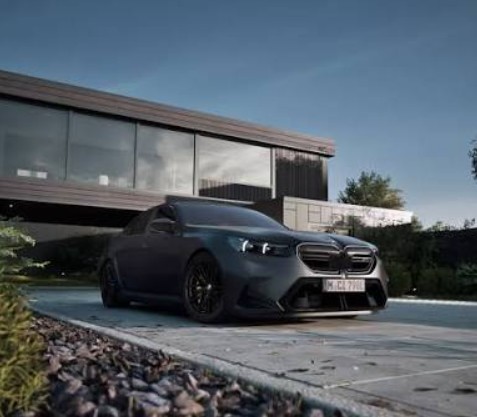
Put the BMW M5 vs Audi RS5 side by side and, at first glance, the comparison feels almost inevitable. Both wear prestigious German badges. Both offer four usable seats, serious all-weather traction, premium cabins, and the sort of acceleration that can turn an innocent highway entrance ramp into the highlight of the morning.
But there is a catch: these cars are not truly direct rivals.
The BMW M5 is the larger, more powerful super-sedan. The Audi RS5 Sportback is smaller, lighter, cheaper, and arguably easier to live with in crowded cities. Think of the M5 as a luxury business jet with afterburners and the RS5 as a compact fighter aircraft dressed for a dinner reservation.
That difference makes the comparison more interesting, not less.
If we want maximum straight-line performance, rear-seat space, cutting-edge electrification, and outrageous horsepower, the modern M5 has the obvious advantage. If we value a tidier footprint, handsome liftback practicality, traditional gasoline performance, and a less intimidating daily-driving experience, the RS5 makes an excellent case for itself.
There is also an important model-year distinction. BMW's latest M5 is the G90-generation plug-in hybrid M5, while the familiar B9-generation Audi RS5 Sportback reached its final U.S. model years before Audi transitioned toward its next-generation performance-car strategy. BMW lists the current M5 at 717 horsepower and 738 lb-ft of torque. Audi's 2025 RS5 Sportback used a 2.9-liter twin-turbo V6 producing 444 horsepower and 442 lb-ft.
So, which one deserves our money? Let's dig into the details.
Content in this publication
- BMW M5 vs Audi RS5 at a Glance
- Engine and Performance
- BMW M5 vs Audi RS5 0-60 Performance
- Handling and Driving Dynamics
- Quattro vs M xDrive
- Transmission Comparison
- Sound: V8 vs V6
- Interior Quality and Design
- Passenger Space and Comfort
- Practicality and Cargo Space
- Fuel Economy and Electrification
- BMW M5 vs Audi RS5 Reliability
- Maintenance Costs
- BMW M5 vs Audi RS5 for Daily Driving
- Which Is Better in Snow and Rain?
- Which Is More Fun on a Twisty Road?
- Which Is Better on a Racetrack?
- Styling: BMW M5 vs Audi RS5
- Price and Value
- Used BMW M5 vs Used Audi RS5
- Who Should Buy the BMW M5?
- Who Should Buy the Audi RS5?
- BMW M5 vs Audi RS5: Pros and Cons
- BMW M5 vs Audi RS5: Which One Would We Choose?
- Final Verdict
- Frequently Asked Questions
BMW M5 vs Audi RS5 at a Glance
Before we get buried in drive modes, turbochargers, batteries, and suspension settings, here is the basic picture.
| Category | BMW M5 | Audi RS5 Sportback |
|---|---|---|
| Engine | 4.4L twin-turbo V8 + electric motor | 2.9L twin-turbo V6 |
| Output | 717 hp | 444 hp |
| Torque | 738 lb-ft | 442 lb-ft |
| Drivetrain | M xDrive AWD | quattro AWD |
| Transmission | 8-speed automatic | 8-speed Tiptronic |
| Body style | Four-door sedan | Five-door Sportback |
| Personality | Super-sedan / grand tourer | Compact performance GT |
| Best for | Maximum performance and luxury | Everyday usability and manageable size |
BMW's current technical specifications list a manufacturer-estimated 0-60 mph time of 3.4 seconds for the M5 Sedan. It also weighs a substantial 5,390 pounds, illustrating just how dramatically the plug-in hybrid system has changed the modern M5 formula.
The Audi takes a different route. Instead of hybrid assistance and gigantic system output, the RS5 relies on a much simpler 2.9-liter twin-turbo V6 and quattro all-wheel drive. Audi listed the 2025 RS5 Sportback at $79,900 before destination and options in the U.S., highlighting another major distinction: the Audi occupied a considerably lower price bracket.
These Cars Play Different Roles
We shouldn't assume that more horsepower automatically means a better car.
The M5 is essentially the performance flagship of BMW's midsize executive sedan family. It needs to behave like several cars at once: luxury sedan, highway cruiser, plug-in hybrid, family car, and borderline supercar.
The RS5 is more focused.
It takes the smaller A5 platform, injects it with Audi Sport hardware, wraps it in muscular bodywork, and adds enough practicality to make it usable Monday through Friday.
One Is a Hammer, the Other a Scalpel
The BMW overwhelms with force.
The Audi wins us over through accessibility.
That distinction will appear repeatedly throughout this comparison.
Engine and Performance
Performance is naturally where the BMW M5 vs Audi RS5 battle becomes most dramatic.
BMW M5: Hybrid V8 Muscle
The current M5 uses a 4.4-liter twin-turbocharged V8 paired with an electric motor.
Together, they produce:
- 717 horsepower
- 738 lb-ft of torque
- All-wheel drive
- Eight-speed automatic transmission
- Manufacturer-estimated 0-60 mph in 3.4 seconds
BMW also quotes a 155-mph electronically limited top speed in standard specification.
Numbers only tell half the story, though.
The electric motor fills gaps in the V8's power delivery, giving the M5 an enormous reserve of torque. Press the accelerator and there is very little waiting around. The car gathers speed with the casual violence of an elevator whose cables have suddenly decided gravity is optional.
It's remarkable.
And slightly ridiculous.
Exactly as an M5 should be.
Audi RS5: Smaller but Still Seriously Fast
The RS5's 2.9-liter twin-turbocharged V6 generates 444 horsepower and 442 lb-ft of torque in U.S.-market 2025 specification. Power travels through Audi's quattro system and an eight-speed Tiptronic automatic transmission.
Against ordinary cars, those figures are enormous.
Against a 717-hp M5, they suddenly look almost sensible.
But we shouldn't dismiss the Audi.
Its smaller dimensions and lower mass create a more intimate driving experience. There is enough torque for effortless overtaking, enough launch performance to pin passengers into their seats, and more speed than most drivers could responsibly exploit on public roads.
Which Is Faster?
The M5.
Comfortably.
If we're asking which car provides the biggest acceleration numbers, the comparison isn't particularly close.
But speed isn't simply about winning a stopwatch contest.
The RS5 can feel lighter on its feet, while the M5 feels like it bends physics through sheer mechanical determination.
BMW M5 vs Audi RS5 0-60 Performance
Launch both cars aggressively and their personalities become obvious.
The BMW punches forward with immense hybrid-assisted torque. Its sophisticated xDrive system works to turn all that output into forward motion rather than tire smoke.
The Audi launches in the classic quattro tradition: cleanly, confidently, and with minimal drama.
Does the Faster Car Feel More Exciting?
Not necessarily.
At everyday speeds, the RS5 can sometimes make us feel more involved because we can use a larger percentage of its performance without instantly entering absurd territory.
The M5's limits are towering.
That's fantastic on a track.
On a crowded road? Sometimes the accelerator feels like a volume knob permanently stuck somewhere between loud and stadium concert.
Handling and Driving Dynamics
Here's where things become more nuanced.
BMW M5 Handling
The latest M5 has to disguise considerable weight.
At 5,390 pounds according to BMW's U.S. specifications, it isn't remotely lightweight.
BMW compensates with sophisticated chassis electronics, adaptive suspension technology, all-wheel drive, powerful brakes, and aggressive calibration.
The result is fascinating.
The M5 can corner far harder than its dimensions suggest. Turn-in is disciplined, body control is excellent, and the drivetrain can help rotate the car rather than simply dragging it around a corner.
Yet physics hasn't retired.
When we really push the car, we remain aware that there is significant mass underneath us.
Audi RS5 Handling
The RS5 approaches corners differently.
It feels more compact because it is more compact.
That sounds obvious, but it matters enormously from behind the wheel.
Place the Audi on a narrow mountain road and it tends to feel easier to position. We aren't managing quite as much width, length, or momentum.
Audi's quattro system also delivers the planted character enthusiasts have associated with fast Audis for decades.
Steering Feel
Neither car belongs to the old hydraulic-steering era.
Both rely heavily on electronic assistance, configurable modes, and software-defined personalities.
The BMW's steering tends to feel serious and substantial. The Audi's can feel slightly more natural when simply commuting because the whole car asks less of us.
If we want dramatic chassis capability, the M5 wins.
If we want confidence without constantly feeling that we are supervising a 700-hp missile, the RS5 can be more relaxing.
Quattro vs M xDrive
This is one of the most interesting technical comparisons.
Audi Quattro
Quattro is practically part of Audi's identity.
In the RS5, all-wheel drive helps deliver predictable traction in poor weather and explosive acceleration from a standstill.
For drivers living where winters are wet, snowy, or icy, that confidence matters.
The RS5 feels secure.
Almost stubbornly so.
BMW M xDrive
BMW's M xDrive philosophy is different.
The system prioritizes the sort of dynamic behavior expected from an M car while retaining all-wheel-drive traction.
Rather than making the M5 feel like an ordinary AWD luxury sedan, BMW tries to preserve a rear-biased personality.
Which AWD System Is Better?
For uncomplicated, confidence-inspiring everyday traction, we'd lean toward the RS5's wonderfully familiar quattro character.
For drivers who deliberately explore a chassis near its limits, the M5's M xDrive system offers a broader performance envelope.
Transmission Comparison
Both cars use eight-speed automatic transmissions, but software tuning gives them different personalities.
M5 Eight-Speed Automatic
BMW's transmission has an enormous job.
It must coordinate a twin-turbo V8, electric assistance, multiple driving modes, and more than 700 horsepower.
In relaxed driving, it can shift unobtrusively.
Switch into aggressive settings and the character changes dramatically. Gears are held longer, downshifts become sharper, and the entire drivetrain seems to tense its muscles.
RS5 Eight-Speed Tiptronic
Audi's Tiptronic feels mature and predictable.
It doesn't need to manage the same level of hybrid complexity.
In normal traffic, that's appealing.
Pull a paddle, request a lower gear, and the gearbox generally responds without turning every drive into a theatrical event.
Sound: V8 vs V6
A performance car should stir something before we've even left the parking lot.
Here, the BMW holds an emotional advantage.
M5 V8 Character
Eight cylinders remain special.
Even with electrification, sound insulation, turbochargers, and modern emissions requirements shaping its voice, the M5's V8 carries a deeper, more muscular tone.
You may be interested in reading BMW M5 vs Porsche 911: Which Performance Icon Wins?
There is something inherently dramatic about a high-output V8 sedan.
RS5 V6 Sound
The RS5's V6 sounds purposeful rather than exotic.
It has plenty of attitude when pushed, but it doesn't quite deliver the same theatrical depth as a V8.
Does that make it boring?
Not remotely.
It simply means the BMW has the richer soundtrack.
Interior Quality and Design
Performance might bring us into the showroom, but we're going to spend far more time looking at the dashboard than at the engine.
BMW M5 Cabin
The modern M5 interior leans heavily into technology.
Large digital displays, customizable driving settings, ambient lighting, premium materials, and sophisticated infotainment give it a very contemporary personality.
It feels expensive.
It also feels complicated.
There are moments when we miss the old days when performance-car dashboards consisted of a tachometer, a speedometer, and a few suspiciously important buttons.
Audi RS5 Cabin
The RS5 comes from an older Audi interior generation, yet that can actually be part of its charm.
Physical controls remain easier to understand. The driving position is excellent, materials feel appropriately premium, and Audi's Virtual Cockpit remains one of the most useful digital gauge implementations.
Which Interior Is Better?
For technology and visual spectacle: BMW M5.
For straightforward ergonomics: Audi RS5.
For pure interior space: BMW M5.
For a cozy performance-coupe atmosphere with four-door practicality: Audi RS5 Sportback.
Passenger Space and Comfort
This is not particularly close.
The M5 is a larger car.
That gives passengers more breathing room, especially in the rear.
Rear-Seat Comfort
If we frequently carry adults in the back seats, we'd choose the BMW.
The RS5 Sportback remains genuinely usable, but passengers will notice its smaller footprint.
The M5 feels like a real executive sedan because that is fundamentally what it is.
Long-Distance Driving
Both cars make excellent highway companions.
The Audi's smaller size feels effortless.
The BMW provides the greater sense of isolation, luxury, and effortless overtaking power.
Imagine crossing several states or countries in one day. The M5 feels designed to arrive hundreds of miles later with the driver wondering why the journey didn't feel longer.
Practicality and Cargo Space
Here's where the Audi fights back.
The RS5 Sportback uses a liftback-style rear hatch rather than a conventional sedan trunk.
That creates a wide opening and makes awkward luggage much easier to load.
Audi RS5 Sportback Advantage
For everyday practicality, the Sportback design is brilliant.
We can carry groceries, suitcases, camera equipment, sports gear, or bulky packages without feeling as though we bought the wrong kind of performance car.
BMW M5 Advantage
The BMW counters with a roomier passenger compartment.
And buyers wanting maximum cargo flexibility can now look toward the M5 Touring, which uses the same 717-hp system and expands the M5 concept into wagon territory. BMW lists the M5 Touring with the same 717 horsepower and 738 lb-ft of torque as the sedan.
Fuel Economy and Electrification
Here's one of the biggest philosophical differences.
The RS5 is a traditional gasoline performance car.
The new M5 is a plug-in hybrid.
What the M5 Hybrid System Changes
Electrification allows the BMW to deliver extraordinary total output while also providing limited electric-only driving capability.
That can make short local journeys quieter and potentially more efficient when the battery is regularly charged.
But the system adds:
- Battery weight
- Additional mechanical complexity
- Charging considerations
- More software integration
- More components to manage long-term
The result is neither inherently good nor bad.
It's a trade-off.
RS5 Simplicity
The Audi's solution feels almost old-school beside the BMW.
Fill it with gasoline.
Start it.
Drive.
For some enthusiasts, that simplicity will become increasingly attractive as electrification spreads across the performance-car market.
BMW M5 vs Audi RS5 Reliability
Predicting long-term reliability is difficult because maintenance history, usage, climate, and individual vehicle condition matter enormously.
Still, we can make a practical observation.
Both are complicated German performance cars.
Neither should be purchased under the assumption that maintenance will resemble ownership of an ordinary four-cylinder commuter sedan.
Potential BMW Ownership Complexity
The modern M5 combines:
- Twin turbochargers
- A V8 engine
- Plug-in hybrid hardware
- High-voltage components
- Adaptive chassis technology
- Sophisticated all-wheel drive
- Extensive electronics
That's an engineering feast.
It's also a long list of expensive systems.
Audi RS5 Ownership Complexity
The Audi isn't simple by normal-car standards.
Its twin-turbo V6, quattro drivetrain, performance brakes, adaptive components, and premium electronics can still generate substantial repair costs.
But compared with the latest hybrid M5, the drivetrain concept itself is less complicated.
Used Buyers Should Prioritize History
A beautifully documented, properly serviced RS5 is generally more attractive than a neglected M5 simply because the BMW was faster when new.
The same applies in reverse.
Condition beats badge.
Maintenance history beats internet mythology.
Maintenance Costs
Neither car is cheap to maintain.
Expect performance-oriented expenses such as:
- Large high-performance tires
- Expensive brake components
- Premium synthetic oil
- Premium fuel
- Specialized labor
- Costly suspension components
- Higher insurance premiums
- Potentially expensive electronic repairs
The BMW's additional hybrid hardware introduces another layer of technology, although warranty coverage can reduce early ownership concerns.
A used RS5 may initially cost less to purchase, but that doesn't transform it into a budget car.
Cheap German performance cars often remain expensive German performance cars wearing cheaper price tags.
BMW M5 vs Audi RS5 for Daily Driving
This category is surprisingly close.
Why We'd Choose the RS5 Daily
The RS5's smaller footprint makes parking easier.
It is easier to thread through city traffic.
Its liftback provides excellent practicality.
The performance is enormous without being overwhelming.
And it doesn't constantly feel as though we're using a 717-hp machine to accomplish a 40-hp task.
Why We'd Choose the M5 Daily
The BMW offers more room.
More luxury.
More effortless highway performance.
More technology.
And, if charging is convenient, the hybrid system changes how short journeys can be handled.
Our preference depends heavily on environment.
Dense city? RS5.
Long highway commutes? M5.
Which Is Better in Snow and Rain?
Both vehicles benefit enormously from all-wheel drive.
Audi's quattro system has an excellent reputation for making high-powered vehicles approachable in poor conditions.
BMW's xDrive system also provides tremendous traction.
But tires matter more than many buyers realize.
A properly equipped RS5 on quality winter tires can be dramatically safer in snow than an M5 sitting on summer performance rubber, regardless of horsepower or drivetrain sophistication.
You may be interested in readingBMW M5 vs Porsche 911: Which Performance Icon Wins?You may be interested in reading
BMW M5 vs Cadillac CT5-V Blackwing: Which Super Sedan Wins?The badge doesn't defeat physics.
Rubber matters.
Which Is More Fun on a Twisty Road?
If the road is narrow, technical, and full of short corners, the Audi can be enormously satisfying.
Its smaller proportions make it feel easier to place.
The BMW brings more power than we'll realistically use between many corners.
On broader, faster roads, the M5 comes alive.
Its stability, gigantic power reserve, and chassis technology turn sweeping bends into its natural playground.
Our Twisty-Road Winner
For approachable fun: RS5.
For ultimate capability: M5.
Those are not necessarily the same thing.
Which Is Better on a Racetrack?
The M5 has the stronger performance ceiling.
There is simply too much firepower for the RS5 to overcome in a conventional acceleration-heavy track environment.
However, the M5's considerable weight becomes part of the equation during repeated hard braking and direction changes.
The Audi has less power but also less machinery to manage.
Neither is the ideal dedicated lightweight track toy.
These cars are road cars that happen to be frighteningly capable on a circuit.
If lap times are our only priority, there are lighter alternatives.
If we want to drive to the track in heated comfort, embarrass legitimately quick cars, then drive home while listening to a podcast, either German machine understands the assignment.
Styling: BMW M5 vs Audi RS5
Design is subjective, but these cars project very different personalities.
BMW M5 Exterior
The M5 looks aggressive, broad, and unmistakably modern.
Its proportions communicate power.
Nothing about it whispers.
The car seems to walk into the room already wearing boxing gloves.
Audi RS5 Exterior
The RS5 Sportback is subtler.
Flared bodywork, large wheels, RS-specific details, and aggressive intakes reveal its performance intentions, yet it still maintains the clean proportions associated with Audi's A5 family.
If we prefer understated speed, the Audi has considerable appeal.
If we want our performance sedan to visually advertise its capabilities, the BMW delivers more theater.
Price and Value
This is one of the biggest reasons the comparison changes dramatically once money enters the equation.
Audi listed the 2025 RS5 Sportback at a starting MSRP of $79,900 before destination.
BMW's U.S. site lists the 2027 M5 Sedan at a starting MSRP of $123,300, with 717 horsepower and a quoted 3.4-second 0-60 mph time.
That's a substantial gap.
Is the BMW Worth the Extra Money?
If we're buying horsepower, technology, rear-seat room, flagship status, and ultimate performance, yes—the M5 offers significantly more car.
But value isn't simply about having more.
Imagine we have roughly $80,000 to spend and want an exciting luxury daily driver.
The RS5 suddenly makes enormous sense.
Spend another forty thousand dollars and the equation changes entirely. We are no longer comparing two versions of the same idea. We have entered another performance and luxury tier.
Used BMW M5 vs Used Audi RS5
The used market creates a much closer contest.
An earlier-generation F90 BMW M5 can overlap significantly with used RS5 pricing.
Now things get spicy.
Why a Used F90 M5 Is Tempting
The F90 generation has become something of a modern performance icon.
It combines outrageous V8 power with genuine daily usability and an all-wheel-drive system that dramatically broadens its capability.
For enthusiasts who dislike the additional weight and hybrid complexity of the newest M5, the F90 is especially attractive.
Why a Used RS5 Is Tempting
The RS5 feels easier to own physically.
It's smaller.
It's practical.
It looks fantastic.
Its performance remains seriously strong.
And well-kept examples can offer a compelling balance between exotic speed and everyday sensibility.
Our Used-Car Rule
Don't buy the cheapest example.
Buy the best-maintained example your budget allows.
A bargain-priced performance German car can become a financial trapdoor remarkably quickly.
Who Should Buy the BMW M5?
Choose the M5 if we want:
- Maximum acceleration
- V8 power
- Flagship performance
- More rear-seat space
- A larger luxury sedan
- Hybrid technology
- Serious highway performance
- A car that can challenge dedicated sports cars in a straight line
The M5 is for someone who looks at 444 horsepower and thinks, "Nice start."
It is excessive by design.
That's the attraction.
Who Should Buy the Audi RS5?
Choose the RS5 if we prefer:
- Smaller exterior dimensions
- Strong everyday practicality
- A useful Sportback hatch
- quattro traction
- Lower purchase price
- Traditional gasoline performance
- Less intimidating power
- A more understated appearance
The RS5 feels like the easier car to simply get into and enjoy.
It doesn't need to dominate every comparison chart.
It just needs to make tomorrow morning's commute much more interesting.
BMW M5 vs Audi RS5: Pros and Cons
BMW M5 Pros
- Massive 717-hp system output
- Extraordinary acceleration
- Powerful V8 character
- Spacious interior
- High-end technology
- Excellent highway comfort
- Sophisticated AWD system
- Plug-in hybrid capability
BMW M5 Cons
- Very heavy
- Significantly more expensive
- Large exterior dimensions
- Complex drivetrain
- Performance can be excessive for normal roads
Audi RS5 Pros
- More compact and manageable
- Excellent quattro traction
- Practical Sportback body
- Strong twin-turbo V6 performance
- Attractive understated styling
- Easier city usability
- Lower purchase price
Audi RS5 Cons
- Much less powerful than the M5
- Smaller rear-seat area
- Older interior architecture
- No V8 soundtrack
- Doesn't deliver M5-level straight-line performance
BMW M5 vs Audi RS5: Which One Would We Choose?
Here's where we have to separate "better" from "better for us."
If somebody handed us the keys to both cars and told us price didn't matter, the M5 would be incredibly difficult to turn down.
It delivers more performance, more interior room, more technology, and a sense of mechanical extravagance that the RS5 simply cannot match.
But buying a car with our own money changes the conversation.
The RS5 offers almost everything we realistically need from a performance daily driver. It's brutally quick by normal standards, practical, attractive, compact enough for everyday use, and substantially less expensive when comparing their late/current U.S. new-car positioning.
It's the sensible choice among two deeply irrational cars.
And there's something charming about that.
Final Verdict
The BMW M5 vs Audi RS5 comparison ultimately comes down to scale.
The Audi RS5 Sportback takes the performance-car formula and keeps it relatively contained. We get a potent twin-turbo engine, quattro traction, useful hatchback practicality, premium surroundings, and enough speed to make virtually any ordinary drive entertaining.
The BMW M5 takes the same basic idea, pours gasoline on it, adds electricity, lights a match, and asks us to hold its briefcase.
With 717 horsepower and 738 lb-ft of torque in the current U.S.-market specification, the M5 sits in another performance league.
So our winners are straightforward.
Best outright performance: BMW M5.
Best engine drama: BMW M5.
Best passenger space: BMW M5.
Best everyday size: Audi RS5.
Best cargo flexibility: Audi RS5 Sportback.
Best value: Audi RS5.
Best choice when money isn't the deciding factor: BMW M5.
If we want a discreetly muscular performance car that fits naturally into everyday life, we'd happily take the RS5.
If we want a four-door machine capable of making the laws of physics look more like polite suggestions, give us the M5.
Neither is boring.
They simply arrive at excitement from completely different directions.
Frequently Asked Questions
Is the BMW M5 faster than the Audi RS5?
Yes. The current BMW M5 has a substantial performance advantage. BMW lists the M5 at 717 horsepower, 738 lb-ft of torque, and a manufacturer-estimated 3.4-second 0-60 mph time. The 2025 U.S.-market Audi RS5 Sportback produced 444 horsepower and 442 lb-ft, so the BMW belongs to a higher performance category.
Is the Audi RS5 cheaper than the BMW M5?
Yes, substantially when comparing their recent U.S. new-car pricing. Audi listed the 2025 RS5 Sportback from $79,900 before destination, while BMW lists the 2027 M5 Sedan from $123,300. Options can push either car higher.
Which is better for daily driving, BMW M5 or Audi RS5?
We'd choose the Audi RS5 for dense urban driving because it is smaller and its Sportback configuration is exceptionally practical. The BMW M5 becomes more attractive for long highway journeys, carrying rear passengers, and buyers wanting a more luxurious flagship experience.
Which is more reliable, Audi RS5 or BMW M5?
There isn't a simple universal winner because reliability depends strongly on model year, maintenance history, mileage, and usage. Both are complex performance cars. The latest M5 adds plug-in hybrid components to an already sophisticated twin-turbo V8 drivetrain, while the RS5 uses a more conventional twin-turbo V6 arrangement. Used buyers should prioritize service history and a professional pre-purchase inspection.
You may be interested in readingBMW M5 vs Porsche 911: Which Performance Icon Wins?You may be interested in reading
BMW M5 vs Cadillac CT5-V Blackwing: Which Super Sedan Wins?You may be interested in reading
BMW M5 vs G Wagon: Performance Sedan or Luxury Icon?Should I buy an M5 or RS5?
Buy the M5 if maximum power, space, luxury, and acceleration are your priorities. Buy the RS5 if you want something smaller, more affordable, easier to use every day, and still exceptionally fast. For many drivers, the RS5 is the more rational purchase; for performance enthusiasts chasing the bigger thrill, the M5 is the clear winner.
If you want to know other articles similar to BMW M5 vs Audi RS5: Which Performance Car Is Better? you can visit the category Models.
Haval Jolion vs Omoda C5: Which SUV Is Better?
Haval Jolion vs Chery Tiggo 4 Pro: Full Comparison
Haval Jolion vs H6: Which SUV Is Better in 2026?
Haval Jolion vs Toyota Corolla Cross: Which SUV Is Better?
Haval Jolion vs Jaecoo J5: Which SUV Is Better?
Volkswagen T-Cross vs Volkswagen T-Roc: Which Is Better?
Leave a Reply
More content of your interest