
Hyundai Palisade vs Ford Everest: Which Large SUV Is Better?

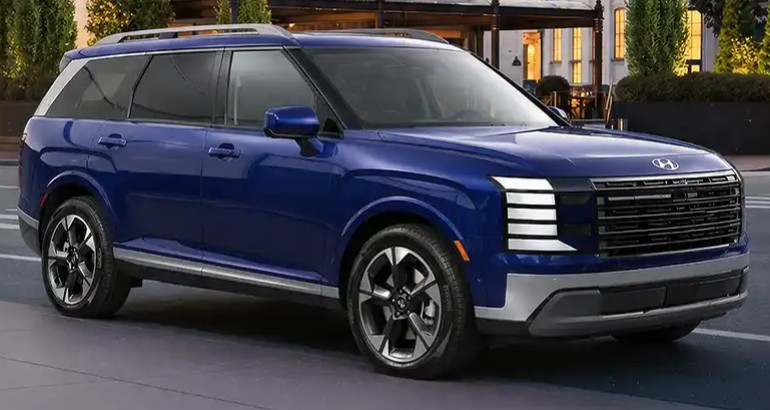
Put the Hyundai Palisade vs Ford Everest side by side and, at first glance, they appear to be chasing the same buyer. Both are big SUVs. Both can carry seven people. Both promise enough space for family holidays, school runs, luggage, pets, and the occasional hardware-store expedition that somehow turns into a full boot of supplies.
Yet these two SUVs approach the job from very different directions.
The Hyundai Palisade is essentially a luxurious family SUV with adventure capability added to the recipe. The Ford Everest starts with much tougher foundations and then adds the comfort, technology, and refinement families expect from a modern SUV.
Think of the Palisade as a comfortable pair of premium walking shoes and the Everest as hiking boots that have somehow become surprisingly pleasant around town.
So, which one should we buy?
For most families spending the majority of their time on sealed roads, the Hyundai Palisade is arguably the more refined and comfortable choice. For towing, challenging terrain, camping, and genuine four-wheel-driving, however, the Ford Everest is clearly the stronger tool.
Let's dig deeper, because the answer gets much more interesting once we move beyond the badges.
Note: Specifications differ between countries and model years. Because both vehicles are currently relevant to Australian buyers, this comparison primarily references current Australian-market models, including the latest Palisade Hybrid and MY26.5 Everest range. Always confirm the exact specifications of the variant available in your market.
Content in this publication
- Hyundai Palisade vs Ford Everest at a Glance
- What Really Separates the Palisade From the Everest?
- Engine and Performance Comparison
- Ford Everest Engine Options
- Fuel Economy: The Palisade Lands a Big Punch
- Hyundai Palisade vs Ford Everest Towing Capacity
- Off-Road Capability: Everest Takes Control
- On-Road Comfort: Palisade Strikes Back
- Interior Design and Cabin Quality
- Seating and Family Practicality
- Cargo Space and Everyday Usability
- Technology Comparison
- Safety: Both Take Family Protection Seriously
- City Driving and Parking
- Hyundai Palisade vs Ford Everest Reliability
- Running Costs and Ownership
- Which Is Better for Camping?
- Which SUV Is Better for a Large Family?
- Hyundai Palisade vs Ford Everest: Pros and Cons
- Who Should Buy the Hyundai Palisade?
- Who Should Buy the Ford Everest?
- Hyundai Palisade vs Ford Everest: Our Verdict
- Frequently Asked Questions
- Closing Thoughts
Hyundai Palisade vs Ford Everest at a Glance
Before we get buried in numbers, here's the personality of each SUV.
| Category | Hyundai Palisade | Ford Everest |
|---|---|---|
| Basic philosophy | Premium family SUV | Rugged 4WD family SUV |
| Seating | 7 or 8 | Up to 7 |
| Current Australian engines | 2.5L turbo hybrid AWD | 2.0L turbo diesel or 3.0L V6 turbo diesel |
| Maximum towing | Up to 2,200 kg on selected variant | Up to 3,500 kg |
| Best environment | City, highway, family touring | Towing, touring, off-road driving |
| Ride character | Smooth and car-like | Firm but composed and capable |
| Off-road ability | Moderate | Excellent |
| Fuel-economy focus | Strong, especially Hybrid | Reasonable for a heavy diesel 4WD |
| Cabin feel | Premium and spacious | Rugged-premium |
| Third-row usefulness | Excellent | Good |
| Best for | Comfort-focused families | Adventure-focused families |
The crucial thing here is that neither SUV is simply "better." They solve slightly different problems.
What Really Separates the Palisade From the Everest?
The biggest difference isn't horsepower, touchscreen size, or how many cupholders we can find.
It's architecture and purpose.
The Palisade has been developed to provide the smooth, predictable road manners associated with passenger vehicles and crossover SUVs. Hyundai itself describes the model as appealing to buyers seeking a more car-like driving experience than traditional body-on-frame 4WDs provide.
The Everest, meanwhile, is engineered much more like a serious touring 4WD. Its emphasis is obvious from its available full-time four-wheel drive, diesel torque, off-road hardware, towing technology, and maximum 3,500 kg braked towing capacity.
Palisade: Family Luxury First
With the Palisade, Hyundai asks: How comfortable can we make seven or eight people?
That's why its strengths revolve around cabin space, refinement, technology, easy driving, and passenger comfort.
Everest: Capability First
Ford asks a slightly different question: How capable can a family SUV be without making it unpleasant to live with every day?
That mindset produces a vehicle better suited to towing a caravan, tackling rough tracks, and travelling into places where bitumen disappears.
Neither philosophy is wrong. We simply need to determine which one matches our lifestyle.
Engine and Performance Comparison
The powertrain battle has changed significantly with the introduction of the latest Palisade Hybrid.
Hyundai Palisade Hybrid Power
The Australian Palisade Hybrid combines a 2.5-litre turbocharged petrol engine with electric assistance and AWD.
Hyundai lists combined output at 245 kW and 460 Nm, paired with a six-speed automatic transmission.
That's a healthy amount of power for a large family SUV.
More importantly, the electric motors help provide immediate response at lower speeds. Around town, this gives the Palisade an effortless feeling that suits its luxury-oriented personality.
The hybrid isn't trying to imitate a performance SUV. Instead, power arrives smoothly and progressively.
Does the Hybrid Feel Strong Enough?
For ordinary family driving? Absolutely.
Overtaking, joining highways, climbing hills, and travelling with several occupants should rarely make the Palisade feel underpowered.
Where the distinction emerges is under heavy loads.
Ford Everest Engine Options
Ford offers a much more traditional 4WD powertrain approach.
Current Australian MY26.5 Everest models can be equipped with a 2.0-litre turbo-diesel producing 125 kW and 405 Nm, while the available 3.0-litre V6 turbo-diesel produces 184 kW and a substantial 600 Nm. Both use a 10-speed automatic transmission.
That 600 Nm figure tells us much of what we need to know.
While the Palisade produces more peak power, the V6 Everest's muscular low-rpm diesel torque is exactly what we want when dragging a heavy caravan uphill or crawling across difficult terrain.
Which SUV Feels Faster?
Without turning this into a drag-racing contest nobody asked for, the Palisade Hybrid should feel impressively responsive in normal road driving.
The V6 Everest feels less eager to sprint and more eager to pull.
That's an important distinction.
If our daily routine consists of traffic lights, suburban roads, and highways, the Hyundai's powertrain makes tremendous sense.
Attach a large caravan and point the nose toward the mountains, however, and the Everest begins speaking a language the Palisade doesn't quite understand.
Fuel Economy: The Palisade Lands a Big Punch
Here's where hybrid technology changes the conversation.
Hyundai quotes combined fuel consumption of 6.8 L/100 km for the current Australian Palisade Hybrid.
For something this large, that's impressive.
Of course, laboratory figures and real-world consumption aren't identical. Load the vehicle with passengers, drive aggressively, tow, or spend hours travelling uphill and consumption will rise.
Nevertheless, the Palisade's hybrid system gives it a major theoretical advantage during mixed urban and highway use.
Why the Hybrid Works Well Around Town
Large traditional SUVs aren't particularly happy in stop-start traffic. We're repeatedly accelerating two-plus tonnes, wasting energy during braking, and starting the cycle again.
A hybrid recovers part of that otherwise wasted braking energy and uses electric assistance when appropriate.
That's why the Palisade makes so much sense for families who want a large SUV but spend Monday through Friday doing distinctly unadventurous things.
School run?
Supermarket?
Traffic?
Office commute?
The Palisade feels built for that reality.
Hyundai Palisade vs Ford Everest Towing Capacity
If towing forms a serious part of our buying decision, the contest swings dramatically toward Ford.
The current mainstream Australian Palisade Hybrid is rated to tow up to 2,000 kg braked, while the more adventure-focused Palisade XRT PRO raises maximum braked towing capacity to 2,200 kg.
The Everest can tow up to 3,500 kg braked when properly equipped.
That's not a tiny difference.
That's the difference between saying, "Yes, this SUV can tow," and designing major parts of the vehicle's personality around serious towing.
Everest Is the Clear Choice for Heavy Caravans
Consider buyers planning to tow:
- Large caravans
- Big boats
- Horse floats
- Heavy camper trailers
- Equipment trailers
The Everest gives us significantly more flexibility.
Ford also offers dedicated towing technology, including available Pro Trailer Backup Assist and a 360-degree camera on relevant variants.
The Palisade remains perfectly useful for moderate towing duties.
But towing is one category where we'd have little hesitation awarding the victory to the Ford.
Remember: Maximum Towing Isn't the Whole Story
A 3,500 kg tow rating doesn't automatically mean we can fill the Everest with seven adults, luggage, accessories, and a 3.5-tonne caravan simultaneously.
Towball weight contributes to vehicle payload, and GVM and GCM limits still apply. Ford specifically warns that passengers or luggage may need to be restricted when towing at maximum limits.
So always calculate the entire setup rather than shopping by the biggest number in the brochure.
Off-Road Capability: Everest Takes Control
Here's another category with a fairly straightforward winner.
The Ford Everest is a genuine off-road-oriented SUV.
Depending on the variant, we get four-wheel-drive systems and terrain-focused technology designed for difficult surfaces. The Tremor goes even further with 17-inch wheels, all-terrain tyres, a wider track, and Bilstein position-sensitive dampers.
You may be interested in reading Hyundai Palisade Versus Toyota Highlander: Which Three-Row SUV Makes More Sense?
That isn't decorative ruggedness.
It's functional hardware.
Can the Hyundai Palisade Go Off Road?
Yes—but we need to define "off road."
The Palisade's AWD system and available terrain modes can provide valuable traction on gravel, snow, mud, sand, camping tracks, and slippery surfaces.
The latest XRT PRO pushes that formula further with all-terrain tyres, an electronic limited-slip differential, recovery hooks, terrain modes, and increased towing capability.
For many families, that's more than enough.
But the Palisade Isn't an Everest
If we're regularly tackling deeply rutted tracks, rocky terrain, difficult river crossings, or remote 4WD trails, we'd still choose the Ford.
It's like comparing a high-quality hiking shoe with a proper mountaineering boot. Both can walk through dirt. Only one is designed around the expectation that things might get ugly.
On-Road Comfort: Palisade Strikes Back
Capability comes with compromises.
The Everest's tougher construction and off-road priorities mean it generally can't reproduce the polished, crossover-like feel of the Palisade on smooth roads.
The Palisade feels more natural in suburbia.
Steering is easy. The suspension is tuned around passenger comfort. Power delivery is smooth. The cabin feels isolated from the outside world.
For families spending 95% of their driving time on sealed roads, those qualities matter every single day.
Everest Is Better Than Old-School 4WDs
We shouldn't misunderstand the point.
The latest Everest is far from crude. Modern versions are comfortable, sophisticated, quiet by traditional 4WD standards, and packed with technology.
But physics still sends us the bill.
A vehicle designed to carry loads, tow heavily, and survive tough terrain usually feels different from a road-oriented crossover.
Which Is Better for Long Highway Trips?
This one's close.
The Palisade wins for sheer passenger relaxation.
The Everest wins when the highway trip involves a caravan, rough destinations, dirt roads, or uncertain conditions.
Interior Design and Cabin Quality
Climb inside either SUV and the stereotype of the cheap, plasticky family truck quickly disappears.
Both can feel properly premium.
The difference is atmosphere.
Palisade Interior: Almost Luxury-SUV Territory
The Palisade places comfort front and centre.
The latest generation incorporates a sweeping modern dashboard, premium materials, large displays, clever storage, and extensive connectivity technology.
It feels like somewhere we'd happily spend six hours on the highway.
Hyundai's current Palisade also offers seven- or eight-seat configurations, giving families more flexibility than the Everest.
The seven-seat layout can use second-row captain's chairs, which create a more luxurious environment and easier access to the third row.
Everest Interior: Smart but Tough
Ford gives the Everest a more upright, rugged dashboard.
Current models feature a large 12-inch portrait touchscreen with SYNC 4A, wireless Apple CarPlay and Android Auto, plus digital instrumentation.
It looks modern without pretending the vehicle isn't designed to get dirty.
That's a good combination.
Seating and Family Practicality
If we're regularly carrying a big family, don't skip this section.
Seat count alone doesn't tell the entire story.
Palisade Can Seat Eight
That single fact may decide the comparison for some buyers.
The Palisade offers seven- or eight-seat layouts, depending on configuration.
If we have five children, regularly transport grandparents, or simply want maximum seating flexibility, eight seats can be incredibly useful.
The Everest generally tops out at seven.
Which Has the Better Third Row?
We'd favour the Palisade.
Because its architecture prioritises passenger packaging rather than hardcore off-road hardware, the third row feels more integral to the vehicle rather than something added for occasional use.
That doesn't make the Everest's third row bad.
Kids should be perfectly happy back there, and adults can use it when necessary.
But if adults regularly occupy all three rows, the Palisade is the vehicle we'd inspect first.
Cargo Space and Everyday Usability
Big families generate luggage the way clouds generate rain.
Pushchairs, school bags, groceries, football kits, suitcases, camping equipment—somehow it all needs to fit.
Hyundai quotes 712 litres of rear cargo volume with the third row folded and up to 2,081 litres with the second and third rows folded for the latest Palisade Hybrid.
Those are serious numbers.
The Shape of the Space Matters
Boot statistics can mislead.
What matters is whether the cargo area is wide, reasonably flat, accessible, and usable with the seats arranged the way our family actually needs them.
The Palisade's broad, family-oriented body gives it an advantage here.
The Everest remains highly practical, but its packaging must also accommodate the engineering required for its heavier-duty mission.
Technology Comparison
Both SUVs have evolved far beyond basic infotainment.
We're talking about connected services, large displays, 360-degree cameras, wireless smartphone integration, advanced driver assistance, and increasingly sophisticated software.
The latest Palisade features technology such as Hyundai Digital Key 2, surround-view monitoring, connected Bluelink functions, and over-the-air connectivity on relevant variants.
Ford counters with its 12-inch SYNC 4A touchscreen, wireless smartphone integration, available 360-degree camera, towing assistance, and extensive driver-assistance systems.
Who Wins Technology?
We'd call it a draw with different strengths.
Hyundai's technology feels geared toward comfort and family convenience.
Ford's technology adds an extra layer of capability, particularly when towing or manoeuvring off road.
Safety: Both Take Family Protection Seriously
Buying a seven-seat SUV usually means we're transporting people who matter to us, so safety understandably sits high on the checklist.
Current versions of both vehicles offer extensive active driver-assistance technology.
The latest Palisade Hybrid has received a five-star ANCAP safety rating, while current Everest variants also carry five-star ANCAP credentials where specified.
Available systems across the two ranges include features such as autonomous emergency braking, blind-spot monitoring, adaptive cruise control, lane-related assistance, surround-view cameras, and rear cross-traffic functions.
We wouldn't choose one purely because its list contains one additional acronym.
Instead, check exactly which safety systems come standard on the trim you're considering.
City Driving and Parking
Here's where the Palisade's road-oriented character starts earning its keep.
Neither vehicle is small.
You may be interested in readingHyundai Palisade Versus Toyota Highlander: Which Three-Row SUV Makes More Sense?You may be interested in reading
 Ford Edge vs Escape: Which Ford SUV Makes More Sense?
You're not going to mistake either for a hatchback when squeezing into an underground parking space.
But the Palisade tends to feel less truck-like around town.
Smooth power delivery, predictable steering, cameras, parking sensors, and a refined suspension make urban driving surprisingly painless.
Everest Requires a Little More Awareness
The Everest's commanding seating position provides excellent visibility, but its tougher dimensions and 4WD personality never completely disappear.
That said, modern cameras and parking technology remove much of the intimidation.
Once accustomed to its size, most drivers should manage perfectly well.
Hyundai Palisade vs Ford Everest Reliability
Reliability is difficult to declare based purely on a badge.
Both Hyundai and Ford have produced reliable vehicles and vehicles with known issues over the years.
The smarter approach is to distinguish between mechanical complexity, usage, servicing, and individual powertrains.
The Palisade Hybrid introduces additional electrical and hybrid components but benefits from a drivetrain engineered specifically around efficient family transportation.
The Everest's diesel engines and heavy-duty drivetrain are designed for demanding use, but diesel emissions equipment, 4WD systems, and towing-related wear can make ownership more complicated as vehicles age.
How We Would Approach a Used Example
If buying used, we'd care more about:
- Complete service history
- Evidence of correct maintenance
- Previous towing workload
- Off-road use
- Accident history
- Tyre condition
- Transmission behaviour
- Warning lights
- Diesel emissions-system condition
- Hybrid-system diagnostics where applicable
A meticulously maintained vehicle is often a safer bet than the supposedly "better" model with a mysterious past.
Running Costs and Ownership
The Palisade Hybrid should have a meaningful fuel-cost advantage for many everyday drivers.
It also doesn't need the same kind of off-road accessories buyers frequently add to Everests.
An Everest owner, meanwhile, may end up spending money on tow equipment, all-terrain tyres, roof systems, suspension accessories, camping gear, and other modifications.
Not because the Everest needs all of them—but because adventure vehicles have a strange ability to turn perfectly sensible adults into accessory-catalogue enthusiasts.
Tyres Can Make a Big Difference
Large premium wheels may look terrific, but replacement tyres aren't cheap.
Drivers who regularly travel off road may prefer smaller wheels with higher-profile tyres, which can improve both durability and ride comfort.
The Everest Tremor's 17-inch all-terrain setup is a good example of function taking priority over showroom glamour.
Which Is Better for Camping?
We need to ask what kind of camping we're talking about.
If "camping" means a comfortable campground reached by paved roads, the Palisade works beautifully.
Pack the family, load the boot, enjoy the quiet cabin, and arrive refreshed.
If camping means driving three hours beyond the final fuel station before following a rough track toward somewhere our phone stopped receiving signal 40 minutes ago, bring the Everest.
Its stronger towing ability and deeper off-road focus make it the more convincing adventure vehicle.
Which SUV Is Better for a Large Family?
For a family prioritising passenger comfort, we'd choose the Hyundai Palisade.
The available eight-seat configuration is particularly useful.
It feels like a vehicle designed from the inside out around humans rather than machinery.
Children, grandparents, and adults in the second row are likely to appreciate that emphasis.
When the Everest Is the Better Family Car
The calculation changes if weekends revolve around:
- Caravanning
- Boating
- Remote touring
- Off-road camping
- Dirt roads
- Heavy trailers
- Outdoor sports
Then the Everest's ruggedness isn't unnecessary engineering.
It's precisely why we're buying the vehicle.
Hyundai Palisade vs Ford Everest: Pros and Cons
Hyundai Palisade Advantages
The Palisade gives us excellent passenger comfort, seven- or eight-seat flexibility, strong hybrid efficiency, polished road manners, impressive cabin technology, generous cargo space, and a distinctly premium atmosphere.
Hyundai Palisade Disadvantages
Its biggest weakness is straightforward: compared with the Everest, towing and serious off-road capability are limited.
Even the tougher XRT PRO's 2,200 kg braked towing rating remains far below the Everest's 3,500 kg maximum.
Ford Everest Advantages
The Everest delivers substantially stronger towing capability, excellent diesel torque, genuine four-wheel-drive ability, sophisticated towing technology, better performance over difficult terrain, and impressive versatility for adventurous families.
Ford Everest Disadvantages
We trade some road-oriented refinement and fuel-efficiency potential for that extra capability.
Seven seats are also the limit, whereas the Palisade can accommodate eight.
Who Should Buy the Hyundai Palisade?
Buy the Palisade if our priorities sound something like this:
"We need a big SUV for the family. We want plenty of room. We like premium features. We drive mainly around town and on highways. We take long road trips, but we're not trying to cross the Simpson Desert."
That's almost the Palisade's perfect customer profile.
The latest hybrid makes an already family-friendly concept even more compelling by bringing impressive claimed efficiency without sacrificing strong combined power.
Who Should Buy the Ford Everest?
Buy the Everest if we're saying:
"We need seven seats, but we also tow. We camp. We travel off road. We want proper four-wheel-drive capability. Sometimes our holiday destination is exactly where the sealed road ends."
The V6 diesel is particularly appealing for buyers who need substantial torque.
It's not simply an SUV that looks ready for adventure.
Adventure is baked into its engineering.
Hyundai Palisade vs Ford Everest: Our Verdict
After comparing the Hyundai Palisade vs Ford Everest, we'd divide the verdict into two simple categories.
For mainstream family use, the Hyundai Palisade is our pick.
Why?
Because most people buying a large SUV spend far more time commuting, transporting children, shopping, travelling on highways, and navigating suburbs than climbing rocky tracks. The Palisade's comfortable ride, spacious cabin, eight-seat availability, hybrid efficiency, and premium atmosphere make those everyday kilometres easier.
But the Ford Everest wins decisively for serious towing and off-road use.
Its maximum 3,500 kg towing capability, available 600 Nm V6 turbo-diesel, four-wheel-drive hardware, and adventure-focused variants give it abilities the standard Palisade simply cannot match.
So instead of asking which SUV is objectively superior, ask one more useful question:
What are we actually going to do with it?
If our adventures mostly happen on sealed roads, take the Palisade.
If the road itself is part of the adventure, take the Everest.
Frequently Asked Questions
1. Is the Hyundai Palisade better than the Ford Everest?
The Hyundai Palisade is arguably better for families prioritising comfort, interior space, fuel efficiency, and everyday road driving. The Ford Everest is better for buyers needing heavy towing and genuine off-road capability. Which is "better" therefore depends more on how we use the SUV than on equipment alone.
2. Which is better off road, Hyundai Palisade or Ford Everest?
The Ford Everest is the stronger off-road vehicle. Its 4WD-focused engineering and available off-road equipment make it much better suited to challenging terrain. The Palisade AWD can handle slippery roads, gravel, mild trails, sand, snow, and similar conditions, while the XRT PRO increases its capability further, but neither changes the Everest's fundamental advantage.
3. Which can tow more, Ford Everest or Hyundai Palisade?
The Ford Everest wins comfortably. Current Australian Everest models can tow up to 3,500 kg braked when properly equipped. The mainstream Palisade Hybrid is rated up to 2,000 kg, while the Palisade XRT PRO increases that figure to 2,200 kg.
4. Which is more fuel efficient, Hyundai Palisade or Ford Everest?
For ordinary mixed driving, the latest Palisade Hybrid is particularly attractive. Hyundai quotes 6.8 L/100 km combined for the Australian-market hybrid. Actual consumption varies with driving conditions, vehicle load, weather, towing, and driving style, so real-world results can differ.
5. Which is better for a family, Palisade or Everest?
We'd choose the Palisade for a typical family because it prioritises passenger comfort, offers seven- or eight-seat configurations, provides generous cargo capacity, and behaves more like a refined passenger vehicle around town. We'd choose the Everest for an adventurous family that regularly tows caravans, travels on rough roads, camps remotely, or needs genuine four-wheel-drive ability.
Closing Thoughts
The Hyundai Palisade and Ford Everest prove there's more than one way to build a great large SUV.
The Palisade wraps family life in comfort. It's roomy, sophisticated, quiet, technologically advanced, and—especially with the latest hybrid powertrain—surprisingly efficient for something with such a substantial footprint.
The Everest takes the tougher road. It gives up a little crossover-like polish in exchange for the kind of towing and off-road capability that turns distant campsites, large caravans, and rough tracks into realistic weekend plans.
Neither formula needs fixing.
You may be interested in readingHyundai Palisade Versus Toyota Highlander: Which Three-Row SUV Makes More Sense?You may be interested in reading
Ford Edge vs Escape: Which Ford SUV Makes More Sense?You may be interested in reading
Ford Edge vs Explorer: Which Ford SUV Is Right for You?We simply need to choose the one that matches our driveway—and the roads waiting beyond it.
If you want to know other articles similar to Hyundai Palisade vs Ford Everest: Which Large SUV Is Better? you can visit the category Models.
Haval Jolion vs Omoda C5: Which SUV Is Better?
Haval Jolion vs Chery Tiggo 4 Pro: Full Comparison
Haval Jolion vs H6: Which SUV Is Better in 2026?
Haval Jolion vs Toyota Corolla Cross: Which SUV Is Better?
Haval Jolion vs Jaecoo J5: Which SUV Is Better?
Volkswagen T-Cross vs Volkswagen T-Roc: Which Is Better?
Leave a Reply
More content of your interest