
Subaru Impreza vs Toyota Camry: Which Car Is Better?

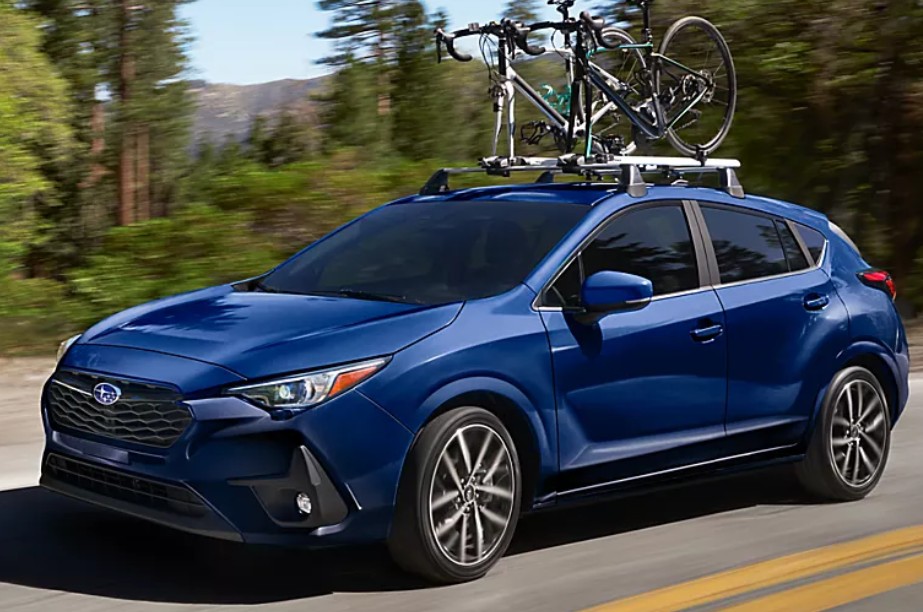
Choosing between the Subaru Impreza vs Toyota Camry looks straightforward until we actually examine what these two cars are built to do. Both are practical, well-known Japanese vehicles with strong reputations, but they approach everyday driving from completely different directions.
The Subaru Impreza is the smaller, more agile option. It traditionally emphasizes standard all-wheel drive, hatchback practicality, predictable handling, and confidence when roads become wet, snowy, or messy. The Toyota Camry, meanwhile, plays in a larger class. It focuses more heavily on passenger comfort, highway refinement, fuel economy, cabin space, and the relaxed driving experience expected from a midsize sedan.
So, which one should we buy?
That depends less on which vehicle is "better" and more on how we expect to use it. Someone dealing with winter roads may immediately appreciate the Impreza. A commuter covering hundreds of highway miles every week might find the Camry much more appealing.
Let's put them side by side and see where each one wins.
Content in this publication
- Subaru Impreza vs Toyota Camry at a Glance
- Understanding the Fundamental Difference
- Exterior Size and Everyday Maneuverability
- Interior Space: Camry Takes the Lead
- Cargo Space: Hatchback Versatility vs Sedan Trunk
- Subaru Impreza vs Toyota Camry Performance
- All-Wheel Drive and Traction
- Fuel Economy: Toyota Camry Has an Important Advantage
- Ride Comfort
- Handling and Steering
- Subaru Impreza vs Toyota Camry Reliability
- Maintenance Costs
- Insurance Costs
- Safety Technology
- Technology and Infotainment
- Interior Quality
- Road Noise
- Winter Driving
- Subaru Impreza vs Toyota Camry for Families
- Which Is Better for College Students?
- Which Is Better for Commuters?
- Which Is Better for Road Trips?
- Subaru Impreza vs Toyota Camry Used Car Comparison
- Resale Value
- Driving Position and Visibility
- Impreza vs Camry: Pros and Cons
- Who Should Buy the Subaru Impreza?
- Who Should Buy the Toyota Camry?
- Subaru Impreza vs Toyota Camry: Which Is Cheaper to Own?
- What About Performance Enthusiasts?
- Subaru Impreza vs Toyota Camry: Which Is Better Overall?
- Final Verdict
- Frequently Asked Questions
Subaru Impreza vs Toyota Camry at a Glance
Before digging into every detail, we can summarize the personalities of these two cars rather easily.
| Category | Subaru Impreza | Toyota Camry |
|---|---|---|
| Vehicle type | Compact hatchback/car | Midsize sedan |
| Primary strength | AWD versatility | Comfort and efficiency |
| Typical drivetrain advantage | Standard AWD | Efficient FWD/AWD configurations depending on model |
| Passenger space | Good for a compact | More spacious overall |
| Cargo practicality | Excellent hatchback flexibility | Large traditional trunk |
| City maneuverability | Excellent | Good |
| Highway comfort | Good | Excellent |
| Poor-weather confidence | Excellent | Good to very good |
| Fuel economy | Competitive | Usually stronger |
| Driving character | Agile and planted | Smooth and composed |
| Best suited to | Active lifestyles, winter climates | Commuters and families |
The biggest mistake we can make is viewing this purely as a specification contest. The Impreza and Camry belong to different size classes, and that difference shapes almost everything else.
The Subaru feels like a practical backpack: compact, flexible, and ready for unpredictable conditions. The Camry feels more like comfortable luggage on wheels: bigger, smoother, and designed to make long journeys effortless.
Understanding the Fundamental Difference
The Subaru Impreza Is a Compact Car
The Impreza occupies the compact-car segment. In recent generations, the model has leaned particularly heavily toward the hatchback format.
That gives it an interesting combination.
We get relatively modest exterior dimensions but a surprisingly useful interior. Fold the rear seats and the Impreza can swallow items that would be awkward or impossible to fit through the trunk opening of many sedans.
It is particularly attractive to drivers who want one vehicle for commuting, groceries, outdoor activities, weekend trips, and unpredictable weather.
The Toyota Camry Is a Midsize Sedan
The Camry sits one class above the Impreza.
That matters.
Its longer body provides more room for passengers, particularly adults riding in the back. Its suspension tuning generally prioritizes comfort, while its cabin feels more relaxed during extended highway driving.
Think of the Camry as the traditional all-round family sedan polished over decades.
Rather than trying to feel sporty or adventurous first, it focuses on making ordinary transportation remarkably easy.
Exterior Size and Everyday Maneuverability
The Impreza's smaller footprint becomes obvious in crowded environments.
Parallel parking is easier. Tight parking garages feel less intimidating. Narrow streets become simpler to navigate.
Anyone living in a dense city may appreciate that advantage every single day.
The Camry requires slightly more space, although we certainly would not describe it as difficult to drive. Modern cameras, parking aids, and driver-assistance technologies reduce much of the inconvenience associated with a larger vehicle.
Still, physics is physics.
A smaller car fits into smaller gaps.
Which Is Better in the City?
For dense urban driving, we would generally give the advantage to the Subaru Impreza.
Its compact dimensions and hatchback configuration make it especially convenient when parking frequently or maneuvering through crowded streets.
However, drivers spending most of their time on wide suburban roads may barely notice the difference.
Interior Space: Camry Takes the Lead
Step inside and the Toyota begins showing why midsize cars still have a loyal audience.
The Camry generally provides more generous passenger accommodations, particularly for rear-seat occupants.
If we're regularly transporting four adults, that extra room can make a noticeable difference.
Nobody wants a two-hour trip with their knees pressed into the seat ahead.
Front-Seat Comfort
Both vehicles can provide comfortable front seats, but their personalities differ.
The Subaru places us in a practical, driver-oriented environment. Visibility tends to be good, controls are accessible, and the overall cabin feels functional.
The Camry tends to create a broader, more relaxed feeling. Its larger dimensions allow greater separation between passengers, contributing to the impression that we're traveling in a more substantial automobile.
Rear-Seat Space
This is where the Camry becomes especially appealing.
Parents carrying teenagers, adults frequently driving colleagues, or ride-share drivers may appreciate its additional rear passenger space.
The Impreza's back seat is perfectly usable, but it remains a compact vehicle.
For frequent adult passengers, Camry wins.
Cargo Space: Hatchback Versatility vs Sedan Trunk
Here things become more interesting.
Looking only at cargo measurements can be misleading because cargo shape matters just as much as cargo volume.
Why the Impreza Hatchback Is So Useful
Open the Impreza's rear hatch and we get a wide opening extending upward with the door.
That makes loading bulky objects much easier.
A folded stroller, bicycle equipment, camping gear, boxes, luggage, or sports equipment can fit surprisingly well.
Fold down the rear seats and the Impreza transforms from commuter into miniature cargo carrier.
That flexibility is one of its strongest arguments.
The Camry Still Offers Plenty of Luggage Room
The Camry provides a conventional trunk that works extremely well for groceries, suitcases, briefcases, backpacks, and other normal luggage.
For a family road trip, its trunk can be excellent.
The limitation is the opening.
Large awkward objects that fit inside the theoretical cargo volume may not fit through a sedan's trunk aperture.
Which Cargo Area Is Better?
We would choose the Impreza for versatility and the Camry for conventional luggage carrying.
If we're frequently moving unusual or bulky items, the Subaru has the edge.
Subaru Impreza vs Toyota Camry Performance
Performance involves more than acceleration.
We need to consider throttle response, handling, traction, ride quality, engine behavior, transmission calibration, and how confident the vehicle makes us feel.
Impreza Driving Character
The Subaru traditionally delivers a low, planted feeling.
Its horizontally opposed engine layout and all-wheel-drive system contribute to a driving experience that feels stable and predictable.
It isn't necessarily a tire-smoking performance machine.
Instead, the Impreza feels reassuring.
Point it toward a wet curve and it tends to inspire confidence rather than drama.
Camry Driving Character
The Camry approaches performance differently.
It emphasizes smoothness and easy speed.
The car generally feels more mature on highways, where its longer wheelbase and comfort-oriented personality become obvious.
Acceleration and power depend heavily on model year and powertrain, particularly as Toyota has moved further toward electrification and hybrid technology.
Regardless of configuration, the Camry's mission remains clear: provide effortless daily transportation.
All-Wheel Drive and Traction
This category historically represents one of the Subaru Impreza's strongest advantages.
Standard AWD Is Part of the Impreza Identity
Subaru has built much of its brand around symmetrical all-wheel drive, and the Impreza is one of the clearest examples.
For drivers living where snow, rain, steep roads, gravel, or rapidly changing weather conditions are common, AWD can be valuable.
The advantage isn't magic—we still need good tires—but sending power to all four wheels can improve traction when accelerating on slippery surfaces.
Can the Camry Compete in Bad Weather?
Depending on model year and market, Camry drivetrain availability differs, so buyers should confirm specifications for the exact vehicle they're considering.
Still, a front-wheel-drive Camry with high-quality winter or all-weather tires can perform perfectly well in many climates.
AWD isn't automatically required simply because rain exists.
But if poor-weather traction is near the top of our priorities, the Impreza provides a particularly convincing package.
Fuel Economy: Toyota Camry Has an Important Advantage
Fuel consumption can completely reshape the economics of car ownership.
This becomes especially important for commuters.
Imagine driving 15,000 or 20,000 miles every year. Even relatively small differences in fuel consumption begin adding up.
The Camry has increasingly emphasized efficiency, especially through hybrid technology.
The Impreza's permanent or full-time AWD-oriented design adds capability but also introduces mechanical losses and additional weight.
That's the classic automotive compromise.
We gain traction, but energy is required to operate that extra hardware.
Which Is Better for Long-Distance Commuting?
For someone primarily driving paved highways in moderate weather, the Camry often makes more sense.
Its combination of efficiency, quietness, range, and comfort is difficult to ignore.
The Impreza becomes more compelling when our commute includes challenging winter conditions or when we value versatility more than maximum fuel efficiency.
Ride Comfort
Few areas illustrate the difference between compact and midsize cars better than ride quality.
Camry Feels More Relaxed
The Camry's dimensions allow it to glide over many road imperfections with greater composure.
Long highway sections suit it beautifully.
Road expansion joints, uneven pavement, and minor bumps tend to feel less disruptive than they might in a smaller vehicle.
It's the automotive equivalent of swapping running shoes for comfortable slippers after a long day.
Impreza Feels More Connected
The Impreza tends to communicate more of what's happening beneath the wheels.
Some drivers will prefer that.
Its smaller size and relatively responsive chassis can make twisting roads more entertaining.
So although the Camry may provide more outright comfort, the Impreza can feel livelier.
Handling and Steering
A vehicle doesn't need hundreds of horsepower to be enjoyable.
Sometimes confidence through a corner matters more.
You may be interested in reading Subaru Impreza vs Honda Fit: Which Compact Car Makes More Sense?
The Subaru's relatively compact proportions and AWD traction give it an appealing sense of stability.
On winding roads, it often feels eager and controlled.
The Camry has become far more composed and dynamic than the old stereotype of a sleepy family sedan suggests. Nevertheless, comfort remains central to its personality.
We could describe the difference this way: the Impreza wants us to notice the road; the Camry wants the road to stop bothering us.
Subaru Impreza vs Toyota Camry Reliability
Reliability is one of the most important concerns for buyers considering either vehicle.
Both Subaru and Toyota have produced vehicles capable of covering high mileages, but maintenance history matters enormously.
A neglected Toyota can become troublesome.
A meticulously maintained Subaru can remain dependable for years.
Brand reputation alone should never replace inspection.
Toyota Camry Reliability
The Camry has developed one of the strongest durability reputations in the mainstream automotive market.
Its popularity also helps.
Because millions of Camrys have been sold over the years, parts availability and mechanic familiarity can be excellent.
Many independent repair shops know these cars intimately.
That can simplify long-term ownership.
Subaru Impreza Reliability
The Impreza can also deliver dependable service, particularly when maintenance schedules are followed carefully.
Buyers of used examples should pay close attention to service history, fluid maintenance, cooling-system condition, leaks, suspension wear, and signs that the car has been modified or driven aggressively.
Older Subaru models sometimes attract enthusiasts who modify them.
Modifications aren't inherently bad, but questionable tuning can turn an otherwise sensible used car into an expensive science experiment.
Maintenance Costs
Routine maintenance costs depend heavily on location, labor rates, model year, and individual vehicle condition.
Still, there are broad patterns.
Toyota's enormous global footprint can make Camry parts relatively easy to source. The Camry's popularity also means owners usually have numerous dealership and independent-shop options.
Subaru maintenance is generally manageable, but its AWD system introduces additional drivetrain components.
That doesn't mean the system constantly breaks. It simply means there are more components that may eventually require attention.
Tire Replacement Matters on an AWD Subaru
One ownership detail deserves special attention.
AWD vehicles can be sensitive to significant differences in tire circumference.
That means replacing only one heavily worn tire may not always be ideal.
Owners should maintain proper tire pressure, rotate tires regularly, and keep tread wear reasonably even across all four wheels.
It's a small ownership habit that can help protect an expensive drivetrain.
Insurance Costs
Insurance prices are impossible to declare universally because premiums depend on age, location, driving record, coverage limits, vehicle year, trim, credit factors where legally permitted, and insurer methodology.
However, both cars sit within mainstream segments rather than exotic-performance territory.
The Camry's replacement value may be higher depending on trim and year, while the Impreza's AWD hardware and repair characteristics can affect claims costs differently.
Rather than assuming one is always cheaper, we recommend requesting quotes for the exact VINs being considered.
Sometimes the insurance difference between two vehicles is surprisingly large.
Safety Technology
Modern versions of both vehicles may include sophisticated driver-assistance systems.
Depending on trim and model year, these technologies can include adaptive cruise control, lane-departure alerts, lane-keeping assistance, automatic emergency braking, blind-spot monitoring, rear cross-traffic alert, and other collision-mitigation systems.
The exact equipment varies significantly by year.
That's particularly important when shopping used.
A feature that became standard later may have been optional—or completely unavailable—on an earlier model.
Subaru EyeSight
Subaru's EyeSight driver-assistance technology has become an important part of the brand's safety strategy.
Its functions vary between generations, so we should verify the equipment on the specific Impreza under consideration.
Toyota Safety Technologies
Toyota likewise offers extensive active-safety technology through its Toyota Safety Sense family of systems.
Again, capability depends on model year and version.
For buyers prioritizing safety, comparing exact trims makes more sense than comparing badges.
Technology and Infotainment
Modern buyers expect phones to connect quickly, navigation to make sense, screens to respond properly, and charging ports to actually be located somewhere useful.
Both cars have evolved substantially in this area.
The Impreza typically presents technology within a relatively simple compact-car environment.
The Camry, particularly in newer and higher-grade versions, can offer a more premium-feeling technology experience.
Screen size alone shouldn't determine our decision, though.
A smaller intuitive interface is often more pleasant than a giant screen buried beneath confusing menus.
Test the infotainment system personally.
Connect a phone.
Try the climate controls.
Adjust the radio while driving.
Those 30 seconds can tell us more than ten paragraphs of specifications.
Interior Quality
Historically, neither model has existed primarily as a luxury vehicle.
That's perfectly fine.
These cars are designed to survive daily life.
Still, the Camry's higher market positioning generally gives Toyota greater room to add soft-touch materials, enhanced seat upholstery, additional sound insulation, and more upscale trim on higher versions.
The Impreza's cabin tends to prioritize durability and straightforward usability.
For muddy shoes, dogs, backpacks, gym equipment, and outdoor gear, that practical atmosphere can actually be an advantage.
Road Noise
Compact cars generally have less space and budget for extensive sound insulation than larger models.
Therefore, the Camry commonly feels quieter at highway speeds.
Wind noise, road texture, and tire noise can become more noticeable inside an Impreza, particularly on coarse pavement.
This isn't necessarily bothersome around town.
After three hours on the interstate, however, reduced noise becomes surprisingly valuable.
If we frequently undertake long journeys, the Camry deserves serious consideration.
Winter Driving
Winter changes the entire comparison.
When snow begins falling, the Subaru's AWD system suddenly feels much more relevant.
Its drivetrain can provide excellent confidence when pulling away from intersections, climbing slippery hills, or negotiating unplowed streets.
But we cannot overstate one important point:
AWD does not improve braking grip beyond the limits of the tires.
Good winter tires can transform either vehicle.
A Camry wearing proper winter tires may outperform an Impreza wearing inappropriate summer rubber when stopping or turning on snow.
Ideally, drivers in severe winter climates combine AWD with seasonally appropriate tires.
That combination makes the Impreza especially formidable.
Subaru Impreza vs Toyota Camry for Families
Families need more than horsepower figures.
We care about child seats, luggage, rear legroom, groceries, safety, comfort, and how easily everyone gets through a normal Monday morning.
For families with older children, the Camry's extra passenger space gives it an advantage.
For families regularly carrying strollers, sports equipment, bicycles, pets, or bulky gear, the Impreza hatchback becomes surprisingly competitive.
Our decision therefore depends on what we transport.
People?
Camry.
Oddly shaped stuff?
Impreza.
Which Is Better for College Students?
Students often need a car that can do everything reasonably well without becoming enormous.
That's where the Impreza shines.
Its hatchback cargo area can handle moving-day boxes, laundry, backpacks, furniture pieces, and weekend gear. AWD can be particularly useful for students attending universities in snowy regions.
The Camry may still appeal to students with long commutes because of its fuel economy and comfort.
A used example with strong maintenance records can make an excellent long-term car.
Purchase condition matters more than the badge on the grille.
Which Is Better for Commuters?
Most commuters should think carefully about their environment.
You may be interested in readingSubaru Impreza vs Honda Fit: Which Compact Car Makes More Sense?You may be interested in reading
Subaru Impreza or Legacy: Which Subaru Should We Choose?If we're driving 60 highway miles per day in a mild climate, the Camry's efficiency and refinement can provide meaningful benefits.
If our commute involves snowy roads, steep terrain, tight city streets, or frequent parking, the Impreza's compact dimensions and AWD may be more valuable.
We can simplify the choice into one question:
What irritates us more—fuel stops or slippery roads?
Our answer moves us surprisingly close to the right car.
Which Is Better for Road Trips?
For traditional road trips involving passengers and highways, we prefer the Camry.
The reasons are straightforward: spacious seating, relaxed driving characteristics, strong efficiency, and generally comfortable highway manners.
A long trip should feel like traveling, not enduring.
However, adventurous travelers shouldn't dismiss the Subaru.
If our road trip involves ski equipment, camping supplies, mountain weather, muddy parking areas, or outdoor recreation, the Impreza's hatchback layout and AWD become extremely attractive.
Subaru Impreza vs Toyota Camry Used Car Comparison
Buying used changes the equation dramatically.
At that point, vehicle condition can matter more than model reputation.
A carefully maintained Impreza with complete service documentation may be a far smarter purchase than an abused Camry with mysterious gaps in its history.
The opposite is equally true.
When evaluating either vehicle, we should check:
- Service and ownership history, accident records, fluid condition, tire wear, suspension behavior, warning lights, leaks, brakes, electronic equipment, air-conditioning performance, cold-start behavior, transmission operation, and evidence of poor-quality modifications.
A professional pre-purchase inspection is inexpensive compared with discovering major mechanical problems after ownership begins.
Watch for Modified Imprezas
Used Imprezas deserve one additional check.
Some owners modify Subaru vehicles because of the brand's enthusiast following.
We should examine aftermarket wheels, altered suspension, engine modifications, unusual exhaust components, tuning devices, and other signs the vehicle may have been driven aggressively.
Stock isn't automatically perfect, but a clean factory configuration often makes evaluation easier.
Used Camry Condition Still Matters
The Camry's reputation can occasionally become its own enemy.
Some owners assume Toyotas require virtually no maintenance.
They do.
Oil changes, coolant, brake service, tires, filters, transmission servicing where applicable, and general inspections still matter.
Reliability should never become an excuse for neglect.
Resale Value
Both Subaru and Toyota enjoy strong customer loyalty in many markets.
Toyota's reputation for durability can support Camry resale values, particularly when the vehicle has complete maintenance records and remains in good cosmetic condition.
Subaru demand can be particularly strong in mountainous or snowy areas where AWD carries additional value.
Location matters more than we might expect.
An AWD Impreza may attract substantially more interest in Colorado or Vermont than in a region where winter weather is practically nonexistent.
Driving Position and Visibility
Visibility is one of those characteristics spec sheets struggle to communicate.
Subaru has traditionally placed considerable emphasis on outward visibility.
That can make the Impreza easy to position in traffic and parking lots.
The Camry provides a more sedan-like driving environment. Some drivers may appreciate its lower, more substantial feel.
Neither approach is universally superior.
Spend time adjusting the seat, steering wheel, and mirrors before deciding.
A car we're comfortable seeing out of is usually a car we're more confident driving.
Impreza vs Camry: Pros and Cons
Rather than crowning a universal champion, it helps to understand each vehicle's strongest and weakest traits.
The Subaru Impreza stands out for AWD traction, compact dimensions, hatchback utility, maneuverability, and confidence on poor roads. Its compromises can include lower fuel economy than highly efficient Camry variants, less rear-seat room, more road noise, and a less relaxed highway experience.
The Toyota Camry counters with generous passenger space, excellent commuting manners, strong efficiency, highway refinement, widespread service familiarity, and a well-established durability reputation. Its conventional sedan body is less flexible for bulky cargo, while its larger exterior dimensions aren't quite as convenient in tight spaces.
Neither set of weaknesses is particularly alarming.
They're simply evidence that these vehicles were designed around different priorities.
Who Should Buy the Subaru Impreza?
Choose the Impreza if versatility matters more than maximum comfort.
It makes particular sense for people living in climates where rain, snow, and slippery roads are normal.
It's also excellent for drivers who regularly carry equipment rather than large numbers of passengers.
Outdoor enthusiasts may especially appreciate the combination of AWD and hatchback cargo access.
Throw in hiking equipment, photography bags, snowboarding gear, or camping supplies and the Subaru starts feeling like a tiny wagon disguised as an ordinary compact car.
Who Should Buy the Toyota Camry?
Choose the Camry if everyday comfort and efficiency dominate your priorities.
It is particularly compelling for highway commuters, small families, business travelers, and drivers who simply want an easygoing sedan.
A Camry doesn't need to turn every journey into an adventure.
Sometimes we just want to get home comfortably.
And that's precisely where the Camry excels.
Subaru Impreza vs Toyota Camry: Which Is Cheaper to Own?
There is no universal answer because ownership costs involve purchase price, depreciation, insurance, maintenance, tires, repairs, fuel, taxes, and financing.
Still, fuel represents an important distinction.
A highly efficient Camry configuration can save substantial money for high-mileage drivers.
The Impreza may counter with a lower purchase cost in some comparisons, depending on year and trim.
Insurance could also swing the calculation either way.
Rather than focusing only on sticker price, we should estimate total ownership costs across three to five years.
A car that costs slightly more initially might ultimately save money through reduced fuel consumption or stronger resale value.
What About Performance Enthusiasts?
Neither standard model should be confused with a dedicated sports car.
Yet enjoyment doesn't always require brutal acceleration.
The Impreza generally provides the more playful personality thanks to its compact proportions and confident traction.
The Camry favors smoothness and effortless momentum.
Drivers wanting sharp responses through twisting roads may lean Subaru.
Drivers wanting quiet acceleration onto the highway may prefer Toyota.
Subaru Impreza vs Toyota Camry: Which Is Better Overall?
We cannot declare one absolute winner because these cars solve different problems.
If we value AWD, compact dimensions, hatchback versatility, maneuverability, and poor-weather confidence, the Subaru Impreza is the stronger choice.
If we prioritize fuel economy, passenger room, highway comfort, refinement, and traditional sedan practicality, the Toyota Camry is difficult to beat.
The Camry probably makes more sense for the average long-distance commuter.
The Impreza makes more sense for someone whose life regularly involves weather, gear, limited parking, or outdoor activities.
And that's the beauty of this comparison.
We're not choosing between a good car and a bad car.
We're choosing between two different philosophies of practical transportation.
Final Verdict
The Subaru Impreza vs Toyota Camry debate ultimately comes down to lifestyle.
The Impreza is the Swiss Army knife. It's smaller, flexible, confident in poor weather, and surprisingly capable when our weekends involve more than grocery shopping.
The Camry is the comfortable workhorse. It's spacious, refined, efficient, and perfectly suited to eating highway miles without making a fuss.
For snowy climates, active lifestyles, urban parking, and cargo flexibility, we would lean toward the Subaru Impreza.
For highway commuting, passenger comfort, efficiency, and traditional family-sedan duties, we would lean toward the Toyota Camry.
If we're buying used, though, there's one rule that overrides everything else: condition beats reputation.
A well-maintained example of either vehicle is usually a smarter purchase than a neglected example of the supposedly "better" model.
Drive both.
Bring the people or equipment we normally carry.
Try the back seat.
Test the cargo area.
Take each car onto the highway.
The specifications will narrow our search, but the test drive will usually make the final decision surprisingly obvious.
Frequently Asked Questions
1. Is a Subaru Impreza better than a Toyota Camry?
The Subaru Impreza is better for drivers prioritizing AWD traction, compact size, hatchback cargo flexibility, and poor-weather performance. The Toyota Camry is generally better for buyers who prioritize passenger space, fuel efficiency, highway refinement, and long-distance comfort. Neither vehicle is universally better; each suits a different type of driver.
2. Is the Subaru Impreza more reliable than the Toyota Camry?
Both can provide long service lives when properly maintained, although the Toyota Camry has an especially strong reputation for long-term durability. Used-car condition is crucial, however. Maintenance records, mileage, prior repairs, accident history, and previous-owner behavior can matter more than the manufacturer's reputation.
3. Which gets better gas mileage, Subaru Impreza or Toyota Camry?
The Toyota Camry generally has the advantage, particularly when comparing the Impreza with fuel-efficient Camry powertrains. The Impreza's AWD hardware provides valuable traction but can create an efficiency penalty. Exact fuel-economy figures vary by year, drivetrain, trim, wheel size, and driving conditions.
4. Is the Toyota Camry bigger than the Subaru Impreza?
Yes. The Toyota Camry is a midsize sedan, while the Subaru Impreza belongs to the compact-car class. The Camry therefore generally provides more passenger room, especially for rear-seat occupants. The Impreza counters with smaller exterior dimensions and a hatchback configuration that can make transporting bulky cargo easier.
5. Which is better in snow, Subaru Impreza or Toyota Camry?
The Subaru Impreza generally has the advantage because AWD is a defining part of its drivetrain philosophy. It can provide better traction when accelerating on slippery roads. However, tires remain extremely important. A vehicle equipped with proper winter tires can dramatically outperform the same vehicle running inappropriate tires, regardless of drivetrain.
You may be interested in readingSubaru Impreza vs Honda Fit: Which Compact Car Makes More Sense?You may be interested in reading
Subaru Impreza or Legacy: Which Subaru Should We Choose?You may be interested in reading
 Audi A6 Models: Complete Guide to Versions, Generations, and Choices
If you want to know other articles similar to Subaru Impreza vs Toyota Camry: Which Car Is Better? you can visit the category Models.
How to Identify Your Ford Fiesta Model
Toyota RAV4 Engine Oil Capacity: Complete Guide

Vauxhall Corsa Models: Complete Guide to Generations, Trims and Versions (1993–2026)
Kia Sportage Trim Levels: Complete 2027 Comparison
Toyota Corolla Cross vs RAV4: Which SUV Is Better?
Haval Jolion vs Omoda C5: Which SUV Is Better?
Leave a Reply
More content of your interest