
Subaru Impreza vs Honda Fit: Which Compact Car Makes More Sense?

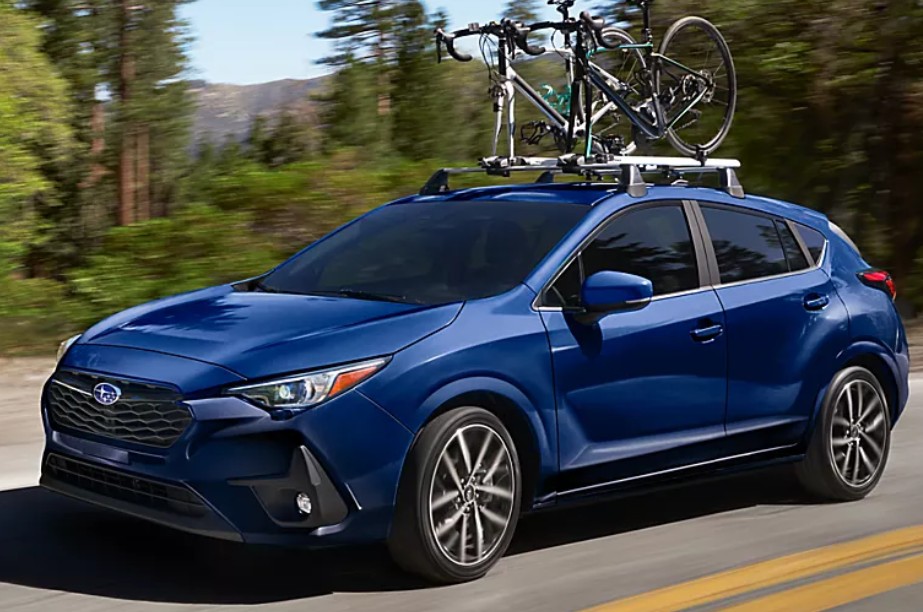
Choosing between the Subaru Impreza vs Honda Fit can feel a little strange at first. They are both compact, practical cars, but they approach everyday driving from very different directions. The Impreza brings all-wheel-drive confidence, a planted feel, and more of a traditional compact-car personality. The Honda Fit, meanwhile, squeezes astonishing practicality into a tiny footprint and treats fuel like something too valuable to waste.
So, which one should we choose?
That depends less on which badge looks better in the driveway and more on how we actually use our car. Do we deal with snow, wet roads, gravel, and highway driving? The Subaru starts looking attractive. Do we spend most of our time threading through crowded streets, hunting for parking spots, and trying to keep fuel bills low? Suddenly, the Honda Fit becomes hard to ignore.
There is another important point before we dive in. The Honda Fit, also known as the Honda Jazz in many markets, is no longer sold new in the United States, while used examples remain popular. The Subaru Impreza has also changed considerably across generations. Exact engines, transmissions, equipment, fuel economy, and safety technology therefore depend on the model year.
With that in mind, let’s compare these cars in the areas that actually matter.
Content in this publication
- Subaru Impreza vs Honda Fit at a Glance
- What Makes the Subaru Impreza Different?
- What Makes the Honda Fit Different?
- Subaru Impreza vs Honda Fit Engine Performance
- Subaru Impreza vs Honda Fit Fuel Economy
- Interior Space: Is the Impreza Bigger Than the Honda Fit?
- Cargo Space: Honda Fit vs Subaru Impreza
- Subaru Impreza vs Honda Fit for Snow
- Which Is Better on the Highway?
- Which Is Better in the City?
- Ride Comfort Comparison
- Handling and Driving Feel
- Subaru Impreza vs Honda Fit Reliability
- Maintenance Costs
- Insurance Costs
- Safety: Which One Gives Us More Confidence?
- Visibility and Driving Position
- Subaru Impreza vs Honda Fit Interior Quality
- Subaru Impreza vs Honda Fit for Families
- Which Car Is Better for Students?
- Which Is Better for First-Time Drivers?
- Subaru Impreza vs Honda Fit for Used-Car Buyers
- Where the Subaru Impreza Wins
- Where the Honda Fit Wins
- Who Should Buy the Subaru Impreza?
- Who Should Buy the Honda Fit?
- Subaru Impreza vs Honda Fit: Which Is the Better Value?
- Can the Honda Fit Replace the Subaru Impreza?
- Can the Subaru Impreza Replace the Honda Fit?
- The Biggest Trade-Off: Capability vs Efficiency
- Final Verdict: Subaru Impreza or Honda Fit?
- Frequently Asked Questions
- 1. Is a Subaru Impreza better than a Honda Fit?
- 2. Is the Honda Fit more fuel-efficient than the Subaru Impreza?
- 3. Is the Subaru Impreza good in snow compared with the Honda Fit?
- 4. Which has more cargo space, the Honda Fit or Subaru Impreza?
- 5. Which is cheaper to own, the Subaru Impreza or Honda Fit?
Subaru Impreza vs Honda Fit at a Glance
The simplest way to describe the difference is this: the Subaru Impreza feels like the more substantial car, while the Honda Fit feels like the smarter packaging exercise.
| Category | Subaru Impreza | Honda Fit |
|---|---|---|
| Vehicle type | Compact car/hatchback | Subcompact hatchback |
| Drivetrain | Commonly standard AWD | Primarily FWD |
| Interior versatility | Good | Excellent |
| Fuel economy | Moderate to good | Usually better |
| Highway confidence | Strong | Adequate |
| City maneuverability | Good | Excellent |
| Snow capability | Excellent for class | Limited by FWD and tires |
| Cargo flexibility | Good | Exceptional for size |
| Performance | Generally stronger | Modest |
| Running costs | Usually higher | Usually lower |
| Best suited for | Mixed weather and longer drives | Urban efficiency and practicality |
Neither car is universally better. Think of them like two different tools. The Impreza is a sturdy multitool. The Fit is a compact Swiss Army knife.
What Makes the Subaru Impreza Different?
Subaru built the Impreza around one feature that immediately separates it from most economy cars: all-wheel drive.
That changes the car’s personality.
While many compact hatchbacks concentrate almost entirely on fuel economy and affordability, the Impreza also tries to provide stability and traction in difficult conditions. That makes it especially appealing in areas where drivers regularly experience rain, snow, icy mornings, unpaved roads, or changing weather.
The Impreza Feels More Substantial
From behind the wheel, the Subaru generally feels broader, heavier, and more planted than the Fit. On a highway, that can be reassuring.
The Fit has the nimbleness of a small backpack. The Impreza feels more like a well-packed suitcase: heavier, yes, but also more secure when things get rough.
That difference becomes noticeable at higher speeds. Crosswinds, freeway expansion joints, and passing large trucks tend to expose the lightweight nature of tiny subcompact cars. The Impreza generally feels calmer.
Standard AWD Is the Impreza's Big Advantage
For many buyers, this alone could settle the Subaru Impreza vs Honda Fit debate.
Subaru's symmetrical all-wheel-drive layout continuously sends power through all four wheels rather than relying only on the front tires. The result can be better traction when accelerating on slippery surfaces.
AWD does not magically make a car invincible, of course. Good winter tires still matter enormously. Braking distances on ice do not disappear because four wheels receive power.
Still, when we're starting on a snowy incline or pulling onto a wet road, having additional driven wheels can make a meaningful difference.
What Makes the Honda Fit Different?
The Honda Fit takes almost the opposite approach.
Instead of asking, "How can we give a small car more traction?" Honda seems to have asked, "How much usefulness can we fit inside the smallest possible space?"
The answer is: quite a lot.
The Fit Is Tiny Outside but Surprisingly Big Inside
This is the Fit's party trick.
Its tall roofline, clever floor layout, and unusually flexible rear-seat design allow it to carry items that look as though they should require a much larger vehicle.
Honda's famous Magic Seat system allows the rear seating area to be configured in several ways. Depending on what we're transporting, the seats can fold down or manipulate vertically to create unusual cargo spaces.
A bicycle? Tall plants? Boxes? Luggage?
The Fit often handles awkward cargo far better than its exterior dimensions suggest.
City Driving Is Where the Fit Shines
Parallel parking becomes less stressful. Narrow parking garages feel less intimidating. Turning around on tight streets is easier.
The Honda feels almost designed for cities where every inch matters.
For commuters living in dense urban areas, this may provide more daily value than AWD ever would.
Subaru Impreza vs Honda Fit Engine Performance
Performance is not the main reason anyone buys either of these cars, but there is still a noticeable difference.
Depending on generation and market, Impreza models have used several boxer-engine configurations, while later mainstream versions commonly rely on four-cylinder engines paired with manual or continuously variable transmissions.
Honda Fit models have generally used small four-cylinder engines focused heavily on efficiency.
The Impreza Usually Feels Stronger
The Subaru typically has more displacement and more power.
That advantage shows up when merging onto highways, passing slower vehicles, or carrying multiple passengers.
Nobody is going to confuse a regular Impreza with a dedicated sports car, but it generally has a deeper reserve of acceleration than the Fit.
When we press the accelerator in a Fit, we often need to plan ahead. When we press it in an Impreza, the response usually feels less strained.
The Honda Fit Prioritizes Efficiency Over Speed
The Fit's engine is happiest doing sensible things.
Commuting. Running errands. Moving through traffic. Cruising at moderate speeds.
Push it hard and the engine can become vocal. That's hardly surprising. A small naturally aspirated engine working near its limits has to raise its voice.
For buyers who care mostly about inexpensive transportation, however, that may not matter.
Subaru Impreza vs Honda Fit Fuel Economy
Here the Honda lands a clean punch.
The Honda Fit usually delivers better fuel economy than the Subaru Impreza, especially during city driving.
Why?
Weight and drivetrain complexity play major roles.
The Fit is lighter and primarily front-wheel drive. The Impreza has to move more vehicle mass while powering an AWD system.
Why the Fit Makes Sense for High-Mileage Commuters
Imagine driving thousands of city miles every year.
Even a modest improvement in fuel economy can accumulate into meaningful savings. That's where the Fit becomes attractive.
Its small engine, light body, and urban-friendly gearing create a package designed around minimizing unnecessary consumption.
Why the Impreza's Extra Fuel Use May Be Worth It
There is no free lunch.
AWD adds weight and mechanical drag, but it also adds capability.
If we live somewhere with unpredictable winters, the additional fuel expense might feel like a fair trade for better traction.
So instead of asking which vehicle uses less fuel, we should ask whether we're willing to exchange some economy for additional capability.
Interior Space: Is the Impreza Bigger Than the Honda Fit?
Physically, yes. Practically? The answer becomes more interesting.
The Subaru Impreza occupies a larger overall footprint, and its cabin feels more conventional. Passengers generally benefit from a wider vehicle and the more relaxed proportions of a compact rather than subcompact platform.
However, the Honda Fit's interior packaging is exceptionally clever.
Front-Seat Comfort
The Impreza generally offers a more substantial driving environment. There is more car surrounding us, and the seating position feels closer to what we expect from a mainstream compact vehicle.
The Fit's cabin is airy because of its tall roof and large glass area, though narrower dimensions remind us that we're inside a subcompact.
For one or two people, either works well.
With four adults traveling longer distances, the Impreza tends to feel like the more mature choice.
Rear-Seat Practicality
This is where Honda works its magic.
The Fit can provide surprising rear passenger room relative to its tiny exterior size. Its tall cabin helps passengers avoid the cramped feeling that plagues many small hatchbacks.
Still, shoulder room can become tight with three people across the back seat.
Cargo Space: Honda Fit vs Subaru Impreza
If cargo versatility matters, don't assume the larger Subaru automatically wins.
The Impreza hatchback offers useful cargo room and benefits from folding rear seats. It is capable enough for groceries, luggage, sports equipment, and everyday household errands.
But the Fit's interior flexibility can make it astonishingly useful.
Honda's Magic Seat Advantage
The rear seats are one of the Fit's defining features.
Instead of simply folding forward like conventional seats, they can support several configurations.
This means the Fit can adapt to cargo rather than forcing cargo to adapt to the car.
For drivers who frequently carry bulky but lightweight objects, that flexibility can be more valuable than raw cargo-volume measurements.
When the Fit's Cargo Design Really Helps
The Honda is particularly appealing if our routine regularly involves things like bicycles, boxes, plants, musical equipment, small furniture, shopping bags, or awkwardly shaped gear.
The Impreza can carry plenty, but the Fit sometimes behaves like a miniature delivery van wearing hatchback clothes.
Subaru Impreza vs Honda Fit for Snow
This category strongly favors the Subaru.
The Impreza's AWD system can provide significantly better acceleration traction in snowy or icy environments compared with a front-wheel-drive Fit on equivalent tires.
That doesn't mean the Fit cannot handle winter.
With high-quality winter tires, front-wheel-drive cars can perform surprisingly well. In moderate winter conditions, a properly equipped Fit may be perfectly usable.
But if we regularly face steep snowy roads, deep winter conditions, or poorly cleared streets, the Impreza is the more confidence-inspiring choice.
Winter Tires Still Matter More Than Many Drivers Think
AWD helps a vehicle move forward. Tires determine how effectively it grips while accelerating, turning, and braking.
An Impreza on worn all-season tires can perform worse in some situations than a Fit on excellent winter tires.
Ideally, winter drivers combine Subaru AWD with appropriate seasonal tires.
That combination turns the Impreza into a particularly capable compact car.
Which Is Better on the Highway?
For frequent highway travel, we'd generally prefer the Subaru Impreza.
Its larger footprint, greater weight, and more substantial road presence tend to produce a calmer experience at speed.
The Honda Fit can certainly handle highway driving, but it rarely feels as relaxed.
Road Noise and Refinement
Small economy hatchbacks often let more road and wind noise into the cabin.
The Fit is no exception.
Depending on the road surface, tire choice, and model year, highway noise may become noticeable.
The Impreza isn't a luxury sedan either, but it generally feels one class larger because, technically, it is.
You may be interested in reading Subaru Impreza or Legacy: Which Subaru Should We Choose?
For occasional highway use, the difference may not matter.
For someone covering hundreds of freeway miles each week, it probably will.
Which Is Better in the City?
Now the pendulum swings toward Honda.
Driving a Fit through a crowded downtown environment can feel wonderfully easy.
We get excellent maneuverability, useful visibility, compact dimensions, and outstanding parking friendliness.
A parking space that looks questionable in a larger car suddenly appears enormous.
The Impreza Is Still Manageable
We're not comparing a Fit with a full-size SUV here.
The Impreza remains a relatively compact vehicle and is perfectly manageable in cities.
But compared directly with the Fit, it needs more room.
If our daily routine includes narrow garages and dense urban streets, the Honda's tiny footprint becomes a genuine quality-of-life feature.
Ride Comfort Comparison
Comfort depends greatly on trim, wheel size, tires, road quality, and generation, but the Subaru generally provides a more settled ride.
The longer, wider platform gives suspension engineers more room to balance body control and comfort.
The Fit's short wheelbase makes it responsive but can also mean rough pavement feels more pronounced.
Think of the difference like rolling two suitcases over cracked pavement. The larger suitcase with bigger wheels tends to glide over imperfections while the tiny one chatters across them.
Which One Is Better for Long Trips?
For extended road trips, we'd give the Impreza the advantage.
The cabin tends to feel less confined, highway stability is stronger, and the car's extra power can make overtaking easier.
The Fit counters with excellent fuel efficiency and brilliant luggage flexibility.
If our road trip involves two people and lots of equipment, the Fit can still make an unexpectedly good travel companion.
Handling and Driving Feel
One of the reasons the Impreza has retained a loyal following is that its engineering gives it a distinctive feel.
Subaru's boxer engine sits relatively low in the chassis, contributing to a lower center of gravity. Combined with AWD, this can create reassuring stability through corners.
The Fit takes a different route.
Its greatest handling advantage is lightness.
The Fit Feels Playful
At ordinary speeds, the Honda can be genuinely fun.
It changes direction quickly, fits through small gaps, and does not feel burdened by unnecessary mass.
We don't need huge horsepower figures to enjoy a lightweight car.
There is something satisfying about using momentum rather than brute force.
The Impreza Feels More Planted
On faster sweeping roads, the Subaru feels more grounded.
Its AWD system and wider stance give it a sense of security that the Fit cannot quite replicate.
Drivers who regularly travel on winding rural roads may appreciate this difference more than urban commuters will.
Subaru Impreza vs Honda Fit Reliability
Both nameplates have reputations that can attract buyers seeking dependable transportation, but reliability should always be evaluated by specific model year, engine, transmission, maintenance history, and previous ownership.
A well-maintained older car can be a much safer purchase than a newer example that was neglected.
Honda Fit Reliability
The Fit's relative mechanical simplicity is one of its attractions.
Small engines, modest performance demands, and straightforward packaging can contribute to manageable ownership.
However, no used Fit should be purchased blindly.
Maintenance records matter, and buyers should inspect areas such as transmission behavior, suspension wear, air conditioning, electrical equipment, and signs of accident damage.
Subaru Impreza Reliability
The Impreza can also provide long service life when properly maintained.
However, its AWD system means there are additional components to consider.
Tire matching is especially important on AWD vehicles. Significant differences in tire circumference can place unwanted stress on drivetrain components.
Older Subaru models may also have generation-specific concerns that deserve investigation before purchase.
Maintenance History Beats Brand Reputation
This point deserves emphasis.
Never buy a used car simply because someone online says, "Hondas last forever" or "Subarus are reliable."
Cars don't read internet forums.
They respond to oil changes, fluid servicing, cooling-system maintenance, careful ownership, proper repairs, and reasonable driving.
A detailed service history is worth more than a stereotype.
Maintenance Costs
The Honda Fit will usually be the cheaper vehicle to keep on the road.
Its simpler front-wheel-drive layout, smaller tires, modest engine, and economy-car mission generally work in its favor.
The Impreza introduces AWD hardware and, depending on specification, potentially more expensive tires and servicing requirements.
That doesn't make the Subaru expensive by default. It simply means the Honda begins with fewer mechanical systems to maintain.
Tires Are an Important Subaru Consideration
AWD vehicles benefit from having four tires with similar tread depth and dimensions.
If one tire is damaged when the others are heavily worn, replacing only that tire may not always be ideal.
That can occasionally turn a single damaged tire into a larger expense.
With the Fit, tire replacement tends to be more straightforward.
Insurance Costs
Insurance prices depend heavily on location, driver age, claims history, annual mileage, coverage limits, and the exact model year.
Still, both vehicles generally sit closer to the practical end of the automotive spectrum than the high-performance end.
The Fit's lower value and modest performance may produce inexpensive premiums in some cases.
The Impreza can also be affordable to insure, though trim level, replacement cost, AWD equipment, and regional claims data can influence quotes.
The smartest move is simple: obtain insurance estimates for the exact VINs we're considering before buying.
Safety: Which One Gives Us More Confidence?
Safety comparisons become highly model-year dependent because vehicle structures and driver-assistance systems evolve dramatically over time.
Newer Impreza generations can offer modern active-safety equipment, while later Fit models may also include advanced driver-assistance features depending on trim and market.
Structurally, the larger Impreza may appeal to buyers who prefer more vehicle around them.
Yet size alone should never replace crash-test research.
Check the Exact Model Year
When shopping used, we should compare the actual vehicles rather than the nameplates in general.
A newer Fit with modern safety equipment could be a better safety proposition than a much older Impreza.
Likewise, a newer Impreza may provide substantially more safety technology than an early Fit.
Model year matters.
Visibility and Driving Position
The Honda Fit has traditionally impressed drivers with its large greenhouse and upright cabin.
That can create excellent outward visibility.
In congested urban environments, seeing corners clearly makes driving easier.
The Impreza also tends to provide good visibility compared with many style-focused modern vehicles, but the Fit's tall cabin gives it a uniquely open feeling.
For nervous city drivers, this seemingly small detail can have a surprisingly large impact.
Subaru Impreza vs Honda Fit Interior Quality
Neither car was designed primarily to impress passengers with luxury materials.
Function comes first.
The Subaru generally feels a little more substantial inside, especially in higher trims and newer generations.
The Honda prioritizes durability and packaging.
Hard plastics may appear in both vehicles depending on age and trim, but that is hardly shocking in cars built around affordability.
What matters more is how well everything survives after years of use.
Technology Depends Heavily on Model Year
Infotainment systems evolve quickly.
A ten-year difference between two used cars can mean the difference between a basic radio and smartphone integration, touchscreen controls, driver aids, and modern connectivity.
Therefore, buyers comparing used examples should evaluate equipment individually.
Don't assume every Impreza automatically has better technology just because it belongs to a larger class.
Subaru Impreza vs Honda Fit for Families
A small family could comfortably use either vehicle, but priorities will determine the better choice.
Parents dealing with snowy roads may appreciate the Impreza's AWD.
Families living in dense cities may adore the Fit's parking ease and flexible interior.
The Honda's rear-seat configuration is particularly useful when transporting children's equipment one day and groceries the next.
The Impreza counters with greater highway confidence and a more substantial overall feel.
Which One Works Better With Children?
For frequent school runs around town, the Fit is wonderfully practical.
You may be interested in readingSubaru Impreza or Legacy: Which Subaru Should We Choose?You may be interested in reading
 Audi A6 Models: Complete Guide to Versions, Generations, and Choices
For regular interstate trips, mountain journeys, or winter travel, we'd lean toward the Subaru.
Neither decision is wrong.
The question is where the car spends most of its life.
Which Car Is Better for Students?
A used Honda Fit can be extremely attractive for students.
Fuel consumption is low, parking is easy, cargo flexibility is excellent, and basic operating costs can be reasonable.
The Impreza makes more sense for students attending school in colder regions, particularly where snow is common.
Imagine two university campuses.
One sits in a warm, crowded city with expensive parking.
Choose the Fit.
The other sits in a snowy mountain region.
The Impreza suddenly makes much more sense.
Which Is Better for First-Time Drivers?
Both have strengths.
The Fit's small dimensions make it easy to position on the road. New drivers often appreciate being able to see clearly and park without feeling as though they are docking a ship.
The Impreza's AWD can provide extra confidence in poor weather.
However, AWD should not encourage inexperienced drivers to overestimate available grip.
For a first car, condition, safety equipment, insurance pricing, and maintenance history matter more than the badge.
Subaru Impreza vs Honda Fit for Used-Car Buyers
This is where the comparison becomes especially relevant because many shoppers will be looking at used examples.
Instead of searching for the "better model" in isolation, we should compare actual vehicles.
Before buying either one, we should check:
- Service records and oil-change history.
- Accident history and signs of structural repairs.
- Transmission operation during a long test drive.
- Tire condition, age, brand, and tread depth.
- Suspension noises over rough roads.
- Air-conditioning performance.
- Warning lights and stored diagnostic codes.
- Evidence of fluid leaks.
- Brake condition.
- Rust underneath the vehicle, especially in winter climates.
- Whether all electronics and safety features operate properly.
A professional pre-purchase inspection can easily pay for itself.
Where the Subaru Impreza Wins
The Impreza's biggest strengths become obvious when conditions move beyond simple urban commuting.
It offers a more substantial road feel, stronger all-weather capability, and generally better performance.
The car makes particular sense for drivers who regularly encounter changing weather.
It also feels more comfortable living at highway speeds.
If our commute mixes freeways, country roads, snow, rain, and occasional gravel, the Impreza is the more versatile machine.
Where the Honda Fit Wins
The Honda wins by doing more with less.
Less fuel.
Less parking space.
Less unnecessary weight.
Yet somehow, it gives us an interior that often feels far more useful than expected.
For city residents, budget-conscious commuters, students, and people who carry oddly shaped cargo, the Fit can be brilliant.
It doesn't dominate with horsepower or drivetrain sophistication.
It wins through cleverness.
Who Should Buy the Subaru Impreza?
We would choose the Subaru if traction, highway stability, and all-season usefulness rank near the top of our priorities.
Drivers living in northern climates are particularly likely to benefit.
The Impreza is also the better candidate when we regularly take longer trips with several passengers.
It sacrifices some efficiency but gives back capability.
The Ideal Impreza Buyer
Picture someone who drives 40 miles to work, encounters snow every winter, spends weekends outside the city, and wants one car that can handle almost everything.
That's Impreza territory.
It is compact enough to be economical yet capable enough to feel reassuring when conditions deteriorate.
Who Should Buy the Honda Fit?
Choose the Fit when efficiency, practicality, low running costs, and urban convenience matter most.
It is especially difficult to beat if parking is a daily headache.
The Fit also suits drivers who rarely need AWD but frequently need interior flexibility.
The Ideal Fit Buyer
Imagine someone commuting across a crowded city, parking on narrow streets, carrying groceries during the week and a bicycle on weekends.
The Fit fits—yes, the name really is appropriate.
It performs the automotive equivalent of turning a studio apartment into a surprisingly functional home.
Subaru Impreza vs Honda Fit: Which Is the Better Value?
Value depends on what we're buying.
The Honda Fit can deliver remarkable practicality for relatively little operating expense.
The Subaru Impreza gives us features—especially AWD—that usually require stepping into larger or more expensive vehicles.
So value is not simply about paying less.
It's about getting features we actually use.
A driver in Miami may get little benefit from paying for an AWD system.
A driver in Vermont may value it every winter morning.
Likewise, someone with a large suburban garage may not care about the Fit's compact dimensions.
Someone parking in downtown Boston might consider them priceless.
Can the Honda Fit Replace the Subaru Impreza?
For many drivers, absolutely.
If snow capability and additional power aren't priorities, the Fit can fulfill most everyday transportation needs while consuming less fuel and occupying less space.
But the substitution does not work equally well in reverse situations.
If we regularly drive through deep winter weather, steep terrain, or high-speed highways, the Fit's advantages may matter less than the Impreza's stability and traction.
Can the Subaru Impreza Replace the Honda Fit?
In terms of transportation duties, yes.
The Subaru can commute, haul groceries, accommodate passengers, and handle road trips.
However, it cannot entirely reproduce the Fit's combination of tiny exterior dimensions and unusually versatile interior space.
The Impreza is the more conventional package.
The Fit is the cleverer package.
The Biggest Trade-Off: Capability vs Efficiency
Strip away the trim levels, infotainment screens, horsepower figures, and marketing language and the entire Honda Fit vs Subaru Impreza debate becomes surprisingly simple.
The Subaru asks us to sacrifice some efficiency for capability.
The Honda asks us to sacrifice some capability for efficiency.
Neither philosophy is inherently superior.
What matters is whether we're paying for qualities that improve our real life.
Choose Capability When Conditions Demand It
If poor weather is part of our routine rather than a rare inconvenience, AWD is not merely something to brag about in a dealership brochure.
It becomes genuinely useful.
That's where the Impreza earns its keep.
Choose Efficiency When Simplicity Matters More
If our car spends most of its time cruising through dry city streets, carrying one or two people, the Fit's philosophy becomes difficult to argue against.
Why move more weight and consume more fuel than necessary?
Sometimes the smallest hammer is the right tool.
Final Verdict: Subaru Impreza or Honda Fit?
The Subaru Impreza vs Honda Fit comparison doesn't produce one universal winner because these cars solve different problems.
The Subaru Impreza is our pick for buyers who prioritize AWD traction, highway stability, stronger performance, and a more substantial driving experience. It is particularly compelling in snowy or wet climates where its drivetrain provides a genuine everyday advantage.
The Honda Fit wins for urban commuters, efficiency-focused buyers, students, and anyone fascinated by clever packaging. It costs less to feed, slips easily into tight parking spaces, and can swallow surprisingly awkward cargo thanks to its flexible interior.
If we lived in a crowded city with mild weather, we'd lean toward the Honda Fit.
If we dealt with winter roads, longer highway drives, or more demanding conditions, we'd choose the Subaru Impreza.
Ultimately, the best used example may matter more than the theoretical winner. A meticulously maintained Fit beats a neglected Impreza, and a carefully serviced Impreza beats an abused Fit every time.
Buy the condition first. Choose the badge second.
Frequently Asked Questions
1. Is a Subaru Impreza better than a Honda Fit?
The Subaru Impreza is better for drivers who need AWD, greater highway stability, more power, and stronger performance in poor weather. The Honda Fit is better for drivers prioritizing fuel economy, easy parking, lower operating costs, and maximum interior versatility from a small vehicle.
2. Is the Honda Fit more fuel-efficient than the Subaru Impreza?
In most comparable configurations, yes. The Honda Fit's smaller engine, lighter body, and front-wheel-drive layout generally allow it to consume less fuel than the AWD Subaru Impreza. Exact figures vary by model year, transmission, market, and driving conditions.
3. Is the Subaru Impreza good in snow compared with the Honda Fit?
The Impreza generally has a substantial advantage because of its AWD system. A Honda Fit equipped with quality winter tires can still perform well in moderate winter conditions, but the Subaru offers better acceleration traction when roads become slippery. Proper tires remain essential on either vehicle.
4. Which has more cargo space, the Honda Fit or Subaru Impreza?
The Impreza hatchback is physically larger, but the Honda Fit can be remarkably competitive in practical cargo use because of its tall cabin and flexible Magic Seat system. The Fit is particularly impressive when carrying unusually tall or awkwardly shaped objects.
You may be interested in readingSubaru Impreza or Legacy: Which Subaru Should We Choose?You may be interested in reading
Audi A6 Models: Complete Guide to Versions, Generations, and ChoicesYou may be interested in reading
Audi A6 Generations: Complete Guide From C4 to C95. Which is cheaper to own, the Subaru Impreza or Honda Fit?
The Honda Fit will generally be cheaper to operate because it tends to use less fuel, has a simpler front-wheel-drive system, and often uses relatively inexpensive consumable parts. However, actual ownership cost depends on vehicle age, condition, insurance rates, repair history, and maintenance requirements.
If you want to know other articles similar to Subaru Impreza vs Honda Fit: Which Compact Car Makes More Sense? you can visit the category Models.
Audi A6 Generations: Complete Guide From C4 to C9
Audi A6 Models: Complete Guide to Versions, Generations, and Choices
Subaru Impreza or Legacy: Which Subaru Should We Choose?
Subaru Impreza vs Toyota Camry: Which Car Is Better?
Subaru Impreza Years to Avoid: The Used-Car Years We’d Be Careful With
Subaru Impreza vs Forester: Which Subaru Fits You Best?
Leave a Reply
More content of your interest