
Nissan X-Trail Gearbox Problems: Symptoms, Causes, Costs, and What Owners Should Know

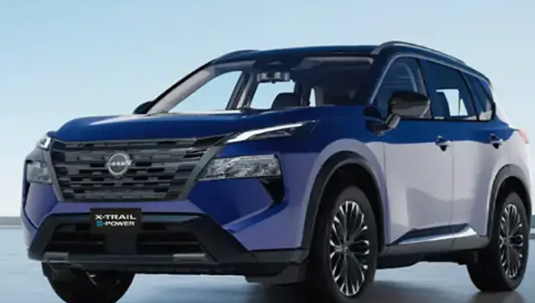
The Nissan X-Trail is one of those SUVs that makes a lot of sense on paper. It is roomy, comfortable, practical, and generally easy to live with. Yet when we start researching used examples—particularly automatic versions from certain generations—one subject keeps appearing like an unwelcome dashboard warning: Nissan X-Trail gearbox problems.
Much of the concern revolves around Nissan's continuously variable transmission, commonly called the CVT or Xtronic CVT. That does not mean every X-Trail gearbox is destined to fail. Far from it. Different generations, engines, countries, and transmission types can behave very differently.
Still, X-Trail owners have reported symptoms including juddering, delayed engagement, whining noises, poor acceleration, overheating, transmission warning lights, and limp-home operation. Community reports also frequently associate T31 and T32 CVT-equipped vehicles with transmission concerns.
So, should we run away from every automatic X-Trail like it is carrying a ticking financial time bomb? Not necessarily.
The smarter approach is understanding which gearbox we are dealing with, what the warning signs look like, and how quickly we need to react.
Content in this publication
- Are Nissan X-Trail Gearbox Problems Common?
- Understanding the Nissan X-Trail CVT Gearbox
- Most Common Nissan X-Trail Gearbox Problems
- Nissan X-Trail Gearbox Juddering
- Nissan X-Trail Gearbox Whining Noise
- Delayed Engagement in Drive or Reverse
- X-Trail CVT Slipping and Poor Acceleration
- Nissan X-Trail CVT Overheating
- Nissan X-Trail Limp Mode and Transmission Warnings
- Nissan X-Trail T31 Gearbox Problems
- Nissan X-Trail T32 Gearbox Problems
- What About the Newer T33 X-Trail?
- Can Incorrect Gearbox Oil Cause Problems?
- How Often Should X-Trail CVT Fluid Be Changed?
- Can Changing CVT Fluid Fix a Failing Gearbox?
- Common Causes Behind X-Trail Gearbox Failure
- Can a Nissan X-Trail Gearbox Be Repaired?
- How Much Does a Nissan X-Trail Gearbox Repair Cost?
- Should We Buy a Used Nissan X-Trail With a CVT?
- How to Test an X-Trail Gearbox Before Buying
- Warning Signs That Should Make Us Walk Away
- Can Driving Style Affect CVT Life?
- Is Towing Bad for an X-Trail CVT?
- Does a Transmission Warning Mean the Gearbox Is Finished?
- How to Reduce the Risk of Nissan X-Trail Gearbox Problems
- Manual Nissan X-Trail Gearbox Problems
- What If My X-Trail Won't Move in Drive or Reverse?
- Are Nissan X-Trail Gearbox Problems a Deal Breaker?
- Final Thoughts: Should We Worry About Nissan X-Trail Gearbox Problems?
- Frequently Asked Questions About Nissan X-Trail Gearbox Problems
- 1. What are the first signs of Nissan X-Trail CVT failure?
- 2. Why does my Nissan X-Trail shudder when accelerating?
- 3. Can changing the gearbox oil fix Nissan X-Trail CVT problems?
- 4. Is it safe to buy a used Nissan X-Trail with a CVT?
- 5. Which Nissan X-Trail generations have the most gearbox complaints?
Are Nissan X-Trail Gearbox Problems Common?
The answer depends heavily on the generation and transmission.
The X-Trail name has been around for decades, and Nissan has fitted different drivetrains depending on engine and market. Some models use manual gearboxes. Others use conventional automatic transmissions. A large number of petrol X-Trails, however, use Nissan's Xtronic continuously variable transmission.
It is the CVT-equipped versions—particularly certain T31 and T32 vehicles—that attract most of the attention when owners discuss gearbox trouble.
Independent repair and owner sources commonly describe juddering, slipping, whining, overheating, delayed engagement, and reduced-power operation among reported CVT complaints.
That distinction matters enormously.
Saying "the X-Trail gearbox is unreliable" is a little like saying every restaurant in a city serves bad food. We need to know which restaurant—or in this case, which transmission—we are actually talking about.
Understanding the Nissan X-Trail CVT Gearbox
What Is an Xtronic CVT?
A traditional automatic transmission moves through fixed gears. First gear becomes second, second becomes third, and so on.
A CVT works differently.
Instead of relying on a conventional sequence of fixed gear ratios, it varies the transmission ratio continuously. The idea is clever: keep the engine operating efficiently while adjusting the ratio needed for acceleration, cruising, or climbing.
When it works properly, acceleration can feel smooth and almost seamless.
But that unusual behaviour occasionally confuses drivers who are accustomed to traditional automatics. Engine revs can rise and remain relatively constant while road speed catches up. That alone does not necessarily mean something is wrong.
The important question is whether the vehicle feels smooth and predictable.
Why CVT Problems Feel Different
A failing conventional automatic might bang between gears.
A struggling CVT can behave differently because there are no traditional gear changes to judge.
Instead, we may notice the engine revving without corresponding acceleration, a tremor under load, strange surging, whining, or a transmission that suddenly refuses to deliver normal performance.
That can make early symptoms surprisingly easy to dismiss.
Most Common Nissan X-Trail Gearbox Problems
Although symptoms vary, several complaints appear repeatedly in discussions involving X-Trail CVTs.
Here are the major warning signs we would pay attention to:
- Juddering or shuddering: vibration during acceleration, particularly under moderate load.
- Delayed engagement: noticeable hesitation after selecting Drive or Reverse.
- Slipping sensation: engine revs increase without an equivalent rise in vehicle speed.
- Whining or humming: transmission-related noise that changes with speed or load.
- Jerking or surging: inconsistent acceleration rather than smooth CVT operation.
- Reduced acceleration: the X-Trail suddenly feels unusually sluggish.
- Limp mode: transmission protection strategies limit vehicle performance.
- Overheating symptoms: performance deteriorates after prolonged driving or heavy loads.
- Transmission warning lights: electronic monitoring identifies a gearbox-related fault.
- Complete loss of drive: in severe cases, the vehicle may fail to move normally in Drive or Reverse.
These symptoms do not automatically prove that the complete transmission has failed. Electronics, fluid condition, sensors, valve-body problems, driveline components, engine faults, and even the transfer case on four-wheel-drive versions can sometimes create similar behaviour.
That is why proper diagnosis matters.
Nissan X-Trail Gearbox Juddering
What Does CVT Judder Feel Like?
Judder can feel like driving across tiny corrugations in the road even when the surface is perfectly smooth.
We press the accelerator and instead of clean acceleration, the vehicle shakes, pulses, or hesitates.
Owners sometimes describe the sensation as:
"Driving over rumble strips."
That description is useful because CVT judder may be considerably more noticeable under acceleration than while cruising at constant speed.
Community reports involving X-Trails include cases of vehicles shaking or jerking at particular speeds or while climbing hills.
Possible Causes of Juddering
Possible causes include deteriorated CVT fluid, hydraulic-pressure irregularities, valve-body problems, internal wear, or other drivetrain faults.
We should resist the temptation to diagnose an entire gearbox from the driver's seat.
Judder deserves investigation, but diagnosis should ideally involve fault-code scanning, transmission data analysis, fluid inspection where applicable, and a proper road test.
Nissan X-Trail Gearbox Whining Noise
A healthy CVT does not necessarily sound exactly like a conventional automatic, but a new or increasingly obvious whine deserves attention.
Transmission-related whining can sometimes rise and fall with vehicle speed or become more obvious as the transmission warms.
Could the Noise Be Something Else?
Absolutely.
This is where X-Trail diagnosis gets interesting.
A documented example involving a T31 initially suspected of having CVT noise was ultimately traced to the transfer case rather than the transmission itself.
That is an important lesson.
Not every sound beneath an X-Trail comes from the CVT.
Wheel bearings, tyres, transfer-case components, differential assemblies, engine accessories, and other rotating parts can create noises that seem transmission-related from inside the cabin.
When Whining Becomes Concerning
We would be particularly cautious if whining appears alongside slipping, poor acceleration, juddering, warning lights, or metallic contamination in the transmission fluid.
One symptom is a clue.
Several symptoms arriving together create a much stronger case for professional inspection.
Delayed Engagement in Drive or Reverse
We move the selector from Park to Drive.
Nothing happens.
A second passes. Maybe two.
Then the X-Trail finally engages.
That delay should not simply be written off as an ageing-car personality trait.
Some owner reports involving older X-Trail CVTs describe delays when selecting forward or reverse drive.
Possible explanations range from fluid and hydraulic-pressure issues to valve-body or internal transmission wear.
If engagement becomes progressively slower, harder, or accompanied by a clunk, we should have the transmission inspected before the situation develops into a complete no-drive condition.
X-Trail CVT Slipping and Poor Acceleration
CVT slipping can be difficult to describe because the transmission does not shift through traditional gears.
Imagine pressing the accelerator and hearing the engine rush ahead while the SUV feels as though it has forgotten to follow.
That mismatch is the key sensation.
Normal CVT Behaviour vs Actual Slipping
We need to distinguish normal CVT operation from a genuine problem.
During hard acceleration, a healthy CVT may allow engine speed to rise significantly and remain elevated while the vehicle accelerates. Drivers transitioning from conventional automatic cars sometimes interpret that as slipping.
Real trouble is more likely when:
Road speed fails to increase normally, acceleration becomes erratic, vibration appears, the vehicle loses power under load, or the symptoms progressively worsen.
Nissan X-Trail CVT Overheating
Heat is rarely a transmission's friend.
CVTs depend on correctly specified fluid to lubricate components, transmit hydraulic pressure, control temperature, and allow the transmission's internal systems to work properly.
Extended high-load operation, towing where permitted, steep hills, hot weather, heavy traffic, or pre-existing internal problems can increase thermal stress.
What Happens When the CVT Gets Too Hot?
The vehicle's control systems may protect the transmission by limiting performance.
From the driver's seat, that can feel dramatic.
The X-Trail may suddenly become reluctant to accelerate, enter a reduced-power state, or produce a warning.
The instinct is often to press the accelerator harder.
That may be exactly what we should avoid.
When unusual transmission behaviour appears, particularly with a warning message or excessive heat, continuing to force the vehicle can turn a manageable problem into something considerably more expensive.
Nissan X-Trail Limp Mode and Transmission Warnings
Limp mode is essentially the vehicle saying:
"Something isn't right, so I'm limiting operation before things get worse."
That can be frustrating, but the protection strategy itself is useful.
The mistake is treating limp mode as the diagnosis.
It is merely a symptom.
A diagnostic scan can reveal stored transmission-related trouble codes and operating data. Those codes help a competent technician identify whether the problem relates to pressure regulation, sensors, temperature, valve-body operation, electrical systems, or another component.
Clearing the code without fixing the cause is like removing the batteries from a smoke alarm while the kitchen is still burning.
Nissan X-Trail T31 Gearbox Problems
The T31 generation is frequently mentioned in discussions about X-Trail CVT reliability.
Some variants used a Jatco CVT, while other T31 versions were fitted with different transmission configurations depending on engine and market.
Reports associated with CVT-equipped T31s include whining, delayed engagement, juddering, and deterioration once the transmission becomes warm.
Should We Avoid Every T31 Automatic?
No.
Age, mileage, service history, operating environment, and previous repairs can matter more than a broad label.
A meticulously maintained vehicle with documented transmission servicing may be a better proposition than a lower-mileage example with absolutely no maintenance records.
When evaluating an older T31, history matters enormously.
Nissan X-Trail T32 Gearbox Problems
The T32 generation is perhaps even more closely associated with online discussions about X-Trail CVT problems.
Independent used-car inspections and repair sources have specifically highlighted juddering, whining, reduced acceleration, overheating, and limp-mode symptoms on some T32 CVTs.
That does not establish that every T32 has a defective transmission.
It does mean we should treat the CVT as one of the highest-priority inspection points when buying one used.
Why Service History Matters on a T32
A shiny body and spotless leather seats can seduce us surprisingly quickly.
But the expensive part lives underneath.
If we are choosing between two similar X-Trails, we would generally place enormous value on evidence of correct servicing, especially transmission maintenance performed with the appropriate fluid and procedures.
A vehicle's service folder can tell us more about its future than freshly polished paint.
What About the Newer T33 X-Trail?
We should avoid automatically transferring the reputation of earlier models onto every newer X-Trail.
The T33 generation introduced substantially different powertrain configurations depending on market, including electrified systems, and transmission arrangements therefore need to be considered by exact model.
Interestingly, Nissan's current UK documentation for applicable T33 CVT-equipped versions specifies Genuine Nissan CVT Fluid NS-3 and explicitly warns against using other transmission fluid because doing so may damage the CVT.
That alone tells us something important: transmission-fluid specification is not an area where improvisation is sensible.
Can Incorrect Gearbox Oil Cause Problems?
Yes.
CVT fluid is not simply ordinary automatic-transmission oil poured into a different box.
The transmission depends on fluid with precisely the characteristics required by its design.
Using the wrong product can alter lubrication, friction behaviour, hydraulic operation, and temperature management.
Nissan specifically states for the applicable current X-Trail CVT that Genuine Nissan NS-3 should be used and warns that another fluid may cause damage.
Never Assume One X-Trail Fluid Fits Every Model
This point deserves emphasis.
Do not buy transmission fluid simply because the bottle says "Nissan compatible."
Confirm the exact:
Model year, engine, transmission code, market specification, and required fluid standard.
Specifications can differ across generations.
When there is uncertainty, we would check the owner's manual or reliable manufacturer service information using the vehicle's exact VIN and transmission configuration.
How Often Should X-Trail CVT Fluid Be Changed?
This is where internet advice becomes messy.
We often encounter confident claims that every CVT must receive fresh fluid every specific number of kilometres.
Reality is less convenient.
Maintenance requirements can vary by generation, country, operating conditions, and manufacturer schedule.
Some transmission specialists advocate preventative CVT-fluid servicing more frequently than minimum manufacturer recommendations, particularly for vehicles used under severe conditions. However, owners should verify the correct procedure and interval for their exact model instead of applying an internet number universally.
The newer X-Trail owner's information published by Nissan also directs owners to a Nissan dealer or qualified workshop when CVT fluid checking or replacement is required.
Can Changing CVT Fluid Fix a Failing Gearbox?
Sometimes fresh, correctly specified fluid can improve operation when degraded fluid contributes to poor behaviour.
But fluid is not magic medicine.
If internal components are already badly worn, replacing the fluid cannot rebuild metal surfaces, repair damaged bearings, restore a faulty valve body, or erase mechanical damage.
That leads us to an important rule.
Diagnose Before Performing Random Maintenance
Suppose our X-Trail suddenly begins shuddering.
Immediately flushing the transmission because someone on a forum recommended it may complicate diagnosis.
A better approach is to have the system inspected first.
A specialist may want to check diagnostic codes, fluid condition, temperatures, pressure-related data, adaptation values where applicable, and road-test behaviour before deciding what maintenance or repair is appropriate.
Common Causes Behind X-Trail Gearbox Failure
There is rarely one universal villain.
Transmission problems can arise from fluid deterioration, incorrect fluid, hydraulic-pressure faults, overheating, valve-body or solenoid issues, bearing wear, internal belt or pulley damage, contamination, electrical faults, neglected maintenance, or accumulated mechanical wear.
And sometimes what feels like transmission failure originates elsewhere in the drivetrain.
That is why replacing the entire gearbox without solid diagnosis is an expensive gamble.
Can a Nissan X-Trail Gearbox Be Repaired?
In many situations, yes.
But "gearbox repair" covers a huge spectrum.
At one end, we might have a sensor, wiring problem, fluid-related concern, or repairable hydraulic component.
At the other end, substantial internal wear can require a specialist rebuild or complete transmission replacement.
Valve Body and Solenoid Problems
The valve body manages hydraulic operation inside the transmission.
If pressure-control components or associated solenoids malfunction, the transmission may behave unpredictably.
Symptoms can resemble much more serious internal failure.
This is another reason professional CVT diagnosis is valuable: we do not want to replace the whole transmission unnecessarily, but we also do not want to install a relatively small component when widespread internal damage has already occurred.
How Much Does a Nissan X-Trail Gearbox Repair Cost?
There is no useful universal figure.
Labour rates vary dramatically between countries, and prices depend on whether we need diagnostics, electronic repairs, valve-body work, a rebuild, a used transmission, a remanufactured unit, or a factory replacement.
A recent Australian independent used-car guide estimates several thousand Australian dollars for refurbished or replacement T32 CVT units, illustrating how expensive a serious failure can become.
The broader lesson matters more than the exact number.
A neglected gearbox can transform a cheap used X-Trail into an expensive SUV remarkably quickly.
Should We Buy a Used Nissan X-Trail With a CVT?
We would not automatically rule one out.
But we would not buy blindly either.
A well-maintained X-Trail with smooth transmission behaviour, credible service records, no warning codes, and a clean professional inspection can still make sense.
The vehicle we would worry about is the suspiciously cheap one with vague history.
"Don't worry, they all drive like that."
That sentence should make our wallet nervous.
How to Test an X-Trail Gearbox Before Buying
Start the vehicle from cold if possible.
We want to know how it behaves before the seller has warmed everything up.
Select Reverse.
Then Drive.
Engagement should feel controlled rather than excessively delayed or violent.
During the road test, accelerate gently, then moderately. Drive uphill if possible. Cruise at several speeds. Slow down and accelerate again. Listen carefully.
Most importantly, continue driving long enough for the transmission to reach operating temperature.
Some problems become more noticeable once the drivetrain is warm.
A five-minute spin around the dealership block tells us almost nothing.
Get a Diagnostic Scan
Even if no warning light appears, scanning the car can reveal stored or historical faults.
A pre-purchase inspection by someone familiar with Nissan CVTs is often worth considerably more than it costs.
We are not merely checking whether the car moves.
We are trying to determine whether it is likely to keep moving.
Warning Signs That Should Make Us Walk Away
One mild symptom does not automatically condemn a vehicle, but several warning signs together dramatically increase our risk.
If a used X-Trail shudders under acceleration, whines loudly, hesitates to enter Drive, displays transmission warnings, loses power after warming up, and comes with no transmission service documentation, negotiating another $500 off the price is probably missing the point.
Sometimes the cheapest repair is simply buying a different vehicle.
Can Driving Style Affect CVT Life?
Mechanical sympathy certainly helps any transmission.
Smooth acceleration, sensible loading, correct servicing, and avoiding unnecessary abuse reduce stress.
But we should be careful not to blame owners automatically when something fails.
Mechanical components can fail despite responsible driving.
The goal is not to drive an X-Trail as though there is a glass gearbox beneath the floor. It is simply to avoid unnecessary punishment while maintaining the vehicle correctly.
Is Towing Bad for an X-Trail CVT?
Towing increases drivetrain load and heat.
That does not automatically mean an X-Trail should never tow.
The crucial rule is staying within the towing limits specified for the exact vehicle and accounting for trailer weight, payload, gradient, temperature, and other operating conditions.
Transmission temperature becomes especially relevant under sustained heavy loads.
If towing is a major part of our lifestyle, we should consider drivetrain suitability and service requirements before purchasing rather than after the trailer is already attached.
Does a Transmission Warning Mean the Gearbox Is Finished?
No.
This is one of the biggest misconceptions surrounding CVTs.
A warning light tells us that the control system has detected something outside its expected parameters.
That may represent a major mechanical fault.
Or it may not.
Guessing based on the warning alone is pointless.
Read the diagnostic trouble codes, investigate the underlying cause, and resist replacing components based purely on symptoms.
How to Reduce the Risk of Nissan X-Trail Gearbox Problems
We cannot make any gearbox immortal, but sensible ownership can reduce unnecessary risk.
Use the exact fluid specification required for the vehicle. Follow appropriate maintenance procedures. Investigate new noises quickly. Do not ignore juddering. Pay attention to delayed Drive or Reverse engagement. Address warning messages rather than repeatedly clearing them.
Most importantly, obtain a diagnosis before throwing parts at the transmission.
Gearbox problems rarely become cheaper because we ignored them for another six months.
Manual Nissan X-Trail Gearbox Problems
Not every X-Trail uses a CVT.
Manual versions can experience conventional manual-transmission and clutch-related problems instead.
Symptoms may include difficult gear selection, clutch slipping, clutch judder, gearbox bearing noise, or synchroniser wear.
Again, generation, engine, mileage, and market matter.
We should therefore avoid applying CVT reliability discussions to a manual X-Trail simply because both vehicles wear the same badge.
What If My X-Trail Won't Move in Drive or Reverse?
If the vehicle completely loses drive, continuing to rev the engine is unlikely to improve matters.
Stop attempting to force movement.
Check for warning messages and obvious fluid leaks where safely possible, and arrange professional diagnosis or recovery when necessary.
A no-drive condition may involve internal transmission failure, hydraulic problems, selector linkage, electronic control issues, driveline components, or another mechanical fault.
The vehicle needs diagnosis rather than optimism.
Are Nissan X-Trail Gearbox Problems a Deal Breaker?
Not automatically.
This is where perspective matters.
Thousands of X-Trails have accumulated substantial mileage without every transmission self-destructing. At the same time, enough CVT-related complaints exist that buyers should not dismiss the subject.
The intelligent middle ground is simple.
We neither panic nor pretend the problem does not exist.
We investigate.
A good X-Trail with strong maintenance history can still be an excellent family vehicle. A poorly maintained one with existing CVT symptoms can become the automotive equivalent of buying a house because we liked the curtains while ignoring cracks in the foundation.
Final Thoughts: Should We Worry About Nissan X-Trail Gearbox Problems?
Nissan X-Trail gearbox problems deserve attention, especially when we are considering a CVT-equipped T31 or T32.
Juddering, whining, delayed engagement, slipping sensations, overheating symptoms, reduced acceleration, and limp mode are among the warning signs we should take seriously. Owner reports and independent repair sources document several of these behaviours on CVT-equipped X-Trails.
But we should avoid turning internet reputation into a verdict on every individual car.
Condition matters.
Service history matters.
The exact transmission matters.
Diagnosis matters.
If we already own an X-Trail, the smartest move is straightforward: use the correct fluids, maintain the vehicle properly, and investigate transmission symptoms early.
If we are shopping for one, spend less time staring at alloy wheels and more time studying the service records.
A beautiful used SUV with a tired transmission can be a very expensive ornament.
Frequently Asked Questions About Nissan X-Trail Gearbox Problems
1. What are the first signs of Nissan X-Trail CVT failure?
Early symptoms can include juddering during acceleration, whining, hesitation when selecting Drive or Reverse, inconsistent acceleration, unusual surging, warning lights, or performance that worsens once the transmission becomes warm. None of these symptoms alone confirms complete CVT failure, so proper diagnosis remains important.
2. Why does my Nissan X-Trail shudder when accelerating?
Transmission-related causes can include fluid deterioration, hydraulic-pressure problems, valve-body issues, or internal CVT wear. Engine or drivetrain faults can create similar symptoms. If the shudder repeatedly appears under load, avoid assuming it is normal CVT behaviour and have the vehicle inspected.
3. Can changing the gearbox oil fix Nissan X-Trail CVT problems?
It can help when incorrect, contaminated, or degraded fluid contributes to poor operation, but changing fluid cannot repair significant mechanical damage. For applicable current X-Trail CVTs, Nissan specifies Genuine Nissan NS-3 fluid and warns against using alternative transmission fluids.
4. Is it safe to buy a used Nissan X-Trail with a CVT?
It can be, provided the transmission behaves correctly and the vehicle has convincing maintenance history. We would strongly recommend an extended test drive and professional pre-purchase inspection. Avoid examples showing persistent juddering, loud whining, delayed engagement, warning messages, or obvious slipping unless the issue has been properly diagnosed and reflected in the purchase decision.
5. Which Nissan X-Trail generations have the most gearbox complaints?
Online owner reports and independent repair sources frequently discuss CVT concerns involving T31 and T32 X-Trails, although transmission availability varies according to engine and market. Rather than judging a vehicle only by generation, identify its exact gearbox and examine its maintenance and repair history before buying.
If you want to know other articles similar to Nissan X-Trail Gearbox Problems: Symptoms, Causes, Costs, and What Owners Should Know you can visit the category Common Problems.
Toyota Corolla Cross Issues: Common Problems and Fixes

MG HS Problems: Common Faults, Reliability and Years to Avoid (2019–2026)
Toyota Yaris Cross Battery Problems: Causes & Fixes

Volvo XC40 Sound Not Working? Complete Troubleshooting Guide

Mazda Diesel Engine Problems: Common Faults and Fixes
Volkswagen Key Not Detected or No Key Error: Causes and Fixes
Leave a Reply
More content of your interest