

Nissan X-Trail Problems: Common Faults, Warning Signs, and What Owners Should Know

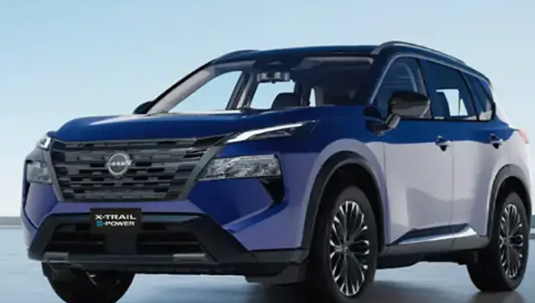
The Nissan X-Trail has long occupied an interesting corner of the SUV market. It is practical without feeling enormous, family-friendly without looking like a van, and available in configurations ranging from straightforward petrol models to diesels, hybrids, four-wheel-drive versions, and the newer e-POWER system.
But what about Nissan X-Trail problems?
That question deserves more than a scary list of faults pulled from owner forums. The X-Trail has been sold across several generations, and a problem associated with an early diesel T30 does not automatically apply to a newer T33 e-POWER. Likewise, gearbox complaints surrounding some vehicles should not be interpreted as proof that every X-Trail transmission is waiting to explode.
The bigger picture is more nuanced.
Some generations have earned a stronger reputation than others. The second-generation T31 is generally viewed as relatively robust, while reliability surveys have been noticeably less flattering toward the 2014–2022 T32. In one What Car? reliability survey, the 2014–2021 X-Trail scored 58.3%, with reported problems involving areas such as the battery, brakes, electrics, engine, air conditioning, and gearbox.
So, should we avoid the X-Trail altogether?
Not necessarily.
What matters is knowing which Nissan X-Trail problems to watch for, which versions they affect, and how to identify trouble before buying or before a small symptom turns into an expensive repair.
Content in this publication
- Are Nissan X-Trails Problematic Cars?
- 1. Nissan X-Trail CVT Transmission Problems
- 2. Nissan X-Trail Jerking When Accelerating
- 3. Nissan X-Trail Diesel Problems
- 4. Earlier X-Trail Turbocharger Problems
- 5. Engine Management Faults
- 6. Nissan X-Trail Electrical Problems
- 7. Nissan X-Trail 360 Camera Problems
- 8. Nissan X-Trail Infotainment Problems
- 9. Nissan X-Trail Battery Problems
- 10. Nissan X-Trail Start-Stop System Problems
- 11. Nissan X-Trail Suspension Problems
- 12. Steering Problems
- 13. Brake Problems
- 14. Air-Conditioning Problems
- 15. Tailgate Problems and Recall History
- 16. Nissan X-Trail 4WD System Problems
- 17. Nissan X-Trail Warning Lights Appearing Together
- 18. Driver-Assistance System Warnings
- 19. Rust and Corrosion on Older X-Trails
- 20. Oil Leaks and Fluid Loss
- 21. Does the Nissan X-Trail Have Timing Chain Problems?
- 22. Are New Nissan X-Trail e-POWER Models Problematic?
- 23. Which Nissan X-Trail Problems Are Most Expensive?
- 24. How to Inspect a Used Nissan X-Trail
- 25. Is a High-Mileage Nissan X-Trail a Bad Idea?
- 26. Which Nissan X-Trail Generation Is the Safest Used Bet?
- 27. Should You Avoid a Nissan X-Trail?
- 28. Nissan X-Trail Problems: Our Final Verdict
- Frequently Asked Questions About Nissan X-Trail Problems
Are Nissan X-Trails Problematic Cars?
We should start by clearing away one misconception: there is no single reliability verdict that accurately describes every Nissan X-Trail.
The nameplate has existed for more than two decades.
The original T30 was a relatively rugged, boxy SUV. The T31 refined that formula. The T32 moved toward the modern family-crossover concept and introduced more sophisticated electronics and drivetrain options. The T33 brought yet another technological jump, including Nissan's e-POWER electrified drivetrain in several markets.
Nissan itself identifies the third-generation T32 as the model produced from 2013 to 2022, illustrating just how long one X-Trail generation can span.
That's important because reliability changes dramatically depending on what sits under the bonnet.
A well-maintained petrol T31 with a conventional ownership history may have very little in common mechanically with a neglected diesel T30 or a CVT-equipped T32.
Which Nissan X-Trail Generation Has the Most Problems?
If we look broadly at historical reliability evidence, the T32 deserves the most careful inspection when buying used.
Older reliability data collected by What Car? placed the 2014–2021 X-Trail near the bottom of its large-SUV reliability rankings. Reported trouble covered multiple areas, including electrical components, batteries, brakes, engines, gearboxes, and other systems.
That doesn't mean a T32 is automatically a bad purchase.
It means we wouldn't buy one casually.
Service history, gearbox behaviour, warning lights, battery condition, and evidence of previous repairs become particularly important.
By comparison, the T31 has historically attracted a stronger reliability assessment. What Car?'s used-car analysis described the second generation as considerably more reliable than the original, while noting occasional engine-management problems on some 2.0 dCi diesels.
1. Nissan X-Trail CVT Transmission Problems
Few phrases make prospective Nissan buyers more nervous than "CVT problems."
Some X-Trail variants use a continuously variable transmission rather than a conventional stepped automatic gearbox. Instead of shifting through traditional gears, the CVT continuously alters its transmission ratio.
When healthy, that arrangement can make acceleration wonderfully smooth.
When something goes wrong, however, the experience can feel like driving through treacle.
Common CVT Warning Signs
A problematic transmission may produce symptoms such as:
- hesitation or delayed movement after selecting Drive;
- shuddering or juddering under acceleration;
- engine revs rising without corresponding acceleration;
- whining or humming noises;
- jerking at low speeds;
- overheating warnings;
- inconsistent power delivery;
- transmission warning lights;
- limp-home behaviour.
None of those symptoms automatically proves internal CVT failure. Engine-management faults, sensors, incorrect fluid condition, mounts, ignition problems, and other components can sometimes mimic transmission trouble.
That's exactly why diagnosis matters.
Does Every X-Trail CVT Fail?
Absolutely not.
Internet discussions naturally amplify failures because satisfied owners rarely create posts titled, "My gearbox worked normally again today."
Nevertheless, we would treat rough or inconsistent CVT behaviour seriously when inspecting a used X-Trail. A healthy unit should generally operate smoothly.
If the car bucks, surges, slips, hesitates badly, or emits an unusual whine during the test drive, we wouldn't simply assume "that's how CVTs feel."
Get it checked.
2. Nissan X-Trail Jerking When Accelerating
Jerking is one of those annoying symptoms that can point in several directions.
In a petrol X-Trail, we might investigate ignition components, plugs, fuel delivery, throttle control, sensors, or the transmission. On a diesel, injector operation, airflow management, turbo-related issues, emissions equipment, or engine-management faults may enter the picture.
CVT-equipped cars add another variable.
If the jerking appears only as the vehicle moves away from a stop or under moderate acceleration, transmission behaviour deserves particular attention.
What Should Normal Acceleration Feel Like?
Smooth.
A CVT may hold the engine at an unexpectedly high rpm while the road speed increases, which can sound strange to someone accustomed to conventional automatic gear changes.
But unusual sound and actual mechanical shudder are different things.
Repeated vibration through the cabin, sudden surging, a delay followed by abrupt engagement, or an obvious loss of drive deserves investigation.
3. Nissan X-Trail Diesel Problems
Diesel X-Trails can be excellent long-distance machines, particularly when they spend their lives doing the sort of driving diesels prefer: sustained journeys at operating temperature.
Problems can become more likely when a diesel spends most of its life crawling through short urban trips.
Modern diesel engines contain far more emissions-control equipment than their ancestors, meaning driving pattern matters almost as much as mileage.
DPF Problems
A diesel particulate filter captures soot from the exhaust and periodically burns it away through regeneration.
Repeated short journeys can interrupt this process.
Eventually, owners may encounter warning lights, reduced performance, increased fuel consumption, or regeneration difficulties.
Ignoring DPF symptoms isn't wise. A relatively manageable emissions problem can eventually snowball into something far more expensive.
EGR and Intake Contamination
Exhaust gas recirculation systems are another potential trouble spot as mileage accumulates.
Soot and oily residue can build up through the intake and EGR system, particularly on diesel vehicles that spend considerable time operating at low speeds and low temperatures.
Possible symptoms include hesitation, rough running, poor performance, excessive smoke, warning lamps, or limp mode.
Again, these symptoms overlap with several other faults, so proper diagnostics beat random parts replacement every time.
4. Earlier X-Trail Turbocharger Problems
Owners considering the original T30 generation should pay particular attention to the diesel engine.
Historical reliability reporting identified turbocharging and intercooler trouble on the older 2.2-litre diesel, including possible oil leakage around the intercooler and turbo-related symptoms such as black smoke or unusual whistling noises.
That does not mean every surviving 2.2 diesel is doomed.
In fact, an older vehicle that has already received appropriate repairs and been carefully serviced might prove better than a younger example that's been neglected.
But age changes the buying equation.
At this point, we are evaluating not only the original engineering but also two decades of servicing, repairs, owners, driving conditions, and replacement parts.
5. Engine Management Faults
Electronic engine management can occasionally make an X-Trail seem far more mechanically unhealthy than it actually is.
Sensors monitor airflow, exhaust gases, fuel delivery, emissions systems, temperatures, pressures, throttle position, and countless other parameters.
One incorrect signal can trigger a warning lamp and sometimes cause the ECU to reduce engine performance.
The second-generation 2.0 dCi, for example, has historically been associated with occasional engine-management trouble capable of causing difficult starting or unexpected cutting out, although reports suggest it was not universal.
Why Diagnostic Codes Matter
This is where we resist the temptation to play "parts darts."
Suppose the X-Trail loses power and illuminates the engine warning light. Replacing the most commonly blamed component on an internet forum may achieve absolutely nothing.
Scanning for diagnostic trouble codes provides a starting point.
Those codes still require interpretation, but they help narrow the investigation considerably.
6. Nissan X-Trail Electrical Problems
Modern SUVs are computers wearing tyres.
The X-Trail is no exception.
As the vehicle evolved, it gained increasingly sophisticated infotainment, parking sensors, cameras, driver-assistance features, keyless entry, electronic parking functions, and other modules.
More technology gives us more convenience—but also more potential failure points.
Owners may encounter glitches involving warning messages, cameras, infotainment, parking sensors, keyless systems, or other electronic accessories.
The T32's reliability record has included electrical issues among reported problem categories.
Check the Battery Before Blaming the Electronics
This simple step gets overlooked surprisingly often.
Modern cars can behave like haunted houses when their 12-volt battery becomes weak.
Multiple warning messages can appear simultaneously. Stop/start may stop working. Keyless functions can become temperamental. Electronic modules may report implausible errors.
Before assuming five separate computers have failed on the same morning, test battery voltage and charging performance.
7. Nissan X-Trail 360 Camera Problems
The Around View Monitor is one of the X-Trail's most useful features, particularly because this isn't exactly a tiny city hatchback.
Multiple cameras combine their images to create a bird's-eye-style parking view.
When one camera develops a fault—or becomes dirty, damaged, poorly connected, or misaligned—the system may display an incomplete image, black screen, distorted picture, or camera warning.
What Should We Inspect?
Start with the simple things.
Clean each camera lens. Look for physical damage. Check whether the problem appeared after body repair, bumper work, mirror replacement, battery disconnection, or an accident.
A camera system isn't merely a television bolted onto the dashboard. Calibration and communication between components matter.
8. Nissan X-Trail Infotainment Problems
Infotainment complaints are particularly irritating because they may not stop the vehicle from moving, yet we interact with the system constantly.
Typical annoyances may include frozen screens, slow responses, Bluetooth connection difficulties, phone-pairing problems, intermittent audio, navigation glitches, or spontaneous system restarts.
Software can sometimes be responsible.
Other cases may involve hardware, wiring, batteries, USB cables, or smartphones rather than the head unit itself.
Before replacing expensive electronics, verify software status and test the problem under controlled conditions.
9. Nissan X-Trail Battery Problems
A battery might sound trivial compared with an engine or transmission.
Yet a weak battery can create an astonishing number of apparent problems.
Repeated short journeys, long periods of inactivity, cold weather, accessories drawing current, aging batteries, or charging-system faults can all leave the battery operating below optimum condition.
We should become suspicious when several unrelated electrical warnings appear simultaneously—particularly after the car has struggled to start.
A proper battery load test can save hours of unnecessary diagnostic work.
10. Nissan X-Trail Start-Stop System Problems
Automatic stop/start technology depends on more conditions than most drivers realize.
The system may stay inactive when battery charge is insufficient, cabin temperature demands are high, engine conditions aren't suitable, or other prerequisites haven't been met.
That means a non-operating stop/start system doesn't automatically indicate failure.
However, if it previously worked consistently and suddenly stops functioning for weeks, checking the 12-volt battery is a sensible first move.
It is the automotive equivalent of checking whether the computer is plugged in before dismantling the motherboard.
11. Nissan X-Trail Suspension Problems
Suspension components eventually wear on virtually every vehicle.
On an older or high-mileage X-Trail, clunks over potholes, knocking noises, uneven tyre wear, steering looseness, or poor ride quality can point toward worn bushes, links, joints, dampers, or other suspension hardware.
Location and road conditions matter enormously.
A vehicle that has spent ten years gliding along smooth motorways has experienced a very different life from one that has spent the same decade bouncing down broken rural roads.
Listen During the Test Drive
Turn the radio off.
Drive across varied surfaces at sensible speeds and listen.
A used car often tells us exactly where its problems are—we just need to stop talking long enough to hear them.
12. Steering Problems
Steering complaints deserve immediate attention because they affect safety as well as comfort.
Possible symptoms include unusual heaviness, inconsistent assistance, vibration, noises while turning, poor self-centering, or warning lights.
But don't confuse wheel alignment problems with steering-system failure.
Tyre wear, tyre pressures, suspension damage, wheel alignment, wheel balance, and steering components interact closely.
Diagnosis needs to consider the whole front-end system rather than one isolated part.
13. Brake Problems
Brakes are another area highlighted in some reliability surveys covering the T32 X-Trail.
Remember that "brake problem" can describe anything from normal consumable wear to electronic or hydraulic faults.
Discs and pads inevitably wear out.
More concerning symptoms include pulling under braking, severe vibration, warning lamps, grinding, abnormal pedal feel, or reduced braking performance.
We would never postpone an inspection when those symptoms appear.
14. Air-Conditioning Problems
An air-conditioning system gradually losing effectiveness isn't unique to Nissan.
Leaks, seals, condensers, compressors, pressure sensors, electrical controls, and refrigerant levels can all affect performance.
Air-conditioning trouble was among the fault categories reported for the 2014–2021 X-Trail in reliability survey data.
When inspecting a used X-Trail, switch the system on even if you're buying the car in winter.
Cold air should arrive quickly.
A seller saying, "It probably just needs regassing," should be treated as a hypothesis—not a diagnosis.
15. Tailgate Problems and Recall History
Some T32 X-Trails have had specific recall-related concerns worth checking by VIN.
Used-car reliability information published by What Car? notes that tailgate gas struts on certain vehicles produced between April 1, 2014 and December 25, 2015 could corrode and potentially crack. The same source also identifies an oxygen-sensor issue affecting certain vehicles manufactured between April 10, 2015 and June 7, 2016.
This illustrates an important point.
A "common problem" article should never replace a VIN-specific recall check.
Recalls frequently apply only to particular production ranges, engines, components, or markets.
16. Nissan X-Trail 4WD System Problems
The X-Trail's available all-wheel-drive system is one of the reasons many buyers choose it in the first place.
If a 4WD warning appears, however, don't immediately assume the rear differential has destroyed itself.
Sensors, wiring, wheel-speed information, control modules, tyres, voltage problems, drivetrain components, and the coupling system can influence operation.
Matching Tyres Matter
Four-wheel-drive systems don't particularly enjoy wildly different rolling circumferences.
Installing mismatched tyre sizes—or running tyres with dramatically different levels of wear—can create undesirable differences in wheel speeds.
Whenever we inspect a used AWD X-Trail, checking all four tyres is therefore worthwhile.
Look at brand, model, size, tread depth, and general condition.
17. Nissan X-Trail Warning Lights Appearing Together
One warning light is inconvenient.
Six appearing simultaneously feels catastrophic.
Yet multiple warning messages can sometimes share one underlying cause.
A weak battery is one possibility. A wheel-speed sensor fault, for instance, may also affect several interconnected driver-assistance systems because they rely on common vehicle data.
This is another reason modern vehicle diagnosis needs to be systematic.
The dashboard tells us which systems noticed something abnormal. It does not necessarily tell us which component caused the original problem.
18. Driver-Assistance System Warnings
Newer X-Trails use cameras, radar, and electronic control systems to support functions such as collision warnings and other driver-assistance features.
These systems have operating limitations even when functioning correctly. Nissan's own documentation explains, for example, that the Intelligent Forward Collision Warning system cannot detect every vehicle under every condition and lists circumstances that can affect radar detection.
That distinction matters.
A temporary unavailable message during severe weather or when a sensor is obstructed does not necessarily mean the system is defective.
A warning that persists in normal conditions deserves diagnosis.
19. Rust and Corrosion on Older X-Trails
Age eventually catches almost everything.
Older X-Trails should therefore be inspected for corrosion regardless of reputation.
We would examine structural areas underneath the vehicle, suspension mounting points, subframes, brake lines, exhaust components, wheel arches, and other exposed metalwork.
Climate makes an enormous difference.
Cars exposed to road salt, coastal environments, regular mud, or poor underbody cleaning can age dramatically faster than visually identical vehicles elsewhere.
Cosmetic Corrosion Still Tells a Story
Peeling alloy wheels or minor surface corrosion might not make the vehicle unsafe, but they can reveal how it has lived.
The first-generation X-Trail was historically noted for alloy-wheel corrosion and other age-related cosmetic deterioration.
One rusty bolt isn't a verdict.
A whole underside glowing orange probably deserves more attention.
20. Oil Leaks and Fluid Loss
Any used X-Trail inspection should include fluid levels and evidence of leaks.
Freshly cleaned engines require particular curiosity.
Why was the engine bay washed immediately before sale?
Perhaps the owner simply loves detailing cars.
Or perhaps someone wanted yesterday's oil stain to disappear before today's buyer arrived.
Look underneath, examine accessible seals and hoses, check coolant condition, and inspect the ground after the vehicle has been running.
Never assume fluid loss is normal merely because the car is old.
21. Does the Nissan X-Trail Have Timing Chain Problems?
This question cannot be answered correctly without specifying the engine.
Different X-Trail generations have used multiple petrol, diesel, hybrid, and electrified powertrains across different markets.
Some use timing chains, and maintenance concerns vary accordingly.
For the original diesel generation, historical reports have mentioned timing-chain tensioner trouble on the 2.2-litre diesel.
We wouldn't extrapolate that issue to every X-Trail ever made.
If you're buying a particular vehicle, identify its exact engine code and investigate that engine—not simply the badge attached to the tailgate.
22. Are New Nissan X-Trail e-POWER Models Problematic?
The newer e-POWER X-Trail needs to be considered separately from older CVT-equipped models.
Its propulsion concept is fundamentally different.
In Nissan's e-POWER arrangement, the petrol engine generates electricity while electric motors provide propulsion to the wheels. Therefore, applying old X-Trail CVT horror stories directly to an e-POWER model makes little mechanical sense.
These newer vehicles do contain extensive electronics, high-voltage components, sensors, cameras, and control software, so their long-term ownership story will naturally involve different considerations.
Because they are much newer than T30, T31, and T32 models, we should also be cautious about declaring definitive 15-year reliability patterns before enough vehicles have actually aged that far.
23. Which Nissan X-Trail Problems Are Most Expensive?
Minor electronic glitches and worn suspension links are one thing.
Internal drivetrain failures are another.
The repairs we'd investigate most carefully before buying are major transmission problems, serious diesel emissions-system faults, turbocharger failure, major engine trouble, high-voltage hybrid/e-POWER issues outside warranty, and complex electronic faults that require expensive modules.
This doesn't mean those failures are inevitable.
It simply means their financial consequences can dwarf the cost of ordinary wear items.
Think of a pre-purchase inspection as inexpensive insurance against buying somebody else's unresolved problem.
24. How to Inspect a Used Nissan X-Trail
When shopping for an X-Trail, we shouldn't judge the vehicle solely by mileage.
A lower-mileage SUV with skipped services, endless five-minute journeys, cheap mismatched tyres, and warning lights mysteriously cleared before sale can be a poorer purchase than a higher-mileage example with meticulous records.
Our priority should be evidence.
Check the service history. Start the vehicle from cold. Scan for stored diagnostic codes where appropriate. Test every electrical feature. Drive at urban and motorway speeds. Observe transmission behaviour. Listen to the suspension. Test the air conditioning. Inspect the tyres. Check underneath for leaks and corrosion. Verify that recall work applicable to that specific VIN and market has been completed.
And most importantly, don't let a shiny body distract you from mediocre mechanical condition.
25. Is a High-Mileage Nissan X-Trail a Bad Idea?
Not automatically.
Mileage is only one chapter in the story.
A vehicle that accumulated 100,000 miles through long motorway journeys may have experienced fewer cold starts and less stop-start punishment than another with 60,000 miles accumulated through brutally short urban trips.
Maintenance quality matters tremendously.
We would rather own an X-Trail whose previous owner has a folder full of invoices than one whose service history apparently vanished into another dimension.
Service History Beats Sales Talk
Statements such as "never gave me any trouble" or "these engines run forever" are pleasant.
Receipts are better.
Documentation tells us when fluids were changed, whether recalls were completed, which components have already been replaced, and whether the owner reacted promptly when problems developed.
26. Which Nissan X-Trail Generation Is the Safest Used Bet?
There isn't one universally correct answer because engines, transmissions, and specifications vary by country.
Historically, however, the T31 has a reasonably positive reputation relative to the generations around it. What Car?'s used-car assessment described the 2007–2014 model as highly reliable overall, while noting relatively isolated engine-management concerns on some diesel variants.
The T32 deserves more scrutiny because reliability-survey results have been considerably weaker.
Older T30 models can still make interesting inexpensive SUVs, but age and diesel-specific issues mean vehicle condition becomes critical.
The T33 is too different technologically to lump into the same category.
27. Should You Avoid a Nissan X-Trail?
No blanket ban is necessary.
But we'd buy selectively.
The Nissan X-Trail can deliver exactly what many families want: space, practicality, comfortable everyday transport, useful technology, and available all-wheel drive.
The trick is avoiding neglected examples.
One X-Trail can serve its owner faithfully for years while an apparently identical vehicle becomes a revolving door at the repair shop. Maintenance, powertrain, production year, driving history, environment, and previous ownership all influence the outcome.
That's why researching only "Nissan X-Trail reliability" isn't enough.
Research your Nissan X-Trail.
28. Nissan X-Trail Problems: Our Final Verdict
So, are Nissan X-Trail problems serious enough to cross this SUV off our shopping list?
We don't think the evidence supports such a sweeping conclusion.
What it does support is caution—particularly with used T32 models and older vehicles whose service histories are incomplete.
CVT behaviour deserves careful assessment on vehicles equipped with one. Diesel models need to suit the driving pattern they're being purchased for. Electrical warning lights shouldn't be dismissed. Older vehicles need thorough checks for corrosion, leaks, turbo-related trouble, and accumulated wear.
Meanwhile, the T31 has historically shown a comparatively respectable reliability record, and newer e-POWER versions shouldn't simply inherit the reputation of mechanically unrelated older variants.
The smartest purchase isn't necessarily the X-Trail with the lowest mileage or prettiest paint.
It's the one that has been maintained properly, drives correctly, has no unexplained warnings, carries convincing service records, and survives a professional inspection.
Cars are a little like people: the birthday tells us how old they are, but not how well they've been looked after.
Choose the history rather than the odometer, and an X-Trail can still make a compelling family SUV.
Frequently Asked Questions About Nissan X-Trail Problems
1. What is the most common problem with the Nissan X-Trail?
There isn't one problem affecting every generation. On certain T32 vehicles, reliability surveys have highlighted electrical, battery, brake, engine, and gearbox faults. Older diesel versions have their own concerns, while later e-POWER models use substantially different technology.
2. Does the Nissan X-Trail have gearbox problems?
Some X-Trails equipped with CVT transmissions have attracted owner concerns involving juddering, hesitation, abnormal noises, or inconsistent acceleration. These symptoms do not automatically mean complete transmission failure, so a proper diagnosis is essential before replacing major components.
3. Which Nissan X-Trail generation is most reliable?
The T31, sold broadly during the 2007–2014 period depending on market, has historically received a relatively positive used-car reliability assessment. The T32 has performed less strongly in some reliability surveys. Actual reliability still depends heavily on engine, transmission, maintenance, and vehicle history.
4. Should I buy a used Nissan X-Trail with a CVT?
A CVT-equipped X-Trail can still be worth buying if it has been correctly maintained and operates smoothly. We would insist on a thorough test drive, service-history check, and preferably an independent mechanical inspection. Walk away—or investigate further—if there is pronounced shuddering, delayed engagement, slipping sensations, warning lights, or abnormal whining.
5. How can I avoid buying a Nissan X-Trail with problems?
Focus on condition and history rather than mileage alone. Verify servicing, check applicable recalls using the VIN, start the engine cold, test all electronics, inspect fluids and tyres, check the body and underside for corrosion or accident repairs, and drive the vehicle long enough to evaluate its transmission, steering, brakes, suspension, engine performance, and warning systems.
If you want to know other articles similar to Nissan X-Trail Problems: Common Faults, Warning Signs, and What Owners Should Know you can visit the category Common Problems.
Volvo XC40 Sound Not Working? Complete Troubleshooting Guide

Mazda Diesel Engine Problems: Common Faults and Fixes

Volkswagen Key Not Detected or No Key Error: Causes and Fixes

Volvo S90 Common Problems: Reliability & Repair Guide
Volvo S90 No Sound: Causes, Fixes and Solutions

Nissan Rogue Smells Like Gas: Causes and Fixes
Leave a Reply
More content of your interest