

Mazda CX 9 Reliability by Year: Best and Worst Models

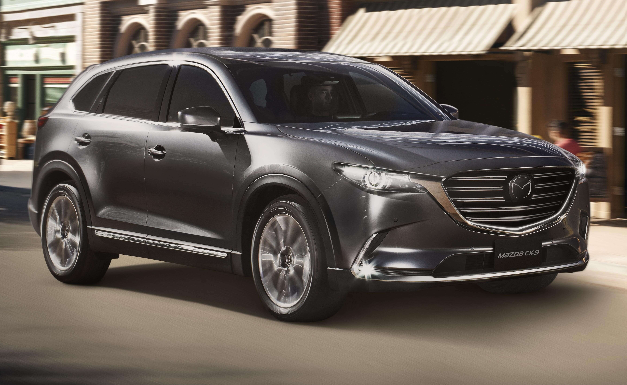
Buying a used three-row SUV can feel a little like picking a suitcase from an airport carousel: several examples may look nearly identical, yet what has happened to them behind the scenes can be completely different. That is especially true when we examine Mazda CX 9 reliability by year.
The Mazda CX-9 has generally earned a reputation as one of the more enjoyable three-row crossovers to drive. It handles with considerably more enthusiasm than the typical family SUV, offers an upscale-feeling cabin, and avoids the bulky road manners that characterize some competitors. Reliability, however, varies considerably depending on which model year we choose.
That distinction matters because the CX-9 effectively lived two different mechanical lives.
First-generation models, produced from the late 2000s through 2015, rely on a naturally aspirated V6 and can encounter expensive aging-related problems. The completely redesigned second generation arrived for 2016 with Mazda's turbocharged 2.5-liter four-cylinder engine, modern electronics, improved fuel economy, and a much more premium cabin.
Unfortunately, the earliest examples of the second generation developed a few concerns of their own.
So, which CX-9 years should we target? Which should we approach cautiously? And can a well-maintained CX-9 realistically last 200,000 miles?
Let's break it down year by year.
Content in this publication
- Mazda CX 9 Reliability by Year at a Glance
- Understanding the Two Mazda CX-9 Generations
- 2007 Mazda CX-9 Reliability
- 2008 Mazda CX-9 Reliability
- 2009 Mazda CX-9 Reliability
- 2010 Mazda CX-9 Reliability
- 2011 Mazda CX-9 Reliability
- 2012 Mazda CX-9 Reliability
- 2013 Mazda CX-9 Reliability
- 2014 Mazda CX-9 Reliability
- 2015 Mazda CX-9 Reliability
- 2007-2015 CX-9 Takata Airbag Recall Considerations
- 2016 Mazda CX-9 Reliability
- 2017 Mazda CX-9 Reliability
- 2018 Mazda CX-9 Reliability
- 2019 Mazda CX-9 Reliability
- 2020 Mazda CX-9 Reliability
- 2021 Mazda CX-9 Reliability
- 2022 Mazda CX-9 Reliability
- 2023 Mazda CX-9 Reliability
- What Are the Worst Mazda CX-9 Years?
- What Are the Best Mazda CX-9 Years?
- How Long Can a Mazda CX-9 Last?
- Mazda CX-9 Reliability Versus Toyota Highlander
- Mazda CX-9 Reliability Versus Honda Pilot
- How to Inspect a Used Mazda CX-9 Before Buying
- Is a Used Mazda CX-9 Worth Buying?
- Final Verdict on Mazda CX 9 Reliability by Year
- Frequently Asked Questions
Mazda CX 9 Reliability by Year at a Glance
No used SUV should be judged exclusively by its model year. Maintenance history, mileage, climate, ownership habits, accident history, and recall completion can matter just as much.
Still, certain CX-9 years deserve more scrutiny than others.
| Model Year | Reliability Outlook | Our Take |
|---|---|---|
| 2007 | Average | Early production year; inspect carefully |
| 2008 | Below average | Water-pump and aging V6 concerns |
| 2009 | Average | Improved, but age matters heavily |
| 2010 | Average | Reasonable with strong maintenance history |
| 2011 | Below average | Brake and drivetrain complaints deserve attention |
| 2012 | Below average | High complaint volume, especially braking-related |
| 2013 | Below average | Water-pump risk remains significant |
| 2014 | Average | Better choice among older models, condition permitting |
| 2015 | Below average | Potentially expensive water-pump/engine failures |
| 2016 | Average | First year of second generation; coolant-leak concern |
| 2017 | Average to good | More refined, but still within early 2.5T era |
| 2018 | Good | Generally attractive used choice |
| 2019 | Good | Strong overall, though 2.5T coolant issue deserves checking |
| 2020 | Good | Improved later production; verify VIN/service history |
| 2021 | Very good | One of our preferred model years |
| 2022 | Very good | Mature second-generation CX-9 |
| 2023 | Very good | Final year and arguably one of the safest bets |
Owner complaint databases provide some useful context. CarComplaints, for example, lists 2012 as having the greatest number of reported complaints among several CX-9 years in its database and rates 2015 particularly poorly because of costly failures. Owner-submitted reports should never be treated as failure-rate statistics, but they can highlight patterns worth investigating before purchase.
Understanding the Two Mazda CX-9 Generations
Before diving deeper into individual years, we need to understand the mechanical divide between generations.
First-Generation Mazda CX-9: 2007-2015
The first CX-9 was a large crossover created during the period when Mazda still had substantial engineering ties with Ford.
Most first-generation CX-9 models use a 3.7-liter naturally aspirated V6 paired with a six-speed automatic transmission.
These SUVs can deliver impressive longevity when maintained properly. The challenge today is age. Even the newest first-generation CX-9 is now more than a decade old.
Rubber seals harden. Suspension components wear out. Electronics age. Cooling-system components deteriorate.
More importantly, the V6's internal water-pump design makes certain cooling-system failures considerably more serious than the phrase "bad water pump" might suggest.
Second-Generation Mazda CX-9: 2016-2023
Mazda reinvented the CX-9 for 2016.
Gone was the V6. In its place came Mazda's SKYACTIV-G 2.5-liter turbocharged four-cylinder engine.
The second-generation SUV became lighter, more efficient, more sophisticated, and considerably more luxurious inside. It also moved much closer to Mazda's modern design philosophy.
From a reliability perspective, later versions tend to be the CX-9s we would rather own.
The exception is that certain 2016-2020 vehicles equipped with the 2.5T engine fall within Mazda documentation addressing coolant leakage around the cylinder head.
2007 Mazda CX-9 Reliability
The 2007 CX-9 launched Mazda into the large three-row crossover segment.
As first-year vehicles go, it was reasonably successful, but buying one today has less to do with how reliable the model was when new and much more to do with nearly two decades of wear.
We would inspect the cooling system, transmission behavior, suspension, engine mounts, oil leaks, and service history carefully.
At this age, a remarkably clean example with meticulous records could actually make more sense than a neglected newer one.
Should We Buy a 2007 CX-9?
Only if the price reflects its age and the vehicle passes a comprehensive pre-purchase inspection.
It is no longer the type of SUV we would buy simply because the badge says Mazda.
2008 Mazda CX-9 Reliability
The 2008 model deserves more caution.
One particularly concerning long-term issue associated with first-generation CX-9s involves water-pump failure. Owner reports describe cases where coolant contamination led to substantial engine damage.
CarComplaints documents reports involving water-pump failures on older CX-9s, including expensive engine-related consequences. These reports do not prove that every vehicle will fail, but they make cooling-system inspection extremely important.
We would not automatically reject a 2008 model. We would, however, want unusually strong evidence of careful maintenance before buying one.
2009 Mazda CX-9 Reliability
The 2009 CX-9 sits in slightly safer territory.
By this point Mazda had already had a couple of years to refine the platform. Mechanically, however, it still shares much of the same architecture with neighboring first-generation years.
That means age and maintenance history remain decisive.
A quiet-running engine, smooth automatic transmission, clean oil, stable coolant level, and complete service history would matter far more to us than exterior cosmetics.
2010 Mazda CX-9 Reliability
The 2010 CX-9 can represent decent value when properly maintained.
These SUVs are comfortable, powerful, spacious, and usually inexpensive compared with newer three-row crossovers.
The catch is repair economics.
A $5,000 repair on a $40,000 SUV hurts. A $5,000 repair on an older SUV worth a fraction of that can effectively total the vehicle financially.
That is why our threshold for purchasing an older CX-9 would be high.
2011 Mazda CX-9 Reliability
With the 2011 model, we start entering years where brake-related complaints become particularly relevant.
Older CX-9s have generated reports concerning braking assistance and brake-booster-related symptoms. Drivers shopping this era should pay attention to pedal feel, stopping effort, dashboard warnings, vacuum-related noises, and records of previous brake-system repairs.
A long test drive is essential.
What Should the Brake Pedal Feel Like?
The pedal should feel consistent and predictable.
An unusually hard pedal, changing brake effort, strange hissing noises, or poor stopping performance should never be dismissed as "normal for an old SUV."
2012 Mazda CX-9 Reliability
The 2012 Mazda CX-9 is one of the years we would approach cautiously.
CarComplaints' year comparison shows 2012 with the highest total complaint count among the listed CX-9 model years in its database and identifies brake power-boost-unit failure as a frequently reported concern for that year.
Again, complaint databases have an important limitation: they show submitted complaints, not the percentage of every CX-9 on the road that experienced a failure.
Even so, concentrated patterns tell us where to look.
For a 2012 CX-9, we would insist on a careful brake-system inspection and would examine cooling-system condition just as closely.
2013 Mazda CX-9 Reliability
The 2013 CX-9 benefits from Mazda having had years to refine the original platform.
Unfortunately, refinement does not eliminate the fundamental risks associated with aging mechanical components.
Water-pump failure remains one of the big-ticket concerns we would investigate.
CarComplaints lists a reported 2013 CX-9 water-pump failure among the more severe CX-9 problems in its database, with engine-related repairs capable of becoming extremely expensive.
Think of it like a tiny leak behind a wall in your house. The inexpensive component is not necessarily what destroys your budget; the damage it causes elsewhere is.
2014 Mazda CX-9 Reliability
Among first-generation examples, the 2014 model can be relatively attractive.
By now the original CX-9 formula had matured considerably, and we avoid some of the disadvantages associated with buying the earliest versions.
That said, no 2014 CX-9 should be purchased based on model year alone.
You may be interested in reading Is a BMW M4 a Good Car? A Complete Owner-Focused Guide
Mileage becomes critical.
A meticulously maintained 120,000-mile example may be a much smarter purchase than a poorly serviced 75,000-mile vehicle.
2015 Mazda CX-9 Reliability
Here is where our caution level rises again.
The 2015 CX-9 appears prominently in owner-reported water-pump and engine-failure discussions. CarComplaints rates 2015 as its worst CX-9 model year overall when considering factors such as problem severity and repair expense. It documents reports in which water-pump failures were associated with severe engine damage and repair bills running into thousands of dollars.
That does not mean every 2015 CX-9 is doomed.
Many are still driving normally.
But when buying used, we are not simply asking, "Can this car be reliable?"
We are asking, "Is there another model year offering similar benefits with less downside risk?"
In this case, there usually is.
2007-2015 CX-9 Takata Airbag Recall Considerations
Reliability is not only about whether the engine starts every morning. Safety campaigns matter too.
NHTSA lists 2007-2015 Mazda CX-9 vehicles among models involved in Takata airbag recall actions. In 2024, NHTSA publicized a Mazda "Do Not Drive" warning affecting certain older recalled vehicles that had not yet received the required Takata repair.
That makes a VIN check mandatory when shopping for an older CX-9.
NHTSA's recall lookup allows owners and shoppers to check whether a specific vehicle has an unrepaired safety recall using its VIN.
2016 Mazda CX-9 Reliability
The second-generation CX-9 arrived in 2016, and from behind the wheel it almost feels like a completely different vehicle.
The cabin became dramatically more sophisticated. Handling improved. Fuel economy benefited from downsizing to a turbocharged four-cylinder.
Reliability also changed.
The major issue shoppers need to understand involves certain SKYACTIV-G 2.5T engines.
Mazda issued technical documentation covering coolant leakage around the cylinder head/exhaust-manifold area on certain 2016-2020 CX-9s built before specified production cutoffs.
Because 2016 was the first year of an entirely redesigned vehicle, we would consider it acceptable rather than ideal.
2017 Mazda CX-9 Reliability
The 2017 CX-9 is generally easier for us to recommend than the 2016, but it still belongs to the group of vehicles for which the 2.5T coolant-leak history deserves investigation.
On a test drive, we would watch the temperature gauge, inspect coolant level before starting, look for dried coolant residue, and review service records.
A Mazda dealer can also help determine whether a particular VIN falls within relevant service-program criteria.
Is the 2017 CX-9 Unreliable?
No.
That would be an exaggeration.
The important distinction is between a vehicle having a documented potential issue and every example experiencing that issue.
Reliability research should help us ask better questions—not panic over every technical bulletin.
2018 Mazda CX-9 Reliability
The 2018 CX-9 starts moving into what we consider the sweet spot.
By now the second-generation platform had spent several years in production. The basic powertrain remained familiar, the cabin still feels modern today, and used pricing is usually considerably lower than late-model examples.
We would still investigate engine cooling history carefully because the underlying 2.5T concern can apply to vehicles from this period.
But a clean 2018 with extensive maintenance records can be an excellent family SUV.
2019 Mazda CX-9 Reliability
The 2019 Mazda CX-9 is another generally strong choice, although we need to make an important distinction.
Mazda's coolant-leak service documentation includes certain 2019 vehicles equipped with the turbocharged 2.5-liter engine.
Mazda later created Customer Service Program CSP11, extending warranty coverage for the specified cylinder-head coolant-leak condition to 10 years or 120,000 miles, whichever comes first, for eligible vehicles including certain 2016-2020 CX-9s.
That warranty extension is extremely relevant to used-car shoppers.
It does not mean the problem affects every vehicle, but it gives us a concrete reason to verify VIN eligibility and repair history.
2020 Mazda CX-9 Reliability
The 2020 CX-9 sits near the transition point where Mazda addressed the cylinder-head issue in production.
Mazda's technical bulletin identifies affected U.S.-spec CX-9s with VINs below a specified sequence and produced before June 9, 2020.
That means two 2020 CX-9s sitting next to each other may deserve slightly different reliability assessments depending on production date and VIN.
A later-production vehicle can therefore be particularly appealing.
2021 Mazda CX-9 Reliability
If someone asked us to choose a CX-9 year without knowing anything else about their budget, 2021 would be near the top of our list.
Why?
Because we gain several advantages simultaneously.
The second-generation platform was mature. We move beyond the production range highlighted in Mazda's coolant-leak documentation. We still get the excellent 2.5T powertrain character, stylish cabin, strong driving dynamics, and modern safety equipment.
And unlike a brand-new vehicle, depreciation has already taken a substantial bite.
That balance is difficult to ignore.
2022 Mazda CX-9 Reliability
The 2022 CX-9 is one of the safest second-generation choices from a reliability-by-year perspective.
By this stage, Mazda had been building the platform for years.
The vehicle no longer had the typical uncertainty attached to an all-new generation, while still benefiting from updated equipment and modern technology.
Of course, newer does not equal indestructible.
A neglected 2022 can still be worse than a loved 2019.
But when everything else is equal, the 2022 model carries fewer historical question marks than many earlier CX-9s.
2023 Mazda CX-9 Reliability
The 2023 model was the final CX-9 before Mazda shifted its three-row SUV strategy toward the CX-90.
Final-year vehicles often appeal to reliability-focused buyers because manufacturers have had years to refine production.
The 2023 CX-9 fits that logic nicely.
It combines the mature second-generation architecture with late-production refinement and avoids the earlier cylinder-head production range identified in Mazda's service documentation.
The downside?
Used prices can remain relatively high.
If the price difference between a 2021 and 2023 is substantial, we would not necessarily pay thousands extra solely to gain two model years.
You may be interested in readingIs a BMW M4 a Good Car? A Complete Owner-Focused GuideYou may be interested in reading
 Nissan X-Trail 91 or 95: Which Fuel Should You Use?
What Are the Worst Mazda CX-9 Years?
If our goal is minimizing mechanical risk rather than finding the lowest possible purchase price, several years deserve additional scrutiny.
The 2012 and 2015 models stand out in owner complaint data, while earlier first-generation examples generally demand caution because of age, water-pump risk, and recall status.
Early second-generation 2016-2020 models are much newer and generally more appealing, but buyers should determine whether a particular example falls within Mazda's documented cylinder-head coolant-leak population.
We would summarize our caution list like this:
- 2008: aging first-generation example with potentially expensive cooling-system consequences.
- 2011-2013: inspect braking and cooling systems especially carefully.
- 2015: one of the years we would be most hesitant to buy without exceptional records.
- 2016: first year of the redesign plus inclusion in Mazda's documented 2.5T coolant-leak range.
- 2017-2020: generally good vehicles, but VIN and cooling-system history deserve verification.
What Are the Best Mazda CX-9 Years?
For most buyers, we would concentrate on 2021, 2022, and 2023.
These late second-generation vehicles combine the qualities that made the CX-9 popular with fewer of the historical reliability concerns associated with earlier examples.
A well-priced 2018-2020 can still make excellent sense, particularly when service documentation confirms the cooling system is healthy and any applicable repairs or programs have been addressed.
Best Value: 2021 Mazda CX-9
The 2021 might be our favorite compromise between age, price, refinement, and reliability.
It is new enough to feel contemporary without necessarily commanding final-year pricing.
Best Reliability Bet: 2022-2023 CX-9
If budget allows, the final two model years would be where we start searching.
They represent the fully matured version of Mazda's second-generation formula.
How Long Can a Mazda CX-9 Last?
A properly maintained CX-9 can potentially reach 200,000 miles or more, but mileage alone is a terrible way to measure remaining life.
Imagine two identical CX-9s.
One travels 150,000 mostly highway miles, receives oil changes on schedule, gets warmed properly, has clean fluids, and spends its nights in a garage.
The other has 90,000 miles consisting largely of short trips, delayed oil changes, overheating episodes, and neglected warning lights.
Which would we rather own?
Probably the higher-mileage example.
Maintenance Matters More as the CX-9 Ages
Turbocharged engines especially reward consistent oil maintenance.
The transmission, cooling system, AWD system, suspension, and brakes should also be considered part of the ownership equation.
We would rather spend slightly more buying a CX-9 with documented service than save money initially on an unknown vehicle.
Mazda CX-9 Reliability Versus Toyota Highlander
The Toyota Highlander often has the stronger reputation for long-term durability and resale value.
That reputation is one reason used Highlanders can cost substantially more.
The CX-9 fights back with driving dynamics.
Where a Highlander can feel like a highly competent appliance, the CX-9 feels closer to a tall Mazda sedan. Steering response is sharper, body control is better, and the interior—particularly on upper trims—can look surprisingly premium.
If our number-one priority is maximum statistical conservatism, the Highlander remains difficult to beat.
If we want reliability combined with genuinely enjoyable driving, a late-model CX-9 becomes much more compelling.
Mazda CX-9 Reliability Versus Honda Pilot
The Honda Pilot is another logical alternative.
Both SUVs offer three rows and family-friendly practicality, but their personalities are quite different.
The Pilot generally emphasizes space and utility.
The CX-9 emphasizes style and handling.
Older Pilots also have their own year-specific mechanical concerns, so switching brands does not magically eliminate used-car risk.
The smarter strategy is always to compare actual vehicles rather than reputations printed on badges.
How to Inspect a Used Mazda CX-9 Before Buying
A pre-purchase inspection is one of the best investments we can make when buying any used CX-9.
On first-generation models, cooling-system condition deserves particularly close attention.
On 2016-2020 turbo models, we would specifically ask whether the vehicle has ever experienced unexplained coolant loss, overheating, cylinder-head repairs, or related work.
We would also run the VIN through NHTSA's recall system because recall applicability is vehicle-specific. NHTSA explicitly recommends checking by VIN to identify unrepaired recalls.
A beautiful paint job cannot compensate for a cooling system preparing to empty itself.
Never Skip a Cold Start
Whenever possible, inspect the vehicle before the seller has started it.
A cold engine can reveal noises, smoke, difficult starting, rough idle, fluid leaks, or warning lights that become less obvious once everything warms up.
Is a Used Mazda CX-9 Worth Buying?
Absolutely—provided we buy the right one.
The CX-9 deserves more attention in the used SUV market than it sometimes receives.
Its combination of elegant styling, sharp road manners, strong turbocharged performance, and premium-feeling interiors can make it one of the most enjoyable alternatives to the Highlander, Pilot, Pathfinder, or Explorer.
We simply would not treat every model year equally.
For maximum peace of mind, our search would begin with 2021-2023 models.
If our budget pushes us toward 2016-2020 examples, we would investigate the 2.5T cylinder-head coolant history and determine whether the VIN falls within Mazda's applicable production range or service program.
For 2007-2015 CX-9s, condition becomes everything.
Final Verdict on Mazda CX 9 Reliability by Year
Looking at Mazda CX 9 reliability by year reveals a simple lesson: the CX-9's reputation cannot be compressed into one word.
There are excellent years, acceptable years, and years that deserve considerably more homework.
The oldest first-generation CX-9s can still be dependable transportation, but aging components and potentially expensive water-pump-related failures make them harder for us to recommend without detailed service records.
The 2015 model deserves particular caution based on owner-reported engine and water-pump problems.
The second generation dramatically improved the overall package, although certain 2016-2020 turbo models warrant a VIN-specific investigation because Mazda has documented cylinder-head coolant leakage on qualifying vehicles and subsequently extended coverage for that condition through CSP11.
Once we reach 2021, the picture becomes much cleaner.
For that reason, 2021, 2022, and 2023 are the Mazda CX-9 model years we would generally recommend most strongly.
The 2021 is arguably the value sweet spot. The 2022 and 2023 models are our picks for shoppers prioritizing the newest, most mature version of the CX-9.
Find one with thorough service records, inspect it professionally, check the VIN for recalls, and the CX-9 can offer something many reliable family SUVs struggle to deliver: practicality without feeling boring.
Frequently Asked Questions
What year Mazda CX-9 is the most reliable?
The 2021-2023 CX-9 models are among our preferred choices. They come from the mature end of the second generation and sit beyond the 2016-2020 production range identified in Mazda documentation concerning certain cylinder-head coolant leaks.
What Mazda CX-9 years should we avoid?
We would approach 2012 and 2015 examples especially carefully because of complaint patterns involving brakes, water pumps, and potentially costly engine repairs. Early 2016-2020 turbo models are not necessarily vehicles to avoid, but their VIN and coolant-system history should be checked closely.
Is the Mazda CX-9 reliable after 100,000 miles?
It can be. A well-maintained CX-9 can continue well beyond 100,000 miles. At higher mileage, however, maintenance history becomes much more important than the number on the odometer. First-generation V6 models deserve particular cooling-system scrutiny.
You may be interested in readingIs a BMW M4 a Good Car? A Complete Owner-Focused GuideYou may be interested in reading
Nissan X-Trail 91 or 95: Which Fuel Should You Use?You may be interested in reading
 Is Kia Carnival a Good Car? A Complete Buyer’s Guide
Does the Mazda CX-9 have engine problems?
Some model years have documented concerns. Older first-generation vehicles have owner reports involving water-pump failures that can lead to major engine damage, while Mazda documented cylinder-head coolant leakage affecting certain 2016-2020 CX-9s equipped with the SKYACTIV-G 2.5T engine.
Is a Mazda CX-9 expensive to maintain?
Routine maintenance is generally reasonable for a midsize three-row SUV. The financial danger comes from major repairs on neglected vehicles. That is why service history, a pre-purchase inspection, and recall/VIN verification matter more than simply finding the cheapest CX-9 advertised.
If you want to know other articles similar to Mazda CX 9 Reliability by Year: Best and Worst Models you can visit the category Blog.
Volvo S90 Reliability: Problems, Costs & Best Years
Is Haval Jolion a Good Car? Honest Review, Reliability, Pros and Cons
How to Start Haval Jolion With Spare Key: Complete Guide
How to Calculate Per Diem on an Auto Loan

How to Calculate the Residual Value of a Car
Is the Honda Passport Selling Well? Sales Numbers Tell the Story
Leave a Reply
More content of your interest