
Is a BMW M4 a Good Car? A Complete Owner-Focused Guide

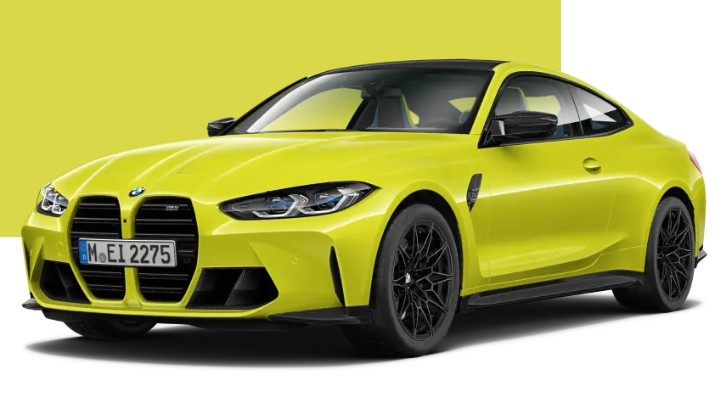
If you're asking, "Is a BMW M4 a good car?", the short answer is yes—very much so. But that answer comes with an important asterisk.
The BMW M4 isn't simply a regular luxury coupe wearing aggressive bumpers and a louder exhaust. It's a serious performance machine engineered to deliver speed, precision, everyday usability, and just enough comfort to make us wonder why dedicated sports cars need to be so inconvenient.
At the same time, owning an M4 isn't exactly like owning a Toyota Corolla. Tires are expensive. Maintenance matters. Fuel disappears surprisingly quickly when we're enjoying the accelerator, and neglecting service can turn an attractive used-car bargain into a very expensive lesson.
So, is the BMW M4 actually worth buying? Is it reliable enough for daily use? Is it comfortable? And does the performance justify the ownership costs?
Let's break it down from the perspective that actually matters: what it's like to live with one.
Content in this publication
- What Exactly Is the BMW M4?
- Is a BMW M4 a Good Car Overall?
- BMW M4 Performance: The Biggest Reason to Buy One
- Is the BMW M4 Fun to Drive?
- Can You Daily Drive a BMW M4?
- Is the BMW M4 Comfortable?
- BMW M4 Interior Quality
- Is a BMW M4 Reliable?
- How Long Can a BMW M4 Last?
- BMW M4 Maintenance Costs
- BMW M4 Fuel Economy
- How Expensive Is BMW M4 Insurance?
- BMW M4 Safety
- BMW M4 vs Regular BMW 4 Series
- BMW M4 vs BMW M3
- What Is the Best BMW M4 for Daily Driving?
- Should You Buy a Manual BMW M4?
- Is a Used BMW M4 a Good Buy?
- Are BMW M4 Parts Expensive?
- Does the BMW M4 Hold Its Value?
- Who Should Buy a BMW M4?
- Who Should Avoid a BMW M4?
- Pros and Cons of the BMW M4
- Is a BMW M4 Worth the Money?
- New vs Used BMW M4: Which Makes More Sense?
- How Practical Is the BMW M4 Compared With a Sports Car?
- Is the BMW M4 Good for Long Trips?
- Is the BMW M4 a Good First Performance Car?
- What Makes the BMW M4 Special?
- Final Verdict: Is a BMW M4 a Good Car?
- Frequently Asked Questions
What Exactly Is the BMW M4?
The BMW M4 is the high-performance version of BMW's 4 Series coupe and convertible family. Developed by BMW's M division, it takes the ordinary luxury-car formula and turns nearly every dial toward performance.
That means more power, sharper suspension tuning, stronger brakes, wider tires, aggressive styling, upgraded cooling systems, and a chassis engineered to handle serious driving.
Think of the standard 4 Series as a talented athlete wearing office clothes. The M4 is what happens when that athlete changes into racing shoes.
The M4 essentially shares its mechanical DNA with the BMW M3. The biggest traditional distinction is body style: the M3 is primarily the sedan, while the M4 occupies the coupe and convertible side of the family.
Why the M4 Has Become So Popular
Few performance cars combine such different personalities so successfully.
An M4 can cruise quietly on the highway, carry luggage, handle daily commuting, and provide modern technology. Then, on the right road, it transforms into something much more serious.
That's the appeal.
We aren't necessarily forced to choose between a comfortable luxury car and an exciting sports car. The M4 attempts to give us both.
Is a BMW M4 a Good Car Overall?
Yes. For buyers who value performance, handling, luxury, technology, and everyday practicality, the BMW M4 is one of the strongest all-around performance cars available.
Its major strengths include:
- Outstanding acceleration
- Powerful turbocharged six-cylinder engines
- Excellent handling
- High-quality interior materials
- Comfortable highway cruising
- Surprisingly practical cargo space
- Sophisticated technology
- Strong aftermarket support
- Genuine daily-driver usability
However, there are also compromises.
The ride can feel firm, particularly with large wheels. Maintenance is more expensive than with a normal BMW. Insurance can be costly, fuel economy isn't exactly its party trick, and certain configurations can become expensive very quickly.
So, the M4 is an excellent car—but not necessarily an excellent car for everyone.
BMW M4 Performance: The Biggest Reason to Buy One
Performance is where the M4 earns its reputation.
BMW's turbocharged inline-six engines have become central to the modern M-car formula. They deliver enormous torque, strong acceleration throughout the rev range, and enough performance to make highway passing almost comically easy.
Press the accelerator hard and the M4 doesn't merely gain speed.
It attacks the horizon.
Acceleration Feels Effortless
One of the M4's biggest advantages isn't simply how fast it can accelerate from a standstill. It's how accessible the performance feels.
There's substantial power available across a broad portion of the rev range, meaning we don't need to constantly search for the perfect gear.
Modern M4 Competition versions are especially fierce, and all-wheel-drive configurations can deploy their power with remarkable effectiveness.
The result is supercar-like acceleration wrapped inside something we could realistically drive to work.
The M4 Is More Than a Straight-Line Car
Buying a performance car solely based on horsepower figures is like judging a restaurant entirely by portion size.
The M4's real talent lies deeper.
BMW engineers give the car upgraded suspension components, performance-focused chassis tuning, powerful brakes, electronically controlled systems, and highly responsive steering.
The result is a car that feels composed even when we're driving quickly.
Cornering Ability
Grip is enormous.
On a winding road, the M4 can change direction with impressive confidence. The body stays controlled, the chassis communicates what it's doing, and the rear-drive character remains noticeable even on versions equipped with BMW's performance-oriented all-wheel-drive system.
The harder we push—within safe and legal limits—the more the M4 begins to reveal why the M badge matters.
Is the BMW M4 Fun to Drive?
Absolutely.
But the type of fun depends partly on which generation and configuration we're driving.
Older M4 models can feel slightly more raw and playful. Newer versions provide greater grip, more sophisticated electronics, more power, and extraordinary capability.
Some enthusiasts prefer the more analog character of earlier cars. Others appreciate the brutal effectiveness of newer models.
Neither side is necessarily wrong.
It's like choosing between a mechanical watch and a modern smartwatch. One charms us through simplicity; the other dazzles us through capability.
Rear-Wheel Drive vs xDrive
For enthusiasts who enjoy a traditional performance-car personality, rear-wheel drive remains appealing.
It can feel more playful and provides the classic front-engine, rear-drive BMW character.
BMW's performance-oriented xDrive system, meanwhile, gives the M4 another dimension.
Traction improves substantially, especially during hard acceleration or in poor weather. That makes the car easier to use year-round and allows it to put serious horsepower onto the road without turning every launch into a negotiation between the tires and physics.
Can You Daily Drive a BMW M4?
This might be the M4's secret weapon.
Yes, we can absolutely daily drive one.
Many high-performance cars become tiring once the novelty fades. Visibility may be poor, storage can be laughable, and getting inside feels like climbing into a bathtub.
The M4 is different.
It remains fundamentally connected to BMW's practical luxury-car architecture.
Comfort During Normal Driving
In its softer settings, the M4 can settle down surprisingly well.
The suspension remains firmer than that of an ordinary 4 Series, but it's generally manageable for daily driving. Highway cruising is particularly comfortable.
We also get supportive seats, strong climate control, modern infotainment, premium materials, and plenty of sound insulation.
It won't float over broken pavement like a large luxury sedan, but that's hardly the point.
Daily Practicality
The M4 offers several advantages over many conventional sports cars:
- A usable trunk
- Rear seats
- Reasonable interior storage
- Good highway stability
- Modern driver-assistance systems
- Excellent infotainment
- Comfortable front seats
- Strong climate control
Those rear seats deserve a caveat.
Adults can fit, but nobody is going to mistake the back of an M4 coupe for business class.
For children, bags, groceries, or occasional passengers, however, they dramatically increase practicality.
Is the BMW M4 Comfortable?
Yes, although comfort depends heavily on configuration.
Cars equipped with aggressive seat options, large wheels, or track-focused equipment may feel considerably less forgiving than more conventionally configured M4s.
Standard sport seats usually strike a better compromise for everyday use.
Ride Quality
The suspension is intentionally firm.
That's good when we're attacking corners. It's less charming when we're driving over potholes before coffee.
Drivers living in areas with rough roads should pay close attention to wheel size and tire choice.
Smaller available wheels with more tire sidewall generally provide better ride comfort and additional protection against pothole damage.
Should You Choose Carbon Bucket Seats?
BMW's optional carbon bucket seats look spectacular and provide serious support during performance driving.
They're also a perfect example of why choosing the "coolest" option isn't always choosing the best option.
For frequent track driving? Fantastic.
For commuting, climbing in and out several times per day, or long road trips? Standard seats may make considerably more sense.
BMW M4 Interior Quality
Step inside an M4 and it still feels like a premium BMW, which is important.
Some sports cars sacrifice luxury in pursuit of weight savings and performance. The M4 generally doesn't.
Materials feel upscale, controls are substantial, and the cabin combines sporty elements with enough refinement to justify its price.
Technology and Infotainment
Modern examples provide comprehensive digital instrumentation and infotainment systems, along with connectivity features expected in a contemporary luxury vehicle.
Depending on model year and specification, features can include:
- Smartphone integration
- Navigation
- Digital gauge displays
- Performance data screens
- Customizable drive settings
- Premium audio
- Parking assistance
- Driver-assistance technology
Some drivers may find the sheer number of configurable settings overwhelming at first.
But once we create our preferred configurations, the complexity starts making sense.
Is a BMW M4 Reliable?
This is where the conversation becomes more nuanced.
The M4 can be reliable when properly maintained.
Its engines and major mechanical components are engineered for high performance, and well-maintained examples can cover substantial mileage.
You may be interested in reading Nissan X-Trail 91 or 95: Which Fuel Should You Use?
However, "reliable performance car" and "cheap car to own" are not the same thing.
Maintenance History Matters More Than Mileage
When buying a used M4, we'd rather see a slightly higher-mileage example with detailed maintenance records than a suspiciously cheap low-mileage car with an unclear history.
Why?
Performance cars often lead difficult lives.
Some owners warm them carefully, service them religiously, and drive responsibly.
Others modify the engine, launch the car repeatedly, neglect maintenance, and sell it when problems appear.
That makes the previous owner almost as important as the car itself.
Common Areas Worth Inspecting
Depending on the generation and model year, buyers should inspect:
- Cooling system condition
- Suspension components
- Oil leaks
- Brake wear
- Tire condition
- Electronic systems
- Service history
- Transmission behavior
- Modification history
- Accident repairs
- Engine tuning
A pre-purchase inspection by a BMW specialist is one of the smartest investments we can make before buying a used M4.
How Long Can a BMW M4 Last?
A properly maintained BMW M4 can remain usable well beyond 100,000 miles, and carefully maintained cars can travel substantially farther.
The bigger issue isn't whether the engine suddenly expires at a particular mileage.
It's the cumulative cost of maintaining a complex, high-performance vehicle as components age.
Suspension parts wear.
Bushings deteriorate.
Cooling components age.
Electronics can develop faults.
Turbocharged engines require proper lubrication and maintenance.
Therefore, longevity comes down to three major ingredients:
- Maintenance
- Driving habits
- Previous ownership
Treat an M4 like a disposable toy and ownership can become painful.
Treat it like a precision machine and it can serve remarkably well.
BMW M4 Maintenance Costs
Nobody buys an M4 because oil changes are inexpensive.
Maintenance costs are higher than those of an ordinary passenger car because virtually every performance-related component is more serious.
Larger brakes cost more.
Performance tires cost more.
Premium fluids cost more.
Specialized labor costs more.
Routine Ownership Expenses
Expect to budget for:
- Synthetic engine oil
- Performance tires
- Brake pads and rotors
- Wheel alignments
- Brake fluid
- Air filters
- Spark plugs
- Transmission servicing when applicable
- Differential servicing
- Cooling-system maintenance
Independent BMW specialists can often reduce maintenance costs compared with dealership pricing, particularly once the car is outside its factory coverage period.
Tires Can Be Surprisingly Expensive
Owners occasionally underestimate tire costs.
The M4 uses wide, high-performance tires designed to handle serious power and cornering forces.
They aren't inexpensive, and aggressive driving can shorten their life quickly.
Saving money by fitting low-quality tires makes little sense on a car whose entire performance envelope depends heavily on grip.
It's like buying professional running shoes and replacing the soles with flip-flops.
BMW M4 Fuel Economy
The M4 isn't designed to maximize fuel efficiency, although modern turbocharged engines can deliver surprisingly reasonable highway consumption when driven gently.
The problem is that driving gently in an M4 requires discipline.
Boost arrives, the engine wakes up, and suddenly our environmentally responsible intentions disappear somewhere behind us.
BMW performance engines generally require or strongly favor high-octane premium gasoline appropriate to the market and specifications.
Fuel cost should therefore be considered alongside insurance, tires, servicing, and depreciation.
If filling the tank already feels financially uncomfortable before purchasing the car, an M4 probably isn't the right choice.
How Expensive Is BMW M4 Insurance?
Insurance can be significantly more expensive than coverage for a regular 4 Series.
Several factors contribute:
- High horsepower
- Expensive body panels
- Sophisticated electronics
- Performance-oriented driver profile
- Costly replacement parts
- Higher repair complexity
Actual premiums vary enormously according to age, driving record, location, insurer, annual mileage, and specific vehicle.
Always obtain insurance quotes before purchasing.
Finding the perfect used M4 and then discovering an unpleasant insurance premium isn't exactly the ending we want.
BMW M4 Safety
The M4 combines strong structural engineering with modern electronic safety technology.
Depending on model year and specification, available systems may include collision warnings, automatic emergency braking, parking sensors, cameras, blind-spot monitoring, lane-related assistance, and adaptive cruise functionality.
But we shouldn't confuse electronics with invincibility.
An M4 produces enormous performance.
Responsible driving remains the most important safety system inside the vehicle.
BMW M4 vs Regular BMW 4 Series
This comparison helps answer whether we genuinely need an M4.
A regular 4 Series is quieter, usually softer, cheaper to operate, and more than quick enough for normal roads.
The M4 offers:
- Far more power
- Sharper steering response
- Stronger brakes
- Wider performance tires
- More advanced cooling
- Aggressive suspension tuning
- More dramatic styling
- Greater track capability
- A fundamentally different driving experience
If we're buying primarily for commuting and luxury, a regular 4 Series may actually be the smarter car.
If driving itself is part of the reason we own a car, the M4 becomes much easier to justify.
BMW M4 vs BMW M3
Mechanically, the M4 and M3 are closely related.
Choosing between them largely comes down to practicality and appearance.
Choose the M4 If You Want
- Coupe styling
- A more dramatic profile
- Two-door character
- A sportier visual presence
Choose the M3 If You Want
- Four doors
- Easier rear-seat access
- Greater family practicality
- Similar performance with fewer compromises
There isn't a wrong answer.
The M3 is arguably the more rational car.
The M4 is arguably the more emotional one.
What Is the Best BMW M4 for Daily Driving?
For most drivers, the ideal M4 isn't necessarily the most aggressive configuration available.
A well-equipped automatic model with comfortable seats and sensible wheels can be a superb everyday performance car.
Drivers living in climates with frequent rain or cold conditions may also appreciate xDrive-equipped versions for their additional traction.
Track enthusiasts, meanwhile, may prioritize lighter seats, carbon components, aggressive tires, and performance packages.
The best M4 is therefore determined by how we actually drive—not by which option sheet produces the largest number.
Should You Buy a Manual BMW M4?
If engagement matters more than outright acceleration, the manual M4 has tremendous appeal.
A manual transmission makes us participate.
Every shift becomes part of the experience.
It's slower on paper than the quickest automatic Competition configurations, but numbers don't tell the entire story.
Driving pleasure isn't a spreadsheet.
A manual M4 may actually feel more special precisely because we have more responsibility for what happens.
For heavy traffic, however, an automatic is easier to live with and brutally effective when performance is demanded.
Is a Used BMW M4 a Good Buy?
Potentially, yes.
Used M4s can offer enormous performance for the money, especially after depreciation has removed some of the initial purchase price.
But buying the cheapest example available is rarely wise.
What to Check Before Buying a Used M4
Before handing over the money, we should verify:
- Complete maintenance records
- Accident history
- Tire condition
- Brake condition
- Oil leaks
- Cooling-system health
- Suspension noises
- Electronic warning messages
- Transmission operation
- Modification history
A heavily modified vehicle isn't automatically bad.
But undocumented modifications, aggressive engine tunes, or low-quality aftermarket components should raise questions.
You may be interested in readingNissan X-Trail 91 or 95: Which Fuel Should You Use?You may be interested in reading
 Is Kia Carnival a Good Car? A Complete Buyer’s Guide
Get a Pre-Purchase Inspection
This deserves repeating.
Have a reputable BMW or European-car specialist inspect the vehicle.
Spending a modest amount before buying can prevent a repair bill worth thousands later.
Are BMW M4 Parts Expensive?
Compared with mainstream vehicles, yes.
This shouldn't surprise us.
The M4 uses specialized performance components and carries a premium badge. Original parts can therefore be costly.
Fortunately, the model's popularity means there is also substantial aftermarket support.
Owners can find everything from OEM-equivalent maintenance components to performance upgrades.
That helps, but quality matters enormously.
Cheap parts on an expensive performance car often create expensive consequences.
Does the BMW M4 Hold Its Value?
M cars generally attract strong enthusiast interest, but depreciation still affects them—especially during the first years of ownership.
Options, mileage, condition, service records, transmission choice, generation, color combination, and rarity can all influence resale value.
Special editions and enthusiast-favored configurations may behave differently from ordinary production cars.
Long-term value should be considered a bonus rather than the primary reason to purchase one.
Buy the M4 because you want to drive it.
Who Should Buy a BMW M4?
The M4 makes excellent sense for someone who wants one vehicle to perform several roles.
It's especially attractive if we want:
- Serious performance
- Luxury
- Strong road presence
- Everyday usability
- A usable trunk
- Modern technology
- Highway comfort
- Occasional track capability
It also suits enthusiasts who don't want a dedicated sports car that requires major lifestyle compromises.
Who Should Avoid a BMW M4?
An M4 may not be the best choice if low operating costs are the top priority.
We might want something else if:
- Fuel economy matters enormously
- Maintenance costs cause concern
- We need spacious rear seats
- We regularly drive on extremely poor roads
- We want a soft luxury-car ride
- We aren't interested in performance
- Insurance premiums stretch the budget
Buying an M4 simply because the monthly payment fits is dangerous.
Ownership costs matter just as much as purchase price.
Pros and Cons of the BMW M4
| Pros | Cons |
|---|---|
| Exceptional acceleration | Expensive maintenance |
| Excellent handling | Costly performance tires |
| Strong turbocharged engines | Firm ride |
| Premium interior | Rear seats are limited |
| Practical for a sports coupe | Insurance can be expensive |
| Available manual transmission | Premium fuel costs |
| Strong technology | Complex electronics |
| Great highway car | Used examples require careful inspection |
| Daily-driver friendly | Easy to buy more performance than you need |
Is a BMW M4 Worth the Money?
For the right buyer, absolutely.
The key is understanding what we're paying for.
The M4 isn't merely transportation.
We're paying for engineering, performance, braking, chassis development, luxury, brand heritage, and the ability to transform an ordinary commute into something entertaining.
Cars offering similar acceleration may occasionally cost less.
Cars offering greater comfort may also cost less.
And pure sports cars may deliver sharper sensations.
The M4's brilliance comes from combining these qualities.
It's the Swiss Army knife of serious performance cars.
New vs Used BMW M4: Which Makes More Sense?
Buying new gives us the latest technology, full warranty coverage, customization opportunities, and the confidence that nobody else abused the car before us.
Buying used can dramatically improve value.
The tradeoff is uncertainty.
A used performance car demands more investigation than a typical family vehicle because the way it was driven matters enormously.
For buyers who dislike risk, newer certified or warranty-backed examples may justify their premium.
For knowledgeable enthusiasts willing to inspect carefully, older examples can represent excellent value.
How Practical Is the BMW M4 Compared With a Sports Car?
Very practical.
This is one reason the M4 has such broad appeal.
A traditional two-seat sports car might deliver more exotic styling or a purer driving experience, but everyday inconveniences can accumulate quickly.
The M4 provides enough cargo capacity for road trips, enough interior space for daily life, and enough comfort to tackle long journeys without punishment.
We can drive it to dinner Friday night, enjoy a winding road Saturday morning, buy groceries Saturday afternoon, and commute Monday.
That's difficult to replicate with many dedicated sports cars.
Is the BMW M4 Good for Long Trips?
Yes.
Despite its performance focus, the M4 is an excellent grand-tourer when configured sensibly.
High-speed stability is exceptional, the seats provide strong support, climate control works well, and highway refinement is impressive.
The firm suspension remains noticeable, but smooth roads reveal another side of the car.
It settles into a confident rhythm.
You begin a journey thinking about horsepower.
You finish appreciating the seats.
Is the BMW M4 a Good First Performance Car?
It can be, although we'd approach this cautiously.
Modern stability systems make powerful cars considerably more manageable than older performance machines, but the M4 still has enough horsepower to overwhelm inexperienced drivers.
Acceleration happens extremely quickly.
Speeds that once felt dramatic become surprisingly easy to reach.
Drivers moving from a modest vehicle should gradually learn the car rather than immediately exploring its limits.
Performance deserves respect.
What Makes the BMW M4 Special?
The automotive market contains plenty of fast cars.
What makes the M4 special is how little we sacrifice to access that speed.
It can be civilized.
It can be luxurious.
It can be practical.
And when we find the right road and select the right settings, it becomes something entirely different.
Few cars bridge those worlds as effectively.
That dual personality is the M4's greatest achievement.
Final Verdict: Is a BMW M4 a Good Car?
Yes—the BMW M4 is a very good car, and for the right enthusiast, it's an exceptional one.
It delivers explosive performance, excellent handling, impressive interior quality, modern technology, and enough practicality to function as a genuine daily driver. That combination explains why the M4 continues to occupy such an important position in the performance-car market.
But we shouldn't romanticize ownership.
Maintenance isn't cheap. Tires aren't cheap. Insurance may not be cheap. Poorly maintained used examples can become money pits, and the ride is firmer than some drivers will enjoy.
Approach the M4 with the right expectations, though, and everything begins to make sense.
It's a car that can commute quietly during the week and become a tire-smoking performance machine when the mood strikes.
That's the magic.
We don't have to choose between sensible and exciting.
The M4 simply asks us how much excitement we'd like today.
Frequently Asked Questions
1. Is a BMW M4 reliable for daily driving?
Yes. A properly maintained BMW M4 can be reliable enough for regular daily use. Maintenance history is particularly important with used vehicles, so buyers should prioritize cars with documented servicing and obtain a pre-purchase inspection.
2. Is the BMW M4 expensive to maintain?
Yes, compared with an ordinary sedan or coupe. Performance tires, brakes, premium fluids, specialized parts, and labor can increase ownership costs. Budgeting for maintenance before purchasing is essential.
3. Is the BMW M4 comfortable enough for long trips?
Generally, yes. The M4 offers supportive seats, strong highway stability, a premium cabin, and useful technology. Cars with aggressive bucket seats or very large wheels may be less comfortable than more conventional configurations.
4. Can a BMW M4 be used as an everyday car?
Absolutely. That's one of its biggest strengths. The M4 combines sports-car performance with a usable trunk, rear seats, modern infotainment, climate control, and comfortable highway manners.
You may be interested in readingNissan X-Trail 91 or 95: Which Fuel Should You Use?You may be interested in reading
Is Kia Carnival a Good Car? A Complete Buyer’s GuideYou may be interested in reading
Kia Carnival Full Details: Specs, Features, Engines, Space, and Everything You Need to Know5. Is buying a used BMW M4 worth it?
A used M4 can provide outstanding performance for the money, but condition matters enormously. Look for a complete service history, inspect modifications carefully, and have the vehicle checked by a BMW specialist before purchasing.
If you want to know other articles similar to Is a BMW M4 a Good Car? A Complete Owner-Focused Guide you can visit the category Blog.
Volvo S90 Reliability: Problems, Costs & Best Years
Is Haval Jolion a Good Car? Honest Review, Reliability, Pros and Cons
How to Start Haval Jolion With Spare Key: Complete Guide
How to Calculate Per Diem on an Auto Loan

How to Calculate the Residual Value of a Car
Is the Honda Passport Selling Well? Sales Numbers Tell the Story
Leave a Reply
More content of your interest