

Is Kia Carnival a Good Car? A Complete Buyer’s Guide

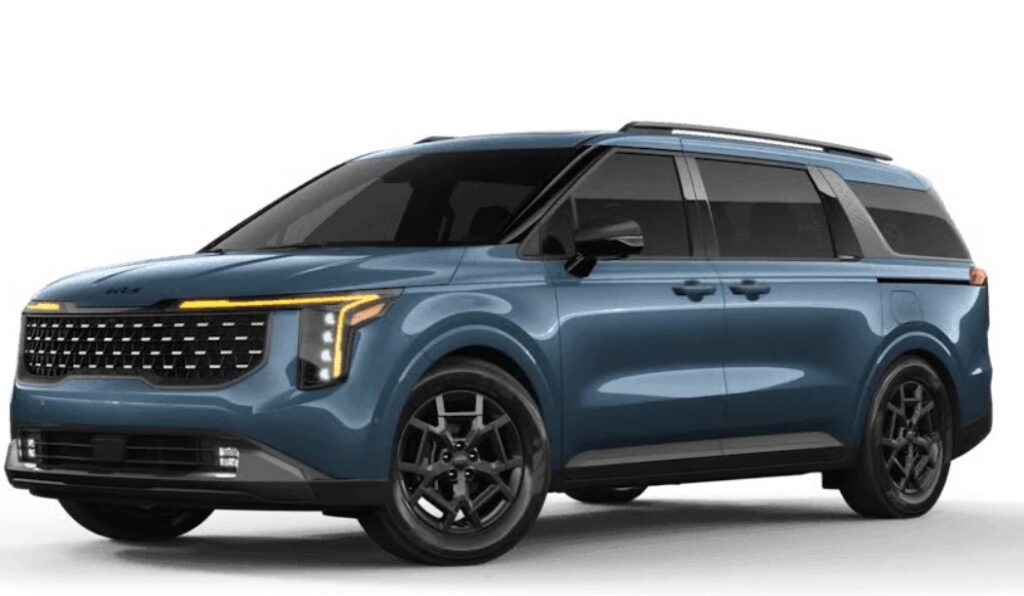
So, is Kia Carnival a good car? For most families looking for serious passenger space, comfort, clever features, and SUV-inspired styling without moving into a huge three-row SUV, the answer is yes—the Kia Carnival is a very good vehicle.
But there is more to the story.
The Carnival sits in an unusual corner of the market. Kia likes to emphasize its SUV-inspired personality, yet underneath that tougher-looking body is something far more useful: a genuinely spacious minivan with sliding doors, three rows of seats, loads of luggage room, and family-friendly practicality.
And frankly, that isn't an insult. It's one of the Carnival's greatest strengths.
The current Carnival offers conventional V6 and hybrid powertrain choices in the U.S. market, depending on model and trim. It combines modern technology with a cabin that can feel surprisingly upscale, particularly in higher specifications. At the same time, reliability isn't flawless, fuel consumption of the V6 is merely average, and some competitors still beat it in particular areas.
Let's dig into what owning one is really like.
Content in this publication
- Is the Kia Carnival Worth Buying?
- What Exactly Is the Kia Carnival?
- How Good Is the Kia Carnival Engine?
- What About the Kia Carnival Hybrid?
- How Comfortable Is the Kia Carnival?
- Is the Third Row Actually Usable?
- How Much Cargo Space Does the Kia Carnival Have?
- Is the Kia Carnival Good for Road Trips?
- Is the Kia Carnival Fuel Efficient?
- How Does the Kia Carnival Drive?
- Can the Kia Carnival Tow?
- Is the Kia Carnival Safe?
- Is the Kia Carnival Reliable?
- What Problems Can Kia Carnival Owners Encounter?
- How Practical Is the Kia Carnival for Children?
- Does the Kia Carnival Feel Cheap Inside?
- Kia Carnival vs Three-Row SUV
- Kia Carnival vs Honda Odyssey
- Kia Carnival vs Toyota Sienna
- Kia Carnival vs Chrysler Pacifica
- Is a Used Kia Carnival a Good Buy?
- Who Should Buy a Kia Carnival?
- Who Should Not Buy a Kia Carnival?
- What Is the Best Kia Carnival to Buy?
- Is the Kia Carnival Expensive to Maintain?
- How Long Can a Kia Carnival Last?
- Pros and Cons of the Kia Carnival
- So, Is Kia Carnival a Good Car?
- Final Verdict
- Frequently Asked Questions
Is the Kia Carnival Worth Buying?
We think the Carnival makes an especially convincing case for buyers who actually use all three rows.
That's important.
Plenty of three-row SUVs technically accommodate seven people, but put adults in the back and suddenly "seven seats" starts feeling like optimistic advertising. The Carnival is different. Its architecture prioritizes passengers, making the second and third rows genuinely useful.
Its strongest qualities include:
- Excellent passenger space
- Large cargo capacity
- Easy-access sliding rear doors
- Attractive SUV-like styling
- Strong naturally aspirated V6 performance
- Available hybrid powertrain
- Modern infotainment technology
- Numerous driver-assistance features
- Comfortable highway manners
- Competitive warranty coverage in the U.S.
The compromises? The V6 isn't particularly economical around town, all-wheel drive isn't offered in the U.S. lineup, and some seating configurations trade cargo flexibility for luxury.
In other words, the Carnival isn't perfect—but its compromises tend to be relatively easy to understand.
What Exactly Is the Kia Carnival?
SUV or Minivan?
Let's settle this before going any further.
The Kia Carnival is fundamentally a minivan, even though Kia has marketed it using the "MPV" or multi-purpose vehicle label and given it SUV-inspired styling.
It has sliding rear doors. It has three spacious rows. It prioritizes passenger packaging rather than off-road capability.
Call it whatever we want—the formula works.
And arguably, the SUV disguise actually makes the Carnival easier to embrace for people who swore they would never buy a minivan.
Why the Carnival Looks Different From Traditional Minivans
Rather than the rounded, cab-forward silhouette historically associated with vans, the Carnival uses a long hood, broad grille, upright bodywork, and chunky exterior detailing.
From some angles, it could almost pass for a large crossover.
That doesn't change what happens inside, though. Open the sliding doors and we find the kind of space management that traditional SUVs struggle to replicate.
It is basically practicality wearing hiking boots.
How Good Is the Kia Carnival Engine?
The 3.5-Liter V6
The conventional U.S.-market Carnival uses a naturally aspirated 3.5-liter V6 producing roughly 287 horsepower, paired with an eight-speed automatic transmission.
That combination suits the vehicle remarkably well.
There's no tiny turbocharged engine working overtime to move a full cabin of passengers. Instead, acceleration feels linear and predictable.
Car and Driver recorded a roughly 7.0-second 0–60 mph time in its testing, which is plenty quick for a family hauler.
Nobody buys a Carnival to terrorize sports cars at traffic lights. What matters is whether it has enough power to merge onto highways, overtake confidently, and move a full load without feeling exhausted.
It does.
Is the Carnival V6 Reliable?
A naturally aspirated V6 paired with a conventional automatic transmission is, conceptually, a fairly straightforward drivetrain compared with some increasingly complex turbocharged alternatives.
That doesn't automatically guarantee trouble-free ownership, of course.
Consumer Reports currently expects the 2026 Carnival to deliver about average reliability compared with the average new vehicle, based on recent model-year data.
So we wouldn't describe the Carnival as an undisputed reliability champion. We would describe its record more cautiously: respectable enough to consider, but still worth checking service history and recall completion when buying used.
What About the Kia Carnival Hybrid?
The hybrid significantly changes the Carnival equation.
Instead of simply asking whether we want a minivan, we can now decide whether the traditional V6 or a more fuel-conscious electrified drivetrain better fits our lifestyle.
Why the Hybrid Makes Sense
A hybrid is especially attractive for families who spend a lot of time in:
- Urban traffic
- School runs
- Stop-and-go commuting
- Short suburban journeys
- Delivery or ride-intensive driving
Those are exactly the situations where a large conventional gasoline engine tends to burn fuel enthusiastically.
Interestingly, Consumer Reports currently predicts the 2026 Carnival Hybrid will have better-than-average new-car reliability, although the hybrid version naturally has a much shorter history than long-established rivals.
V6 or Hybrid: Which Would We Choose?
The answer depends on priorities.
We'd lean toward the V6 if we valued simplicity, stronger traditional power delivery, frequent highway driving, or towing.
We'd lean toward the hybrid if fuel bills, urban use, and efficiency mattered more.
Neither choice automatically makes the other wrong.
How Comfortable Is the Kia Carnival?
This is where the Carnival starts earning its keep.
Family vehicles live hard lives. They deal with long trips, restless children, grocery bags, grandparents, sports equipment, luggage, spilled drinks, and the occasional argument about who gets which seat.
A good family vehicle needs to reduce friction.
The Carnival does.
Front-Seat Comfort
Up front, the driving environment feels closer to a modern crossover than an old-school people carrier.
The dashboard design is broad and contemporary, while large displays in suitably equipped models create a more premium appearance.
There is useful storage throughout the cabin, something that sounds boring until we live with a vehicle that lacks it.
Phones, keys, bottles, wipes, charging cables—they all need somewhere to go.
Second-Row Comfort
Second-row accommodation is one of the Carnival's highlights.
Certain high-end configurations offer plush reclining lounge-style seats with leg rests. They can transform the back of the Carnival into something resembling an airport business-class lounge.
Wonderful for passengers.
Less wonderful for cargo flexibility.
Car and Driver points out that the luxury VIP-style second-row seats cannot simply disappear into the floor and can reduce the vehicle's maximum versatility compared with more conventional seating arrangements.
That's why we'd resist automatically buying the fanciest seating package.
Luxury and practicality don't always travel in the same lane.
Is the Third Row Actually Usable?
Yes—and this is one of the most compelling reasons to choose the Carnival over many midsize three-row SUVs.
The third row isn't merely an emergency bench reserved for children.
Adults can use it.
Access is also dramatically easier thanks to the sliding doors and wide cabin opening.
Parents already know why this matters. Trying to strap a child into a car seat while wedged between an SUV door and the vehicle parked beside us can feel like competitive gymnastics.
Sliding doors largely eliminate that nonsense.
How Much Cargo Space Does the Kia Carnival Have?
A lot.
Car and Driver reports approximately 40 cubic feet of cargo capacity behind the third row, giving the Carnival useful luggage space even when every seating row is occupied. In its testing, it managed to accommodate 14 carry-on suitcases behind the third row and 48 with the passenger area configured for maximum cargo.
That distinction matters.
Some three-row SUVs provide plenty of passenger seats or plenty of luggage room—but struggle to provide both simultaneously.
The Carnival is designed around exactly that challenge.
Why the Cargo Area Works So Well
The low floor makes loading easier, while the deep rear storage area creates useful vertical space.
We can carry:
- Family luggage
- Grocery runs
- Baby equipment
- Sports bags
- Camping supplies
- Pushchairs and strollers
- Large boxes
- Airport luggage
without automatically sacrificing the third row.
For active families, that's a huge advantage.
Is the Kia Carnival Good for Road Trips?
Absolutely.
In fact, long-distance travel may be where the Carnival makes the most sense.
Imagine six people heading away for a week.
You may be interested in reading Kia Carnival Full Details: Specs, Features, Engines, Space, and Everything You Need to Know
A fashionable three-row crossover sounds attractive until we add six suitcases, snacks, chargers, jackets, pillows, and miscellaneous items nobody remembers packing.
The Carnival absorbs that chaos far more gracefully.
Its combination of passenger space, storage, highway comfort, USB access, entertainment features depending on trim, and easy cabin movement makes it a natural road-trip machine.
Highway Refinement
The suspension favors comfort rather than sporty aggression.
Good.
Nobody needs razor-sharp cornering while transporting three generations of the family.
Road manners are stable and predictable, and the naturally aspirated V6 has enough reserve power for overtaking.
That relaxed personality fits the mission.
Is the Kia Carnival Fuel Efficient?
V6 Fuel Economy
Fuel economy isn't the standard Carnival's greatest strength.
For the current V6 model, Car and Driver lists EPA estimates of approximately 18 mpg city, 25 mpg highway, and 21 mpg combined. Interestingly, its own 75-mph highway test produced 28 mpg.
Those numbers are reasonable for a large gasoline-powered family vehicle, but they won't make anyone throw a party at the fuel station.
If our driving is predominantly urban, the hybrid deserves serious consideration.
Fuel Economy Versus an SUV
This is where perspective helps.
The Carnival shouldn't necessarily be compared with a compact crossover. We need to compare it with vehicles capable of carrying a similar number of people and comparable luggage.
A large three-row SUV may use as much fuel—or considerably more—while providing less practical interior packaging.
Suddenly, the Carnival's numbers don't look quite so frightening.
How Does the Kia Carnival Drive?
Easy Rather Than Exciting
The Carnival drives exactly as a good family vehicle should.
Steering is manageable, controls are intuitive, and the driving experience rarely demands unnecessary attention.
It doesn't shrink around us like a sports sedan, and there is no pretending that this isn't a sizable machine.
Still, it doesn't feel like piloting a bus either.
Acceleration
The V6 is one of its strongest dynamic attributes.
Power builds smoothly without waiting for a turbocharger to wake up, and the eight-speed automatic generally keeps the engine in an appropriate range.
Load the Carnival with people and luggage and the additional power suddenly becomes much more valuable than acceleration statistics might suggest.
Can the Kia Carnival Tow?
For families combining passenger duty with occasional recreational towing, the Carnival has another card to play.
The V6 Carnival is rated to tow up to 3,500 pounds when properly equipped, according to Car and Driver.
That can make it suitable for certain:
- Small trailers
- Lightweight campers
- Utility trailers
- Personal watercraft
Of course, we should always verify the exact rating for the model year, specification, load, and market involved.
Towing limits aren't numbers to improvise with.
Is the Kia Carnival Safe?
The safety picture is generally respectable, although it's worth examining more deeply than simply saying "yes."
For the 2026 Carnival, IIHS gives the vehicle a Good rating in the small-overlap front test, while its updated moderate-overlap front test is rated Marginal and its updated side test is rated Acceptable.
IIHS also notes that structural reinforcements were introduced for 2025 models in areas including the B-pillar, doors, and rear seat rail.
So while several crash-performance areas are strong, current IIHS testing does reveal room for improvement.
Driver-Assistance Technology
Modern Carnivals also offer a broad suite of active-safety technology, with features varying by trim and market.
IIHS identifies standard systems including blind-spot detection, lane-departure warning/prevention, and rear automatic braking on the current U.S. model.
Technology cannot replace attentive driving, but in a large family vehicle, these systems provide useful additional layers of protection.
Is the Kia Carnival Reliable?
Here's where we need nuance.
Searching "Is Kia Carnival a good car?" often quickly turns into "Will a Kia Carnival last?"
Those aren't exactly the same question.
Current Reliability Expectations
Consumer Reports predicts roughly average reliability for the 2026 gasoline Carnival, based on results from the 2023–2025 models.
That means we shouldn't place it on an imaginary pedestal alongside vehicles famous for near-indestructibility.
But neither does the evidence justify automatically dismissing it as unreliable.
The smarter approach is to evaluate specific model years.
Recalls Matter
As of 2026, some Carnival model years have been affected by recalls.
For example, a 2026 recall covering certain 2022–2026 Carnivals concerns the possibility of a fuel leak at a fuel-pipe connection, while another recall affecting certain 2026 Kia models involves instrument-panel display software. Remedies are provided without charge for affected vehicles.
That's why anyone buying used should check the VIN against the applicable national recall database rather than assuming every Carnival has—or doesn't have—the same issue.
What Problems Can Kia Carnival Owners Encounter?
No vehicle is faultless, and modern cars contain enormous amounts of electronics.
Potential concerns reported across different years can involve areas such as electrical accessories, infotainment, powered doors, software, trim components, and recall-related items.
But we'd avoid falling into the classic internet trap.
Search any model followed by the word "problems," and within five minutes it will sound like every example exploded before leaving the dealership.
Owner complaints are useful for identifying patterns. They are less useful for estimating how frequently a problem occurs unless we have population-level data.
What to Check on a Used Carnival
Before buying one, we'd inspect:
- Complete service records.
- Recall completion.
- Sliding-door operation.
- Infotainment and camera functionality.
- Air-conditioning performance in all rows.
- Power-seat and tailgate functions.
- Tire wear patterns.
- Suspension noises.
- Transmission behavior when cold and warm.
- Evidence of accident repairs or water intrusion.
A professional pre-purchase inspection is also money well spent.
How Practical Is the Kia Carnival for Children?
Very.
Possibly annoyingly practical.
Sliding doors are the star attraction because children can't fling them outward into neighboring cars.
Parents also gain easier access to child seats, while the wide cabin makes climbing between rows less awkward.
IIHS currently gives the 2026 Carnival an Acceptable rating for LATCH ease of use, meaning its child-seat anchors are reasonably accessible, though not the very best in the class.
It's one of those vehicles where the benefits become clearer after living with it for a week than after staring at a specification sheet.
Does the Kia Carnival Feel Cheap Inside?
Not generally.
Kia has made enormous strides in interior design, and the Carnival is a good example.
Higher trims can look considerably more expensive than we might expect from a traditional minivan, particularly with dual digital displays, leather upholstery, upscale seating, panoramic roof options, and decorative trim.
The Luxury Trap
There is, however, an interesting question:
How luxurious should a family van actually be?
If children are going to treat the second row like a mobile cafeteria, spending heavily on the fanciest upholstery may not make sense.
Sometimes the sweet spot is a mid-level model with the important technology but fewer precious surfaces.
Kia Carnival vs Three-Row SUV
Here's the comparison that matters most.
Why buy a Carnival instead of a Telluride, Palisade, Highlander, Pilot, Explorer, or similar SUV?
Because the Carnival generally uses its footprint more intelligently for passengers.
A three-row SUV may make more sense if we need:
- Available all-wheel drive
- Higher ground clearance
- Rough-road capability
- Greater towing capacity
- More traditional SUV styling
The Carnival makes more sense if we prioritize:
- Easy third-row access
- Sliding doors
- Maximum passenger comfort
- Cargo space with all seats occupied
- Child-seat convenience
- Low loading height
If family practicality is the scoreboard, the minivan keeps scoring points while everyone is distracted by the SUV badge.
Kia Carnival vs Honda Odyssey
The Honda Odyssey remains one of the obvious Carnival rivals.
Honda's long history in the segment, clever interior packaging, and strong family reputation make it difficult to ignore.
You may be interested in readingKia Carnival Full Details: Specs, Features, Engines, Space, and Everything You Need to KnowYou may be interested in reading
 Leapmotor C10 Insurance Group: Costs, Ratings and What UK Drivers Should Know
The Carnival counters with more adventurous styling, a sophisticated cabin, competitive equipment, and available hybrid technology that the Odyssey does not currently match in the same way.
We'd test-drive both.
The Odyssey feels like the established specialist. The Carnival feels like the challenger that turned up wearing a designer jacket.
Kia Carnival vs Toyota Sienna
The Toyota Sienna's major attraction is efficiency and its established hybrid formula, plus available all-wheel drive.
That makes it particularly compelling for high-mileage families or buyers living in areas where additional traction matters.
The Carnival fights back with available V6 power, distinctive styling, cabin technology, and a more conventional driving feel in gasoline form.
There's no universal winner.
Our annual mileage may decide this comparison more effectively than any review score.
Kia Carnival vs Chrysler Pacifica
The Pacifica deserves consideration because of its clever interior flexibility, available plug-in-hybrid version, and available AWD on certain configurations.
The Carnival counters with bold styling, a strong equipment list, and Kia's warranty proposition.
Car and Driver notes that the Pacifica and Honda Odyssey can offer somewhat more overall interior room than the Carnival, despite the Kia still being exceptionally spacious.
Again, we're dealing with degrees of "very spacious," not cramped versus spacious.
Is a Used Kia Carnival a Good Buy?
It certainly can be.
Because the Carnival name replaced the Sedona in the U.S. beginning with the 2022 model year, even early examples still feel relatively modern. IIHS confirms that the current Carnival generation arrived for 2022.
Used models can offer a significant amount of space and equipment for the money.
But model-year differences matter.
Later vehicles may have revised equipment or structural improvements, and newer examples can have remaining factory coverage depending on age, mileage, ownership status, market, and warranty rules.
Don't Buy on Price Alone
A suspiciously cheap Carnival isn't automatically a bargain.
We'd rather pay slightly more for a well-documented example than save money on one with:
- Missing maintenance history
- Unresolved warning lights
- Accident damage
- Uncompleted recalls
- Electrical faults
- Abnormal transmission behavior
A bargain family vehicle stops being a bargain remarkably quickly when repairs start arriving like subscription payments.
Who Should Buy a Kia Carnival?
The Carnival makes exceptional sense for larger families, frequent road-trippers, multi-generational households, and anyone regularly transporting five or more people.
It also works beautifully for buyers who don't necessarily need seven passengers every day but want enormous flexibility.
We'd strongly consider one if:
- We have three or more children.
- We regularly carry grandparents or friends.
- We take long family vacations.
- We routinely carry large amounts of luggage.
- We value passenger comfort more than off-road ability.
- We want something more distinctive than a traditional van.
- We prefer sliding doors to conventional rear doors.
Who Should Not Buy a Kia Carnival?
It's not for everybody.
Someone who rarely carries more than four people may simply be hauling around a lot of unused vehicle.
Likewise, drivers who frequently face deep snow, rough trails, or difficult unpaved roads may prefer an AWD SUV with additional ground clearance.
We would look elsewhere if our priorities include:
- Genuine off-road use
- AWD in the U.S.
- Heavy towing
- Compact exterior dimensions
- Sports-car handling
- Maximum gasoline fuel economy
There's nothing wrong with recognizing that a good car can still be the wrong car for us.
What Is the Best Kia Carnival to Buy?
For many buyers, the ideal Carnival isn't the cheapest or the most expensive version.
It's somewhere in the middle.
A mid-level trim often delivers the core technologies, comfort features, safety equipment, and cabin upgrades we actually use without loading the vehicle with expensive extras.
Do We Really Need VIP Seats?
They look spectacular.
Passengers will love them.
Instagram will love them.
Your refrigerator probably won't.
If we routinely use the Carnival as a cargo vehicle, a more flexible conventional second-row arrangement may prove far more useful.
If we primarily transport passengers and want near-limousine comfort, however, those luxury chairs make much more sense.
Think About How You Will Use the Car
The best specification isn't determined by the brochure.
It's determined by Tuesday afternoon.
Who sits where? What do we carry? How many miles do we drive? Do we remove seats? Do we tow? Are most journeys urban?
Answer those questions and the correct Carnival configuration becomes much easier to identify.
Is the Kia Carnival Expensive to Maintain?
Running costs should generally sit within the territory expected of a mainstream large family vehicle rather than a premium luxury SUV.
Still, maintenance expenditure grows as vehicles age.
We need to budget for:
- Engine oil and filters
- Tires
- Brake pads and rotors
- Transmission servicing where specified
- Coolant
- Batteries
- Air-conditioning maintenance
- Suspension components
- Scheduled inspections
Large vehicles also tend to consume tires and brakes faster than tiny cars simply because there is more mass to stop and support.
Following the maintenance schedule matters much more than trying to save a few dollars by postponing routine work.
How Long Can a Kia Carnival Last?
There is no magic mileage at which every Carnival expires.
Longevity depends enormously on maintenance, climate, driving style, operating conditions, accident history, and previous ownership.
A carefully maintained vehicle driven mainly on long highway trips may age far more gracefully than a lower-mileage example subjected to endless short journeys and neglected servicing.
Instead of asking only, "How many miles will it last?" we'd ask:
How well has this particular Carnival been cared for?
That question tells us much more.
Pros and Cons of the Kia Carnival
If we had to reduce everything to a quick buying decision, here's where the Carnival stands.
| Pros | Cons |
|---|---|
| Spacious three-row cabin | No AWD in U.S. models |
| Extremely practical sliding doors | V6 city fuel economy isn't outstanding |
| Strong 3.5L V6 | Some rivals offer greater maximum cargo flexibility |
| Available hybrid | VIP seats reduce versatility |
| Attractive SUV-inspired design | Reliability record isn't class-leading |
| Large cargo area | Large exterior footprint |
| Modern technology | Some current IIHS results are only Marginal/Acceptable |
| Comfortable long-distance cruiser | Certain model years have recalls |
| Useful towing capability with V6 | Higher trims can become expensive |
| Family-friendly interior | Not designed for off-road use |
So, Is Kia Carnival a Good Car?
Yes.
The Kia Carnival is a good car—and arguably an even better family vehicle.
Its greatest strength isn't horsepower, screen size, styling, or even cargo volume individually.
It's how well all those pieces work together.
The Carnival can carry a large family without forcing everyone to negotiate for legroom. It can transport luggage without instantly sacrificing the rear seats. Sliding doors make everyday parking easier. The V6 provides confident performance, while the hybrid gives efficiency-focused buyers another path.
There are valid drawbacks.
The gasoline version isn't an economy champion, AWD remains unavailable in the U.S., some seating arrangements compromise cargo versatility, reliability projections aren't flawless, and current IIHS testing includes a Marginal updated moderate-overlap result and Acceptable side rating.
Still, those issues don't erase the broader package.
For a buyer who actually needs three usable rows, the Carnival isn't merely a reasonable alternative to a three-row SUV.
In many situations, it's the smarter tool for the job.
Final Verdict
After weighing space, comfort, practicality, engine performance, efficiency options, safety, reliability, and everyday usability, we'd comfortably place the Kia Carnival on the shortlist for anyone shopping for a large family vehicle.
The conventional V6 is the straightforward choice for buyers who value smooth power and traditional drivetrain behavior. The hybrid becomes increasingly appealing as annual mileage and urban driving increase.
Our recommendation?
Don't dismiss the Carnival simply because it is technically a minivan.
Drive one with the entire family onboard, put everyone's luggage behind the third row, and then perform the same experiment with the three-row SUV you were planning to buy.
The measuring tape may settle the argument faster than we can.
Frequently Asked Questions
1. Is Kia Carnival a reliable car?
The Kia Carnival appears to offer reasonable rather than exceptional reliability. Consumer Reports currently predicts the 2026 gasoline Carnival will have about average reliability compared with the average new vehicle, while its prediction for the 2026 Carnival Hybrid is more favorable. Maintenance history remains particularly important when shopping used.
2. Is the Kia Carnival better than an SUV?
For carrying people and luggage, it often can be. Sliding doors, easier third-row access, a lower floor, and efficient interior packaging give the Carnival practical advantages over many three-row SUVs. An SUV may still be preferable if AWD, off-road capability, higher ground clearance, or greater towing capacity are priorities.
3. Is the Kia Carnival good for long trips?
Yes. The spacious second and third rows, substantial luggage capacity, comfortable ride, available passenger amenities, and strong V6 performance make the Carnival particularly well suited to family road trips.
4. Does the Kia Carnival have enough power?
Yes. The current U.S. gasoline version's 3.5-liter V6 produces about 287 horsepower, and Car and Driver recorded a 0–60 mph time of roughly seven seconds. That's more than adequate for typical family use, highway merging, and overtaking.
You may be interested in readingKia Carnival Full Details: Specs, Features, Engines, Space, and Everything You Need to KnowYou may be interested in reading
Leapmotor C10 Insurance Group: Costs, Ratings and What UK Drivers Should KnowYou may be interested in reading
Leapmotor C10 Reliability: Is It a Dependable SUV?5. Should I buy a Kia Carnival V6 or Hybrid?
Choose the V6 if you prefer a conventional naturally aspirated drivetrain, strong acceleration, and frequent highway or towing use. Consider the Carnival Hybrid if you drive substantial annual mileage, spend plenty of time in urban traffic, and want to reduce fuel consumption. The best option depends more on how and where we drive than on which powertrain looks better on paper.
If you want to know other articles similar to Is Kia Carnival a Good Car? A Complete Buyer’s Guide you can visit the category Blog.
Volvo S90 Reliability: Problems, Costs & Best Years
Is Haval Jolion a Good Car? Honest Review, Reliability, Pros and Cons
How to Start Haval Jolion With Spare Key: Complete Guide
How to Calculate Per Diem on an Auto Loan

How to Calculate the Residual Value of a Car

Is the Honda Passport Selling Well? Sales Numbers Tell the Story
Leave a Reply
More content of your interest