

Mazda CX-9 Tire Pressure: The Complete PSI Guide

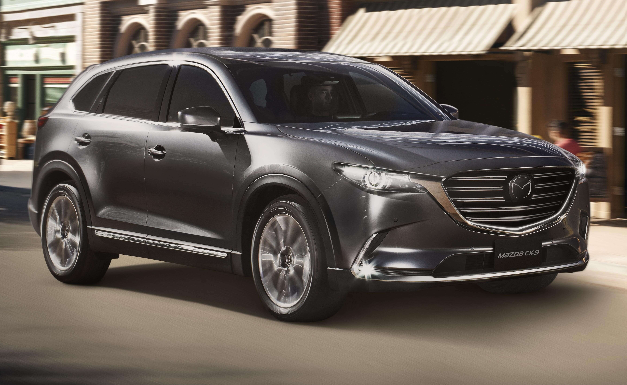
Getting the Mazda CX-9 tire pressure right sounds like one of those tiny maintenance jobs we can ignore until the dashboard starts complaining. Yet those few pounds of air inside each tire influence almost everything we feel from behind the wheel: ride comfort, steering response, fuel economy, tire wear, braking stability, and even how confidently the CX-9 handles a wet highway.
So, what tire pressure should a Mazda CX-9 have?
For many second-generation Mazda CX-9 models sold in the United States and Canada, including vehicles equipped with 255/60R18 or 255/50R20 tires, Mazda specifies 34 psi (230 kPa) front and rear when the tires are cold. Mazda's specifications for the 2016, 2018, 2022, and 2023 CX-9 all show this figure for those factory tire sizes.
But there is an important catch.
We should always verify the specification printed on the tire-information placard on the driver's-side door frame or B-pillar, because pressure recommendations can differ by market, tire size, model year, and vehicle configuration. Mazda itself directs owners to this label for the correct inflation pressure.
Let's break everything down without turning tire pressure into rocket science.
Content in this publication
- What Is the Correct Mazda CX-9 Tire Pressure?
- Mazda CX-9 Tire Pressure by Model Year
- What Does “Cold Tire Pressure” Actually Mean?
- How to Check Mazda CX-9 Tire Pressure Correctly
- How Often Should We Check Mazda CX-9 Tire Pressure?
- Why Does Mazda CX-9 Tire Pressure Drop in Cold Weather?
- Mazda CX-9 TPMS Light: What Does It Mean?
- Is 40 PSI Too High for a Mazda CX-9?
- Is 30 PSI Too Low for a Mazda CX-9?
- What Happens If CX-9 Tires Are Underinflated?
- What Happens If CX-9 Tires Are Overinflated?
- Mazda CX-9 18-Inch vs 20-Inch Tire Pressure
- Does Tire Pressure Affect Mazda CX-9 Fuel Economy?
- Does Tire Pressure Affect Handling?
- Why One CX-9 Tire Keeps Losing Air
- Can We Drive With the Mazda CX-9 TPMS Light On?
- Mazda CX-9 Tire Pressure Maintenance Tips
- Should We Use Nitrogen in Mazda CX-9 Tires?
- Mazda CX-9 Tire Pressure Quick Reference
- Conclusion: Keep It Simple and Keep It Cold
- Frequently Asked Questions About Mazda CX-9 Tire Pressure
What Is the Correct Mazda CX-9 Tire Pressure?
For a large portion of second-generation Mazda CX-9 models sold in the United States and Canada, the recommended cold inflation pressure is:
| Tire Size | Front | Rear |
|---|---|---|
| 255/60R18 | 34 psi | 34 psi |
| 255/50R20 | 34 psi | 34 psi |
That equals approximately 230 kPa.
Mazda's 2023 CX-9 owner's manual lists 34 psi for both front and rear tires with either of these factory tire sizes. The 2022 documentation lists the same values, as do Mazda specifications for the 2016 and 2018 CX-9.
That's convenient because we don't have to remember different front and rear pressures on these versions.
Think of 34 psi as the sweet spot Mazda's engineers selected to balance comfort, grip, efficiency, handling, and tire durability.
However, don't treat 34 psi as a universal CX-9 law carved into stone. Older vehicles, export models, replacement wheels, or different tire configurations may have another recommendation.
Where to Find the Official PSI for Your CX-9
Open the driver's door.
Look around the door jamb or B-pillar for a rectangular tire-information sticker. Mazda says this placard contains the factory tire size and recommended inflation pressure in psi and kPa.
That sticker outranks:
- Internet forums
- A neighbor's recommendation
- The number printed on the tire sidewall
- A generic tire-pressure chart
- What another CX-9 owner uses
Your individual vehicle's placard is the best reference.
Why the Door Sticker Matters
Mazda sold the CX-9 across multiple markets and with different tire and wheel combinations.
For example, Mazda's 2023 U.S./Canada documentation lists 34 psi for factory 18-inch and 20-inch tires, while its Mexican specifications list 230 kPa/2.3 bar, shown as 33 psi, illustrating why regional documentation matters.
One PSI is hardly a dramatic difference, but it reinforces an important principle: check the specification meant for your actual vehicle.
Mazda CX-9 Tire Pressure by Model Year
Owners often search for tire pressure by year, so let's simplify the picture.
2016 Mazda CX-9 Tire Pressure
The redesigned second-generation CX-9 arrived for the 2016 model year.
For U.S. and Canadian models, Mazda specified:
- 255/60R18: 34 psi front / 34 psi rear
- 255/50R20: 34 psi front / 34 psi rear
Those figures are cold inflation pressures.
2016 TPMS Note
The 2016 manual also explains that after adjusting tire pressure on vehicles using the applicable tire-pressure monitoring system, the system may require initialization so that it operates normally.
That's an easy detail to miss. You can correct all four tires and still wonder why a warning persists if the system hasn't been handled correctly.
2017 Mazda CX-9 Tire Pressure
The second-generation platform continued into 2017, but rather than assuming a number from a neighboring model year, we should check the driver's-door placard.
For vehicles carrying the common second-generation factory wheel-and-tire packages, owners will frequently encounter approximately 34 psi cold, but the placard remains the definitive source.
2018 Mazda CX-9 Tire Pressure
Mazda's 2018 specifications list 34 psi front and rear for both:
- P255/60R18
- P255/50R20
The temporary spare specified for U.S. and Canadian versions requires considerably more pressure: 60 psi.
That spare is easy to forget. It can sit untouched beneath the cargo area for years, quietly losing pressure until the exact day we desperately need it.
2019 Mazda CX-9 Tire Pressure
For a 2019 CX-9 using the standard second-generation wheel combinations, approximately 34 psi cold is a useful reference point.
Still, confirm the driver's-door tire label before filling the tires. We never want an online guide to replace the specification Mazda printed specifically for the vehicle.
2020 Mazda CX-9 Tire Pressure
The same approach applies to the 2020 Mazda CX-9.
Check the pressure when the tires are cold and compare your gauge reading with the driver's-door placard.
If the sticker specifies 34 psi, inflate the front and rear tires to 34 psi cold.
2021 Mazda CX-9 Tire Pressure
For a 2021 CX-9, the quickest routine is wonderfully simple:
Check the sticker, measure all four tires while cold, correct any differences, and don't forget the spare when applicable.
What matters most is consistency. One tire at 27 psi while the other three are around 34 psi deserves attention even if the SUV still seems to drive normally.
2022 Mazda CX-9 Tire Pressure
Mazda's 2022 manual gives a clear specification for U.S. and Canadian vehicles.
Both the P255/60R18 and P255/50R20 factory tires are listed at:
34 psi front and 34 psi rear.
The U.S./Canadian temporary spare is listed at 60 psi.
2023 Mazda CX-9 Tire Pressure
The 2023 model year was the final CX-9 model year in the United States before Mazda shifted attention toward newer three-row SUVs such as the CX-90.
Mazda's 2023 specifications again list:
34 psi front and rear for both 18-inch and 20-inch factory tire packages sold in the U.S. and Canada.
That makes the later CX-9 refreshingly easy to remember.
What Does “Cold Tire Pressure” Actually Mean?
Here's where many owners accidentally get things wrong.
Thirty-four psi doesn't simply mean "make the gauge say 34 whenever we happen to check it."
The specification refers to cold tire pressure.
Mazda describes cold pressure as the pressure measured before the tires have warmed through driving. Its tire-information guidance notes that placard pressure refers to tires measured cold, including after the vehicle has been parked for at least three hours.
Driving generates heat.
Heat raises tire pressure.
Therefore, checking the tires after cruising down the highway can produce a higher reading even though nothing is wrong.
Should We Lower Pressure When the Tires Are Hot?
Usually, no.
Mazda specifically warns that warm tires normally show pressure above the recommended cold figure and says not to release air from warm tires merely to bring them down to the cold specification.
Imagine we leave home with perfectly inflated tires at 34 psi.
After an hour of driving, they may read noticeably higher. If we release air until they read 34 while hot, those same tires may become underinflated once everything cools.
That's why morning is often the easiest time to check them.
How to Check Mazda CX-9 Tire Pressure Correctly
We don't need fancy workshop equipment.
A decent digital or dial tire-pressure gauge will do the job.
Step 1: Let the Tires Cool
Ideally, check them before driving.
Mazda's tire guidance recommends checking cold tires rather than relying on readings taken after the tires have heated up.
Step 2: Find the Recommended Pressure
Open the driver's door and read the tire-information placard.
Write the pressure down if necessary.
Step 3: Remove the Valve Cap
Unscrew the valve cap from the first tire and put it somewhere safe.
Losing these tiny caps somehow seems easier than losing car keys.
Step 4: Attach the Pressure Gauge
Push the gauge firmly onto the valve stem until air stops escaping.
Read the result.
Suppose the door sticker says 34 psi and the gauge shows 29 psi. Add air.
If it reads 38 psi while cold, release a little.
Step 5: Recheck the Pressure
Don't assume the compressor stopped exactly where you wanted it.
Measure again.
A few extra seconds here beats guessing.
Step 6: Repeat on All Four Tires
Never assume all four tires have lost pressure equally.
One might be at 34 psi while another sits at 30.
Step 7: Check the Spare
If your CX-9 carries a temporary spare, check that too.
Mazda specifies 60 psi for the temporary spare listed on many U.S. and Canadian second-generation CX-9 models.
A forgotten flat spare is about as useful as an umbrella with holes.
How Often Should We Check Mazda CX-9 Tire Pressure?
Mazda recommends inspecting tire pressures, including the spare, monthly while the tires are cold.
We would also check them:
- Before a long road trip
- After a major temperature change
- When the TPMS warning appears
- After hitting a severe pothole
- If handling suddenly feels unusual
- Before carrying a particularly heavy load
- Whenever a tire seems softer than the others
A monthly check takes five minutes and can reveal problems long before they become expensive.
Why Does Mazda CX-9 Tire Pressure Drop in Cold Weather?
If the TPMS light suddenly appears on a chilly morning, the tire may not necessarily have a puncture.
Air pressure changes with temperature.
As temperatures fall, the air inside the tire contracts and the gauge pressure decreases. That means a tire that was borderline acceptable during warm weather can slip below the warning threshold after a cold night.
The opposite happens when the tire heats up.
Should We Add Extra Air During Winter?
We should inflate the tire to the specified cold pressure under the current ambient conditions.
If the placard says 34 psi and the cold tire reads 31, bring it to 34.
Don't intentionally leave it low simply because it might rise later in the day.
Mazda CX-9 TPMS Light: What Does It Mean?
TPMS stands for Tire Pressure Monitoring System.
Its job is to warn us when tire pressure requires attention.
A warning light shouldn't trigger panic, but it shouldn't be ignored either.
What to Do When the TPMS Light Comes On
Find somewhere safe to stop and visually inspect the tires.
If none appears seriously damaged, check the pressures with a gauge as soon as practical.
Correct them according to the driver's-door placard.
Mazda advises inspecting the tires and adjusting them to the specified inflation pressure when the TPMS warning occurs.
What If the TPMS Light Stays On?
Possible causes include:
- One or more tires still being underinflated
- Pressure having been adjusted while the tires were warm
- A slow puncture
- Valve leakage
- TPMS sensor trouble
- System initialization requirements on applicable model years
If a tire repeatedly loses pressure, don't keep feeding it air forever. Mazda recommends having a tire inspected if it frequently needs inflation.
Is 40 PSI Too High for a Mazda CX-9?
If your CX-9 placard specifies 34 psi cold, then 40 psi measured cold is above the factory recommendation.
That doesn't mean a warm tire temporarily reaching around that neighborhood after driving is automatically a problem. Pressure naturally increases as tires heat up.
The key distinction is cold versus hot pressure.
If you're looking at 40 psi first thing in the morning while the vehicle has been sitting overnight, check the door label and adjust accordingly.
Is 30 PSI Too Low for a Mazda CX-9?
If the specified cold pressure is 34 psi, then 30 psi is underinflated.
Four PSI might sound insignificant, but tires are remarkably sensitive pieces of engineering.
Mazda warns that underinflation can contribute to reduced fuel economy and accelerated or uneven tire wear. It can also increase tire deformation and heat buildup.
So we wouldn't intentionally drive around at 30 psi when the vehicle calls for 34.
What Happens If CX-9 Tires Are Underinflated?
Underinflated tires flex more than intended.
Picture the tire's sidewall squashing and recovering thousands of times as it rolls. Excessive flex generates heat.
Potential consequences include:
- Increased rolling resistance
- Worse fuel economy
- Slower steering response
- Uneven shoulder wear
- Additional heat buildup
- Reduced tire life
- Increased risk of tire damage
Mazda specifically connects underinflation with decreased fuel economy and accelerated or uneven tire wear.
And because the CX-9 is a relatively large three-row SUV, maintaining proper tires becomes especially important when passengers and luggage are aboard.
What Happens If CX-9 Tires Are Overinflated?
More isn't better.
A tire inflated well beyond its recommended cold pressure can make the CX-9 feel harsher over bumps.
Mazda notes that overinflation can produce a harsher ride, uneven or accelerated wear, and greater susceptibility to road-hazard damage.
That last point matters if our daily commute includes potholes that resemble moon craters.
Why the Tire Sidewall PSI Is Not Your Target
This is one of the biggest tire-pressure misunderstandings.
The tire itself may display a maximum pressure figure.
That number is not necessarily the recommended inflation pressure for the Mazda CX-9.
Mazda distinguishes between maximum inflation pressure—the tire manufacturer's upper limit—and the vehicle's recommended cold inflation pressure.
Use the vehicle placard.
Not the tire's maximum number.
Mazda CX-9 18-Inch vs 20-Inch Tire Pressure
We might expect the larger wheel to require dramatically different pressure, but Mazda's later CX-9 specifications make things easy.
For U.S. and Canadian versions covered by Mazda's published specifications:
18-Inch Tires
P255/60R18:
34 psi front / 34 psi rear
20-Inch Tires
P255/50R20:
34 psi front / 34 psi rear
Mazda lists the same 230 kPa pressure for both factory configurations in its 2023 specifications.
Still, if your CX-9 has aftermarket wheels or non-original tire sizes, don't blindly apply factory numbers without verifying the proper setup.
Does Tire Pressure Affect Mazda CX-9 Fuel Economy?
Yes.
Underinflated tires create more rolling resistance.
It's a little like cycling with soft bicycle tires: the bike still moves, but every rotation asks for more effort.
The engine experiences a similar effect.
Mazda explicitly identifies reduced fuel economy as one consequence of underinflation.
Will correcting a couple of PSI transform your CX-9 into an economy car?
Of course not.
But proper tire pressure removes unnecessary resistance, and those tiny savings accumulate over thousands of miles.
Does Tire Pressure Affect Handling?
Absolutely.
Tire pressure determines how a tire supports the vehicle and interacts with the road.
When pressure is too low, steering can feel softer and less precise.
When it is excessively high, the ride can become sharp and nervous over rough pavement.
The factory specification isn't arbitrary. It is part of the calibration of the chassis.
Mazda says correct inflation contributes to proper performance, safety, fuel economy, ride quality, handling, and tire wear.
Why One CX-9 Tire Keeps Losing Air
If one tire drops from 34 psi to 29 while the others remain stable, we shouldn't blame the weather.
Temperature usually affects all four tires in broadly similar ways.
A single recurring low tire may point to:
- A nail or screw
- Valve-stem leakage
- A damaged wheel
- A bead-sealing problem
- Tire damage
- A faulty valve core
Add air so the tire is safe, but get the cause investigated.
Repeated inflation isn't a repair.
Can We Drive With the Mazda CX-9 TPMS Light On?
That depends on why it's illuminated.
A tire that's only slightly below specification is very different from a rapidly deflating tire.
If the steering feels strange, the vehicle pulls sharply, vibration appears, or a tire visibly looks flat, stop driving as soon as safely possible.
Mazda warns against ignoring TPMS warnings because an unresolved tire problem can develop into a more serious failure.
Mazda CX-9 Tire Pressure Maintenance Tips
If we want to make tire care almost effortless, a few habits go a long way:
- Buy a reliable tire gauge. Gas-station gauges can receive hard use.
- Check pressures once a month. Mazda recommends monthly cold-pressure checks.
- Measure before driving. Cold readings are easier to compare with the placard.
- Check all four tires. Don't only inspect the one triggering concern.
- Remember the spare. A spare loses air even while doing absolutely nothing.
- Inspect the tread while you're there. Look for screws, cuts, bulges, cracking, or uneven wear.
- Recheck after major weather changes. Seasonal temperature swings can move pressures noticeably.
- Investigate repeated pressure loss. Don't normalize a leaking tire.
These habits cost almost nothing and protect equipment that is definitely not cheap to replace.
Should We Use Nitrogen in Mazda CX-9 Tires?
Nitrogen isn't necessary for normal CX-9 ownership.
Regular compressed air already contains mostly nitrogen and works perfectly well when pressure is checked routinely.
The more important question isn't what gas we put inside the tire.
It's whether the tire is inflated to the correct cold pressure.
If nitrogen is already in the tires and one is low, don't avoid correcting the pressure just because only regular air is available.
Correct inflation matters more.
Mazda CX-9 Tire Pressure Quick Reference
For many 2016-2023 U.S. and Canadian Mazda CX-9 models using factory P255/60R18 or P255/50R20 tires, Mazda lists:
Front: 34 psi
Rear: 34 psi
Measurement: Cold
Equivalent: 230 kPa
Temporary spare: 60 psi on the specified U.S./Canadian temporary-spare setup.
Always confirm those numbers against the tire placard on your specific CX-9.
That's the number we trust.
Conclusion: Keep It Simple and Keep It Cold
Tire pressure is one of the easiest maintenance items on a Mazda CX-9, yet it's also one of the easiest to neglect.
For many second-generation U.S. and Canadian CX-9s, 34 psi cold in all four factory tires is the key figure. Mazda lists that pressure for the common 18-inch and 20-inch tire sizes across multiple model years.
But remember our golden rule: the tire-information placard on the driver's door frame wins.
Check the tires cold. Check them monthly. Don't bleed pressure from hot tires simply because the reading rises after driving. And if one tire repeatedly loses air, find the leak instead of turning the air compressor into a weekly ritual.
Five minutes with a tire gauge can improve comfort, preserve the tires, protect fuel economy, and help the CX-9 drive the way Mazda intended.
Sometimes good maintenance really is that simple.
Frequently Asked Questions About Mazda CX-9 Tire Pressure
1. What PSI should Mazda CX-9 tires be?
Many 2016-2023 Mazda CX-9 models sold in the United States and Canada with factory 255/60R18 or 255/50R20 tires are specified at 34 psi front and rear when cold. Always confirm the number on your driver's-door tire placard.
2. Is 35 PSI okay for a Mazda CX-9?
If your door placard specifies 34 psi, a one-PSI difference is small and can even reflect gauge accuracy or temperature variation. For routine adjustment, however, we would simply set the tire to the manufacturer's specified cold pressure.
3. Why does my Mazda CX-9 tire pressure light come on when it gets cold?
Falling temperatures reduce tire pressure. A tire that was already close to the TPMS threshold may fall low enough overnight to trigger the warning. Check all four tires cold and inflate them to the pressure shown on the driver's-door placard.
4. Should Mazda CX-9 tire pressure be checked hot or cold?
Cold. Mazda recommends checking tire inflation while the tires are cold because driving heats the tires and raises pressure. Mazda also advises against releasing air from warm tires simply to match the cold specification.
5. What pressure should the Mazda CX-9 spare tire have?
Mazda lists 60 psi (420 kPa) for the temporary spare fitted to the specified U.S. and Canadian second-generation CX-9 models. Spare specifications can differ by market, so confirm the value printed for your vehicle and spare.
If you want to know other articles similar to Mazda CX-9 Tire Pressure: The Complete PSI Guide you can visit the category Service and Parts.
Volvo S90 Engine Oil: Type, Capacity & Change Guide
Volvo S90 Boot Space: Size, Capacity and Practicality
SEO Title: Volvo S90 Oil Capacity: Complete Guide by Engine

Kia Sorento Oil Type: Complete Guide by Year & Engine
Kia Sorento Engine Capacity: Complete Guide by Year
Peugeot 308 Clutch Replacement Cost: Complete UK Guide for 2026
Leave a Reply
More content of your interest