

Nissan X-Trail and Rogue: Are They Really the Same SUV?

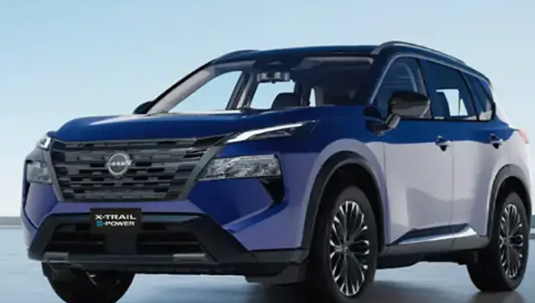
If you have been shopping for a Nissan SUV online, you may have stumbled into a surprisingly confusing question: what is the difference between the Nissan X-Trail and Rogue?
One website calls the vehicle a Nissan Rogue. Another shows what looks almost like the same SUV wearing an X-Trail badge. Then you start comparing interiors, engines, seating layouts, and specifications, and suddenly the answer becomes less obvious.
Here is the simple version: the Nissan X-Trail and Nissan Rogue belong to the same basic global vehicle family, but they are marketed under different names and can have significantly different specifications depending on the country.
Think of them like siblings raised in different countries. Their DNA is extremely similar, their proportions are familiar, and much of their underlying engineering is shared. Yet their personalities can be surprisingly different once engines, trims, seating configurations, equipment, and local market requirements enter the picture.
So, are the Nissan X-Trail and Rogue actually the same car? Which one is bigger? Does one have seven seats? And is an imported X-Trail essentially interchangeable with a Rogue?
We are going to untangle the whole thing.
Content in this publication
- Are the Nissan X-Trail and Rogue the Same Car?
- Nissan X-Trail vs Rogue: Quick Comparison
- Nissan X-Trail and Rogue Platform Explained
- Nissan X-Trail vs Rogue Dimensions
- Which Is Bigger: Nissan X-Trail or Rogue?
- Nissan X-Trail and Rogue Interior Comparison
- Nissan X-Trail vs Rogue Cargo Space
- Nissan Rogue Engine Options
- Nissan X-Trail Engine Options
- Nissan X-Trail vs Rogue AWD Systems
- Nissan X-Trail vs Rogue Fuel Economy
- Nissan X-Trail and Rogue Driving Experience
- Nissan Rogue vs X-Trail Technology
- Nissan X-Trail vs Rogue Reliability
- Can Nissan Rogue Parts Fit a Nissan X-Trail?
- Can You Import an X-Trail to Replace a Rogue?
- Nissan X-Trail vs Rogue for Families
- Nissan X-Trail vs Rogue for Road Trips
- Which Costs More: X-Trail or Rogue?
- Are Used Nissan X-Trail and Rogue Models Good Buys?
- Nissan X-Trail and Rogue: Which One Should You Buy?
- The Biggest Mistake When Comparing Nissan X-Trail and Rogue
- Nissan X-Trail and Rogue: The Bottom Line
- Frequently Asked Questions About Nissan X-Trail and Rogue
Are the Nissan X-Trail and Rogue the Same Car?
Broadly speaking, yes.
The Nissan Rogue is essentially the North American version of Nissan's global X-Trail SUV family. Both occupy Nissan's compact-to-midsize crossover space and have historically shared platforms, body structures, cabin layouts, technology, and major mechanical components.
However, calling them completely identical would be oversimplifying things.
Depending on model year and market, differences may include:
- Engine choices
- Hybrid availability
- Transmission configurations
- Front-wheel drive or all-wheel drive systems
- Five-seat versus seven-seat layouts
- Infotainment equipment
- Safety technology
- Suspension tuning
- Trim names
- Wheels and exterior details
- Towing ratings
- Emissions equipment
In other words, X-Trail and Rogue are closely related regional versions rather than two completely separate Nissan SUVs.
Why Does Nissan Use Two Different Names?
Automakers routinely change vehicle names between markets.
Sometimes a name has stronger recognition in one region. Sometimes an existing model already occupies a certain branding position. And occasionally manufacturers discover that keeping a familiar regional badge sells more cars than forcing every country into one worldwide naming convention.
The X-Trail name has traditionally been strong across markets including Europe, Australia, Japan, and parts of Asia.
Rogue, meanwhile, became Nissan's established crossover nameplate in the United States and Canada.
Once buyers recognize a name, changing it can be like renaming a popular restaurant. Even if nothing changes inside, customers wonder what happened.
So Nissan kept both identities.
Nissan X-Trail vs Rogue: Quick Comparison
The easiest way to understand the relationship is to separate their shared fundamentals from their regional differences.
| Category | Nissan X-Trail | Nissan Rogue |
|---|---|---|
| Main markets | Europe, Australia, Japan and others | United States and Canada |
| Vehicle family | X-Trail/Rogue | X-Trail/Rogue |
| Body style | Crossover SUV | Crossover SUV |
| Typical seating | 5 or available 7 depending on market | Usually 5 |
| Drivetrain | FWD/AWD depending on version | FWD/AWD depending on trim |
| Hybrid options | Available in several markets | Market/model-year dependent |
| Gasoline engines | Market dependent | Market dependent |
| Core platform | Closely related/shared | Closely related/shared |
| Main difference | Regional configuration | Regional configuration |
That table tells us something important: there is no universal mechanical comparison that applies to every X-Trail and every Rogue ever produced.
A 2020 X-Trail sold in Australia may differ considerably from a 2026 X-Trail sold in Europe. Likewise, an older Rogue with a naturally aspirated engine is not mechanically identical to today's turbocharged Rogue.
Whenever we compare them, model year matters almost as much as the badge.
Nissan X-Trail and Rogue Platform Explained
Modern X-Trail and Rogue models are built around the same general vehicle architecture.
This shared foundation influences everything from wheelbase to crash structure, suspension design, cabin dimensions, and electronic systems.
Imagine building two houses from the same architectural blueprint. One owner chooses a larger kitchen and another adds an extra bedroom. They remain fundamentally the same house underneath, but the experience can be different.
That is essentially what Nissan does.
Do the X-Trail and Rogue Look the Same?
Usually, very close.
Park equivalent-generation examples side by side and most people would immediately recognize their shared design.
The headlights, roofline, doors, windshield, overall proportions, and basic interior architecture tend to be extremely similar.
Regional versions can nevertheless receive different:
- Grilles
- Bumpers
- Wheels
- badges
- Lighting configurations
- Exterior colors
- Styling packages
Unless we are dealing with noticeably different model years, however, the resemblance is unmistakable.
Can You Tell Them Apart Without Looking at the Badge?
Sometimes—but it takes a trained eye.
A different wheel design or bumper insert may give the game away. Inside, trim colors or multimedia systems can also reveal which market the SUV came from.
For casual observers, though, removing the badges could turn identifying them into a surprisingly difficult guessing game.
Nissan X-Trail vs Rogue Dimensions
Because equivalent generations share so much engineering, their dimensions tend to be remarkably close.
Both sit in that useful SUV sweet spot: large enough for a family but not so enormous that every supermarket parking space feels like a geometry exam.
They generally offer:
- Two spacious front seats
- A wide second row
- A practical rear cargo area
- A relatively high roof
- Easy passenger entry
- SUV-style ground clearance
Exact measurements vary according to year, trim, wheels, and regional bumper design.
The important takeaway is that neither should be considered substantially larger than its equivalent-generation counterpart simply because it carries a different name.
Which Is Bigger: Nissan X-Trail or Rogue?
For matching generations, the difference is generally negligible.
However, there is one major practical distinction that can make an X-Trail feel like a much bigger family vehicle.
The Seven-Seat Difference
In several international markets, certain X-Trail versions can be configured with seven seats.
The conventional U.S.-market Rogue is normally positioned as a five-passenger crossover. Nissan currently describes the regular Rogue as offering seating for up to five.
Some X-Trail markets, by comparison, offer a third row. Nissan's UK specifications, for example, list seven-seat variants with 50:50 folding third-row seats and adjustable second-row seating.
This changes the buying equation dramatically.
For a family occasionally carrying six or seven people, the X-Trail's optional third row can be a lifesaver.
Just remember that we are not talking about minivan-like third-row space. Compact crossover third rows are usually better suited to children or occasional short journeys than adults spending hours on a motorway.
Nissan X-Trail and Rogue Interior Comparison
Open the door of comparable-generation models and the family resemblance becomes even stronger.
Dashboard architecture, switchgear, seat design, storage spaces, instrument displays, and multimedia interfaces can all look virtually identical.
And that is good news.
Modern versions lean heavily toward everyday usability rather than gimmicks.
We generally find plenty of places for:
- Phones
- Water bottles
- Sunglasses
- Charging cables
- Children's snacks
- Small bags
- Travel clutter
Because, really, isn't that what matters in a family crossover?
A flashy dashboard looks brilliant in a showroom. A deep storage bin becomes considerably more valuable after three months of school runs.
Rear Passenger Space
Second-row accommodation is one of the stronger qualities of this vehicle family.
The relatively long wheelbase provides useful knee room, while the high roof prevents taller passengers from feeling squeezed.
The current North American Rogue, for example, provides seating for five and Nissan lists generous front and rear legroom.
Some X-Trail configurations also include sliding rear seats, particularly when equipped with a third row.
That flexibility allows owners to trade luggage space for passenger room depending on the day.
Nissan X-Trail vs Rogue Cargo Space
Cargo practicality is another area where both models perform strongly.
The Rogue's boxy rear body is much more useful than the swooping rooflines found on fashionable coupe-style SUVs.
Current U.S. Rogue specifications advertise approximately 36 cubic feet of cargo space behind the rear seats, depending on configuration, and up to 74.1 cubic feet with the second row folded.
Those numbers make it genuinely practical for family life.
A stroller? Fine.
Airport luggage? Easy.
Flat-pack furniture bought after insisting, "It will definitely fit"?
You may be interested in reading Nissan X-Trail vs Toyota RAV4: Which SUV Should You Buy?
Probably.
Does the Seven-Seat X-Trail Have Less Luggage Space?
With all seven seats raised, yes.
Third-row seats have to live somewhere, and they inevitably consume some cargo volume.
Fold them down and the luggage area becomes much more useful.
That is why we would treat an X-Trail's third row as bonus flexibility rather than expecting full-size SUV cargo capacity while carrying seven passengers.
Nissan Rogue Engine Options
Here is where regional differences become much more noticeable.
The contemporary North American Rogue uses Nissan's 1.5-liter VC-Turbo three-cylinder engine, rated at 201 horsepower and 225 lb-ft of torque in current specifications.
VC-Turbo technology varies the engine's compression ratio depending on operating conditions.
In plain English, the system tries to behave one way when efficiency matters and another when the driver asks for stronger performance.
It is clever engineering packed into a surprisingly small engine.
How Does the Rogue Feel to Drive?
The Rogue is not trying to masquerade as a sports SUV.
Its priorities are comfort, usable torque, efficiency, and predictable daily driving.
Put your foot down and the turbocharged engine delivers enough punch for merging and overtaking, but nobody is likely to confuse it with a Nissan Z.
And that is completely fine.
Family SUVs rarely need fireworks. They need an engine that gets everyone onto the highway without drama.
Nissan X-Trail Engine Options
This is one area where saying "the X-Trail has this engine" becomes dangerous because X-Trail powertrains vary substantially around the world.
Depending on location and generation, buyers may encounter gasoline engines, mild-hybrid configurations, e-POWER variants, and all-wheel-drive electrified models.
That creates a much broader powertrain landscape than the conventional North American Rogue has historically offered.
What Is Nissan e-POWER?
Nissan's e-POWER system takes an interesting approach to electrification.
Unlike a conventional hybrid where the gasoline engine can directly drive the wheels, e-POWER is designed around electric propulsion.
The gasoline engine primarily generates electricity, while electric motors provide the driving force.
The result can feel closer to an electric vehicle when accelerating because the wheels respond to electric motors rather than relying primarily on a conventional engine-transmission relationship.
Why Does That Matter?
Electric motors respond quickly.
That can make low-speed acceleration feel smooth and immediate, which works especially well in urban traffic.
The system also allows Nissan to deliver an electrified driving character without requiring drivers to plug the vehicle into a charger.
For buyers who like the idea of EV-like response but are not ready to organize life around public charging, that can be attractive.
Nissan X-Trail vs Rogue AWD Systems
Both names can be associated with all-wheel-drive configurations, although the hardware varies according to powertrain and market.
Conventional Rogue AWD distributes power mechanically between the front and rear axles as needed.
Electrified X-Trail variants can use a different strategy, with electric motors contributing to axle control.
This highlights why we should avoid assuming that every Rogue component is interchangeable with every X-Trail component.
They might share a body shell and still operate quite differently underneath.
Which Is Better in Snow?
Either can be capable when properly equipped with AWD and suitable tires.
And yes, tires matter enormously.
An advanced AWD system wearing poor summer-focused tires is like hiking in expensive technical clothing while wearing flip-flops.
For frequent snow use, proper winter tires can matter more than choosing one badge over the other.
Nissan X-Trail vs Rogue Fuel Economy
There is no single winner here because powertrain differences dominate the calculation.
A gasoline Rogue, mild-hybrid X-Trail, e-POWER X-Trail, and older naturally aspirated version will all return different results.
Driving style matters too.
High-speed motorway journeys favor some powertrains while stop-and-go urban traffic can make electrified systems shine.
When shopping used, compare the exact engine, drivetrain, wheel size, and model year rather than relying on broad X-Trail versus Rogue claims.
That simple habit can prevent a lot of misleading comparisons.
Nissan X-Trail and Rogue Driving Experience
Both vehicles are primarily tuned for comfort and confidence.
Steering is generally light enough for city driving, visibility is SUV-friendly, and the suspension aims to absorb rough roads rather than communicate every pebble through the driver's spine.
That makes sense.
Nobody buys a family crossover hoping every pothole will provide detailed feedback.
Ride Comfort
The X-Trail/Rogue formula works best when cruising.
Seats tend to be supportive, wind noise is reasonably controlled in newer models, and the elevated driving position helps on long journeys.
Large wheels can make some high-spec versions slightly firmer, so buyers obsessed with maximum comfort should not automatically assume the biggest alloy wheels are an upgrade.
Sometimes smaller wheels and taller tire sidewalls are the secret luxury option hiding in plain sight.
Handling
Body movement exists, as we would expect from a relatively tall crossover.
However, modern versions feel composed rather than sloppy.
The goal is confidence, not lap times.
Push one hard through tight corners and physics eventually reminds us that we are driving a family SUV full of cupholders.
Nissan Rogue vs X-Trail Technology
Technology packages vary dramatically by trim, but newer versions can offer large infotainment screens, digital instrument clusters, smartphone integration, surround-view cameras, connected services, wireless charging, and advanced driver-assistance systems.
Higher trim levels are where the cabin starts to feel surprisingly premium.
The challenge for used buyers is specification creep.
Two identical-looking vehicles may have completely different technology depending on trim.
Safety Technology
Common modern Nissan driver-assistance features can include:
- Automatic emergency braking
- Blind-spot monitoring
- Rear cross-traffic alert
- Lane assistance
- Adaptive cruise control
- Parking cameras
- Traffic-sign recognition
- Driver attention monitoring
Availability depends on the country and model year.
This is another reason we should check the individual vehicle identification and equipment list rather than relying only on exterior appearance.
Nissan X-Trail vs Rogue Reliability
Mechanically, comparable versions can share many reliability characteristics because they come from the same broader engineering family.
But once powertrains diverge, so can reliability patterns.
For example, an older naturally aspirated X-Trail or Rogue with a CVT should not automatically be judged by exactly the same standards as a newer VC-Turbo Rogue or electrified X-Trail.
When buying used, we would focus on five things:
- Exact model year.
- Exact engine and transmission.
- Complete maintenance history.
- Recall completion.
- Independent pre-purchase inspection.
That tells us much more than the badge on the tailgate.
You may be interested in readingNissan X-Trail vs Toyota RAV4: Which SUV Should You Buy?You may be interested in reading
Nissan X-Trail vs Hyundai Tucson: Which SUV Is Better?Is the Rogue More Reliable Than the X-Trail?
Not inherently.
Regional naming alone does not make one vehicle more durable.
The bigger reliability variables are generation, powertrain, maintenance, climate, driving history, and manufacturing updates introduced over time.
A carefully maintained X-Trail could easily be a better buy than a neglected Rogue, and vice versa.
Can Nissan Rogue Parts Fit a Nissan X-Trail?
Some can.
Many equivalent-generation components may be shared or closely related, particularly structural, suspension, interior, or body parts.
But we would never assume compatibility from appearance alone.
Regional differences can affect:
- Engine components
- Emissions systems
- Electronics
- ECU programming
- Wiring
- Lighting
- Infotainment
- Sensors
- Brakes
- Suspension
- Drivetrain components
Always verify the original Nissan part number or VIN-specific catalog before ordering.
A part that looks identical in an online photograph can become a very expensive paperweight once it arrives.
Can You Import an X-Trail to Replace a Rogue?
Technically, importing may be possible in certain countries, but legal and financial barriers can make it impractical.
Vehicle regulations differ across borders.
Issues may involve:
- Crash standards
- Emissions certification
- Lighting regulations
- Speedometer requirements
- Customs duties
- Registration
- Parts availability
- Warranty coverage
- Insurance
So even if an overseas X-Trail looks like a bargain compared with a Rogue, the final cost can tell a very different story.
Nissan X-Trail vs Rogue for Families
For a five-person household, both versions can work extremely well.
They offer the combination that made crossovers dominant in the first place: manageable exterior dimensions, easy access, decent cargo room, good visibility, and enough passenger space for everyday life.
However, the X-Trail gains a major advantage where seven-seat variants are available.
Choose the X-Trail If You Need Seven Seats
If your market offers the seven-seat X-Trail and you occasionally carry extra children, relatives, or friends, that flexibility is difficult to ignore.
It essentially gives you an emergency third row without forcing you into a much larger SUV.
Choose the Rogue If Five Seats Are Enough
For buyers in North America who only need five seats, the conventional Rogue's cabin and cargo area make excellent use of its footprint.
Current models provide five seats and substantial rear cargo capacity without sacrificing space to a conventional third row.
Nissan X-Trail vs Rogue for Road Trips
Both are well suited to long-distance travel.
Their seating position, luggage space, quiet cruising character, and driver-assistance technology make them natural road-trip machines.
If we were choosing specifically for highway journeys, we would prioritize:
- Comfortable seat trim
- Adaptive cruise control
- Smaller wheels for ride comfort
- Panoramic camera
- Good audio system
- Efficient powertrain
- Full-size or temporary spare tire availability
The fanciest exterior styling package would be much lower on our list.
After six hours behind the wheel, lumbar support matters more than black alloy wheels.
Which Costs More: X-Trail or Rogue?
Direct pricing comparisons rarely make sense because they are sold in different currencies, tax environments, trim structures, and powertrain configurations.
An X-Trail may appear more expensive partly because the version being compared includes hybrid technology or seven seats.
Likewise, a premium Rogue trim can cost substantially more than an entry-level X-Trail somewhere else.
Rather than comparing sticker prices across borders, compare what each vehicle costs within its own competitive market.
Are Used Nissan X-Trail and Rogue Models Good Buys?
They certainly can be.
Both are popular enough that used examples are widely available in many markets, creating plenty of choice.
But popularity also means condition varies enormously.
A former highway commuter with excellent servicing may be a better proposition than a lower-mileage SUV that spent years skipping maintenance.
What Should We Check Before Buying?
Look closely at:
- Service records
- Transmission behavior
- Engine noise
- Oil leaks
- Warning lights
- Tire wear
- Suspension noises
- Battery condition
- Infotainment operation
- Cameras and sensors
- Air conditioning
- Recall history
For AWD versions, make sure all four tires are closely matched in size and wear.
Uneven tires can put unnecessary strain on drivetrain components.
Nissan X-Trail and Rogue: Which One Should You Buy?
For most shoppers, this question is decided automatically by geography.
If you live in the United States, you will generally be shopping for a Rogue.
If you live in markets where Nissan sells the X-Trail, that is the badge you will encounter instead.
So rather than asking, "Should I buy an X-Trail or Rogue?" the better question is:
Which version of the X-Trail/Rogue family available in my country has the powertrain and equipment that best fit my needs?
That shift makes the decision much easier.
Who Should Choose the Nissan Rogue?
The Rogue makes sense for buyers who want:
- A comfortable five-seat crossover
- Good cargo capacity
- Manageable dimensions
- Available AWD
- Modern safety equipment
- Strong North American dealer support
- A turbocharged gasoline powertrain in current conventional models
Who Should Choose the Nissan X-Trail?
The X-Trail is particularly compelling for buyers who want:
- Available seven-seat flexibility
- Electrified powertrain choices in supported markets
- Family-friendly practicality
- AWD options
- A spacious cabin
- Efficient daily transportation
- More regional powertrain variety
The Biggest Mistake When Comparing Nissan X-Trail and Rogue
The biggest mistake is assuming the badge tells us everything.
It does not.
A buyer might search "X-Trail vs Rogue" expecting two competing Nissan SUVs, when the real comparison is usually between regional versions of the same broader model family.
From there, year and powertrain become critical.
Compare a current Rogue with a same-generation X-Trail and the shared DNA is obvious.
Compare vehicles separated by ten years and different engines, and they can feel worlds apart.
Nissan X-Trail and Rogue: The Bottom Line
So, after peeling away the badges, marketing names, engines, trims, and regional quirks, what are we left with?
The Nissan X-Trail and Nissan Rogue are essentially regional members of the same SUV family.
Their basic architecture and purpose overlap heavily. They are practical crossovers designed around everyday family transportation rather than hardcore off-roading or sports-car performance.
Yet regional specification makes the story interesting.
The North American Rogue typically emphasizes five-seat practicality and its region-specific gasoline drivetrain lineup. The X-Trail sold internationally can offer a broader selection of electrified configurations and, in some countries, seven-seat flexibility.
Neither name is automatically better.
What matters is the actual vehicle sitting in front of us.
Check the model year. Check the engine. Check the seating layout. Check the equipment. Check the service history.
That badge on the tailgate tells only the first chapter.
Once we understand that, the apparently confusing Nissan X-Trail and Rogue relationship becomes surprisingly simple: same family, different passports.
Frequently Asked Questions About Nissan X-Trail and Rogue
1. Is a Nissan Rogue the Same as a Nissan X-Trail?
Broadly, yes. The Rogue and X-Trail are regional versions of the same Nissan crossover family. The Rogue name is primarily used in North America, while X-Trail is used in numerous international markets. Engines, equipment, seating capacity, and drivetrains can differ by region.
2. Why Is the Nissan X-Trail Called Rogue in America?
Nissan uses the Rogue name in North America because it became an established regional nameplate. Manufacturers frequently use different model names in different countries to match local branding strategies and customer recognition.
3. Is the Nissan X-Trail Bigger Than the Rogue?
Equivalent-generation X-Trail and Rogue models are generally extremely similar in exterior size because they share their underlying vehicle architecture. However, certain X-Trail versions offer seven seats, while the conventional U.S. Rogue typically seats five, which can make the X-Trail more versatile for larger families.
4. Can Nissan Rogue Parts Be Used on an X-Trail?
Some parts may interchange between equivalent X-Trail and Rogue generations, but compatibility should never be assumed. Engines, electronics, emissions equipment, lighting, software, and drivetrain components may differ by market. Always verify part numbers using the vehicle's VIN.
You may be interested in readingNissan X-Trail vs Toyota RAV4: Which SUV Should You Buy?You may be interested in reading
Nissan X-Trail vs Hyundai Tucson: Which SUV Is Better?You may be interested in reading
 Leapmotor C10 Life vs Design: Which Trim Should We Buy?
5. Which Is Better, Nissan X-Trail or Rogue?
Neither is universally better because they are closely related vehicles configured for different markets. The best choice depends on available engines, seating requirements, drivetrain, equipment, local servicing, and price. Buyers needing seven seats or certain electrified powertrains may prefer an X-Trail configuration, while North American buyers wanting a spacious five-seat crossover will generally find the Rogue the natural choice.
If you want to know other articles similar to Nissan X-Trail and Rogue: Are They Really the Same SUV? you can visit the category Models.
Honda Passport vs Toyota 4Runner: Which SUV Is Better?
Honda Passport vs Ford Bronco: Which SUV Is Better?
Honda Passport vs Ford Explorer: Which SUV Is Better?
Honda Passport or Pilot: Which SUV Is Better?
Honda Passport vs Jeep Grand Cherokee: Which SUV Is Better?
Honda Passport vs Nissan Pathfinder: Which SUV Is Better?
Leave a Reply
More content of your interest