

Subaru XV Years to Avoid: The Used-Buyer’s Complete Guide

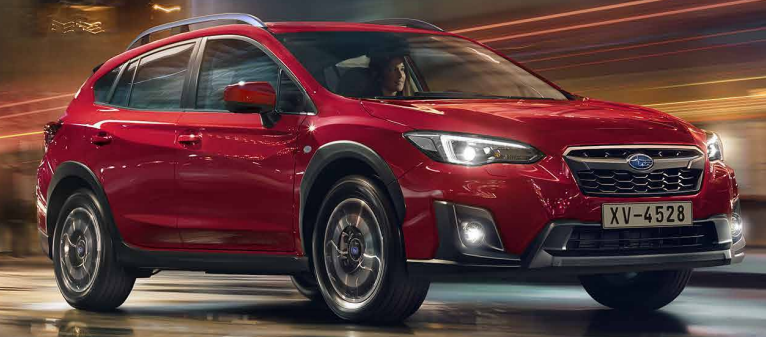
The Subaru XV has always been a slightly different kind of compact crossover. While many rivals behave like tall hatchbacks dressed for an outdoor photo shoot, the XV backs up its rugged appearance with permanent all-wheel drive, useful ground clearance, a boxer engine, and the sort of confidence on slippery roads that has helped Subaru build a loyal following.
But buying one second-hand raises an obvious question: which Subaru XV years should we avoid?
There isn't one model year that automatically turns every XV into a mechanical nightmare. However, some early-production vehicles carry more baggage than others. Certain years have documented recalls involving engine components and electrical systems, while older cars can also bring age-related CVT, suspension, oil-consumption, and maintenance concerns.
If we want the short version, 2012–2014 Subaru XV models deserve the closest inspection, with 2013 standing out as the year we'd approach most cautiously. Meanwhile, later examples—particularly well-maintained cars from the later first generation and second generation—can make much more comfortable used-car purchases.
Let's dig deeper, because buying purely according to the year stamped on the registration papers is like choosing hiking boots by color. The details underneath matter far more.
Content in this publication
- What Are the Subaru XV Years to Avoid?
- Why the 2013 Subaru XV Deserves the Most Attention
- 2012 Subaru XV: The Early-Adopter Question
- 2014 Subaru XV: Better, but Not Automatically Trouble-Free
- What About the 2015 Subaru XV?
- 2016 Subaru XV: One of the More Appealing First-Generation Choices
- Is the 2017 Subaru XV a Good Year?
- Should We Avoid the 2018 Subaru XV?
- Subaru XV CVT Problems: What Buyers Should Know
- Oil Consumption and the Boxer Engine
- Wheel Bearings, Suspension, and Everyday Wear
- Hybrid Subaru XV Models: Are They Years to Avoid?
- Best Subaru XV Years to Buy Used
- First Generation vs Second Generation Subaru XV
- How Many Kilometers Can a Subaru XV Last?
- How to Inspect a Subaru XV Before Buying
- Red Flags That Would Make Us Walk Away
- Does a Recall Mean We Should Avoid That XV?
- What Is the Worst Subaru XV Year?
- Is the Subaru XV Generally Reliable?
- Should You Buy a High-Mileage Subaru XV?
- Subaru XV Years to Avoid vs Subaru Crosstrek Years to Avoid
- How Recall Checking Changes the Buying Decision
- How Much Should We Pay for an Older XV?
- Our Final Ranking: Which Subaru XV Years Need the Most Caution?
- Conclusion: Which Subaru XV Years Should We Really Avoid?
- Frequently Asked Questions About Subaru XV Years to Avoid
What Are the Subaru XV Years to Avoid?
For used-car shoppers, the main years we would put under the microscope are:
- 2012 Subaru XV: early-production quirks and certain electrical-related recall exposure in some markets.
- 2013 Subaru XV: our biggest caution year because some vehicles were affected by the significant valve-spring recall alongside other early-generation concerns.
- 2014 Subaru XV: improved in some respects, but still part of an early-generation production period affected by a wiring-harness recall in Australia.
- 2018 Subaru XV/Crosstrek: not necessarily an outright year to avoid, but early examples of the second generation deserve recall-history checks and careful inspection.
That doesn't mean we should automatically reject every car from those years. A 2013 XV with complete maintenance records, completed recalls, sensible mileage, and a clean inspection can easily be a better purchase than a neglected 2017 example.
The trick is learning where the risk lies.
Why the 2013 Subaru XV Deserves the Most Attention
If someone asks us to identify just one Subaru XV year to avoid, we'd probably start with 2013—not because every 2013 XV fails, but because there is enough documented history to justify additional caution.
In the United States, Subaru recalled certain 2013 XV Crosstrek vehicles because engine valve springs could fracture, potentially causing the engine to stall and preventing it from restarting. Subaru's campaign documentation identified 2013 XV Crosstrek vehicles among the affected models.
Australia experienced a comparable recall affecting certain 2012–2013 Subaru XV, Impreza, Forester, and BRZ vehicles. Australian recall documentation explains that a defective valve spring could fracture, causing engine stalling and potentially leaving the engine unable to restart.
That's more serious than an irritating touchscreen or squeaky interior panel. An engine that unexpectedly stops working changes the conversation completely.
The Valve-Spring Recall Explained
Valve springs keep an engine's valves operating in rhythm with the rest of the combustion process. Think of them as tiny but relentlessly hardworking members of an orchestra. One spring getting tired isn't merely an off-key trumpet—it can bring the whole performance to a halt.
The recall remedy involved replacing the affected engine valve springs.
For anyone considering a 2013 XV today, the question therefore isn't simply:
"Was this model recalled?"
The more useful question is:
"Was this specific VIN affected, and if so, was the recall repair properly completed?"
That distinction can turn a worrying used car into a perfectly reasonable candidate.
Should We Completely Avoid a 2013 Subaru XV?
Not necessarily.
If we find one with documented recall completion, excellent maintenance, smooth CVT behavior, no suspicious oil consumption, and a clean mechanical inspection, it can still represent good value.
However, we'd demand a greater discount and stronger documentation than we would when considering a younger XV.
There are simply more unknowns to investigate.
2012 Subaru XV: The Early-Adopter Question
First-model-year vehicles always make us a little more cautious.
Why?
Because manufacturers can test vehicles for millions of simulated kilometers, but thousands of owners driving through summer heat, winter snow, potholes, traffic jams, gravel roads, and supermarket car parks create a far harsher laboratory.
The original XV arrived in Australia and New Zealand in 2012. ANCAP records the first-generation XV as being sold from 2012 through April 2017 in those markets.
Those early examples established the formula that made the XV appealing: compact dimensions, elevated ride height, standard all-wheel-drive capability in many markets, and practical everyday road manners.
They also belong to the oldest part of the XV population today.
Electrical Recall Concerns on Early Subaru XV Models
Australian authorities issued a recall covering 2011–2014 Impreza/XV and Forester vehicles because a wiring-harness problem could potentially cause a short circuit in the vehicle's electrical system. The official recall stated that damaged wiring had to be inspected, insulated, or replaced, with an additional countermeasure installed to prevent further contact.
Contemporary reporting explained that wiring insulation could be damaged by contact with a metal plate, potentially affecting electrical functions and, in certain circumstances, contributing to engine shutdown.
For buyers, this is another reminder that VIN history matters more than internet folklore.
A recalled car that received its corrective work isn't automatically dangerous. A car with an outstanding recall deserves immediate attention.
2014 Subaru XV: Better, but Not Automatically Trouble-Free
The 2014 model year sits in an awkward position.
It's no longer the earliest XV, but it's still firmly within the first-generation period. Australian 2014 XV vehicles were also included within the aforementioned wiring-harness recall range.
Does that make the 2014 XV unreliable?
Not by itself.
Recalls and reliability aren't interchangeable concepts. A manufacturer can recall a large number of vehicles over one specific defect while the rest of the vehicle remains mechanically durable.
What should influence us more strongly on a 2014 car is its actual condition after more than a decade on the road.
Age Matters as Much as Model Year
By now, even an excellent early XV can be dealing with ordinary aging:
rubber bushes harden, seals deteriorate, wheel bearings wear, dampers lose effectiveness, batteries come and go, paint picks up battle scars, and previous owners leave behind the consequences of deferred maintenance.
That's why we would rather buy a carefully maintained 2014 XV with 120,000 km than blindly choose a 2016 car with 200,000 neglected kilometers simply because the registration year looks better.
What About the 2015 Subaru XV?
The 2015 XV starts becoming more interesting for budget-conscious buyers.
By this stage, Subaru had several years of real-world experience with the platform, and we are moving away from the earliest production run.
That doesn't magically eliminate every possible issue. No used car gets such a guarantee. But in general, a clean later first-generation example is where we'd begin feeling more comfortable.
Why 2015 Can Be a Better Used-Car Sweet Spot
Used-car value is about balancing depreciation against risk.
A nearly new XV costs considerably more. A very early XV is inexpensive but can bring additional age and maintenance uncertainty.
A 2015 or similarly aged later first-generation car can sit between those extremes.
What matters most is service history.
Regular oil changes matter enormously on any boxer engine, and CVT servicing should never be dismissed simply because somebody once described transmission fluid as "lifetime" fluid. Fluids live a far harder life than marketing departments do.
2016 Subaru XV: One of the More Appealing First-Generation Choices
If we specifically wanted a first-generation XV, we'd usually be more interested in a clean later-production vehicle than a 2012 or 2013 example.
The 2016 model year benefits from being several years removed from launch. By then, many initial production issues had either been addressed, identified, or better understood by technicians and owners.
There's another advantage: maintenance histories can still be reasonably straightforward to verify.
Why Condition Still Beats the Badge
We should never interpret "better year" as "buy without inspection."
Even the most desirable model year can become expensive when subjected to years of:
poor-quality oil, missed services, mismatched tyres, accident repairs, towing abuse, overheating, harsh off-road use, or ignored warning lights.
An XV's symmetrical all-wheel-drive system also makes tyre condition especially important. We want four appropriately matched tyres with similar wear, not a random collection assembled whenever one corner suffered a puncture.
Is the 2017 Subaru XV a Good Year?
Depending on market and production timing, 2017 can represent either the tail end of the earlier generation or the arrival of the redesigned second generation.
That makes model identification particularly important.
We shouldn't assume two vehicles sharing "2017" on their paperwork are mechanically identical across every country.
This is one reason any article declaring that "2017 is perfect everywhere" should make us suspicious. Subaru model years, launch dates, specifications, engines, and even names vary between markets.
Check Generation, Not Just Registration Year
Before buying, identify the VIN, engine, transmission, production date, and exact generation.
That's far more informative than relying solely on an online list of good and bad years.
Should We Avoid the 2018 Subaru XV?
The redesigned second-generation XV—called Crosstrek in North America—brought major improvements in platform design, refinement, safety technology, and cabin quality.
Still, early production deserves attention.
For example, U.S.-market 2018 Crosstrek vehicles have been subject to multiple recalls over time, including campaigns associated with issues such as rear stabilizer bracket bolts and engine-management-related concerns.
That doesn't automatically place 2018 beside 2013 on our avoidance list.
Instead, we'd describe it as a check-before-you-buy year.
Why Recalls Shouldn't Automatically Scare Us
Recall numbers often look terrifying on used-car websites.
Yet the existence of a recall actually tells us something useful: a problem was identified and an official corrective process was established.
You may be interested in reading Subaru XV Models: Complete Guide to Generations, Trims and Versions
What worries us more is an owner who never bothered completing the work.
That's why VIN checking should be part of every used XV purchase.
In Australia, Subaru currently provides a VIN recall lookup service and specifically recommends checking whether a vehicle has outstanding recall work.
In the United States, NHTSA also offers VIN-based recall checking that can indicate whether a vehicle has unrepaired safety recalls.
Subaru XV CVT Problems: What Buyers Should Know
No Subaru XV buying guide would feel complete without discussing the continuously variable transmission.
CVTs have an unusual personality. Instead of stepping through fixed gears like a conventional automatic, they vary the transmission ratio continuously.
Some drivers love the smoothness. Others press the accelerator, hear the engine hold a steady rpm, and wonder whether the gearbox has misplaced its gears somewhere behind the dashboard.
That characteristic isn't necessarily a fault.
Warning Signs That Are Not Normal
What we don't want are significant shudders, delayed engagement, grinding, severe hesitation, warning lights, abnormal whining, or obvious slipping.
During a test drive, the transmission should engage Drive and Reverse cleanly and deliver power consistently.
We'd test it cold and again once fully warmed up.
Why Maintenance History Matters
If the seller claims the transmission "never needs servicing," we wouldn't immediately walk away—but we'd investigate.
Service recommendations vary by country and operating conditions, and vehicles exposed to severe usage can require greater attention.
Receipts from a Subaru specialist or knowledgeable workshop are worth more to us than vague assurances that "my mechanic always looked after it."
Oil Consumption and the Boxer Engine
Subaru's horizontally opposed boxer engine is one of the XV's defining features.
Instead of pistons moving vertically in a straight or V-shaped layout, opposing pistons move horizontally. The arrangement helps Subaru achieve a relatively low center of gravity and packaging that works neatly with its drivetrain philosophy.
But used examples require the same discipline as any aging engine: check the oil.
An engine can consume some oil without being mechanically ruined. What matters is the amount, consistency, maintenance history, and whether the previous owner actually monitored it.
What We Should Inspect
Before purchase, we'd check the oil level and condition, look around the engine for leakage, examine the cooling system, inspect the exhaust when appropriate, and ask whether the owner ever needs to add oil between scheduled services.
A suspiciously empty dipstick is not the sort of mystery we'd enjoy solving after handing over our money.
Wheel Bearings, Suspension, and Everyday Wear
One reason people buy the XV is that it encourages adventure.
Unfortunately, "adventure" can mean different things.
For one owner, it means driving to a national park twice a year.
For another, it means attacking corrugated gravel tracks every weekend with camping equipment stacked to the roof.
Those vehicles may have identical odometer readings but completely different levels of mechanical fatigue.
Listen During the Test Drive
Wheel-bearing noise often presents itself as a humming or droning sound that changes with road speed.
Suspension knocks can suggest worn bushes, links, mounts, or other components.
None necessarily makes an XV a bad car. On an older vehicle, they're wear items.
But several problems appearing simultaneously can turn an attractive sticker price into a repair invoice wearing hiking boots.
Hybrid Subaru XV Models: Are They Years to Avoid?
Hybrid XV versions exist in several markets and add another layer to the buying decision.
We wouldn't label every hybrid model as problematic simply because it contains additional electrical hardware.
Instead, we'd treat battery condition, hybrid-system diagnostics, service history, and model-specific warranty coverage as additional inspection points.
Hybrid technology can be extremely dependable when maintained correctly. But when we're purchasing an older hybrid without records, uncertainty has a price.
That price should be reflected in what we're willing to pay.
Best Subaru XV Years to Buy Used
If our priority were reducing risk rather than finding the absolute cheapest car, we'd generally lean toward later first-generation XVs and well-maintained second-generation examples.
A later vehicle gives us two advantages: younger components and more production maturity.
Still, mileage and care can reverse that advantage remarkably quickly.
A 2019 car that spent its life bouncing over mining roads may be less appealing than a gently driven 2016 model owned by someone who filed every service invoice like a tax accountant.
First Generation vs Second Generation Subaru XV
Generation matters because buying a used car isn't just about avoiding breakdowns.
It's also about what we get for our money.
The original XV delivered the fundamental Subaru recipe at a relatively affordable price. The second generation refined that formula with a more modern platform, better technology, improved cabin execution, and newer safety systems depending on specification.
Naturally, younger cars cost more.
When the First-Generation XV Makes Sense
A first-generation XV makes sense when budget matters and we locate a genuinely good example.
This is where careful shopping pays off.
Instead of buying the cheapest car available, we'd look for one that has been owned by somebody who treated maintenance as an obligation rather than an optional subscription.
When We'd Pay More for the Second Generation
If our budget allows, spending extra on a later XV can remove some of the age-related uncertainty attached to early vehicles.
We're not simply paying for a newer registration year. We're buying younger seals, electronics, bearings, interior materials, suspension components, and safety technology.
That can make the additional upfront cost worthwhile.
How Many Kilometers Can a Subaru XV Last?
There isn't a magic odometer reading at which every XV turns into a pumpkin.
Longevity depends heavily on servicing, operating conditions, climate, previous repairs, and driving style.
A high-mileage XV with outstanding maintenance records can remain perfectly usable. A lower-mileage example neglected for years can become a far greater financial risk.
We should therefore stop asking only:
"How many kilometers has it travelled?"
And start asking:
"How were those kilometers accumulated?"
Highway mileage is typically easier on a vehicle than endless short cold starts, heavy stop-and-go traffic, or constant travel over rough surfaces.
How to Inspect a Subaru XV Before Buying
Our pre-purchase process should be methodical rather than emotional.
That beautiful orange XV sitting under dealership lights can make us imagine snowy mountains and weekend escapes before we've even opened the bonnet.
Keep the wallet closed for another hour.
Start with the VIN and verify outstanding recalls. Then review maintenance invoices rather than trusting a stamped service book alone. Check the engine from cold, because a seller who has conveniently warmed it before arrival may be hiding noises that appear only at startup.
Drive at suburban and highway speeds. Test the CVT under light and moderate acceleration. Turn tightly at low speed and listen for drivetrain noises. Run the air conditioning. Try every electric window. Test the infotainment system. Verify EyeSight and warning lights where fitted.
After that, arrange an independent pre-purchase inspection.
That final step can save thousands.
Red Flags That Would Make Us Walk Away
A Subaru XV doesn't have to be perfect. Used cars rarely are.
But several warning signs should immediately change how much we're willing to risk.
The biggest concern is a seller who cannot explain the vehicle's maintenance history.
Next comes evidence of overheating, serious oil starvation, transmission malfunction, structural accident damage, inconsistent tyre sizes, unexplained dashboard warnings, outstanding safety recalls, or modifications of questionable quality.
One small oil seep might be negotiable.
A slipping transmission, mystery coolant loss, four mismatched tyres, and a glowing dashboard simultaneously?
That's the automotive equivalent of a restaurant menu with twelve spelling mistakes and no prices. We can eat somewhere else.
You may be interested in readingSubaru XV Models: Complete Guide to Generations, Trims and VersionsYou may be interested in reading
 Kia Carnival vs Honda Odyssey: Which Family Minivan Wins?
Does a Recall Mean We Should Avoid That XV?
No.
This is one of the most important distinctions in the entire discussion.
A recall confirms that a particular safety-related defect has been officially identified in an affected population of vehicles. It does not prove that every vehicle from the same year suffers that defect, nor does it automatically establish that the entire model year is unreliable.
Official Australian recall documentation, for instance, clearly identifies specific model ranges, affected vehicles, hazards, and corrective actions.
That's why we prefer evidence over dramatic internet headlines.
VIN Beats Model-Year Guesswork
Two identical-looking 2013 XVs can have completely different histories.
One may have completed every recall, received oil changes on schedule, spent its life in a garage, and accumulated gentle highway mileage.
The other may have an outstanding campaign, irregular servicing, accident damage, and a transmission that's beginning to complain.
Calling both cars equally bad because they share a production year doesn't help us make a smart purchase.
What Is the Worst Subaru XV Year?
If forced to name one, we'd give 2013 the greatest caution.
Its position within the earliest generation, combined with the documented valve-spring recall affecting certain vehicles, means buyers should perform more due diligence than usual.
That is very different from saying:
"Never buy a 2013 Subaru XV."
We wouldn't make such a sweeping claim.
The best used car is often the best individual example, not merely the best model year.
Is the Subaru XV Generally Reliable?
The XV can be a solid used crossover when properly maintained.
Its attraction goes beyond reliability statistics anyway. Subaru gave it a combination few competitors matched perfectly: compact exterior dimensions, meaningful ground clearance, an all-wheel-drive-focused design philosophy, car-like handling, and useful practicality.
That explains why older XVs remain appealing.
The trade-off is that this isn't a basic front-wheel-drive hatchback with nothing complicated underneath. Buyers need to respect drivetrain servicing, tyre matching, fluid condition, recall history, and routine maintenance.
Treat the car well, and that complexity can deliver genuine capability.
Ignore maintenance, and complexity becomes expensive.
Should You Buy a High-Mileage Subaru XV?
Possibly.
At higher mileage, though, we'd stop paying much of a premium merely for the Subaru badge or a desirable trim level.
Mechanical condition becomes king.
A high-mileage XV should ideally arrive with a thick folder containing servicing records, invoices, evidence of appropriate fluids, replacement wear parts, and completed recalls.
Counterintuitively, evidence that an owner spent money replacing worn components can be reassuring.
A car with 170,000 km and recently replaced wheel bearings, suspension components, tyres, fluids, and brakes may be more attractive than one with 130,000 km that appears "all original."
Original isn't always a compliment when everything original is tired.
Subaru XV Years to Avoid vs Subaru Crosstrek Years to Avoid
Here's where online research can become confusing.
The Subaru XV and Subaru Crosstrek are closely related names used for the same basic vehicle family in different markets and periods. North American shoppers are much more familiar with the Crosstrek name, while XV has historically been widely used in markets including Australia, Europe, and Asia.
Consequently, searching only for "Subaru XV problems" can hide useful North American Crosstrek information, while searching only for Crosstrek complaints may produce specifications and recall campaigns that don't exactly match an Australian or European vehicle.
Always verify local-market applicability.
The badge on the tailgate may travel internationally. Recall campaigns don't always do so in exactly the same form.
How Recall Checking Changes the Buying Decision
This takes only a few minutes and should be one of our first steps.
Subaru Australia maintains recall lookup facilities, including dedicated recall information for affected vehicles.
American buyers can perform the equivalent check through NHTSA using the vehicle's VIN.
If an outstanding recall appears, don't panic.
Determine what it involves, whether the vehicle is eligible for repair, and speak with an authorized Subaru retailer or the relevant manufacturer representative before proceeding.
A five-minute VIN search is far more useful than reading fifty anonymous comments saying, "My cousin had one and it was terrible."
How Much Should We Pay for an Older XV?
Price depends heavily on country, mileage, trim, engine, condition, and local demand, so a universal figure would be misleading.
Instead, compare equivalent vehicles and then adjust for condition.
A desirable year with questionable maintenance should be discounted aggressively.
An older year with immaculate history may justify paying above the cheapest listings.
Remember that the purchase price is only the entrance ticket.
Set aside money for an initial service, fluids, tyres, brakes, battery, suspension work, or whatever the inspection reveals.
Buying an older crossover with every last dollar in our budget is rarely a relaxing strategy.
Our Final Ranking: Which Subaru XV Years Need the Most Caution?
From a used-buyer's perspective, we'd place the 2012–2014 period at the top of the inspection list, particularly 2013.
The reason isn't internet mythology. Certain early vehicles were covered by documented safety recalls, including the valve-spring campaign affecting some 2012–2013 vehicles and wiring-related campaigns covering early XV production in Australia.
The 2018 model year also deserves proper recall verification because early second-generation Crosstreks experienced multiple recall campaigns in the U.S., although we wouldn't put 2018 in the same outright caution category as the earliest cars.
From there, we'd increasingly focus on the individual car.
Service history.
CVT behavior.
Oil condition.
Tyres.
Suspension.
Recall completion.
Accident history.
Those seven things can tell us more than the model year alone ever will.
Conclusion: Which Subaru XV Years Should We Really Avoid?
So, what are the Subaru XV years to avoid?
Our answer is more nuanced than simply circling a few dates in red.
We would exercise the most caution with 2012, 2013, and 2014 Subaru XV models, especially 2013 vehicles that need verification regarding the documented valve-spring recall. Early XVs can also overlap with other recall campaigns depending on market and VIN.
But "caution" doesn't mean "never buy."
A thoroughly maintained early XV with completed recalls could still be an excellent little crossover. Conversely, the newest car within our budget could be a terrible purchase if someone has neglected it for years.
That's the central lesson.
Buy the history, condition, and inspection—not merely the year.
The XV is a bit like a well-used pair of hiking boots. Age doesn't automatically make it bad. What matters is where it has been, how hard it has worked, and whether somebody bothered looking after it along the way.
Frequently Asked Questions About Subaru XV Years to Avoid
1. What is the worst year for the Subaru XV?
The 2013 Subaru XV is the model year we'd inspect most cautiously, particularly because certain 2013 vehicles were involved in a documented valve-spring recall that could result in engine stalling. However, recall applicability depends on VIN and market, so a properly repaired 2013 vehicle shouldn't automatically be rejected.
2. Should I avoid a 2012 Subaru XV?
Not automatically. The 2012 XV belongs to the earliest production period, and some early vehicles were affected by recalls depending on market and build date. Because these vehicles are also now relatively old, maintenance history, CVT condition, suspension wear, oil level, and recall completion should play a major role in the decision.
3. Is a 2015 Subaru XV a good used car?
A well-maintained 2015 XV can be an appealing used purchase because it's removed from the earliest years of production while still offering relatively affordable pricing. We'd still insist on maintenance records, a proper road test, a VIN recall check, and an independent mechanical inspection.
4. How reliable is the Subaru XV CVT?
A Subaru XV CVT can provide many years of normal service, but condition and maintenance are crucial. During a used-car inspection, watch for severe shuddering, unusual whining, delayed Drive or Reverse engagement, warning lights, slipping sensations, or inconsistent acceleration. Normal CVT operation can sound different from a conventional automatic, so don't confuse its characteristic high-rpm behavior with a defect.
You may be interested in readingSubaru XV Models: Complete Guide to Generations, Trims and VersionsYou may be interested in reading
Kia Carnival vs Honda Odyssey: Which Family Minivan Wins?You may be interested in reading
Kia Carnival vs Hyundai Palisade: Which Family Hauler Wins?5. What should I check before buying a used Subaru XV?
Start with the VIN and check for outstanding recalls. Then review the service history, inspect the engine oil and cooling system, test the CVT cold and warm, verify that all four tyres match appropriately, listen for wheel-bearing and suspension noise, check electronics, inspect for accident damage, and arrange an independent pre-purchase inspection. Those steps matter far more than relying on model year alone.
If you want to know other articles similar to Subaru XV Years to Avoid: The Used-Buyer’s Complete Guide you can visit the category Models.
Honda Passport vs Toyota 4Runner: Which SUV Is Better?
Honda Passport vs Ford Bronco: Which SUV Is Better?
Honda Passport vs Ford Explorer: Which SUV Is Better?
Honda Passport or Pilot: Which SUV Is Better?
Honda Passport vs Jeep Grand Cherokee: Which SUV Is Better?
Honda Passport vs Nissan Pathfinder: Which SUV Is Better?
Leave a Reply
More content of your interest