

Toyota Hilux Fuel Consumption: Real-World MPG, Diesel Economy, and Running Costs

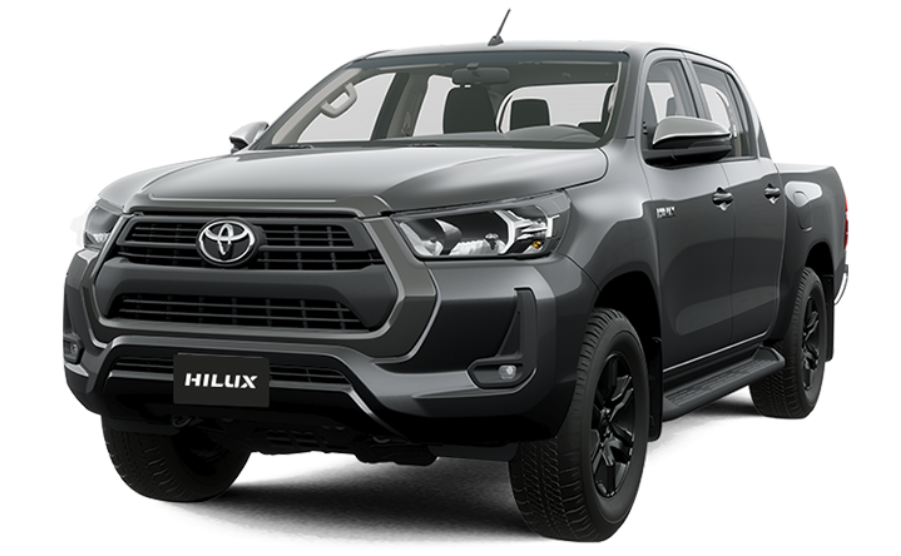
The Toyota Hilux has never pretended to be a lightweight city runabout. It is built to carry tools, haul trailers, tackle dirt roads, survive job sites, and keep moving when softer vehicles would rather turn around. Yet even buyers shopping for one of the world's best-known pickups eventually ask the practical question: what is the Toyota Hilux fuel consumption really like?
The answer isn't quite as simple as quoting one number from a brochure.
Depending on the engine, transmission, drivetrain, body configuration, tyres, payload, terrain, and even the country in which the Hilux is sold, its fuel economy can vary considerably. A lightly loaded 4x2 diesel cruising on an open highway lives a very different life from a 4x4 Double Cab pulling a caravan through rolling countryside.
Current Australian Toyota figures provide a useful example. Some newer 2.8-litre turbo-diesel Hilux configurations are officially rated around 7.1–7.4 L/100 km, while Toyota itself notes that laboratory results do not necessarily represent real-world consumption.
So let's dig beneath the headline numbers. We'll look at diesel consumption, petrol versions, manual versus automatic models, city driving, highway economy, towing, payloads, modifications, and the little habits that can quietly turn one tank of diesel into either a long-distance companion or a disappearing act.
Content in this publication
- What Is the Toyota Hilux Fuel Consumption?
- Toyota Hilux Fuel Consumption at a Glance
- Understanding Litres per 100 km
- Toyota Hilux Diesel Fuel Consumption
- Toyota Hilux 2.4 Diesel Fuel Consumption
- Toyota Hilux Petrol Fuel Consumption
- Toyota Hilux Manual vs Automatic Fuel Consumption
- Toyota Hilux 4x2 Fuel Consumption
- Toyota Hilux 4x4 Fuel Consumption
- Toyota Hilux City Fuel Consumption
- Toyota Hilux Highway Fuel Consumption
- Toyota Hilux Fuel Consumption When Towing
- How Payload Affects Hilux Fuel Economy
- Do Bigger Tyres Increase Toyota Hilux Fuel Consumption?
- Roof Racks, Canopies and Bull Bars Matter Too
- How Driving Style Changes Toyota Hilux Fuel Consumption
- Tyre Pressure and Fuel Economy
- Does Air Conditioning Increase Hilux Fuel Use?
- Does DPF Regeneration Affect Fuel Consumption?
- Why Has My Toyota Hilux Fuel Consumption Increased?
- How to Calculate Toyota Hilux Fuel Consumption Properly
- Toyota Hilux Fuel Consumption per 1,000 km
- How Far Can a Toyota Hilux Travel on a Tank?
- Toyota Hilux Fuel Economy vs Other Pickups
- Is the Toyota Hilux Fuel Efficient?
- How to Improve Toyota Hilux Fuel Consumption
- What Is Good Fuel Consumption for a Toyota Hilux?
- Official vs Real-World Toyota Hilux Fuel Consumption
- Conclusion: Is the Toyota Hilux Expensive to Run on Fuel?
- Frequently Asked Questions
What Is the Toyota Hilux Fuel Consumption?
For many modern diesel Hilux variants, an official combined consumption figure somewhere around 7–10 L/100 km is a sensible broad reference, but there is no universal number.
Toyota Australia's May 2026 specification sheet, for example, lists certain diesel 4x2 variants at approximately 7.3 L/100 km with the manual transmission and 7.4 L/100 km with the automatic transmission. Extra-urban figures can drop to around 6.9–7.1 L/100 km, while urban figures rise to roughly 7.6–8.2 L/100 km.
Meanwhile, specifications differ elsewhere. Toyota UK's current Hilux information quotes combined diesel consumption around 9.7–10.0 L/100 km for the latest diesel offering under its applicable test cycle and configuration.
Why such a large gap?
Because comparing Hilux fuel figures across markets can be like comparing marathon times run on different courses. Different emissions-testing procedures, vehicle specifications, tyres, drivetrains, body styles, emissions equipment, and model generations can all influence the published result.
That is why we should treat advertised economy as a benchmark rather than a promise.
Toyota Hilux Fuel Consumption at a Glance
A practical way to understand Hilux economy is to think in ranges rather than expecting one magic number.
| Driving situation | Typical expectation |
|---|---|
| Efficient diesel highway driving | Around 7–9 L/100 km |
| Mixed everyday diesel driving | Around 8–11 L/100 km |
| Heavy city use | Around 9–13+ L/100 km |
| Towing or heavy payloads | Around 11–16+ L/100 km |
| Older petrol Hilux | Often 10–15+ L/100 km |
| Modified 4x4 in difficult terrain | Highly variable |
These are practical ranges rather than official figures for every model. Your own result can fall outside them depending on specification and conditions.
Think of fuel consumption as a moving target. Every kilogram added to the tray, every chunky mud tyre, every roof rack and every extra 10 km/h of highway speed nudges the target in the wrong direction.
Understanding Litres per 100 km
If you're used to mpg, L/100 km can initially feel backward.
With litres per 100 kilometres, lower is better.
A Hilux consuming:
- 7 L/100 km uses 7 litres to travel 100 km.
- 9 L/100 km uses 9 litres.
- 12 L/100 km uses 12 litres.
A difference of two or three litres may not sound enormous until we calculate it across 20,000 or 30,000 kilometres per year.
Why Small Fuel Differences Matter
Suppose we drive 20,000 km annually.
At 8 L/100 km, we'd use approximately 1,600 litres.
At 10 L/100 km, we'd use approximately 2,000 litres.
That's 400 extra litres every year.
For a commercial vehicle that stays in service for five or ten years, seemingly tiny improvements in average fuel economy can become serious money.
Toyota Hilux Diesel Fuel Consumption
Diesel engines have traditionally been the Hilux sweet spot because their low-rpm torque suits the vehicle's working character.
Modern turbo-diesel Hilux engines deliver strong pulling power without having to rev aggressively. That matters because moving a large pickup efficiently is largely about producing useful torque without constantly asking the engine for everything it has.
The current Australian Hilux range centres heavily around a 2.8-litre four-cylinder turbo-diesel, with Toyota listing fuel efficiency around the low-to-mid 7 L/100 km region for several specifications under laboratory testing.
In actual mixed driving, however, we'd generally expect higher numbers.
Traffic, short journeys, cold starts, hills and accessories don't exist in perfect laboratory harmony.
Toyota Hilux 2.8 Diesel Fuel Consumption
The 2.8-litre turbo-diesel is one of the engines most buyers search for when researching Hilux economy.
Its appeal lies in balancing performance and consumption.
It doesn't sip fuel like a tiny hatchback, obviously. Asking a Hilux to behave like a Yaris at the fuel pump would be like asking a workhorse to survive on the diet of a house cat.
But considering the Hilux's size, payload capability and towing potential, the 2.8 diesel can be relatively efficient.
Current Australian specifications show some versions around 7.1–7.4 L/100 km officially, although the exact rating depends on the grade and drivetrain.
What Owners Should Expect From a 2.8 Diesel
For normal mixed driving, we would consider something in roughly the 8–11 L/100 km region perfectly believable.
Highway cruising could improve on this.
Heavy urban driving could worsen it.
Towing can push consumption dramatically higher.
There's no contradiction there. We're simply asking one engine to perform very different jobs.
Toyota Hilux 2.4 Diesel Fuel Consumption
The 2.4-litre turbo-diesel has appeared in numerous Hilux markets and configurations over the years.
Its smaller displacement might make us assume it will always outperform the 2.8 on fuel.
Not necessarily.
Older Toyota data demonstrates that 2.4-litre Hilux fuel economy depends heavily on specification. UK WLTP information for earlier models showed roughly the upper-20s to around 30 mpg depending on cab style and transmission.
The lesson is useful: smaller engines do not automatically guarantee lower real-world fuel bills.
If a smaller engine has to work much harder when loaded, climbing or towing, the difference can narrow surprisingly quickly.
Toyota Hilux Petrol Fuel Consumption
Petrol Hilux models are less common in some modern markets, but plenty remain in service globally.
Older 2.7-litre petrol Hilux models demonstrate just how different consumption can be from diesel.
Toyota Australia previously quoted combined figures around 10.4–11.1 L/100 km for several 2.7-litre petrol configurations, with urban consumption climbing to roughly 13.1–14.0 L/100 km.
That gap becomes meaningful for high-mileage users.
Is a Petrol Hilux Bad on Fuel?
"Bad" depends on what we're comparing it with.
Against a diesel Hilux? Often, yes, petrol versions consume noticeably more fuel.
Against another older petrol-powered utility vehicle with similar weight and aerodynamics? The difference may seem less dramatic.
Petrol Hilux models can still make sense where:
- Annual mileage is low.
- Purchase price is significantly cheaper.
- Diesel costs considerably more locally.
- Maintenance simplicity matters.
- The truck spends most of its life lightly loaded.
Fuel economy is only one slice of total ownership cost.
Toyota Hilux Manual vs Automatic Fuel Consumption
Here's where conventional wisdom sometimes trips us up.
Years ago, buying the manual often guaranteed better economy. Modern automatic transmissions have narrowed that advantage dramatically.
Toyota Australia's current diesel specifications illustrate this nicely. A 4x2 diesel WorkMate is listed around 7.3 L/100 km manual versus 7.4 L/100 km automatic combined under laboratory testing. Interestingly, its official extra-urban figure favours the automatic at 6.9 L/100 km versus 7.1 for the manual.
That's practically a rounding error.
Why Automatics Can Be Efficient
Modern automatic transmissions can:
- Keep the engine closer to its efficient rpm range.
- Shift consistently.
- Use tall cruising gears.
- Lock the torque converter under suitable conditions.
- Prevent unnecessarily high engine speeds.
A skilled manual driver can still extract excellent economy. But an automatic removes a lot of variability.
If we're buying a Hilux primarily for fuel efficiency, transmission choice shouldn't automatically overshadow drivetrain, tyres, load, and driving conditions.
Toyota Hilux 4x2 Fuel Consumption
A 4x2 Hilux usually enjoys a natural efficiency advantage.
Why?
There's generally less drivetrain hardware, less weight and fewer mechanical losses than in a comparable 4x4.
Toyota's Australian 4x2 diesel specifications support the point, with current combined figures around 7.3–7.4 L/100 km for several versions.
If we don't need four-wheel drive, buying it simply because it looks tougher may mean carrying its extra mechanical complexity everywhere.
It's rather like hiking with a toolbox in your backpack "just in case."
Eventually, you'll notice.
Toyota Hilux 4x4 Fuel Consumption
Four-wheel-drive versions are extremely popular because off-road ability is one of the Hilux's defining characteristics.
But those capabilities aren't free.
A 4x4 typically adds:
- Additional drivetrain components.
- Extra weight.
- Different tyres.
- Higher ride height or off-road-oriented specifications.
All can affect efficiency.
In previous Toyota specifications, 4x4 diesel Hilux variants commonly produced official combined figures around the high-7 L/100 km region, depending on engine, gearbox and cab.
Real-world figures can easily move into the 9–11 L/100 km zone once urban driving, accessories and larger tyres enter the picture.
Toyota Hilux City Fuel Consumption
Cities are where pickups become thirsty.
We're repeatedly accelerating two tonnes or so of vehicle, stopping it, and doing the same thing again.
Engines also spend more time:
- Idling.
- Operating before reaching ideal temperature.
- Accelerating from low speed.
- Running accessories such as air conditioning.
Toyota's official urban figures illustrate this effect. Current Australian 4x2 diesel figures can rise from roughly 7.3–7.4 combined to approximately 7.6–8.2 L/100 km urban, depending on transmission.
Real traffic can be harsher still.
Short Journeys Are Fuel-Economy Killers
Repeated five-kilometre trips can produce surprisingly poor numbers.
The drivetrain spends much of its time warming up, and diesel emissions systems also prefer sustained journeys rather than endless short hops.
If your Hilux lives exclusively in dense traffic, don't expect the brochure's combined figure to appear faithfully on the dashboard.
Toyota Hilux Highway Fuel Consumption
The open road is where the Hilux can relax.
Once we're cruising steadily, the engine doesn't need to repeatedly accelerate the vehicle's mass.
Official extra-urban Australian figures can dip below 7 L/100 km on certain current automatic diesel versions.
Realistically, highway results depend heavily on speed.
Why Speed Matters More Than We Think
Aerodynamic drag increases rapidly with speed.
And the Hilux isn't shaped like a raindrop.
It's tall, broad and upright. Throw in a canopy, roof rack, bull bar, spotlights or rooftop tent and we're effectively punching a larger hole through the air.
Cruising at 90–100 km/h can therefore produce noticeably better economy than sitting at higher motorway speeds.
Toyota Hilux Fuel Consumption When Towing
Attach a trailer and fuel consumption enters a different universe.
A trailer adds both weight and aerodynamic resistance.
Caravans can be particularly demanding because their large frontal area behaves like a parachute we willingly attach to the back of the truck.
Depending on trailer weight, shape, terrain and speed, seeing 11–16 L/100 km or more shouldn't be surprising.
Why Towing Consumption Changes So Much
Several factors matter:
- Trailer mass.
- Frontal area.
- Headwinds.
- Gradient.
- Highway speed.
- Tyre pressures.
- Cargo in the Hilux.
- Driving technique.
A streamlined 1,000-kg trailer and a tall 3,000-kg caravan are technically both "towing," but expecting identical fuel consumption would make little sense.
How Payload Affects Hilux Fuel Economy
Load 500 kg into the tray and physics sends us the invoice.
Extra mass means the engine must work harder every time we accelerate or climb a hill.
At steady highway speed on flat ground, the difference may not seem enormous.
In city driving or mountainous terrain, however, repeated acceleration makes payload far more noticeable.
If your Hilux constantly carries tools, drawers, recovery equipment, a canopy and spare parts, your "empty" vehicle may already be carrying several hundred kilograms.
That's why two owners with apparently identical Hilux models can report very different fuel consumption.
Do Bigger Tyres Increase Toyota Hilux Fuel Consumption?
Usually, yes.
Large aftermarket tyres can influence economy in several ways.
They may be heavier, wider, more aggressive and harder to accelerate.
Mud-terrain tyres in particular create more rolling resistance than road-focused tyres.
Changing tyre diameter can also make dashboard readings misleading.
If the rolling circumference changes without the vehicle's electronics being recalibrated, the indicated distance travelled may no longer perfectly match the actual distance.
That means your calculated fuel consumption might be slightly inaccurate.
Suddenly, what looks like an engine problem may partly be mathematics wearing muddy boots.
Roof Racks, Canopies and Bull Bars Matter Too
Accessories make a Hilux useful.
They can also quietly turn it into an aerodynamic brick.
A roof rack, rooftop tent, awning, snorkel, bull bar and large driving lights all interact with airflow.
One accessory might make little difference.
Stack enough together, however, and the effect at highway speeds becomes measurable.
Aerodynamic Drag Is the Silent Fuel Thief
Around town, weight matters heavily.
On highways, aerodynamic drag increasingly becomes the enemy.
This is why removing unused roof-mounted equipment can be one of the simplest ways to improve long-distance economy.
How Driving Style Changes Toyota Hilux Fuel Consumption
No modification can compensate for an impatient right foot.
Heavy acceleration converts diesel into speed with remarkable enthusiasm.
Smooth driving does the opposite.
Think ahead.
If traffic 300 metres ahead is stopped, there's little reason to accelerate hard only to brake moments later.
The Best Habits for Lower Consumption
We can usually improve Hilux economy by:
- Accelerating progressively.
- Keeping highway speed reasonable.
- Avoiding unnecessary idling.
- Looking ahead and maintaining momentum.
- Using cruise control where terrain suits it.
- Avoiding unnecessary loads.
- Checking tyre pressure regularly.
- Servicing the vehicle on schedule.
None of these tricks is glamorous.
That's precisely why they work.
Fuel efficiency is usually won through boring consistency rather than one miraculous modification.
Tyre Pressure and Fuel Economy
Underinflated tyres increase rolling resistance.
Imagine cycling with soft bicycle tyres. Suddenly, every pedal stroke feels heavier.
Your Hilux experiences the same principle.
Tyres should be inflated according to Toyota's recommended pressures for the vehicle and load conditions rather than simply inflated to whatever number appears convenient.
Payload and towing may require different pressures from an unloaded commute, so consult the vehicle placard and owner's manual.
Does Air Conditioning Increase Hilux Fuel Use?
Yes, although the impact isn't usually dramatic enough to justify suffering through summer like we're proving a point.
The air-conditioning compressor places an additional load on the engine.
At low speeds, that extra load can become noticeable.
At highway speed, however, driving with the windows wide open can increase aerodynamic drag, offsetting some or all of the fuel savings from switching the air conditioning off.
Comfort wins this round.
Does DPF Regeneration Affect Fuel Consumption?
Modern diesel Hilux models can use a diesel particulate filter, or DPF, as part of their emissions system.
During regeneration, accumulated soot is burned off at a high temperature.
Fuel consumption can temporarily rise during this process.
A vehicle repeatedly used for very short trips may also have more difficulty completing regeneration cycles efficiently.
Toyota's current Australian specification information confirms diesel particulate-filter equipment on relevant Hilux diesel models.
If fuel economy suddenly deteriorates significantly and stays there, however, we shouldn't simply blame regeneration forever. Mechanical inspection may be appropriate.
Why Has My Toyota Hilux Fuel Consumption Increased?
A gradual or sudden increase can have numerous causes.
Before assuming the engine is failing, check the basics:
- Tyre pressures.
- Added accessories.
- Increased payload.
- Seasonal temperature changes.
- Traffic conditions.
- More city driving than usual.
- Towing frequency.
- Dirty air filter.
- Wheel alignment.
- Brake drag.
- Injector condition.
- Sensor faults.
Changes in routine often explain consumption changes better than faults.
Perhaps we changed jobs and now commute through traffic instead of cruising along a motorway. Same Hilux, completely different operating environment.
How to Calculate Toyota Hilux Fuel Consumption Properly
Dashboard fuel-economy computers are convenient, but the tank-to-tank method gives us a useful independent measurement.
Fill the tank completely.
Reset the trip meter.
Drive normally.
At the next fill, record how many litres go back into the tank and how far you travelled.
Then use:
Litres filled ÷ kilometres travelled × 100 = L/100 km
Example
Imagine we travel 650 km and refill with 58 litres.
58 ÷ 650 × 100 = 8.92 L/100 km
Repeat this over several tanks.
One tank can be distorted by traffic, weather, towing or variations in how completely we filled the tank.
Five or ten tanks paint a much better picture.
Toyota Hilux Fuel Consumption per 1,000 km
Understanding long-distance fuel usage helps us calculate running costs.
At:
- 7 L/100 km = 70 litres per 1,000 km.
- 8 L/100 km = 80 litres.
- 9 L/100 km = 90 litres.
- 10 L/100 km = 100 litres.
- 12 L/100 km = 120 litres.
Multiply this by your local fuel price and suddenly efficiency becomes money rather than an abstract dashboard figure.
How Far Can a Toyota Hilux Travel on a Tank?
Range depends on tank capacity and actual fuel consumption.
For illustration, imagine a Hilux with an 80-litre usable fuel calculation.
At 8 L/100 km, the mathematical range would be around 1,000 km.
At 10 L/100 km, it drops to roughly 800 km.
At 13 L/100 km while towing, it's closer to 615 km.
Actual usable range should always include a sensible safety margin rather than assuming we'll consume every last drop.
A fuel gauge is a planning tool, not a dare.
Toyota Hilux Fuel Economy vs Other Pickups
Fuel consumption matters when comparing the Hilux with rivals such as the Ford Ranger, Isuzu D-Max, Mitsubishi Triton, Nissan Navara and Volkswagen Amarok.
Yet paper specifications don't tell the entire story.
Two pickups might differ by only 0.5 L/100 km officially, but one may suit our driving environment better.
Instead of asking only, "Which pickup uses the least fuel?" we should ask:
Which pickup uses the least fuel doing the work I actually need it to do?
That's a much more useful question.
A lightly loaded 4x2 commuter, remote-area touring rig and 3.5-tonne towing vehicle live completely different lives.
Is the Toyota Hilux Fuel Efficient?
Within the context of a full-sized working pickup, modern diesel Hilux models can be quite respectable.
They're not economy cars.
They aren't supposed to be.
What impresses us is that some current Australian turbo-diesel variants have official combined consumption around the low-7 L/100 km range despite the Hilux's substantial utility capability.
But context matters.
A heavily modified 4x4 Hilux consuming 11 L/100 km isn't automatically inefficient if it's permanently loaded with touring equipment.
Likewise, a standard 4x2 regularly consuming 14 L/100 km without towing deserves investigation.
How to Improve Toyota Hilux Fuel Consumption
There is no magical bolt-on device that turns a Hilux into an economy hatchback.
But there are straightforward ways to reduce fuel use.
- Keep tyres correctly inflated. Soft tyres waste energy.
- Remove unnecessary weight. Don't carry 100 kg of equipment you haven't used in two years.
- Remove unused roof accessories. Aerodynamic drag becomes costly at speed.
- Drive smoothly. Gentle acceleration pays.
- Reduce highway speed slightly. Small speed changes can make surprisingly large differences.
- Maintain the engine properly. Filters, oil and servicing matter.
- Check wheel alignment. Poor alignment increases resistance and tyre wear.
- Avoid excessive idling. Zero kilometres per litre is terrible economy.
- Plan journeys. Combining several short trips can be more efficient than repeated cold starts.
- Monitor consumption over time. A sudden change can reveal developing problems.
Don't Chase Economy at the Expense of Safety
Lower tyre pressures may be appropriate off-road, for example, but they should not simply be carried over into high-speed sealed-road driving.
Likewise, coasting in neutral or switching engines off while moving is not a fuel-saving strategy worth considering.
Saving fuel should make our driving smarter, not riskier.
What Is Good Fuel Consumption for a Toyota Hilux?
There's no universal benchmark, but for a modern diesel Hilux used normally:
Around 8–10 L/100 km in mixed real-world use can be considered a solid result.
Below 8 L/100 km is excellent for many configurations.
Around 10–12 L/100 km may still be perfectly understandable for urban use, loaded vehicles or modified 4x4s.
Once consumption moves considerably higher without towing, heavy loads or stop-start traffic, it's worth asking why.
The important comparison isn't with somebody else's truck on the internet.
It's with your own Hilux under similar conditions over time.
Official vs Real-World Toyota Hilux Fuel Consumption
This distinction deserves repeating.
Official test figures are useful because they give us a standardized way to compare vehicles.
They are not predictions of exactly what we'll achieve tomorrow morning.
Toyota itself states that laboratory fuel-consumption figures may not reflect real-world driving.
Real life introduces variables no brochure can control:
rain, traffic, hills, passengers, tyres, roof racks, trailers, headwinds, temperatures, driving habits and payload.
Use official figures as the starting line, not the finish line.
Conclusion: Is the Toyota Hilux Expensive to Run on Fuel?
The Toyota Hilux fuel consumption story is more encouraging than its rugged dimensions might suggest.
Modern diesel versions can produce impressive official numbers, particularly lightly loaded 4x2 models. Current Australian specifications place several diesel configurations around 7.1–7.4 L/100 km, while other markets and test procedures produce higher published figures.
Real-world consumption will normally rise once traffic, loads, modifications and towing enter the picture.
That isn't necessarily a flaw.
A Hilux earns its keep by doing jobs smaller vehicles simply can't handle.
For us, the best way to judge economy is therefore to match expectations to how the truck is actually being used. An 8 L/100 km Hilux commuting on highways and a 13 L/100 km Hilux pulling a caravan can both be performing perfectly well.
Ultimately, fuel efficiency isn't about chasing the smallest number on the dashboard. It's about getting maximum useful work from every litre we put into the tank.
And for a pickup designed to work hard, that distinction matters.
Frequently Asked Questions
1. What is the average Toyota Hilux fuel consumption?
Modern diesel Hilux models can officially fall around the 7–10 L/100 km region depending on specification and market. In everyday mixed driving, around 8–11 L/100 km is a reasonable practical expectation for many diesel versions.
2. How economical is the Toyota Hilux 2.8 diesel?
The 2.8-litre turbo-diesel can be surprisingly economical for a pickup. Toyota Australia currently lists approximately 7.1–7.4 L/100 km for certain turbo-diesel variants under laboratory testing, although actual consumption depends heavily on driving conditions.
3. Why is my Toyota Hilux using so much fuel?
High fuel consumption can result from underinflated tyres, heavy loads, towing, city driving, larger tyres, roof accessories, aggressive acceleration, poor alignment, servicing issues or mechanical faults. Compare several full-tank calculations before assuming something is wrong.
4. Does towing increase Hilux fuel consumption significantly?
Yes. Towing a large or heavy trailer can raise consumption considerably because the engine has to overcome additional weight and aerodynamic drag. Around 11–16+ L/100 km may be possible under demanding towing conditions.
5. How can I make my Toyota Hilux use less diesel?
Keep tyre pressures correct, remove unnecessary weight, limit roof-mounted accessories, drive smoothly, reduce excessive highway speed, avoid unnecessary idling and maintain the vehicle properly. Tracking consumption over several tanks also helps identify changes early.
If you want to know other articles similar to Toyota Hilux Fuel Consumption: Real-World MPG, Diesel Economy, and Running Costs you can visit the category Driving.
Mazda CX-5 Real-World MPG: What Drivers Actually Get
Mazda CX-5 0-60: Acceleration Times by Year and Engine
MG HS Fuel Consumption: Complete MPG Guide

Can Nissan Rogue Pull a Boat? Complete Towing Guide
Can Nissan Rogue Be Flat Towed? Complete Towing Guide
Are Nissan Rogue Good on Gas? MPG, Fuel Economy, and Real-World Costs
Leave a Reply
More content of your interest