

Tyre Pressure for Subaru XV: PSI, Bar and kPa Guide

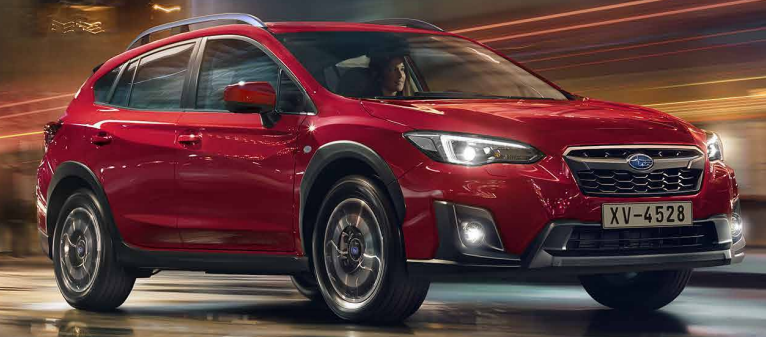
Getting the tyre pressure for Subaru XV right sounds like one of those tiny maintenance jobs we can easily postpone. The tyres look fine, the car feels normal, and there is no warning light glowing on the dashboard. Why worry?
Because tyre pressure quietly influences almost everything happening between our Subaru XV and the road.
Steering response, braking, fuel economy, ride comfort, tyre wear and stability can all change when tyre pressures drift too far from their recommended values. Subaru itself advises checking tyre pressures when the tyres are cold and adjusting them according to the pressure shown on the vehicle's tyre placard.
So, what pressure should we actually use?
For many Subaru XV models equipped with common 17- or 18-inch tyres, approximately 33 psi (230 kPa/2.3 bar) at the front and 32 psi (220 kPa/2.2 bar) at the rear is a frequently specified combination. For example, published data for several XV configurations with 225/60R17 and 225/55R18 tyres lists those pressures.
But that is a useful reference—not a universal rule.
The correct figure for your XV is the cold tyre pressure printed on the tyre-information label, normally located on the driver's door pillar or door opening.
Let's dig into what those numbers mean, when to check them and why a couple of PSI can make a bigger difference than we might expect.
Content in this publication
- What Is the Recommended Tyre Pressure for a Subaru XV?
- Where Do We Find the Subaru XV Tyre Pressure Label?
- Subaru XV Tyre Pressure in PSI, Bar and kPa
- Should Subaru XV Tyre Pressure Be Checked Cold?
- Why Subaru XV Tyre Pressure Changes With Temperature
- Why Correct Tyre Pressure Matters on a Subaru XV
- How Often Should We Check Subaru XV Tyre Pressure?
- How to Check Tyre Pressure on a Subaru XV
- Subaru XV Front vs Rear Tyre Pressure
- Tyre Pressure for Subaru XV With 17-Inch Wheels
- Tyre Pressure for Subaru XV With 18-Inch Wheels
- What Happens if Subaru XV Tyre Pressure Is Too Low?
- What Happens if Subaru XV Tyre Pressure Is Too High?
- Understanding the Subaru XV TPMS Warning Light
- Can We Rely Only on the Subaru XV TPMS Display?
- Does Carrying Passengers Change Subaru XV Tyre Pressure?
- Subaru XV Tyre Pressure Before a Long Road Trip
- Does Off-Road Driving Require Lower Subaru XV Tyre Pressure?
- Should We Use Different Pressures After Changing Tyres?
- Common Subaru XV Tyre Pressure Mistakes
- How to Make Subaru XV Tyre Checks Almost Effortless
- The Best Tyre Pressure for Subaru XV Is the Factory Pressure
- Final Thoughts
- Frequently Asked Questions
What Is the Recommended Tyre Pressure for a Subaru XV?
A useful starting point for many Subaru XV models is:
| Position | Typical pressure | kPa | Bar |
|---|---|---|---|
| Front | 33 psi | 230 kPa | 2.3 bar |
| Rear | 32 psi | 220 kPa | 2.2 bar |
Those figures apply to several XV configurations, particularly examples using 225/60R17 or 225/55R18 tyres.
However, Subaru XV tyre pressures are not identical across every production year or specification. Earlier models, alternative wheel packages, different markets and certain trim levels may specify different values.
For instance, historical XV Crosstrek configurations have been listed with pressure recommendations including 32 psi front/30 psi rear as well as 33 psi front/32 psi rear, demonstrating exactly why copying somebody else's pressure from an online forum is risky.
The simple rule is this:
Use the driver's-door tyre placard as the definitive pressure specification for the car.
Where Do We Find the Subaru XV Tyre Pressure Label?
The easiest place to find the correct numbers is not Google, a tyre manufacturer's website or even this article.
It is your Subaru.
Open the driver's door and look around the door pillar or door frame. There should be a tyre-information label listing important information such as:
- Original tyre size
- Recommended cold inflation pressure
- Front tyre pressure
- Rear tyre pressure
- Load-related information
- Sometimes spare tyre information
Subaru documentation specifically directs owners to adjust tyre pressures to the cold pressure printed on the tyre inflation label on the driver's-side door pillar.
Think of the label as the car's own prescription. General tyre-pressure tables are helpful, but the placard knows exactly which configuration Subaru engineered your XV to use.
Why the Door Placard Beats the Number on the Tyre
One of the most common tyre-pressure mistakes is reading the PSI printed on the tyre sidewall and assuming that is the correct inflation pressure.
It usually isn't.
The sidewall figure relates to the tyre itself and its maximum operating parameters. It does not replace the pressure recommended by the vehicle manufacturer.
The recommended Subaru pressure has been chosen around the vehicle's weight, suspension, axle loading, wheel and tyre combination, handling targets and ride characteristics.
So if the sidewall says something considerably higher than the Subaru door sticker, we should not simply inflate the tyre to that larger number.
Follow the vehicle placard.
Subaru XV Tyre Pressure in PSI, Bar and kPa
Depending on where we live or what pressure gauge we use, the same tyre pressure may appear in different units.
The three most common are:
PSI
PSI means pounds per square inch.
It is commonly used in countries including the United States and appears on many portable tyre-pressure gauges.
For example:
33 psi ≈ 2.3 bar ≈ 230 kPa
Bar
Bar is widely used across Europe and other markets.
Typical XV pressures around 32-33 psi correspond roughly to:
- 32 psi ≈ 2.2 bar
- 33 psi ≈ 2.3 bar
kPa
Kilopascals, or kPa, are another common pressure measurement.
As a quick reference:
- 220 kPa ≈ 32 psi
- 230 kPa ≈ 33 psi
Some Subaru TPMS displays can show pressure in either PSI or kPa depending on vehicle equipment and settings. Subaru documentation confirms that supported systems can display tyre pressure in either unit.
Quick Conversion Table
| PSI | Approx. bar | Approx. kPa |
|---|---|---|
| 28 | 1.9 | 193 |
| 30 | 2.1 | 207 |
| 31 | 2.14 | 214 |
| 32 | 2.2 | 220 |
| 33 | 2.3 | 228-230 |
| 34 | 2.34 | 234 |
| 35 | 2.4 | 241 |
| 36 | 2.5 | 248 |
We do not need to obsess over mathematical perfection here. Good digital pumps and gauges normally allow us to select the unit we want.
Should Subaru XV Tyre Pressure Be Checked Cold?
Yes.
This is one of the most important details in the entire guide.
Subaru instructs owners to check tyre pressure when the tyres are cold.
Why?
Because tyres heat up as we drive. Friction and flexing generate heat, and the air inside expands. As a result, pressure rises naturally.
Suppose we start with 33 psi in the morning. After driving on the motorway for an hour, the gauge may show noticeably more.
That does not automatically mean the tyre is overinflated.
What Does “Cold Tyre Pressure” Mean?
In practical terms, we want to measure the tyres before a meaningful drive, ideally after the vehicle has been parked for several hours.
Checking them first thing in the morning works beautifully.
Drive ten or twenty kilometres first and the number we see no longer represents the cold pressure shown on the placard.
Should We Release Air From a Hot Tyre?
Normally, no.
If the tyre was correctly inflated when cold and now reads higher after driving, the increase is generally expected.
Bleeding air from hot tyres to force them back to the cold specification can leave them underinflated once they cool down.
That is like altering a thermometer because the afternoon is warmer than the morning. The change itself is part of the system.
Why Subaru XV Tyre Pressure Changes With Temperature
Weather can make tyre pressures seem mischievous.
One week everything looks perfect. Then the temperature drops sharply and suddenly the TPMS warning appears.
Air pressure changes with temperature.
When temperatures fall, tyre pressure generally falls too. When temperatures rise, pressure increases.
This is why the first genuinely cold morning of the season can produce a dashboard warning even when there is no puncture.
The opposite can happen in warmer weather.
Do We Need More Pressure in Winter?
We should not randomly add several extra PSI simply because winter has arrived.
Instead, check the tyres cold and bring them back to the manufacturer's specified cold pressure.
If the weather has lowered them from 33 psi to 29 or 30 psi, for example, we add enough air to restore the placard recommendation.
Simple.
Why Correct Tyre Pressure Matters on a Subaru XV
The Subaru XV is built around a combination of all-wheel-drive capability, everyday comfort and predictable road manners.
Tyres form the final link in that chain.
Even sophisticated suspension and AWD systems cannot compensate perfectly for four tyres operating at inappropriate pressures.
Handling and Steering
An underinflated tyre flexes more.
That can make steering feel slower or less precise, particularly during faster cornering or sudden direction changes.
Too much pressure can produce the opposite sensation: the tyre may feel sharper initially but less compliant over irregular surfaces.
Correct pressure gives us the balance Subaru intended.
Braking Performance
Tyres play a critical role in braking because they provide the physical contact patch through which braking force reaches the road.
Poor inflation can alter tyre shape and behaviour.
That does not mean one missing PSI suddenly makes the car dangerous, but substantial underinflation should never be ignored.
Subaru warns that excessive underinflation can generate heat, contribute to tyre damage and potentially lead to tyre failure.
Fuel Economy
Soft tyres increase rolling resistance.
Imagine trying to push a wheelbarrow with a slightly flat tyre. It still moves, but it takes more effort.
The same basic principle applies to our XV.
The engine has to overcome additional resistance, which can reduce efficiency.
Subaru also notes that underinflation can reduce fuel efficiency.
Tyre Wear
Incorrect pressure can shorten tyre life.
Underinflation can increase shoulder wear because the tyre bends and spreads differently against the road.
Overinflation may encourage greater centre wear in some circumstances.
Either way, replacing four quality SUV tyres early is an expensive way to discover that a £10 pressure gauge would have been useful.
How Often Should We Check Subaru XV Tyre Pressure?
A practical routine is at least once a month and before long trips.
That recommendation lines up directly with Subaru guidance, which says each tyre should be checked and adjusted when necessary at least monthly and before long journeys.
We should also check sooner when:
- Temperatures change significantly
- The car has been parked for a long period
- The steering suddenly feels unusual
- One tyre looks lower than the others
- The TPMS warning light appears
- We are preparing for a road trip
- We have recently repaired or replaced a tyre
- We have hit a pothole particularly hard
- The vehicle is carrying unusual loads
Five minutes once a month can potentially save money, improve comfort and reveal a slow puncture before it becomes a bigger problem.
How to Check Tyre Pressure on a Subaru XV
The process is simple enough to become part of our normal car-care routine.
Step 1: Find the Recommended Pressure
Open the driver's door and read the tyre placard.
Write down or photograph the front and rear values.
Do not assume they are identical.
Step 2: Let the Tyres Cool
Measure before driving where possible.
A morning check is ideal.
Step 3: Remove the Valve Cap
Unscrew the valve cap from the first tyre and put it somewhere safe.
Tiny valve caps have a mysterious talent for disappearing under cars.
Step 4: Attach a Reliable Pressure Gauge
Push the gauge squarely onto the tyre valve.
If we hear air escaping continuously, reposition it until the seal is firm.
Step 5: Compare the Reading
Compare the measured pressure against the door-label specification.
If it is low, add air.
If it is genuinely too high while the tyre is cold, release a small amount and recheck.
Step 6: Repeat for All Four Tyres
Never check only the tyre that looks suspicious.
A tyre can lose several PSI without looking dramatically flat.
Step 7: Refit the Valve Caps
Valve caps help protect the valve from dirt, moisture and debris.
That tiny plastic cap has a job after all.
Subaru XV Front vs Rear Tyre Pressure
Some owners are surprised to discover that front and rear tyre pressures may differ.
That is completely normal.
Many Subaru XV configurations use slightly more pressure at the front than the rear because the vehicle's weight distribution and axle loading are not identical.
For example, 33 psi front and 32 psi rear is listed for several XV variants.
Other XV specifications can differ.
We therefore should not assume four identical readings are automatically correct.
Should We Put 35 PSI in All Four Tyres?
Not unless the placard calls for it.
The idea of using a convenient universal figure such as 35 psi everywhere may be tempting, but convenience is not the goal.
The manufacturer has already done the engineering.
We simply need to follow the numbers supplied for the vehicle.
Tyre Pressure for Subaru XV With 17-Inch Wheels
A common XV tyre size is 225/60R17.
For several later XV versions using that tyre size, published placard data shows approximately:
- Front: 33 psi / 230 kPa / 2.3 bar
- Rear: 32 psi / 220 kPa / 2.2 bar
Again, consider these reference figures.
Confirm against your driver's-door placard before inflating.
Tyre Pressure for Subaru XV With 18-Inch Wheels
Another common size is 225/55R18.
Some Subaru XV specifications with this tyre also use approximately 33 psi front and 32 psi rear.
However, different markets and model years may use another value, so wheel diameter alone cannot determine the correct pressure.
Tyre size, load rating, model configuration and homologation all matter.
What Happens if Subaru XV Tyre Pressure Is Too Low?
A slightly low tyre may not immediately announce itself.
That is part of the problem.
We may keep driving without realising anything has changed.
Potential consequences include:
- Increased rolling resistance
- Reduced fuel efficiency
- Less precise steering
- Increased tyre flex
- Additional heat generation
- Accelerated shoulder wear
- Greater risk of tyre damage when severely underinflated
- Less predictable handling
Subaru explicitly warns that significant underinflation can cause tyres to overheat and may result in tyre failure.
Can Low Pressure Damage a Tyre Permanently?
Yes, particularly if the tyre is driven significantly underinflated for an extended distance.
The sidewall flexes repeatedly as the wheel rotates.
That generates heat and stresses the tyre's internal structure.
Inflating it later does not magically undo internal damage.
If a tyre has been driven badly underinflated, especially at motorway speed, professional inspection is sensible.
What Happens if Subaru XV Tyre Pressure Is Too High?
More pressure is not automatically better.
Overinflation can make the ride firmer and reduce the tyre's ability to absorb small bumps.
The car may feel more nervous over broken surfaces, and tyre wear may become less even over time.
It is particularly easy to overinflate when we chase an arbitrary “fuel economy” number instead of using the Subaru specification.
Efficiency matters, but tyres are not balloons in an experiment.
The correct balance matters more.
Understanding the Subaru XV TPMS Warning Light
Many Subaru XV models are equipped with a Tyre Pressure Monitoring System, or TPMS.
Its job is to alert us when tyre pressure drops sufficiently.
The system is useful—but it should not replace manual checks.
Subaru specifically states that TPMS does not substitute for correct tyre maintenance and that maintaining proper tyre inflation remains the driver's responsibility.
What Should We Do When the TPMS Light Comes On?
We should:
- Reduce speed if necessary.
- Stop somewhere safe.
- Inspect all tyres visually.
- Check their pressures with a gauge.
- Inflate them to the cold pressure specified on the vehicle label.
- Check for punctures or damage if one tyre is substantially lower.
If pressure drops again soon afterward, we probably have more than a temperature issue.
There could be:
- A nail or screw
- Valve leakage
- Bead leakage
- Wheel damage
- Tyre damage
Why Doesn't the TPMS Light Go Out Immediately?
Some systems may need the vehicle to be driven before updated pressure information is recognised.
Subaru notes for supported vehicles that updated tyre-pressure information may require driving for at least 60 seconds at around 25 mph before registering.
So if we have corrected the pressures and everything checks out, the warning may not disappear instantly while parked.
Can We Rely Only on the Subaru XV TPMS Display?
We should treat it as a useful assistant, not our only instrument.
A separate quality tyre-pressure gauge remains valuable.
TPMS is designed primarily as a warning system. Waiting until the car complains before checking tyre pressure is a little like waiting for the fuel warning light every time before buying petrol.
It works—but it is hardly ideal maintenance.
Does Carrying Passengers Change Subaru XV Tyre Pressure?
Heavy loading can affect the appropriate pressure on some vehicles.
Certain manufacturers specify different pressures for normal and fully loaded conditions.
Whether that applies to a particular XV depends on the version and market.
This is another reason to read the tyre placard and owner's manual rather than applying an internet rule universally.
Before a holiday journey with several passengers, luggage, bikes and camping equipment, check the relevant loaded-vehicle instructions.
The rear axle may be carrying considerably more weight than it does during a normal solo commute.
Subaru XV Tyre Pressure Before a Long Road Trip
Tyre pressure should be near the top of our pre-trip checklist.
Before leaving:
- Check all four tyres cold
- Inspect tread condition
- Look for cuts or bulges
- Check for embedded objects
- Confirm the correct pressure
- Check the spare if equipped
- Inspect the tyre-repair kit where applicable
Subaru recommends checking tyre pressures before long journeys as well as during normal monthly maintenance.
Five minutes in the driveway is much nicer than discovering a soft tyre two hours into a motorway journey.
Does Off-Road Driving Require Lower Subaru XV Tyre Pressure?
This needs care.
Experienced off-road drivers sometimes lower pressures temporarily to improve tyre compliance or traction on certain surfaces.
But we should not casually reduce the tyre pressure simply because the Subaru XV has all-wheel drive and decent ground clearance.
Road pressures are designed for road driving.
If we intentionally air down for specialised off-road use, the correct pressure depends on tyre construction, terrain, speed, load and wheel setup.
Most importantly, tyres must be returned to the proper road pressure before sustained normal or high-speed driving.
Running aggressively reduced off-road pressures on a motorway is a completely different—and potentially dangerous—situation.
Should We Use Different Pressures After Changing Tyres?
If replacement tyres match the factory specification in size, load rating and construction, the vehicle placard normally remains the key reference.
But modified wheel and tyre combinations can complicate matters.
Suppose we replace the factory wheels with a different diameter, significantly alter tyre width or change load characteristics.
At that point, simply copying the old PSI may not always be appropriate.
Consult a qualified tyre specialist and, where necessary, Subaru.
We should also remember that replacement wheels and sensors need to remain compatible with the vehicle's TPMS where fitted. Subaru warns that incompatible replacement tyre or wheel setups can interfere with TPMS operation.
Common Subaru XV Tyre Pressure Mistakes
Most pressure problems come from ordinary habits rather than dramatic failures.
Checking After a Long Drive
Hot pressures will naturally be higher.
Adjusting them down to the cold specification can leave the tyres too low later.
Inflating to the Tyre Sidewall Maximum
The tyre's sidewall is not the vehicle's recommended pressure chart.
Use the vehicle placard.
Assuming Front and Rear Are Equal
Some XVs specify different values.
Check both.
Ignoring Small Pressure Losses
A tyre that repeatedly loses two or three PSI faster than the others deserves inspection.
That slow leak may eventually become a large inconvenience.
Waiting for the TPMS Warning
The system may not illuminate for every small deviation.
Regular manual checks still matter.
Using an Inaccurate Gauge
Cheap or damaged gauges can mislead us.
If two gauges disagree dramatically, compare them with a reliable calibrated unit.
How to Make Subaru XV Tyre Checks Almost Effortless
The easiest maintenance routine is the one we actually follow.
Keep a digital pressure gauge in the glovebox or garage.
Once a month, preferably on a cool morning:
- Check the door placard.
- Measure all four tyres.
- Inflate where necessary.
- Look over the tread and sidewalls.
- Note any tyre losing pressure faster than the others.
The whole process takes about as long as making coffee.
And unlike many maintenance tasks, tyre-pressure checking requires almost no mechanical experience.
The Best Tyre Pressure for Subaru XV Is the Factory Pressure
If we remember only one thing from this guide, let it be this:
There is no single universal Subaru XV tyre pressure covering every year and configuration.
Around 33 psi front and 32 psi rear is common for several XV models and wheel combinations, but different configurations have used other recommendations.
The definitive answer sits a few centimetres away every time we get into the car:
the tyre placard on the driver's-side door pillar.
It tells us exactly what Subaru recommends for that vehicle when the tyres are cold.
Final Thoughts
Tyre pressure is one of those small details that quietly separates a well-maintained Subaru XV from a neglected one.
We do not need specialist tools, a workshop appointment or advanced mechanical knowledge. We just need a decent gauge, a few minutes and the pressure specification printed on the vehicle.
For many Subaru XV models, numbers around 33 psi at the front and 32 psi at the rear are common. But rather than treating those figures like a universal law, we should use them as context and trust the pressure label fitted to our particular XV.
Check the tyres cold. Check them regularly. Do it before long trips. Pay attention when one tyre repeatedly drops faster than the others.
It is a tiny ritual with disproportionately useful consequences: better tyre life, better efficiency, more predictable handling and fewer unpleasant surprises.
Sometimes good car maintenance really is as simple as putting the right amount of air in the right place.
Frequently Asked Questions
1. What is the correct tyre pressure for a Subaru XV?
Many Subaru XV models use pressures around 33 psi (230 kPa/2.3 bar) at the front and 32 psi (220 kPa/2.2 bar) at the rear, particularly certain versions fitted with 225/60R17 or 225/55R18 tyres. However, pressures vary by year, market and specification, so always follow the tyre-information label on the driver's door pillar.
2. Is 35 PSI too high for a Subaru XV?
Not necessarily, but we should not choose 35 psi simply because it sounds reasonable. If the door placard specifies 33 psi, use 33 psi when the tyre is cold. If a particular model specifies 35 psi, then 35 psi is appropriate. The placard determines the correct target.
3. Should Subaru XV tyre pressures be checked hot or cold?
Check them cold. Subaru specifically instructs owners to check tyre pressure when the tyres are cold and adjust them according to the vehicle's tyre placard. Pressure naturally increases as tyres heat while driving.
4. Why does my Subaru XV tyre-pressure warning appear in cold weather?
Lower ambient temperatures can reduce tyre pressure enough to activate the TPMS warning. Check every tyre with a gauge when cold and inflate them to the values shown on the vehicle placard. If one tyre continues losing pressure, have it inspected for a leak.
5. Where is the Subaru XV tyre-pressure sticker?
It is normally located on the driver's-side door pillar or door opening. Subaru's own guidance identifies the driver's-side door-pillar tyre-inflation label as the reference for the correct cold tyre pressure.
If you want to know other articles similar to Tyre Pressure for Subaru XV: PSI, Bar and kPa Guide you can visit the category Service and Parts.
Land Rover Defender 90 Tyre Pressure: Complete Guide
Land Rover Defender 90 Weight: Kerb Weight, GVW and Payload Explained
Land Rover Defender 90 Towing Capacity: Complete Guide
Land Rover Defender 90 Boot Space: Size, Dimensions and Practicality
Toyota Hilux Key Battery Replacement: Complete DIY Guide
Toyota Hilux Windscreen Replacement Cost: Prices, Factors, and Money-Saving Tips
Leave a Reply
More content of your interest