

How Long Do Toyota Hilux Last? Real-World Lifespan Explained

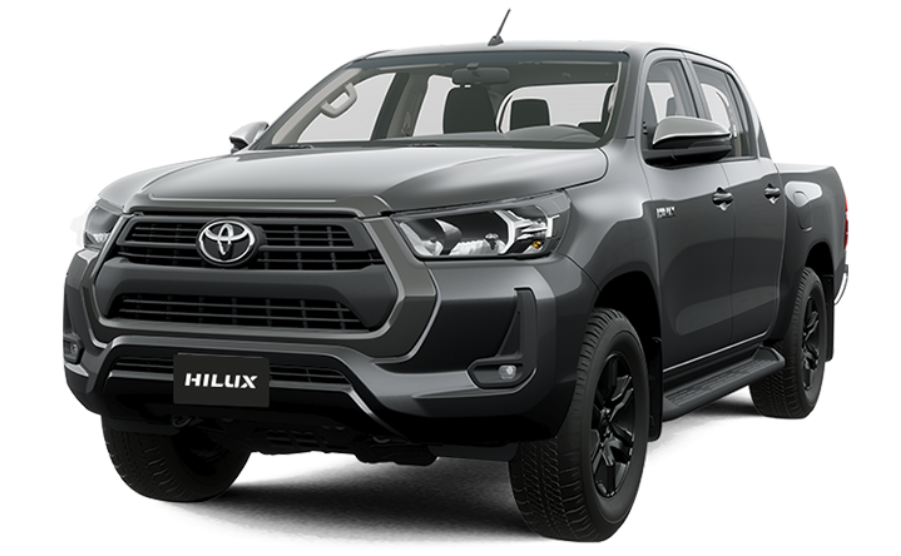
If you are wondering how long do Toyota Hilux last, the short answer is reassuring: a properly maintained Toyota Hilux can realistically reach 200,000 to 300,000 miles (around 320,000 to 480,000 km), while exceptionally well-cared-for examples can travel even farther.
In terms of age, that can translate into roughly 15 to 25 years of useful service, depending on how the truck is driven, maintained, stored, and worked.
But mileage alone tells only half the story.
A Hilux that has covered 180,000 miles on long highway journeys with regular servicing might be healthier than another truck with 80,000 miles spent crawling through mines, towing heavy trailers, crossing muddy farms, and idling for hours every day.
That distinction matters because the Hilux is rarely treated like an ordinary family car. These trucks work.
They tow. They haul. They climb. They spend their lives on construction sites, farms, remote roads, and rough terrain. Yet longevity has become one of the qualities most closely associated with the model. Toyota has produced the Hilux since 1968, and its body-on-frame construction and work-focused engineering have helped build that reputation over multiple generations.
So, how many years can we reasonably expect from one? What usually kills a high-mileage Hilux? And how can we make one last as long as possible?
Let's dig into it.
Content in this publication
- What Is the Average Toyota Hilux Lifespan?
- How Many Years Does a Toyota Hilux Last?
- Why Do Toyota Hilux Trucks Last So Long?
- How Long Does a Toyota Hilux Diesel Engine Last?
- Can Petrol Toyota Hilux Models Last Just as Long?
- Does Regular Servicing Really Make That Much Difference?
- What Usually Shortens Toyota Hilux Life?
- Does Towing Reduce Toyota Hilux Lifespan?
- Does Off-Road Driving Reduce Hilux Longevity?
- How Long Does a Toyota Hilux Transmission Last?
- What Mileage Is Too High for a Used Toyota Hilux?
- How Can We Make a Toyota Hilux Last 300,000 Miles?
- Which Toyota Hilux Generations Last the Longest?
- Can Rust Kill a Hilux Before the Engine Does?
- Is Buying an Older Low-Mileage Hilux Better?
- When Is a Toyota Hilux No Longer Worth Repairing?
- Signs a High-Mileage Hilux Still Has Plenty of Life
- Toyota Hilux Longevity vs Modern Pickup Complexity
- Is the Toyota Hilux a Good Vehicle to Keep Long Term?
- Final Verdict: How Long Do Toyota Hilux Last?
- Frequently Asked Questions
What Is the Average Toyota Hilux Lifespan?
There is no official expiration mileage stamped somewhere under the bonnet. A Hilux does not suddenly become unusable when the odometer crosses 200,000 miles.
Instead, we can think about its lifespan in stages.
| Hilux Mileage | What We Might Expect |
|---|---|
| Under 100,000 miles | Generally early to mid-life if maintained correctly |
| 100,000–150,000 miles | Normal wear items become increasingly important |
| 150,000–200,000 miles | Maintenance history matters more than odometer numbers |
| 200,000–300,000 miles | Achievable for a well-maintained Hilux |
| 300,000+ miles | Possible, but condition and previous repairs become critical |
These numbers should not be treated as guarantees. They are practical ownership ranges.
A truck that has survived 250,000 miles has not necessarily done so without repairs. By then, suspension parts, bearings, cooling-system components, sensors, injectors, clutches, alternators, starter motors, seals, hoses, and other components may have been replaced.
That is normal.
Longevity does not mean never fixing anything. It means the fundamental vehicle remains economically worthwhile to maintain.
Can a Toyota Hilux Reach 300,000 Miles?
Yes, a Hilux reaching 300,000 miles is entirely plausible when it receives consistent maintenance and avoids serious corrosion, overheating, contaminated fuel, or prolonged mechanical neglect.
We would not buy a used Hilux simply because somebody says, "These things run forever," though.
Nothing runs forever.
What makes the Hilux interesting is that its basic design has traditionally been oriented more toward durability and utility than delicate sophistication. That gives a well-maintained example a solid foundation for high mileage.
At 300,000 miles, however, we should expect evidence that the owner has spent money keeping it healthy.
A completely untouched 300,000-mile work truck would worry us more than one with documented replacement components.
Repairs are not automatically bad news. Sometimes they prove somebody cared.
How Many Years Does a Toyota Hilux Last?
For owners driving around 10,000 to 15,000 miles annually, reaching 200,000 miles may require anywhere from roughly 13 to 20 years.
Someone covering only 8,000 miles per year could theoretically keep the same Hilux for considerably longer.
This is why we regularly see a distinction between mileage lifespan and calendar lifespan.
Rubber, seals, wiring, paint, bushings, hoses, interior materials, and corrosion protection age even when the odometer barely moves.
A 20-year-old Hilux with 70,000 miles is therefore not automatically better than a 10-year-old example with 140,000 miles.
Age leaves fingerprints too.
Mileage vs Age: Which Matters More?
Neither figure should be considered alone.
For an older Hilux, we should evaluate mileage alongside:
- service records and oil-change history;
- chassis and body corrosion;
- evidence of towing or overloading;
- engine starting behavior when cold;
- smoke, leaks, noises, and warning lights;
- gearbox, clutch, differential, and transfer-case operation;
- suspension and steering wear;
- tyre condition and alignment;
- previous accident or off-road damage.
That inspection tells us considerably more than an attractive number on the dashboard.
Why Do Toyota Hilux Trucks Last So Long?
Durability does not come from one magical component.
Think of longevity like a football team. One superstar cannot win every match alone. We need the engine, transmission, cooling system, chassis, electrical system, maintenance schedule, and owner habits all working together.
The Hilux has historically benefited from a relatively work-oriented formula.
Body-on-Frame Construction
The Hilux uses body-on-frame construction rather than the unibody layout common among passenger cars and many modern crossovers.
That architecture suits demanding commercial work, towing, uneven terrain, and repeated heavy use. Toyota itself highlights the Hilux's body-on-frame construction as part of its robust work-focused character.
Of course, a tough frame does not make a truck invincible.
Corrosion can become a bigger enemy than engine mileage in certain climates.
The Chassis Can Matter More Than the Engine
Imagine finding a Hilux with a beautifully running diesel engine but severe structural corrosion underneath.
Would we call it a good high-mileage truck?
Probably not.
A usable drivetrain inside a badly deteriorated chassis can quickly turn into an expensive problem.
For Hilux models that have spent years around road salt, coastal air, deep mud, agriculture, or frequent water crossings, chassis inspection becomes essential.
Mud deserves particular attention because it can remain packed around structural components, trapping moisture against metal. Used-vehicle guidance for the Hilux similarly recommends checking underneath for off-road damage, accumulated mud, and corrosion.
How Long Does a Toyota Hilux Diesel Engine Last?
Diesel Hilux models dominate many international markets, and buyers often choose them specifically for commercial work and long-distance durability.
A properly maintained Hilux diesel engine can potentially operate well beyond 200,000 miles, and reaching the 250,000- to 300,000-mile region is realistic enough that mileage by itself should not scare us away.
Maintenance is the deciding factor.
Modern diesel engines rely on far more than a strong engine block. Turbochargers, high-pressure fuel systems, emissions equipment, sensors, EGR systems, and diesel particulate filters can all influence long-term ownership costs.
High Mileage Is Not the Same as Engine Wear
This point sounds strange at first.
Imagine two identical Hilux trucks.
Truck A covers 150,000 miles largely on open roads, reaching operating temperature every journey.
Truck B covers 80,000 miles but spends its entire life moving around a construction site, starting cold repeatedly, idling for long periods, operating in dust, carrying heavy loads, and rarely cruising for sustained periods.
Which engine has had the easier life?
Quite possibly Truck A.
An odometer records distance. It does not record suffering.
That is why hours of operation, driving environment, service quality, towing history, idle time, and previous ownership matter enormously.
Can Petrol Toyota Hilux Models Last Just as Long?
Petrol Hilux models can also be extremely long-lived.
Depending on the market and generation, buyers may encounter different Toyota petrol engines. A naturally aspirated petrol engine can sometimes offer a simpler ownership proposition than a modern turbo-diesel because it does not rely on the same diesel-specific emissions and high-pressure injection hardware.
The trade-off is usually fuel consumption.
For owners covering modest mileage or operating where diesel repair expertise is limited, a petrol Hilux can therefore make considerable sense.
We would still focus on the same fundamentals: clean oil, a healthy cooling system, correct fluids, sensible warm-up habits, and rapid attention to unusual noises or leaks.
Does Regular Servicing Really Make That Much Difference?
Absolutely.
The Hilux's tough reputation can sometimes work against it because owners assume toughness eliminates the need for maintenance.
You may be interested in reading Why Are Toyota Hilux So Tough? The Engineering Behind the Legend
It does not.
A truck capable of surviving difficult conditions still needs fresh lubricant, clean filters, correct coolant, healthy driveline fluids, and routine inspection.
Toyota UK currently specifies servicing for Hilux models at 12 months or 10,000 miles, whichever comes first. Service intervals have differed across generations and markets, however, so we should always follow the maintenance schedule for the exact model, engine, country, and year rather than copying a generic interval from the internet.
Oil Changes Are Cheap Compared With Engines
Oil has a difficult job.
It lubricates rotating components, helps control heat, suspends contaminants, and protects internal surfaces. Stretching oil changes far beyond the proper interval to save a small amount of money can become spectacularly expensive later.
If we want a Hilux to reach 250,000 miles or more, maintenance should become boringly consistent.
That is a compliment.
A long-lasting truck usually has a wonderfully uneventful service history: oil changed on time, filters replaced, leaks investigated, fluids checked, warning lights diagnosed, and small problems repaired before they become large ones.
Severe Use May Require Extra Attention
Commercial operation deserves special thought.
Towing, repeated short journeys, deep dust, heavy payloads, slow off-road operation, high temperatures, water crossings, and extended idling can create harsher operating conditions than ordinary road driving.
That means the owner's handbook and severe-use recommendations matter.
The truck does not know whether we call the journey "only ten miles." It knows how hard those ten miles were.
What Usually Shortens Toyota Hilux Life?
If we want to understand longevity, we should look at the things that destroy it.
One catastrophic overheating episode can undo years of careful maintenance. Serious rust can make an otherwise healthy truck uneconomical to repair. Poor-quality fuel can damage expensive diesel injection equipment. Ignoring warning lights can turn a modest repair into a major one.
The biggest lifespan killers are rarely mysterious.
Neglected servicing, overheating, corrosion, abusive loading, poor repairs, contaminated lubricants, incorrect modifications, and repeatedly ignoring mechanical symptoms are much more dangerous than the odometer simply clicking upward.
Overheating Is a Major Red Flag
We would treat any history of serious overheating cautiously.
Cooling systems become especially important as mileage rises. Radiators can deteriorate or become obstructed. Hoses age. Water pumps and thermostats can fail. Coolant leaks can begin small enough to ignore until suddenly they are not small anymore.
Engines dislike heat in the same way ice cream dislikes summer pavement.
Things can go wrong very quickly.
If the temperature gauge behaves abnormally, the best response is not to keep driving and hope.
Diesel Emissions Systems Need Appropriate Driving
On modern diesel Hilux models, emissions equipment becomes another part of long-term ownership.
A diesel particulate filter works best when the vehicle regularly reaches conditions that allow regeneration. Trucks that idle extensively or spend most of their lives making very short journeys can experience DPF trouble.
Used-Hilux guidance has specifically identified blocked DPFs as something buyers should watch for on vehicles exposed to frequent idling and short-distance operation.
That does not make modern diesel Hilux models unreliable.
It means we should use a diesel in a way that suits a diesel.
Does Towing Reduce Toyota Hilux Lifespan?
Towing does not automatically ruin a Hilux.
The problem comes from heat, excess weight, poor maintenance, aggressive driving, or regularly exceeding vehicle limits.
A truck pulling a trailer within its specified capacity and receiving appropriate servicing may remain healthy for years.
But towing increases workload.
The engine works harder. The transmission handles additional stress. Brakes convert more energy into heat. Suspension components manage greater forces. Cooling becomes even more important.
For a used Hilux that has spent years towing commercially, we would examine the gearbox, clutch where applicable, differential, brakes, cooling system, rear suspension, tow equipment, and service history more carefully.
Does Off-Road Driving Reduce Hilux Longevity?
Not necessarily.
The Hilux was built with demanding environments in mind.
Still, repeated off-road operation can accelerate wear in specific areas.
Dust can overwhelm neglected air filters. Mud retains moisture. Rocks can damage underbody components. Water crossings can contaminate fluids if seals or breathers are compromised. Steering and suspension parts absorb far more impact than they would during ordinary highway driving.
This is where cleaning becomes maintenance.
A muddy Hilux might look adventurous in photographs, but leaving layers of wet dirt underneath it for weeks is not doing the chassis any favors.
How Long Does a Toyota Hilux Transmission Last?
There is no universal expiration mileage for a Hilux gearbox.
Manual and automatic transmissions can both last for very high mileages when treated correctly, although the surrounding components and maintenance requirements differ.
A manual transmission may eventually require clutch work. An automatic depends heavily on fluid condition, heat management, and correct operation.
When buying a high-mileage Hilux, we want smooth behavior rather than promises.
Automatic shifts should feel consistent rather than slipping, flaring, banging, or hesitating. A manual should engage gears cleanly without crunching, excessive noise, or obvious clutch slip.
Four-wheel-drive operation deserves testing too.
A Hilux is a system, not just an engine with a tray attached.
What Mileage Is Too High for a Used Toyota Hilux?
There is no single number.
We would rather buy a documented 160,000-mile Hilux maintained by one careful owner than a suspicious 70,000-mile truck with no service history, mismatched tyres, structural rust, warning lights, and evidence of abuse.
As mileage climbs beyond 150,000 miles, condition becomes increasingly important.
Above 200,000 miles, we would want a particularly thorough inspection.
That does not mean walking away automatically. It means pricing the vehicle according to what is likely to need attention.
Is a 200,000-Mile Hilux Worth Buying?
Potentially, yes.
A 200,000-mile Hilux can still have useful life remaining.
At that point, however, we are buying its history as much as the truck itself.
We want evidence of consistent servicing. We want to know whether the engine burns excessive oil, loses coolant, struggles to start, smokes abnormally, or produces suspicious noises.
We should also inspect the drivetrain, chassis, brakes, suspension, steering, tyres, electrical system, and four-wheel-drive hardware.
A specialist pre-purchase inspection is particularly valuable because somebody experienced with Hilux models may spot patterns an ordinary buyer overlooks.
How Can We Make a Toyota Hilux Last 300,000 Miles?
There is no secret potion.
The formula is mostly disciplined ownership.
We should use the correct oil and fluids, service the truck according to the appropriate Toyota schedule, keep the cooling system healthy, investigate leaks promptly, avoid chronic overloading, warm the vehicle through normal gentle driving rather than aggressive cold operation, allow a diesel to complete appropriate regeneration cycles, clean mud and salt from the underside, and respond to unusual noises instead of turning the radio louder.
Most importantly, we should keep records.
A thick maintenance folder may not make the truck drive better today, but it helps us identify what has been done, what will be due next, and whether a recurring issue is developing.
Consistency wins the longevity race.
You may be interested in readingWhy Are Toyota Hilux So Tough? The Engineering Behind the LegendYou may be interested in reading
Which Toyota Hilux Is the Most Reliable? The Best Years and EnginesWhich Toyota Hilux Generations Last the Longest?
This question does not have a simple winner.
Older trucks may have simpler mechanical systems, making certain repairs easier and eliminating some modern emissions equipment. Newer trucks gain better technology, safety features, refinement, power, and emissions control.
But age introduces its own problems.
Even an exceptionally durable older Hilux can now be dealing with decades of corrosion, deteriorated rubber, wiring repairs, worn suspension, previous accidents, questionable modifications, and multiple owners.
Newer does not automatically mean more durable.
Older does not automatically mean better.
We would rather judge each truck on its engine, generation, maintenance history, use case, condition, and local parts availability.
Can Rust Kill a Hilux Before the Engine Does?
Definitely.
This point deserves emphasis because conversations about Toyota Hilux lifespan often concentrate entirely on the engine.
Yet structural corrosion can determine whether an old truck remains safe and economical.
Vehicles used near the sea, in humid environments, around chemicals, or on roads heavily treated with winter salt deserve particularly careful inspection.
Look underneath.
A shiny bonnet tells us very little about the chassis.
Surface corrosion and severe structural deterioration are also not the same thing, so an experienced mechanic should assess anything questionable.
Is Buying an Older Low-Mileage Hilux Better?
Not always.
Low mileage becomes attractive only when the rest of the story makes sense.
A truck that has spent long periods sitting unused may develop problems of its own. Seals can deteriorate. Batteries fail. Brake components corrode. Tyres age regardless of tread depth. Fluids absorb contamination. Fuel systems dislike years of neglect.
Then there is odometer credibility.
Service invoices, inspection certificates, maintenance records, and vehicle-history information can help establish whether the displayed mileage makes sense.
Mileage is evidence.
It is not the entire case.
When Is a Toyota Hilux No Longer Worth Repairing?
This is ultimately an economic question rather than a mechanical one.
Almost anything can be repaired with enough money.
The more useful question is whether repairing the truck costs less than replacing it with something that better meets our needs.
An old Hilux might need suspension work this month, injectors later, tyres shortly afterward, and rust repair next year. Individually, none of those jobs necessarily condemns the vehicle.
Together, they can change the mathematics.
We should consider the truck's market value, structural condition, anticipated future repairs, reliability requirements, and how much downtime costs us.
A farmer using a Hilux every day may judge downtime very differently from someone keeping one as an occasional weekend vehicle.
Signs a High-Mileage Hilux Still Has Plenty of Life
Mileage becomes less frightening when the truck gives us positive evidence.
A strong candidate should start cleanly from cold, maintain a stable temperature, drive straight, change gears properly, stop confidently, show no serious structural corrosion, operate its four-wheel-drive system correctly, and come with believable maintenance documentation.
The interior can tell stories too.
Extremely worn pedals, steering wheels, seats, switches, and door hinges on an allegedly low-mileage vehicle deserve investigation.
We are looking for consistency between mileage, age, appearance, service history, and mechanical condition.
When the story fits, confidence rises.
Toyota Hilux Longevity vs Modern Pickup Complexity
Modern pickups are becoming more sophisticated.
That brings enormous advantages: stronger safety technology, cleaner emissions, better connectivity, improved comfort, advanced engine management, and more refined automatic transmissions.
It also means there are more systems that may eventually need diagnosis or repair.
Therefore, expecting a modern truck to reach 300,000 miles while replacing nothing except oil and tyres is unrealistic.
Long life and zero repair costs are different concepts.
A 20-year-old Hilux can be remarkably durable while still needing thousands of dollars, pounds, or other local currency in maintenance during those two decades.
The key question is whether the underlying truck remains sound.
Is the Toyota Hilux a Good Vehicle to Keep Long Term?
For the right owner, yes.
The Hilux makes particular sense when we value utility, durability, towing capability, off-road ability, parts support, and the possibility of keeping a vehicle for many years.
But long-term ownership works best when we maintain proactively rather than reactively.
Waiting until something completely fails is usually the expensive strategy.
A minor coolant leak today can become overheating tomorrow. A damaged suspension bush can contribute to uneven tyre wear. A torn protective boot can allow contamination into a component that would otherwise have lasted much longer.
Small problems behave like unpaid bills.
Eventually, they collect interest.
Final Verdict: How Long Do Toyota Hilux Last?
So, how long do Toyota Hilux last?
A sensible expectation for a properly maintained example is 200,000 to 300,000 miles, or roughly 320,000 to 480,000 km. Some well-maintained trucks can exceed that range, while badly neglected examples may develop expensive problems far earlier.
In years, 15 to 25 years of service is entirely conceivable when corrosion is controlled and maintenance remains consistent.
What makes the Hilux special is not that nothing ever breaks.
Parts wear. Components fail. Repairs happen.
Its real strength is that a cared-for truck can continue being useful long after many owners would expect an ordinary vehicle to retire.
If we want maximum lifespan, the recipe is refreshingly unglamorous: service it properly, protect it from corrosion, respect its load limits, keep the cooling system healthy, use the right fluids, investigate symptoms early, and buy on condition rather than mileage alone.
Treat a Hilux like an indestructible machine and eventually it will prove us wrong.
Treat it like a durable machine that still deserves care, and it may stay beside us for hundreds of thousands of miles.
Frequently Asked Questions
How many miles will a Toyota Hilux last?
A well-maintained Toyota Hilux can realistically reach around 200,000 to 300,000 miles. Exceptional examples may travel farther, although longevity depends heavily on servicing, corrosion, operating environment, previous use, and mechanical condition.
Can a Toyota Hilux last 500,000 km?
Yes. 500,000 km is approximately 311,000 miles, so reaching that figure is possible for a carefully maintained Hilux. It should not be considered guaranteed, and substantial wear-component replacement may be required before the truck reaches that mileage.
Is 200,000 km high mileage for a Toyota Hilux?
Not necessarily. Around 200,000 km, or 124,000 miles, is significant mileage, but it does not automatically make a Hilux worn out. At that stage, service history, chassis condition, engine health, transmission behavior, previous workload, and maintenance quality are much more informative.
How long does a Toyota Hilux diesel engine last?
A properly maintained Hilux diesel can potentially exceed 200,000 miles, with some reaching 250,000 to 300,000 miles or more. Maintaining the fuel system, cooling system, turbocharger, lubrication system, and emissions equipment becomes increasingly important as mileage rises.
Is a high-mileage Toyota Hilux worth buying?
It can be. A high-mileage Hilux with complete maintenance records, a healthy chassis, smooth drivetrain, good cold-start behavior, and evidence of careful ownership may be a better purchase than a lower-mileage truck that has been neglected. A professional pre-purchase inspection is particularly worthwhile once mileage becomes substantial.
You may be interested in readingWhy Are Toyota Hilux So Tough? The Engineering Behind the LegendYou may be interested in reading
Which Toyota Hilux Is the Most Reliable? The Best Years and EnginesYou may be interested in reading
Are Toyota Hilux Any Good? The Real-World AnswerIf you want to know other articles similar to How Long Do Toyota Hilux Last? Real-World Lifespan Explained you can visit the category Blog.
Are Toyota Hilux Any Good? The Real-World Answer
Which Toyota Hilux Is the Most Reliable? The Best Years and Engines
Why Are Toyota Hilux So Tough? The Engineering Behind the Legend
Are Toyota Hilux Reliable? A Complete Long-Term Reliability Guide

BMW i7 Reliability: Is BMW’s Electric Flagship Built to Last?

Infiniti QX60 Reliability: Is This Luxury SUV Dependable?
Leave a Reply
More content of your interest