

Which Toyota Hilux Is the Best? The Complete Buyer’s Guide

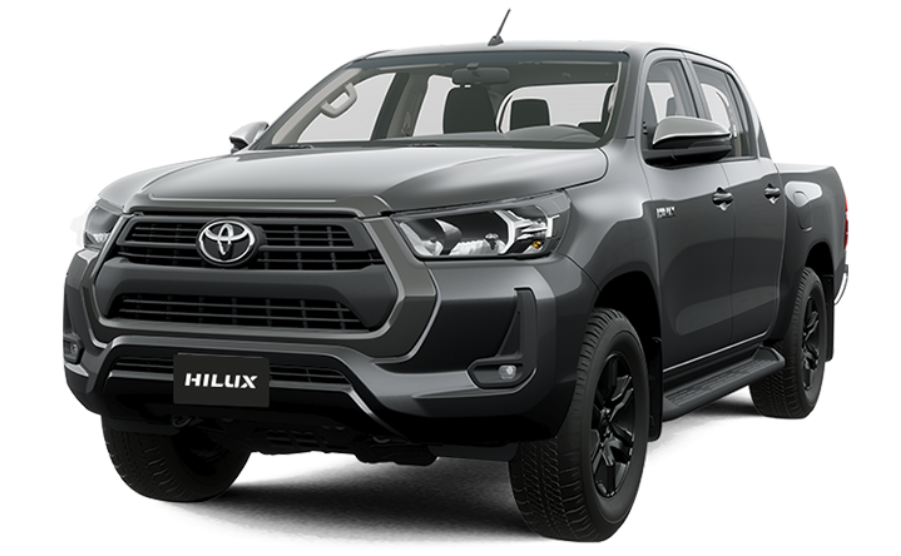
Ask ten Toyota Hilux owners which Toyota Hilux is the best, and we may get ten slightly different answers.
One person will point straight at a rugged 4x4 diesel with steel wheels and say, “That one. Nothing unnecessary to break.” Another will choose a luxurious double-cab model loaded with technology. Someone else will insist that the GR Sport is the only Hilux worth having.
And, strangely enough, they can all be right.
The best Toyota Hilux isn't necessarily the most expensive, the fastest, or the one wearing the biggest wheels. It is the version that matches what we actually expect the truck to do.
For most buyers who want the best all-round combination of power, towing capability, off-road ability, resale value, and everyday usability, a 2.8-litre turbo-diesel 4x4 Double Cab is the sweet spot. If we're buying purely for work, however, a simpler 2.4 diesel can make considerably more sense. And if lifestyle appeal matters as much as utility, the GR Sport becomes hard to ignore.
Let's dig deeper and figure out which Hilux deserves a place in our driveway.
Content in this publication
- Which Toyota Hilux Is the Best Overall?
- Our Quick Toyota Hilux Recommendations
- Why There Isn't One Perfect Hilux for Everyone
- Best Toyota Hilux Engine: 2.8 Diesel or 2.4 Diesel?
- Which Hilux Is Best: Manual or Automatic?
- Best Toyota Hilux for Off-Road Driving
- Best Toyota Hilux for Towing
- Best Toyota Hilux for Work
- Best Toyota Hilux for Family Use
- Which Toyota Hilux Trim Is Best?
- Is the Hilux GR Sport the Best Hilux?
- Which Toyota Hilux Generation Is Best?
- What Is the Most Reliable Toyota Hilux?
- Best Hilux for Long-Distance Touring
- Best Hilux for City Driving
- 4x2 vs 4x4: Which Hilux Should We Buy?
- Which Hilux Offers the Best Value for Money?
- New vs Used Toyota Hilux: Which Is Better?
- The Hilux We'd Personally Choose
- Mistakes to Avoid When Choosing a Toyota Hilux
- So, Which Toyota Hilux Is the Best?
- Frequently Asked Questions
- Closing Thoughts
Which Toyota Hilux Is the Best Overall?
If we had to choose only one specification for the widest range of buyers, we'd look for a:
Toyota Hilux Double Cab 4x4 with the 2.8-litre turbo-diesel engine.
Why this combination?
It sits almost perfectly in the middle of the Hilux universe.
We get enough cabin space for a family, a genuinely useful load bed, strong diesel torque, serious off-road hardware, respectable towing capability, and the sort of resale desirability that has helped turn the Hilux into an automotive institution.
The 2.8 diesel particularly suits the Hilux because this isn't a lightweight crossover pretending to be adventurous. It's a proper body-on-frame pickup designed to carry, tow, climb, crawl, and occasionally get covered in enough mud to resemble a chocolate cake.
Choosing the bigger diesel gives us greater performance flexibility without fundamentally changing the Hilux formula.
For buyers who use one vehicle for practically everything, this is the configuration we'd place at the top of the list.
Our Quick Toyota Hilux Recommendations
Before disappearing down the rabbit hole of engines, transmissions, trims, generations, and suspension setups, here's the simple version.
| Buyer | Best Hilux Choice |
|---|---|
| Best overall | 2.8 diesel 4x4 Double Cab |
| Best for heavy towing | 2.8 diesel 4x4 |
| Best for off-road driving | 2.8 4x4 or GR Sport |
| Best work truck | 2.4 diesel Single/Extra Cab |
| Best family Hilux | 2.8 Double Cab |
| Best luxury/lifestyle model | GR Sport or premium trim |
| Best for fuel-conscious work use | 2.4 diesel |
| Best affordable used Hilux | Well-maintained seventh-generation diesel |
| Best newer used Hilux | Eighth-generation 2.8 diesel |
| Best long-term value | Mid/high-spec 4x4 diesel |
Notice the pattern?
The 2.8-litre 4x4 keeps appearing because it's simply the most versatile configuration.
But versatility isn't everything.
Why There Isn't One Perfect Hilux for Everyone
Toyota sells the Hilux across numerous markets, and specifications vary substantially.
We may encounter names such as WorkMate, SR, SR5, Invincible, Rogue, Legend, GR Sport, Active, Icon, or completely different regional combinations.
That creates a problem when somebody asks, “What's the best Hilux model?”
Trim badges don't translate perfectly from one country to another.
Instead of becoming obsessed with names, we should focus on five things:
- Engine
- Drivetrain
- Cab configuration
- Equipment level
- Intended use
These factors tell us far more about whether a Hilux suits us than whatever badge Toyota has attached to the tailgate.
Best Toyota Hilux Engine: 2.8 Diesel or 2.4 Diesel?
For many buyers, this is the most important question of all.
Toyota has offered multiple Hilux engines around the world, but modern diesel shoppers commonly encounter two particularly relevant choices: the 2.4-litre turbo diesel and 2.8-litre turbo diesel.
Neither is inherently bad.
They simply play different roles.
Why the 2.8 Diesel Is Our Overall Pick
The 2.8 diesel gives the Hilux the muscular character many buyers expect from a modern pickup.
Its stronger torque delivery becomes particularly noticeable when:
- Towing
- Overtaking
- Climbing hills
- Carrying heavy loads
- Driving through sand
- Fitting larger off-road tyres
- Travelling with passengers and luggage
Imagine pushing a loaded wheelbarrow uphill.
The smaller engine can still get the job done, but the larger engine feels like somebody has stepped behind us and started helping.
That's roughly the difference.
The 2.8 isn't about turning the Hilux into a sports car. It's about making demanding situations feel less demanding.
When the 2.4 Diesel Is the Smarter Hilux
Here's where things get interesting.
Bigger isn't automatically better.
If we're running a fleet, carrying moderate loads, commuting to building sites, travelling mostly on sealed roads, or simply want a dependable pickup without paying extra for performance we rarely use, the 2.4 diesel can be an excellent option.
Its advantages may include:
- Lower purchase cost
- Potentially lower operating expenses
- Adequate performance for normal workloads
- Simpler work-focused specifications
- Good long-distance practicality
A contractor doesn't necessarily need the fanciest drill in the hardware store.
Likewise, a Hilux doesn't need maximum output to be useful.
For commercial users, the 2.4 diesel may actually be the better Hilux.
Which Hilux Is Best: Manual or Automatic?
Traditional pickup buyers often love manual transmissions.
And we understand why.
A manual Hilux feels mechanical, direct, and refreshingly straightforward. It can also provide excellent control in particular work and off-road situations.
However, we'd recommend the automatic for most modern buyers.
Automatic Hilux Advantages
An automatic is particularly pleasant when:
- Driving in traffic
- Towing regularly
- Commuting daily
- Travelling long distances
- Sharing the vehicle with multiple drivers
The convenience factor shouldn't be underestimated.
After two hours crawling through congested traffic, operating a clutch stops feeling rugged and starts feeling like leg day at the gym.
Who Should Still Buy the Manual?
A manual deserves serious consideration if:
- We strongly prefer manual control
- The truck primarily performs agricultural work
- We're buying a simpler commercial configuration
- Purchase price is critical
- We operate in conditions where straightforward mechanical control is preferred
Condition remains more important than transmission type when shopping used.
We'd rather own a carefully maintained automatic than a neglected manual—and vice versa.
Best Toyota Hilux for Off-Road Driving
This one is easy.
Buy the 4x4.
A rear-wheel-drive Hilux can deal with rough roads surprisingly well, but when terrain becomes genuinely difficult, four-wheel drive changes the game.
A proper Hilux 4x4 can offer the ingredients we want for serious exploration, depending on model and market:
- High ground clearance
- Low-range gearing
- Strong chassis construction
- Generous suspension travel
- Electronic traction assistance
- Locking differential availability
- Underbody protection on certain variants
The difference between 4x2 and 4x4 is like comparing hiking boots with running shoes.
Either may survive a dirt trail.
Only one is designed around it.
Is the Hilux GR Sport the Best Off-Road Hilux?
For buyers who want a factory-built Hilux with additional visual attitude and upgraded performance-oriented hardware, the GR Sport is one of the most desirable versions.
But we wouldn't automatically call it the best choice for everybody.
Its biggest strengths are usually a combination of:
- More aggressive styling
- Wider stance on certain versions
- Suspension revisions
- Improved on-road confidence
- Higher-output engine calibration in some markets
- Better interior presentation
- Unique GR detailing
It feels like Toyota has taken the normal Hilux and sent it to the gym.
But a basic 4x4 Hilux fitted with appropriate tyres can still be an exceptional off-road tool.
GR Sport vs Standard Hilux 4x4
Choose the GR Sport if we value:
- Style
- Performance
- Factory upgrades
- Road presence
- Premium cabin features
Choose a regular 4x4 if we value:
- Lower cost
- Simpler equipment
- Easier work use
- Better value
- Less concern about scratching expensive trim
There's something liberating about driving a work-spec Hilux through dense vegetation without worrying about what every branch is doing to the paintwork.
Best Toyota Hilux for Towing
Again, the 2.8 diesel 4x4 rises to the top.
Heavy towing rewards torque.
A larger diesel engine generally doesn't have to work as hard when pulling substantial weight, particularly on steep roads or during overtaking.
But there's an important point we should never ignore:
Towing ratings differ according to model, body style, drivetrain, transmission, year, and market.
Always check the official rating for the exact vehicle rather than assuming that every Hilux has identical towing capacity.
You may be interested in reading Land Rover Defender 90 vs 110: Which Defender Should You Buy?
Why Specification Matters When Towing
Tow ratings tell only part of the story.
We should also consider:
- Payload
- Gross vehicle mass
- Gross combination mass
- Tow-ball load
- Number of passengers
- Accessories fitted
- Weight carried in the tray
A Hilux loaded with four adults, camping equipment, a canopy, bull bar, recovery gear, and auxiliary battery isn't starting from an empty vehicle.
Those kilograms add up quickly.
For regular serious towing, we'd generally favour a 2.8-litre 4x4 model in a suitable towing specification.
Best Toyota Hilux for Work
Now let's move away from glamour.
Imagine we're buying a Hilux because it actually needs to earn money.
Suddenly, leather seats and sporty bodywork become considerably less important.
A basic 2.4-litre diesel Hilux—particularly in Single Cab or Extra Cab form—can be one of the smartest configurations Toyota offers.
Why Work-Spec Hilux Models Make Sense
Commercial vehicles live hard lives.
They get:
- Dirty boots
- Tools thrown into them
- Dust everywhere
- Scratched plastics
- Heavy loads
- Repeated short trips
- Long working days
Fancy equipment can become something else to protect.
A simpler Hilux encourages us to use the truck as intended.
Single Cab vs Double Cab for Work
Choose a Single Cab when load-bed space and payload usability matter more than rear seats.
Choose an Extra Cab when we want additional interior storage without sacrificing as much bed length.
Choose a Double Cab when workers or family members regularly need proper rear seating.
None is universally best.
The cab itself is a tool.
Best Toyota Hilux for Family Use
Can a Hilux work as a family vehicle?
Absolutely.
But we'd choose carefully.
For families, the Double Cab 2.8 automatic makes the strongest case.
Four proper doors transform the Hilux from commercial transport into something far easier to live with every day.
Higher-spec models may also bring useful comfort and safety equipment depending on market and model year.
We'd prioritise features such as:
- Modern driver-assistance systems
- Rear parking sensors
- Reversing camera
- Smartphone connectivity
- Climate control
- Comfortable seats
- Side steps
- Better headlights
Remember, though, that the Hilux remains a body-on-frame pickup.
An SUV may deliver a softer rear-seat experience and more secure interior luggage space.
The Hilux wins when our family lifestyle also involves bikes, muddy equipment, towing, camping, construction materials, boats, or adventures where an ordinary SUV starts looking nervous.
Which Toyota Hilux Trim Is Best?
For most private buyers, we'd avoid both extremes.
The cheapest Hilux can feel unnecessarily basic, while the flagship can become expensive enough that its value proposition begins to blur.
The mid-to-upper trim level is usually where we'd shop.
Why?
Because it tends to provide the equipment we actually appreciate without charging us heavily for cosmetic features we don't necessarily need.
Look for useful equipment rather than a prestigious badge.
Things worth paying for include:
- Rear differential lock
- Good infotainment
- Reversing camera
- Parking assistance
- Adaptive safety technology
- LED lighting
- Quality seats
- All-terrain-capable wheels and tyres
Twenty-inch wheels may look fantastic outside a café.
Deep in the wilderness, we'd rather have sensible tyres with enough sidewall to survive rocks.
Is the Hilux GR Sport the Best Hilux?
For emotional appeal?
Possibly.
The GR Sport is the Hilux we might buy with our heart.
A well-specified conventional 2.8 4x4 is the Hilux we'd probably buy with our calculator.
GR Sport versions combine the familiar Hilux foundation with stronger visual personality and market-dependent chassis or performance upgrades.
It is arguably the most exciting factory Hilux.
Yet excitement costs money.
Who Should Buy a GR Sport?
The GR Sport makes sense if we:
- Want the most distinctive Hilux
- Care about appearance
- Use the vehicle recreationally
- Appreciate performance upgrades
- Still need genuine pickup capability
- Plan to keep the vehicle long enough to enjoy the premium
It's less compelling when the Hilux will spend its life covered in cement dust.
Which Toyota Hilux Generation Is Best?
Now we enter used-car territory.
The Hilux has existed for decades, so there is no shortage of choice.
For most used buyers, we'd divide the decision into two broad categories.
Best Modern Hilux: Eighth Generation
The eighth-generation Hilux, introduced during the mid-2010s, brought a considerably more modern interpretation of Toyota's pickup formula.
It is our preferred generation if buyers want:
- Modern safety equipment
- Better comfort
- Strong 2.8 diesel availability
- Improved technology
- Contemporary styling
- Better daily usability
Later examples typically benefit from revisions introduced throughout the generation.
For somebody who wants a Hilux that can serve as both a workhorse and everyday transport, this generation makes tremendous sense.
Best Old-School Hilux: Seventh Generation
There's still a lot to love about the previous generation.
It feels more traditional.
For some buyers, that's exactly the attraction.
Well-maintained examples remain popular in markets where buyers prize straightforward utility and proven mechanical durability.
However, age matters.
Even Toyota reliability cannot defeat time indefinitely.
Rubber bushes, seals, suspension components, cooling systems, injectors, clutches, transmissions, and electrical equipment all experience wear.
A newer vehicle with documented servicing is usually safer than buying an older Hilux purely because somebody on the internet called that generation “bulletproof.”
What Is the Most Reliable Toyota Hilux?
The most reliable Hilux is often the one somebody actually maintained.
That answer sounds boring.
It's also true.
Toyota built the Hilux's reputation through durability, but no pickup enjoys immunity from neglect.
A poorly serviced Hilux that has spent years overloaded on dusty roads can become a money pit wearing a Toyota badge.
Meanwhile, a carefully maintained truck with considerable mileage may have years of dependable service ahead.
What We Would Check Before Buying a Used Hilux
We'd inspect:
- Complete service history
- Engine oil condition
- Cooling system
- Diesel injection system
- Transmission operation
- Transfer case
- Four-wheel-drive engagement
- Differential condition
- Suspension wear
- Steering components
- Chassis corrosion
- Accident damage
- Signs of extreme towing
- Modifications
- DPF condition where applicable
Be Careful With Modified Hilux Models
Modifications aren't inherently bad.
A thoughtfully upgraded Hilux can be brilliant.
But poorly executed modifications create headaches.
Suspension lifts, oversized tyres, performance tuning, heavy accessories, and aggressive off-road use can increase stress on components.
You may be interested in readingLand Rover Defender 90 vs 110: Which Defender Should You Buy?You may be interested in reading
Land Rover Defender 90 vs 110 vs 130: Which Defender Is Right for You?Sometimes the shiniest modified pickup hides the hardest life.
We generally prefer buying close to standard and choosing our own modifications afterward.
Best Hilux for Long-Distance Touring
For touring, our recipe looks like this:
2.8 diesel + automatic + 4x4 + Double Cab + sensible tyres.
We want torque without constant gear changes, enough cabin room, and four-wheel drive when the highway eventually turns into gravel.
A touring setup can then add items such as:
- Canopy
- Drawer system
- Auxiliary battery
- All-terrain tyres
- Recovery points
- Underbody protection
- Long-range fuel solution
- Roof or bed-mounted storage
But there's a trap.
Every accessory adds weight.
The Hilux can start as a capable touring machine and slowly become a rolling hardware shop.
Build intelligently.
Best Hilux for City Driving
This isn't where the Hilux shines brightest.
It's a large pickup, and physics isn't interested in marketing brochures.
Still, urban buyers can make it easier to live with.
Choose:
- Double Cab
- Automatic transmission
- Reversing camera
- Parking sensors
- 360-degree camera if available
- Moderate wheel size
Would we buy a Hilux exclusively for crowded city driving?
Probably not.
But if our weekdays involve traffic and weekends involve towing, construction projects, dirt roads, or outdoor adventures, the compromise begins to make sense.
4x2 vs 4x4: Which Hilux Should We Buy?
We don't automatically recommend 4x4 to everybody.
If a Hilux spends virtually its entire life on sealed roads and is used primarily for deliveries or light commercial work, 4x2 may save money and still do everything required.
Choose 4x2 If:
- Purchase price matters
- We rarely leave paved roads
- We don't need low-range gearing
- The truck primarily performs urban work
Choose 4x4 If:
- We travel off-road
- We tow in difficult terrain
- We visit farms or construction sites
- We drive through mud, sand, or snow
- We want stronger resale desirability in a 4x4-oriented market
When uncertain, we'd generally choose 4x4.
It's easier to own capability and rarely need it than need capability and suddenly discover we didn't buy it.
Which Hilux Offers the Best Value for Money?
Our value pick is usually one step below the flagship.
These versions often retain most meaningful mechanical hardware while avoiding the steepest premium attached to sporty or luxury branding.
Think of it like ordering a burger.
The standard meal covers the basics. The flagship throws on three extra layers of cheese, special sauce, and a fancy box.
Nice?
Absolutely.
Necessary?
Not always.
The best-value Hilux usually has the stronger diesel, 4WD, useful safety technology, and a comfortable cabin without every decorative extra.
New vs Used Toyota Hilux: Which Is Better?
A new Hilux gives us:
- Warranty protection
- Known history
- Latest available safety technology
- No hidden previous abuse
But the used market can deliver excellent value.
A two- to five-year-old Hilux with full service records can be particularly appealing because somebody else has already absorbed part of the depreciation.
However, strong Hilux resale values mean the price gap between used and new isn't always enormous.
Run the numbers.
Sometimes a heavily priced used Hilux is only a surprisingly small step away from a new one.
The Hilux We'd Personally Choose
If we wanted one Hilux to handle work, family duties, road trips, towing, and occasional serious off-roading, our choice would be straightforward:
2.8-Litre Turbo-Diesel
The additional torque creates useful breathing room.
Four-Wheel Drive
Because capability is one of the main reasons to buy a Hilux.
Double Cab
Proper passenger accommodation makes the truck dramatically more versatile.
Automatic Transmission
Better suited to everyday traffic, towing, and long-distance driving for most owners.
Mid-to-High Specification
Enough comfort and technology without paying purely for status.
And What Would We Skip?
We wouldn't chase the largest wheels.
We wouldn't buy modifications simply because they look aggressive.
And we wouldn't choose the most expensive version unless its additional features genuinely improve how we use the vehicle.
Mistakes to Avoid When Choosing a Toyota Hilux
The Hilux badge can make buyers overconfident.
Avoid these common mistakes:
- Buying 4x2 and later discovering we need 4x4.
- Choosing a Single Cab despite regularly carrying passengers.
- Paying extra for the 2.8 diesel when the truck performs only light urban work.
- Buying an older Hilux solely because of its durability reputation.
- Ignoring service history.
- Assuming every Hilux has the same towing capacity.
- Buying extreme modifications without understanding their impact.
- Ignoring payload after fitting accessories.
- Choosing appearance over practical wheel and tyre sizes.
- Paying flagship money for equipment we'll barely use.
A Hilux can last a very long time.
That makes choosing the correct specification even more important.
A small purchasing mistake gets considerably more annoying when we're still living with it years later.
So, Which Toyota Hilux Is the Best?
For the widest range of buyers, we believe the Toyota Hilux 2.8-litre turbo-diesel 4x4 Double Cab is the best overall Hilux configuration.
It combines the characteristics that made the Hilux famous with the comfort and performance expected from a modern pickup.
But we'd adjust our recommendation according to the job.
For pure commercial use, buy the simpler 2.4 diesel and save the money.
For serious touring and towing, stick with the 2.8 4x4.
For family use, choose a Double Cab automatic.
For maximum style and factory performance appeal, look toward the GR Sport.
For value, avoid automatically jumping to the flagship and find the mid-to-upper trim carrying the equipment that actually matters.
Ultimately, the Hilux is a bit like a good pair of work boots. The fanciest pair isn't necessarily the best. The best pair fits properly, survives what we throw at it, and doesn't make us regret the purchase halfway through the journey.
Choose the Hilux the same way.
Frequently Asked Questions
1. What is the best Toyota Hilux model to buy?
For most buyers, a 2.8-litre turbo-diesel 4x4 Double Cab offers the strongest balance of performance, passenger space, towing capability, off-road ability, and resale appeal. Exact trim names vary between countries, so we'd prioritise mechanical specification over the badge.
2. Is the Toyota Hilux 2.8 better than the 2.4?
The 2.8 diesel is generally the better choice for buyers who tow, carry heavy loads, travel long distances, or want stronger performance. The 2.4 can be the smarter choice for commercial users who prioritise purchase price, simplicity, and operating costs over maximum power.
3. Is the Hilux GR Sport worth buying?
It can be. The GR Sport particularly suits buyers who want a more distinctive, performance-oriented Hilux and are willing to pay for the additional styling, equipment, and market-specific mechanical upgrades. A regular 2.8 4x4 remains better value for many buyers.
4. Which generation of Toyota Hilux is best?
For modern buyers, the eighth-generation Hilux is arguably the strongest all-round choice because it combines traditional Hilux toughness with improved safety, technology, comfort, and modern diesel engines. Older generations can still be excellent purchases when condition and maintenance history are strong.
5. Should I buy a 4x2 or 4x4 Toyota Hilux?
Choose 4x2 if the Hilux will mainly operate on paved roads and keeping costs down is important. Choose 4x4 if you travel off-road, tow in difficult conditions, work on farms or construction sites, or simply want maximum versatility. For private owners unsure between the two, we'd generally lean toward 4x4.
Closing Thoughts
So, which Toyota Hilux is the best?
There isn't one magical badge hiding somewhere in Toyota's catalogue.
There is, however, one configuration that comes remarkably close to being the universal answer: the 2.8 diesel, automatic, 4x4 Double Cab.
It's powerful without becoming ridiculous, practical without feeling agricultural, capable off-road without becoming unbearable on the road, and spacious enough to work as genuine everyday transportation.
That balance is what makes it our overall winner.
The GR Sport might turn more heads. A basic 2.4 work truck might make more financial sense. An older Hilux might deliver better value.
But if we could park only one Hilux outside and ask it to handle almost anything?
You may be interested in readingLand Rover Defender 90 vs 110: Which Defender Should You Buy?You may be interested in reading
Land Rover Defender 90 vs 110 vs 130: Which Defender Is Right for You?You may be interested in reading
 Toyota Hilux vs Tundra: Which Toyota Pickup Fits Your Life?
We'd take the 2.8 4x4 Double Cab, fill the tank, throw our gear in the back, and stop wondering whether we chose the right truck.
If you want to know other articles similar to Which Toyota Hilux Is the Best? The Complete Buyer’s Guide you can visit the category Models.
Honda Passport vs Toyota 4Runner: Which SUV Is Better?
Honda Passport vs Ford Bronco: Which SUV Is Better?
Honda Passport vs Ford Explorer: Which SUV Is Better?
Honda Passport or Pilot: Which SUV Is Better?
Honda Passport vs Jeep Grand Cherokee: Which SUV Is Better?
Honda Passport vs Nissan Pathfinder: Which SUV Is Better?
Leave a Reply
More content of your interest