

Land Rover Defender 90 vs 110 vs 130: Which Defender Is Right for You?

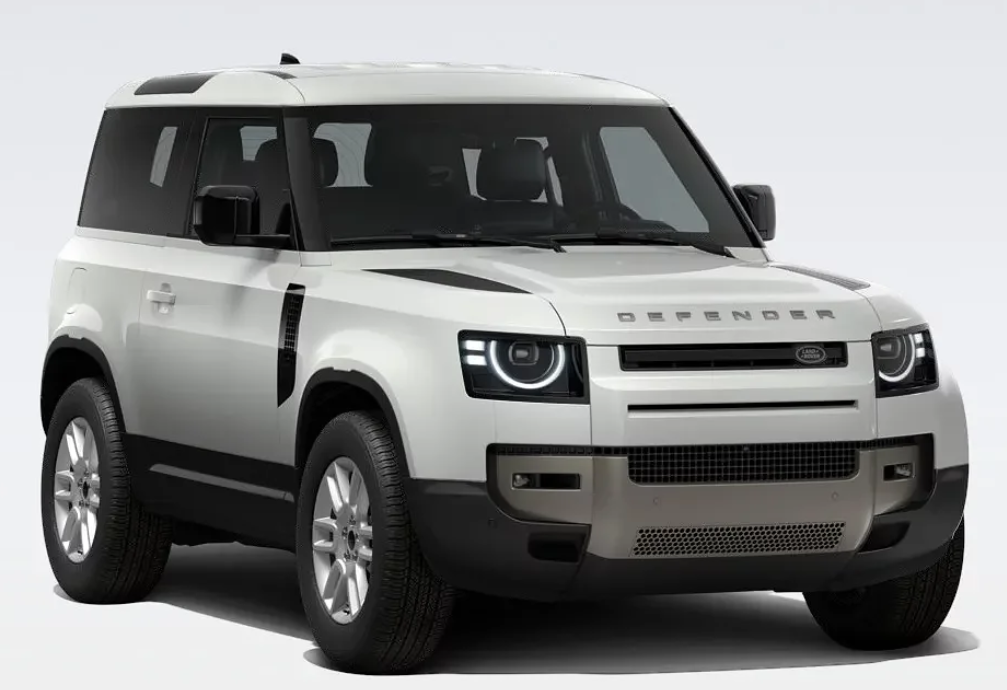
Choosing between the Land Rover Defender 90 vs 110 vs 130 sounds simple until we actually look at what separates them. They wear essentially the same family face, share serious off-road hardware, and deliver that unmistakable Defender blend of luxury and ruggedness. Yet once we start living with them rather than simply admiring them in a showroom, they feel like three distinctly different SUVs.
The Defender 90 is the compact rebel. It has two doors, short proportions, and the strongest visual connection to the old-school Defender formula.
The Defender 110 is the all-rounder. It adds four-door practicality, substantially more passenger and cargo flexibility, yet still feels manageable enough for everyday driving.
Then there is the Defender 130. Think of it as the expedition wagon of the family: long, spacious, imposing, and designed for buyers who genuinely need extra passenger or luggage capacity.
So which one should we buy?
For most people, the Defender 110 is the sweet spot. But "most people" does not necessarily include us. Depending on how many people, dogs, suitcases, trailers, parking garages, muddy trails, and weekend adventures are involved, the 90 or 130 could easily make more sense.
Let's break them down properly.
Content in this publication
- Land Rover Defender 90 vs 110 vs 130 at a Glance
- Defender 90 vs 110 vs 130 Dimensions
- Land Rover Defender 90 vs 110 vs 130 Interior Space
- Defender 90 Interior: Cool but Compromised
- Defender 110 Interior: The Family-Friendly Choice
- Defender 130 Interior: The Space Champion
- Cargo Space: Defender 90 vs 110 vs 130
- Which Defender Is Best to Drive?
- Defender 90 Driving Experience
- Defender 110 Driving Experience
- Defender 130 Driving Experience
- Off-Road Ability: Defender 90 vs 110 vs 130
- Towing Capacity: Which Defender Is Best?
- Defender 90 vs 110 vs 130 for City Driving
- Defender 90 vs 110 vs 130 for Long Road Trips
- Defender 90 vs 110 vs 130 for Families
- Which Defender Looks Best?
- Which Defender Is the Most Practical?
- Which Defender Offers the Best Value?
- Defender 90 vs 110 vs 130: Pros and Cons
- Which Defender Should We Buy?
- Land Rover Defender 90 vs 110 vs 130: Final Verdict
- Frequently Asked Questions
Land Rover Defender 90 vs 110 vs 130 at a Glance
Before diving into the details, here is the basic personality of each Defender.
| Feature | Defender 90 | Defender 110 | Defender 130 |
|---|---|---|---|
| Doors | 2 | 4 | 4 |
| Current seating capacity* | Up to 5 | Up to 7 | Up to 8 |
| Overall character | Compact and playful | Balanced and versatile | Spacious and expedition-focused |
| Wheelbase | About 101.9 in | About 119 in | About 119 in |
| Overall length | About 180.4 in | About 197.5 in | About 211 in |
| Best for | Couples, enthusiasts | Families, daily use | Large families, long trips |
| Parking ease | Best | Good | Most difficult |
| Cargo practicality | Limited | Excellent | Best |
| Off-road maneuverability | Best | Excellent | Very good |
*Seat availability depends on market, model year, trim, and configuration. Current Land Rover U.S. pages list up to five seats for the Defender 90, seven for the 110, and eight for the 130.
What immediately jumps out is that the names do not simply represent small, medium, and large versions of exactly the same SUV.
There are deeper differences, especially between the 110 and 130.
Defender 90 vs 110 vs 130 Dimensions
Size is probably the biggest reason to choose one Defender over another.
The Defender 90 is roughly 180 inches long, the Defender 110 sits around 197.5 inches, and the Defender 130 stretches to roughly 211 inches. The difference between the smallest and largest models is therefore substantial.
You notice that difference everywhere.
Parking spaces feel larger in the 90. Tight trails become easier. City streets feel less intimidating.
Move into the 130 and the opposite happens. We gain tremendous practicality, but suddenly underground parking structures and narrow urban streets require more thought.
Defender 90: Compact by Defender Standards
The Defender 90 rides on a wheelbase of approximately 101.9 inches, dramatically shorter than the 110.
That gives it stubby proportions that make it look like a mountain goat wearing an expensive suit.
It changes the driving experience too.
The 90 feels more eager to rotate through bends, easier to position between obstacles off-road, and noticeably less cumbersome when maneuvering around town.
However, shortening the vehicle inevitably removes interior space.
That is the fundamental trade-off.
Defender 110: The Middle Ground
The Defender 110 stretches its wheelbase to approximately 119 inches and adds a second pair of doors.
Those few extra feet transform the Defender.
Suddenly rear passengers can climb aboard without gymnastics. Child seats become easier to manage. Grocery runs are simple. Long-distance trips stop feeling like carefully planned military operations.
Yet the 110 still does not feel enormous by modern luxury-SUV standards.
That balance explains why it is arguably the easiest version to recommend.
Defender 130: Long Body, Surprisingly Familiar Wheelbase
Here is something many buyers miss.
The Defender 130 also uses approximately the same 119-inch wheelbase as the 110. Instead of stretching dramatically between the axles, Land Rover added much of the extra body length behind the rear wheels. Land Rover lists the 130 at roughly 211 inches overall.
That matters because the 130 does not suddenly provide limousine-like second-row legroom.
Its real advantage lies farther back: third-row accommodation and luggage capacity.
Why the 130's Extra Rear Overhang Matters
Imagine attaching a larger backpack to the same hiker.
Their legs have not become longer, but they can carry much more gear.
That is essentially what happens with the Defender 130.
The trade-off is that the longer rear overhang can make the 130 less naturally suited to extremely tight off-road terrain than the short-tailed 90.
Land Rover Defender 90 vs 110 vs 130 Interior Space
All three Defenders share the same basic interior philosophy.
We get an upright driving position, broad dashboard, exposed structural-looking elements, practical storage areas, chunky controls, modern infotainment, and materials that cleverly mix luxury with utility.
The difference is how much usable space surrounds all of that.
Defender 90 Interior: Cool but Compromised
There is something undeniably appealing about climbing into a two-door Defender.
The massive front doors and short cabin immediately make the 90 feel special. It is less like getting into another luxury SUV and more like stepping into a modern interpretation of an adventure vehicle.
But rear access remains its biggest weakness.
If we regularly carry adults, children, or anyone who dislikes folding front seats forward, the novelty can fade.
Who Will Enjoy the Defender 90 Interior Most?
The 90 works especially well for:
- Couples
- Solo drivers
- Buyers who rarely use rear seats
- Off-road enthusiasts
- People who value style over maximum practicality
- Owners with another family vehicle
If our rear seats are occupied only occasionally, the compromise is easy to accept.
If we perform the school run every morning, it is harder to justify.
Defender 110 Interior: The Family-Friendly Choice
The Defender 110 is where the design starts making practical sense for a much broader audience.
Four proper doors change everything.
Rear passengers enter normally, child seats are easy to reach, and the second row feels like a genuine part of the vehicle rather than spare accommodation.
Depending on specification and market, the 110 can also be configured with additional seating.
Land Rover currently advertises the 110 with up to seven seats in the U.S.
That makes it much more versatile than the 90 without pushing us into the enormous footprint of the 130.
Is the Defender 110 Big Enough for a Family?
For most families, absolutely.
Two adults, two or three children, luggage, groceries, sports equipment, and even a dog can coexist without the Defender feeling like a game of automotive Tetris.
That is why the 110 feels like the sensible answer to this comparison.
It gives up a little of the 90's cheeky personality but gains a mountain of everyday usability.
Defender 130 Interior: The Space Champion
The 130 exists for buyers who look at the 110 and think, "Nice, but where is everyone else going to sit?"
Land Rover advertises the Defender 130 with up to eight seats, while certain configurations offer seven seats with second-row captain's chairs.
This makes the 130 considerably more appealing for large families.
The third row is not merely an emergency bench intended for people we do not particularly like. The entire vehicle is designed around carrying more occupants more comfortably.
When Eight Seats Actually Matter
Eight-seat capacity becomes genuinely useful for:
- Large families
- Three-generation trips
- Group adventures
- Hotel or estate transportation
- Families frequently carrying children's friends
- Buyers who refuse to own a minivan
That last group may be more important than Land Rover would care to admit.
The Defender 130 essentially lets us enjoy minivan-style people-moving usefulness while looking like we are heading across the Serengeti.
Cargo Space: Defender 90 vs 110 vs 130
Cargo capacity produces one of the clearest differences between the three.
Current U.S. Land Rover marketing lists maximum cargo capacity of approximately:
- Defender 90: up to 58.3 cu ft
- Defender 110: up to 69.1 cu ft
- Defender 130: up to 89 cu ft
Figures vary with seating configuration and model specification, but the progression is obvious.
Defender 90 Cargo Space
The 90 can swallow a surprising amount once the rear seats are folded.
The problem appears when passengers occupy those seats.
Then the luggage area becomes relatively modest.
For weekend trips with two people? Excellent.
For four people heading to an airport with large suitcases? We may start negotiating with the luggage.
You may be interested in reading Toyota Hilux vs Tundra: Which Toyota Pickup Fits Your Life?
Defender 110 Cargo Space
The 110 feels far more natural for daily cargo duty.
We have enough space for groceries, suitcases, camping equipment, sports gear, or a dog without constantly rearranging the cabin.
It is the Defender we'd choose when cargo requirements change from day to day.
Defender 130 Cargo Space
This is where the 130 finally explains its enormous rear end.
Maximum cargo capacity approaches 89 cubic feet on current U.S.-market specifications.
Fold the appropriate seats and it becomes a moving equipment room.
The Defender 130 Outbound Adds Another Twist
Some Defender 130 configurations prioritize cargo over maximum passenger capacity.
That makes sense for buyers carrying bicycles, climbing equipment, camping supplies, photography gear, dogs, or expedition equipment rather than eight humans.
The 130 is therefore not just the passenger champion. It can also be the strongest choice for serious gear hauling.
Which Defender Is Best to Drive?
Here's where numbers stop telling the full story.
The Defender 90, 110, and 130 may share DNA, yet their personalities diverge once the road starts twisting.
Defender 90 Driving Experience
The 90 feels the most playful.
Its short wheelbase gives it an agility the larger Defenders cannot fully imitate. Direction changes feel quicker, the vehicle occupies less mental space on a narrow road, and parking requires less planning.
Does it drive like a sports car?
Of course not.
It is still a tall, heavy SUV shaped roughly like an expensive refrigerator.
But within the Defender family, the 90 is the mischievous one.
Defender 110 Driving Experience
The 110 feels calmer and more mature.
Its longer wheelbase improves its settled character on highways, while modern suspension technology keeps body movements under control.
It does not shrink around us quite like the 90, but neither does it feel unwieldy.
For mixed driving—city streets, highways, mountain roads, school runs, and weekend trails—the 110 offers the most convincing compromise.
Defender 130 Driving Experience
The 130 makes its size known.
We notice the additional body length while parking, reversing, or navigating tight streets.
Yet because it shares the 110's approximately 119-inch wheelbase, it can feel less dramatically different from the driver's seat than its overall length might suggest.
Its additional rear body is what demands attention.
In other words, the front of the vehicle may clear an obstacle while the back is still considering whether it wants to come along.
Off-Road Ability: Defender 90 vs 110 vs 130
Every modern Defender takes off-road ability seriously.
Current models offer features such as all-wheel drive, a twin-speed transfer case, Terrain Response systems, hill-descent technologies, and sophisticated electronic traction management depending on specification.
None of these is simply a fashion SUV wearing hiking boots.
But physics still matters.
Why the Defender 90 Is the Off-Road Favorite
Short wheelbase.
Short overall length.
Better maneuverability.
Less body hanging beyond the axles.
Those ingredients make the 90 naturally suited to technical terrain.
When trails become tight, steep, or awkward, smaller dimensions are like having shorter skis in a slalom—they make rapid changes easier.
Is the Defender 110 Good Off-Road?
Very.
For many adventures, we might actually prefer it.
Why?
Because off-road travel usually involves equipment.
Camping gear, recovery equipment, water, food, clothes, passengers, and perhaps a roof tent all occupy space. The 110 lets us carry those things without abandoning strong trail capability.
It is arguably the best overlanding Defender for most buyers.
What About the Defender 130 Off-Road?
The 130 remains extremely capable, but its long rear overhang deserves consideration.
That body extension can become a disadvantage on sharp crests, steep exits, or very confined trails.
If our idea of adventure is crossing continents on gravel tracks, the 130 makes plenty of sense.
If our weekends involve crawling over boulders for fun, the 90 is the sharper tool.
Towing Capacity: Which Defender Is Best?
Towing figures deserve special caution because they vary by powertrain, specification, and country.
Land Rover's global towing information currently quotes up to 3,500 kg for the Defender 90 and 110 and up to 3,000 kg for the Defender 130, while Land Rover's U.S. site lists certain Defender 90, 110, and 130 configurations at up to 8,200 lb. Always check the rating for the exact vehicle being purchased.
That means we should never assume that simply buying the longest Defender automatically provides the greatest towing capacity.
Best Defender for Regular Towing
If towing is a major priority, the 110 is particularly attractive.
It combines substantial towing capability with a longer, more stable-feeling platform than the 90 while avoiding the extra overall length of the 130.
The 130 remains excellent for towing in compatible configurations, particularly when we also need lots of passengers or cargo.
Defender 90 vs 110 vs 130 for City Driving
This round belongs to the 90.
No debate needed.
It is shorter, easier to park, easier to thread through narrow streets, and less intimidating in older parking garages.
The 110 is still perfectly usable around town, especially with modern camera systems.
The 130 requires more planning.
It is not impossibly large, but if our daily routine involves compact parallel-parking spaces, we will become extremely familiar with the 360-degree cameras.
Defender 90 vs 110 vs 130 for Long Road Trips
Here we reverse the ranking.
For two travelers, the 90 can be brilliant. Fold the rear seats, throw the luggage inside, and head toward the horizon.
Add children and the 110 becomes much better.
Add grandparents, teenagers, or several friends and suddenly the 130 starts looking like the smartest vehicle Land Rover makes.
Our Road-Trip Ranking
For typical family travel:
- Defender 110 – best overall balance
- Defender 130 – best for large groups
- Defender 90 – best for couples or two-person adventures
The 130 wins on outright room, but bigger is not automatically better if we never use the extra capacity.
Defender 90 vs 110 vs 130 for Families
If we have small children, four doors alone give the 110 and 130 an enormous advantage.
Imagine securing a child into a rear-facing car seat through the front door of a two-door SUV every morning.
It may look romantic in the brochure.
By Thursday, romance could be dead.
Best for One or Two Children: Defender 110
The 110 should cover almost every requirement.
It offers sensible rear access, useful cargo capacity, and plenty of flexibility without becoming unnecessarily long.
You may be interested in readingToyota Hilux vs Tundra: Which Toyota Pickup Fits Your Life?You may be interested in reading
Toyota Hilux vs Mitsubishi Triton: The Complete 2026 ComparisonBest for Three or More Children: Defender 130
When passenger count increases, the 130's additional seating becomes difficult to ignore.
Throw luggage into the equation and its purpose becomes even clearer.
The 130 is not merely a longer Defender for people who enjoy excess. For some families, it is the only version that genuinely solves the space problem.
Which Defender Looks Best?
Now we enter dangerous territory.
Styling is subjective, but each body length changes the Defender's visual character.
Defender 90: The Icon
The 90 arguably has the strongest proportions.
Short body. Tall roof. Huge wheels. Rear-mounted spare.
It looks almost cartoonishly tough, like someone compressed a full-size expedition vehicle into a city-friendly package.
If our decision were based entirely on appearance, the 90 would be hard to resist.
Defender 110: The Classic Modern Proportion
The 110 looks balanced.
Not too short. Not too long.
The additional doors integrate naturally, and the wheelbase gives the body more visual maturity.
It may lack some of the 90's novelty, but it arguably looks the most "complete."
Defender 130: Maximum Presence
Nobody accidentally overlooks a Defender 130.
It has tremendous road presence.
The extended rear section can look slightly unusual from certain angles because the wheelbase is shared with the 110, leaving considerably more body behind the rear axle.
But in the right specification—with purposeful wheels, roof equipment, and expedition accessories—it looks ready to cross continents before breakfast.
Which Defender Is the Most Practical?
Pure practicality belongs to the Defender 130.
But practicality per inch of vehicle?
That crown probably goes to the Defender 110.
The 110 provides four doors, up to seven seats in applicable configurations, nearly 70 cubic feet of maximum cargo capacity in current U.S. specifications, serious towing potential, and strong off-road ability without becoming enormously long.
That combination is difficult to beat.
Which Defender Offers the Best Value?
The answer depends on whether we measure value in dollars or usefulness.
The 90 may have a lower entry point in some markets, but we surrender passenger accessibility and cargo flexibility.
The 130 costs more but gives us capabilities we may otherwise need an entirely different vehicle to obtain.
The 110 sits between them financially and physically.
That makes it the safest purchase when we are unsure.
Do Not Buy More Defender Than You Need
This is important.
A larger SUV does not automatically deliver a better ownership experience.
Every extra inch follows us everywhere.
We pay for it when parking.
We feel it on tight trails.
We notice it in garages.
If we genuinely need eight-seat capability or huge cargo space, the 130 earns its footprint.
If we don't, the 110 is easier to live with.
And if passengers are almost irrelevant? The 90 is the fun one.
Defender 90 vs 110 vs 130: Pros and Cons
Defender 90 Pros
- Most compact Defender
- Distinctive two-door styling
- Excellent off-road maneuverability
- Easier to park
- Feels playful and characterful
- Ideal for couples and enthusiasts
Defender 90 Cons
- Rear access is inconvenient
- Least practical for families
- Less cargo flexibility with passengers aboard
- Two-door layout becomes tiresome for frequent rear-seat use
Defender 110 Pros
- Best balance of size and practicality
- Four proper doors
- Up to seven seats in applicable configurations
- Strong cargo capacity
- Excellent road-trip vehicle
- Highly capable off-road
- Easier to manage than the 130
Defender 110 Cons
- Less agile than the 90
- More expensive and larger than buyers without family needs may require
- Optional third-row arrangements reduce luggage flexibility
Defender 130 Pros
- Up to eight seats
- Largest cargo potential
- Excellent for big families
- Ideal for long-distance adventures
- Huge road presence
- Flexible passenger and cargo configurations
Defender 130 Cons
- Longest body
- Harder to park
- Extra rear overhang matters off-road
- More vehicle than many owners actually need
- Higher purchase and running costs may accompany larger specifications
Which Defender Should We Buy?
Here is the easiest way to decide.
Choose the Defender 90 if…
We mostly drive alone or with one passenger, love the classic short-body Defender aesthetic, want maximum agility, or regularly tackle technical off-road trails.
It is the emotional choice.
And sometimes emotion is exactly why we buy a Defender.
Choose the Defender 110 if…
We need one SUV to perform almost every job.
Daily commute?
Yes.
Family transport?
Yes.
Long road trips?
Yes.
Camping?
Absolutely.
Towing?
Potentially excellent, depending on specification.
Serious off-roading?
Still very capable.
The 110 asks for the fewest compromises.
Choose the Defender 130 if…
We regularly carry six, seven, or eight people, travel with serious amounts of luggage, have a large family, or simply want maximum Defender space.
Do not choose it merely because it is the biggest.
Choose it because we can genuinely use what those extra inches provide.
Land Rover Defender 90 vs 110 vs 130: Final Verdict
The Land Rover Defender 90 vs 110 vs 130 debate ultimately comes down to how much Defender we genuinely need.
The Defender 90 has the most personality. Its short wheelbase, two-door body, compact dimensions, and playful nature make it the enthusiast's choice. We sacrifice convenience, but every trip feels a little more special.
The Defender 110 is the Goldilocks model. It keeps virtually all of the Defender's off-road credibility while adding the everyday usability that turns an adventure vehicle into a genuine family car. For most buyers, this is the one we would choose.
The Defender 130 is the specialist for space. It carries more people, more luggage, and more adventure equipment while retaining genuine Defender DNA. Its length creates compromises, but anyone who needs eight-seat flexibility will happily make them.
Think of the lineup like hiking backpacks.
The 90 is the compact day pack.
The 110 is the versatile weekend backpack.
The 130 is the expedition pack designed to carry everything—including, apparently, half the neighborhood.
None is universally better.
The right Defender is simply the one whose compromises match our life.
Frequently Asked Questions
1. Which is better, Defender 90, 110, or 130?
For most buyers, the Defender 110 is the best overall choice because it balances passenger room, cargo space, maneuverability, off-road capability, and four-door practicality. The Defender 90 is better for enthusiasts and smaller households, while the Defender 130 is better for large families and maximum cargo needs.
2. Is the Defender 130 much bigger than the 110?
Yes. The Defender 130 is roughly 211 inches long compared with approximately 197.5 inches for the 110. Interestingly, both use an approximately 119-inch wheelbase, so much of the 130's extra length is located behind the rear axle.
3. Is the Defender 90 better off-road than the 110 and 130?
The Defender 90 has natural advantages on technical terrain because its shorter wheelbase and compact body improve maneuverability and help it negotiate tight obstacles. However, the 110 and 130 remain highly capable off-road vehicles, and the 110 may be better for overlanding because it carries substantially more equipment.
You may be interested in readingToyota Hilux vs Tundra: Which Toyota Pickup Fits Your Life?You may be interested in reading
Toyota Hilux vs Mitsubishi Triton: The Complete 2026 ComparisonYou may be interested in reading
Toyota Hilux vs Nissan Navara: Which Ute Makes More Sense?4. How many people can the Defender 90, 110, and 130 seat?
Current U.S.-market Land Rover information lists up to five seats in the Defender 90, seven in the Defender 110, and eight in the Defender 130. Seating arrangements differ by model year, trim, configuration, and country, so we should verify the exact vehicle before purchasing.
5. Is the Defender 130 worth buying over the 110?
The Defender 130 is worth choosing when we genuinely need its additional passenger or cargo capacity. Large families, frequent group travelers, and owners carrying substantial equipment will appreciate it. For households that rarely use more than five seats, however, the Defender 110 is generally easier to park, easier to maneuver, and more than spacious enough.
If you want to know other articles similar to Land Rover Defender 90 vs 110 vs 130: Which Defender Is Right for You? you can visit the category Models.
Honda Passport vs Toyota 4Runner: Which SUV Is Better?
Honda Passport vs Ford Bronco: Which SUV Is Better?
Honda Passport vs Ford Explorer: Which SUV Is Better?
Honda Passport or Pilot: Which SUV Is Better?
Honda Passport vs Jeep Grand Cherokee: Which SUV Is Better?
Honda Passport vs Nissan Pathfinder: Which SUV Is Better?
Leave a Reply
More content of your interest