

Land Rover Defender 90 vs 110: Which Defender Should You Buy?

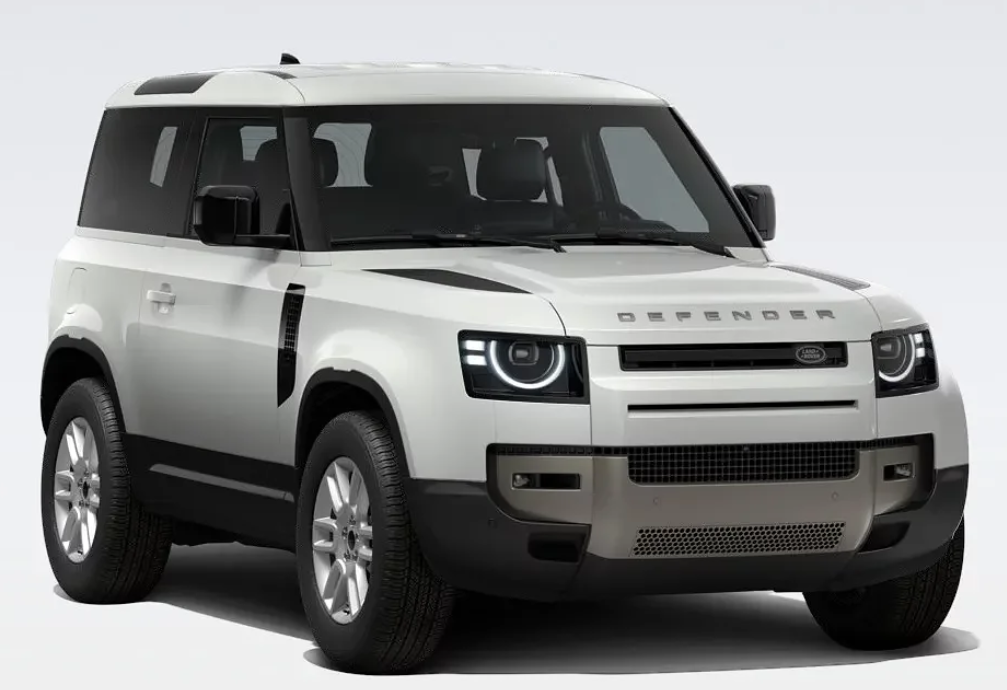
Choosing between the Land Rover Defender 90 vs 110 looks simple until we actually start imagining how we would live with each one.
At first glance, they share the same square-jawed personality. Both look as though they could climb a mountain before breakfast, cross a river at lunch, and still arrive at a nice restaurant that evening without looking remotely out of place. Yet underneath that familiar Defender design, the 90 and 110 serve noticeably different buyers.
The Defender 90 is the shorter, more compact and arguably more characterful version. It feels closer to the traditional idea of a rugged two-door Defender, only wrapped in modern technology and comfort. The Defender 110 adds a longer wheelbase, conventional rear doors, substantially more luggage space and available third-row seating, making it the more practical everyday SUV.
Land Rover currently describes the 90 as offering compact proportions with up to six seats, while the 110 provides additional space and the option of a third row.
So, should we follow our heart and buy the Defender 90, or listen to our practical side and choose the Defender 110?
Let's compare them properly.
Content in this publication
- Land Rover Defender 90 vs 110 at a Glance
- What Is the Main Difference Between the Defender 90 and 110?
- Defender 90 vs 110 Dimensions
- Defender 90 vs 110 Interior Space
- Defender 90 vs 110 Seating Capacity
- Land Rover Defender 90 vs 110 Boot Space
- Defender 90 vs 110 for City Driving
- Defender 90 vs 110 Off-Road
- Defender 90 vs 110 Towing Capacity
- Defender 90 vs 110 Ride Comfort
- Land Rover Defender 90 vs 110 Engines
- Defender 90 vs 110 Fuel Economy
- Defender 90 vs 110 Reliability and Maintenance
- Defender 90 vs 110 for Families
- Defender 90 vs 110 for Camping and Overlanding
- Defender 90 vs 110 With Dogs
- Defender 90 vs 110 Styling
- Defender 90 vs 110 Price and Value
- Does the Defender 90 Hold Its Value Better Than the 110?
- Who Should Buy the Land Rover Defender 90?
- Who Should Buy the Land Rover Defender 110?
- Land Rover Defender 90 vs 110: Which Is Better Overall?
- Closing Thoughts: Defender 90 or 110?
- Frequently Asked Questions
Land Rover Defender 90 vs 110 at a Glance
Before disappearing down the rabbit hole of engines, cargo space and off-road geometry, here is the simplest way to understand the difference.
| Feature | Defender 90 | Defender 110 |
|---|---|---|
| Overall character | Compact and adventurous | Practical and versatile |
| Side doors | 2 | 4 |
| Wheelbase | 2,587 mm | 3,022 mm |
| Overall length | 4,583 mm | 5,018 mm |
| Seating | Up to 5 or 6 | Up to 7 depending on configuration |
| Dry cargo space behind second row | 297 L | Up to 786 L |
| Kerb-to-kerb turning circle | 11.3 m | 12.84 m |
| Maximum towing capability | Up to 3,500 kg | Up to 3,500 kg |
| Best suited to | Couples, enthusiasts, city driving | Families, touring, cargo |
Land Rover's technical specifications list a 2,587 mm wheelbase and 4,583 mm overall length for the Defender 90, compared with 3,022 mm and 5,018 mm for the Defender 110. Both are equally wide with their mirrors extended, so most of the size difference comes from length rather than width.
That 435 mm difference might not sound enormous on paper. On a narrow street or inside a packed parking garage, however, it can feel like the difference between wearing hiking boots and snowshoes.
What Is the Main Difference Between the Defender 90 and 110?
The fundamental difference is wheelbase and body length.
The Defender 90 uses a shorter body with two passenger doors. The Defender 110 stretches the platform and adds conventional rear doors.
This changes almost everything about how they behave in daily life.
The 90 is:
- Easier to manoeuvre
- Easier to park
- More compact on narrow trails
- More distinctive visually
- Less convenient for rear passengers
- Considerably tighter for luggage
The 110 is:
- Easier for families
- Roomier in the second row
- Better for long-distance travel
- Much better for luggage
- Available with additional seating configurations
- Slightly more cumbersome in tight spaces
Neither philosophy is wrong.
One simply asks us to make fewer compromises.
Defender 90 vs 110 Dimensions
Here is where the personalities really separate.
The Defender 90 measures approximately 4,583 mm long including its rear-mounted spare wheel, while the Defender 110 stretches to around 5,018 mm. Their wheelbases differ by exactly the same 435 mm: 2,587 mm for the 90 versus 3,022 mm for the 110.
Why the Shorter Defender 90 Feels So Different
Numbers rarely communicate how a vehicle feels.
That shorter wheelbase gives the 90 an almost playful stance. Its proportions look chunky rather than stretched, and when we're threading it through city traffic or negotiating a technical trail, the vehicle feels more concentrated around us.
It is still a substantial SUV. Nobody will mistake it for a compact hatchback.
But compared with the 110, it feels noticeably more manageable.
Why the Defender 110 Feels Like the Full Family SUV
Stretching the wheelbase transforms the Defender.
Instead of feeling like a recreational 4x4 that happens to be luxurious, the 110 becomes a genuine family SUV capable of competing with conventional premium three-row vehicles.
That additional length gives passengers space to breathe and luggage somewhere to live.
If our Defender will regularly carry four adults, children, dogs, suitcases or camping equipment, the benefits become difficult to ignore.
Defender 90 vs 110 Interior Space
Cabin architecture is broadly familiar between the two. We get the same industrial-inspired dashboard theme, upright driving position, useful storage areas and tough-but-premium atmosphere.
The difference begins behind the driver.
Front-Seat Space Is Similar
From the driver's seat, the 90 and 110 can feel remarkably alike.
Land Rover's technical specifications list maximum front legroom of approximately 993 mm in both models.
That is important because choosing the smaller 90 does not mean squeezing ourselves into a miniature cabin.
Most of the compromise happens farther back.
Second-Row Space Favors the Defender 110
Rear passengers benefit substantially from the 110's longer wheelbase.
Technical specifications list maximum second-row legroom around 929 mm for the Defender 90, compared with as much as 992 mm in a five-seat Defender 110 configuration.
More importantly, passengers simply enter the 110 through rear doors.
That sounds almost laughably obvious until we start using the vehicle every morning.
The Rear-Door Question Matters More Than We Think
Imagine putting a child into a car seat twice a day.
Now imagine folding or sliding a front seat forward every single time.
Suddenly those beautiful short-wheelbase proportions do not seem quite as romantic.
The 90 can absolutely transport rear passengers, but the 110 welcomes them instead of merely accommodating them.
Defender 90 vs 110 Seating Capacity
Current Defender materials position the 90 with five- or six-seat possibilities in applicable markets, while the 110 can offer a third row and up to seven seats depending on specification and market availability.
The Defender 90 Can Be Surprisingly Flexible
One of the 90's interesting tricks is the potential availability of a front-row jump seat in certain configurations, creating six-passenger capacity.
That's wonderfully Defender-like.
It feels unconventional, clever and slightly eccentric.
Still, buying the 90 because a specification sheet says "six seats" misses the point. If we frequently carry many passengers, the 110 remains the sensible vehicle.
The Defender 110 Is the Family Choice
The ability to combine proper rear doors with an optional third row transforms usability.
We would choose the 110 without hesitation if our routine involves:
- School runs
- Three or more children
- Older relatives
- Frequent rear passengers
- Family road trips
- Regular use of child seats
The 90 wins hearts.
The 110 wins arguments around the kitchen table.
Land Rover Defender 90 vs 110 Boot Space
This may be the single most important practical difference.
With its second row in use, Land Rover lists 297 litres of dry loadspace for the Defender 90.
A five-seat Defender 110 offers approximately 786 litres behind its second row. Fold the passenger rows and the difference remains substantial: roughly 1,263 litres behind the first row in the 90 versus up to 1,875 litres in a five-seat 110.
Those are not small differences.
They change how we use the vehicle.
Living With the Defender 90 Boot
The 90's cargo area works for groceries, weekend luggage and moderate outdoor gear.
But if we start throwing in:
- Large suitcases
- A stroller
- Camping equipment
- A cooler
- Dog crates
- Sports equipment
things get crowded quickly.
The rear-mounted spare wheel also means the tailgate swings sideways rather than lifting vertically, so we need additional clearance behind the vehicle.
Living With the Defender 110 Boot
The 110 gives us breathing room.
We can pack without playing three-dimensional Tetris every time the family leaves town.
For someone buying a Defender specifically for long adventures, that extra capacity may be worth more than almost any engine upgrade.
Power is fun.
Having somewhere to put your tent is useful.
Defender 90 vs 110 for City Driving
This is where the Defender 90 begins fighting back.
You may be interested in reading Land Rover Defender 90 vs 110 vs 130: Which Defender Is Right for You?
Despite its chunky dimensions, the shorter vehicle is simply easier to place.
Land Rover lists a kerb-to-kerb turning circle of approximately 11.3 metres for the 90 versus 12.84 metres for the 110.
That's noticeable.
Parking the Defender 90
Parallel parking becomes less stressful. Tight underground ramps feel less claustrophobic. U-turns demand less choreography.
For someone living in a dense city but wanting a genuinely capable luxury SUV, the 90 makes a surprisingly compelling argument.
The 90 Is Smaller, But Not Tiny
We should keep expectations realistic.
Both Defenders measure roughly 2.0 metres wide with the mirrors folded, so neither magically becomes a city car.
Narrow parking spaces remain narrow.
The difference is that the 90 carries less vehicle behind us.
Defender 90 vs 110 Off-Road
Here's the fun part.
Both vehicles are genuine Defenders and benefit from sophisticated four-wheel-drive hardware and impressive off-road geometry. Depending on specification, equipment and suspension, Land Rover's technical data shows maximum wading depth can reach 900 mm with air suspension on both body styles.
So the 110 is not some watered-down family version.
Still, physics gives the 90 an advantage.
Why the Defender 90 Is Better on Tight Trails
The shorter wheelbase makes navigating narrow turns easier and reduces the amount of vehicle we have to drag around obstacles.
Its breakover geometry is also favorable.
With air suspension in the referenced off-road specification, Land Rover lists a ramp angle of around 30.7 degrees for the Defender 90 compared with 27.9 degrees for the 110.
That means the 90 has a lower tendency to belly out when cresting sharp ridges.
Is the Defender 110 Still Good Off-Road?
Absolutely.
For the overwhelming majority of owners, the difference will matter less than tyre choice, driver skill and trail conditions.
The 110 remains extraordinarily capable by normal SUV standards.
Think of the 90 as the more agile mountain goat and the 110 as the pack mule carrying everyone's equipment up the same mountain.
Defender 90 vs 110 Towing Capacity
Interestingly, choosing the smaller body does not automatically mean sacrificing serious towing capability.
Land Rover's technical specifications list maximum braked towing capacity of up to 3,500 kg for both the Defender 90 and Defender 110 in applicable configurations. Exact capabilities depend on engine, specification and market, so buyers should always check the plate and local documentation for the individual vehicle.
Which Defender Is Better for Towing?
Although maximum headline capacity can be similar, we would generally prefer the Defender 110 for frequent long-distance towing.
Why?
A longer wheelbase tends to give us a more settled platform, while the additional interior volume lets us carry passengers and travel equipment more comfortably.
For occasional trailer duty, the 90 remains remarkably capable.
For regular caravans, boats or heavy trailers, the 110's overall package feels better suited to the job.
Defender 90 vs 110 Ride Comfort
Both Defenders were engineered to combine serious off-road capability with surprisingly polished road manners.
Still, wheelbase affects character.
The 90 Feels More Playful
Its shorter footprint gives it a livelier personality.
Changes in direction can feel more immediate, and the vehicle seems more compact around the driver.
That is part of its charm.
The trade-off is that shorter-wheelbase vehicles can feel slightly busier over certain road surfaces.
The 110 Feels More Relaxed
The 110's longer wheelbase tends to suit motorway cruising beautifully.
It feels planted and substantial—the automotive equivalent of settling into a large armchair rather than perching on a bar stool.
When our journeys routinely cover hundreds of kilometres, that calmer personality becomes valuable.
Land Rover Defender 90 vs 110 Engines
Powertrain availability changes by country, trim level and model year, so we should avoid assuming every engine advertised in one region is available somewhere else.
What matters more for this comparison is that body style usually changes the experience less than engine choice does.
A high-output Defender 90 can feel hilariously quick and theatrical.
The same type of power in a 110 feels more like effortless luxury.
Which Engine Should We Choose?
Our priorities matter more than bragging rights.
For frequent long-distance driving, torque-rich powertrains can suit the Defender's character beautifully. Petrol options may appeal to buyers prioritizing refinement or performance, while electrified options, where available, can make sense for certain driving patterns.
The golden rule?
Choose the body first.
A perfect engine cannot magically make a Defender 90 carry luggage like a 110.
Defender 90 vs 110 Fuel Economy
A shorter vehicle does not automatically guarantee dramatically better fuel economy.
The 90 may weigh less in comparable configurations, but both vehicles are tall, wide, permanent-looking blocks of aerodynamic stubbornness.
They push through the air rather than slipping politely around it.
Real-world fuel consumption will depend heavily on:
- Engine choice
- Wheels and tyres
- Roof accessories
- Driving speed
- Towing
- Terrain
- Payload
- Weather
If efficiency is the deciding factor in our SUV purchase, neither Defender body should be chosen solely because one is shorter.
Defender 90 vs 110 Reliability and Maintenance
Mechanically, equivalent 90 and 110 variants share significant architecture and technology.
That means reliability differences are more likely to come from the individual engine, equipment package, suspension configuration, build history and maintenance record than from simply choosing a 90 or 110.
If we're buying used, condition matters far more than body length.
Used Defender Buying Checklist
We would pay particular attention to:
- Complete service history
- Warning lights and stored faults
- Air-suspension operation where fitted
- Infotainment behavior
- Battery condition
- Signs of serious off-road damage
- Tyre wear
- Water ingress
- Tow-bar and trailer-use history
- Software updates and recall completion
A cheaper Defender with neglected maintenance can become very expensive very quickly.
Defender 90 vs 110 for Families
This contest is not close.
The Defender 110 is the better family SUV.
Rear doors alone would almost be enough to settle the argument, but then we add better second-row space, dramatically more luggage capacity and optional additional seating.
Should a Family Ever Buy the Defender 90?
Certainly.
If we have one child, rarely use the rear seats or simply adore the 90 enough to tolerate its compromises, it can work.
Cars do not always need to be chosen using spreadsheets.
But anyone expecting multiple car seats, strollers and luggage should spend ten minutes loading a Defender 90 before signing the order form.
Romance disappears quickly when the stroller refuses to fit.
You may be interested in readingLand Rover Defender 90 vs 110 vs 130: Which Defender Is Right for You?You may be interested in reading
 Toyota Hilux vs Tundra: Which Toyota Pickup Fits Your Life?
Defender 90 vs 110 for Camping and Overlanding
This comparison becomes fascinating because each model offers a different philosophy.
Choose the 90 for Technical Adventures
The shorter body makes sense when trails become tight and obstacles matter more than luggage.
For solo travelers or couples who pack efficiently, the 90 feels wonderfully purposeful.
Choose the 110 for Expedition Travel
The 110 is usually the stronger overlanding platform for longer journeys.
Why?
Because expeditions accumulate stuff.
Water, food, recovery equipment, clothes, cooking gear and camping equipment consume space astonishingly quickly.
The 110 gives us room to carry everything without turning the cabin into a storage locker.
Defender 90 vs 110 With Dogs
Large-dog owners should lean strongly toward the 110.
The 90's cargo area can work for a smaller dog, particularly if rear seats are rarely needed.
The 110 provides considerably greater flexibility for crates, barriers and luggage.
If our dog travels like another family member—and most dogs apparently believe they are the most important family member—the 110 makes life easier.
Defender 90 vs 110 Styling
Now logic has to leave the room for a moment.
The Defender 90 looks fantastic.
Its short wheelbase, upright body and rear-mounted spare wheel create proportions that feel almost cartoonishly tough. It resembles a sketch of the word "4x4."
Why Enthusiasts Love the Defender 90
There is something slightly irrational about it.
And that is precisely the point.
When parked beside the 110, the 90 often looks more adventurous even when both are standing motionless outside a supermarket.
It carries more visual connection to traditional short-wheelbase Defenders.
Why the Defender 110 Still Looks Right
The 110 is hardly boring.
Its longer proportions actually look more balanced from some angles, and the additional doors make the design feel substantial rather than stretched.
We could argue about styling all day.
Our eyes usually decide before our brain joins the discussion.
Defender 90 vs 110 Price and Value
At comparable trim and powertrain levels, the 110 generally requires more money because we're buying more vehicle.
But price differences vary considerably by market, configuration and model year.
The smarter question is not simply, "Which one is cheaper?"
It is:
Which one prevents us from wishing we had bought the other?
Buying a 90 and replacing it two years later because the family outgrew it is not economical.
Likewise, paying extra for a 110 when we live alone, park downtown and rarely carry luggage might be unnecessary.
Does the Defender 90 Hold Its Value Better Than the 110?
Resale values depend heavily on market conditions, specification, mileage and demand.
The 90's distinctive styling can make desirable configurations especially attractive to enthusiasts.
The 110, however, appeals to a much broader audience because families can realistically use it as their primary vehicle.
That broader practicality may make it easier to sell.
We would therefore choose based on use rather than trying to predict depreciation perfectly.
Who Should Buy the Land Rover Defender 90?
The Defender 90 makes the most sense when emotional appeal and compact dimensions matter more than maximum practicality.
Choose the Defender 90 if:
- We normally travel alone or as a couple
- Rear seats are used occasionally
- City parking matters
- We enjoy technical off-roading
- We prefer short-wheelbase styling
- Cargo requirements are modest
- The Defender is a lifestyle vehicle rather than the only family car
The 90 feels like the Defender we buy because we genuinely want one.
It is less rational—and somehow more special because of it.
Who Should Buy the Land Rover Defender 110?
Choose the Defender 110 if:
- We have children
- Adults regularly use the back seats
- We need substantial cargo space
- We travel long distances
- We tow frequently
- We want optional extra seating
- We carry dogs or outdoor equipment
- The Defender will be our primary household SUV
The 110 sacrifices very little of the Defender personality while removing many of the 90's compromises.
That is a powerful combination.
Land Rover Defender 90 vs 110: Which Is Better Overall?
For most buyers, the Defender 110 is the better all-round vehicle.
It retains serious off-road capability, distinctive styling and premium-road manners while adding far more passenger and luggage space.
But "better" is not the same as "more desirable."
The Defender 90 is the more distinctive choice.
Its smaller footprint, tighter turning circle and shorter wheelbase give it an entertaining character that the larger 110 cannot fully duplicate.
Our choice therefore comes down to one question:
Do we want our Defender primarily because we love driving a Defender, or because we need a luxury SUV that can do almost anything?
If the first answer sounds familiar, buy the 90.
If the second describes our life, buy the 110.
Closing Thoughts: Defender 90 or 110?
The beauty of the Land Rover Defender 90 vs 110 debate is that neither vehicle feels like a lesser version of the other.
They simply interpret the Defender idea differently.
The 90 is compact, charismatic and unapologetically compromised. It asks us to pack lighter, climb through fewer doors and accept that style sometimes defeats logic.
The 110 takes the same basic recipe and stretches it into something far easier to live with. Families get proper rear access. Travelers get much more luggage space. Rear passengers get additional breathing room. Yet we still retain genuine Defender capability.
If we were buying one Defender to perform every task—commuting, family trips, holidays, towing and weekend adventures—we would choose the Defender 110.
If there were already another practical vehicle parked at home and we wanted the Defender with the strongest personality?
The Defender 90 would be very difficult to resist.
Sometimes the sensible shoe fits better.
Sometimes we want the hiking boot.
Frequently Asked Questions
1. Is the Defender 90 better than the Defender 110?
The Defender 90 is better for buyers prioritizing compact dimensions, distinctive styling, tight-trail manoeuvrability and easier city parking. The Defender 110 is better for most families because it provides rear doors, more passenger space and substantially greater cargo capacity.
2. Is the Defender 110 much bigger than the Defender 90?
Yes. Land Rover's technical specifications list the Defender 90 at approximately 4,583 mm long with a 2,587 mm wheelbase, while the Defender 110 measures approximately 5,018 mm long with a 3,022 mm wheelbase. That makes the 110 around 435 mm longer overall.
3. Which has more boot space, Defender 90 or 110?
The Defender 110 has substantially more luggage capacity. Land Rover lists approximately 297 litres of dry cargo volume behind the second row in the 90, versus up to 786 litres in the five-seat 110.
4. Can the Defender 90 and 110 tow the same weight?
In applicable configurations, Land Rover lists a maximum braked towing capability of up to 3,500 kg for both body styles. Exact ratings depend on engine, specification and market, so the individual vehicle's documentation should always be checked before towing.
You may be interested in readingLand Rover Defender 90 vs 110 vs 130: Which Defender Is Right for You?You may be interested in reading
Toyota Hilux vs Tundra: Which Toyota Pickup Fits Your Life?You may be interested in reading
Toyota Hilux vs Mitsubishi Triton: The Complete 2026 Comparison5. Which Defender is better for everyday driving?
For couples or drivers living in crowded cities, the Defender 90 can be easier and more enjoyable to manoeuvre. For families, regular passengers and road trips, the Defender 110 is usually the more practical everyday choice because of its rear doors, larger second row and significantly greater boot capacity.
If you want to know other articles similar to Land Rover Defender 90 vs 110: Which Defender Should You Buy? you can visit the category Models.
Honda Passport vs Toyota 4Runner: Which SUV Is Better?
Honda Passport vs Ford Bronco: Which SUV Is Better?
Honda Passport vs Ford Explorer: Which SUV Is Better?
Honda Passport or Pilot: Which SUV Is Better?
Honda Passport vs Jeep Grand Cherokee: Which SUV Is Better?
Honda Passport vs Nissan Pathfinder: Which SUV Is Better?
Leave a Reply
More content of your interest