

Toyota Hilux vs Mitsubishi Triton: The Complete 2026 Comparison

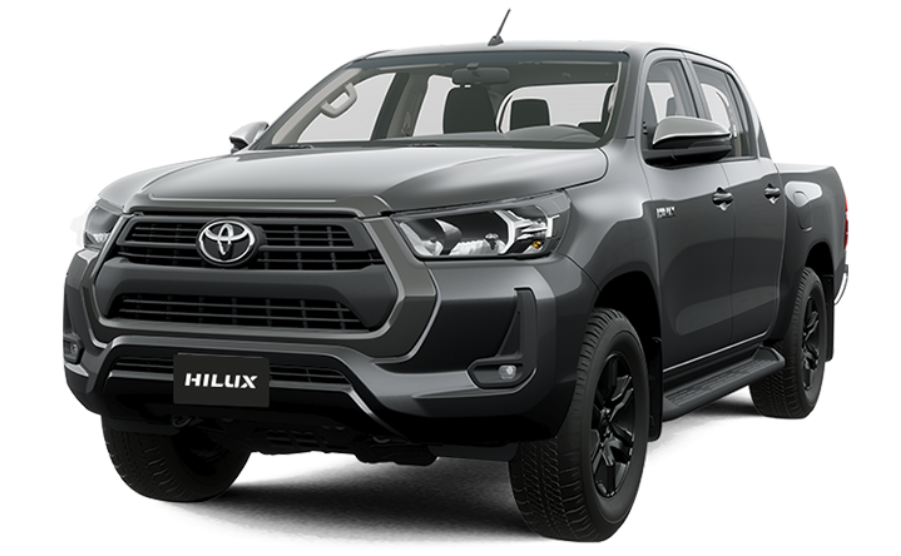
Choosing between the Toyota Hilux vs Mitsubishi Triton has never been quite as interesting as it is now. These two utes have spent decades earning their reputations on farms, construction sites, highways, beaches, and muddy tracks, but the latest versions are far more than rugged workhorses with trays bolted to the back.
Today, both can tow serious loads, carry a family, tackle remote tracks, and provide enough technology to make an older pickup feel like agricultural machinery by comparison.
For this guide, we’re focusing mainly on the current Australian-market 2026 Toyota HiLux and MY26 Mitsubishi Triton, because Australia offers both vehicles in closely comparable configurations. Specifications differ by country, grade, transmission, and body style, so always check the exact vehicle sold in your market.
Toyota's latest HiLux uses a 2.8-litre turbo-diesel producing 150kW, with automatic versions delivering 500Nm. Mitsubishi answers with a 2.4-litre bi-turbo diesel producing the same 150kW but 470Nm. Both can provide 3,500kg braked towing capacity in relevant 4x4 configurations.
So, which one makes more sense? That depends on what we expect our ute to do. Let's dig beneath the badges.
Content in this publication
- Toyota Hilux vs Mitsubishi Triton at a Glance
- Engines: 2.8-Litre HiLux vs 2.4-Litre Triton
- Transmission and Everyday Driving
- Ride Comfort: Which Ute Is Easier to Live With?
- Toyota Hilux vs Mitsubishi Triton Off Road
- Ground Clearance and Off-Road Geometry
- Towing: Hilux vs Triton
- Payload and Work Capability
- Fuel Economy
- Interior Space and Practicality
- Technology: The New Hilux Has Changed the Equation
- Safety: Both Have Made Big Progress
- Reliability and Long-Term Ownership
- Resale Value and Used-Market Appeal
- Hilux vs Triton for Work
- Hilux vs Triton for Families
- Hilux vs Triton for Touring
- Which Is Better Value: Toyota Hilux or Mitsubishi Triton?
- Toyota Hilux vs Mitsubishi Triton: Strengths Compared
- Toyota Hilux or Mitsubishi Triton: Which One Should We Buy?
- Closing Thoughts
- FAQs About Toyota Hilux vs Mitsubishi Triton
Toyota Hilux vs Mitsubishi Triton at a Glance
Here is how comparable current diesel models broadly stack up:
| Specification | Toyota HiLux | Mitsubishi Triton |
|---|---|---|
| Diesel engine | 2.8L turbo-diesel | 2.4L bi-turbo diesel |
| Maximum power | 150kW | 150kW |
| Maximum torque | 500Nm automatic / 420Nm manual | 470Nm |
| Automatic transmission | 6-speed | 6-speed |
| Maximum braked towing | Up to 3,500kg on diesel 4x4 | Up to 3,500kg |
| Double-cab length | About 5,320mm | About 5,320mm |
| Wheelbase | 3,085mm | 3,130mm |
| Current Australian safety rating | 5-star ANCAP on most variants | 5-star ANCAP |
| 4WD systems | Part-time 4WD, depending on grade | Easy Select or Super Select 4WD-II, depending on grade |
Current Toyota specifications show the 2026 HiLux at 5,320mm long in many double-cab pickup configurations, while Mitsubishi lists the Triton pickup at the same overall length and a 3,130mm wheelbase. Mitsubishi also quotes 228mm of ground clearance across the MY26 Triton range.
Those numbers tell only half the story, though. These trucks can look similar on a spreadsheet and feel surprisingly different once we're behind the wheel.
Engines: 2.8-Litre HiLux vs 2.4-Litre Triton
The HiLux takes the traditional route. Toyota's familiar 1GD-FTV 2.8-litre four-cylinder turbo-diesel remains at the centre of the range. In current Australian specification, it produces 150kW and 500Nm when paired with the six-speed automatic transmission. Manual versions retain 150kW but produce 420Nm.
Mitsubishi goes smaller but more sophisticated on paper. Its 2.4-litre 4N16 bi-turbo diesel generates 150kW at 3,500rpm and 470Nm between 1,500 and 2,750rpm.
The headline is easy to understand: power output is identical, while the automatic HiLux has 30Nm more maximum torque.
Yet peak figures don't completely describe how an engine behaves.
How the HiLux Engine Feels
The Toyota's 2.8-litre diesel is about low-down muscle. That extra displacement and 500Nm figure suit the HiLux's character perfectly.
Push the accelerator with a trailer attached, climb a long hill, or load the tray with equipment and the engine gives the impression that it would rather pull than sprint. Think of it as a strong farm dog: perhaps not elegant, but point it at the job and it gets moving.
Toyota has also expanded its 48-volt V-Active technology across selected automatic double-cab models. The system uses an 8.5kW/65Nm motor generator, lithium-ion battery and DC/DC converter to assist acceleration, enable smoother stop-start operation, and improve efficiency. It is a mild-hybrid-style assistance system rather than a system that allows meaningful electric-only driving.
How the Triton Engine Feels
Mitsubishi's smaller engine uses staged turbocharging to spread torque across a useful low-rpm window. The 470Nm maximum arrives from just 1,500rpm, so we're not constantly chasing revs to make progress.
On paper, the Triton gives away 30Nm to an automatic HiLux. In ordinary traffic, that difference is unlikely to transform the driving experience.
Where the Triton's engine becomes interesting is its combination of relatively modest displacement and strong output. It feels engineered for efficiency and flexibility rather than relying purely on engine capacity.
Does 500Nm Automatically Make the HiLux Faster?
No.
Maximum torque isn't the same thing as acceleration. Vehicle mass, gearing, throttle calibration, traction, aerodynamic drag and where torque appears in the rev range all matter.
The HiLux does have the stronger torque figure in automatic form, making it attractive for buyers who regularly tow or carry substantial loads. But we shouldn't interpret a 30Nm advantage as a dramatic performance gap.
Transmission and Everyday Driving
Both vehicles use six-speed automatic transmissions in their popular automatic configurations.
That might sound old-fashioned when some competitors offer eight or ten gears, but more gears aren't automatically better in a work ute. A well-calibrated six-speed can reduce unnecessary shifting, particularly while towing.
Mitsubishi says its six-speed automatic uses revised internals and a wider gear spread designed to keep the bi-turbo engine in its useful operating range.
Toyota similarly sticks with a six-speed automatic alongside available six-speed manuals.
Around town, what matters more is the way each vehicle has evolved beyond the traditional clumsy ute formula.
The newest HiLux now uses electric power steering, part of Toyota's attempt to improve everyday driveability. That matters because steering effort is something we experience every time we park, negotiate a tight shopping centre or make a three-point turn—not just when we're crawling over rocks.
Ride Comfort: Which Ute Is Easier to Live With?
Dual-cab pickups have an awkward mission. They need suspension tough enough to support payloads while remaining comfortable enough to transport people.
Those goals naturally fight each other.
An empty ute often rides more firmly because its rear suspension is waiting for hundreds of kilograms that aren't there.
Toyota has addressed this in the latest HiLux by giving SR5 and higher grades a more comfort-oriented rear leaf-spring tune. WorkMate and SR grades retain heavier-duty tuning suited to towing and load-carrying.
That distinction is important. Saying "the HiLux rides like this" is too simplistic because an SR5 and a work-focused WorkMate aren't configured identically.
The Triton also aims to balance commercial durability with daily comfort. Its longer 3,130mm wheelbase can contribute to a more settled feel over undulating surfaces, although suspension tune, tyre choice and payload remain just as important. Mitsubishi's current double-cab structure is substantially more contemporary than the Triton generations many second-hand buyers may remember.
Which Is Better for Daily Commuting?
For commuters, we'd focus less on maximum towing numbers and more on steering weight, seat comfort, visibility, camera quality and active safety systems.
This is where the latest HiLux has closed many of the traditional gaps associated with utilitarian pickups.
Toyota now installs a 12.3-inch touchscreen across the HiLux range, with wireless Apple CarPlay and Android Auto, while higher trims gain more sophisticated digital displays and additional comfort equipment.
The Triton counters with a 9-inch Smartphone Link Display Audio system on relevant grades, wireless Apple CarPlay and an extensive collection of driver-assistance features.
Neither cabin needs to feel like we're driving a toolbox anymore.
Toyota Hilux vs Mitsubishi Triton Off Road
Now we reach the fun part.
A ute can have enormous horsepower and still be frustrating off road if its gearing, traction systems and suspension don't cooperate.
Both the Hilux and Triton have genuine off-road credentials, but Mitsubishi brings one particularly interesting weapon: Super Select 4WD-II on higher grades.
Triton Super Select 4WD-II Explained
Super Select allows certain Triton grades to use a full-time four-wheel-drive mode on sealed roads, alongside the expected off-road modes.
Mitsubishi specifically highlights a 4H full-time 4WD setting that can be used on dry or wet sealed surfaces, in addition to the system's other selectable modes.
That flexibility is valuable because traditional part-time four-wheel-drive systems aren't intended to remain locked in 4H on high-grip sealed roads.
If we regularly move between wet bitumen, gravel, dirt and slippery rural roads, Super Select can make the Triton particularly convenient.
What the HiLux Brings Off Road
The HiLux uses a more conventional part-time 4x4 arrangement on diesel four-wheel-drive models. Depending on grade, equipment includes a locking rear differential, Multi-Terrain Select, downhill assist control and Toyota's Multi-Terrain Monitor camera system.
Then there's the Rugged X, designed specifically around more demanding recreational off-road use. Factory equipment includes features such as a bullbar, bash plate and front and rear recovery points.
The HiLux approach feels familiar and straightforward. The Triton's driveline offers more flexibility; the Toyota counters with an established off-road formula and increasingly sophisticated electronic assistance.
Ground Clearance and Off-Road Geometry
The MY26 Triton brochure quotes 228mm of ground clearance and an approach angle of around 30.4 degrees across numerous variants. Pickup versions list a departure angle of 22.8 degrees.
HiLux measurements vary according to body style and grade, so direct numerical comparisons should be made only between specific models.
And that's worth stressing: ground clearance alone does not decide how capable a ute is.
You may be interested in reading Toyota Hilux vs Nissan Navara: Which Ute Makes More Sense?
Tyres, wheelbase, overhangs, traction calibration, suspension articulation, underbody protection and driver technique can turn what looks like the weaker vehicle on paper into the easier vehicle on a real trail.
Mud doesn't read specification sheets.
Towing: Hilux vs Triton
If we're buying either ute to tow a caravan, boat or equipment trailer, both are serious contenders.
Toyota specifies up to 3,500kg braked towing capacity for its diesel 4x4 HiLux variants. Mitsubishi similarly advertises 3,500kg for the Triton.
That creates an apparent draw—but there's a trap.
Why 3,500kg Towing Doesn't Mean We Can Load Everything Else
Maximum trailer capacity is only one number in a network of weight limits.
We also need to account for GVM, GCM, axle loads, accessories, occupants, cargo and tow-ball download.
Toyota's May 2026 specification table lists a 6,300kg GCM across its diesel 4x4 HiLux range, alongside 3,500kg braked towing capacity.
That means loading a vehicle to its theoretical maximum payload and simultaneously attaching a maximum-weight trailer isn't necessarily possible.
This applies to the Triton too.
So if we're buying a dual cab for a 3.2-tonne caravan, four passengers, steel bullbar, canopy, drawers, fridge and camping equipment, we should calculate actual weights rather than staring at the "3,500kg" badge.
Payload and Work Capability
Payload varies substantially from model to model because luxury equipment, larger wheels, protection equipment and accessories add kerb weight.
Mitsubishi currently advertises up to 1,111kg maximum payload within the Triton range.
Toyota's 2026 specification sheet illustrates just how wide the variation can become. A 4x4 WorkMate single-cab automatic is listed with a maximum kerb weight of 1,830kg and a 3,065kg GVM, whereas heavily equipped double-cab flagships are considerably heavier.
That's why the basic work model can often be the better actual load carrier.
Luxury costs kilograms.
If payload is our priority, the sensible buying process is surprisingly unglamorous: compare the exact kerb mass and GVM of the precise variant we're considering, then subtract the mass of every accessory and passenger we plan to add.
Fuel Economy
Official consumption figures are another area where configuration matters.
Current diesel 4x4 HiLux figures in Toyota's May 2026 specification sheet range from roughly 7.1 to 7.6L/100km depending on configuration. Toyota explicitly notes that laboratory results do not necessarily represent real-world consumption.
Mitsubishi lists around 7.6L/100km for the Triton Double Cab and 7.7L/100km for the Club Cab on its Australian ute range page.
On a perfectly controlled comparison, certain HiLux versions therefore carry a small paper advantage.
Reality will be messier.
Fit all-terrain tyres, a roof rack and bullbar, lift the suspension, tow 2.5 tonnes and spend every weekend punching into a headwind, and factory economy figures can disappear like footprints in sand.
The 48V HiLux Factor
Toyota's V-Active system deserves attention for owners doing plenty of stop-start driving.
Rather than turning the HiLux into a conventional hybrid, the 48V system provides electrical assistance to improve initial response and reduce fuel use while supporting smoother stop-start operation.
For urban use, that's a useful development.
For someone spending most of the vehicle's life crawling through low-range tracks, however, tyres, gearing and suspension may matter far more.
Interior Space and Practicality
The current Triton double cab measures 5,320mm long and rides on a 3,130mm wheelbase. Mainstream versions are 1,865mm wide, while some variants extend to 1,930mm.
The comparable 2026 HiLux double cab is also around 5,320mm long, but its wheelbase measures 3,085mm. Width ranges according to grade, with examples spanning roughly 1,855 to 1,885mm.
Mitsubishi therefore stretches its axles farther apart within virtually the same overall length.
That layout can benefit cabin packaging and stability, although again it doesn't automatically make one cabin "bigger" in every meaningful dimension.
Sit in both before buying.
Rear-seat comfort becomes particularly important if we're treating a ute as a family SUV with a cargo tub attached.
Technology: The New Hilux Has Changed the Equation
For years, buying a HiLux often meant accepting that toughness came before flashy technology.
The newest generation moves well beyond that stereotype.
Toyota now provides the 12.3-inch central multimedia display across the range, while SR5 models and above introduce equipment such as a larger digital instrument display, heated front seats, heated steering wheel and dual-zone climate control.
Mitsubishi's Triton offers wireless Apple CarPlay, Android Auto, navigation and various convenience systems, while higher trims add items including wireless phone charging and the Super Select drivetrain.
The Mitsubishi interface may appeal to drivers who prefer something relatively straightforward. The new Toyota environment feels like a much larger generational leap from the outgoing HiLux.
Safety: Both Have Made Big Progress
Safety comparisons deserve more than counting airbags.
The current Mitsubishi Triton carries a five-star ANCAP safety rating, applying to variants introduced from February 2024. ANCAP highlights standard autonomous emergency braking, lane-support systems, speed-sign recognition, a centre airbag and other occupant-protection technology.
The new-generation HiLux also achieved a five-star ANCAP rating. The rating applies to current diesel and BEV versions except the Rugged X. ANCAP reports scores of 84% for adult occupant protection, 89% for child occupant protection, 82% for vulnerable road user protection and 82% for safety assist.
Toyota additionally equips the latest HiLux range with updated Toyota Safety Sense technology, including systems such as autonomous emergency braking, active cruise control, lane assistance, blind-spot monitoring and rear cross-traffic alert.
Anyone buying a Rugged X should note the ANCAP applicability exception rather than assuming the rating automatically carries across.
Reliability and Long-Term Ownership
Here's where this comparison becomes more nuanced than internet folklore suggests.
The HiLux badge carries decades of association with durability. That reputation matters, especially in commercial fleets and remote regions where parts availability, service networks and mechanical familiarity can be valuable.
But reputation is not a warranty.
Modern diesel engines contain turbochargers, high-pressure fuel systems, diesel particulate filters, emissions equipment, sensors and increasingly complex electronics. Maintenance history can matter enormously.
The Triton has its own long-running commercial vehicle history, and Mitsubishi makes its ownership proposition especially noticeable through its Australian warranty program.
Mitsubishi's 10-Year Ownership Package
Eligible Mitsubishi owners can receive warranty coverage of up to 10 years/200,000km when scheduled servicing is completed through Mitsubishi dealerships under the program's conditions. Otherwise, Mitsubishi states that a five-year/100,000km new-vehicle warranty applies. Its capped-price servicing program can extend to 10 years/150,000km.
For buyers planning to keep a Triton for a decade, that deserves serious consideration.
Toyota's attraction tends to rest more heavily on the HiLux's established ownership ecosystem, resale history, dealer network and familiarity within the commercial market.
You may be interested in readingToyota Hilux vs Nissan Navara: Which Ute Makes More Sense?You may be interested in reading
Toyota Hilux or Ford Ranger: Which Ute Makes More Sense?Resale Value and Used-Market Appeal
The HiLux name is exceptionally well established, which can be useful when the day eventually comes to sell or trade the vehicle.
However, resale value isn't guaranteed simply because the tailgate says Toyota.
Purchase price, kilometres, servicing, accident history, modifications, engine condition, market supply and the exact trim all influence what we eventually recover.
Triton buyers sometimes find the Mitsubishi compelling precisely because purchase economics can be different from the Toyota. If we save significantly at the beginning, a lower future resale figure does not necessarily mean higher total ownership cost.
The number that matters isn't just resale price.
It's purchase price minus resale price plus everything we spent in between.
Hilux vs Triton for Work
For pure commercial use, we'd pay close attention to the lower and mid-level trims rather than immediately comparing glamorous flagship models.
The HiLux range offers single-cab, extra-cab and double-cab configurations, with cab-chassis and pickup options across various grades. Toyota has deliberately retained heavy-duty suspension tuning on work-focused WorkMate and SR models.
Mitsubishi similarly sells Single Cab, Club Cab and Double Cab configurations, with pickup and cab-chassis options.
Before signing anything, we would check:
- Actual payload of the exact variant after accessories are fitted; towing requirements including GVM and GCM; whether part-time or full-time-on-road 4WD functionality matters; local dealer and parts availability; servicing requirements and warranty conditions; rear-seat use; tyre and suspension requirements; and whether we're genuinely buying a work vehicle or a lifestyle vehicle that occasionally works.
That last question changes everything.
Hilux vs Triton for Families
A modern dual cab often has two lives.
Monday to Friday, it carries tools. Saturday morning, it carries mountain bikes. Sunday afternoon, there are children in the back and groceries rolling around the tray.
For that kind of mixed use, technology, rear-seat accommodation, safety systems and unloaded ride quality matter far more than they do to a fleet manager buying single-cab chassis vehicles.
The newest HiLux is substantially more convincing here than older generations because Toyota has invested heavily in cabin technology, steering and comfort improvements.
The Triton remains highly attractive for families who value its Super Select 4WD-II system, long warranty opportunity and well-equipped mid- and high-grade models.
Hilux vs Triton for Touring
Long-distance touring creates its own priorities.
Fuel availability, tyre sizes, aftermarket accessories, underbody protection, suspension upgrades, bullbars, snorkels, recovery equipment and dealer coverage can matter as much as touchscreen size.
The HiLux benefits from an enormous established aftermarket ecosystem. Finding touring equipment for one is rarely difficult.
The Triton isn't exactly an obscure choice either. Its popularity means accessories are widely available, and its full-time-capable Super Select system on relevant grades can be particularly convenient on mixed-surface journeys.
For us, the decision would come down to the type of touring.
If maximum familiarity, aftermarket support and a traditional part-time 4WD setup appeal, the HiLux makes a compelling case.
If we're constantly transitioning between wet roads, gravel highways and genuine off-road terrain, the Triton's Super Select system deserves a long look.
Which Is Better Value: Toyota Hilux or Mitsubishi Triton?
Value cannot be reduced to whichever vehicle has the lower sticker price.
Imagine two tools.
One costs less and includes more equipment. The other costs more but holds more value when we sell it. Which is cheaper?
We don't know until we calculate the entire ownership cycle.
For the Triton, the conditional 10-year warranty and capped-price servicing program can add meaningful ownership certainty.
For the HiLux, the appeal may come from its broad model range, strong market recognition, extensive aftermarket ecosystem and established service footprint.
Buyers should therefore compare equivalent grades rather than saying "a Triton costs X and a HiLux costs Y." A bare commercial variant and a luxury double cab may share a badge but serve completely different purposes.
Toyota Hilux vs Mitsubishi Triton: Strengths Compared
Where the Toyota Hilux Stands Out
The automatic HiLux provides the stronger peak torque figure at 500Nm, and its latest generation brings significantly upgraded infotainment, active safety and steering technology. Its range of work and recreational configurations is broad, while diesel 4x4 models retain up to 3,500kg braked towing capacity.
The introduction of V-Active technology also gives Toyota an additional efficiency-oriented option without fundamentally changing the diesel formula.
And then there's the intangible advantage: familiarity. Mechanics, accessory suppliers, fleet operators and rural users have lived with HiLux vehicles for decades.
Where the Mitsubishi Triton Stands Out
The Triton matches the Toyota's 150kW maximum power and 3,500kg maximum braked towing figure while using a smaller 2.4-litre bi-turbo diesel.
Higher grades also offer Super Select 4WD-II, giving the Mitsubishi unusual drivetrain flexibility for a traditional dual-cab ute.
Its potential 10-year warranty is another strong ownership feature for buyers happy to meet the servicing conditions.
Toyota Hilux or Mitsubishi Triton: Which One Should We Buy?
There's no universal answer—and that's precisely why this comparison remains interesting.
The Toyota HiLux makes particular sense when we prioritise strong automatic diesel torque, a huge accessory ecosystem, broad model choice, towing ability and the familiarity associated with one of the world's most established pickups.
The Mitsubishi Triton becomes extremely persuasive when we value Super Select 4WD-II, competitive fuel consumption, strong payload potential, modern safety technology and long-term warranty coverage under Mitsubishi's servicing conditions.
A tradesperson, caravan owner, weekend off-roader and suburban family can all look at the same two vehicles and logically make different choices.
That's not indecision. That's choosing the tool that fits the job.
Closing Thoughts
The Toyota Hilux vs Mitsubishi Triton battle isn't a story of one brilliant ute and one consolation prize. Both have evolved into sophisticated vehicles capable of doing work that would once have required a far more agricultural machine.
Toyota's newest HiLux improves precisely where previous generations were beginning to show their age: steering, cabin technology, safety and refinement. It retains the muscular 2.8-litre diesel, adds 48-volt assistance to selected variants and continues to offer 3,500kg towing in diesel 4x4 form.
Mitsubishi attacks from a slightly different angle. Its 2.4-litre bi-turbo diesel delivers competitive performance, the Super Select system provides unusual four-wheel-drive versatility, and its conditional 10-year Australian warranty program creates a compelling long-term ownership proposition.
If we're choosing between them, the smartest test drive isn't a five-minute loop around a dealership.
Drive them on the roads we actually use. Sit adults in the back. Check child-seat access if relevant. Examine the tray. Calculate payload after accessories. Think about the trailer we're actually towing rather than the one in the brochure.
Once we do that, the right ute usually becomes much easier to see.
FAQs About Toyota Hilux vs Mitsubishi Triton
Is the Mitsubishi Triton more powerful than the Toyota Hilux?
Maximum power is effectively tied in current Australian diesel specifications: both produce 150kW. However, the automatic Toyota HiLux produces 500Nm compared with 470Nm from the Triton, while manual HiLux versions produce 420Nm.
Which can tow more, Hilux or Triton?
Relevant diesel 4x4 HiLux models and Triton models can both tow up to 3,500kg with a braked trailer. Actual usable towing capacity must still be considered alongside GVM, GCM, axle loads, tow-ball download and vehicle payload.
Does the Triton have full-time 4WD?
GLS and GSR Triton models equipped with Super Select 4WD-II include a 4H mode designed to provide four-wheel drive on sealed surfaces as well as additional settings for off-road conditions. Lower grades may use a different 4WD system, so specification matters.
Is the new Toyota Hilux safer than the Triton?
Both current models hold five-star ANCAP ratings in applicable variants. The Triton rating applies to all variants covered by its 2024 assessment, while the current HiLux's five-star rating applies to diesel and BEV variants except Rugged X. Comparing the detailed ANCAP category scores is more informative than simply comparing star counts.
You may be interested in readingToyota Hilux vs Nissan Navara: Which Ute Makes More Sense?You may be interested in reading
Toyota Hilux or Ford Ranger: Which Ute Makes More Sense?You may be interested in reading
Toyota Hilux vs Isuzu D-Max: Which Tough Ute Fits You Best?Which is better for long-term ownership, Hilux or Triton?
That depends on priorities. The HiLux offers a deeply established service, resale and aftermarket ecosystem, while Mitsubishi provides an eligible Triton with warranty coverage of up to 10 years/200,000km when its specified dealer-servicing conditions are met. Buyers should compare local servicing costs, warranty terms and expected resale alongside the initial purchase price.
If you want to know other articles similar to Toyota Hilux vs Mitsubishi Triton: The Complete 2026 Comparison you can visit the category Models.
Honda Passport vs Toyota 4Runner: Which SUV Is Better?
Honda Passport vs Ford Bronco: Which SUV Is Better?
Honda Passport vs Ford Explorer: Which SUV Is Better?
Honda Passport or Pilot: Which SUV Is Better?
Honda Passport vs Jeep Grand Cherokee: Which SUV Is Better?
Honda Passport vs Nissan Pathfinder: Which SUV Is Better?
Leave a Reply
More content of your interest