
Toyota Hilux or Ford Ranger: Which Ute Makes More Sense?

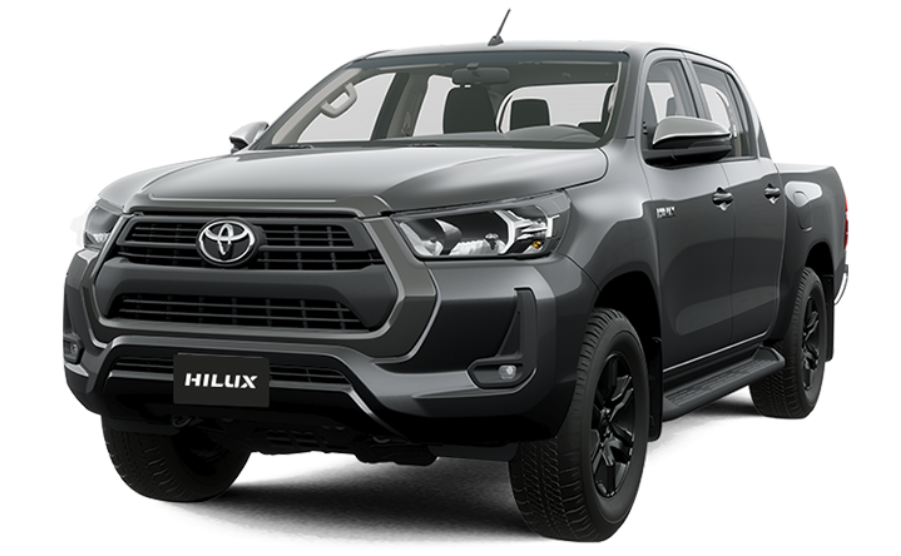
Choosing between the Toyota Hilux or Ford Ranger is one of those decisions that sounds simple until we actually start comparing them. Both are famous, both can tow serious weight, both can tackle rough terrain, and both have enough versions to make a dealership brochure feel like a restaurant menu.
Yet these two utes have noticeably different personalities.
The Toyota Hilux has traditionally built its reputation around durability, simplicity, work-ready toughness, and the kind of dependability that makes owners reluctant to sell them. The Ford Ranger, meanwhile, has evolved into something closer to a multipurpose adventure vehicle. It can still spend Monday hauling equipment around a job site, but by Saturday it feels perfectly comfortable carrying the family on a road trip.
So, Toyota Hilux or Ford Ranger—which should we choose?
There isn't one universal answer. Our decision depends on whether we care most about rugged simplicity, engine performance, cabin technology, towing, off-road ability, ownership costs, or everyday comfort.
Let's put them side by side.
Content in this publication
- Toyota Hilux or Ford Ranger: Quick Comparison
- Toyota Hilux vs Ford Ranger Engine Performance
- Toyota Hilux or Ford Ranger for Towing
- Toyota Hilux or Ford Ranger Off Road
- Ride Comfort and On-Road Driving
- Interior and Cabin Quality
- Technology and Infotainment
- Toyota Hilux vs Ford Ranger Reliability
- Payload and Work Capability
- Toyota Hilux or Ford Ranger for Work
- Toyota Hilux or Ford Ranger for Families
- Fuel Economy
- Transmission: Ranger 10-Speed vs Hilux 6-Speed
- Size and Practicality
- Ford Ranger vs Toyota Hilux Resale Value
- Maintenance Costs
- Hilux or Ranger for Serious Off-Road Touring
- Ford Ranger Advantages Over Toyota Hilux
- Toyota Hilux Advantages Over Ford Ranger
- Toyota Hilux or Ford Ranger: Which Is Better for Different Buyers?
- Should We Buy a Hilux or Ranger Used?
- Toyota Hilux or Ford Ranger for Long-Term Ownership
- What We Would Check Before Choosing
- Toyota Hilux or Ford Ranger: Final Thoughts
- Frequently Asked Questions
Toyota Hilux or Ford Ranger: Quick Comparison
For current Australian-market models, Toyota's mainstream diesel Hilux uses a 2.8-litre four-cylinder turbo-diesel, producing up to 150 kW and 500 Nm with the automatic transmission. Diesel 4x4 variants can tow up to 3,500 kg braked.
Ford gives Ranger buyers considerably more engine variety. For example, the current Ranger XLT can be fitted with a 2.0-litre turbo-diesel producing 125 kW and 405 Nm or a 3.0-litre V6 turbo-diesel producing 184 kW and 600 Nm. Ranger configurations are also available with maximum braked towing capacities of 3,500 kg.
| Category | Toyota Hilux | Ford Ranger |
|---|---|---|
| Character | Tough, straightforward workhorse | Refined, technology-focused all-rounder |
| Main diesel focus | 2.8L four-cylinder turbo-diesel | 2.0L diesel or 3.0L V6 diesel depending on grade |
| Maximum quoted torque | Up to 500 Nm | Up to 600 Nm with V6 |
| Maximum braked towing | Up to 3,500 kg on diesel 4x4 versions | Up to 3,500 kg on suitable versions |
| Transmission | 6-speed manual/automatic depending on grade | Primarily 10-speed automatic in many current variants |
| Best suited to | Work, durability, traditional ute buyers | Towing, touring, family use, technology |
| Driving personality | Solid and purposeful | Smooth and more SUV-like |
Those figures already reveal the biggest philosophical difference.
The Hilux feels like a work vehicle that has become increasingly comfortable.
The Ranger feels like a comfortable lifestyle vehicle that hasn't forgotten how to work.
Toyota Hilux vs Ford Ranger Engine Performance
Performance might not matter much when we're carrying ladders across town. Hook up a caravan, climb a mountain road, or accelerate onto a highway with five passengers aboard, though, and engine performance becomes much more noticeable.
Toyota Hilux 2.8-Litre Diesel
Toyota keeps things relatively straightforward.
Its 2.8-litre turbo-diesel produces up to 150 kW and 500 Nm in automatic configurations, while current manual versions have different torque outputs.
It's a muscular engine rather than a dramatic one.
Press the accelerator and the Hilux doesn't behave like it's trying to win a drag race. Instead, torque builds confidently and predictably. That's exactly what many ute owners want.
When crawling along rough tracks or hauling heavy equipment, controlled low-end strength often matters far more than impressive acceleration numbers.
Why the Hilux Engine Works So Well
Toyota's approach is almost like a dependable pair of work boots. It isn't trying to look glamorous at dinner. It simply wants to survive years of abuse.
That straightforward character is one reason the Hilux remains attractive to tradespeople, fleet buyers, farmers, remote-area drivers, and anyone who considers reliability more important than outright performance.
Ford Ranger Engine Options
The Ranger takes a broader approach.
Current Australian Rangers offer different powertrains according to grade, including an upgraded 2.0-litre turbo-diesel and the stronger 3.0-litre V6 turbo-diesel. Ford has also expanded V6 availability across more Ranger variants for 2026.
And that V6 changes the character of the vehicle.
With 184 kW and 600 Nm in the current XLT specification, it gives the Ranger muscular acceleration and plenty of pulling power.
The Ranger V6 simply feels less strained when we're asking a lot from it.
Which Has the Better Engine?
If outright diesel torque and effortless performance matter most, the Ranger's V6 gives it an obvious mechanical advantage over the mainstream Hilux diesel.
However, bigger numbers aren't automatically better for every owner.
A driver covering remote areas may prefer mechanical familiarity and simplicity. Someone regularly towing a large caravan may appreciate the Ranger V6's extra torque every time the road begins climbing.
Context matters.
Toyota Hilux or Ford Ranger for Towing
This category is surprisingly close.
Both vehicles can offer 3,500 kg maximum braked towing capacity in suitable diesel 4x4 configurations, although actual legal towing capability depends on the specific variant, vehicle load, tow-ball mass, GVM, GCM, accessories, and local regulations.
That last point matters enormously.
A sticker saying "3.5 tonnes" doesn't mean we can fill the ute with passengers, accessories and camping equipment and automatically tow another 3.5 tonnes without considering total weight limits.
Ranger Towing Experience
The Ranger's V6 has an advantage when towing heavy loads simply because 600 Nm gives the engine more muscle to work with.
On long hills, overtaking lanes and highway merges, that extra torque can make towing feel calmer.
The Ranger also benefits from Ford's strong focus on towing-related electronics and integrated driver technology across parts of the range.
Hilux Towing Experience
The Hilux counters with predictability.
Its 2.8-litre diesel has ample torque for conventional towing jobs, and Australian diesel 4x4 models are rated up to the familiar 3,500 kg braked benchmark.
It may not feel as effortless as the V6 Ranger under a genuinely heavy load, but that doesn't suddenly make it weak.
Think of it as the difference between carrying a suitcase with one strong arm and carrying it with both. Either works—the second simply requires less effort.
Toyota Hilux or Ford Ranger Off Road
This comparison gets interesting because neither vehicle is pretending.
These are genuine four-wheel-drive platforms designed for conditions beyond smooth suburban asphalt.
Hilux Off-Road Character
The Hilux has decades of reputation behind it.
On rough tracks, its strengths are easy to understand: predictable controls, strong low-speed behaviour, useful ground clearance in appropriate variants, proper four-wheel-drive hardware, and a chassis developed with hard use in mind.
More importantly, the Hilux tends to communicate what's happening underneath it.
There's an old-school confidence to that.
We point it toward an ugly section of track and the vehicle seems to shrug.
Hilux in Remote Conditions
This may be where Toyota's philosophy makes the most sense.
When travelling far from major towns, sophisticated features become less important than confidence in the basic vehicle underneath us.
That's one reason Hilux remains deeply associated with mining, agriculture, construction and remote travel in many markets.
Ranger Off-Road Character
The Ranger doesn't sacrifice serious off-road capability, but it wraps that capability in more technology.
Depending on grade, Ranger owners can get sophisticated drive modes, electronic assistance systems and advanced 4WD hardware.
The result can make difficult terrain surprisingly approachable.
It's rather like hiking with a modern GPS watch rather than a compass. Both methods can get us through the mountains; one provides considerably more information along the way.
Ride Comfort and On-Road Driving
Here's where the gap becomes more obvious.
Ford Ranger Feels More Like an SUV
Among modern dual-cab utes, Ranger has become known for balancing load-carrying ability with relatively sophisticated road manners.
Steering feels manageable around town. Highway cruising is relaxed. The automatic transmission helps keep the engine within an effective operating range.
Passengers who don't normally like utes may climb aboard and wonder what all the fuss was about.
That matters if this will be our only vehicle.
Toyota Hilux Feels More Like a Traditional Ute
The Hilux has improved significantly over successive generations, but its personality remains more work-focused.
Unladen, a leaf-sprung ute can never completely hide what it's designed to do. Road imperfections can be more noticeable when there's nothing heavy sitting over the rear axle.
That's not necessarily a flaw.
Some owners actually prefer the heavier, purposeful feel because it provides the sensation of driving something genuinely robust.
Daily Driver Verdict
For school runs, commuting and long motorway journeys, many drivers will find the Ranger more relaxed.
For drivers who see comfort as secondary to toughness, the Hilux's firmer personality may barely register as a disadvantage.
Interior and Cabin Quality
Twenty years ago, ute interiors were simple.
Hard plastics. Basic stereo. Cup holder if we were lucky.
Those days are gone.
Inside the Ford Ranger
The Ranger cabin is arguably one of its strongest selling points.
Large displays, modern interfaces and thoughtful storage make it feel much closer to a contemporary SUV than an old commercial vehicle.
Even before driving it, we notice Ford's philosophy.
Technology isn't hidden in the background. It's part of the Ranger experience.
Current Ranger XLT versions, for example, feature a 12-inch touchscreen among their standard equipment.
Inside the Toyota Hilux
The Hilux follows a more conservative route.
It provides the connectivity and conveniences modern buyers expect, particularly higher in the range, but the overall environment generally feels more functional.
You may be interested in reading Toyota Hilux vs Isuzu D-Max: Which Tough Ute Fits You Best?
That's not necessarily bad.
Do we actually want our work ute dashboard to resemble the bridge of a spaceship?
For some drivers, absolutely.
Others would rather have controls they can understand while wearing gloves.
Technology and Infotainment
If technology sits high on our shopping list, Ranger makes a persuasive argument.
Ford has pushed connectivity, larger screens, electronic assistance and sophisticated driver interfaces aggressively across the Ranger family.
Toyota's technology has continued improving too, especially as Hilux moves into its latest generation, but the Ford approach generally feels more digitally ambitious.
When Simpler Can Be Better
More technology isn't free.
It adds convenience, but it also adds complexity.
Someone leasing a new ute every three years may not care. Someone planning to own the vehicle for fifteen years might view the equation differently.
That's an important distinction when considering Hilux vs Ranger reliability over the long term.
Toyota Hilux vs Ford Ranger Reliability
Reliability comparisons are dangerous when reduced to slogans.
One owner can drive 300,000 kilometres without a major failure. Another can experience trouble within the warranty period. Maintenance, environment, modifications, towing habits and sheer luck all play roles.
Still, Toyota has built the Hilux brand around long-term durability.
Why Hilux Has Such a Strong Reputation
Part of the Hilux appeal isn't simply whether it statistically experiences fewer failures in every situation.
It's confidence.
Mechanics know them. Parts networks are extensive in many countries. Fleet operators understand them. Used buyers know what they are looking at.
That ecosystem matters.
A reliable vehicle isn't only one that rarely breaks. It's also one that doesn't become a nightmare when something eventually wears out.
What About Ford Ranger Reliability?
Modern Rangers are far more sophisticated than older work utes, and complexity naturally introduces more systems that may eventually require attention.
That does not mean Ranger should automatically be considered unreliable.
It means we'd pay particularly close attention to service history when buying used.
Regular maintenance matters for both trucks, especially diesel models used primarily for short journeys or subjected to towing, dust and extreme heat.
Payload and Work Capability
Here's something many lifestyle buyers overlook.
Payload can matter more than towing capacity.
Fit a bull bar. Add a canopy. Install drawers. Throw in recovery equipment. Add passengers, tools and camping gear.
Suddenly, a supposedly enormous payload allowance gets smaller very quickly.
Toyota's current Australian Hilux lineup includes numerous cab-chassis and pick-up configurations with different kerb weights and GVM ratings, so actual payload varies substantially by grade.
The Ranger is similarly specification-dependent.
This is why we should compare the exact models we're considering rather than simply searching "Hilux payload" and assuming one number applies to everything wearing a Hilux badge.
Toyota Hilux or Ford Ranger for Work
If we're purchasing primarily as a commercial tool, the question changes.
We stop caring quite so much about giant displays and start thinking about downtime.
For work-focused buyers, the Hilux remains compelling because its personality is unapologetically utilitarian.
Its strongest qualities include:
- Straightforward, proven work-ute character
- Wide selection of cab and body configurations in relevant markets
- Strong diesel torque
- 3,500 kg braked towing on current Australian diesel 4x4 variants
- Excellent reputation in demanding industries
- Broad familiarity among mechanics and fleet operators
- Strong appeal in the second-hand market
The Ranger counters with more comfort and engine choice, which can be important when the vehicle itself becomes a mobile office.
Spend eight hours driving between job sites and suddenly seat comfort, cabin storage, phone integration and highway refinement don't sound like luxuries.
Toyota Hilux or Ford Ranger for Families
A family ute has a completely different job description.
Monday: commute.
Tuesday: school.
Wednesday: hardware store.
Friday: groceries.
Saturday: bikes.
Sunday: tow the boat.
That's exactly where Ranger's versatility becomes attractive.
Ranger as a Family Vehicle
Its more SUV-like cabin and road behaviour make it easier to forget we're driving something fundamentally designed to carry loads.
That can be valuable when a ute replaces a conventional family SUV.
Hilux as a Family Vehicle
The Hilux still works perfectly well as a family dual cab, especially in more highly specified grades.
But family buyers should test the rear seats carefully.
Bring the kids. Bring the child seats. Sit behind your normal driving position.
A specification sheet cannot tell us whether our knees will hate a three-hour journey.
Fuel Economy
Fuel consumption is one of the hardest categories to compare honestly because engine choice changes everything.
Driving style changes everything too.
Toyota lists combined laboratory consumption figures around the low-to-mid 7L/100 km range for a number of current Australian diesel Hilux configurations, though exact numbers vary by grade and drivetrain. Toyota explicitly notes that laboratory figures do not necessarily reflect real-world consumption.
The Ranger's fuel use likewise varies with engine, body and drivetrain.
Real-World Fuel Consumption Matters More
A ute towing a 2.5-tonne caravan through hills won't achieve brochure numbers.
Neither will one carrying roof racks, all-terrain tyres, a bull bar, rooftop tent and half a workshop in the tray.
When estimating ownership costs, we'd rather use realistic owner-style consumption than the prettiest figure in the brochure.
Transmission: Ranger 10-Speed vs Hilux 6-Speed
This difference perfectly captures each manufacturer's philosophy.
The Hilux commonly uses a six-speed automatic, while many Rangers use a 10-speed automatic.
More gears allow Ford to keep the engine closer to its useful operating range.
That can contribute to smooth acceleration and relaxed highway driving.
Toyota's six-speed arrangement is simpler in concept and familiar to long-time Hilux owners.
Neither philosophy is automatically superior.
One aims for broader flexibility and refinement.
The other feels more traditional.
Size and Practicality
Modern dual-cab utes aren't small.
A current Australian Hilux double-cab pick-up can be approximately 5.32 metres long, depending on grade, with a 3,085 mm wheelbase.
That means underground parking garages and tight city streets deserve consideration.
The Ranger is similarly substantial.
If we're moving from a hatchback, the first week can feel as though someone swapped our shoes for skis.
Don't Ignore Parking
A reversing camera and parking assistance become genuinely useful in vehicles this large.
The same applies to turning circles, garage length and driveway width.
Before buying either ute, we'd physically check whether it fits where we're going to park it.
Seriously.
You may be interested in readingToyota Hilux vs Isuzu D-Max: Which Tough Ute Fits You Best?You may be interested in reading
Toyota Hilux vs Tacoma: Which Toyota Pickup Makes More Sense?Discovering the garage door won't close after buying a new truck is a very expensive geometry lesson.
Ford Ranger vs Toyota Hilux Resale Value
Resale depends on age, condition, engine, mileage, market and specification.
Still, both names carry considerable recognition in used-ute markets.
Hilux has particularly strong brand equity built around durability, which tends to create consistent second-hand demand.
Ranger also benefits from enormous popularity and a wide buyer base.
Condition Beats Badge
A battered Hilux with questionable modifications isn't automatically worth buying simply because "Toyotas last forever."
Likewise, a beautifully maintained Ranger with complete records shouldn't be dismissed because somebody on the internet once experienced a transmission issue.
When buying used, documentation beats mythology.
Maintenance Costs
We shouldn't choose a ute based solely on its purchase price.
Tyres, servicing, brakes, diesel emissions equipment, batteries, insurance and wear caused by towing all contribute to ownership costs.
A more sophisticated vehicle may eventually have more expensive electronic components.
A heavily modified "simple" vehicle can become equally expensive if modifications accelerate wear.
Our Best Ownership Strategy
Regardless of which one we choose, we'd prioritise preventive maintenance.
Fresh fluids are cheap.
Engines aren't.
Hilux or Ranger for Serious Off-Road Touring
Long-distance touring introduces another dimension.
Imagine driving hundreds of kilometres beyond the nearest major town.
Suddenly, reliability perception, fuel availability, spare parts and repair familiarity become almost as important as traction.
The Hilux's global reputation makes it extremely attractive for this kind of work.
The Ranger's superior comfort and available V6 performance can make long journeys considerably easier, though.
So the question becomes philosophical.
Would we rather arrive with fewer aches or travel with the machine we perceive as simpler?
For many buyers, that is the real Toyota Hilux or Ford Ranger decision.
Ford Ranger Advantages Over Toyota Hilux
Ranger particularly shines when we value refinement.
The available V6 diesel brings stronger torque than the mainstream Hilux 2.8 diesel, while the cabin can feel more modern and digitally advanced.
Its biggest attractions are performance, comfort, technology and everyday versatility.
If our ute spends as much time carrying humans as equipment, those advantages become difficult to ignore.
Toyota Hilux Advantages Over Ford Ranger
Hilux appeals for almost the opposite reasons.
It feels familiar.
Purposeful.
Conservative in the best sense of the word.
Toyota hasn't built the Hilux reputation by chasing every fashion. The model's identity revolves around doing difficult jobs repeatedly.
For some buyers, that reassurance matters more than another hundred Newton-metres or a larger display.
Toyota Hilux or Ford Ranger: Which Is Better for Different Buyers?
| Buyer | Stronger Match |
|---|---|
| Traditional work-ute buyer | Toyota Hilux |
| Family-focused dual-cab buyer | Ford Ranger |
| Buyer wanting V6 diesel power | Ford Ranger |
| Remote-area touring buyer prioritising familiarity | Toyota Hilux |
| Heavy towing buyer wanting stronger diesel torque | Ford Ranger V6 |
| Buyer wanting straightforward workhorse character | Toyota Hilux |
| Technology-focused buyer | Ford Ranger |
| Long-term owner prioritising Toyota's established reputation | Toyota Hilux |
| Buyer wanting SUV-like road manners | Ford Ranger |
Notice something?
There's no embarrassing loser here.
We're comparing two of the defining vehicles in the ute market.
Should We Buy a Hilux or Ranger Used?
Used shopping changes the rules.
At that point, we'd rather buy the better individual vehicle than obsess over the better badge.
A carefully maintained Ranger beats a neglected Hilux.
A completely standard Hilux with documented servicing may beat a Ranger that has spent five years towing at maximum load while wearing giant tyres and a questionable suspension lift.
Service history should influence our decision heavily.
So should modifications.
A stock ute often tells fewer secrets.
Toyota Hilux or Ford Ranger for Long-Term Ownership
Buyers keeping a vehicle for ten years may approach this comparison differently from buyers upgrading every three.
Long-term owners often value simplicity, parts accessibility and established repair knowledge.
Those priorities strengthen the Hilux argument.
Shorter-term buyers may place greater value on performance, technology and refinement.
That strengthens the Ranger argument.
Neither buyer is wrong.
They're buying different experiences.
What We Would Check Before Choosing
Instead of choosing from internet opinions alone, we'd test the exact variants we're considering.
Drive them over imperfect roads.
Accelerate uphill.
Sit in the back.
Connect a phone.
Open the tray.
Check visibility.
Measure the garage.
Study payload.
Calculate towing weights properly.
And most importantly, consider what the vehicle will actually do during the other 360 days of the year.
Buying a vehicle around five annual camping trips while ignoring the daily commute is like buying hiking boots to wear at the office because we occasionally visit a mountain.
Toyota Hilux or Ford Ranger: Final Thoughts
The Toyota Hilux or Ford Ranger debate doesn't have a universal winner because these utes approach the same job from different directions.
The Hilux remains immensely attractive for buyers who want a tough, familiar, work-oriented vehicle with a long-standing reputation for durability. Its 2.8-litre diesel delivers substantial torque, its diesel 4x4 range can tow up to 3,500 kg in current Australian specifications, and its straightforward personality feels perfectly aligned with demanding ownership.
The Ranger makes the stronger case when we want extra refinement, technology and engine performance. The available 3.0-litre V6 turbo-diesel delivers 184 kW and 600 Nm in current Australian XLT specification, providing a substantial performance advantage while maintaining up to 3,500 kg of towing capability in suitable configurations.
For hard-working traditionalists, the Hilux remains deeply convincing.
For drivers wanting one vehicle to handle work, towing, commuting and family duties with greater refinement, the Ranger is exceptionally compelling.
Ultimately, we shouldn't ask which ute is better in isolation.
We should ask something more useful:
Which one is better for the way we're actually going to use it?
Answer that honestly, and choosing between the Toyota Hilux and Ford Ranger becomes considerably easier.
Frequently Asked Questions
1. Is a Toyota Hilux better than a Ford Ranger?
Neither is universally better. The Hilux tends to appeal more strongly to buyers prioritising ruggedness, familiarity and long-term workhorse character, while the Ranger places greater emphasis on refinement, technology and available engine performance. The better choice depends heavily on how the vehicle will be used.
2. Which is more powerful, Toyota Hilux or Ford Ranger?
Using current Australian diesel specifications as a reference, the Ranger's available 3.0-litre V6 produces 184 kW and 600 Nm, compared with up to 150 kW and 500 Nm from the automatic 2.8-litre diesel Hilux.
3. Which is better for towing, Hilux or Ranger?
Suitable versions of both vehicles can tow up to 3,500 kg braked in the current Australian market. The Ranger V6's additional torque may make heavy towing feel more effortless, but legal payload, GVM and GCM limits must also be considered.
You may be interested in readingToyota Hilux vs Isuzu D-Max: Which Tough Ute Fits You Best?You may be interested in reading
Toyota Hilux vs Tacoma: Which Toyota Pickup Makes More Sense?You may be interested in reading
Toyota Hilux vs Ford Raptor: Which Pickup Fits Your Life?4. Is the Hilux or Ranger better for everyday driving?
The Ranger generally delivers the more SUV-like everyday experience, especially for buyers prioritising technology, powertrain refinement and cabin comfort. The Hilux retains more of the traditional work-ute character that some owners actively prefer.
5. Which should we buy for long-term ownership?
Buyers planning very long ownership periods may be drawn toward the Hilux because of its established durability reputation and widespread mechanical familiarity. However, maintenance history and actual usage matter more than badge reputation alone, particularly when buying either vehicle second-hand.
If you want to know other articles similar to Toyota Hilux or Ford Ranger: Which Ute Makes More Sense? you can visit the category Models.
Honda Passport vs Toyota 4Runner: Which SUV Is Better?
Honda Passport vs Ford Bronco: Which SUV Is Better?
Honda Passport vs Ford Explorer: Which SUV Is Better?
Honda Passport or Pilot: Which SUV Is Better?
Honda Passport vs Jeep Grand Cherokee: Which SUV Is Better?
Honda Passport vs Nissan Pathfinder: Which SUV Is Better?
Leave a Reply
More content of your interest