

Toyota Hilux vs Isuzu D-Max: Which Tough Ute Fits You Best?

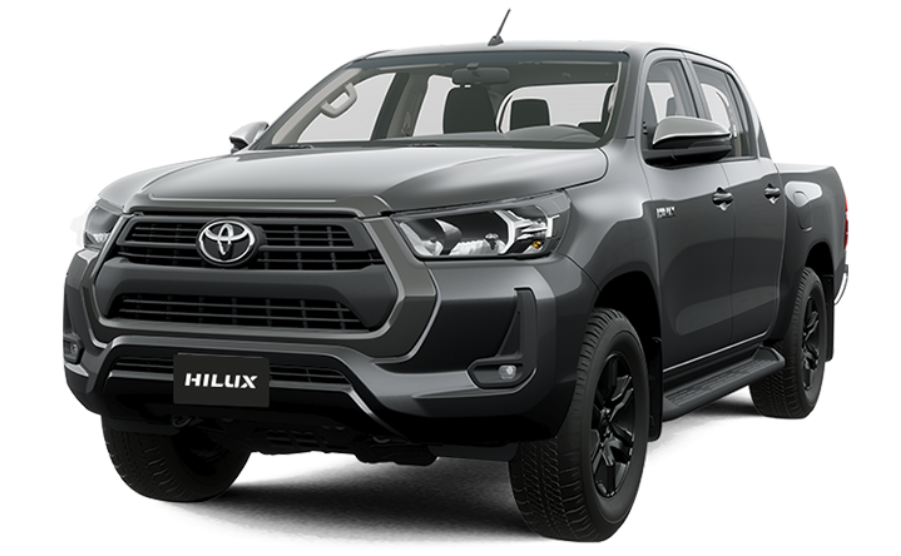
Few ute comparisons feel as natural as Toyota Hilux vs Isuzu D-Max. These are not soft-road SUVs dressed in hiking boots. Both were built with work, towing, rough tracks, dirty boots, heavy loads, and long-distance driving firmly in mind.
Yet they approach the job differently.
The Toyota Hilux has spent decades building the sort of reputation that makes its badge almost shorthand for durability in many markets. The latest Australian-market generation adds considerably more technology and refinement while retaining the workhorse formula.
The Isuzu D-Max takes a similarly serious approach but leans heavily on Isuzu's diesel-engine expertise. Its current Australian range offers both 3.0-litre and 2.2-litre turbo-diesel choices, along with a strong standard package of off-road and driver-assistance technology.
So, which one deserves space in our driveway?
That answer becomes much clearer once we stop comparing badges and start comparing how these utes actually fit different jobs.
Note: Specifications in this comparison primarily reference current Australian-market models available in 2026. Equipment, engines, payloads, towing limits, and trim names can differ significantly in other countries.
Content in this publication
- Toyota Hilux vs Isuzu D-Max at a Glance
- Toyota Hilux vs Isuzu D-Max Engine Performance
- Which Feels Stronger on the Road?
- Toyota Hilux vs Isuzu D-Max Towing Capacity
- Payload and Worksite Practicality
- Toyota Hilux vs Isuzu D-Max Fuel Economy
- Off-Road Ability: Hilux or D-Max?
- Ride Comfort and Everyday Driving
- Interior and Technology
- Toyota Hilux vs Isuzu D-Max Safety
- Reliability and Long-Term Ownership
- Toyota Hilux vs Isuzu D-Max for Towing a Caravan
- Toyota Hilux vs Isuzu D-Max for Work
- Toyota Hilux vs Isuzu D-Max for Family Use
- Ownership Costs and Value
- Hilux vs D-Max: The Personality Difference
- Which One Suits Different Buyers?
- Toyota Hilux vs Isuzu D-Max: What Should We Test Before Buying?
- The Used Hilux vs Used D-Max Question
- Final Thoughts
- Frequently Asked Questions
Toyota Hilux vs Isuzu D-Max at a Glance
The latest Hilux and D-Max remain traditional ladder-frame utes designed around serious utility, yet their mechanical personalities are noticeably different.
| Category | Toyota Hilux | Isuzu D-Max |
|---|---|---|
| Main diesel engine | 2.8L turbo-diesel | 3.0L turbo-diesel |
| Maximum power | 150kW | 140kW |
| Maximum torque | 500Nm auto / 420Nm manual | 450Nm |
| Alternative engine | Market/grade dependent | 2.2L turbo-diesel, 120kW/400Nm |
| Maximum braked towing | Up to 3,500kg diesel 4x4 | Up to 3,500kg |
| Main transmissions | 6-speed manual/automatic | 6-speed auto 3.0L; 8-speed auto 2.2L |
| 4x4 availability | Yes | Yes |
| Rear differential lock | Selected 4x4 variants | Standard on current Australian 4x4 models |
| Current ANCAP rating | Five stars on applicable variants | Five stars on applicable variants |
Toyota's current Australian diesel Hilux develops up to 150kW and 500Nm with the automatic transmission, while Isuzu's 3.0-litre D-Max produces 140kW and 450Nm. Isuzu also offers a newer 2.2-litre diesel producing 120kW and 400Nm with an eight-speed automatic. Both can reach a 3,500kg braked towing rating in applicable configurations.
Numbers, however, tell only half the story.
Toyota Hilux vs Isuzu D-Max Engine Performance
Toyota Hilux 2.8-Litre Turbo-Diesel
The current Australian Hilux range centres on Toyota's 2.8-litre four-cylinder turbo-diesel. Automatic versions produce 150kW and 500Nm, while manual versions retain the same peak power but deliver 420Nm.
That 500Nm figure matters when we're overtaking, climbing long gradients, carrying equipment, or towing.
The engine doesn't need to feel like a sports-car motor. That's not the mission. Instead, its strength is the solid shove available in the middle of the rev range.
Think of it like a big wrench rather than a scalpel. Its job is leverage.
The newer Hilux also uses Toyota's V-Active technology on selected automatic 4x4 double-cab diesel variants, while the broader range has received major changes in steering, technology, comfort, and active safety for the latest generation.
Isuzu D-Max 3.0-Litre Turbo-Diesel
Isuzu does things slightly differently.
The familiar 3.0-litre 4JJ3-TCX turbo-diesel produces 140kW at 3,600rpm and 450Nm between 1,600 and 2,600rpm. It is paired with a six-speed automatic in current Australian applications.
On paper, Toyota therefore holds the advantage in outright power and torque.
But we shouldn't mistake a lower number for a weak engine.
The D-Max's torque arrives low in the rev range and spreads across a useful plateau. That characteristic suits towing, low-speed trail work, and relaxed highway cruising remarkably well.
What About the D-Max 2.2-Litre Engine?
Here's where the Isuzu becomes especially interesting.
The newer 2.2-litre RZ4F turbo-diesel produces 120kW and 400Nm and is coupled to an eight-speed automatic transmission. Isuzu introduced this engine to the Australian range as a more efficiency-focused alternative to the 3.0-litre unit.
Drivers who don't regularly pull massive trailers may appreciate that option.
It gives the D-Max range an extra layer of flexibility: we can choose the big 3.0-litre engine when towing muscle matters most or consider the smaller diesel when operating costs and everyday driving carry more weight.
Which Feels Stronger on the Road?
The Hilux's 500Nm automatic diesel gives it the stronger headline output.
Plant the accelerator while joining a motorway or climbing with luggage aboard and that additional torque can be useful. There's a muscular quality to the powertrain that suits drivers who don't want their ute constantly hunting for momentum.
The 3.0-litre D-Max takes a calmer approach.
Its low-rpm torque delivery makes it feel comfortable doing hard work without turning every acceleration run into a dramatic event. It is less about showing its strength and more about getting on with the job.
For many owners, that distinction will matter more than the raw figures.
Transmission Differences Matter Too
Both brands still rely on proven conventional automatic transmissions rather than chasing complicated dual-clutch setups.
Toyota offers six-speed manual or automatic transmissions on relevant Hilux diesel variants. Isuzu's current Australian D-Max pairs the 3.0-litre diesel with a six-speed automatic, whereas its 2.2-litre diesel receives an eight-speed automatic.
More ratios don't automatically make a gearbox better, but the eight-speed unit gives the smaller Isuzu diesel more opportunities to stay within its productive torque band.
Toyota Hilux vs Isuzu D-Max Towing Capacity
Now we reach one of the questions that can decide the purchase almost by itself.
Properly configured Hilux diesel 4x4 variants can tow up to 3,500kg braked, while Toyota lists lower limits for some 4x2 and battery-electric configurations.
Current Australian D-Max models are also offered with up to 3.5 tonnes of braked towing capacity, including the 3.0-litre turbo-diesel configurations.
So at the headline level, this contest is essentially even.
But maximum towing capacity should never be the only number we check.
The 3.5-Tonne Number Isn't the Whole Story
A ute advertised with 3,500kg towing ability doesn't necessarily allow us to load the tray to its maximum at the same time.
Payload, tow-ball load, Gross Vehicle Mass and Gross Combination Mass all interact. Add passengers, a bull bar, canopy, recovery equipment, camping gear, larger tyres and a heavy caravan, and the available margins can disappear faster than expected.
That means buyers planning serious towing should calculate the specific trim's weights, rather than assuming every Hilux or D-Max can simultaneously carry and tow its published maximums.
That's especially important with caravans.
A tow rating looks wonderfully simple in a brochure. Real-world loading is more like Tetris with kilograms.
Payload and Worksite Practicality
Both vehicles exist because people need them to work.
Single-cab chassis models, crew cabs, tray backs and lifestyle-oriented pickups can have dramatically different payloads, so there is no honest universal payload figure covering either entire range.
Isuzu, for example, has offered D-Max configurations exceeding one tonne of payload, while specialised lifestyle grades carry less because additional equipment increases kerb weight. Toyota's Hilux range likewise varies substantially between work-focused and premium double-cab configurations.
For tradespeople, farmers and fleet buyers, the correct question therefore isn't simply:
"Which ute has the bigger payload?"
It's:
"Which exact cab, drivetrain and grade leaves enough payload after we've fitted everything we actually use?"
That little change in thinking can prevent a very expensive buying mistake.
Toyota Hilux vs Isuzu D-Max Fuel Economy
Fuel consumption is where specification sheets can become slippery.
Body shape, drivetrain, engine, tyres, accessories, traffic, payload, towing and driving style all make substantial differences.
Current Toyota figures for some Australian diesel Hilux variants sit in roughly the low-to-mid 7L/100km range under official laboratory testing, depending on grade and configuration. Toyota itself notes that laboratory figures do not necessarily represent real-world consumption.
The D-Max varies even more because buyers now have two diesel engines. Current official Isuzu specification data shows combined-cycle figures that change by configuration, with some 2.2-litre versions dipping below comparable 3.0-litre models.
Which Is More Economical in Real Life?
There's no useful universal winner.
If we compare a lighter 2.2-litre D-Max with a heavier Hilux 4x4, the Isuzu may naturally have an efficiency advantage.
Compare differently equipped vehicles and the gap may disappear.
Then attach a large caravan and the equation changes again.
You may be interested in reading Toyota Hilux vs Tacoma: Which Toyota Pickup Makes More Sense?
Rather than chasing a tenth of a litre on an official test cycle, we'd look at the engine that best matches how the ute will spend most of its life. Buying a heavy-duty configuration for jobs we perform twice a year may cost more every other day.
Off-Road Ability: Hilux or D-Max?
This is where both machines can get properly dirty.
The current D-Max offers Terrain Command, Rough Terrain Mode and a rear differential lock on Australian 4x4 models. Isuzu also publishes an 800mm wading depth for applicable versions.
Toyota's Hilux similarly offers part-time four-wheel drive and a rear differential lock on selected configurations, with the current generation maintaining a clear focus on off-road capability.
Neither ute transforms us into an expert off-road driver, of course.
Tyres, ground clearance, wheel articulation, driver judgement, tyre pressures, vehicle weight and route selection matter enormously.
Where the D-Max Makes Its Case
Rough Terrain Mode is one of the D-Max's useful tricks. It works with the vehicle's traction systems to manage wheel slip over awkward surfaces, while the rear differential lock gives us another tool when traction disappears.
In other words, it doesn't simply hand us one hammer and expect every trail to be a nail.
That flexibility is useful on rocky climbs, muddy farm tracks, sand and rutted terrain.
Where the Hilux Makes Its Case
The Hilux counters with an enormous amount of accumulated development around work and off-road use.
The latest Australian version has also undergone meaningful mechanical and technology updates rather than surviving entirely on reputation.
For someone moving between highways, building sites and remote tracks, that broad competence is arguably more important than having one spectacular party trick.
Ride Comfort and Everyday Driving
Here's an uncomfortable truth about dual-cab utes: they are fundamentally compromised vehicles.
We ask them to carry big loads like commercial vehicles, tow like trucks, climb trails like 4x4s and then glide through supermarket car parks like crossovers.
Physics eventually sends the invoice.
An unloaded ute can still feel firmer and busier than a road-focused SUV, particularly over broken urban surfaces.
The latest Hilux generation puts greater emphasis on driveability and comfort, including electric power steering and substantial cabin upgrades.
The D-Max has similarly evolved far beyond the agricultural interiors associated with old-school pickups. Higher grades offer heated leather-accented seating, larger infotainment systems and convenience equipment that makes long journeys much easier to live with.
City Driving
If our ute spends Monday through Friday in traffic, size and steering behaviour deserve almost as much attention as towing capacity.
Modern driver assistance, cameras, parking sensors and improved infotainment help, but neither vehicle magically becomes small.
A dual-cab ute in a tight underground parking garage can feel like trying to thread a refrigerator through a letterbox.
Test driving both in the environment where we'll actually use them is therefore essential.
Interior and Technology
Toyota Hilux Cabin
The latest Hilux has moved significantly forward technologically.
Depending on grade, Toyota offers large digital displays, smartphone integration, wireless charging and more comprehensive camera technology. The Australian SR, for example, is advertised with a 12.3-inch touchscreen and connectivity features, with equipment naturally varying across the lineup.
This makes the newest Hilux feel substantially less utilitarian than older examples.
And that's important.
A modern dual-cab often doubles as the family car. Hard plastics are easier to forgive when we're wearing muddy work boots than when we're beginning a 900km holiday.
Isuzu D-Max Cabin
The D-Max takes a similar layered approach.
Work-focused SX versions keep things comparatively straightforward, while LS-U, LS-U+, X-Terrain and other lifestyle grades introduce larger displays, smarter entry systems, leather-accented trim and additional convenience equipment.
Current Australian models use either 8-inch or 9-inch infotainment displays depending on grade and include smartphone connectivity.
Neither ute is pretending to be a luxury limousine, but both have moved well beyond the "hose it out and go home" era.
Toyota Hilux vs Isuzu D-Max Safety
Safety comparisons need context because crash-test protocols change over time.
The current Hilux assessed by ANCAP received a five-star rating under 2025 protocols, applying to relevant diesel and battery-electric variants while excluding Rugged X. It scored 84% for adult occupant protection, 89% for child occupant protection, 82% for vulnerable road-user protection and 82% for safety assist.
The relevant D-Max rating was awarded under 2022 protocols and remains applicable to specified models built from July 2022 onward, excluding Blade. ANCAP recorded 86% adult occupant protection, 89% child occupant protection, 69% vulnerable road-user protection and 84% safety assist.
Those percentages should not be treated as a direct mathematical shootout because the vehicles were assessed in different rating years.
Driver-Assistance Technology
Both vehicles offer modern systems such as autonomous emergency braking and lane-support technology.
The current D-Max uses Isuzu's IDAS suite, while the newest Hilux includes updated collision-avoidance and lane-support technologies.
As always, these systems assist rather than replace the driver.
Reliability and Long-Term Ownership
This topic attracts some spectacularly confident opinions online.
"My cousin's Hilux has 600,000km."
"My neighbour's D-Max has never needed anything."
Nice stories, but anecdotes aren't controlled reliability studies.
Both model lines have established reputations as serious working utes, and both use comparatively traditional diesel powertrains. Yet long-term reliability depends heavily on servicing, workload, modifications, operating conditions and the exact generation we're buying.
A badly maintained "legendary" ute can become a money pit.
A well-maintained ordinary one can run beautifully for years.
What We'd Inspect on a Used Example
If buying second-hand, we would prioritise:
- complete servicing records and correct oil-change history;
- evidence of excessive towing or constant maximum-load use;
- underbody damage from off-road driving;
- suspension wear and uneven tyre wear;
- diesel particulate filter or emissions-system warnings;
- coolant or oil leaks;
- transmission behaviour when cold and fully warm;
- four-wheel-drive and differential-lock operation;
- aftermarket electrical modifications;
- accident repairs, corrosion and chassis damage.
Service history tells a better story than shiny paint.
Toyota Hilux vs Isuzu D-Max for Towing a Caravan
For heavy caravan work, both can make sense.
The 3.0-litre D-Max's 450Nm torque plateau and 3.5-tonne maximum braked towing capability give it the fundamentals we want from a touring ute.
The automatic 2.8-litre Hilux counters with 500Nm and up to 3,500kg braked towing on diesel 4x4 variants.
But the smarter choice depends on loaded weights.
For a 2,500kg caravan, both may offer comfortable margins in an appropriate configuration.
At 3,400kg loaded, everything becomes more sensitive: passengers, tow-ball download, accessories, cargo, GVM, GCM and axle limits all deserve careful calculation.
Never buy based solely on the largest number in the brochure.
Toyota Hilux vs Isuzu D-Max for Work
For pure commercial use, configuration matters enormously.
A business carrying bulky but relatively light equipment may value tray dimensions and cab layout.
Another carrying dense tools or construction material will care more about payload.
A remote operator may prioritise dealer access, parts availability and fuel range.
You may be interested in readingToyota Hilux vs Tacoma: Which Toyota Pickup Makes More Sense?You may be interested in reading
Toyota Hilux vs Ford Raptor: Which Pickup Fits Your Life?Someone towing every afternoon will care about engine response and thermal management.
In that world, buying the flashiest double-cab simply because it looks good in the showroom can be like wearing polished dress shoes to pour concrete.
Choose the tool first. Choose the trim second.
Toyota Hilux vs Isuzu D-Max for Family Use
Once children's seats, school bags, grocery runs and weekend trips enter the picture, our priorities shift.
Rear-seat comfort matters.
So do air vents, USB ports, cameras, driver-assistance systems, smartphone integration and storage.
Premium versions of both utes can comfortably serve as family vehicles, but anyone replacing an SUV should test the rear seats and ride quality carefully.
A body-on-frame ute still behaves like a ute.
That's part of the charm—and part of the compromise.
Ownership Costs and Value
Purchase price is only the first chapter.
Over several years, we should consider servicing, tyres, insurance, fuel, accessories, registration, depreciation and repairs.
The Hilux's established presence in many markets can make ownership appealing to buyers who value a huge ecosystem around the vehicle.
The D-Max builds its own case around diesel-focused engineering and a range that now offers two engine sizes in Australia.
Neither automatically represents better value.
A base work ute and a flagship lifestyle version may share a badge yet operate in completely different financial universes.
Don't Ignore Accessories
This is another area where ute budgets quietly explode.
Bull bars, canopies, drawers, roof platforms, tow bars, long-range tanks, underbody protection, suspension upgrades, lighting, recovery equipment and all-terrain tyres can add thousands.
Worse, every accessory weighs something.
A 900kg theoretical payload can become significantly smaller before we've loaded a single suitcase.
When comparing Hilux vs D-Max prices, compare the vehicles after fitting the equipment we genuinely need.
Hilux vs D-Max: The Personality Difference
Specifications explain vehicles.
Personality explains purchases.
The Hilux feels like the established all-rounder: powerful 2.8-litre diesel, broad model recognition, serious work credentials and an increasingly modern cabin.
The D-Max feels more deliberately diesel-centric. Its 3.0-litre motor prioritises accessible torque and towing ability, while the 2.2-litre option broadens the range toward drivers who don't necessarily require the biggest engine.
One is a multipurpose hammer.
The other feels like a particularly well-developed spanner.
Both belong in the same toolbox.
Which One Suits Different Buyers?
Rather than declaring one ute universally superior, we'd match each vehicle to the job.
Drivers who value stronger headline diesel output may be drawn toward the automatic Hilux's 150kW/500Nm combination.
Buyers who appreciate the D-Max's 3.0-litre diesel character, standard 4x4 traction equipment in applicable Australian models, or the option of a smaller 2.2-litre engine may find Isuzu's range especially appealing.
Heavy towers should compare actual GVM and GCM calculations.
Tradespeople should compare payload after accessories.
Families should compare rear-seat space and ride quality.
Tourers should compare fuel consumption, range, tyres, servicing support and accessory weight.
That's a much more useful way of choosing than arguing over which badge "wins."
Toyota Hilux vs Isuzu D-Max: What Should We Test Before Buying?
A 15-minute dealership loop won't tell us much.
We would try to drive both vehicles over rough roads, at motorway speeds and through tight urban turns. We'd check seating comfort, visibility, camera quality, cabin noise, low-speed steering, transmission behaviour and brake feel.
Anyone planning to tow should pay particular attention to engine response between roughly 80 and 110km/h, because that's where effortless brochure performance can become very different from real-world load performance.
And don't forget the back seat.
If adults regularly ride there, put one in it before signing anything.
The Used Hilux vs Used D-Max Question
Used buyers face a slightly different decision.
Here, condition can outrank model choice.
We'd rather own a meticulously maintained D-Max than an abused Hilux, and we'd rather own a carefully serviced Hilux than a D-Max that's spent years pulling overloaded trailers without proper maintenance.
Mileage alone shouldn't scare us.
Usage matters more.
A highway-driven ute with thorough records may be healthier than a lower-mileage example that spent its life crawling through mud, towing machinery and skipping services.
With used commercial vehicles, history is everything.
Final Thoughts
The Toyota Hilux vs Isuzu D-Max comparison isn't a battle where one vehicle needs to leave the arena defeated.
They're two interpretations of the same idea: build a durable, practical ute capable of working hard during the week and escaping civilisation on the weekend.
The latest Hilux brings a potent 2.8-litre diesel producing as much as 150kW and 500Nm in automatic form, plus substantial improvements in safety, steering and cabin technology.
The D-Max responds with a proven 3.0-litre diesel delivering 140kW and 450Nm, plus a newer 120kW/400Nm 2.2-litre alternative with an eight-speed automatic. Its Australian 4x4 range also makes Rough Terrain Mode and a rear differential lock key parts of its off-road package.
Both offer up to 3.5 tonnes of braked towing in applicable configurations. Both can be genuine work tools. Both can serve family duties. And both can travel far beyond sealed roads when properly equipped.
So instead of asking, "Which badge is better?", we should ask something more useful:
"Which specification matches what we'll actually do with it?"
Once we answer that, the choice gets much easier.
Frequently Asked Questions
1. Is the Toyota Hilux more powerful than the Isuzu D-Max?
Using the current Australian-market main diesel engines, yes in terms of peak output. The automatic 2.8-litre Hilux produces up to 150kW and 500Nm, compared with 140kW and 450Nm from the 3.0-litre D-Max. The way that performance feels on the road also depends on gearing, vehicle weight and load.
2. Can the Isuzu D-Max tow as much as the Toyota Hilux?
Applicable versions of both vehicles are rated to tow up to 3,500kg braked in Australia. Specific limits vary by model, drivetrain and configuration, so owners should always confirm the exact vehicle's tow rating, GVM, GCM and axle limits.
3. Which is better off road, Hilux or D-Max?
Both are designed for serious 4x4 use. Current Australian D-Max 4x4 models feature Terrain Command, Rough Terrain Mode and a rear differential lock, while relevant Hilux 4x4 models also offer part-time four-wheel drive and differential-lock capability. Tyres, configuration, clearance and driver experience can be just as important as the badge.
You may be interested in readingToyota Hilux vs Tacoma: Which Toyota Pickup Makes More Sense?You may be interested in reading
Toyota Hilux vs Ford Raptor: Which Pickup Fits Your Life?You may be interested in reading
Toyota Hilux vs Land Cruiser: Which Toyota 4x4 Makes More Sense?4. Is the D-Max more fuel-efficient than the Hilux?
Not universally. Fuel economy varies by engine, transmission, body, drivetrain and load. The D-Max now offers a smaller 2.2-litre diesel specifically aimed partly at greater efficiency, while current Hilux diesel variants also post competitive official consumption figures. Real-world results can differ significantly from laboratory tests.
5. Is a Hilux or D-Max better for long-distance touring?
Either can make a strong touring platform. We'd compare the exact vehicle's payload after accessories, fuel consumption, towing requirements, suspension, tyre choice, service availability, cabin comfort and off-road equipment. For remote touring, those details matter far more than choosing solely on reputation.
If you want to know other articles similar to Toyota Hilux vs Isuzu D-Max: Which Tough Ute Fits You Best? you can visit the category Models.
Honda Passport vs Toyota 4Runner: Which SUV Is Better?
Honda Passport vs Ford Bronco: Which SUV Is Better?
Honda Passport vs Ford Explorer: Which SUV Is Better?
Honda Passport or Pilot: Which SUV Is Better?
Honda Passport vs Jeep Grand Cherokee: Which SUV Is Better?
Honda Passport vs Nissan Pathfinder: Which SUV Is Better?
Leave a Reply
More content of your interest