
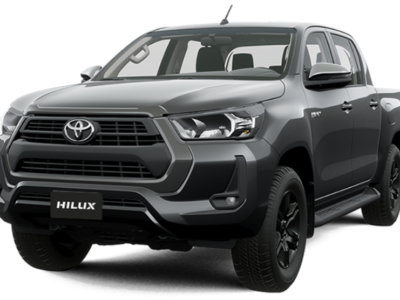
Which Toyota Hilux Is the Most Reliable? The Best Years and Engines

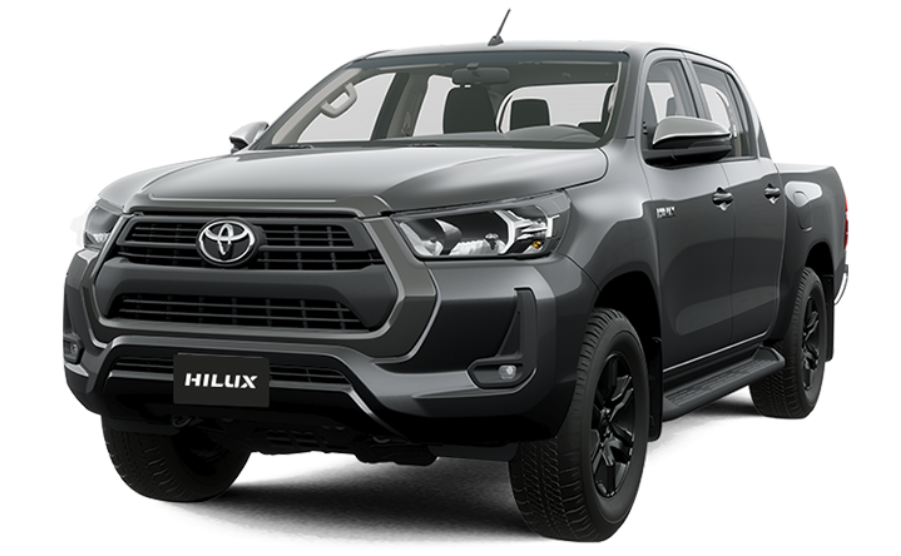
The Toyota Hilux has spent decades building the sort of reputation most pickup trucks would happily trade their tailgates for. It works on farms, crawls through mining sites, crosses deserts, hauls equipment, and somehow still turns up Monday morning ready for another shift.
But there is an important catch.
Not every Hilux is equally reliable.
Different generations use different engines, fuel systems, emissions equipment, transmissions, and electronics. Some combinations are remarkably simple. Others are still durable but introduce expensive components such as common-rail injectors, variable-geometry turbochargers, diesel particulate filters, and increasingly sophisticated emissions controls.
So, which Toyota Hilux is the most reliable?
If outright mechanical dependability matters more than fuel economy, our strongest pick is a late seventh-generation Toyota Hilux equipped with the naturally aspirated 2.7-liter 2TR-FE petrol engine, particularly a well-maintained example from roughly the late 2000s through 2015. The engine is comparatively simple, has no diesel DPF, no diesel high-pressure common-rail system, and no turbocharger to worry about. Used-vehicle specialists also regard the 2.7-liter engine as one of the more robust engines offered in the N70-generation Hilux.
For diesel buyers, however, the answer changes. A late seventh-generation 2.5-liter 2KD-FTV Hilux, particularly one from the latter part of production with excellent maintenance records, can represent one of the safest traditional diesel choices.
Let's dig deeper, because choosing a Hilux purely by the badge on its tailgate is like choosing hiking boots because they're brown. The details matter.
Content in this publication
- Quick Answer: The Most Reliable Toyota Hilux Versions
- Why the 2.7-Liter Petrol Hilux Gets Our Top Reliability Vote
- The Best Reliable Diesel Hilux: Late 2KD-FTV Models
- What About the Famous 3.0-Liter 1KD Hilux?
- Why the Seventh-Generation Hilux Is Such a Reliability Sweet Spot
- Is an Older Hilux Even More Reliable?
- How Reliable Is the Eighth-Generation Hilux?
- Why We Would Be Careful With 2015–2020 GD Diesels
- Is the Post-2020 Hilux More Reliable?
- 2.4 GD vs 2.8 GD: Which Is More Reliable?
- Manual or Automatic: Which Hilux Is More Reliable?
- 4x2 or 4x4: Which Is More Dependable?
- The Biggest Reliability Factor Isn't the Engine
- How Many Miles Can a Reliable Hilux Last?
- Which Toyota Hilux Years Should We Avoid?
- The Hilux We'd Personally Choose for Maximum Reliability
- Which Diesel Hilux Would We Buy?
- Used Hilux Reliability Checklist
- Final Verdict: Which Toyota Hilux Is the Most Reliable?
- Frequently Asked Questions
Quick Answer: The Most Reliable Toyota Hilux Versions
If we had to create a shortlist based primarily on long-term reliability, it would look something like this:
| Hilux version | Reliability verdict | Main advantage | Main concern |
|---|---|---|---|
| Late 7th-gen 2.7 petrol 2TR-FE | Best for pure simplicity | No diesel turbo or DPF | High fuel consumption |
| Late 7th-gen 2.5 diesel 2KD-FTV | Best traditional diesel choice | Relatively simple, proven design | Injectors and fuel quality |
| Late 7th-gen 3.0 diesel 1KD-FTV | Very durable when maintained | Strong torque and huge parts support | Injectors; some earlier piston issues |
| 2021+ 8th-gen 2.8 1GD-FTV | Best modern choice | Powerful, refined, improved | More emissions complexity |
| 2015–2020 2.4/2.8 GD diesel | Buy carefully | Good base engine | DPF history in some markets |
There is an important lesson hidden in that table: the most reliable Hilux isn't necessarily the most powerful Hilux.
Sometimes boring wins.
And in reliability terms, boring can be beautiful.
Why the 2.7-Liter Petrol Hilux Gets Our Top Reliability Vote
The 2.7-liter 2TR-FE is hardly the Hilux engine people brag about at traffic lights.
That's part of its charm.
It's a naturally aspirated four-cylinder petrol engine. There is no turbocharger pushing additional air into the cylinders, no high-pressure diesel injection system, and no diesel particulate filter repeatedly trying to burn accumulated soot.
The 2TR-FE uses a timing chain and has a relatively short list of widely reported mechanical weaknesses. Common age-related concerns tend to involve things such as cooling-system components, oil leaks, ignition components, and eventually timing-chain wear at very high mileages rather than an obvious pattern of catastrophic engine failure.
That doesn't make it immortal.
Nothing with pistons is.
But mechanically, it carries fewer expensive pieces of baggage than most modern turbo-diesels.
The Reliability Advantage of Simplicity
Imagine two toolboxes.
One contains ten sturdy tools.
The other contains fifty sophisticated tools.
Even if every tool is well made, the second box simply contains more things that can eventually wear out.
That is roughly the difference between the old-school petrol Hilux and newer diesel models.
With the 2TR-FE, we eliminate several potential trouble spots associated with modern diesel pickups:
- Diesel particulate filter complications
- High-pressure diesel injector problems
- Turbocharger failures
- Diesel EGR soot accumulation
- Complex diesel regeneration cycles
Naturally, we pay for that simplicity at the fuel pump.
Its Biggest Weakness: Fuel Economy
The 2.7 petrol engine has to move a large, heavy, aerodynamically stubborn pickup truck.
It isn't exactly sipping fuel through a cocktail straw.
Real-world consumption can be considerably higher than comparable diesel models, and the engine also produces less low-rpm torque than Toyota's turbo-diesels.
Drivers regularly towing heavy trailers or traveling enormous distances may therefore find a diesel far more economical.
But our question isn't which Hilux uses the least fuel?
It's which Toyota Hilux is the most reliable?
Those are two different races.
And the simple petrol engine has a strong argument in the second one.
The Best Reliable Diesel Hilux: Late 2KD-FTV Models
Most Hilux buyers around the world aren't shopping for petrol engines at all.
They want diesel.
If that's us, the late seventh-generation 2.5-liter 2KD-FTV deserves serious attention.
Toyota's seventh-generation Hilux officially ran from 2004 to 2015, while the eighth generation arrived in 2015.
The 2KD-FTV belongs to Toyota's older KD diesel family and was used extensively around the world. It doesn't deliver the enormous torque figures of today's Hilux engines, but that relatively conservative output is actually part of its appeal.
Why We Prefer Later 2KD Examples
Earlier KD-series engines weren't completely problem-free.
Injector condition and diesel quality matter enormously, while some earlier 2KD examples have also been associated with piston-related concerns. Reports suggest improvements were made during the engine's production life, making later examples generally more attractive than the earliest trucks.
That leads us toward one particular sweet spot:
A late-production seventh-generation Hilux 2.5 diesel with documented servicing and clean injector behavior.
We'd take that over an older example with mysterious maintenance history every time.
What to Check on a 2KD Before Buying
Even the toughest workhorse deserves an inspection.
Look for:
- Rough or unstable cold idle
- Excessive diesel knock
- White, blue, or heavy black exhaust smoke
- Difficult cold starting
- Poor injector correction values
- Oil consumption
- Cooling-system leaks
- Dirty or neglected engine oil
- Evidence of questionable tuning
- Chassis damage from commercial or off-road work
The last point is crucial.
A perfectly reliable engine bolted to a pickup that has spent twelve years being launched across quarry roads isn't necessarily a reliable purchase.
What About the Famous 3.0-Liter 1KD Hilux?
Now we reach one of the most famous Hilux engines of all: the 3.0-liter 1KD-FTV.
We understand why people love it.
It has good low-end pulling power, enormous global parts availability, widespread mechanic familiarity, and countless examples have accumulated serious mileage.
But if we're ranking Hilux engines strictly by potential repair risk, it isn't automatically number one.
The 1KD Injector Issue
The common-rail injection system deserves particular attention.
Injector deterioration can produce symptoms such as:
- Rough idle
- Cold-start knocking
- Increased fuel consumption
- Smoke
- Poor running under load
Specialist reports have documented injector deterioration and injector-seat problems on parts of the 1KD production run.
A healthy 1KD can be fantastic.
A neglected 1KD can become an expensive science project.
Early Piston Concerns Matter Too
Certain versions of the 1KD have also been associated with piston cracking, particularly among specified earlier production ranges and higher-stress versions. This is one reason we wouldn't simply tell every used Hilux buyer, "Get the 3.0 diesel and don't worry about it."
Later-production trucks are more appealing, but inspection remains essential.
Would We Still Buy One?
Absolutely.
A documented late 1KD Hilux that has been maintained by someone who understood the engine can be an extremely dependable pickup.
We'd simply choose it with our eyes open.
Service history matters more here than internet folklore.
Why the Seventh-Generation Hilux Is Such a Reliability Sweet Spot
Toyota launched the seventh-generation Hilux in 2004, building it around the global IMV platform and selling it across more than 140 countries. Toyota itself says the model was designed around durability while also improving comfort and practicality.
More importantly for used buyers today, production lasted for roughly a decade.
That matters.
Why?
Because long production runs allow manufacturers to refine things.
A brand-new generation is a freshly baked recipe. By the time the final version rolls off the line years later, many of the rough edges have been identified.
Later Trucks Benefited From Years of Development
Toyota updated the seventh-generation Hilux during its production life, including significant revisions in 2008 and 2011 as the company responded to feedback from different markets.
That's one reason late-production models can make so much sense.
They combine:
You may be interested in reading Are Toyota Hilux Any Good? The Real-World Answer
- Mature engineering
- Huge parts availability
- Widespread mechanical knowledge
- Fewer emissions systems than many newer trucks
- Relatively simple electronics
- Strong resale demand
They're old enough to remain straightforward but new enough to feel like modern pickups.
That's a useful middle ground.
Is an Older Hilux Even More Reliable?
Some enthusiasts will immediately ask:
"What about the really old Hilux?"
Fair question.
Older Toyota pickups from the 1980s and 1990s can be astonishingly durable. Many use extremely simple petrol or diesel engines with minimal electronics.
But vehicle reliability isn't just engine reliability.
Rubber ages.
Wiring ages.
Bushings split.
Seals harden.
Chassis corrode.
Cooling systems deteriorate.
Thirty-year-old trucks also have thirty years of owners, repairs, modifications, accidents, and questionable weekend engineering hiding underneath them.
So while an older Hilux might have simpler engineering, we wouldn't automatically call it the most reliable used Hilux to buy today.
Age eventually becomes its own mechanical system.
How Reliable Is the Eighth-Generation Hilux?
The eighth-generation Hilux arrived in 2015.
Toyota says its engineers traveled globally, studied the extreme conditions in which owners used the truck, and developed the model around a concept it called "redefining toughness."
Structurally, the eighth-generation truck remains a serious piece of machinery.
Its engines, however, are more sophisticated.
The headline diesel choices became the 2.4-liter 2GD-FTV and 2.8-liter 1GD-FTV.
They're quieter, stronger, cleaner, and generally more pleasant than the engines they replaced.
But there's a trade-off.
More Technology Means More Things to Maintain
Modern GD engines may incorporate systems such as:
- High-pressure common-rail injection
- Variable-geometry turbocharging
- Diesel particulate filtration
- Exhaust-gas recirculation
- Additional emissions sensors
- Sophisticated engine-management electronics
None of those things automatically make the engine unreliable.
They simply increase the number of systems whose condition matters.
Why We Would Be Careful With 2015–2020 GD Diesels
Here's where model year suddenly becomes important.
In Australia, Hilux, Prado, and Fortuner vehicles equipped with 1GD-FTV and 2GD-FTV engines and acquired between October 1, 2015 and April 23, 2020 became the subject of litigation concerning their diesel particulate filter systems. A Federal Court notice states that the relevant vehicles were found not to have been of acceptable quality when initially supplied because of a defective DPF system, although an effective repair was subsequently available.
Symptoms associated with the dispute included things such as DPF blockage, smoke and increased fuel consumption.
That's significant.
It doesn't mean every 2015–2020 Hilux will fail.
It doesn't mean the underlying engine is bad.
And the situation varies by market specification.
But if we were shopping for a used Hilux from that period, we would absolutely verify:
- Exact engine
- Local market specification
- DPF configuration
- Recall or campaign history
- Repair history
- ECU/software updates
- Regeneration behavior
- Service documentation
A bargain isn't a bargain when a warning light becomes our new dashboard wallpaper.
Is the Post-2020 Hilux More Reliable?
For someone wanting a newer truck, we'd generally feel more comfortable looking at a post-2020 or 2021-onward Hilux, all else being equal.
Toyota had years of real-world experience with the eighth-generation platform by then, and later vehicles sit beyond the early period specifically identified in Australia's DPF litigation.
That doesn't magically remove every possible problem.
Modern diesels still prefer appropriate operating conditions.
Repeated two-mile journeys around town are simply not what a DPF-equipped Hilux dreams about at night.
The Best Modern Hilux for Reliability
If we want the combination of:
- Modern safety
- Strong towing ability
- More power
- Better refinement
- Newer interior technology
- Proven Hilux durability
then a carefully maintained later 2.8-liter 1GD-FTV Hilux makes a lot of sense.
We would simply rank it behind the old 2.7 petrol in mechanical simplicity.
That's not an insult.
It's physics.
2.4 GD vs 2.8 GD: Which Is More Reliable?
Both engines belong to Toyota's GD diesel family.
The 2.4-liter 2GD generally produces less power and torque, while the 2.8-liter 1GD serves as the stronger option in many markets.
From a reliability perspective, we'd care less about displacement and more about year, maintenance and use pattern.
A beautifully maintained 2.8 that regularly completes long highway journeys can be a far safer purchase than a neglected low-mileage 2.4 that has spent its entire life crawling three kilometers at a time through city traffic.
Mileage tells us how far a Hilux traveled.
It doesn't tell us how well it traveled.
Manual or Automatic: Which Hilux Is More Reliable?
If our sole goal is simplicity, a manual transmission has an obvious appeal.
There are fewer hydraulic and electronic transmission components involved, and conventional manual gearboxes can survive enormous distances.
But modern Toyota automatics aren't inherently fragile.
A properly serviced automatic can last extremely well.
The bigger danger is neglected fluid.
Why Maintenance History Wins Again
When evaluating either transmission, we want evidence that the owner treated the vehicle like machinery rather than furniture.
Check:
- Clutch bite and slip on manuals
- Gear selection when cold
- Synchro operation
- Automatic shift smoothness
- Transmission fluid condition
- Transfer-case engagement
- Differential noises
- Prop-shaft vibration
The badge might say Hilux.
That doesn't suspend the laws of lubrication.
4x2 or 4x4: Which Is More Dependable?
Technically, a 4x2 has fewer drivetrain components.
No front differential.
No front driveshaft system performing the same job as a 4x4.
Less hardware usually means fewer potential wear points.
So if our Hilux will spend its entire life on paved roads, a 4x2 is theoretically the simpler reliability choice.
But many buyers choose a Hilux specifically because they need four-wheel drive.
Toyota's part-time 4WD systems are generally robust when maintained correctly, and Toyota has used part-time four-wheel-drive systems extensively in the Hilux.
We wouldn't sacrifice genuine off-road requirements just to remove two driven wheels from the equation.
The Biggest Reliability Factor Isn't the Engine
Here's the part people sometimes don't want to hear:
Condition beats specification.
A 250,000-km Hilux maintained obsessively can be a better purchase than an 80,000-km Hilux that spent its life overloaded in a mine.
Commercial pickups live differently from normal cars.
You may be interested in readingAre Toyota Hilux Any Good? The Real-World AnswerYou may be interested in reading
 Land Rover Defender 90 vs 110 vs 130: Which Defender Is Right for You?
They tow.
They haul.
They idle for hours.
They travel on corrugated roads.
They get modified.
They get pressure-washed.
They get handed from employee to employee.
Some live like pampered Labradors.
Others live like medieval warhorses.
Check the Chassis Before Falling in Love With the Engine
When inspecting a used Hilux, look underneath before admiring the touchscreen.
Check for:
- Chassis corrosion
- Cracked or damaged mounting points
- Evidence of hard off-road impacts
- Bent underbody components
- Differential leaks
- Damaged CV boots
- Worn suspension bushes
- Uneven tire wear
- Tow-bar stress
- Signs of repeated overload
- Poorly installed accessories
Used-vehicle inspection specialists specifically warn that former fleet, mining and farm Hiluxes may have suffered hard service, meaning chassis and usage history can matter more than mileage alone.
How Many Miles Can a Reliable Hilux Last?
There's no expiration date stamped underneath the bonnet.
A Hilux's useful life depends heavily on servicing, operating conditions, fuel quality, loading, corrosion, and previous repairs.
Still, properly maintained examples regularly reach very high mileage.
The more useful question isn't:
"Can this engine reach 300,000 miles?"
It's:
"Can this particular truck reach 300,000 miles without financially ruining me?"
That's why we'd rather buy a 180,000-mile truck with twenty service invoices than an 80,000-mile truck whose seller says, "My cousin handled all the servicing."
Paperwork is boring.
Boring is good.
Remember what we said?
Which Toyota Hilux Years Should We Avoid?
We wouldn't create a giant blacklist because regional Hilux specifications vary enormously.
But we would exercise additional caution with three groups.
1. Early KD-Series Diesels Without Clear Injector History
Earlier 1KD and 2KD trucks can be excellent, but injector condition and previous repairs matter.
If the seller cannot explain what has been done, assume nothing.
2. Certain Early 1KD Versions
Because piston and injector-related issues have been documented on portions of the production run, we would prefer later examples or trucks with documented corrective work.
3. Early Eighth-Generation GD Diesels With Questionable DPF History
The Australian DPF case makes 2015–2020 vehicles particularly worthy of investigation where relevant.
Again, that doesn't mean "never buy one."
It means verify before buying one.
The Hilux We'd Personally Choose for Maximum Reliability
Suppose someone handed us money and said:
"Buy a Hilux. I don't care whether it's exciting. I want it to start every morning."
We'd look for a late seventh-generation 2.7-liter petrol Hilux, ideally unmodified, privately owned, with excellent service history and minimal corrosion.
Why?
Because the recipe is wonderfully unfashionable:
Naturally aspirated petrol engine.
Conventional fuel injection.
Timing chain.
No diesel DPF headaches.
No diesel turbo.
No complex diesel injector system.
Plenty of global parts support.
It's the mechanical equivalent of a hammer.
Not sophisticated.
Not economical.
But reassuring.
Which Diesel Hilux Would We Buy?
For someone covering serious distances, the petrol engine's thirst changes the calculation.
Then we'd hunt for a late seventh-generation 2.5 2KD-FTV, preferably from the latter years of production, and subject it to a proper diesel inspection.
Our alternative would be a documented late 3.0 1KD.
If we wanted a modern truck with stronger performance and current safety equipment, we'd move toward a post-2020 2.8 1GD-FTV.
That creates three clear categories:
- Maximum mechanical simplicity: 2.7 2TR-FE petrol
- Old-school diesel reliability: late 2.5 2KD-FTV
- Best modern compromise: later 2.8 1GD-FTV
That's much more useful than pretending there's one magic Hilux for everyone.
Used Hilux Reliability Checklist
Before buying any Hilux, we'd perform or arrange the following checks:
- Start the engine completely cold.
- Listen for abnormal knocking or timing-chain noise.
- Check injector correction values on diesel models.
- Scan the ECU for stored and pending fault codes.
- Verify DPF behavior on applicable models.
- Inspect the turbocharger and intake system.
- Check coolant condition and cooling-system pressure.
- Inspect engine and transmission oil leaks.
- Test every gearbox ratio.
- Engage four-wheel drive and low range.
- Inspect chassis rails carefully.
- Check suspension bushes and wheel bearings.
- Examine service invoices rather than trusting stamps alone.
- Investigate previous commercial or fleet ownership.
- Look for ECU tunes and aftermarket performance modifications.
And Don't Forget the Previous Owner
Sometimes the most important component in a used Hilux isn't under the bonnet.
It's standing next to us holding the keys.
A meticulous owner who knows every service date is a promising sign.
An owner who says, "Oil? Yeah, we changed it whenever the light came on," is nature's way of telling us to keep walking.
Final Verdict: Which Toyota Hilux Is the Most Reliable?
So, after pulling the generations apart, comparing the engines, and stripping away the mythology, which Toyota Hilux is the most reliable?
For pure mechanical simplicity and low engine-related risk, our pick is a late seventh-generation Toyota Hilux with the 2.7-liter 2TR-FE petrol engine. The naturally aspirated design avoids much of the expensive diesel hardware found on newer models, while the engine itself has a strong reputation for durability.
For buyers who specifically want diesel, we'd favor a late-production 2.5-liter 2KD-FTV Hilux with impeccable maintenance history, while a properly maintained later 3.0 1KD can also be an excellent workhorse.
For a newer truck, the post-2020 2.8-liter 1GD-FTV Hilux is arguably the most attractive balance of reliability, performance, safety and refinement, although it remains mechanically more complex than its predecessors.
Above everything else, though, remember this:
Buy the condition, not the legend.
Toyota designed the Hilux to work hard. The seventh generation was built around global durability, and the eighth generation was explicitly developed to redefine the truck's toughness.
But even the toughest pickup can be destroyed by neglect.
Find one with clean oil, honest paperwork, a straight chassis and an owner who cared.
Do that, and a good Hilux may feel less like something we own and more like something we're merely looking after for the next generation.
Frequently Asked Questions
1. What year Toyota Hilux is the most reliable?
There isn't one universally perfect year because specifications differ between countries. However, late seventh-generation models from roughly the early 2010s through 2015 are especially attractive because the platform was mature while remaining mechanically simpler than many later emissions-controlled diesels. Toyota produced the seventh generation from 2004 to 2015.
2. What is the most reliable Hilux engine?
For pure mechanical simplicity, the 2.7-liter 2TR-FE petrol engine is one of our top choices. It is naturally aspirated, uses a timing chain, and avoids the turbocharger, DPF and diesel high-pressure injection hardware found on many diesel Hilux versions. Its biggest drawback is fuel consumption rather than an obvious widespread catastrophic weakness.
3. Is the Toyota Hilux 2.5 or 3.0 more reliable?
Both can last extremely well, but we'd lean toward a later 2.5 2KD-FTV when reliability takes priority over performance. The 3.0 1KD offers stronger performance but has a more notable history of injector-related issues and piston concerns on some production ranges. Condition and documented servicing remain more important than displacement alone.
4. Is the 2.8 Toyota Hilux reliable?
Generally, yes. The 2.8-liter 1GD-FTV can be a strong and durable modern diesel when maintained properly. However, some earlier eighth-generation vehicles were affected by DPF-related issues, particularly among Australian vehicles supplied during the 2015–2020 period identified in legal proceedings. For that reason, we'd check service and campaign history carefully or favor a later example.
You may be interested in readingAre Toyota Hilux Any Good? The Real-World AnswerYou may be interested in reading
Land Rover Defender 90 vs 110 vs 130: Which Defender Is Right for You?You may be interested in reading
 Toyota Corolla AE86 Engine Swap – The Ultimate Guide
5. Is an older Hilux more reliable than a new one?
An older Hilux is usually simpler, but that doesn't automatically make the entire vehicle more reliable. Newer trucks have more emissions equipment and electronics, while older vehicles face corrosion, worn suspension, deteriorated seals, aging wiring and decades of previous use. A well-maintained newer Hilux can therefore be considerably safer than a neglected old one. Service history and condition should always outweigh age alone.
If you want to know other articles similar to Which Toyota Hilux Is the Most Reliable? The Best Years and Engines you can visit the category Blog.
Are Toyota Hilux Any Good? The Real-World Answer
Why Are Toyota Hilux So Tough? The Engineering Behind the Legend
How Long Do Toyota Hilux Last? Real-World Lifespan Explained
Are Toyota Hilux Reliable? A Complete Long-Term Reliability Guide
BMW i7 Reliability: Is BMW’s Electric Flagship Built to Last?
Infiniti QX60 Reliability: Is This Luxury SUV Dependable?
Leave a Reply
More content of your interest