
Are Toyota Hilux Any Good? The Real-World Answer

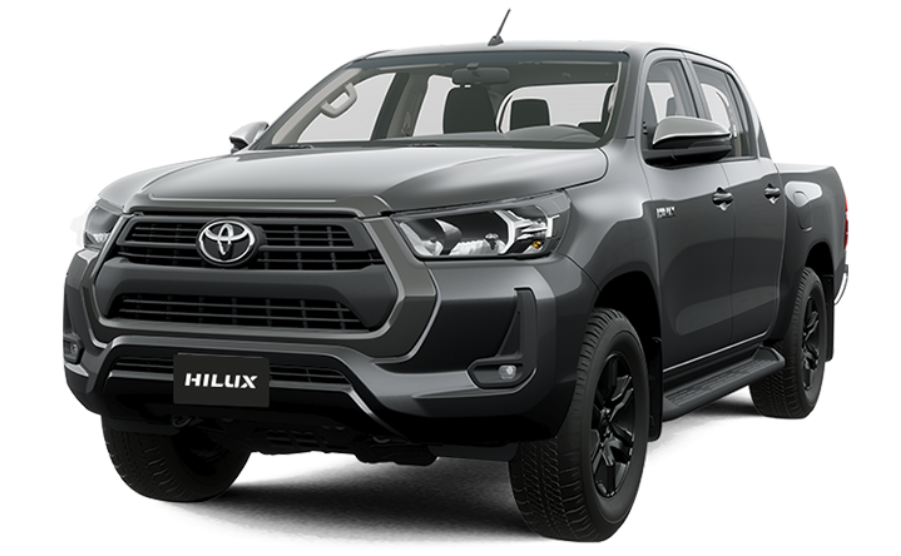
If you have ever looked for a pickup truck that seems capable of surviving almost anything, the Toyota Hilux has probably appeared somewhere on your shortlist. It has earned a reputation as a tough, dependable workhorse, and in many parts of the world, the Hilux is practically shorthand for durability.
But reputations can become larger than reality.
So, are Toyota Hilux any good?
Yes. For most buyers who value reliability, rugged construction, strong resale value, respectable off-road ability, and long-term durability, the Toyota Hilux is a very good pickup. In fact, its ability to keep working under difficult conditions is arguably its biggest selling point.
That does not mean it is perfect.
A Hilux can feel firm when unloaded. Some competitors provide more sophisticated interiors, smoother road manners, or stronger performance. Depending on the engine, trim, age, and market, fuel economy may also be merely acceptable rather than outstanding.
Think of the Hilux as a pair of quality work boots. They might not feel as soft as expensive sneakers when you first put them on, but when the road turns ugly, the rain starts falling, and you still have another hundred miles to travel, those boots suddenly make a lot of sense.
Let's look at what owning one is actually like.
Content in this publication
- Are Toyota Hilux Good Trucks Overall?
- Why Does the Toyota Hilux Have Such a Strong Reputation?
- Are Toyota Hilux Reliable?
- How Long Can a Toyota Hilux Last?
- Is the Toyota Hilux Good for Daily Driving?
- Is the Toyota Hilux Comfortable Inside?
- Are Toyota Hilux Good Off Road?
- Are Toyota Hilux Good for Towing?
- Is the Toyota Hilux Good for Work?
- What Are Toyota Hilux Engines Like?
- What Is Toyota Hilux Fuel Economy Like?
- How Practical Is a Toyota Hilux?
- Is the Toyota Hilux Safe?
- What Are the Main Toyota Hilux Disadvantages?
- Toyota Hilux vs Other Pickup Trucks
- Do Toyota Hilux Hold Their Value?
- Should You Buy a Used Toyota Hilux?
- Who Should Buy a Toyota Hilux?
- Who Should Not Buy a Toyota Hilux?
- Are Older Toyota Hilux Models Still Good?
- Is a Toyota Hilux Expensive to Maintain?
- Is the Toyota Hilux Worth the Money?
- What Is the Best Type of Hilux to Buy?
- Are Toyota Hilux Any Good After All?
- Frequently Asked Questions
Are Toyota Hilux Good Trucks Overall?
For buyers who want a genuine utility vehicle rather than a lifestyle vehicle pretending to be one, the Hilux remains difficult to ignore.
Its strongest qualities generally include:
- Proven mechanical durability
- Strong reputation for reliability
- Capable four-wheel-drive systems on applicable models
- Good towing and payload potential depending on configuration
- Strong resale demand in many markets
- Wide availability of replacement parts and accessories
- Practical cabin and cargo-bed configurations
- An enormous aftermarket for touring and off-road equipment
There is something refreshingly simple about the Hilux philosophy.
Toyota does not need the truck to behave like a sports sedan. It needs it to start in the morning, carry a load, travel across rough roads, and return home again.
That focus is exactly why so many owners remain loyal to it.
Why Does the Toyota Hilux Have Such a Strong Reputation?
The Hilux name has existed for generations, and Toyota has spent decades refining the formula.
Rather than chasing every passing automotive trend, the company has traditionally concentrated on the fundamentals that matter to pickup owners: chassis durability, dependable powertrains, reasonable serviceability, load-carrying ability, and resistance to hard use.
That long history matters.
When a manufacturer has produced millions of vehicles across different climates and driving environments, weaknesses tend to reveal themselves quickly. Toyota has had plenty of time to improve the Hilux based on real-world experience.
The Hilux Is Designed With Hard Use in Mind
Much of the Hilux's character comes from its body-on-frame construction.
Instead of building the body and chassis as one structure like a typical passenger car or crossover, a traditional pickup uses a separate frame underneath the body.
This layout can bring advantages when dealing with:
- Heavy loads
- Towing
- Uneven terrain
- Repeated off-road driving
- Commercial use
- Rough rural roads
The trade-off is that a body-on-frame truck rarely rides as delicately as a comfort-oriented SUV.
That difference becomes obvious when the cargo bed is empty.
Durability Matters More Than Fashion
Automotive technology changes quickly. Giant screens, elaborate ambient lighting, complicated driver interfaces, and increasingly complex powertrains can dominate new-car marketing.
The Hilux has historically followed a different path.
Toyota certainly adds modern equipment, but the basic appeal remains mechanical toughness rather than technological theatre.
For many owners, that is precisely the point.
Are Toyota Hilux Reliable?
Reliability is probably the first reason many people consider buying a Hilux.
And broadly speaking, the Hilux deserves its reputation.
A properly maintained example can accumulate substantial mileage while remaining perfectly usable. Commercial fleets, farmers, construction crews, tradespeople, remote-area drivers, and private owners have depended on Hilux models for decades.
However, we should separate reliability from invincibility.
No truck is indestructible.
An abused Hilux with poor servicing, contaminated fuel, neglected cooling-system maintenance, worn suspension components, or years of hard towing can become an expensive headache just like any other vehicle.
Maintenance Still Determines Longevity
If we want a Hilux to last, basic maintenance matters enormously.
That includes:
- Changing engine oil at appropriate intervals
- Using the correct oil specification
- Replacing fuel and air filters when required
- Servicing transmissions and differentials correctly
- Monitoring coolant condition
- Inspecting suspension and steering components
- Checking brakes and wheel bearings
- Addressing warning lights instead of ignoring them
- Maintaining diesel emissions equipment where fitted
A reliable design gives us a strong foundation. Good maintenance allows that foundation to work.
How Long Can a Toyota Hilux Last?
There is no universal mileage at which a Hilux suddenly becomes worn out.
How long one lasts depends on operating conditions, maintenance history, modifications, driving habits, climate, engine type, and previous ownership.
A truck driven gently on sealed roads has a very different life from one towing heavy equipment through dust, mud, and extreme temperatures every week.
Well-maintained Hilux models are nevertheless known for achieving high mileage.
The more important question when buying used is therefore not:
“How many miles has it done?”
We prefer:
“How were those miles accumulated, and how was the truck maintained?”
A higher-mileage truck with excellent documentation can be considerably safer than a low-mileage example that has been abused.
Is the Toyota Hilux Good for Daily Driving?
This is where opinions become more divided.
The Hilux can absolutely function as a daily driver. Thousands of people use one for commuting, school runs, shopping, highway travel, and family duties.
But it still feels like a pickup truck.
Anyone moving from a compact SUV or passenger car may immediately notice its dimensions, steering characteristics, turning circle, ride quality, and rear suspension behaviour.
Ride Comfort When the Bed Is Empty
Pickups are designed to carry weight.
That means their suspension needs enough strength to support cargo without collapsing under pressure.
Unfortunately, suspension designed for heavy loads can feel relatively stiff when there is nothing in the cargo bed.
You may notice more movement over broken pavement, potholes, expansion joints, and speed bumps than you would in a comfort-focused crossover.
Add some weight to the rear and the vehicle can often feel more settled.
Highway Driving
On highways, the Hilux generally becomes easier to appreciate.
The elevated driving position provides excellent visibility, diesel engines available in many markets offer useful low-end torque, and the truck feels reassuringly substantial.
It is not trying to carve through bends like a sports car.
Relax, settle into the cruise, and the Hilux makes considerably more sense.
Is the Toyota Hilux Comfortable Inside?
Modern versions are far more comfortable than the bare-bones work trucks associated with older generations.
Depending on trim and market, equipment may include modern infotainment, smartphone connectivity, climate control, improved seating materials, driver-assistance technology, cameras, keyless systems, and additional comfort features.
Higher trims can feel surprisingly SUV-like.
Yet we should keep expectations realistic.
Entry-level commercial variants prioritize durability and cost.
That often means:
- Simpler upholstery
- Basic interior trim
- Fewer convenience features
- Smaller wheels
- More utilitarian finishes
Move higher through the range and the personality changes.
You may find more attractive seats, larger displays, upgraded exterior styling, additional safety features, larger wheels, and greater cabin refinement.
Which Interior Is Better?
There is no automatic winner.
If we work in construction and regularly climb into the truck covered in dust, fancy upholstery might actually be a disadvantage.
If the Hilux doubles as our family car, better seats and additional convenience equipment may be worth every penny.
The best trim depends on the job.
Are Toyota Hilux Good Off Road?
Yes. Off-road capability is another major Hilux strength, especially when discussing properly equipped four-wheel-drive variants.
Ground clearance, a robust chassis, suitable suspension, low-range gearing on applicable models, traction systems, and strong aftermarket support make the Hilux a popular choice for off-road travel.
You may be interested in reading Land Rover Defender 90 vs 110 vs 130: Which Defender Is Right for You?
The aftermarket is particularly important.
Owners can configure a Hilux for almost every imaginable purpose, including:
- Camping
- Overlanding
- Farm work
- Beach driving
- Remote-area touring
- Mining and industrial use
- Trail driving
- Emergency support
- Long-distance expeditions
Tyres Make a Huge Difference
A capable truck on inappropriate tyres can struggle surprisingly quickly.
If serious off-road driving forms part of our plans, selecting tyres appropriate for the terrain may provide a bigger practical improvement than many expensive cosmetic modifications.
Good traction is where everything starts.
Do You Actually Need Every Off-Road Modification?
Probably not.
It is easy to turn a Hilux into a rolling accessories catalogue.
Lift kits, winches, snorkels, roof racks, bull bars, bash plates, auxiliary lights, oversized tyres, drawer systems, and long-range tanks can all serve legitimate purposes.
But modifications add weight.
They can also affect handling, fuel consumption, braking, legal compliance, warranty coverage, and payload capacity.
Build the truck for the driving we actually do rather than the adventures we imagine doing once every three years.
Are Toyota Hilux Good for Towing?
A Hilux can be an effective tow vehicle when used within the limits of its particular specification.
This is where we need to be careful with blanket statements.
Towing capacities can vary according to:
- Model year
- Engine
- Transmission
- Drivetrain
- Cab configuration
- Vehicle specification
- Local market regulations
Never assume that every Hilux has identical towing limits.
Check the specific vehicle documentation and applicable local regulations before attaching a heavy trailer.
Torque Is One of the Hilux's Advantages
Diesel Hilux variants are especially attractive for towing because diesel engines generally produce useful torque at relatively low engine speeds.
That makes pulling away with a trailer or climbing gradients feel more natural.
But maximum towing capacity is not the only number that matters.
Payload, tow-ball weight, gross vehicle mass, gross combination mass, tyre ratings, brake requirements, and axle limits can all influence what we can safely and legally tow.
Is the Toyota Hilux Good for Work?
This might be the environment where the Hilux feels most at home.
Need to carry tools? Easy.
Need to visit a muddy construction site? Fine.
Need to travel hundreds of miles during the week and then haul equipment on Friday? That is exactly the sort of mixed use pickup trucks are built around.
Toyota's dealer and parts networks in many Hilux markets also contribute to the truck's popularity with businesses.
Downtime costs money.
A commercial vehicle is not much use when it spends its life waiting for an obscure replacement component.
What Are Toyota Hilux Engines Like?
Engine choices vary considerably by generation and country.
Diesel engines have traditionally been central to the Hilux range in many markets because they suit utility driving particularly well.
Their combination of low-speed torque and reasonable fuel efficiency makes sense for towing, carrying loads, highway driving, and rural use.
Petrol engines have also been available in various markets and generations.
Is a Diesel Toyota Hilux Worth Buying?
For high-mileage drivers, regular towing, commercial operation, or rural use, diesel often makes sense.
However, modern diesel technology can include additional emissions-control equipment that needs proper operating conditions and maintenance.
Drivers who make only short urban journeys should consider whether diesel really suits their usage pattern.
A diesel truck that rarely reaches normal operating temperature may not be living the life its powertrain was designed for.
What Is Toyota Hilux Fuel Economy Like?
Do not buy a Hilux expecting economy-car fuel consumption.
It is a large, heavy, relatively tall vehicle with substantial tyres, truck-oriented gearing, and aerodynamics closer to a brick than a raindrop.
Considering its capability, consumption can be reasonable.
But expectations matter.
Factors that can noticeably increase fuel use include:
- Aggressive acceleration
- Large all-terrain or mud-terrain tyres
- Roof tents and roof racks
- Heavy accessories
- Bull bars
- Suspension lifts
- Towing
- Carrying permanent cargo
- Frequent short journeys
- Driving at high motorway speeds
That fully accessorized expedition Hilux might look fantastic, but the fuel pump will notice every kilogram and every aerodynamic obstacle.
How Practical Is a Toyota Hilux?
Very practical—provided that pickup ownership matches our lifestyle.
The tray or cargo bed separates messy equipment from the passenger cabin, which is brilliant for tools, muddy bicycles, camping gear, gardening equipment, building materials, or sports equipment.
Double-cab models can also provide useful rear seating.
However, pickup practicality works differently from SUV practicality.
The Cargo Bed Has Pros and Cons
An open bed gives tremendous flexibility, but anything stored there may be exposed to rain, dust, theft, or extreme temperatures.
A tonneau cover, roller cover, canopy, or hardtop can transform usability.
But once again, accessories cost money and add weight.
If we simply need a giant enclosed luggage compartment, an SUV may actually be more convenient.
Is the Toyota Hilux Safe?
Safety equipment varies by generation, country, and trim level, so buyers should investigate the exact vehicle rather than assuming that every Hilux has identical technology.
Newer models may include a variety of active and passive safety systems depending on specification.
Older vehicles naturally tend to offer fewer modern driver-assistance features.
Size Does Not Automatically Equal Safety
A large truck can feel safe because we sit high above traffic.
That feeling should not encourage overconfidence.
Pickups have different handling characteristics from low passenger cars, particularly when unloaded, heavily loaded, towing, or driving on wet surfaces.
Tyre condition, correct tyre pressure, sensible speeds, and proper load distribution remain extremely important.
What Are the Main Toyota Hilux Disadvantages?
A balanced answer to “are Toyota Hilux any good?” needs to include the bad news too.
And yes, there are compromises.
The most common reasons someone might prefer another vehicle include:
- Firm ride quality – especially when the truck is unloaded.
- Large exterior dimensions – inconvenient in narrow streets or parking structures.
- Truck-like handling – not as polished as many passenger-based SUVs.
- Purchase price – popular models can command strong prices.
- Used-market premiums – reliability reputation can make second-hand examples expensive.
- Fuel costs – especially with accessories, heavy loads, or frequent urban driving.
- Interior refinement – some rivals may feel more luxurious.
- Performance expectations – a Hilux is designed for usable strength, not sports-car acceleration.
None of those problems automatically make the Hilux bad.
They simply reveal what kind of vehicle it is.
Toyota Hilux vs Other Pickup Trucks
The modern pickup market gives us plenty of alternatives.
Depending on where we live, buyers may compare the Hilux with models from Ford, Isuzu, Mitsubishi, Nissan, Volkswagen, Mazda, and other manufacturers.
Some rivals can beat the Hilux in specific areas.
One may ride better.
Another may offer a more powerful engine.
Another may provide a more premium cabin.
Another could deliver better value for money.
So Why Do People Still Buy the Hilux?
Because buying a vehicle is not always about winning a specification-table competition.
Ownership matters.
Reliability history matters.
You may be interested in readingLand Rover Defender 90 vs 110 vs 130: Which Defender Is Right for You?You may be interested in reading
 Toyota Corolla AE86 Engine Swap – The Ultimate Guide
Resale value matters.
Parts availability matters.
Dealer support matters.
And confidence matters.
When buyers need a truck for remote travel or commercial work, knowing that a vehicle has a well-established reputation can be worth more than another 20 horsepower or a slightly larger touchscreen.
Do Toyota Hilux Hold Their Value?
Resale strength is often one of the Hilux's biggest ownership advantages.
Demand for clean used examples can remain strong, particularly for desirable engines, four-wheel-drive configurations, double-cab bodies, and well-maintained trucks.
That can make a used Hilux seem expensive.
The flip side appears when we sell it.
Strong residual values can reduce the effective cost of ownership because we recover more money at the end.
What Hurts Hilux Resale Value?
A tough truck can still become difficult to sell if it has been modified badly or maintained poorly.
Warning signs include:
- Missing service records
- Excessive rust
- Poor-quality suspension modifications
- Electrical accessories installed carelessly
- Accident damage
- Heavy off-road abuse
- Engine tuning without supporting maintenance
- Mismatched tyres
- Signs of extreme towing or overloading
A tasteful, documented modification package is one thing.
A truck assembled with a drill, cable ties, and enthusiasm is something else entirely.
Should You Buy a Used Toyota Hilux?
A used Hilux can make excellent sense.
Because the model has such a strong durability reputation, buyers sometimes assume they can purchase any example safely.
That is dangerous.
What to Check Before Buying
When inspecting a used Hilux, we would pay close attention to:
- Full service history
- Cold-start behaviour
- Unusual engine noises
- Smoke from the exhaust
- Transmission operation
- Four-wheel-drive engagement
- Differential noises
- Steering play
- Suspension wear
- Fluid leaks
- Cooling-system condition
- Uneven tyre wear
- Chassis damage
- Rust or corrosion
- Evidence of heavy towing
- Off-road damage underneath
- Dashboard warning lights
- Quality of aftermarket modifications
Get a Professional Inspection
If we are spending serious money, an independent pre-purchase inspection is usually worth it.
A trained mechanic can spot evidence of accident repairs, drivetrain problems, neglected servicing, worn components, or poorly installed modifications that may escape an enthusiastic buyer.
The prettiest Hilux is not necessarily the best Hilux.
Who Should Buy a Toyota Hilux?
The Hilux makes the most sense for drivers who genuinely benefit from pickup capabilities.
It is particularly suitable for:
- Tradespeople
- Farmers
- Construction workers
- Frequent towers
- Rural drivers
- Off-road enthusiasts
- Campers and overlanders
- Outdoor sports enthusiasts
- Buyers seeking long-term ownership
- Drivers who prioritize durability over luxury
For those buyers, a Hilux can feel like the Swiss Army knife of vehicles.
Who Should Not Buy a Toyota Hilux?
Not everyone needs a pickup.
If we spend 99% of our time commuting through congested city streets with one passenger and a laptop bag, a Hilux may be solving a problem we do not actually have.
A crossover or conventional SUV could offer:
- Easier parking
- Better fuel economy
- Softer suspension
- Quieter road manners
- More secure luggage space
- More car-like handling
Buying a truck because it looks adventurous is perfectly legal, of course.
Just recognize the trade-offs.
The most capable vehicle is not automatically the best vehicle for every driver.
Are Older Toyota Hilux Models Still Good?
Older Hilux models can be tremendously appealing because they are often mechanically simpler.
For enthusiasts, that simplicity is part of the charm.
Fewer electronic systems can mean easier diagnosis and repair in certain circumstances.
But age creates its own problems.
Rubber deteriorates. Bushings wear. Seals leak. Wiring ages. Corrosion develops. Previous owners make questionable modifications.
Condition Matters More Than Age Alone
We would rather own a carefully maintained older Hilux than a much newer example that has spent its life being abused.
Service history should influence the decision more heavily than odometer numbers or registration year alone.
Is a Toyota Hilux Expensive to Maintain?
Routine maintenance costs depend heavily on location, engine, generation, workshop rates, and parts availability.
The Hilux's popularity can work in its favour because independent mechanics are often familiar with the model and parts availability is generally good in major Hilux markets.
Unexpected costs become more likely when a truck has been:
- Neglected
- Heavily modified
- Regularly overloaded
- Used extensively off road
- Used for extreme towing
- Serviced with incorrect fluids or parts
Reliable vehicles still need maintenance.
Reliability reduces drama; it does not eliminate physics.
Is the Toyota Hilux Worth the Money?
For the right buyer, yes.
The Hilux makes its strongest financial argument when we plan to keep it for a long time, use its capabilities, maintain it properly, and eventually benefit from strong resale demand.
The equation becomes less attractive when we simply want comfortable urban transport.
A Hilux purchased for fashion may feel unnecessarily expensive.
A Hilux purchased because we actually need what it does can feel like money extremely well spent.
What Is the Best Type of Hilux to Buy?
There is no single answer.
Instead, match the configuration to the job.
| Buyer | Hilux Type to Consider |
|---|---|
| Urban lifestyle buyer | Double cab, comfort-focused trim |
| Tradesperson | Practical work trim with suitable payload |
| Frequent tower | Higher-torque engine and appropriate towing specification |
| Off-road driver | 4WD with suitable tyres |
| Family buyer | Double cab with stronger comfort and safety equipment |
| Long-distance traveller | Efficient drivetrain with sensible touring accessories |
| Budget buyer | Well-maintained used example with documented history |
The smartest Hilux is often not the most expensive one.
It is the one that fits our real life without forcing us to pay for capability we never use.
Are Toyota Hilux Any Good After All?
Yes—the Toyota Hilux is a very good pickup truck.
But the reason is more interesting than simply saying, “Toyota makes reliable vehicles.”
The Hilux understands its job.
It does not need to be the fastest, softest, fanciest, or most technologically dramatic pickup available. Its appeal comes from delivering a combination of durability, practicality, rugged capability, long-term usability, and resale strength that owners have learned to trust.
A Hilux can tow, work, explore, commute, carry equipment, travel enormous distances, and deal with terrain that would make an ordinary crossover reconsider its life choices.
There are compromises.
The ride can be firm. Parking can be inconvenient. Fuel consumption will never rival a small hatchback. High-spec competitors may feel more luxurious.
Yet those weaknesses become easier to forgive when durability is our priority.
Final Verdict
If we want a rugged pickup that can serve as a work vehicle during the week, an adventure machine on the weekend, and potentially remain useful for many years, the Hilux deserves serious consideration.
Buy the correct version.
Inspect used examples carefully.
Keep it serviced.
Avoid pointless modifications.
Treat it with some mechanical sympathy.
Do that, and the Hilux can be more than just a good truck.
It can become the sort of vehicle we eventually sell—and then immediately start looking for another one.
Frequently Asked Questions
1. Are Toyota Hilux reliable vehicles?
Yes. Toyota Hilux models generally have a strong reputation for durability and reliability, particularly when serviced correctly. Maintenance history remains crucial when buying used because even a robust pickup can develop expensive problems after years of neglect or abuse.
2. Is a Toyota Hilux good for everyday driving?
Yes, although it feels more truck-like than a conventional SUV. The higher driving position and practical cabin make daily use easy, but an unloaded Hilux may ride more firmly and require more space for parking.
3. Are Toyota Hilux good off road?
Four-wheel-drive Hilux models can be highly capable off road. Suitable tyres, sensible driving technique, adequate ground clearance, and appropriate recovery equipment can make them excellent vehicles for rural travel, camping, touring, and difficult terrain.
4. Is a used Toyota Hilux worth buying?
A well-maintained used Hilux can be an excellent purchase. Prioritize service records, mechanical condition, chassis integrity, and modification quality rather than buying purely on mileage or appearance. A professional inspection is particularly valuable for vehicles previously used for towing or off-road driving.
You may be interested in readingLand Rover Defender 90 vs 110 vs 130: Which Defender Is Right for You?You may be interested in reading
Toyota Corolla AE86 Engine Swap – The Ultimate GuideYou may be interested in reading
 Does the Toyota Camry Have CVT Transmission?
5. What is the biggest disadvantage of a Toyota Hilux?
For many buyers, ride comfort is the biggest compromise. A Hilux is designed to carry loads and handle demanding conditions, so it can feel firmer and less refined than a passenger-based SUV when driven empty. Its size and fuel consumption can also make urban ownership less convenient.
If you want to know other articles similar to Are Toyota Hilux Any Good? The Real-World Answer you can visit the category Blog.
Which Toyota Hilux Is the Most Reliable? The Best Years and Engines
Why Are Toyota Hilux So Tough? The Engineering Behind the Legend
How Long Do Toyota Hilux Last? Real-World Lifespan Explained
Are Toyota Hilux Reliable? A Complete Long-Term Reliability Guide
BMW i7 Reliability: Is BMW’s Electric Flagship Built to Last?
Infiniti QX60 Reliability: Is This Luxury SUV Dependable?
Leave a Reply
More content of your interest