
Mazda CX-8 Diesel Fuel Tank Capacity: Size, Range, and Refuelling Guide

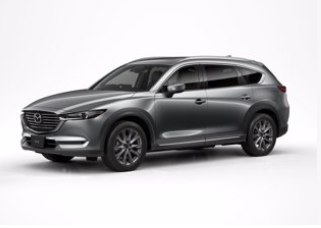
If you are searching for the Mazda CX-8 diesel fuel tank capacity, the short answer is straightforward: the CX-8 equipped with Mazda’s 2.2-litre SKYACTIV-D diesel generally has a 72-litre tank in front-wheel-drive/2WD versions and a 74-litre tank in AWD/4WD versions. Mazda’s official documentation confirms these capacities.
For Australian-market CX-8 diesel models, things are even simpler. The later Australian CX-8 SKYACTIV-D was paired with Mazda’s i-ACTIV AWD system, and Mazda lists its fuel tank capacity at 74 litres. The same Australian specification sheet gives an official combined fuel-consumption figure of 6.0 L/100 km for the 2.2-litre diesel AWD.
But knowing the size of the tank is only half the story.
How far can we actually travel on those 74 litres? How much diesel is really left when the low-fuel light appears? Does AWD explain the slightly larger tank? And should we regularly drive a CX-8 until the gauge is nearly empty?
Let's dig into everything that matters.
Content in this publication
- Mazda CX-8 Diesel Fuel Tank Capacity at a Glance
- What Fuel Does the Mazda CX-8 Diesel Use?
- How Far Can a Mazda CX-8 Diesel Travel on a Full Tank?
- Mazda CX-8 Diesel Fuel Tank Capacity in Australia
- Why Does the AWD CX-8 Have a 74-Litre Tank?
- How Much Does It Cost to Fill a Mazda CX-8 Diesel?
- When Does the CX-8 Diesel Low-Fuel Warning Appear?
- Can We Put More Than 74 Litres Into the Tank?
- How Accurate Is the Distance-to-Empty Display?
- What Affects Mazda CX-8 Diesel Fuel Consumption?
- Does the Mazda CX-8 Diesel Have Good Range for a Seven-Seater?
- Should We Keep the Diesel Tank Above One-Quarter Full?
- How to Get More Kilometres From a Tank
- Mazda CX-8 Diesel Refuelling Tips
- Mazda CX-8 72L vs 74L Fuel Tank: Which One Do You Have?
- Is the Mazda CX-8 Diesel Tank Big Enough?
- Mazda CX-8 Diesel Fuel Tank Capacity and Practical Ownership
- Final Thoughts
- Frequently Asked Questions
Mazda CX-8 Diesel Fuel Tank Capacity at a Glance
The exact capacity depends primarily on drivetrain configuration and market.
| Mazda CX-8 configuration | Fuel tank capacity |
|---|---|
| SKYACTIV-D 2.2 FWD / 2WD | 72 litres |
| SKYACTIV-D 2.2 AWD / 4WD | 74 litres |
| Australian CX-8 2.2 Diesel AWD | 74 litres |
| 74 L in US gallons | Approx. 19.5 US gal |
| 74 L in Imperial gallons | Approx. 16.3 Imp gal |
Mazda's CX-8 owner's documentation lists 72.0 L (19.0 US gal) for FWD and 74.0 L (19.5 US gal) for AWD.
So, if we own an Australian diesel CX-8 AWD, 74 litres is the figure to remember.
Why Do Some Sources Say 72 Litres and Others 74 Litres?
This is where online specifications can become confusing.
A search for CX-8 specifications may bring up 72 L on one website and 74 L on another. Neither figure is necessarily wrong.
Mazda produced the CX-8 in different drivetrain configurations depending on the country and model year. Mazda's Japanese documentation, for example, identifies approximately:
- 72 litres for 2WD models
- 74 litres for AWD models
The Australian-market diesel configuration shown in Mazda's later brochure uses AWD and therefore carries the larger 74-litre tank.
That two-litre difference may seem tiny—roughly the size of a large bottle of soft drink—but over a long road trip, every extra kilometre helps.
What Fuel Does the Mazda CX-8 Diesel Use?
The Mazda CX-8 SKYACTIV-D uses diesel fuel rather than petrol.
Mazda documentation specifies diesel meeting the appropriate fuel-quality standard; the Australian owner's guide states that the SKYACTIV-D can operate efficiently on diesel meeting EN590 or an equivalent specification.
That sounds obvious, but it becomes important when comparing CX-8 variants because Mazda also sold petrol-powered versions in some markets.
The 2.2-Litre SKYACTIV-D Engine
The diesel CX-8 uses Mazda's 2.2-litre four-cylinder SKYACTIV-D engine. In the Australian specification cited by Mazda, it is a 2,191 cc intercooled twin-turbo diesel producing 140 kW and 450 Nm, paired with a six-speed automatic transmission and i-ACTIV AWD.
This combination is one reason the CX-8 diesel became attractive as a family SUV.
Rather than drinking fuel like a large petrol seven-seater every time we touch the accelerator, the diesel combines strong low-rpm torque with relatively modest fuel consumption.
Think of it more like a marathon runner than a sprinter: it is designed to cover ground efficiently.
How Far Can a Mazda CX-8 Diesel Travel on a Full Tank?
Now we reach the question that really matters.
A 74-litre tank sounds substantial, but tank volume alone does not tell us much. What matters is how efficiently the engine uses those litres.
Mazda's Australian specification lists the diesel AWD's official combined consumption at 6.0 L/100 km, with 5.5 L/100 km in extra-urban testing and 6.9 L/100 km in urban testing. Mazda also warns that actual consumption depends on traffic, road conditions and driving style.
Using the combined laboratory figure:
74 ÷ 6.0 × 100 = approximately 1,233 km
That is a mathematical maximum based on consuming the entire tank at exactly the official test consumption.
We would not treat 1,233 km as a guaranteed real-world driving range.
Real-World Range Is Usually Lower
Cars do not live in laboratories.
We accelerate hard sometimes. We sit in traffic. We run the air conditioning. We climb hills, carry passengers, load luggage onto the roof and occasionally spend far too long looking for parking.
All those things affect fuel consumption.
If our CX-8 averages around 7.0 L/100 km, for example, a theoretical 74-litre calculation produces roughly 1,057 km.
At 8.0 L/100 km, it falls to approximately 925 km.
At 9.0 L/100 km, the same tank mathematically represents about 822 km.
And because we should not plan to consume every final drop of diesel, usable trip range should be treated more conservatively.
Highway Driving Can Stretch the Tank
Long highway journeys are where a diesel CX-8 can really settle into its rhythm.
Maintaining a steady speed minimizes repeated acceleration, while the diesel engine can operate efficiently at relatively low engine speeds.
That means a road trip with two adults, a couple of children and luggage could produce noticeably better fuel economy than a week of short urban errands.
Wind, hills, tyre pressures, temperature, traffic and vehicle load still matter, however.
A roof box in particular can quietly become a fuel-economy thief. It punches a larger hole through the air, and at motorway speed that additional aerodynamic drag becomes increasingly important.
Mazda CX-8 Diesel Fuel Tank Capacity in Australia
Australian buyers will most commonly encounter the 74-litre figure when researching diesel CX-8 models.
Mazda Australia's published CX-8 specification lists the 2.2-litre diesel with i-ACTIV AWD and a 74 L fuel tank, compared with 72 L for the 2.5-litre petrol FWD version shown alongside it.
This distinction matters when calculating range or comparing running costs.
Australian Diesel Specification
The Australian specification pairs several useful numbers:
| Specification | Mazda CX-8 2.2 Diesel AWD |
|---|---|
| Engine | 2.2L SKYACTIV-D |
| Capacity | 2,191 cc |
| Drive | i-ACTIV AWD |
| Fuel | Diesel |
| Tank | 74 L |
| Official combined consumption | 6.0 L/100 km |
| Maximum power | 140 kW |
| Maximum torque | 450 Nm |
| Transmission | 6-speed automatic |
These specifications come from Mazda Australia's CX-8 brochure and provide a useful baseline rather than a promise of what every owner will achieve.
Why Market Matters
Whenever we research an imported or used CX-8, it is worth checking the exact specification rather than assuming every vehicle is identical.
A Japanese-market 2WD diesel, for instance, may use the 72-litre configuration, whereas an Australian diesel AWD uses 74 litres.
VIN details, the owner's manual and Mazda's specifications for the relevant country are better references than a generic specification website.
Why Does the AWD CX-8 Have a 74-Litre Tank?
Packaging a fuel tank beneath a modern SUV is surprisingly complicated.
There is far more under the floor than empty space.
Engineers have to work around the exhaust, suspension, structural components, driveline hardware and crash-protection requirements. AWD vehicles also have components running toward the rear wheels.
Yet Mazda's AWD CX-8 specification carries two additional litres compared with the 2WD version.
From an owner's perspective, the important result is simple: the AWD tank gives us slightly more fuel capacity and therefore potentially a little more range.
Does Two Litres Make a Big Difference?
Not dramatically.
At 6 L/100 km, two litres theoretically represent around 33 km of driving.
At 8 L/100 km, they represent around 25 km.
We are not suddenly crossing a continent because of those extra two litres. But when the next fuel station is 30 km down the road, we may suddenly appreciate them.
How Much Does It Cost to Fill a Mazda CX-8 Diesel?
The calculation is simple:
Tank capacity × diesel price per litre = theoretical full-tank cost.
If diesel costs $2.00 per litre in a particular market, filling 74 litres would cost $148.
At $1.80 per litre, the same 74 litres would cost $133.20.
At $2.20 per litre, it becomes $162.80.
However, we almost never pump a full 74 litres into the vehicle.
Why?
Because some fuel remains in the tank when we arrive at the station.
If we fill up when 15 litres remain, we are purchasing roughly 59 litres rather than 74.
Fuel Gauge Capacity vs Refuelling Amount
This creates a common misunderstanding.
Someone may read that the CX-8 has a 74-litre tank, drive until the warning light appears, fill the vehicle and discover that the pump stops at only 62 or 65 litres.
Then comes the inevitable question:
"Where did the other litres go?"
They have not disappeared.
The tank does not need to be physically empty when the gauge reaches its lowest point or the warning activates. Manufacturers intentionally give drivers some operating margin.
The amount displayed by the fuel pump therefore should not automatically be interpreted as the tank's total capacity.
When Does the CX-8 Diesel Low-Fuel Warning Appear?
The dashboard warning should be treated as a signal to refuel rather than an invitation to discover the absolute maximum range.
A modern diesel vehicle depends on a consistent supply of fuel, and regularly running the tank extremely low offers little practical benefit.
Instead of thinking, "How many kilometres can we squeeze out after the warning?" a better habit is, "Where is the next convenient station?"
That approach gives us margin for unexpected traffic, closed service stations or a detour.
Don't Treat the Last Litres as Normal Driving Range
Planning a 1,000-km journey and assuming every litre in the tank is available is like budgeting every dollar in our bank account with nothing left for emergencies.
Technically possible?
Yes.
Comfortable?
Not particularly.
Building a sensible reserve into trip calculations makes long-distance driving less stressful.
Can We Put More Than 74 Litres Into the Tank?
Occasionally drivers report pumping an amount that appears surprisingly close to—or even slightly beyond—the published nominal capacity of a vehicle.
That does not mean Mazda supplied the wrong specification.
Published tank capacity is an approximate engineering figure, while several practical factors affect the amount recorded by a fuel pump.
Vehicle angle, dispenser shut-off behaviour, fuel temperature and the design of the filler system can influence the experience.
The sensible approach is not to repeatedly force more fuel into the filler neck after the automatic nozzle stops.
Avoid Topping Off Repeatedly
Once the fuel nozzle automatically clicks off, continuing to squeeze in extra fuel is generally unnecessary.
We gain very little useful driving range while potentially filling parts of the system that are not intended to act as ordinary tank volume.
For a normal fill, allowing the dispenser's automatic shut-off system to do its job is the easier approach.
How Accurate Is the Distance-to-Empty Display?
The CX-8's estimated remaining range is useful, but we should remember the word estimated.
The vehicle calculates range partly from recent fuel consumption.
If we have spent the past hour cruising gently along a flat motorway, the computer may expect that efficiency to continue.
Leave the motorway, enter steep terrain and start driving through stop-start traffic, and reality changes.
The distance-to-empty figure will adapt.
Why Estimated Range Can Drop Quickly
Imagine we leave home with an indicated 800 km of range.
Then we encounter:
- heavy traffic,
- steep climbs,
- strong headwinds,
- a fully loaded cabin,
- roof-mounted cargo, and
- frequent acceleration.
Consumption increases, so estimated range may fall faster than the odometer suggests.
The computer is not necessarily malfunctioning. It is updating its prediction with new information.
What Affects Mazda CX-8 Diesel Fuel Consumption?
Two people can own practically identical CX-8 diesels yet report noticeably different fuel economy.
Driving conditions make a huge difference.
Urban trips require repeated acceleration. Cold engines tend to operate less efficiently than fully warmed engines. Short trips may never give the powertrain much time to settle into efficient operation.
High-speed motorway driving brings another enemy: aerodynamic drag.
And once we add seven occupants, luggage and accessories, the engine has more work to do.
The Biggest Range Killers
The factors worth watching most closely include:
- Aggressive acceleration and braking.
- Heavy urban congestion.
- Frequent short journeys.
- High motorway speeds.
- Low tyre pressure.
- Roof racks or roof boxes.
- Heavy passenger and cargo loads.
- Mountainous terrain.
- Strong winds.
- Extended idling or climate-control use.
None of these means something is automatically wrong with the vehicle. They simply explain why our real-world number may not resemble an official laboratory figure.
Does the Mazda CX-8 Diesel Have Good Range for a Seven-Seater?
A 74-litre tank paired with an efficient diesel engine gives the CX-8 the ingredients for strong touring range.
This is particularly useful in a seven-seat SUV.
Family vehicles frequently undertake exactly the journeys where long range matters: holidays, interstate trips, airport runs and weekends away.
Stopping for coffee is pleasant.
Stopping because the fuel gauge is desperately blinking at us is less charming.
The combination of relatively generous capacity and diesel efficiency means we can potentially cover long stretches between refuelling stops without carrying an absurdly oversized fuel tank.
Why Diesel Works Well for Long-Distance Driving
Diesel engines traditionally shine when covering sustained distances under load.
The CX-8's strong torque output also means the engine does not need to behave like an overexcited blender every time the road starts climbing.
That relaxed character complements highway driving nicely.
Of course, whether diesel is the best choice for a particular owner depends on driving patterns. Someone doing predominantly very short journeys has different priorities from someone regularly covering hundreds of kilometres.
Should We Keep the Diesel Tank Above One-Quarter Full?
There is no need to panic the moment the gauge slips below one-quarter, but maintaining a reasonable reserve is a useful habit.
It gives us flexibility.
Unexpected traffic? No problem.
Fuel station closed? Keep driving.
Road diverted because somebody decided today was the perfect day to repair a bridge? We still have breathing room.
For remote journeys, the buffer becomes even more important.
Long-Distance Trip Planning
Before setting off into areas with limited services, we would check three things: available fuel stations, expected distance and actual recent fuel consumption.
Do not calculate the route exclusively from the theoretical maximum range.
If our CX-8 has recently been averaging 8.0 L/100 km, use that figure—not the brochure's 6.0 L/100 km—to estimate the next stop.
Real data from our own vehicle is far more useful for trip planning than an optimistic laboratory figure.
How to Get More Kilometres From a Tank
We do not need to crawl everywhere at half the speed limit to improve fuel economy.
Smoothness matters more.
Accelerate progressively. Look ahead so we can avoid unnecessary braking. Maintain appropriate tyre pressures. Remove roof accessories when they are not needed. Avoid carrying unnecessary weight.
Small improvements accumulate.
Saving only 0.5 L/100 km over thousands of kilometres can translate into a meaningful quantity of diesel over a year.
Tyre Pressure Matters More Than We Think
Underinflated tyres increase rolling resistance.
The engine then spends additional energy overcoming that resistance every kilometre we travel.
Correct tyre pressures help fuel economy, handling, tyre life and braking behaviour simultaneously.
That is a rare win-win-win-win situation.
Check Pressures When Conditions Change
Tyre pressure can change with temperature, vehicle loading and time.
When preparing a CX-8 for a long holiday with additional passengers and luggage, consult the tyre placard and owner's documentation for the appropriate specifications.
Do not simply guess.
Mazda CX-8 Diesel Refuelling Tips
Mazda's Australian quick guide states that when refuelling, drivers should add at least 10 litres of fuel.
That is worth remembering if we have run particularly low.
Otherwise, normal refuelling is refreshingly uncomplicated: use the correct diesel fuel, stop when appropriate and avoid confusing petrol and diesel nozzles.
Misfuelling a diesel vehicle can turn a five-minute fuel stop into an extremely expensive afternoon.
Check the Pump Before Pulling the Trigger
Routine can make us careless.
We pull into a familiar station, grab a nozzle almost automatically and start filling.
Spend two seconds confirming that we have selected diesel.
Those two seconds are cheaper than fuel-system repairs.
Mazda CX-8 72L vs 74L Fuel Tank: Which One Do You Have?
If we are uncertain about our own vehicle, the drivetrain is the first clue.
Mazda's documentation associates:
2WD/FWD → 72 litres
AWD/4WD → 74 litres
However, because model specifications vary between markets and production years, confirmation from the vehicle's manual or Mazda documentation remains the safest approach.
Australian late-model SKYACTIV-D versions were specified with AWD and a 74-litre tank.
Used Imports Need Extra Attention
This is especially relevant when buying a Japanese import.
Do not automatically assume that specifications from Mazda Australia apply to a vehicle originally manufactured for another market.
Look at the exact drivetrain and specification.
Two CX-8s parked beside one another can look almost identical while having slightly different mechanical configurations beneath the bodywork.
Is the Mazda CX-8 Diesel Tank Big Enough?
For ordinary family use, 74 litres is a substantial capacity.
More importantly, capacity works together with efficiency.
A gigantic tank attached to a thirsty engine can deliver less range than a smaller tank feeding an efficient one.
That is why the CX-8's diesel combination makes sense on paper: decent tank capacity plus comparatively economical long-distance consumption.
It is not the number 74 alone that matters.
It is what the vehicle can do with those 74 litres.
Mazda CX-8 Diesel Fuel Tank Capacity and Practical Ownership
Fuel capacity sounds like one of the dullest specifications in a brochure until we actually live with the vehicle.
Then it affects nearly every long journey.
A larger usable range means fewer refuelling stops, greater flexibility around fuel prices and more confidence when travelling through areas where service stations are spread farther apart.
For anyone considering a CX-8 diesel as a family tourer, this is arguably more meaningful than many flashy equipment features.
Screens impress us in the showroom.
Range impresses us when the nearest town is 150 km away.
Final Thoughts
The Mazda CX-8 diesel fuel tank capacity is 72 litres for 2WD/FWD versions and 74 litres for AWD/4WD versions, according to Mazda documentation. Australian CX-8 2.2-litre SKYACTIV-D models paired with i-ACTIV AWD use the 74-litre tank.
Mazda's Australian specification gives the diesel AWD an official combined consumption figure of 6.0 L/100 km, creating an impressive theoretical range. Real-world range will naturally be lower or higher depending on speed, traffic, terrain, weather, loading and driving style.
Instead of obsessing over extracting the final kilometre from every tank, we would focus on smooth driving, correct tyre pressures and sensible refuelling habits.
After all, a good fuel tank is a little like a good travel companion: the best one is the one that lets us enjoy the journey without constantly asking when the next stop is.
Frequently Asked Questions
1. What is the Mazda CX-8 diesel fuel tank capacity?
Mazda specifies approximately 72 litres for FWD/2WD CX-8 models and 74 litres for AWD/4WD versions. Australian 2.2-litre SKYACTIV-D AWD models have a 74-litre fuel tank.
2. How far can a Mazda CX-8 diesel travel on a full tank?
It depends heavily on real-world consumption. Using Mazda Australia's official 6.0 L/100 km combined figure and the 74-litre capacity gives a mathematical figure of roughly 1,233 km, but drivers should not expect to use every litre or consistently reproduce laboratory fuel consumption. Actual range depends on traffic, terrain, speed, weather, loading and driving behaviour.
3. Does every Mazda CX-8 diesel have a 74-litre tank?
No. Mazda documentation lists 72 litres for 2WD/FWD configurations and 74 litres for AWD/4WD configurations. The exact specification therefore depends on the vehicle's drivetrain, market and model configuration.
4. What fuel does the Mazda CX-8 2.2 diesel use?
The SKYACTIV-D 2.2 uses diesel. Mazda's Australian quick guide states that the engine operates efficiently on diesel meeting EN590 or an equivalent specification. Always follow the fuel requirements specified for the vehicle's particular market.
5. Why can't I put 74 litres into my CX-8 when the fuel warning appears?
Because a low-fuel warning does not necessarily mean the tank is physically empty. Fuel normally remains when the warning activates, so a typical fill may be noticeably less than the tank's nominal capacity. Tank capacity and the amount required at an individual fuel stop are therefore not the same thing.
If you want to know other articles similar to Mazda CX-8 Diesel Fuel Tank Capacity: Size, Range, and Refuelling Guide you can visit the category Service and Parts.
Peugeot RCZ Weight: A Complete Guide to Kerb Weight and Specs
Peugeot RCZ Boot Space: How Practical Is This Stylish Coupé?
Peugeot RCZ Engine Size: Complete Petrol and Diesel Guide
Peugeot RCZ Tyre Pressure: Complete PSI and Bar Guide
Mazda CX-8 Engine Size: Complete Petrol and Diesel Guide
Mazda CX-8 Warning Lights: Meanings, Causes, and What to Do
Leave a Reply
More content of your interest