
Peugeot RCZ Models: Complete Guide to Versions, Trims and Engines

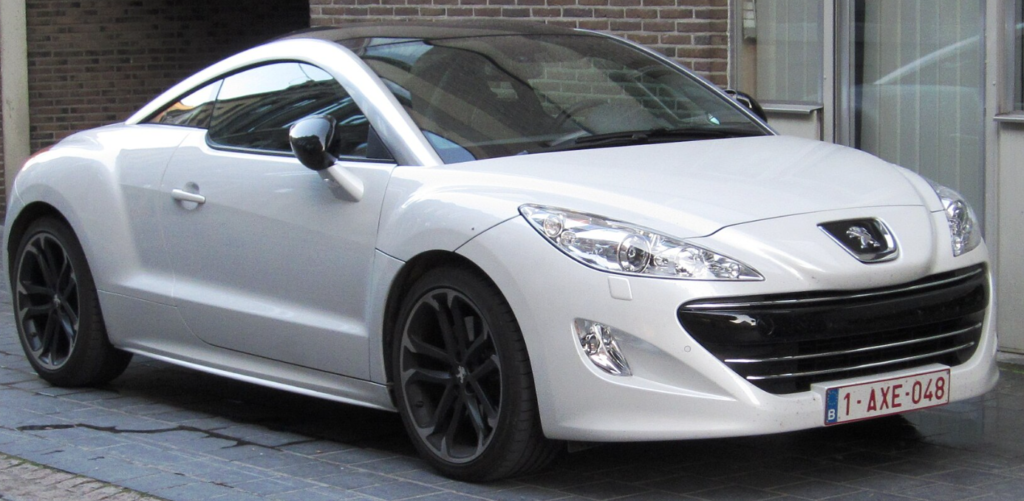
Few Peugeot models have aged quite like the RCZ. Even now, years after production ended, its double-bubble roof, sweeping aluminium arches and low-slung profile make it look as though it escaped from a concept-car display and simply kept driving.
That is not far from the truth. The RCZ grew from the 308 RCZ concept shown in 2007, reached production form shortly afterward, and became one of Peugeot's most distinctive modern cars. Production took place at Magna Steyr in Graz, Austria, with the final RCZ leaving the line on September 18, 2015. Magna recorded 67,915 vehicles produced during the programme.
But searching for Peugeot RCZ models can quickly become confusing.
Are Sport and GT different models? What about THP 156, THP 200 and HDi 163? Is an RCZ R simply a high-spec GT? Where do versions such as Asphalt, Magnetic, Red Carbon and GT Line fit?
We are going to untangle all of it.
The important thing to understand is that the RCZ range was divided not only by engine but also by trim level, production period and market. Peugeot did not sell exactly the same combinations in every country, so an RCZ advertised in Britain may have a different trim name from a broadly equivalent car sold in continental Europe.
Content in this publication
- Peugeot RCZ Models at a Glance
- Understanding the Peugeot RCZ Model Structure
- Peugeot RCZ THP 156
- Peugeot RCZ THP 200
- Peugeot RCZ 2.0 HDi 163
- Peugeot RCZ Sport
- Peugeot RCZ GT
- Peugeot RCZ GT Line
- Peugeot RCZ Asphalt
- Peugeot RCZ Magnetic
- Peugeot RCZ Red Carbon
- Peugeot RCZ R
- Peugeot RCZ R vs THP 200
- Which Peugeot RCZ Model Fits Different Drivers?
- What to Check When Comparing Used Peugeot RCZ Models
- Are There Different Generations of the Peugeot RCZ?
- Why the Peugeot RCZ Range Still Feels Unusual
- Peugeot RCZ Model Timeline
- Was There Ever an RCZ Hybrid?
- The Rarity Factor: Does the Model Name Matter?
- Closing Thoughts on Peugeot RCZ Models
- Frequently Asked Questions About Peugeot RCZ Models
Peugeot RCZ Models at a Glance
Before diving into individual versions, we can simplify the RCZ family into several major categories.
| RCZ version | Typical engine | Power | Main character |
|---|---|---|---|
| RCZ THP 156 | 1.6 turbo petrol | 156 hp | Accessible petrol model |
| RCZ THP 156 Automatic | 1.6 turbo petrol | 156 hp | Relaxed automatic alternative |
| RCZ THP 200 | 1.6 turbo petrol | 200 hp | Sportier mainstream RCZ |
| RCZ HDi 163 | 2.0 turbo diesel | 163 hp | Torque-focused long-distance model |
| RCZ Sport | Various | 156–200 hp / 163 hp diesel | Entry/mainstream UK trim |
| RCZ GT | Various | 156–200 hp / 163 hp diesel | Higher-spec UK trim |
| RCZ GT Line | Mainly late-production models | Market dependent | R-inspired styling without full R hardware |
| RCZ Asphalt | Primarily THP 200 | 200 hp | Limited special edition |
| RCZ Magnetic | THP 156, THP 200 or HDi 163 in UK | Varies | High-spec special edition |
| RCZ Red Carbon | Petrol/diesel depending market | Varies | Late special edition |
| RCZ R | 1.6 THP petrol | 270 hp | Peugeot Sport-developed flagship |
The original mainstream engine family consisted of a 1.6-litre THP petrol with 156 hp, a higher-output 1.6 THP producing 200 hp and a 2.0-litre HDi diesel producing 163 hp. The 156 hp petrol was also available with a six-speed automatic in certain markets.
Then Peugeot Sport turned the dial far beyond eleven and created the 270 hp RCZ R.
Understanding the Peugeot RCZ Model Structure
The easiest mistake is treating every badge as though it identifies an entirely different mechanical model.
It doesn't.
Think of the RCZ range as a wardrobe. The engine is what is underneath; the trim determines what the car is wearing.
A THP 156 describes the powertrain. Sport or GT generally describes the specification level. Therefore, something advertised as a “Peugeot RCZ GT THP 156” combines the GT equipment package with the 156 hp turbocharged petrol engine.
Likewise, an RCZ Sport could be fitted with different engines.
The RCZ R is different. It was not merely an equipment package. Peugeot Sport substantially altered the engine, differential, chassis, suspension, brakes and aerodynamics, turning it into a genuinely distinct performance derivative.
Phase 1 and Phase 2 Peugeot RCZ Models
Another useful distinction is between early and facelifted cars.
The original production RCZ arrived in 2010. Peugeot introduced the redesigned RCZ for the first months of 2013, changing its front-end styling while retaining the familiar double-bubble silhouette and core engine family.
Consequently, enthusiasts often refer to:
Phase 1: approximately 2010–2012/early 2013
Phase 2 or facelift: approximately 2013–2015
Exact registration dates overlap because unsold earlier cars could be registered after the facelift arrived.
What Changed With the 2013 RCZ Facelift?
The biggest visual difference sits right in front of us.
Early cars use the broad, distinctive Peugeot grille associated with the brand's late-2000s design language. The facelift brought a smaller, cleaner grille and slimmer front styling that tied the RCZ more closely to Peugeot's newer models.
Peugeot also refreshed interior details and expanded personalisation opportunities. Mechanically, however, the familiar 156 hp THP, 200 hp THP and 163 hp HDi engines continued in the regular RCZ range.
That makes the facelift more evolutionary than revolutionary—until we reach the R.
Peugeot RCZ THP 156
For many owners, the THP 156 is the gateway into RCZ ownership.
Its 1.6-litre turbocharged direct-injection petrol engine officially produced 115 kW, or 156 hp, with 240 Nm of torque in Peugeot's facelift specifications. It was offered with a six-speed manual gearbox and, in various markets, a six-speed automatic.
It may be the least powerful petrol RCZ, but calling it slow misses the point.
The RCZ is relatively compact and low, so even the entry petrol model retains the visual drama buyers expect. You still get the sweeping roof, frameless-looking coupé proportions, active rear spoiler and driving position that separates the RCZ from an ordinary hatchback.
THP 156 Manual vs Automatic
The manual makes the RCZ feel more traditional and involving. You choose the gear, work with the turbocharged engine and become more connected with the car.
The automatic takes a different approach. It is better suited to someone who likes the shape and atmosphere of the RCZ but spends plenty of time in urban traffic.
Importantly, the automatic was associated with the lower-powered THP rather than the THP 200 or RCZ R. Original Peugeot specifications listed the THP 156 with either six-speed manual or six-speed automatic transmission.
Who Is the THP 156 For?
It makes sense for drivers who want the RCZ experience without making outright performance the central reason for owning one.
We would still pay more attention to condition and service history than to the number written on the boot. An immaculate, carefully maintained THP 156 can be a much more satisfying ownership proposition than a neglected higher-powered example.
Peugeot RCZ THP 200
Now the RCZ begins to flex its shoulders.
The 1.6 THP 200 raised output to 147 kW, or 200 hp, and Peugeot quoted 275 Nm of torque for the facelift version. A six-speed manual gearbox was standard with this engine.
Where the THP 156 is a stylish coupé with useful performance, the THP 200 feels much closer to what the bodywork promises.
It accelerates harder, responds more eagerly and gives us more reason to find an entertaining road after taking the long route home.
Why the THP 200 Matters in the Range
For years, this was the strongest regular-production RCZ.
Before the R arrived, it represented the performance peak of the conventional lineup. Peugeot even used the 200 hp version as the basis for special derivatives such as the Asphalt edition.
That also gives it an interesting position on the used market. It delivers substantially more punch than the THP 156 without entering the specialised territory of the RCZ R.
Is the THP 200 an RCZ R Without the Badge?
No.
This distinction matters.
The R did not simply receive extra boost and a larger number in the brochure. Peugeot Sport engineered specific mechanical components around the 270 hp powertrain, adding a Torsen limited-slip differential, dedicated suspension calibration, uprated braking hardware, aerodynamic changes and an altered chassis setup.
The THP 200 remains the hotter version of the normal RCZ.
The RCZ R is another animal.
Peugeot RCZ 2.0 HDi 163
A diesel engine inside such a flamboyant coupé sounds slightly contradictory at first.
Then we remember how people actually use cars.
The 2.0 HDi FAP produced 120 kW, or 163 hp, together with a much stronger 340 Nm of torque in Peugeot's official specifications. It came with a six-speed manual gearbox.
That torque changes the car's personality.
Instead of chasing revs, we can lean on the diesel's mid-range shove. Long motorway journeys suit it particularly well, which made the HDi RCZ an intriguing combination of visual theatre and everyday efficiency.
Why Peugeot Offered a Diesel RCZ
Because the RCZ was always meant to be more usable than its styling suggested.
It has a 2+2 cabin rather than being a strict two-seater, the rear seatbacks can fold, and the luggage area is unusually practical for a coupé. Peugeot deliberately designed the RCZ to combine emotional styling with real-world usability.
You may be interested in reading Test Drive Review: The Fiat 500 Abarth 0-60 Acceleration
The diesel simply extended that philosophy to people covering substantial annual mileage.
HDi 163 vs THP Petrol Models
The petrol engines suit the RCZ's sporty character more naturally. The diesel counters with stronger low-speed torque and historically attractive official fuel-consumption figures.
Which personality sounds better depends on what we want from the car.
For occasional weekend use, a petrol model feels logical. For long-distance commuting, the HDi makes the unusual coupé surprisingly sensible.
Peugeot RCZ Sport
Here is where market-specific trim names become important.
In the UK, Sport served as the more accessible mainstream trim, and it could be combined with multiple engines rather than identifying one particular powertrain.
Period used-car data shows Sport examples with THP 156, THP 200 and HDi 163 engines.
Sport cars were hardly stripped-out machines. Equipment included features such as alloy wheels, sports seats, dual-zone climate control, parking assistance, electronic stability systems and the RCZ's active rear spoiler, although precise equipment could vary with production year.
RCZ Sport Does Not Mean the Fastest Model
The name catches people out.
“Sport” sounds as though it should automatically mean a stronger engine. In reality, we might find a Sport THP 156 sitting next to a GT THP 156.
Their performance could therefore be broadly similar while their equipment differs.
Always read the complete model description.
Peugeot RCZ GT
GT sat above Sport in markets such as the UK and added a more luxurious flavour to the same dramatic shape.
Depending on model year, GT specification brought upgrades such as leather upholstery, heated front seats, larger alloy wheels, additional parking assistance and automatic lighting or wipers.
Again, GT did not automatically mean THP 200.
Used and historical model listings show GT cars fitted with THP 156, THP 200 and HDi 163 engines.
Sport vs GT: What Is the Real Difference?
Think specification rather than speed.
Two cars carrying the same engine can drive similarly while feeling noticeably different inside because one has richer upholstery, larger wheels or more convenience equipment.
This is why shopping solely by badge can lead us down the wrong road.
A well-optioned Sport can overlap with a GT, while optional equipment and special editions muddy the water even further.
Peugeot RCZ GT Line
Late in the RCZ's life, Peugeot introduced its GT Line philosophy across the wider range, starting its expansion with the RCZ.
The idea was simple: give buyers a stronger visual connection with higher-performance GT products without requiring them to choose the most extreme engine. Peugeot announced the GT Line strategy in October 2014.
Late-production RCZ GT Line examples are therefore particularly interesting because they combine the facelift design with sporty visual details inspired by the hotter end of the family.
By 2015, as production wound down, some European markets had reduced the RCZ catalogue dramatically. L'Argus reported that after the THP 155 and HDi versions were phased out, the French range was essentially reduced to the THP 200 GT Line and RCZ R before production ended.
Peugeot RCZ Asphalt
If the normal RCZ was striking, Peugeot decided it could still turn the visual volume higher.
Enter the Asphalt.
This limited special edition used the THP 200 engine and adopted an especially distinctive appearance. Peugeot described versions with matt-finish bodywork, 19-inch alloy wheels and upgraded leather/Alcantara detailing.
It is the sort of car that makes washing instructions feel almost as important as the owner's manual.
What Makes an Asphalt Different?
Its appeal rests mainly in rarity, appearance and equipment rather than a massive mechanical transformation.
That distinction separates it from the RCZ R.
The Asphalt takes the regular performance RCZ and dresses it for a special occasion. The R rebuilds key mechanical parts of the package around outright performance.
Peugeot RCZ Magnetic
The Magnetic was another special-edition interpretation, particularly notable in the UK.
Launched in 2013, the UK Magnetic was based on the Sport trim but added equipment including 19-inch wheels, navigation, parking assistance and leather sports seats. British buyers could order it with the THP 156, THP 200 or HDi 163 engine, and just 170 were allocated to the UK market.
That engine availability is important because “Magnetic” does not tell us how powerful the car is.
One Magnetic might be a 156 hp petrol. Another could carry the 200 hp THP. A third might be diesel.
The special-edition badge tells us about the specification package, not necessarily the engine beneath it.
Peugeot RCZ Red Carbon
Red Carbon arrived late in the RCZ story and leaned heavily into the car's dramatic side.
Peugeot's official material described features such as 19-inch wheels, contrasting black exterior trim, Nappa leather, red stitching, navigation and xenon lighting. Availability differed between countries: for example, Peugeot Austria announced its Red Carbon with a 155 hp THP manual engine, while German-market material described petrol and diesel choices.
This is a perfect illustration of why regional specification matters when researching Peugeot RCZ models.
Special Editions Were Not Identical Worldwide
Names, engine combinations, quantities and equipment varied.
Besides the better-known Asphalt, Magnetic and Red Carbon, Peugeot also created other country-specific or regional editions during the RCZ's career.
So when we encounter an unusual badge, we should not immediately assume it is fake or aftermarket. But neither should we rely solely on a seller's description. Checking the VIN, original market specification and factory equipment is the safest way to identify an unusual RCZ correctly.
Peugeot RCZ R
And now we reach the one wearing boxing gloves.
The RCZ R was the ultimate production RCZ and the version that transformed Peugeot's glamorous coupé into something much more serious.
Its 1.6-litre THP engine delivered 199 kW, or 270 hp, at 6,000 rpm and 330 Nm between 1,900 and 5,500 rpm. Peugeot quoted 0–100 km/h in 5.9 seconds and an electronically limited 250 km/h top speed.
For a 1.6-litre production engine in 2014, those numbers were remarkable.
What Peugeot Sport Changed
This was far more than engine software.
Peugeot Sport worked extensively on the powertrain and chassis. The production R received a Torsen limited-slip differential, dedicated suspension settings, stronger braking hardware, a lower stance and aerodynamic changes. Peugeot also used specially developed internal engine components to make the highly stressed 1.6-litre unit suitable for its intended performance.
In simple language, Peugeot did not create the R by asking, “How much more power can we add?”
It asked, “What else must change so the entire car can handle that power?”
RCZ R Styling Differences
The transformation was visual too.
The R received unique 19-inch wheels, matt-black roof arches, a fixed rear spoiler, distinctive exterior detailing and an interior featuring sport seats, Alcantara/Nappa materials and red accents.
You may be interested in readingTest Drive Review: The Fiat 500 Abarth 0-60 AccelerationYou may be interested in reading
 Customizing Your Ride: A Comprehensive Guide to the Fiat 500 Body Kit
An ordinary RCZ already looks special.
The R looks as though someone tightened every screw in its personality.
Peugeot RCZ R vs THP 200
The difference between these two deserves its own section because used-car advertisements sometimes blur the distinction.
| Feature | RCZ THP 200 | RCZ R |
|---|---|---|
| Engine | 1.6 turbo petrol | 1.6 turbo petrol |
| Power | 200 hp | 270 hp |
| Transmission | 6-speed manual | 6-speed manual |
| Limited-slip differential | Standard RCZ setup | Torsen LSD |
| Suspension | Sportier regular RCZ setup | Peugeot Sport-specific |
| Brakes | Regular production specification | High-performance R system |
| Character | Fast road coupé | Focused performance flagship |
So no, adding R-style wheels, a spoiler and badges to a THP 200 does not turn it into an R.
When originality matters, verify the vehicle identity rather than relying on cosmetic clues.
Which Peugeot RCZ Model Fits Different Drivers?
Instead of hunting for one universally “best” RCZ, it makes more sense to match each version to the way it will actually be driven.
The THP 156 manual suits someone who mainly wants the styling, petrol character and manual driving experience without chasing maximum performance.
The THP 156 automatic is the more relaxed alternative for traffic-heavy daily driving.
The THP 200 appeals to drivers who want a meaningful performance increase while keeping the character and relative simplicity of the standard RCZ range.
The HDi 163 suits higher-mileage use and drivers who appreciate strong mid-range diesel torque.
The GT makes sense when cabin specification matters as much as the engine.
Special editions such as Asphalt, Magnetic and Red Carbon are particularly interesting to buyers who value unusual factory specifications.
And the RCZ R sits in its own corner for those specifically seeking the most performance-focused production version.
What to Check When Comparing Used Peugeot RCZ Models
Model specification matters, but history matters more.
Before focusing on whether the badge says Sport, GT, Magnetic or R, we would check:
- VIN and original factory specification
- Complete maintenance records
- Evidence of correct oil changes and servicing
- Cold-start behaviour
- Cooling-system condition
- Turbocharger operation
- Clutch and gearbox behaviour
- Suspension noises and uneven tyre wear
- Condition of the active rear spoiler on regular models
- Evidence of accident repair or poor-quality modifications
- Correct wheels, interior and trim on claimed special editions
- Proof that a supposed RCZ R is genuinely an R
The RCZ is now an older performance-oriented coupé. A carefully maintained lower-spec example may therefore be the smarter car than a rare edition with missing history.
Are There Different Generations of the Peugeot RCZ?
Not in the conventional sense.
There was only one production generation of the Peugeot RCZ.
What changed was the phase.
The original design ran from launch until the 2013 facelift, after which the restyled version continued until production ended in September 2015. Peugeot never launched a second-generation RCZ. Magna Steyr confirms that the last example left its Graz production line on September 18, 2015 after 67,915 vehicles had been manufactured.
That is useful when searching classified ads because phrases such as “second-generation RCZ” are usually inaccurate. What sellers generally mean is the facelift or Phase 2 model.
Why the Peugeot RCZ Range Still Feels Unusual
Most coupés reveal their engineering hierarchy immediately.
Small engine. Bigger engine. Performance model. Done.
The RCZ is more tangled—and more interesting.
Its trim names overlapped with several engines. Different countries received different specifications. Special editions multiplied. Then, near the end of production, Peugeot Sport produced an R derivative so extensively modified that it effectively became the wild sibling of the standard car.
The RCZ was unusual from the beginning anyway. It became Peugeot's first production model of its era to abandon the company's familiar numeric naming pattern, and its silhouette stayed remarkably close to the concept that inspired it.
That gives it something specifications cannot quite measure: identity.
Peugeot RCZ Model Timeline
The timeline is easier to understand once we strip away regional trim complications.
| Period | Major RCZ development |
|---|---|
| 2007 | 308 RCZ concept appears |
| 2009 | Production RCZ revealed; early limited edition announced |
| 2010 | Main production RCZ goes on sale |
| 2011 | Special editions including Asphalt expand the range |
| 2013 | Facelifted RCZ arrives |
| 2013 | Magnetic and other special versions appear in selected markets |
| Early 2014 | 270 hp RCZ R reaches customers |
| 2014 | Red Carbon and GT Line-era derivatives appear |
| 2015 | RCZ range winds down |
| September 18, 2015 | Final RCZ produced at Magna Steyr |
Peugeot's own historical material traces the car from its 2007 concept through the 2010 production launch, the 2013 facelift and the arrival of the RCZ R.
Was There Ever an RCZ Hybrid?
Peugeot explored the idea.
The company showed an RCZ HYbrid4 concept combining a 2.0-litre HDi engine with an electric motor on the rear axle, creating a proposed 200 hp hybrid system.
It never became a normal production RCZ model.
That distinction matters because old concept photographs sometimes surface online and create the impression that an extremely rare hybrid RCZ was sold to the public.
The production range remained centred on the THP petrol engines, HDi diesel and ultimately the high-performance RCZ R.
The Rarity Factor: Does the Model Name Matter?
Increasingly, yes.
As the surviving RCZ population ages, originality becomes more relevant. Standard Sport and GT cars will generally be easier to find than genuine limited editions or RCZ R examples.
However, rarity alone does not make a particular car desirable.
A special badge cannot compensate for questionable maintenance, mismatched tyres, damaged body panels or years of deferred repairs.
We would rather inspect the car than fall in love with the advert.
With something like an Asphalt, Magnetic, Red Carbon or R, documentation becomes especially valuable because cosmetic parts can be changed and replicas can be built.
Closing Thoughts on Peugeot RCZ Models
The Peugeot RCZ range looks complicated only until we divide it into layers.
At its core were three mainstream powertrain choices: THP 156, THP 200 and HDi 163. Depending on country, those engines could sit beneath trims such as Sport or GT. Peugeot then sprinkled special editions across individual markets before producing the dramatically more serious 270 hp RCZ R.
A facelift in 2013 refreshed the shape without replacing the underlying model, meaning there was only one RCZ generation in production.
And perhaps that is part of its charm.
Peugeot did not endlessly reinvent the RCZ. It created one striking shape, polished it, experimented with specifications and finally handed it to Peugeot Sport to see just how far the idea could go.
The result ranges from comfortable diesel cruiser to 270 hp performance coupé—all wrapped in essentially the same unmistakable double-bubble silhouette.
Years after the last of 67,915 cars left Graz, the RCZ still does something many newer cars struggle to achieve.
You notice it.
Frequently Asked Questions About Peugeot RCZ Models
1. What Peugeot RCZ models are there?
The main engine versions are the 1.6 THP 156 petrol, 1.6 THP 200 petrol, 2.0 HDi 163 diesel and the 1.6 THP 270 RCZ R. Depending on the country and year, regular cars were sold under trims such as Sport, GT and later GT Line, alongside special editions including Asphalt, Magnetic and Red Carbon.
2. What is the most powerful Peugeot RCZ model?
The production flagship is the Peugeot RCZ R, whose 1.6-litre turbocharged petrol engine produces 270 hp and 330 Nm. Peugeot quoted a 0–100 km/h time of 5.9 seconds and a limited top speed of 250 km/h.
3. What is the difference between Peugeot RCZ Sport and GT?
Sport and GT primarily identify equipment levels rather than engines. In markets such as the UK, both trims could be paired with several RCZ engines. GT generally added luxury and convenience equipment including leather upholstery, heated seats and larger wheels, depending on model year.
4. Is the Peugeot RCZ R the same as the THP 200?
No. Although both use a turbocharged 1.6-litre petrol engine, the RCZ R produces 270 hp rather than 200 hp and received major Peugeot Sport modifications including a Torsen limited-slip differential, dedicated chassis and suspension tuning, stronger brakes and specific engine components.
You may be interested in readingTest Drive Review: The Fiat 500 Abarth 0-60 AccelerationYou may be interested in reading
Customizing Your Ride: A Comprehensive Guide to the Fiat 500 Body KitYou may be interested in reading
 A Trip Down Memory Lane: The 1977 Fiat 124 Spider
5. How many generations of Peugeot RCZ were made?
There was one production generation, divided broadly into the original model and the facelifted version introduced for 2013. RCZ production ended in September 2015, with Magna Steyr recording 67,915 vehicles over the programme.
If you want to know other articles similar to Peugeot RCZ Models: Complete Guide to Versions, Trims and Engines you can visit the category Models.
Toyota Hilux Like Cars: The Best Alternatives Worth Considering
Toyota Hilux and Fortuner Same Engine: Are They Really Identical?
Toyota Hilux vs Mazda BT-50: Which Ute Makes More Sense?
Toyota Hilux vs Prado: Which Toyota 4WD Makes More Sense?
Toyota Hilux vs Land Cruiser: Which Toyota 4x4 Makes More Sense?
Toyota Hilux vs Ford Raptor: Which Pickup Fits Your Life?
Leave a Reply
More content of your interest