

Mazda CX-8 vs CX-9: Which Three-Row Mazda Makes More Sense?

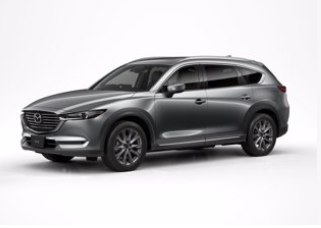
Put the Mazda CX-8 vs CX-9 side by side and, at first glance, they can feel like two variations of the same recipe. Both carry Mazda’s elegant design language, both offer three rows of seats, both aim to make family transport feel less like driving a small bus, and both deliver that familiar Mazda emphasis on steering feel and cabin quality.
Look a little deeper, though, and the personalities separate quickly.
The Mazda CX-8 is the leaner, more economical choice, particularly when equipped with its muscular turbo-diesel engine. The Mazda CX-9 is bigger, stronger under acceleration, roomier for passengers and luggage, and generally feels more like Mazda’s traditional flagship family SUV.
Neither is currently a mainstream new-car proposition in markets such as Australia. Mazda confirmed that Australia-bound CX-8 production would end in 2023, while Mazda also describes the CX-9 as discontinued as its newer large-SUV range takes over. That makes this comparison particularly useful for anyone shopping the used market.
So, which one belongs in our driveway? Let’s dig beyond the badge.
Note: Specifications vary by model year and country. Where numerical specifications are given below, we primarily reference late Australian-market CX-8 and CX-9 models so we are comparing similar generations rather than mixing specifications from different regions.
Content in this publication
- Mazda CX-8 vs CX-9 at a Glance
- What Is the Main Difference Between the Mazda CX-8 and CX-9?
- Exterior Size and Road Presence
- Mazda CX-8 vs CX-9 Interior Space
- Third-Row Space: Which One Works Better for Seven People?
- Mazda CX-8 vs CX-9 Boot Space
- Engine Comparison
- Performance: CX-8 Diesel vs CX-9 Turbo
- Fuel Economy
- Driving Experience
- Ride Comfort and Refinement
- Mazda CX-8 vs CX-9 Towing Capacity
- Technology and Infotainment
- Safety Equipment
- Reliability and Used-Car Considerations
- Running Costs
- Which Is Better for a Family?
- Mazda CX-8 vs CX-9 for City Driving
- Mazda CX-8 vs CX-9 for Road Trips
- Is the CX-9 Worth the Extra Size?
- Is the Mazda CX-8 Basically a Smaller CX-9?
- Which Used Model Makes the Most Sense?
- Final Thoughts on the Mazda CX-8 vs CX-9
- Frequently Asked Questions
Mazda CX-8 vs CX-9 at a Glance
Before getting buried in engine codes and cargo measurements, here is the basic difference.
| Feature | Mazda CX-8 | Mazda CX-9 |
|---|---|---|
| Main character | Efficient, narrower family SUV | Larger flagship family SUV |
| Typical seating | 6 or 7 | 6 or 7 |
| Key engine options | 2.5L petrol / 2.2L turbo diesel | 2.5L turbo petrol |
| Maximum power | Up to 140 kW | 170 kW |
| Maximum torque | Up to 450 Nm diesel | 420 Nm |
| Length | 4,925 mm late model | Around 5,075 mm |
| Cargo behind third row | 209 L | 230 L |
| Cargo with third row folded | Around 742 L* | 810 L |
| Maximum braked towing | Up to 2,000 kg | 2,000 kg |
| Main advantage | Efficiency and manageable dimensions | Performance and extra space |
*Mazda's CX-8 brochure also lists 775 L when underfloor storage is included.
Think of them as siblings dressed for different occasions. The CX-8 turns up wearing fitted clothes and sensible shoes. The CX-9 arrives in a broader jacket with a turbocharger hidden underneath.
What Is the Main Difference Between the Mazda CX-8 and CX-9?
Size and power separate them most clearly.
The CX-8 was designed to provide three-row practicality without demanding quite as much road space. Mazda's late Australian specification lists it at 4,925 mm long, while the CX-9 stretches to roughly 5,075 mm.
That 150 mm difference sounds modest on paper. Around tight shopping-centre parking spaces, narrow residential streets, and packed school pickup zones, however, it can become noticeable.
The CX-9 uses its larger footprint to offer more breathing room and greater luggage capacity.
Then we reach the engines.
Late CX-8s could be fitted with either a naturally aspirated 2.5-litre petrol engine or Mazda's 2.2-litre twin-turbo diesel, whereas the CX-9 relied on a 2.5-litre turbocharged petrol engine.
Those engines fundamentally change how the two SUVs feel.
Exterior Size and Road Presence
CX-8: Big Without Feeling Excessive
The CX-8 occupies an interesting middle ground.
It is unquestionably a substantial SUV, yet its proportions disguise some of that size. The body feels long rather than bulky, and at 1,845 mm wide in late Australian specification, it remains relatively manageable for a three-row vehicle.
That's useful when our weekly routine contains more supermarket car parks than cross-country expeditions.
Mazda also managed to give the CX-8 elegant proportions rather than designing something that resembles a refrigerator on wheels.
CX-9: The More Commanding SUV
The CX-9 feels like the bigger machine because it is one.
Its additional length contributes to a stronger visual presence, and from behind the steering wheel there is more of that traditional large-SUV sensation.
The CX-9 therefore suits buyers who actively want space rather than merely tolerating it.
Which Is Easier Around Town?
Purely from a size perspective, we'd expect most drivers to find the CX-8 less demanding in urban environments.
A difference of a few centimetres rarely matters on an open motorway. When you're reversing between concrete pillars while somebody waits impatiently behind you, every centimetre suddenly deserves a promotion.
Mazda CX-8 vs CX-9 Interior Space
Both SUVs demonstrate one thing Mazda traditionally does rather well: making an ordinary family cabin feel a little more expensive than expected.
Controls generally fall naturally to hand, materials in higher grades can feel genuinely premium, and the overall design avoids the visual chaos occasionally found in feature-heavy family SUVs.
Yet space remains the CX-9's natural territory.
Front-Row Comfort
Drivers of either model get a relatively car-like seating position rather than the towering command-post feeling offered by some body-on-frame SUVs.
That's part of their appeal.
The CX-8 feels slightly more intimate. The CX-9 gives shoulders and elbows a little more territory.
Higher specifications of both vehicles could also provide equipment such as leather upholstery, heated seats, ventilated front seats, Bose audio and a 360-degree camera, although exact features depend heavily on trim and model year.
Second-Row Accommodation
For families using the second row every day, both work well.
The CX-9's larger body gives it a natural advantage when carrying adults or bulky child seats. The CX-8 remains perfectly usable, but its mission is clearly to package three rows into a somewhat tidier footprint.
Some premium versions of both SUVs were available with six-seat layouts using second-row captain's chairs rather than a traditional bench. Mazda's CX-8 Asaki LE, for example, offered second-row captain's seating, while the CX-9 Azami LE used a similar six-seat philosophy.
Third-Row Space: Which One Works Better for Seven People?
Here's where marketing brochures meet knees.
Technically, seven seats and seven comfortable seats aren't necessarily the same thing.
CX-8 Third Row
The CX-8's third row is useful for children and occasional adult journeys. What we shouldn't expect is limousine space behind the second row.
Its cleverness comes from fitting legitimate three-row flexibility inside a relatively narrow package.
CX-9 Third Row
The CX-9's extra overall size gives it a better foundation for carrying passengers across all three rows.
If the third row will be occupied every single day rather than twice a month, the CX-9's larger dimensions become more meaningful.
Our Practical Rule
If rows one and two handle almost all daily passengers and row three is mainly for school friends or occasional relatives, the CX-8 makes plenty of sense.
If six or seven occupants are part of normal life, the CX-9's additional space deserves serious consideration.
Mazda CX-8 vs CX-9 Boot Space
Three-row SUVs often perform a magic trick: seven seats appear, and the boot disappears.
Neither Mazda completely escapes that reality.
Mazda lists the CX-8 at 209 litres behind the third row, while its own historical comparison lists the CX-9 at 230 litres. Fold row three and the numbers increase dramatically, to roughly 742 litres in the CX-8 and 810 litres in the CX-9 using Mazda's comparable published figures.
The later CX-8 brochure quotes 775 litres including underfloor storage, illustrating why cargo figures should always be checked carefully before comparing sources.
What Does That Mean in Real Life?
With every seat occupied, neither suddenly becomes a cargo van.
Think school bags, a modest grocery run, or carefully selected luggage rather than half the contents of our house.
Fold the third row and both become substantially more useful, while the CX-9 preserves the advantage.
For families carrying a stroller, sports equipment, suitcases and seven passengers simultaneously, we'd recommend physically testing the boot before buying. Numbers rarely reveal whether our specific stroller fits without performing luggage Tetris.
Engine Comparison
Now things get interesting.
Mazda CX-8 2.5 Petrol
The late Australian CX-8's 2.5-litre naturally aspirated petrol engine produced 140 kW and 252 Nm, driving the front wheels through a six-speed automatic. Official combined consumption was listed at 8.1 L/100 km.
You may be interested in reading Mitsubishi Pajero Sport Models: Generations, Trims, Engines, and Differences Explained
It's the straightforward choice.
Power delivery is predictable and smooth, but a fully loaded seven-seat SUV inevitably asks more from a naturally aspirated engine than a lightly loaded hatchback would.
Mazda CX-8 2.2 Diesel
The 2.2-litre twin-turbo diesel transforms the CX-8's personality.
Output remained 140 kW, but torque climbed to a substantial 450 Nm at 2,000 rpm. The Australian specification paired the diesel with all-wheel drive and listed combined consumption at 6.0 L/100 km.
That low-rpm torque is exactly what we want when the SUV is loaded with people, luggage or a trailer.
Instead of shouting for revs, the diesel simply leans into the job.
Mazda CX-9 2.5 Turbo Petrol
The CX-9 answers with Mazda's turbocharged 2.5-litre petrol engine producing 170 kW and 420 Nm.
Official Australian combined figures were listed at 8.4 L/100 km for FWD and 9.0 L/100 km for AWD, with the engine paired to Mazda's six-speed automatic.
It has less peak torque than the CX-8 diesel but noticeably more power.
That makes the CX-9 feel stronger when accelerating rather than simply muscular at low engine speeds.
Performance: CX-8 Diesel vs CX-9 Turbo
Here's the fascinating part.
On paper:
- CX-8 diesel: 140 kW / 450 Nm
- CX-9 turbo petrol: 170 kW / 420 Nm
The CX-8 wins the torque contest.
The CX-9 wins the power contest.
But numbers don't drive cars.
How the CX-8 Diesel Feels
The diesel gives us a thick wave of low-speed pulling power. Accelerating with passengers aboard feels relaxed rather than frantic.
It's the sort of engine that seems to say, "Yes, I've noticed the hill. No, I'm not worried."
How the CX-9 Feels
The CX-9's turbo petrol engine feels livelier and more willing to build speed.
Where the diesel CX-8 behaves like a strong workhorse, the CX-9 feels more athletic.
Drivers who enjoy effortless overtaking and punchy acceleration are likely to appreciate the additional 30 kW.
Fuel Economy
For drivers covering serious distances, the diesel CX-8 has a persuasive argument.
Official Australian combined figures were:
- CX-8 2.2 diesel AWD: 6.0 L/100 km
- CX-8 2.5 petrol FWD: 8.1 L/100 km
- CX-9 2.5 turbo FWD: 8.4 L/100 km
- CX-9 2.5 turbo AWD: 9.0 L/100 km
These are laboratory-derived comparison figures rather than guarantees of real-world consumption; traffic, driving style, load and road conditions all matter.
For Frequent Highway Driving
A well-maintained CX-8 diesel naturally looks attractive.
Long-distance journeys play directly into the diesel engine's strengths: strong low-rpm torque and lower official fuel consumption.
For Short Urban Trips
The calculation becomes more complicated.
Modern diesels generally prefer reaching full operating temperature and regularly experiencing longer journeys. Someone doing repeated five-minute trips may find a petrol engine better suited to the usage pattern.
The cheapest fuel bill on a spreadsheet isn't automatically the cheapest ownership experience.
Driving Experience
Mazda built its reputation partly by refusing to accept that practical cars must be boring.
That philosophy carries into both SUVs.
CX-8 Handling
The CX-8 feels surprisingly composed for something containing three rows.
Its narrower body and slightly smaller footprint contribute to an impression of agility. Steering feels natural, and the car generally shrinks around us once moving.
We shouldn't mistake it for an MX-5 wearing hiking boots, but there is enough communication to make a twisting road less tedious.
CX-9 Handling
The CX-9 feels heavier and more substantial, yet Mazda worked hard to preserve responsive steering and controlled body movements.
It trades some of the CX-8's compact sensation for greater cruising composure.
Which Feels More Luxurious?
The CX-9 generally produces the grander experience.
The CX-8 feels polished.
The CX-9 feels substantial.
That distinction becomes clearer at motorway speeds, where its size, performance and flagship positioning combine nicely.
Ride Comfort and Refinement
Both models favor comfort without becoming excessively soft.
On smaller wheels, either can absorb rough surfaces relatively gracefully. Larger wheels available on premium grades can sharpen styling at the expense of some tyre cushioning.
The CX-9 arguably feels more mature on long journeys, while the CX-8's slightly tidier dimensions make it easier to thread through crowded streets.
It's a familiar compromise: a larger ship handles the open sea beautifully, while the smaller boat is easier around the harbour.
Mazda CX-8 vs CX-9 Towing Capacity
Towing is another area where engine choice matters.
Late Australian CX-8 specifications list:
- 1,800 kg braked for the petrol
- 2,000 kg braked for the diesel
- 750 kg unbraked
The CX-9 was rated at 2,000 kg braked when fitted with the appropriate genuine towing equipment.
For regular towing, the CX-8 diesel's 450 Nm is particularly appealing.
The CX-9 remains a capable alternative, however, especially for owners who prefer petrol performance during everyday driving.
Always check the exact vehicle's compliance plate, towbar rating, gross vehicle mass, payload and local towing regulations rather than relying solely on the headline maximum.
Technology and Infotainment
Late versions of both vehicles came reasonably well equipped, but the CX-8 benefited from updates near the end of its life.
For 2023, Mazda Australia fitted the CX-8 range with a 10.25-inch Mazda Connect display plus wireless Apple CarPlay and Android Auto as standard.
Depending on year and trim, CX-9 equipment may include features such as:
- Apple CarPlay and Android Auto
- Bose premium audio
- Head-up display
- 360-degree camera
- Front and rear parking sensors
- Heated and ventilated seating
- Wireless phone charging
- Adaptive LED headlights
Here, model year matters nearly as much as model name.
You may be interested in readingMitsubishi Pajero Sport Models: Generations, Trims, Engines, and Differences ExplainedYou may be interested in reading
 Infiniti QX60 vs Acura MDX: Which Luxury SUV Makes More Sense?
A late high-spec CX-8 can easily contain technology absent from an older entry-level CX-9.
Safety Equipment
Both families offered Mazda's suite of driver-assistance technology across various years and trims.
Features can include adaptive cruise control, autonomous emergency braking, blind-spot monitoring, rear cross-traffic alert, lane-keeping assistance, traffic-sign recognition and tyre-pressure monitoring.
The key phrase is can include.
Used buyers should compare the exact trim, build year and market specification rather than assuming every CX-8 or CX-9 contains identical technology.
A badge on the tailgate tells us surprisingly little about the equipment hiding inside.
Reliability and Used-Car Considerations
A used three-row SUV should be judged by more than leather quality and infotainment screens.
Service history is king.
What to Check on a Used CX-8
Particular attention should go to:
- Complete maintenance documentation
- Diesel usage history
- Warning lights
- DPF-related issues on diesel versions
- Oil condition and service intervals
- Smooth transmission operation
- AWD operation where fitted
- Suspension noises
- Electronics and cameras
- Evidence of towing
A diesel CX-8 that spent its life covering long motorway distances may be a completely different ownership proposition from one that performed only tiny urban journeys.
What to Check on a Used CX-9
For the CX-9, we'd examine:
- Turbo-petrol engine service history
- Cooling system condition
- Oil leaks or abnormal consumption
- Transmission smoothness
- AWD system operation
- Suspension wear
- Infotainment functionality
- Power tailgate operation
- Driver-assistance sensors
- Accident and repair history
A pre-purchase inspection is money well spent on either vehicle.
A beautiful SUV with poor history can turn into an elegantly upholstered invoice printer.
Running Costs
The CX-8 diesel's lower official consumption makes it tempting for high-mileage drivers, but running costs go beyond fuel.
Tyres, brakes, servicing, insurance and potential diesel-system repairs all matter.
The CX-9's turbo petrol engine drinks more fuel on paper, particularly in AWD form, but may suit owners whose driving consists largely of short journeys.
This is why we wouldn't choose purely from fuel consumption.
We'd first estimate annual kilometres and typical journey length.
Which Is Better for a Family?
There isn't one universal answer because families use SUVs differently.
Choose the CX-8 If We Prioritize
- Easier urban dimensions
- Strong diesel torque
- Better official fuel economy with the diesel
- Three rows without maximum exterior bulk
- Frequent highway travel
- Occasional rather than constant third-row use
Choose the CX-9 If We Prioritize
- More passenger space
- Greater luggage room
- Stronger petrol performance
- A more substantial flagship feel
- Frequent use of all three rows
- More relaxed long-distance family touring
Mazda CX-8 vs CX-9 for City Driving
For city duty, the CX-8 makes an unusually convincing case.
It's still large, of course. Nobody will confuse it with a Mazda2.
But compared with the CX-9, its shorter body makes squeezing into parking spaces and navigating narrow roads slightly less stressful.
The naturally aspirated petrol CX-8 also provides a relatively uncomplicated configuration for drivers who don't need AWD or diesel torque.
Mazda CX-8 vs CX-9 for Road Trips
Pack the family for a two-week holiday and the CX-9 begins playing its strongest cards.
Extra luggage volume?
Useful.
More interior space?
Useful.
Turbo petrol power when joining a fast motorway with six passengers aboard?
Very useful.
The CX-8 diesel fights back with impressive cruising efficiency and abundant torque. For couples or smaller families using only two rows most of the time, it may actually make the smarter touring companion.
Is the CX-9 Worth the Extra Size?
It is when we're actually using the space.
That's the critical point.
Buying the largest SUV available simply because it exists is like buying a six-bedroom house because relatives visit at Christmas.
If the third row is frequently occupied, the boot regularly carries substantial luggage, and stronger petrol performance matters, the CX-9's size has a purpose.
Otherwise, the CX-8 delivers much of the same Mazda flavor in a more manageable package.
Is the Mazda CX-8 Basically a Smaller CX-9?
Not quite.
That's an easy way to understand the range initially, but mechanically the differences run deeper.
The CX-8's diesel option fundamentally changes its character. Its dimensions target buyers who need seven-seat functionality without committing to the CX-9's larger footprint.
So the CX-8 isn't merely a CX-9 put through a photocopier at 90% scale.
It has its own reason for existing.
Which Used Model Makes the Most Sense?
Instead of deciding by badge first, we'd use this order:
- Determine whether we genuinely need six or seven seats.
- Measure the luggage we regularly carry.
- Decide whether our driving is primarily urban or long-distance.
- Choose petrol or diesel accordingly.
- Compare individual vehicles by condition and service history.
- Inspect the exact trim's safety and convenience equipment.
- Arrange an independent pre-purchase inspection.
A pristine CX-8 with meticulous servicing can be a far smarter purchase than a neglected CX-9—and vice versa.
On the used market, condition can outweigh specifications surprisingly quickly.
Final Thoughts on the Mazda CX-8 vs CX-9
The Mazda CX-8 vs CX-9 debate ultimately comes down to how much SUV we actually need.
The CX-8 is the more compact interpretation of Mazda's three-row formula. In diesel form, its 450 Nm of torque and 6.0 L/100 km official combined consumption create an especially compelling long-distance package. It carries a family without automatically feeling enormous.
The CX-9 takes the same fundamental idea and stretches it. Its 170 kW turbo petrol engine, larger cargo area and extra overall length give it the stronger flagship personality.
If we spend most of our time carrying four or five people and simply want a third row available when necessary, the CX-8's dimensions are wonderfully sensible.
If we routinely fill every seat, travel with substantial luggage or simply appreciate effortless turbo-petrol performance, the CX-9's extra size becomes genuinely useful.
Neither approach is inherently better. They solve slightly different versions of the same family-SUV problem—and that distinction is exactly what makes comparing them interesting.
Frequently Asked Questions
1. Is the Mazda CX-9 bigger than the CX-8?
Yes. Late Australian-market CX-8 models measured approximately 4,925 mm long, while Mazda listed the CX-9 at about 5,075 mm. The CX-9 consequently provides more overall cabin and cargo space.
2. Which has more boot space, the Mazda CX-8 or CX-9?
The CX-9. Mazda published figures of approximately 230 litres behind its third row and 810 litres with the third row folded, compared with 209 litres and about 742 litres respectively for the CX-8 using directly comparable figures. CX-8 specifications can show 775 litres when its underfloor storage is included.
3. Which is more powerful, the Mazda CX-8 or CX-9?
The CX-9 produces more peak power. Its 2.5-litre turbo petrol engine develops 170 kW and 420 Nm, while late Australian CX-8 petrol and diesel engines produced 140 kW. However, the CX-8 diesel generates 450 Nm, giving it more peak torque than the CX-9.
You may be interested in readingMitsubishi Pajero Sport Models: Generations, Trims, Engines, and Differences ExplainedYou may be interested in reading
Infiniti QX60 vs Acura MDX: Which Luxury SUV Makes More Sense?You may be interested in reading
Infiniti QX60 vs Nissan Pathfinder: Luxury or Practicality?4. Is the Mazda CX-8 more fuel efficient than the CX-9?
The diesel CX-8 is significantly more economical according to official Australian figures. Mazda listed the CX-8 diesel AWD at 6.0 L/100 km combined, compared with 8.4 L/100 km for a FWD CX-9 and 9.0 L/100 km for AWD. Actual consumption varies with conditions and driving style.
5. Are the Mazda CX-8 and CX-9 discontinued?
In Australia, yes. Mazda announced that CX-8 production for Australia would cease at the end of 2023, with remaining vehicles continuing on sale into early 2024. Mazda also identifies the CX-9 as discontinued as newer large Mazda SUVs such as the CX-80 and CX-90 take their place.
If you want to know other articles similar to Mazda CX-8 vs CX-9: Which Three-Row Mazda Makes More Sense? you can visit the category Models.
Honda Passport vs Toyota 4Runner: Which SUV Is Better?
Honda Passport vs Ford Bronco: Which SUV Is Better?
Honda Passport vs Ford Explorer: Which SUV Is Better?
Honda Passport or Pilot: Which SUV Is Better?
Honda Passport vs Jeep Grand Cherokee: Which SUV Is Better?
Honda Passport vs Nissan Pathfinder: Which SUV Is Better?
Leave a Reply
More content of your interest