
Mitsubishi Pajero Sport Towing Capacity: Complete Towing Guide

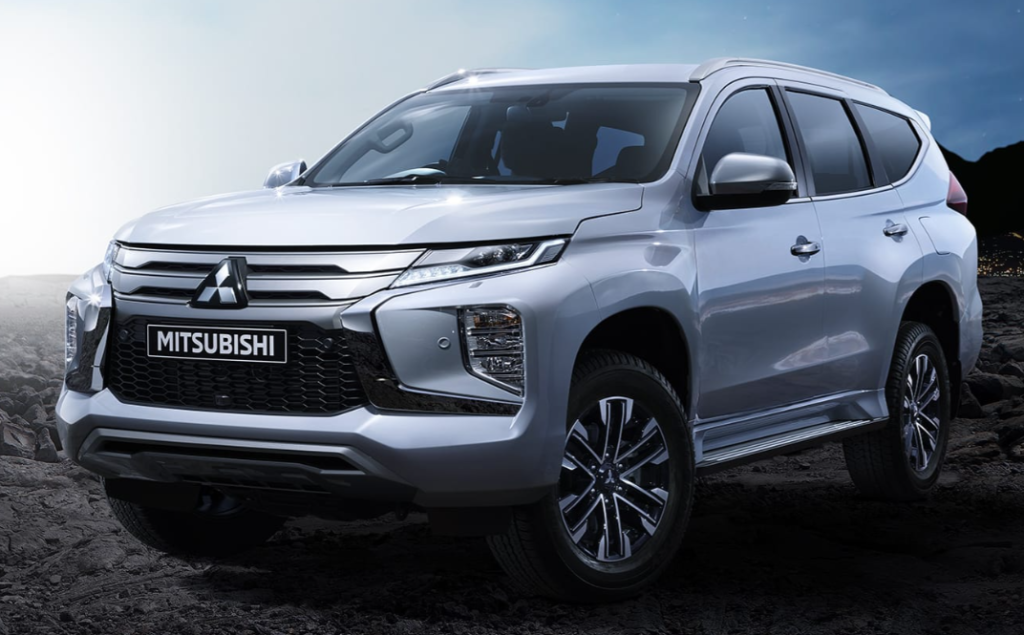
The Mitsubishi Pajero Sport towing capacity is one of the SUV’s strongest selling points, particularly for drivers who want a proper four-wheel-drive wagon without stepping up to something as large, thirsty, or expensive as a full-size off-roader.
For current Australian-spec 4WD Pajero Sport models, Mitsubishi lists a maximum braked towing capacity of 3,100 kg, while the maximum unbraked towing capacity is 750 kg. The maximum permitted tow-ball load is 310 kg.
Those numbers immediately make the Pajero Sport an interesting option for caravans, boats, horse floats, camper trailers, and equipment trailers.
But here's the catch.
A 3,100 kg badge on a specification sheet doesn't automatically mean we can hitch up any 3.1-tonne caravan, fill the SUV with seven people, throw a fridge and camping gear in the back, load the roof rack, and disappear into the horizon.
Towing weights interact with each other.
Payload matters. Tow-ball weight matters. GVM matters. Gross Combination Mass matters.
So rather than simply answering, "How much can a Mitsubishi Pajero Sport tow?" we're going to look at what those numbers actually mean in the real world.
Content in this publication
- Mitsubishi Pajero Sport Towing Capacity at a Glance
- What Is the Mitsubishi Pajero Sport Braked Towing Capacity?
- Mitsubishi Pajero Sport Unbraked Towing Capacity
- Mitsubishi Pajero Sport Maximum Tow-Ball Weight
- Understanding Pajero Sport GVM
- What Is the Mitsubishi Pajero Sport GCM?
- Which Engine Does the Pajero Sport Use for Towing?
- Is the Pajero Sport Good for Towing?
- Mitsubishi Pajero Sport vs 3.5-Tonne Tow Vehicles
- Pajero Sport Towing Capacity by Model Year
- How Much Caravan Can We Realistically Tow?
- How to Calculate Your Pajero Sport Towing Setup
- What Accessories Affect Towing Payload?
- Does Towing Increase Pajero Sport Fuel Consumption?
- Tips for Towing Safely With a Mitsubishi Pajero Sport
- Can the Mitsubishi Pajero Sport Tow a Boat?
- Can the Pajero Sport Tow a Horse Float?
- Is the Mitsubishi Pajero Sport a Good Caravan Tow Vehicle?
- Common Pajero Sport Towing Mistakes
- Final Thoughts on Mitsubishi Pajero Sport Towing Capacity
- Frequently Asked Questions
Mitsubishi Pajero Sport Towing Capacity at a Glance
For the current Australian 4WD specification, the important figures are:
| Specification | Mitsubishi Pajero Sport |
|---|---|
| Maximum braked towing capacity | 3,100 kg |
| Maximum unbraked towing capacity | 750 kg |
| Maximum tow-ball load | 310 kg |
| Gross Vehicle Mass (GVM) | 2,775 kg |
| Gross Combination Mass (GCM) | 5,565 kg |
| Kerb mass | 2,130 kg |
| Maximum payload | 645 kg |
| Maximum rear axle load | 1,600 kg |
These figures are published by Mitsubishi for current Australian Pajero Sport specifications.
That 3.1-tonne braked capacity is the headline number most buyers will care about.
Yet the 645 kg payload figure deserves almost as much attention because passengers, luggage, accessories and tow-ball download all eat into it.
What Is the Mitsubishi Pajero Sport Braked Towing Capacity?
The Mitsubishi Pajero Sport can tow up to 3,100 kg with a properly braked trailer in current Australian 4WD specification.
That's equivalent to:
- 3.1 tonnes
- approximately 6,834 lb
- enough capacity for many medium-to-large caravans
- large boat trailers
- substantial camper trailers
- some horse floats and equipment trailers
Notice the word maximum, though.
Think of 3,100 kg as the roof of the house rather than the floor we should always stand on.
A lighter trailer creates more breathing room for acceleration, braking, hills, changing weather conditions and vehicle loading.
Is 3,100 kg Enough for a Caravan?
For many Australian caravans, yes.
A wide range of touring caravans fall below a 3,100 kg Aggregate Trailer Mass rating. That puts them theoretically within Pajero Sport territory.
However, we shouldn't shop for a caravan by looking only at its empty or tare weight.
What matters once we travel is the caravan's actual loaded weight.
Add:
- water
- gas bottles
- batteries
- food
- clothing
- camping equipment
- solar equipment
- tools
- bikes
- spare parts
- outdoor furniture
and a trailer that looked comfortably light in the brochure can gain hundreds of kilograms surprisingly quickly.
It's a little like packing a suitcase for a two-week holiday: somehow the scale always knows about the "few extra things" we threw in at the last minute.
Mitsubishi Pajero Sport Unbraked Towing Capacity
The Pajero Sport's maximum unbraked towing capacity is 750 kg according to Mitsubishi's Australian specifications.
An unbraked trailer relies on the tow vehicle to provide essentially all of the braking force for the combination, so its permitted mass is dramatically lower.
Small box trailers and lightweight recreational trailers may fall into this category.
Anything approaching serious caravan or boat territory will normally require its own compliant braking system.
Braked vs Unbraked Towing
The difference is straightforward.
A braked trailer has its own braking system designed to help slow the trailer.
An unbraked trailer doesn't.
That's why we go from a 750 kg limit without trailer brakes to as much as 3,100 kg with a correctly equipped braked trailer.
Requirements for trailer brakes, controllers and breakaway systems vary according to trailer mass and local regulations, so owners should confirm the rules applying in their jurisdiction before towing.
Mitsubishi Pajero Sport Maximum Tow-Ball Weight
Mitsubishi specifies a maximum tow-ball load of 310 kg.
This number is crucial.
Tow-ball download is the amount of trailer weight pushing vertically downward onto the vehicle's towbar.
Too little can contribute to poor trailer stability.
Too much can overload the rear of the Pajero Sport, exceed its maximum tow-ball limit, eat deeply into payload, or potentially push the rear axle beyond its permitted load.
Does Tow-Ball Weight Count Toward Payload?
Yes.
This is one of the details new caravan owners often overlook.
Imagine our Pajero Sport begins with a theoretical 645 kg payload allowance.
If our trailer places 300 kg on the tow ball, we have roughly:
645 kg − 300 kg = 345 kg
of nominal payload remaining before considering other relevant limits.
That remaining capacity needs to accommodate things such as:
- driver and passengers
- luggage
- aftermarket accessories
- recovery equipment
- portable refrigerators
- additional vehicle-mounted equipment
- anything else added above the vehicle's specified kerb mass
Suddenly, 645 kg doesn't feel enormous.
Why Seven Passengers Change the Equation
The Pajero Sport is attractive partly because several versions offer seven seats.
But seven seats don't magically create seven-passenger payload.
Suppose we use 300 kg of payload through tow-ball download. Then add several adults, children, luggage and accessories.
It becomes surprisingly easy to approach the vehicle's GVM.
That's why anyone buying a Pajero Sport specifically to tow a heavy caravan should calculate the entire setup rather than relying on the maximum towing number alone.
Understanding Pajero Sport GVM
The current Pajero Sport's Gross Vehicle Mass is 2,775 kg.
GVM represents the maximum permitted loaded mass of the vehicle.
In simple terms, it includes the SUV itself plus the load it is carrying.
That load can include passengers, luggage, accessories and the downward load imposed by the trailer at the tow ball.
Think of GVM as the Pajero Sport's personal weight ceiling.
Go above it, and the fact that your trailer remains below 3,100 kg doesn't rescue the situation.
Pajero Sport Payload Capacity
Current seven-seat Australian specifications list a 2,130 kg kerb mass and 2,775 kg GVM, giving Mitsubishi's quoted maximum payload of 645 kg.
Mathematically:
2,775 − 2,130 = 645 kg
Payload sounds generous until towing enters the picture.
Consider an illustrative setup:
| Load | Example weight |
|---|---|
| Tow-ball download | 280 kg |
| Driver and passenger | 160 kg |
| Accessories | 70 kg |
| Luggage and equipment | 100 kg |
| Total added load | 610 kg |
We are already close to that nominal 645 kg payload figure.
Add more passengers or heavier accessories and the margin gets thinner.
What Is the Mitsubishi Pajero Sport GCM?
The current Pajero Sport has a Gross Combination Mass of 5,565 kg.
GCM places a maximum on the combined loaded mass of the tow vehicle and trailer combination, accounting for how trailer load is distributed between the tow vehicle and trailer axles.
This number matters because towing isn't really about one isolated specification.
We're balancing several limits simultaneously.
You need to remain within the applicable:
- trailer ATM
- trailer GTM
- vehicle GVM
- GCM
- maximum tow-ball load
- front axle limit
- rear axle limit
- tyre load ratings
Whichever allowable limit you reach first becomes your practical constraint.
Can the Pajero Sport Tow 3.1 Tonnes at Maximum Vehicle Load?
This question needs more care than simply subtracting 3,100 kg from 5,565 kg.
A trailer's ATM includes the weight supported at the tow ball, whereas Gross Trailer Mass represents the load carried by the trailer's wheels while connected to the vehicle.
For example, imagine a trailer has:
- 3,100 kg ATM
- 310 kg tow-ball download
Its approximate GTM would be around:
3,100 − 310 = 2,790 kg
Interestingly, the Pajero Sport's:
2,775 kg GVM + 2,790 kg GTM = 5,565 kg
which matches its published GCM.
That illustrates why the Pajero Sport's 3,100 kg towing figure can work mathematically alongside its stated combination limits when the entire setup is correctly distributed.
Real vehicles and trailers should still be weighed rather than relying purely on theoretical calculations.
Which Engine Does the Pajero Sport Use for Towing?
The Australian Pajero Sport uses a 2.4-litre four-cylinder turbo-diesel engine paired with an eight-speed automatic transmission. Mitsubishi highlights the eight-speed automatic and 3.1-tonne towing ability as central performance characteristics of the vehicle.
Published Australian specifications for recent versions put output at 133 kW and 430 Nm, with peak torque helping the vehicle deal with low-speed loads and gradients.
Is 430 Nm enormous by modern 4WD standards?
No.
Some larger rivals produce considerably more.
But outright torque isn't the complete story. Gear ratios, cooling, vehicle weight, drivetrain calibration and transmission behaviour all shape the towing experience.
How Does the Eight-Speed Automatic Help?
Eight ratios give the transmission more opportunities to keep the diesel engine working in an effective part of its rev range.
When we're towing, that matters.
On a flat highway, the gearbox can settle into a relaxed ratio.
Reach a long climb and it can drop gears to keep engine speed where useful torque is available.
Descending hills may also require greater driver involvement, using lower gears appropriately rather than relying exclusively on the brakes.
Should We Expect Sports-Car Acceleration With a Caravan?
Definitely not.
A Pajero Sport pulling close to three tonnes is doing serious work.
An independent multi-vehicle towing comparison found the Pajero Sport relatively modest in acceleration on a steep towing test, although its transmission was able to select appropriate gearing.
That's worth remembering.
Rated capacity tells us what the vehicle is engineered and approved to tow. It doesn't promise effortless acceleration with the maximum load attached.
Is the Pajero Sport Good for Towing?
For the right trailer, it has several appealing qualities.
We get respectable towing capacity, a ladder-frame 4WD platform, a diesel engine, an eight-speed automatic and genuine four-wheel-drive hardware.
Mitsubishi's Super Select 4WD-II system also gives 4WD models several drivetrain settings, including modes intended for gravel, mud/snow, sand and rock conditions.
For somebody whose caravan trips lead beyond perfectly paved holiday parks, that can be valuable.
Where the Pajero Sport Makes Sense
The Pajero Sport becomes especially attractive when we want one vehicle capable of handling:
- weekday family transport
- long motorway journeys
- caravan holidays
- boat towing
- camping
- unsealed roads
- light-to-serious recreational off-roading
Instead of owning a large ute simply because we occasionally tow, we can have a more conventional SUV cabin while retaining genuine towing and 4WD ability.
Where Its 3.1-Tonne Limit May Be Restrictive
If our caravan has an ATM around 3,300-3,500 kg, the Pajero Sport isn't the appropriate match at that loaded weight.
The same applies if we're planning to purchase a caravan very close to 3,100 kg but expect substantial future modifications.
Extra batteries, larger water tanks, generators or storage upgrades can gradually push trailer mass upward.
Choosing a tow vehicle with virtually no capacity margin is rarely convenient.
Mitsubishi Pajero Sport vs 3.5-Tonne Tow Vehicles
One number frequently appears when researching modern 4WD towing: 3,500 kg.
Several Pajero Sport competitors advertise 3.5-tonne braked towing capacities, while Mitsubishi limits the Pajero Sport to 3.1 tonnes. Independent reviewers have specifically noted that the Mitsubishi's figure sits below the 3.5-tonne benchmark offered by some rivals.
That's a 400 kg difference.
Significant?
Sometimes.
For a 2,400 kg caravan, perhaps not.
For a loaded caravan sitting at 3,250 kg, absolutely.
We shouldn't automatically assume a 3,500 kg-rated SUV is therefore the better tow vehicle, though.
Its payload, GCM, axle limits, tow-ball allowance, engine performance and chassis behaviour still need investigation.
A towing number in isolation is a bit like judging a restaurant from the size of the menu. It tells us something, just not everything.
Pajero Sport Towing Capacity by Model Year
The exact Pajero Sport towing capacity can vary according to year, drivetrain and market.
Australian historical listings generally show maximum braked figures around 3,000-3,100 kg, with many 4WD variants rated to 3,100 kg. CarsGuide's historical data, for example, lists a 3,100 kg maximum across the model's recent history while certain 2WD variants in some years are listed at 3,000 kg.
That distinction is important.
Never assume another Pajero Sport's rating applies to yours simply because the badge looks identical.
Why Specifications Can Differ
Towing ratings may change because of:
- model year
- drivetrain
- 2WD versus 4WD configuration
- homologation differences
- vehicle market
- trim specifications
- engineering updates
For an exact vehicle, the owner's manual, vehicle identification information and Mitsubishi documentation should take priority over generic online specifications.
How Much Caravan Can We Realistically Tow?
This is arguably the more useful question.
A 3,100 kg maximum rating doesn't mean we need a 3,100 kg caravan.
Suppose our loaded caravan weighs 2,600 kg.
Immediately, we gain approximately 500 kg between the actual trailer mass and the headline maximum.
That doesn't increase any legal limit, but it creates useful operating margin.
The engine works less aggressively.
Acceleration may feel less strained.
Hill starts become easier.
Braking demands are reduced.
Payload calculations may also become easier depending on ball loading and the rest of the setup.
Why We Prefer a Weight Buffer
Mechanical systems generally dislike living at their absolute limits.
Towing near maximum capacity also amplifies every other variable.
A strong headwind feels stronger.
A steep mountain pass feels steeper.
Hot weather puts greater demands on cooling.
Poor trailer loading becomes more noticeable.
That's why matching the tow vehicle and trailer should involve more than asking, "Can it technically tow this?"
A better question is:
Will this combination comfortably suit the journeys we actually plan to make?
How to Calculate Your Pajero Sport Towing Setup
Before heading away, we can approach the calculation systematically.
Start with the loaded vehicle and loaded trailer rather than brochure tare figures.
Then check:
- Actual loaded trailer mass against the trailer ATM and Pajero Sport's applicable towing limit.
- Tow-ball download against the Pajero Sport's maximum tow-ball load.
- Loaded vehicle mass against its GVM.
- Combined vehicle and trailer mass against GCM.
- Rear and front axle loads against their individual ratings.
- Tyre capacities and pressures against vehicle and tyre requirements.
- Trailer brake equipment for compliance with applicable regulations.
A public weighbridge makes these numbers much less mysterious.
Guessing that "it should be fine" is not the same thing as knowing.
What Accessories Affect Towing Payload?
Four-wheel-drive owners love accessories.
Unfortunately, physics loves them too.
Anything permanently installed on the vehicle adds weight.
A Pajero Sport might acquire:
- steel bull bar
- winch
- underbody protection
- roof rack
- awning
- dual-battery system
- drawer system
- cargo barrier
- aftermarket towbar equipment
- recovery gear
- larger tyres
Individually, each item may seem manageable.
Together, they can consume a meaningful chunk of payload before passengers even climb aboard.
Roof Loads Matter Too
Mitsubishi's current Australian specifications list a maximum roof load of 80 kg.
That doesn't mean we should simply add 80 kg to the roof and forget about it.
Roof equipment contributes to vehicle mass, while placing weight high above the road also changes the vehicle's centre of gravity.
When towing, thoughtful packing becomes especially important.
Heavy equipment usually belongs low and securely positioned rather than piled overhead like we're moving house.
Does Towing Increase Pajero Sport Fuel Consumption?
Absolutely.
Mitsubishi may publish normal combined-cycle fuel figures for the vehicle, but a large caravan changes the aerodynamic and mechanical workload enormously.
Trailer shape can matter almost as much as weight.
A tall, square-fronted caravan punches a large hole through the air.
At highway speed, aerodynamic drag climbs dramatically.
Expect towing consumption to vary with:
- caravan size and shape
- trailer weight
- cruising speed
- terrain
- wind direction
- tyre pressure
- vehicle load
- traffic
- temperature
Rather than expecting a universal towing fuel figure, plan conservatively and monitor the consumption shown during your own trips.
Tips for Towing Safely With a Mitsubishi Pajero Sport
A good towing setup should feel calm rather than dramatic.
Before a long journey, we'd focus on the fundamentals:
- weigh the loaded vehicle and trailer
- confirm tow-ball download
- inspect trailer tyres
- check vehicle tyre pressures
- inspect hitch and safety connections
- test trailer brakes
- distribute trailer cargo sensibly
- secure every loose item
- check mirrors and visibility
- allow significantly more stopping distance
- slow down for poor weather and crosswinds
No electronic system can rescue a badly overloaded or poorly balanced trailer from the laws of physics.
Use the Right Gear on Hills
When the vehicle repeatedly hunts between gears on a climb, manually selecting an appropriate lower ratio can sometimes provide smoother progress.
On descents, lower gears can also assist with controlling speed.
The aim isn't to make the engine silent.
Diesel engines are built to work.
The aim is to keep the drivetrain operating sensibly without unnecessary stress or constant gear changes.
Keep Speed Sensible
Speed has an outsized effect on towing.
Increasing speed increases aerodynamic drag and reduces the time available to react.
Crosswinds also become more influential.
If the combination begins feeling nervous, slowing appropriately is often far more effective than fighting the steering wheel.
Can the Mitsubishi Pajero Sport Tow a Boat?
Yes.
Its 3,100 kg maximum braked towing capacity makes the Pajero Sport capable of towing many recreational boats when the complete boat-and-trailer combination falls within the applicable limits.
Boat owners should calculate the weight of more than the hull.
Remember:
- trailer
- fuel
- batteries
- fishing equipment
- water
- anchor
- safety equipment
- motors
- personal gear
Boat ramps also highlight the value of proper four-wheel-drive capability, especially when surfaces are wet, steep or slippery.
Can the Pajero Sport Tow a Horse Float?
Potentially, yes.
But horse floats deserve particularly careful calculations because live cargo moves.
We need the loaded float mass—not merely the empty trailer specification.
That means accounting for horses, tack, feed, water and equipment while also ensuring the trailer's brakes, tyres and weight distribution are appropriate.
Being under 3,100 kg is only the first step.
Is the Mitsubishi Pajero Sport a Good Caravan Tow Vehicle?
For caravans comfortably within its weight envelope, the Pajero Sport presents a compelling package.
The specification combines:
3,100 kg braked towing capacity + 310 kg maximum tow-ball load + 5,565 kg GCM + genuine 4WD hardware.
Its limitation is equally obvious.
People buying very heavy caravans around the 3.2-3.5 tonne range need to look elsewhere or choose a lighter trailer.
For everybody below that threshold, however, maximum capacity should not be viewed as a weakness simply because another badge advertises 3.5 tonnes.
The right question is whether the Pajero Sport's numbers fit our caravan.
Common Pajero Sport Towing Mistakes
The biggest towing mistakes usually aren't dramatic mechanical failures.
They're calculations people never made.
Watch out for:
- Shopping by caravan tare weight instead of loaded mass.
- Forgetting that tow-ball download contributes to vehicle loading.
- Ignoring passengers when calculating payload.
- Installing heavy accessories without updating calculations.
- Checking towing capacity but forgetting GVM and axle loads.
- Assuming every Pajero Sport model has an identical rating.
- Never visiting a weighbridge.
- Loading too much equipment behind the rear axle.
- Treating 3,100 kg as a target instead of a maximum.
- Assuming a stable trailer when empty will remain stable when packed.
A few minutes with a calculator—and ideally a weighbridge ticket—can tell us more than hours spent arguing about tow vehicles online.
Final Thoughts on Mitsubishi Pajero Sport Towing Capacity
The Mitsubishi Pajero Sport towing capacity is up to 3,100 kg braked for current Australian 4WD models, complemented by a 750 kg unbraked limit and 310 kg maximum tow-ball load. Mitsubishi also lists a 2,775 kg GVM, 5,565 kg GCM and 645 kg payload for the current seven-seat Australian specification.
Those numbers make the Pajero Sport a genuinely useful tow vehicle rather than an SUV that merely happens to have a towbar.
It can make sense for caravans, boats, campers and other sizeable trailers while still working as an everyday family 4WD.
The trick is not obsessing over that 3.1-tonne headline.
We need to treat towing like a puzzle where every piece has to fit: trailer weight, tow-ball download, passengers, accessories, GVM, GCM and axle loads.
Get those numbers right, and the Pajero Sport offers a useful balance between family practicality and serious towing ability.
Ignore them, and even a trailer technically below 3,100 kg can create problems.
In towing, the smartest number isn't always the biggest one.
It's the one we have verified.
Frequently Asked Questions
1. What is the Mitsubishi Pajero Sport towing capacity?
Current Australian 4WD Pajero Sport specifications list a maximum braked towing capacity of 3,100 kg. The unbraked towing limit is 750 kg.
2. What is the Mitsubishi Pajero Sport tow-ball weight limit?
The maximum tow-ball load is 310 kg on current Australian models. Remember that tow-ball download contributes to the load carried by the vehicle, so it affects available payload.
3. Can a Mitsubishi Pajero Sport tow a 3,000 kg caravan?
A current 4WD Pajero Sport is rated to tow up to 3,100 kg braked, so a properly equipped 3,000 kg caravan can fall within its trailer rating. However, we must still check tow-ball load, GVM, GCM, axle weights and the actual loaded masses of both vehicle and caravan.
4. Is the Pajero Sport rated to tow 3.5 tonnes?
No. Current Australian Pajero Sport 4WD models are rated to 3,100 kg braked, which is 400 kg below the 3,500 kg rating offered by some competing tow vehicles.
5. Is the Mitsubishi Pajero Sport good for towing caravans?
It can be a strong match for caravans within its weight limits thanks to its 3.1-tonne braked capacity, diesel engine, eight-speed automatic transmission and genuine four-wheel-drive system. For caravans approaching or exceeding 3.1 tonnes loaded, a higher-rated tow vehicle would be required.
If you want to know other articles similar to Mitsubishi Pajero Sport Towing Capacity: Complete Towing Guide you can visit the category Service and Parts.
Peugeot RCZ Engine Swap: Options, Costs, Compatibility, and What You Need to Know
Mitsubishi Pajero Sport Engine Size: Complete Engine Guide
Mitsubishi Pajero Sport Weight: Kerb Weight, GVM, Payload and What It Really Means
Mitsubishi Pajero Sport Service Reset: Complete Step-by-Step Guide
Mitsubishi Pajero Sport Boot Space: Complete Cargo and Luggage Guide
BMW i7 Specs: Power, Range, Battery, Dimensions and More
Leave a Reply
More content of your interest