
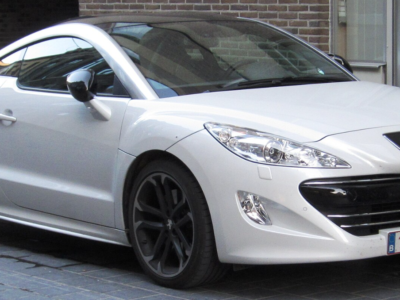
Peugeot RCZ Weight: A Complete Guide to Kerb Weight and Specs

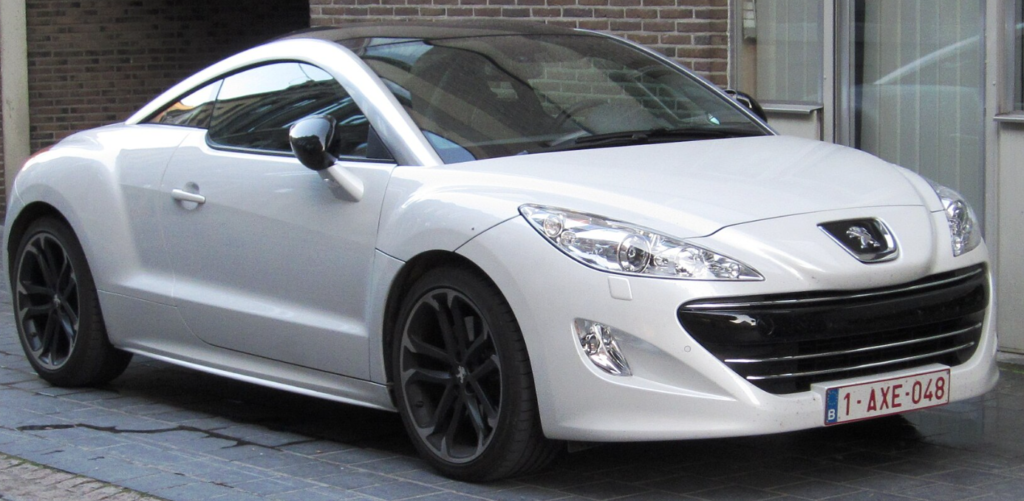
The Peugeot RCZ weight is one of those specifications that looks simple until we start comparing different websites. One source might say an RCZ weighs around 1,275 kg, another gives 1,350 kg, while a diesel model can appear closer to 1,445 kg. So, which number is actually correct?
Potentially all of them.
The confusion comes from the fact that Peugeot published several types of weight measurements, particularly unladen weight and kerb weight. Engine choice, gearbox, equipment and model version also make a noticeable difference.
For most petrol RCZ versions, we are looking at roughly 1,275–1,297 kg unladen, while Peugeot's handbook lists kerb figures around 1,350–1,372 kg. The heavier 2.0 HDi diesel reaches approximately 1,370 kg unladen and 1,445 kg kerb weight. Meanwhile, the high-performance RCZ R is particularly interesting because Peugeot deliberately reduced its mass despite increasing its performance.
Let's break those numbers down properly and see why they matter.
Content in this publication
- How Much Does a Peugeot RCZ Weigh?
- Peugeot RCZ Weight in Pounds
- Why Are There Different Peugeot RCZ Weight Figures?
- Peugeot RCZ 1.6 THP Weight
- Peugeot RCZ 200 Weight
- Peugeot RCZ R Weight
- Peugeot RCZ Diesel Weight
- Peugeot RCZ Gross Vehicle Weight
- Peugeot RCZ Payload
- Does Peugeot RCZ Weight Affect Performance?
- How Weight Influences RCZ Fuel Economy
- How Heavy Is the RCZ Compared With Modern Cars?
- Is the Peugeot RCZ Considered a Lightweight Sports Car?
- Does Wheel Size Change Peugeot RCZ Weight?
- Can You Reduce the Weight of a Peugeot RCZ?
- Why Accurate RCZ Weight Matters When Buying Parts
- Where Can You Find the Exact Weight of Your RCZ?
- Actual Weight vs Published Peugeot RCZ Weight
- What Is the Best Peugeot RCZ Weight Figure to Use?
- Peugeot RCZ Weight and Driving Character
- Is the Peugeot RCZ R Significantly Lighter?
- Peugeot RCZ Weight: Final Thoughts
- Frequently Asked Questions
How Much Does a Peugeot RCZ Weigh?
The simplest answer is that most Peugeot RCZ models weigh somewhere between approximately 1,275 kg and 1,445 kg, depending on which weight definition and version we use.
Peugeot's owner's documentation provides separate figures for unladen and kerb weight. For example, commonly encountered specifications include:
| Peugeot RCZ version | Unladen weight | Kerb weight |
|---|---|---|
| 1.6 THP 156 manual | 1,275 kg | 1,350 kg |
| 1.6 THP automatic versions | Around 1,297 kg | Around 1,372 kg |
| 1.6 THP 200 manual | 1,297 kg | 1,372 kg |
| 2.0 HDi 163 manual | 1,370 kg | 1,445 kg |
| RCZ R 270 | 1,280 kg | 1,355 kg |
The petrol figures appear in Peugeot RCZ handbook data, while the diesel handbook lists the 2.0 HDi at 1,370 kg unladen and 1,445 kg kerb weight.
These figures immediately tell us something interesting: despite looking substantial, the RCZ was not an especially heavy sports coupé.
Peugeot RCZ Weight in Pounds
For readers working with imperial measurements, those figures translate approximately to:
- 1,275 kg: 2,811 lb
- 1,280 kg: 2,822 lb
- 1,297 kg: 2,859 lb
- 1,350 kg: 2,976 lb
- 1,372 kg: 3,025 lb
- 1,445 kg: 3,186 lb
That means even the heavier diesel sits only a little above the 3,000-pound mark when using Peugeot's kerb-weight figure.
For a car with broad shoulders, a double-bubble roof and muscular coupé proportions, that is fairly restrained.
Why Are There Different Peugeot RCZ Weight Figures?
This is where most of the confusion begins.
Search for the Peugeot RCZ weight and we will quickly find numbers that seem to contradict one another. The issue normally isn't that one figure is necessarily wrong. Instead, different weight standards are being used.
Unladen Weight
Unladen weight broadly refers to the vehicle without passengers or cargo and according to the manufacturer's applicable measurement convention.
In Peugeot RCZ documentation, common petrol versions sit around 1,275–1,297 kg unladen.
This is often the lower number quoted on specification websites.
Kerb Weight
Kerb weight includes additional operating items according to the measurement standard being used.
Peugeot's handbook, for example, lists the RCZ 1.6 THP 156 manual at 1,350 kg kerb weight, compared with its 1,275 kg unladen figure.
That 75 kg difference is why two websites can publish different RCZ weight figures while both appear to be drawing from legitimate technical information.
Always Check the Definition
Whenever we compare the RCZ with an Audi TT, Volkswagen Scirocco, BMW coupé or another sports car, we should make sure both cars are measured using the same standard.
Comparing the unladen weight of one car against the kerb weight of another is like comparing someone's weight before breakfast with someone carrying a packed suitcase. The numbers look comparable, but they aren't measuring quite the same thing.
Peugeot RCZ 1.6 THP Weight
The turbocharged 1.6-litre petrol engine was central to the RCZ range.
Depending on output and transmission, Peugeot's documentation gives unladen figures around 1,275–1,297 kg and corresponding kerb figures around 1,350–1,372 kg.
That relatively modest mass helped Peugeot extract strong performance without needing a huge engine.
Peugeot RCZ 156 Weight
The 1.6 THP 156 manual is one of the lighter mainstream versions.
Peugeot lists approximately:
- Unladen weight: 1,275 kg
- Kerb weight: 1,350 kg
- Gross vehicle weight: 1,740 kg
The automatic configuration is heavier, with handbook figures reaching approximately 1,297 kg unladen and 1,372 kg kerb weight.
That difference is hardly dramatic, but it demonstrates how transmission choice influences the final number.
Does the Extra Automatic Gearbox Weight Matter?
In normal driving, not much.
A difference of roughly 20 kg is unlikely to transform the character of the car. Nevertheless, enthusiasts chasing the lightest possible RCZ may naturally prefer the manual.
Weight influences:
- Acceleration
- Braking
- Cornering response
- Fuel consumption
- Tyre workload
- Suspension behaviour
Twenty kilograms alone won't rewrite the rulebook, but every kilogram forms part of the complete package.
Peugeot RCZ 200 Weight
The 200 hp 1.6 THP model is especially interesting because it delivered significantly more performance without becoming dramatically heavier.
Peugeot's handbook lists the manual 200 hp version at roughly 1,297 kg unladen and 1,372 kg kerb weight, with a gross vehicle weight of approximately 1,780 kg.
That gives the 200 a healthy relationship between power and mass.
Instead of feeling like a heavyweight coupé being pushed around by its engine, the RCZ 200 benefits from keeping its mass relatively contained.
Why the RCZ 200 Feels Lighter Than Its Number Suggests
Numbers on a specification sheet tell only part of the story.
How a car feels depends on where its weight sits, how quickly the suspension controls body movement and how responsive the steering and drivetrain are.
A 1,300 kg car with disciplined suspension can feel far more energetic than a similarly powerful machine carrying hundreds of extra kilograms.
That is one reason the RCZ's moderate mass remains relevant when enthusiasts discuss the car today.
Peugeot RCZ R Weight
Now we reach the most interesting member of the family.
The Peugeot RCZ R was developed as the most performance-focused production RCZ, producing 270 hp from its 1.6-litre turbocharged petrol engine.
Peugeot's contemporary press material quoted a weight of 1,280 kg and stated that weight-saving measures cut approximately 17 kg compared with the 200 hp RCZ. Peugeot also quoted a power-to-weight figure of about 4.7 kg per horsepower.
The later owner's handbook presents that same 1,280 kg figure as unladen weight and lists 1,355 kg as kerb weight.
This neatly explains why searches for "Peugeot RCZ R weight" can return both 1,280 kg and 1,355 kg.
Why Peugeot Reduced the RCZ R's Weight
Adding power is easy in principle. Making the whole car work better is harder.
Peugeot Sport's approach involved more than simply increasing turbo boost. Engineers developed model-specific components and looked for opportunities to remove unnecessary mass.
According to Peugeot, the RCZ R saved roughly 17 kg compared with the 200 hp model.
Less weight benefits almost everything a performance car does.
The engine has less mass to accelerate. The brakes have less energy to absorb. The tyres have less inertia to control. And the suspension has less body mass shifting from side to side.
Power-to-Weight Matters More Than Power Alone
We sometimes become obsessed with horsepower.
But power without context tells us surprisingly little.
A 270 hp engine moving a relatively light coupé can provide stronger performance than considerably more horsepower trying to move a much heavier machine.
Peugeot quoted roughly 4.7 kg per horsepower for the RCZ R, helping explain why the car could deliver serious performance from what, on paper, was merely a 1.6-litre engine.
You may be interested in reading Toyota Corolla AE86 Engine Swap – The Ultimate Guide
Peugeot RCZ Diesel Weight
The diesel sits at the opposite end of the RCZ weight spectrum.
The 2.0 HDi 163 uses a larger diesel engine and associated hardware, making it noticeably heavier than the petrol versions.
Peugeot's handbook lists:
- Unladen weight: 1,370 kg
- Kerb weight: 1,445 kg
- Payload: 455 kg
- Gross vehicle weight: 1,825 kg
- Gross train weight: 2,325 kg
These figures apply to the 2.0 HDi 163 with the six-speed manual transmission.
Why Is the Diesel RCZ Heavier?
Diesel engines typically require heavier components because of their operating characteristics.
Higher compression pressures demand stronger internal components, while the diesel installation also includes equipment associated with emissions control and turbocharging.
The result is an RCZ carrying roughly 70–100 kg more than several petrol versions, depending on which configurations and measurement definitions we compare.
Does that ruin the diesel?
Not necessarily.
The HDi compensates with plentiful torque and relaxed cruising ability. For drivers covering long motorway distances, its personality can make more sense than chasing the lightest specification.
Peugeot RCZ Gross Vehicle Weight
Kerb weight should not be confused with gross vehicle weight, commonly abbreviated GVW.
The gross vehicle weight represents the maximum permitted loaded vehicle mass.
That means the car itself plus occupants, luggage and other permitted load.
Typical handbook figures include:
- RCZ 1.6 THP 156 manual: approximately 1,740 kg
- Other petrol configurations: roughly 1,760–1,780 kg
- 2.0 HDi 163: 1,825 kg
- RCZ R: 1,780 kg
Peugeot's technical documentation shows that these figures vary by engine and transmission rather than applying one universal limit to every RCZ.
Peugeot RCZ Payload
Payload is another useful number, especially if we plan to carry passengers and luggage.
Peugeot listed payload figures in the region of roughly 425–483 kg across different petrol configurations, while the 2.0 HDi handbook figure is 455 kg.
For most RCZ owners, payload is unlikely to become a daily concern. After all, this is a compact 2+2 coupé rather than a family van.
Still, it matters because adding two adults, luggage and miscellaneous equipment increases the real mass that the tyres, suspension and brakes must handle.
Does Peugeot RCZ Weight Affect Performance?
Absolutely.
Weight is one of the invisible forces shaping how every car behaves.
Imagine two runners with identical strength. Give one a 20 kg backpack and leave the other unburdened. We already know who will accelerate, stop and change direction more easily.
Cars operate under the same basic physics.
Acceleration
For a given amount of power, reducing mass generally improves acceleration.
This is particularly relevant to the RCZ R, where Peugeot combined 270 hp with deliberate weight reduction.
The result was a car Peugeot quoted at 0–100 km/h in 5.9 seconds, demonstrating how effective the combination of power and controlled mass could be.
Braking
Brakes convert kinetic energy into heat.
A heavier vehicle carries more kinetic energy at a given speed, meaning its brakes have more work to do.
Reducing mass therefore helps the entire braking system.
Cornering
Less mass can also help the suspension and tyres manage direction changes.
That doesn't automatically mean the lightest vehicle always handles best—suspension geometry, tyres, chassis rigidity, weight distribution and aerodynamics all matter—but lower mass gives engineers a useful foundation.
How Weight Influences RCZ Fuel Economy
Vehicle mass also affects fuel consumption, particularly during stop-start driving.
Every time we pull away from a junction, the engine must accelerate the car's mass.
More mass means more energy is required.
At steady motorway speeds, aerodynamics become increasingly important, so weight matters less than it does during repeated acceleration.
This means the RCZ diesel's extra kilograms don't automatically make it inefficient. Diesel engine characteristics can compensate substantially during longer journeys.
The relationship between weight and economy isn't a straight line.
How Heavy Is the RCZ Compared With Modern Cars?
Viewed through today's automotive landscape, the RCZ's weight is arguably one of its most appealing specifications.
Modern vehicles have grown considerably more complex.
Larger infotainment systems, extensive driver-assistance technology, increasingly sophisticated crash structures, electric motors and large battery packs can all add mass.
Against that background, a performance coupé weighing roughly 1.3 tonnes unladen feels refreshingly compact.
We don't need to claim that lighter automatically means better. Modern cars offer enormous gains in safety, refinement and technology.
But from a driving perspective, there is something attractive about moving less mass.
Is the Peugeot RCZ Considered a Lightweight Sports Car?
Calling the standard RCZ a true lightweight might be slightly generous.
Cars such as the Mazda MX-5 or Lotus Elise approach weight reduction far more aggressively.
The RCZ belongs more comfortably in the moderately light sports coupé category.
It offers features we expect from a usable road car—air conditioning, sound insulation, substantial bodywork, a practical boot and everyday equipment—while still keeping mainstream petrol versions around the 1.3-tonne mark unladen.
That compromise arguably suits the RCZ's character perfectly.
It was never meant to be a stripped-out track toy.
It was designed to look dramatic on Friday night, cruise comfortably on Saturday morning and still entertain us when the road starts twisting.
Does Wheel Size Change Peugeot RCZ Weight?
Yes, although usually only slightly.
Different wheel designs and sizes carry different masses. A larger alloy wheel doesn't automatically weigh more because construction matters, but wheel and tyre packages can influence both overall and unsprung mass.
Unsprung mass deserves particular attention.
What Is Unsprung Weight?
Unsprung mass includes components such as wheels, tyres and parts of the suspension assembly that move with the road surface rather than being fully supported by the springs.
Reducing unsprung mass can help suspension respond more effectively over bumps.
You may be interested in readingToyota Corolla AE86 Engine Swap – The Ultimate GuideYou may be interested in reading
 Does the Toyota Camry Have CVT Transmission?
That means losing several kilograms from wheels can sometimes be more noticeable dynamically than removing the same amount from something sitting inside the cabin.
Don't Chase Weight Savings Blindly
There is a catch.
A lightweight aftermarket wheel is useful only if it is strong, correctly sized and suitable for the car.
Saving a few kilograms isn't worth compromising structural integrity, tyre fitment or handling geometry.
Can You Reduce the Weight of a Peugeot RCZ?
Technically, yes.
Owners pursuing track performance can remove weight from several areas, including:
- Lighter wheels
- Lightweight exhaust components
- Smaller performance-oriented seats
- Removal of unnecessary interior equipment
- Lightweight battery
- Reduced sound insulation
- Track-focused braking components
- Removal of rear-seat components where legally appropriate
But for a road-going RCZ, we should ask whether removing weight actually improves the car we want to own.
If we strip out insulation, rear trim and comfort features only to save 40 kg, we may end up with a noisier, less pleasant car that is barely faster during ordinary driving.
Sometimes the better modification is simply keeping the car well maintained.
Why Accurate RCZ Weight Matters When Buying Parts
Knowing the correct version becomes particularly important when buying:
- Springs
- Shock absorbers
- Brake components
- Tyres
- Wheels
- Vehicle lifts or jacks
- Towing equipment
- Performance suspension kits
The diesel RCZ, for instance, carries more front-end mass than a lighter petrol version.
Suspension products therefore may have engine-specific ratings.
Never assume that every component sold for "Peugeot RCZ" is equally suitable for every engine and trim.
Where Can You Find the Exact Weight of Your RCZ?
If we need the exact legal specification for a particular car, the vehicle itself is more useful than a generic internet table.
Peugeot's handbook notes that manufacturer identification information includes vehicle weight data, including gross vehicle and gross train weight information.
We can also check:
- Vehicle identification plates
- Registration documentation
- Official Peugeot technical data
- The correct owner's handbook for the model year
- VIN-specific information from Peugeot
- A certified vehicle scale if actual operating weight is required
This becomes important because optional equipment and regional specifications may alter the real vehicle mass.
Actual Weight vs Published Peugeot RCZ Weight
Published specifications are useful benchmarks, but the RCZ sitting on our driveway may not weigh exactly the same amount.
Real-world weight can change because of:
- Fuel quantity
- Aftermarket wheels
- Audio upgrades
- Replacement exhaust systems
- Tools in the boot
- Spare-wheel equipment
- Interior accessories
- Driver and passengers
- Luggage
- Optional factory equipment
Fill the tank, put a driver behind the wheel and add weekend luggage, and the actual car naturally becomes heavier than an unladen specification.
That's why understanding the definition is more useful than memorising one number.
What Is the Best Peugeot RCZ Weight Figure to Use?
For general comparison, we would use the unladen figure when comparing versions within Peugeot's own published data, provided every vehicle is measured the same way.
For broader vehicle comparisons, kerb weight may be more commonly encountered, but we should confirm the measuring standard first.
For a quick reference:
Mainstream petrol RCZ: approximately 1,275–1,297 kg unladen
Petrol RCZ kerb weight: approximately 1,350–1,372 kg
RCZ R: 1,280 kg unladen / around 1,355 kg kerb
2.0 HDi: 1,370 kg unladen / around 1,445 kg kerb
Those figures provide a far clearer picture than claiming every RCZ simply "weighs 1,300 kg."
Peugeot RCZ Weight and Driving Character
Perhaps the most interesting thing about RCZ weight isn't the number itself.
It's what Peugeot did with it.
The car has the visual presence of something much heavier. Its wide body, sweeping arches and distinctive roof give it the stance of a muscular grand tourer.
Yet underneath, many petrol versions remain relatively close to 1.3 tonnes unladen.
That keeps the RCZ from feeling like a big luxury coupé wearing sports-car clothes.
Instead, the moderate mass works alongside the turbocharged engines and compact dimensions to give the car its distinctive personality.
Is the Peugeot RCZ R Significantly Lighter?
Not dramatically in absolute terms, but the engineering philosophy matters.
Peugeot stated that the R saved 17 kg compared with the RCZ 200, despite becoming a more capable performance model.
Seventeen kilograms might sound insignificant—we are talking roughly the weight of a packed suitcase—but manufacturers often add weight as performance increases.
Bigger brakes, stronger drivetrain components and additional cooling can easily push performance models in the opposite direction.
Peugeot Sport managed to increase capability while controlling mass.
That is the impressive part.
Peugeot RCZ Weight: Final Thoughts
The Peugeot RCZ proves why a single weight number rarely tells the whole story.
Depending on engine, transmission and measurement method, published figures range from roughly 1,275 kg unladen for lighter petrol versions to 1,445 kg kerb weight for the 2.0 HDi diesel. The RCZ R sits near the lighter end at 1,280 kg unladen, with Peugeot deliberately removing weight compared with the 200 hp model.
More importantly, the RCZ manages to combine distinctive styling and everyday usability without becoming excessively heavy.
And that matters.
Power can always grab headlines, but weight quietly influences almost everything we feel through a car: acceleration, braking, steering response, cornering and efficiency.
If we're researching a particular RCZ before buying one, the best approach is therefore not to ask simply, "How much does a Peugeot RCZ weigh?"
Instead, ask:
Which RCZ, with which engine, transmission and weight definition?
Once we do that, the apparently contradictory numbers suddenly make sense.
Frequently Asked Questions
1. How much does a Peugeot RCZ weigh?
Most petrol Peugeot RCZ models weigh approximately 1,275–1,297 kg unladen, while handbook kerb figures are generally around 1,350–1,372 kg. The diesel version is heavier.
2. What is the Peugeot RCZ R weight?
Peugeot quoted the RCZ R at 1,280 kg, while the owner's handbook identifies 1,280 kg as its unladen weight and approximately 1,355 kg as kerb weight. Peugeot stated that the R saved about 17 kg compared with the 200 hp RCZ.
3. How much does the Peugeot RCZ 2.0 HDi weigh?
The 2.0 HDi 163 manual is listed at 1,370 kg unladen and 1,445 kg kerb weight, making it one of the heavier regular RCZ versions.
4. Why do websites list different Peugeot RCZ weights?
Different sources may use unladen weight, kerb weight or another measurement convention. Peugeot's own handbook frequently shows approximately 75 kg between its listed unladen and kerb figures, so checking the definition is essential.
5. Is the Peugeot RCZ heavy for a sports coupé?
Not particularly. Most petrol versions sit close to 1.3 tonnes unladen, giving the RCZ a relatively moderate mass for a comfortable road-going coupé with everyday equipment and a usable boot.
You may be interested in readingToyota Corolla AE86 Engine Swap – The Ultimate GuideYou may be interested in reading
Does the Toyota Camry Have CVT Transmission?You may be interested in reading
 Toyota Camry Trim Levels 2014: A Detailed Guide to Choosing the Best
If you want to know other articles similar to Peugeot RCZ Weight: A Complete Guide to Kerb Weight and Specs you can visit the category Service and Parts.
Peugeot RCZ Boot Space: How Practical Is This Stylish Coupé?
Peugeot RCZ Engine Size: Complete Petrol and Diesel Guide
Peugeot RCZ Tyre Pressure: Complete PSI and Bar Guide
Mazda CX-8 Engine Size: Complete Petrol and Diesel Guide
Mazda CX-8 Warning Lights: Meanings, Causes, and What to Do
Mazda CX-8 Diesel Fuel Tank Capacity: Size, Range, and Refuelling Guide
Leave a Reply
More content of your interest