
Is Infiniti QX60 Reliable? A Complete Reliability Guide

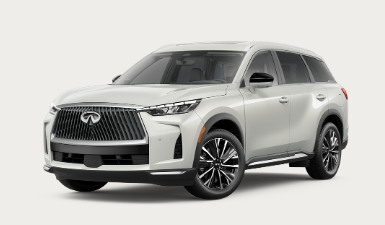
If you are shopping for a luxury three-row SUV, there is a good chance the Infiniti QX60 has caught your eye. It offers a handsome interior, plenty of family-friendly space, strong equipment levels, and—especially on the used market—prices that can look surprisingly attractive compared with European rivals. But that tempting price naturally leads us to a bigger question: is Infiniti QX60 reliable?
The short answer is yes, but reliability varies considerably by model year and generation.
The Infiniti QX60 is not a vehicle we should judge with one broad reliability label. Earlier versions used a continuously variable transmission, or CVT, that generated enough concern for Infiniti to issue service campaigns and technical guidance addressing transmission judder. The second-generation QX60 made an important mechanical change for 2022 by replacing the CVT with a conventional nine-speed automatic transmission. Then another major change arrived for the U.S. market in 2025, when Infiniti replaced the naturally aspirated V6 with a turbocharged variable-compression four-cylinder engine.
So, asking whether a QX60 is reliable is a little like asking whether a neighborhood is expensive. We need to know exactly which part—and which year—we are talking about.
Let's break it down.
Content in this publication
- How Reliable Is the Infiniti QX60 Overall?
- The Biggest Factor: Which Generation Are You Buying?
- Is the 2014 Infiniti QX60 Reliable?
- Are 2015–2018 Infiniti QX60 Models Reliable?
- Are the 2019 and 2020 Infiniti QX60 Reliable?
- The 2022 QX60 Was a Major Reliability Turning Point
- Is the 2022 Infiniti QX60 Reliable?
- How Reliable Are the 2023 and 2024 QX60?
- What Changed With the 2025 Infiniti QX60?
- Is the 2026 Infiniti QX60 Reliable?
- Infiniti QX60 Warranty Coverage
- Most Important Infiniti QX60 Reliability Concerns
- How Long Can an Infiniti QX60 Last?
- Are Infiniti QX60 Repairs Expensive?
- Is Infiniti QX60 Maintenance Expensive?
- Does the Infiniti QX60 Have a Good Engine?
- Is the Infiniti QX60 Transmission Reliable?
- Which Infiniti QX60 Years Deserve Extra Attention?
- What Is the Most Sensible Used QX60 Era?
- Should You Buy an Infiniti QX60 With 100,000 Miles?
- How to Check an Infiniti QX60 Before Buying
- QX60 Reliability Versus Luxury Expectations
- Is a Used Infiniti QX60 Worth Considering?
- So, Is Infiniti QX60 Reliable?
- FAQs About Infiniti QX60 Reliability
How Reliable Is the Infiniti QX60 Overall?
Overall, we would describe the Infiniti QX60 as a luxury SUV with reasonable reliability potential but a model-year-dependent history.
Recent owner-survey data does not suggest that the QX60 is disastrously unreliable. J.D. Power gave the 2024 QX60 an 80/100 Quality & Reliability score. Its pages for the 2025 and 2026 models show 76/100, although ratings for newer vehicles can rely partly on previous-model-year information because complete long-term ownership data naturally takes time to accumulate.
Those numbers are useful, but we should not treat them like commandments carved into stone. Real-world reliability depends heavily on maintenance, mileage, climate, driving habits, production changes, and whether previous owners dealt with recalls and technical campaigns properly.
More importantly, there are essentially three QX60 reliability stories to understand:
| QX60 era | Powertrain | Reliability consideration |
|---|---|---|
| 2014–2020 | 3.5L V6 + CVT | CVT deserves careful inspection |
| 2022–2024 | 3.5L V6 + 9-speed automatic | Avoids the old CVT concern |
| 2025–2026 U.S. | 2.0L VC-Turbo + 9-speed automatic | Newer combination with less long-term QX60 data |
There was no U.S.-market 2021 QX60 model year between the first and second generations.
The Biggest Factor: Which Generation Are You Buying?
This matters more than almost anything else.
Put a 2014 QX60 next to a 2024 QX60 and the badges may tell us they belong to the same family, but mechanically they represent very different chapters.
First-Generation Infiniti QX60 Reliability
The QX60 name appeared for 2014 after Infiniti renamed the JX35. The first-generation SUV offered a naturally aspirated V6 with a CVT.
That combination delivers the smooth, relaxed character many family-SUV buyers enjoy. The V6 itself is not necessarily the component that should keep us awake at night. Instead, the transmission history deserves attention.
Infiniti issued a voluntary service campaign covering certain 2013 JX35 and 2014 QX60 vehicles to reprogram the transmission control module. Documentation also shows that Infiniti extended CVT-related warranty coverage on certain early vehicles from 72 months/70,000 miles to 96 months/94,000 miles.
Even more telling, an Infiniti technical service bulletin covering the 2013 JX35 and 2014–2018 V6 QX60 specifically addresses CVT judder accompanied by diagnostic trouble codes P17F0 or P17F1.
That does not mean every older QX60 transmission will fail. It does mean we would never buy one casually.
What Does QX60 CVT Judder Feel Like?
Imagine gently accelerating and feeling the SUV hesitate, shake, vibrate, or produce a succession of small bumps instead of delivering smooth power.
That is roughly the type of behavior Infiniti's technical bulletin describes as transmission judder.
A poorly behaving CVT might also make a used QX60 feel strangely indecisive during acceleration. Because transmission repair can transform an inexpensive luxury SUV into an expensive headache remarkably quickly, a thorough inspection matters enormously.
Why Maintenance Records Matter
An older QX60 with 80,000 miles and detailed dealer records can be a more sensible purchase than one with 55,000 miles and virtually no history.
Mileage tells us how far the SUV has traveled. Records tell us how it got there.
For a first-generation QX60, we would want to investigate the transmission history before getting excited about leather seats, panoramic roofs, polished wheels, or a bargain price.
Is the 2014 Infiniti QX60 Reliable?
The 2014 QX60 deserves additional caution because it sits near the beginning of the model's history and appears directly in Infiniti's CVT service campaign documentation.
Certain 2014 vehicles were included in a campaign involving transmission control module reprogramming, while Infiniti documentation also described procedures that could lead to CVT component or assembly replacement depending on diagnosis.
Would we assume every 2014 QX60 is bad? No.
Would we purchase one without checking the VIN, service history, transmission behavior, and evidence of campaign completion? Also no.
At this age, condition becomes just as important as the original engineering. A well-kept example may still provide useful service, but neglected examples should be approached carefully.
Are 2015–2018 Infiniti QX60 Models Reliable?
These model years can make sense as affordable used luxury SUVs, but the CVT remains the elephant sitting quietly in the showroom.
Infiniti's January 2021 technical bulletin for CVT judder applies to V6-powered 2014–2018 QX60 models under the conditions described by the bulletin.
That gives us a practical shopping strategy.
Rather than asking whether every 2015, 2016, 2017, or 2018 QX60 is unreliable, we should investigate the individual vehicle.
A clean inspection and strong maintenance history are worth far more than reassuring words from a salesperson.
Are the 2019 and 2020 Infiniti QX60 Reliable?
The later first-generation models can be interesting choices because they arrived after Infiniti had years to refine the platform.
However, they still belong to the CVT era.
That distinction matters because anyone specifically trying to avoid a continuously variable transmission should move forward to the redesigned QX60 rather than assuming a late first-generation model uses the newer automatic gearbox.
For many used buyers, this makes 2019–2020 models a middle ground: newer than early QX60s, often attractively priced, yet still carrying a powertrain layout that some shoppers would rather avoid.
The 2022 QX60 Was a Major Reliability Turning Point
Now things get interesting.
Infiniti redesigned the QX60 for 2022, and perhaps the most meaningful mechanical change was underneath the polished bodywork.
The CVT disappeared.
In its place came a conventional nine-speed automatic transmission paired with Infiniti's 3.5-liter naturally aspirated V6. Infiniti specified the 2022 model at 295 horsepower and 270 lb-ft of torque in the U.S. market.
For shoppers concerned primarily about the reputation of the previous CVT, this is a crucial dividing line.
Why the Nine-Speed Automatic Matters
A nine-speed automatic is not magically immune from problems. No transmission is.
However, the move meant that the redesigned QX60 no longer relied on the CVT configuration associated with the earlier model's judder-related service documentation.
That gives the 2022 redesign an entirely different reliability profile.
Instead of worrying about the first generation's best-known mechanical concern, we can evaluate normal issues associated with a modern luxury crossover: electronics, sensors, infotainment, seats, driver-assistance hardware, drivetrain components, and general build quality.
The V6 Is Another Important Part of the Equation
The 2022–2024 U.S.-market QX60 retained a naturally aspirated 3.5-liter V6 rather than moving immediately to a smaller turbocharged engine.
Many buyers value that relative mechanical familiarity.
It does not guarantee longevity, but if we were comparing an older CVT-equipped QX60 with a properly maintained 2022–2024 example, the redesigned drivetrain would be a major consideration in our decision.
Is the 2022 Infiniti QX60 Reliable?
The 2022 model introduced many new components at once: platform revisions, electronics, interior technology, drivetrain changes, and an extensively redesigned cabin.
First-year redesigns can occasionally produce teething problems, so we should inspect a 2022 carefully rather than assuming that eliminating the CVT solved everything.
For example, Infiniti conducted a safety recall campaign covering certain 2022–2023 QX60 vehicles involving inspection and, where necessary, replacement of the driver's seat rail.
That illustrates an important distinction.
A recall does not automatically make a model unreliable. Recalls address identified safety defects, and manufacturers provide remedies. What matters to a used buyer is whether the specific VIN is affected and whether the repair has been completed.
How Reliable Are the 2023 and 2024 QX60?
The 2023 and 2024 models retain the second generation's V6 and nine-speed automatic combination, making them appealing to shoppers who want the redesigned QX60 while avoiding the new-for-2025 engine.
You may be interested in reading Mitsubishi Pajero Sport Years to Avoid: A Used Buyer’s Guide
J.D. Power lists a 75/100 Quality & Reliability score for the 2023 QX60 and 80/100 for 2024. These scores are best treated as one data point rather than a definitive prediction of how an individual vehicle will age.
There have also been recalls affecting certain vehicles.
A 2023 recall addressed certain second-row adjustable seat assemblies that could become difficult to move, stick, or fail to lock. A separate 2024 recall included certain QX60s built during a specified production period because of an issue involving a seat-belt lap pretensioner assembly.
Again, VIN verification is more valuable than panic.
A recall repaired correctly by an authorized dealer may be far less concerning than an unrecorded mechanical problem on a vehicle with no maintenance history.
What Changed With the 2025 Infiniti QX60?
The 2025 U.S.-market QX60 introduced another major powertrain change.
Infiniti replaced the 3.5-liter V6 with its 2.0-liter VC-Turbo four-cylinder engine, producing 268 horsepower and 286 lb-ft of torque, while retaining the nine-speed automatic transmission.
VC-Turbo technology changes the engine's compression ratio through a sophisticated multi-link mechanism, allowing the engine to alter its operating characteristics depending on power and efficiency requirements.
Technically, it is fascinating.
From the perspective of a reliability-focused buyer, however, sophistication always gives us something else to think about.
Is the 2025 Infiniti QX60 Reliable?
At this stage, we should separate early quality information from genuine long-term reliability evidence.
A 2025 vehicle simply has not spent enough time accumulating 100,000, 150,000, or 200,000 miles across a large population for us to judge its QX60-specific long-term durability in the same way we can evaluate an older generation.
J.D. Power currently shows a 76/100 Quality & Reliability score for the 2025 model and explicitly notes that previous-year ratings and review data may be used until newer survey data becomes available.
So we would not label the 2025 QX60 unreliable. We would simply say its long-term reliability remains less proven because the engine application is newer to the QX60.
That is a far more useful distinction.
Is the 2026 Infiniti QX60 Reliable?
The 2026 U.S. QX60 continues with the 268-hp, 286-lb-ft VC-Turbo engine and nine-speed automatic.
J.D. Power currently lists its Quality & Reliability score at 76/100.
Still, a 2026 vehicle is far too new for meaningful decade-long ownership evidence. Anybody promising certainty about 10-year durability at this point would be reading tomorrow's newspaper today.
What we can say is that buyers receive substantial factory warranty protection in the United States.
Infiniti QX60 Warranty Coverage
For the U.S. market, Infiniti's 2025 warranty booklet specifies 48 months/60,000 miles of basic coverage and 72 months/70,000 miles of powertrain coverage, whichever occurs first.
Infiniti's published specifications continue to show the same basic and powertrain periods for current vehicles.
That matters with a luxury SUV because sophisticated equipment can be costly once factory protection disappears.
Coverage differs by country, vehicle history, and in-service date, so buyers outside the United States should verify the warranty terms applicable to their market.
Most Important Infiniti QX60 Reliability Concerns
If we were examining a used QX60 tomorrow, these are the areas we would place near the top of our inspection:
- CVT behavior on first-generation models: Watch for judder, vibration, hesitation, strange surging, warning lights, or diagnostic history.
- Maintenance documentation: Regular servicing matters more as mileage increases.
- Recall completion: Search the VIN rather than relying only on the seller's word.
- Electronics: Test cameras, infotainment, displays, powered seats, climate controls, sensors, and driver-assistance features.
- AWD operation: On equipped vehicles, check for drivetrain noises, warnings, leaks, or irregular operation.
- Suspension and tires: Uneven tire wear, clunks, vibration, or poor alignment can indicate neglected maintenance.
- Engine condition: Look for leaks, unusual noises, poor idle quality, warning lights, or questionable maintenance intervals.
- Transmission behavior: Regardless of transmission type, shifts or acceleration should feel consistent and predictable.
- Battery health: Modern luxury vehicles can display an impressive collection of electronic oddities when voltage becomes unstable.
- Pre-purchase scan: A professional diagnostic scan may uncover stored or pending codes that are invisible during a five-minute dealership test drive.
Notice the theme?
We are not merely buying a model year. We are buying the previous owner's habits.
How Long Can an Infiniti QX60 Last?
There is no factory expiration date at which a QX60 suddenly becomes unreliable.
With appropriate maintenance, a QX60 can potentially remain useful well beyond 100,000 miles, but claiming that every example will reach a specific mileage would be misleading.
Once mileage climbs, maintenance history increasingly outweighs reputation.
Two identical QX60s can age completely differently. One may have received regular fluid changes, quality replacement parts, highway driving, prompt repairs, and gentle use. Another may have lived on short journeys, overdue maintenance, potholes, cheap tires, and dashboard warning lights treated like decorative Christmas ornaments.
Which would we rather own?
Exactly.
Are Infiniti QX60 Repairs Expensive?
They can be.
The QX60 is a premium vehicle, so buyers should not budget for it like an economy crossover. Larger wheels, advanced electronics, cameras, powered cabin equipment, AWD components, luxury trim, and complicated powertrain systems can increase repair costs.
Dealer labor can also be more expensive than service at an independent workshop.
That does not automatically make ownership unreasonable. It simply means a discounted used luxury SUV can still have luxury-car repair bills.
This is particularly important with older QX60s. A low purchase price sometimes tricks us into forgetting what the vehicle originally was.
Depreciation makes the car cheaper.
It does not magically make its parts simpler.
Is Infiniti QX60 Maintenance Expensive?
Routine maintenance is generally much easier to budget for than unexpected repairs.
Oil, filters, brakes, tires, batteries, fluids, spark plugs, and normal wear components should all be considered part of ownership rather than reliability failures.
The bigger financial risk comes from neglect.
Saving a small amount by repeatedly postponing maintenance can be like ignoring a dripping roof because the bucket underneath is cheaper than calling a roofer. Eventually, the inexpensive problem invites several expensive friends.
Follow the maintenance schedule for your exact year, engine, drivetrain, mileage, and operating conditions rather than relying on generic internet intervals.
Does the Infiniti QX60 Have a Good Engine?
That answer depends on the year.
3.5-Liter V6 QX60
The naturally aspirated V6 powered the QX60 for many years and remained in the redesigned U.S. model from 2022 through 2024, paired with the newer nine-speed automatic.
For buyers who prefer naturally aspirated engines and a conventional automatic, the 2022–2024 combination is particularly notable.
2.0-Liter VC-Turbo QX60
U.S.-market 2025 and 2026 vehicles use the 2.0-liter VC-Turbo four-cylinder with the nine-speed automatic. Infiniti rates it at 268 horsepower and 286 lb-ft of torque.
The engine offers more peak torque than the previous U.S. V6 specification, but its QX60-specific long-term record is naturally younger.
For someone buying new or nearly new, factory warranty coverage helps reduce short-term financial uncertainty.
For someone whose only priority is proven long-term simplicity, the extensive track record of the older naturally aspirated V6 configuration may carry greater appeal.
Is the Infiniti QX60 Transmission Reliable?
This question requires one very large asterisk.
Older QX60 CVT Reliability
The first-generation CVT deserves careful evaluation because Infiniti itself published campaigns and technical bulletins dealing with judder on specified vehicles.
We would never conclude that an older QX60 is mechanically sound simply because it survived a ten-minute test drive.
A proper inspection should investigate transmission codes, service history, fluid condition where appropriate, prior repairs, campaign records, and behavior when cold and fully warmed.
You may be interested in readingMitsubishi Pajero Sport Years to Avoid: A Used Buyer’s GuideYou may be interested in reading
Mitsubishi Pajero Sport Reliability: Is It a Dependable SUV?2022-and-Newer Nine-Speed Automatic
The redesigned QX60 moved to a torque-converter nine-speed automatic for 2022.
That removes the defining CVT concern from the second-generation model.
It does not make every newer transmission immortal, but it changes the risk conversation considerably.
Which Infiniti QX60 Years Deserve Extra Attention?
Rather than creating an oversimplified "bad years" list, we would divide the market by mechanical configuration.
Early first-generation examples—particularly those falling under CVT-related campaigns or displaying judder symptoms—deserve the most investigation.
Later first-generation vehicles may be more appealing, but they still use a CVT.
The 2022 redesign brings the conventional nine-speed automatic but also carries the usual consideration attached to the first year of a substantially redesigned vehicle.
The 2023 and 2024 models combine the redesigned platform with the naturally aspirated V6 and nine-speed automatic.
The 2025 and newer U.S. models retain the conventional automatic but introduce the VC-Turbo engine, meaning we have less QX60-specific long-term evidence.
There is no perfect year.
There are simply different trade-offs.
What Is the Most Sensible Used QX60 Era?
For many reliability-conscious used shoppers, 2022–2024 deserves close consideration because these model years combine the newer-generation platform with a conventional nine-speed automatic and the naturally aspirated 3.5-liter V6.
Within that range, however, condition still matters more than simply purchasing the newest badge possible.
A thoroughly maintained 2022 could be preferable to a neglected 2024.
Likewise, a properly inspected late first-generation QX60 may suit a buyer seeking a lower purchase price, provided that person understands the CVT history and has priced the risk accordingly.
We should buy evidence, not assumptions.
Should You Buy an Infiniti QX60 With 100,000 Miles?
Potentially—but this is where paperwork becomes almost as valuable as the vehicle itself.
At 100,000 miles, we want proof that routine maintenance was not treated as optional.
We also want a professional inspection.
The technician should look beyond obvious fluid leaks and brake wear. A high-mileage luxury SUV deserves an electronic scan, drivetrain inspection, suspension evaluation, tire assessment, road test, and review of any abnormal noises or stored diagnostic codes.
For first-generation vehicles, transmission behavior becomes especially important.
A cheap high-mileage QX60 that immediately requires a major repair is no bargain. It is simply an expensive vehicle wearing a cheap price tag.
How to Check an Infiniti QX60 Before Buying
Start with the VIN.
NHTSA allows U.S. owners and shoppers to search a vehicle identification number for open safety recalls.
Next, compare the odometer reading with maintenance records. Look for suspicious gaps. Ask whether major components have already been replaced.
Then drive the SUV in multiple conditions rather than circling one city block.
Try low-speed acceleration, stronger acceleration, highway cruising, braking, parking maneuvers, full steering lock, climate control, infotainment, cameras, powered seats, windows, tailgate operation, and every electronic feature you can access.
Finally, have the vehicle independently inspected.
A pre-purchase inspection costs money.
A transmission costs more.
QX60 Reliability Versus Luxury Expectations
This is where buyers occasionally judge the QX60 unfairly—or too generously.
Luxury vehicles contain more features than basic family transportation. More motors, modules, cameras, sensors, displays, powered accessories, sound-system hardware, and convenience equipment mean more potential failure points.
Reliability therefore should not mean "nothing will ever break."
A more useful definition is whether the vehicle can deliver predictable transportation without recurring major mechanical failures or disproportionate repair costs when maintained correctly.
Under that definition, a well-selected QX60 can make sense.
But the model year matters tremendously.
Is a Used Infiniti QX60 Worth Considering?
Absolutely, provided we shop selectively.
Depreciation often places used QX60s at attractive prices compared with new premium SUVs. We get three-row practicality, a comfortable cabin, generous equipment, and a luxury badge without necessarily paying new-luxury-SUV money.
Yet value and reliability are partners.
A $20,000 luxury SUV that consumes another $7,000 in neglected repairs is not better value than a $24,000 example with immaculate records.
This is why the cheapest QX60 on the market is rarely the one we would chase first.
Condition, history, mechanical configuration, inspection results, and price should work together.
So, Is Infiniti QX60 Reliable?
Yes—with qualifications.
The Infiniti QX60 can be a dependable luxury family SUV, but its reliability story changes substantially across generations.
The first-generation QX60 requires the most caution because of its CVT history. Infiniti documentation confirms campaigns and technical procedures related to CVT judder on specified earlier vehicles, making transmission condition a priority during any used-car inspection.
The redesigned 2022 QX60 removed that CVT and introduced a conventional nine-speed automatic paired with a 3.5-liter V6. That makes the 2022–2024 period particularly interesting for buyers who want the newer design without the older transmission configuration.
For 2025, the U.S.-market QX60 switched to a 268-hp 2.0-liter VC-Turbo engine while retaining the nine-speed automatic, and that powertrain continues for 2026. Because these versions are newer, we simply have less evidence about very high-mileage QX60-specific durability.
So the better question is not merely "Is Infiniti QX60 reliable?"
It is:
"Is this particular QX60, from this particular year, with this particular maintenance history, a reliable example?"
Once we ask the question that way, buying becomes much easier.
FAQs About Infiniti QX60 Reliability
1. Is Infiniti QX60 reliable after 100,000 miles?
It can be. At that mileage, service history, transmission condition, engine maintenance, suspension wear, electronics, and previous repairs become increasingly important. A high-mileage QX60 with extensive records and a clean inspection can be more attractive than a lower-mileage vehicle with poor maintenance history.
2. What is the biggest reliability concern with the Infiniti QX60?
On older first-generation models, the CVT is the main component we would investigate. Infiniti issued documentation addressing CVT judder on specified QX60 model years, including a technical service bulletin covering V6-powered 2014–2018 vehicles under defined diagnostic conditions.
3. Does the 2022 Infiniti QX60 have a CVT?
No. The redesigned 2022 QX60 replaced the previous CVT with a nine-speed torque-converter automatic transmission. In the U.S., it was paired with a 295-hp 3.5-liter V6.
4. Does the 2025 Infiniti QX60 have a V6?
Not in the U.S. market. Infiniti replaced the V6 with a 2.0-liter VC-Turbo four-cylinder producing 268 horsepower and 286 lb-ft of torque for 2025, paired with the existing nine-speed automatic transmission. Specifications can vary by international market, so buyers outside the U.S. should check their local model.
You may be interested in readingMitsubishi Pajero Sport Years to Avoid: A Used Buyer’s GuideYou may be interested in reading
Mitsubishi Pajero Sport Reliability: Is It a Dependable SUV?You may be interested in reading
 Peugeot RCZ Engine Swap: Options, Costs, Compatibility, and What You Need to Know
5. What should we check before buying a used Infiniti QX60?
Check the VIN for recalls, obtain maintenance records, verify transmission behavior, test every electronic feature, inspect the engine and drivetrain for leaks or warning codes, examine tires and suspension, and arrange an independent pre-purchase inspection. On first-generation models, pay especially close attention to the CVT.
If you want to know other articles similar to Is Infiniti QX60 Reliable? A Complete Reliability Guide you can visit the category Blog.
Mitsubishi Pajero Sport Reliability: Is It a Dependable SUV?
Mitsubishi Pajero Sport Years to Avoid: A Used Buyer’s Guide

Peugeot RCZ Insurance Group: Complete UK Guide
Peugeot RCZ Reliability: How Dependable Is This Stylish Coupé?
Mazda CX-8 Reliability: How Dependable Is This 7-Seat SUV?
Is Infiniti QX60 a Good Car? A Complete Buyer’s Guide
Leave a Reply
More content of your interest