
BYD Shark 6 Insurance Cost: What Should You Expect?

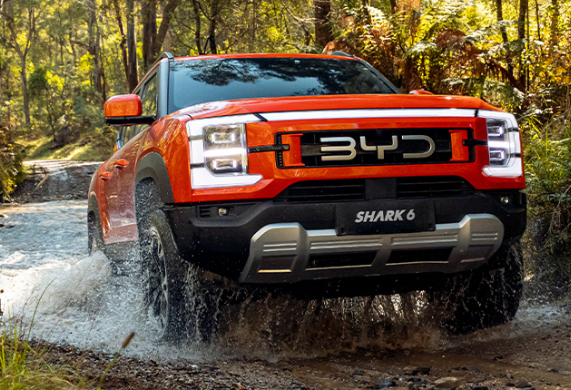
The BYD Shark 6 insurance cost is becoming an important ownership question as this plug-in hybrid ute finds its way onto more Australian roads. The Shark 6 looks like a conventional dual-cab from across the car park, but beneath the skin it is a rather different animal. We have a petrol engine, a sizeable Blade battery, powerful electric motors, all-wheel drive, sophisticated electronics and acceleration that would have embarrassed performance cars not so long ago.
Naturally, that raises a question: is the BYD Shark 6 expensive to insure?
There is no single nationwide figure that applies to every owner. Insurance pricing depends heavily on the driver, suburb, annual mileage, vehicle variant, excess, claims history, parking arrangements and insurer.
Still, we finally have some useful real-world data.
Youi currently publishes an annual comprehensive insurance premium range of approximately A$1,271 to A$2,377 for the BYD Shark 6, based on policies sold between November 22, 2025 and May 22, 2026. Youi notes that premiums depend on individual circumstances and underwriting, so those figures should be viewed as a reference point rather than a promise of what we will personally pay.
That gives us a much better starting point than simply throwing darts at a board.
Content in this publication
- How Much Does BYD Shark 6 Insurance Cost?
- Why the BYD Shark 6 Can Be Interesting to Insurers
- What Factors Affect BYD Shark 6 Insurance Cost Most?
- Age and Driving History Can Make a Huge Difference
- Does Your Postcode Affect Shark 6 Insurance?
- Does Annual Mileage Matter?
- How Does the Insurance Excess Affect the Premium?
- Agreed Value vs Market Value for a BYD Shark 6
- Does the BYD Shark 6 Safety Rating Help?
- CTP vs Comprehensive Insurance for a Shark 6
- Does the Shark 6 Variant Affect Insurance?
- What Might Different Shark 6 Owners Pay?
- What About Business Use?
- Does Towing Affect Shark 6 Insurance?
- Will Modifications Increase BYD Shark 6 Insurance Cost?
- How Can We Reduce BYD Shark 6 Insurance Cost?
- Is the BYD Shark 6 Expensive to Insure Compared With Its Price?
- What Could Insurance Cost Over Three or Five Years?
- Get an Insurance Quote Before Buying the Shark 6
- Our Take on BYD Shark 6 Insurance Cost
- Conclusion
- Frequently Asked Questions
How Much Does BYD Shark 6 Insurance Cost?
Based on that published insurance data, a reasonable real-world reference range for comprehensive cover is:
| Period | Indicative cost based on published range |
|---|---|
| Annual | A$1,271–A$2,377 |
| Monthly equivalent | About A$106–A$198 |
| Weekly equivalent | About A$24–A$46 |
These figures are mathematical equivalents of the annual premiums rather than monthly-payment quotes. Insurers may charge differently when premiums are paid monthly, so always compare the total annual cost, not merely the amount leaving our bank account each month.
More importantly, some Shark 6 owners could receive quotes below this range while others could easily find themselves above it.
A 50-year-old driver with a long claim-free history, secure garage and modest annual mileage is a very different proposition from a 22-year-old driver parking on the street in a high-claim postcode.
Insurance algorithms notice the difference.
What the Current Insurance Data Actually Tells Us
The A$1,271–A$2,377 figure is useful because it comes from policies that were actually sold rather than from a hypothetical comparison profile. Youi states that the range is based on its internal data and represents comprehensive policies purchased for the model during its stated reporting period.
However, we should resist turning that into a supposed national average.
Different insurers have different risk models. One company might price the Shark 6 aggressively because its claims experience with the vehicle has been good. Another may quote considerably more because it has fewer repair-cost statistics or because our postcode produces a different claims profile.
Insurance pricing is less like buying petrol and more like buying an airline ticket. Two people can purchase essentially the same product and somehow receive very different numbers.
Why There Is No Universal Shark 6 Insurance Price
Australia's Moneysmart explains that insurers consider factors including the type and value of the vehicle, the drivers, how frequently and how far the vehicle is driven, where the owner lives, where the vehicle is parked and the chosen excess.
That means asking, "How much is Shark 6 insurance?" is only half the question.
The better question is:
How much would a Shark 6 cost to insure for someone with our specific risk profile?
That distinction matters.
Why the BYD Shark 6 Can Be Interesting to Insurers
The Shark 6 is not simply another four-cylinder ute.
Its unusual combination of performance, electrification and utility gives insurers several variables to consider.
Vehicle Value Matters
Insurance companies care about vehicle value because a total loss on a A$60,000 vehicle is obviously more expensive than a total loss on a A$15,000 hatchback.
At the time of writing in September 2026, BYD Australia is advertising the Shark 6 Premium from A$57,900 drive-away as part of a promotional offer running through September 30, 2026, subject to its terms and availability.
The higher-performance models can cost more. CarExpert, for example, lists 2026 Shark 6 pricing reaching approximately A$69,231 drive-away in its Sydney-based estimates.
That replacement value becomes part of the broader insurance equation.
The Plug-In Hybrid Drivetrain Adds Complexity
Under the floor sits considerably more technology than we find in a conventional petrol or diesel ute.
The current Shark 6 family combines a turbocharged petrol engine with electric motors and a 29.6kWh BYD Blade Battery. BYD's 2026 specifications show outputs reaching 321kW in the Dynamic and Premium models and 350kW in the Performance.
That does not automatically mean astronomical insurance.
But modern electrified vehicles include expensive sensors, electronic control systems, high-voltage equipment and specialised components. Insurers ultimately care about both how often claims occur and how much those claims cost.
This Is a Seriously Powerful Ute
Here is where things become interesting.
The Shark 6 Premium produces a claimed 321kW and 650Nm, while the Performance raises combined output to 350kW and 700Nm. BYD quotes 0–100km/h times of 5.7 and 5.5 seconds respectively.
Think about that for a moment.
We are talking about a large ute weighing well over two tonnes that can accelerate like a sports sedan.
An insurer does not simply look at the badge on the tailgate. Vehicle type, value and risk characteristics can all contribute to pricing, although individual insurers generally do not publish the exact weighting used in their formulas.
Ute Usage Can Change the Equation
A Shark 6 bought as a family vehicle may live a fairly relaxed life.
Another might spend every weekday travelling between construction sites.
Another could tow a boat every weekend.
And someone else may install a canopy, tray equipment, suspension components and expensive accessories.
From an insurance perspective, those are not necessarily identical vehicles anymore.
Commercial or business use should therefore be disclosed correctly. Trying to shave a few dollars from a premium by describing business use as purely private use could create much larger problems if we later make a claim.
What Factors Affect BYD Shark 6 Insurance Cost Most?
While every insurer calculates premiums differently, the biggest variables commonly include:
- Driver age and experience: younger or inexperienced drivers may face higher premiums and additional excesses.
- Claims and driving history: previous insurance claims can affect future pricing.
- Postcode: theft rates, traffic density, storm exposure and historical claims can influence pricing.
- Parking: garaging a vehicle overnight can produce a different risk profile from street parking.
- Annual kilometres: more time on the road can mean greater exposure to accidents.
- Vehicle usage: private, commuting and business use may be assessed differently.
- Vehicle value: more expensive vehicles can produce larger potential claims.
- Modifications and accessories: aftermarket equipment should be declared where required.
- Chosen excess: accepting a larger excess can sometimes reduce the premium.
- Policy inclusions: rental car cover, roadside assistance and other extras can change the final cost.
- Listed drivers: adding younger drivers can materially alter quotes.
- Agreed or market value: the way the vehicle is insured can influence both premiums and claim payouts.
These variables explain why someone else's Shark 6 quote is interesting but never definitive.
Age and Driving History Can Make a Huge Difference
Imagine two identical Shark 6 Premiums parked five kilometres apart.
One owner is 48, has twenty years of claim-free driving and keeps the ute inside a locked garage.
The other is 21, recently obtained a full licence and has already made an insurance claim.
Same ute.
Completely different insurance proposition.
This is why online forum conversations about insurance prices sometimes resemble people arguing about restaurant bills without mentioning that one table ordered water and the other ordered champagne.
Context changes everything.
Does Your Postcode Affect Shark 6 Insurance?
Absolutely.
Moneysmart confirms that where we live and where the vehicle is kept are factors insurers can take into account when setting premiums.
An area with high vehicle-theft claims may produce different pricing from a lower-risk suburb.
Natural-hazard exposure can matter too.
If one postcode regularly produces hail, storm or flood claims, the insurer has historical information that can influence its assessment.
This is also why moving house can unexpectedly change a renewal premium even though neither the vehicle nor driver has changed.
Does Annual Mileage Matter?
It can.
Someone travelling 8,000km annually creates a different exposure profile from someone covering 35,000km.
Some insurers specifically ask for estimated yearly kilometres during the quoting process.
Be realistic.
Underestimating our mileage simply to chase a cheaper quote is not clever if the information is material to the insurer's decision.
The excess is the amount we generally agree to contribute when making certain claims.
Moneysmart notes that choosing a higher excess can reduce the insurance premium, although we need to ensure we could comfortably afford that excess if an accident actually happened.
The Higher-Excess Trap
Suppose increasing our excess saves A$180 per year.
That sounds attractive.
You may be interested in reading BYD Shark 6 Reliability: How Dependable Is This Hybrid Ute?
But if the change increases our claim contribution by A$1,000, we should ask whether the annual saving genuinely compensates us for taking that additional risk.
There is no universally correct answer.
Someone with a large emergency fund may happily accept a higher excess. Someone living month to month might reasonably prefer paying a slightly higher premium in exchange for a manageable claim cost.
Agreed Value vs Market Value for a BYD Shark 6
This deserves more attention than it usually receives.
With market value, the insurer determines what the vehicle was worth around the time of a covered total-loss claim according to the policy terms.
With agreed value, an amount is agreed between the insurer and policyholder.
Moneysmart notes that agreed-value policies may come with higher premiums, and agreed values can change at renewal.
For a relatively new vehicle such as the Shark 6, we would pay particular attention to this figure.
A beautifully cheap premium becomes less impressive if the insured value leaves us significantly short of replacing the vehicle after a total loss.
Does the BYD Shark 6 Safety Rating Help?
The Shark 6 has a strong safety package.
ANCAP tested the model in 2025, with the rating applying to all variants introduced in Australia and New Zealand from January 2025. Its assessment recorded 85% for adult occupant protection, 87% for child occupant protection, 74% for vulnerable road-user protection and 86% for safety assist.
Standard safety technology includes features such as autonomous emergency braking, lane support systems and advanced speed assistance.
Modern collision-avoidance technology has obvious safety benefits.
However, we should not assume that a strong safety rating automatically guarantees inexpensive comprehensive insurance. Premiums incorporate many variables beyond crash safety, including vehicle value, repair costs and the driver's individual profile.
CTP vs Comprehensive Insurance for a Shark 6
This distinction is critical in Australia.
Compulsory Third Party insurance, or CTP, deals primarily with injuries to people arising from road accidents. It does not provide the same protection for damage to our vehicle or someone else's vehicle.
Moneysmart explains that comprehensive insurance can cover damage to our own vehicle and other people's property, subject to the policy's conditions and exclusions.
For a new vehicle costing around A$60,000, many owners will naturally investigate comprehensive cover rather than relying only on compulsory insurance.
That does not mean every comprehensive policy is equal.
The cheapest quote might exclude benefits that matter to us, while a slightly more expensive policy might provide superior replacement-car provisions, choice of repairer, windscreen cover or rental-car benefits.
Price is important.
Policy wording is more important than many buyers realise.
Does the Shark 6 Variant Affect Insurance?
BYD's expanded 2026 Australian Shark 6 range includes the Dynamic Cab Chassis, Premium and Performance models.
Insurers can potentially price individual variants differently because vehicle value, specifications and performance differ.
The Premium is likely to be the model many shoppers encounter because it established the Shark 6 in Australia and currently carries BYD's A$57,900 promotional drive-away pricing.
It combines 321kW, 650Nm and all-wheel drive with a 29.6kWh battery.
The published Youi Shark 6 insurance range provides a useful benchmark, but drivers should obtain a quote for the exact variant rather than assuming all Sharks receive the same premium.
The Performance introduces a 2.0-litre turbocharged hybrid drivetrain producing a claimed 350kW and 700Nm, along with maximum braked towing capacity of 3,500kg.
Because its purchase price and specifications differ from the Premium, we would quote the Performance separately before ordering rather than assuming its insurance will match the existing Shark 6 benchmark.
That five-minute insurance check could prevent a nasty surprise after signing the purchase contract.
What Might Different Shark 6 Owners Pay?
Rather than pretending we can manufacture precise quotes, it is more useful to consider risk profiles.
Lower-Risk Owner
Picture an experienced driver with no recent claims, secure overnight parking, limited annual kilometres and a higher voluntary excess.
That driver might receive a particularly competitive quote.
Could it fall below the published A$1,271 reference point?
Possibly. Insurance prices are individual.
But only a genuine quote can confirm it.
Typical Established Driver
An experienced driver using the Shark 6 for commuting and normal private use might find quotes somewhere around the broad published benchmark.
The important strategy is to compare several insurers using identical coverage assumptions.
A A$1,500 policy with a large excess and reduced benefits cannot fairly be compared with a A$1,700 policy offering a lower excess and better inclusions.
Higher-Risk Profile
Young drivers, drivers with previous claims, high annual mileage, certain postcodes or business usage may find premiums substantially higher.
There may also be separate age-related or inexperienced-driver excesses.
Before allowing younger household members to use the vehicle, check exactly how the policy treats them.
What About Business Use?
The Shark 6 sits in an interesting grey zone between lifestyle vehicle and working ute.
Some buyers will use it purely to tow bikes and visit the beach.
Others will put tools in the tray and treat it like a mobile office.
Tell the insurer how the vehicle is actually used.
If we regularly carry tools or commercial equipment, we should also investigate whether those items are covered under the motor policy or require separate business insurance.
Do not assume everything sitting inside a locked ute is automatically insured.
Does Towing Affect Shark 6 Insurance?
The Shark 6 Premium and Dynamic are rated for up to 2,500kg braked towing, while the 2026 Performance raises that maximum to 3,500kg, according to BYD's current specifications.
Owners planning to tow caravans, boats or trailers should check their policy wording carefully.
Questions worth answering include whether damage while towing is covered, what protection applies to the trailer itself and whether roadside assistance has towing-distance or vehicle-size restrictions.
The car and caravan may travel together, but insurance policies do not necessarily treat them as one object.
Will Modifications Increase BYD Shark 6 Insurance Cost?
They can.
Australian ute owners rarely leave their vehicles completely alone.
Bull bars, driving lights, canopies, trays, roof racks, suspension upgrades, wheels, tyres, charging accessories and camping equipment can rapidly add thousands of dollars to a build.
Tell the insurer about modifications and accessories where required.
Otherwise we could spend A$10,000 transforming the ute and later discover that the policy only recognises the standard vehicle.
That is the insurance equivalent of buying a very expensive umbrella and discovering it has holes when the rain arrives.
How Can We Reduce BYD Shark 6 Insurance Cost?
There is no magic switch, but there are several sensible ways to attack the premium.
Compare Quotes Every Year
This is arguably the most important step.
Moneysmart reported in August 2026 that motor vehicle insurance premiums had risen 8% in the twelve months to July 2025. It also cited ASIC research showing that 31% of customers who contacted their insurer and asked received a lower premium without reducing their coverage.
Loyalty does not automatically guarantee the lowest price.
Obtain fresh quotes.
Then compare the details.
Consider Paying Annually
Monthly instalments are convenient, but convenience is not always free.
You may be interested in readingBYD Shark 6 Reliability: How Dependable Is This Hybrid Ute?You may be interested in reading
 Is Mitsubishi Pajero Sport a Good Car? A Complete Ownership Review
Compare the total annual amount payable under monthly billing with the cost of paying the policy upfront.
The difference might be small.
Or it might pay for a nice dinner.
Either way, we should know.
Use Secure Parking Where Possible
Because where the vehicle is stored can contribute to insurance pricing, secure overnight parking is worth declaring accurately during the quotation process.
Do not claim garage parking if the garage actually contains boxes while the Shark sleeps on the street every night.
Accuracy matters.
Remove Extras We Do Not Need
Some policies bundle rental-car coverage, roadside assistance or additional benefits.
Those options can be valuable.
But paying twice for the same benefit is pointless.
If our vehicle subscription, roadside organisation or another product already supplies similar protection, check whether the duplication is necessary.
Treat Every Renewal Like a New Purchase
A renewal notice is an offer, not a command.
Read the insured value.
Check the excess.
Review listed drivers.
Compare the premium.
Then obtain competing quotes.
Moneysmart recommends regularly comparing insurers rather than assuming an existing policy remains the best deal.
Is the BYD Shark 6 Expensive to Insure Compared With Its Price?
The current published A$1,271–A$2,377 comprehensive range does not suggest that every Shark 6 owner faces an enormous premium.
Consider the broader picture.
We are insuring a roughly A$60,000 plug-in hybrid ute with more than 300kW, all-wheel drive, advanced electronics and substantial replacement value.
An annual premium around the lower end of that published range would represent roughly 2% of a A$60,000 vehicle's purchase value.
At the upper end, it is closer to 4%.
That is not a universal insurance ratio and should not be used to predict quotes, but it provides useful context when budgeting for ownership.
What matters is whether our particular quote represents reasonable value relative to competing policies offering similar protection.
What Could Insurance Cost Over Three or Five Years?
Using the published Youi range purely as a constant-price illustration:
| Period | Illustrative premium total |
|---|---|
| 1 year | A$1,271–A$2,377 |
| 3 years | A$3,813–A$7,131 |
| 5 years | A$6,355–A$11,885 |
Real premiums will not remain frozen like this.
Rates can rise or fall.
Our postcode can change.
Our claims history changes.
The vehicle depreciates.
Insurer pricing models evolve.
Australia's broader motor-insurance market has also experienced premium increases in recent years.
Still, the illustration shows why insurance deserves a place in the ownership budget.
A few hundred dollars difference between competing annual quotes becomes meaningful over five years.
Get an Insurance Quote Before Buying the Shark 6
One of the easiest mistakes when buying a car is researching the purchase price obsessively while leaving insurance until delivery day.
We would reverse that sequence.
Once the exact Shark 6 variant is selected, get several comprehensive quotes before signing the final paperwork.
Use the same details for every insurer: same driver, same postcode, same annual kilometres, same vehicle use, similar insured value and comparable excess.
Then compare:
annual premium → excess → insured value → exclusions → repair options → rental-car cover → windscreen terms → accessories → additional-driver excesses.
Suddenly the cheapest policy may not look cheapest anymore.
A policy costing A$150 less annually but carrying an extra A$1,000 excess could be a poor trade if we actually make a claim.
Our Take on BYD Shark 6 Insurance Cost
The good news is that we now have a credible real-world benchmark.
Youi's published customer data puts BYD Shark 6 comprehensive premiums at approximately A$1,271 to A$2,377 annually for the reporting period it provides.
That gives prospective buyers something tangible to plug into an ownership budget.
But we should never mistake a benchmark for a quote.
The Shark 6 is an unusual machine: part ute, part high-powered AWD vehicle and part plug-in hybrid. Its 321kW-plus drivetrain, approximately A$60,000 purchase price, sophisticated safety systems and electrified architecture make the insurance calculation more nuanced than simply asking what another ute costs.
The sensible move is beautifully boring.
Get several quotes before buying.
Match the excesses.
Check the insured values.
Declare modifications and actual vehicle use.
Then repeat the exercise every year.
Ten minutes comparing policies can be worth considerably more than ten minutes negotiating floor mats at the dealership.
Conclusion
The BYD Shark 6 insurance cost in Australia currently has a useful real-world reference point of roughly A$1,271 to A$2,377 per year for comprehensive insurance, based on Youi's published historical customer data.
That equals approximately A$106–A$198 per month when simply dividing the annual figures by twelve, although actual monthly payment arrangements can differ.
Our individual premium may land below, inside or above that range.
Driver age, claims history, postcode, annual mileage, parking location, insurance excess, vehicle use, modifications and chosen coverage all matter.
So if we are considering buying the Shark 6, insurance should become part of the pre-purchase calculation alongside finance, servicing, fuel, electricity, tyres and registration.
The Shark may be quick.
Our insurance research should happen before it reaches the driveway.
Frequently Asked Questions
1. How much is BYD Shark 6 insurance per year?
A current published reference comes from Youi, which lists a comprehensive annual premium range of approximately A$1,271–A$2,377 for the Shark 6 based on policies sold between November 22, 2025 and May 22, 2026. Individual quotes can fall outside that range depending on the driver's circumstances.
2. How much is BYD Shark 6 insurance per month?
Dividing the published annual benchmark by twelve gives approximately A$106–A$198 per month. That is only a mathematical equivalent. An insurer offering monthly instalments may charge a different total amount than it charges customers paying annually.
3. Is the BYD Shark 6 expensive to insure?
There is no universal answer because premiums are highly individual. Current published data provides a useful A$1,271–A$2,377 annual reference range, but age, postcode, claims history, mileage, vehicle use, excess and coverage can push a quote substantially higher or lower.
You may be interested in readingBYD Shark 6 Reliability: How Dependable Is This Hybrid Ute?You may be interested in reading
Is Mitsubishi Pajero Sport a Good Car? A Complete Ownership ReviewYou may be interested in reading
 Is Peugeot RCZ a Good Car? A Complete Used Buyer’s Guide
4. Will the BYD Shark 6 Performance cost more to insure?
Not necessarily for every driver. The Performance has a higher purchase price and increases output to 350kW and 700Nm, while BYD quotes 0–100km/h in 5.5 seconds. Because insurers price risk differently, obtain a quote for the exact Performance variant rather than assuming its premium from Premium-model figures.
5. How can I get cheaper BYD Shark 6 insurance?
Compare multiple insurers, review your excess, remove unnecessary optional extras, accurately declare lower annual mileage where applicable and compare again at every renewal. Moneysmart also recommends asking an existing insurer whether it can improve its renewal price; ASIC research cited by Moneysmart found that 31% of customers who contacted their insurer received a lower premium without reducing cover.
If you want to know other articles similar to BYD Shark 6 Insurance Cost: What Should You Expect? you can visit the category Blog.
Volvo S90 Reliability: Problems, Costs & Best Years
Is Haval Jolion a Good Car? Honest Review, Reliability, Pros and Cons
How to Start Haval Jolion With Spare Key: Complete Guide
How to Calculate Per Diem on an Auto Loan

How to Calculate the Residual Value of a Car

Is the Honda Passport Selling Well? Sales Numbers Tell the Story
Leave a Reply
More content of your interest