
BYD Shark 6 Problems: Common Issues, Faults, and What Owners Should Know

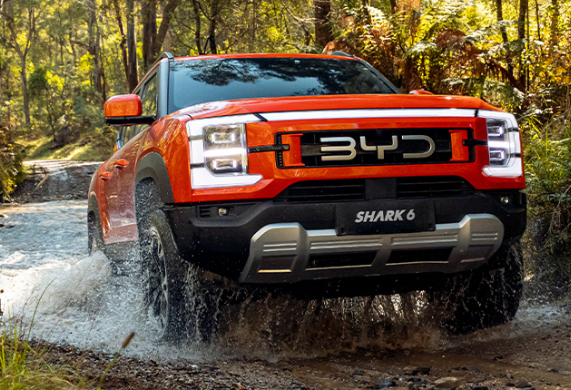
The BYD Shark 6 has landed in the ute market like someone kicked open the saloon doors. It is fast, quiet, packed with technology, surprisingly comfortable, and radically different from the diesel dual-cabs many of us have become accustomed to.
But novelty brings questions.
What are the real BYD Shark 6 problems? Are owners discovering serious reliability faults? Does the plug-in hybrid system create headaches? What about towing, electronics, infotainment glitches, off-road performance, and that increasingly important question: recalls?
As of September 2026, the picture is becoming much clearer.
The Shark 6 has now spent enough time on Australian roads for genuine patterns to emerge. There is a significant safety recall involving the spare-wheel mounting system, documented reports of telematics failures, complaints surrounding driver-assistance warnings, and several limitations associated with towing and demanding off-road use.
At the same time, current evidence does not establish an epidemic of failed high-voltage batteries, electric motors, or petrol engines.
So, rather than treating every internet complaint as proof the Shark is unreliable, we are going to separate confirmed defects from recurring complaints, minor annoyances, design limitations, and issues that software updates may address.
Content in this publication
- BYD Shark 6 Problems at a Glance
- 1. The BYD Shark 6 Spare-Wheel Recall Is the Most Important Current Issue
- 2. T-Box and Telematics Failures Have Frustrated Some Owners
- 3. BYD Shark 6 Infotainment Problems Are Usually More Annoying Than Serious
- 4. Driver Monitoring Can Be Too Sensitive
- 5. The Shark 6 Can Feel Overloaded With Warning Sounds
- 6. Earlier BYD Shark 6 Towing Problems Deserve Context
- 7. Heavy Towing Can Dramatically Increase Fuel Consumption
- 8. The Premium's 2,500kg Towing Limit Is a Weakness, Not a Fault
- 9. Off-Road Ability Has Been a Contentious BYD Shark 6 Problem
- 10. The Shark 6 Is Heavy
- 11. Payload Can Disappear Faster Than Expected
- 12. Suspension Comfort Has a Trade-Off
- 13. Some Owners Have Reported 12V Battery or Parked-Drain Concerns
- 14. Service and Parts Support May Depend on Where You Live
- 15. Has the BYD Shark 6 Had Serious Battery Problems?
- 16. Are There Widespread BYD Shark 6 Engine Problems?
- 17. Are BYD Shark 6 Problems Getting Better With Updates?
- 18. What Should We Check Before Buying a Used BYD Shark 6?
- 19. Who Should Be Most Concerned About BYD Shark 6 Problems?
- 20. Are the BYD Shark 6 Problems Serious Enough to Avoid It?
- Closing Thoughts: Understanding BYD Shark 6 Problems Properly
- Frequently Asked Questions About BYD Shark 6 Problems
BYD Shark 6 Problems at a Glance
Here is the short version before we dive deeper.
| Issue | What we know | Concern level |
|---|---|---|
| Spare-wheel mounting recall | Official Australian recall affecting 32,009 vehicles | High |
| T-Box/telematics failures | Reported by multiple owners; not an official fleet-wide failure rate | Moderate |
| Sensitive driver monitoring | Noted in professional testing | Low to moderate |
| Lane-keeping intervention | Can feel intrusive on narrow roads | Low |
| Infotainment/connectivity quirks | Owner reports include Bluetooth/app connectivity issues | Low to moderate |
| Earlier towing software limitations | Documented on early vehicles; updates have improved behavior | Moderate |
| Fuel use while heavy towing | Can rise dramatically versus headline PHEV figures | Moderate |
| 2,500kg towing on Premium | Limitation rather than mechanical fault | Moderate for towers |
| Off-road torque management | Earlier versions have struggled in demanding tests | Moderate |
| Heavy kerb weight | Impacts payload, efficiency, tyres, and dynamics | Moderate |
| 12V battery/drain complaints | Isolated owner reports, not established as universal | Low to moderate |
| Service-network concerns | Depends heavily on location | Variable |
That table tells us something important: BYD Shark 6 problems are not one single reliability story. They are a mixture of an actual recall, first-generation electronic quirks, PHEV operating characteristics, and compromises that matter more to some owners than others.
1. The BYD Shark 6 Spare-Wheel Recall Is the Most Important Current Issue
Let us start with the problem owners should take most seriously.
In September 2026, BYD Australia recalled 32,009 Shark 6 vehicles because the spare-wheel support system could potentially wear and allow the spare wheel to detach while the vehicle is moving. Vehicles involved were produced between August 29, 2024 and June 15, 2026.
According to the recall information, incorrect installation of the spare wheel, incorrect positioning of its tray, or insufficient fastening torque can cause abnormal wear to the support cable.
Continued movement can eventually damage that cable.
And if it fails? The spare wheel could separate from the vehicle.
That obviously transforms what sounds like a fairly mundane hardware problem into a genuine road-safety concern.
What Is BYD Doing About the Recall?
Affected vehicles are receiving an updated spare-wheel lifter assembly free of charge. BYD has advised affected owners to arrange the repair and, according to published recall information, has recommended removing the spare wheel while continuing to drive before rectification.
The campaign spans Shark 6 variants, although not every Shark 6 ever produced is necessarily affected. Owners should verify their individual VIN rather than assuming their ute is included or excluded based purely on model year.
Should the Recall Stop Us Buying a Shark 6?
A recall does not automatically make a vehicle unreliable.
Virtually every major manufacturer has issued recalls at some point.
What matters is the nature of the problem, whether manufacturers identify affected vehicles correctly, and how effectively the remedy is implemented.
For prospective Shark 6 buyers looking at used examples, we would therefore place recall completion near the top of the pre-purchase checklist.
2. T-Box and Telematics Failures Have Frustrated Some Owners
One of the more noteworthy owner-reported BYD Shark 6 problems involves the T-Box.
Think of the T-Box as part of the vehicle's digital nervous system. It handles telematics functions that connect the ute to external services.
A documented Australian owner experience published by The Driven described a failed T-Box that resulted in loss of connected functionality including navigation-related services, over-the-air updates and smartphone-app functionality. The author also described similar failures as commonly discussed in Shark owner communities. However, there is no authoritative fleet-wide failure percentage publicly established by that report.
That distinction matters.
We can reasonably say T-Box failures have been reported repeatedly.
We cannot reasonably say half of every Shark 6 on the road will experience one.
Symptoms That May Point Toward a Connectivity Problem
Depending on the fault, an owner might notice:
- the BYD smartphone app stops communicating with the vehicle;
- connected services disappear;
- navigation or data-based features stop working;
- over-the-air updates cannot be downloaded;
- the cellular connection indicator disappears;
- remote commands stop responding.
The ute may remain perfectly drivable despite the telematics malfunction.
And that is almost what makes the problem more annoying. You have this immensely sophisticated vehicle sitting in the driveway, but part of its digital ecosystem suddenly behaves like a smartphone without a SIM card.
3. BYD Shark 6 Infotainment Problems Are Usually More Annoying Than Serious
Modern vehicles have become computers with wheels.
That brings tremendous convenience, but it also creates entirely new categories of failure.
Instead of asking whether a gearbox slips, we now ask whether Android Auto connected this morning.
Some Shark 6 owners have discussed Bluetooth and smartphone-connectivity inconsistencies, while the vehicle depends heavily on its central touchscreen for settings and features.
That does not mean every Shark has infotainment trouble.
It does mean prospective buyers should spend more time testing the digital systems than they might in a traditional ute.
What Should We Test During a Used Shark 6 Inspection?
Connect your own phone.
Do not merely look at the screen and assume everything works.
Try:
- Bluetooth calling;
- music streaming;
- Apple CarPlay or Android Auto;
- navigation;
- the BYD smartphone app;
- remote locking features;
- climate controls;
- reversing and 360-degree cameras;
- vehicle settings;
- OTA software information.
A five-minute technology test could uncover more than staring under the bonnet for half an hour.
4. Driver Monitoring Can Be Too Sensitive
The Shark 6 comes loaded with safety technology.
That is unquestionably useful, and ANCAP awarded the Shark 6 a five-star rating, with an 86 per cent Safety Assist score. Its standard equipment includes systems such as autonomous emergency braking, lane support, intelligent speed assistance and driver-assistance technology.
The frustration comes from calibration.
During CarExpert testing, the driver monitoring system was described as slightly too sensitive, while the passive lane-keeping system occasionally intervened on narrow roads.
It is not a reliability defect in the traditional sense.
Still, something can work exactly as engineered and irritate us at the same time.
Why Driver-Assistance Complaints Matter
Imagine driving down a narrow country road.
You naturally position the ute away from the centre line because a truck is coming the other way. The vehicle interprets your positioning differently and nudges the steering.
Technically, nothing has broken.
Emotionally, you may feel like you have a back-seat driver permanently installed behind the dashboard.
Calibration and software updates therefore matter almost as much as the hardware itself.
5. The Shark 6 Can Feel Overloaded With Warning Sounds
Another recurring criticism concerns the number of alerts.
Speed warnings, attention monitoring, lane warnings, seat-belt reminders and other safety notifications can make the Shark feel rather talkative.
Professional reviewers noted early vehicles were full of audible safety prompts and electronic assistance.
Some drivers will barely notice.
Others will want to throw the imaginary passenger responsible for all that beeping out of the window.
The important consideration is how easily unwanted systems can be configured and whether preferences remain configured between drives.
6. Earlier BYD Shark 6 Towing Problems Deserve Context
Towing produced some of the most interesting early Shark 6 complaints.
When early Australian vehicles detected a connected trailer, reported restrictions included a 110km/h maximum speed and changes to certain advanced driver-assistance functions. BYD subsequently worked on software remedies for towing behavior.
Later testing showed improvements, particularly in power and battery management while towing.
This highlights something unusual about modern cars: the Shark you test today may behave differently from the same vehicle running older software.
Early Towing Software Was Not the Same as Mechanical Failure
That distinction is important for searchers looking up BYD Shark 6 reliability.
Software making questionable decisions about power distribution is very different from:
- an electric motor failing;
- a transmission destroying itself;
- a battery pack dying;
- an engine suffering internal damage.
The symptom may still inconvenience the owner, but the underlying risk profile is different.
7. Heavy Towing Can Dramatically Increase Fuel Consumption
Here we encounter one of the most misunderstood BYD Shark 6 "problems."
Official figures for the 1.5-litre Premium advertise extremely low fuel consumption when the battery has sufficient charge. BYD lists 2.0L/100km under the relevant test cycle with the battery above 25 per cent state of charge, rising to 7.9L/100km below 25 per cent. BYD itself warns that laboratory figures may not reflect real-world consumption.
Now hitch a large caravan to it.
Everything changes.
In one carsales tow test with an approximately 2400kg caravan, average consumption reached 17.4L/100km during that particular test.
Does that mean every Shark burns 17.4L/100km while towing?
No.
Load, gradient, speed, battery charge, wind, temperature and driving style all matter.
But it demonstrates why shoppers should not look at a PHEV's headline efficiency number and assume the same result while dragging several tonnes down the motorway.
The 60-Litre Fuel Tank Can Magnify the Issue
The Premium uses a 60-litre fuel tank.
High fuel consumption combined with a relatively modest tank can shrink petrol-only touring range significantly while towing.
For people who mainly drive 30 kilometres around town and charge every night, that might be irrelevant.
For people crossing remote Australia with a caravan?
Very different story.
The current Shark 6 range requires careful differentiation.
The Premium's braked towing limit remains 2,500kg, while the newer Performance variant is rated to tow as much as 3,500kg. The Performance also uses a 2.0-litre turbo hybrid system producing 350kW and 700Nm, compared with the Premium's 321kW and 650Nm.
This matters because older online articles sometimes make statements such as "the Shark 6 can only tow 2.5 tonnes."
That is no longer true across the entire family.
For the Premium, however, 2,500kg remains a limitation compared with many conventional diesel utes rated for 3,500kg.
9. Off-Road Ability Has Been a Contentious BYD Shark 6 Problem
The Shark 6 looks ready for the wilderness.
It has AWD, generous torque, 230mm of unladen ground clearance and a claimed 700mm wading depth in applicable specifications.
But hardware numbers only tell half the story.
Early testing revealed that challenging low-speed climbs could expose weaknesses in how the vehicle managed and distributed torque. The Shark lacks the conventional mechanical low-range gearing and locking differentials found in some dedicated off-road utes.
CarExpert subsequently found the vehicle improved after updates but still considered serious off-road work an area where rivals could hold an advantage.
Why Electric AWD Behaves Differently
Traditional four-wheel-drive systems are wonderfully mechanical.
Gears turn gears. Shafts turn wheels.
The Shark has an electrified approach, with front and rear electric motors and software deciding how power should be distributed.
When that calibration works well, responses can be lightning-fast.
When the algorithm does not give the wheel exactly what it needs, exactly when it needs it, the experience can feel strangely hesitant despite huge theoretical power.
Software Can Change the Character of the Vehicle
BYD has continued developing its off-road software, including additional low-speed functionality within the expanding Shark 6 range.
That means we should be cautious about judging every 2026 vehicle from videos of early production or pre-production Sharks.
Software age matters.
10. The Shark 6 Is Heavy
There is no escaping physics.
The Shark 6 Premium weighs approximately 2,710kg at the kerb, while the Performance is listed at around 2,775kg.
That is a lot of vehicle.
The weight comes partly from combining two worlds: the ute carries a petrol engine, fuel system, substantial battery, electric motors and power electronics.
That mass can influence:
- tyre wear;
- braking demand;
- energy consumption;
- payload calculations;
- suspension behavior;
- cornering feel;
- off-road maneuverability.
Professional road testing has also noted that the Shark's weight can be felt dynamically.
Again, heaviness is not a fault.
It is a characteristic buyers need to understand.
11. Payload Can Disappear Faster Than Expected
The Premium's 3,500kg gross vehicle mass combined with its approximately 2,710kg kerb weight creates a theoretical difference of roughly 790kg before considering how real vehicle configuration and accessories affect usable payload.
Add:
- five adults;
- a canopy;
- bull bar;
- recovery equipment;
- camping equipment;
- tools;
- towball download;
and kilograms disappear like ice cubes on a summer driveway.
This is especially important for owners replacing a traditional work ute.
A vehicle can have monumental horsepower and still exceed its legal weight limits surprisingly easily.
12. Suspension Comfort Has a Trade-Off
One of the Shark 6's nicest qualities is its ride.
Instead of behaving like an empty work truck bouncing over suburban roads, the Shark can feel closer to a large SUV.
That is partly because it uses independent double-wishbone suspension at both ends rather than following the traditional leaf-sprung rear formula.
Comfort is excellent for the class, but there is another side.
During heavy towing tests, reviewers have described the front end as relatively soft over large undulations.
So the same tuning that makes the Shark pleasant during the Monday commute can feel less controlled when Saturday involves a large caravan.
13. Some Owners Have Reported 12V Battery or Parked-Drain Concerns
There have also been individual owner discussions involving unexplained battery depletion while the Shark is parked.
One Australian forum thread described a vehicle losing a noticeable percentage of traction-battery charge while switched off, with participants suspecting repeated charging of the 12V auxiliary battery as one possible explanation. Other Shark owners in the same discussion said their vehicles did not behave that way.
That is a useful example of how we should interpret internet reliability information.
One owner experiencing a fault proves the fault can occur.
It does not establish that the entire model has a systemic defect.
Warning Signs Worth Investigating
We would investigate further if a Shark:
- loses significant charge repeatedly while parked;
- struggles to wake or unlock;
- generates low-voltage warnings;
- behaves differently after sitting overnight;
- repeatedly needs external assistance.
A healthy modern PHEV will consume some energy maintaining electronic systems, but unusually large or worsening losses deserve diagnosis.
14. Service and Parts Support May Depend on Where You Live
The vehicle itself is only half the ownership equation.
The other half is the company standing behind it.
Some Australian Shark owners have complained about delays, limited regional service access and waiting for electronic components. A documented long-distance ownership account involving a failed T-Box described frustration obtaining a replacement while travelling.
For metropolitan owners with a convenient BYD service centre, this may barely register.
For rural buyers several hundred kilometres from their nearest authorised repairer, it deserves much more weight in the purchase decision.
Before buying, we would check the nearest service location rather than discovering it after a warning light appears.
15. Has the BYD Shark 6 Had Serious Battery Problems?
So far, the available evidence we reviewed does not establish a widespread epidemic of failed Shark 6 Blade Battery packs.
BYD uses a roughly 29.6kWh Blade Battery in current Australian Shark 6 variants and lists an eight-year/160,000km traction-battery warranty, subject to its warranty conditions. The broader vehicle warranty is listed as six years/150,000km.
That does not guarantee that an individual battery can never fail.
No manufacturer can promise that.
But it is important not to confuse:
software bugs, a failed T-Box, 12V battery issues or changing state-of-charge behavior
with:
high-voltage traction-battery failure.
They are completely different things.
16. Are There Widespread BYD Shark 6 Engine Problems?
The same caution applies to the petrol engine.
The Premium and Dynamic use a 1.5-litre turbocharged petrol engine as part of their DMO plug-in hybrid system, while the newer Performance employs a 2.0-litre turbocharged engine.
At this stage, the current sources reviewed do not establish a widespread pattern of catastrophic Shark 6 petrol-engine failure.
What drivers may notice is the engine working harder when battery charge is low, loads are high or the vehicle is towing.
A PHEV can be whisper-quiet one minute, then suddenly make the petrol engine very obvious the next.
That change in sound alone does not indicate something is broken.
17. Are BYD Shark 6 Problems Getting Better With Updates?
Some are.
And that may be one of the most interesting aspects of Shark ownership.
Towing power management has already evolved, and BYD has continued adding and refining software functionality. Current specifications include OTA software capability across the range.
We should therefore think of the Shark 6 differently from an old diesel ute.
An old ute generally leaves the factory with its personality permanently baked in.
The Shark can change.
That is wonderful when an update improves something.
It is less wonderful when a feature depends on software that has not yet been perfected.
18. What Should We Check Before Buying a Used BYD Shark 6?
A careful inspection is worthwhile, particularly because the Shark combines conventional mechanical equipment with sophisticated electronics.
We would check:
- Recall status: Confirm whether the spare-wheel campaign applies and whether the repair has been completed.
- Software version: Make sure the vehicle has received relevant updates.
- T-Box operation: Check connected services, app access and navigation.
- Charging: Test AC charging and, where possible, DC charging.
- 12V system: Look for warning messages or unusual parked battery drain.
- Driver-assistance systems: Confirm sensors and cameras operate correctly.
- Tyres: Inspect all four for unusual or uneven wear.
- Underbody: Important if the ute has been used extensively off-road.
- Towbar: Look for signs of heavy towing and confirm the correct equipment is installed.
- Service history: Verify scheduled servicing and documented warranty work.
A used Shark with documented updates and recall work may make more sense than an apparently immaculate example with a mysterious digital history.
19. Who Should Be Most Concerned About BYD Shark 6 Problems?
Not every weakness matters equally.
For an urban owner who drives 40km per day, charges at home and occasionally visits a hardware store, fuel range while towing a 2.4-tonne caravan is almost meaningless.
For a grey nomad?
It could be decisive.
Likewise, extreme off-road limitations hardly matter to someone whose definition of adventure is a gravel road to a campsite.
We would pay particular attention to the Shark's weaknesses if you:
- tow close to the maximum rating regularly;
- travel through remote regions;
- need maximum payload;
- perform difficult low-speed off-road work;
- live far from an authorised service centre;
- dislike intrusive electronic assistance;
- depend heavily on app connectivity.
20. Are the BYD Shark 6 Problems Serious Enough to Avoid It?
The answer depends less on the number of complaints and more on what we expect the vehicle to do.
There is one current issue that owners should unquestionably treat seriously: the spare-wheel recall.
Telematics failures and electronic annoyances also deserve attention, particularly because modern Shark functionality depends so heavily on software.
Beyond those areas, many frequently discussed "problems" are better described as compromises.
The Premium's 2,500kg towing limit is not a failure.
Its 2.7-tonne kerb weight is not a defect.
Higher fuel consumption while towing is not evidence that the hybrid system is broken.
Limited low-range crawling ability compared with traditional 4WD hardware is a capability difference.
Separating those categories keeps the conversation grounded.
Closing Thoughts: Understanding BYD Shark 6 Problems Properly
The Shark 6 is a fascinating ute precisely because it does things differently.
Its plug-in hybrid drivetrain can make conventional dual-cabs feel almost agricultural around town. It provides huge performance, genuine electric commuting capability, sophisticated cabin technology and SUV-like refinement.
Yet sophistication creates complexity.
The most important BYD Shark 6 problems currently include the September 2026 spare-wheel recall, reported telematics/T-Box failures, sensitive electronic safety systems, and some limitations surrounding towing, remote touring and demanding off-road driving.
There are smaller complaints surrounding connectivity and isolated reports of battery drain, too.
What we do not currently have solid evidence for is a universal disaster involving batteries, engines or electric motors.
And perhaps that is the fairest way to describe the Shark: it is not a perfect ute, nor does current evidence justify portraying it as a mechanical time bomb.
It is a young, software-heavy plug-in hybrid platform finding its feet in one of the toughest vehicle markets on earth.
Before buying one, we would check the recalls, test every electronic feature, understand the towing numbers and decide whether its particular compromises match how we actually use a ute.
Because reliability is not simply about whether something breaks.
Sometimes the biggest problem is buying the right vehicle for the wrong job.
Frequently Asked Questions About BYD Shark 6 Problems
1. What is the biggest known BYD Shark 6 problem?
As of September 2026, the most significant confirmed issue in Australia is the recall involving the spare-wheel support system. BYD recalled 32,009 vehicles because abnormal wear of the support cable could potentially allow the spare wheel to detach. Affected vehicles receive an updated lifter assembly free of charge.
2. Does the BYD Shark 6 have battery problems?
Individual electrical and parked-battery-drain complaints have appeared in owner discussions, but current evidence does not demonstrate widespread failure of the Shark 6's high-voltage Blade Battery. Buyers should distinguish 12V electrical problems, software issues and telematics faults from traction-battery failure.
3. Does the BYD Shark 6 have towing problems?
Early vehicles attracted criticism for towing-related software behavior and restrictions, and heavy towing can substantially increase fuel consumption. Subsequent software changes improved power and battery management. The Premium remains rated to tow 2,500kg braked, while the newer Performance is rated up to 3,500kg.
4. Is the BYD Shark 6 good off-road?
It has useful fundamentals including AWD, 230mm of unladen ground clearance and substantial electric torque. However, testing has shown demanding low-speed off-road conditions can expose limitations compared with vehicles equipped with traditional low-range gearing and locking differentials. Software development has continued to improve its capabilities.
5. Is the BYD Shark 6 reliable?
It is still a relatively young model, so a decade of long-term reliability data simply does not exist yet. Current evidence includes a major spare-wheel recall and recurring reports of certain electronic or telematics issues, but it does not establish widespread catastrophic failure of the hybrid drivetrain. Prospective owners should check recall completion, service history, software updates and connected features carefully.
If you want to know other articles similar to BYD Shark 6 Problems: Common Issues, Faults, and What Owners Should Know you can visit the category Common Problems.
Volvo S90 Common Problems: Reliability & Repair Guide
Volvo S90 No Sound: Causes, Fixes and Solutions

Nissan Rogue Smells Like Gas: Causes and Fixes
Vauxhall Agila Problems: Common Faults & Fixes

Kia Sorento Jerking When Accelerating: Causes & Fixes

Jaguar F-Pace Low Battery: Causes, Warning Signs, and How to Fix It
Leave a Reply
More content of your interest