
Mitsubishi Pajero Sport Years to Avoid: A Used Buyer’s Guide

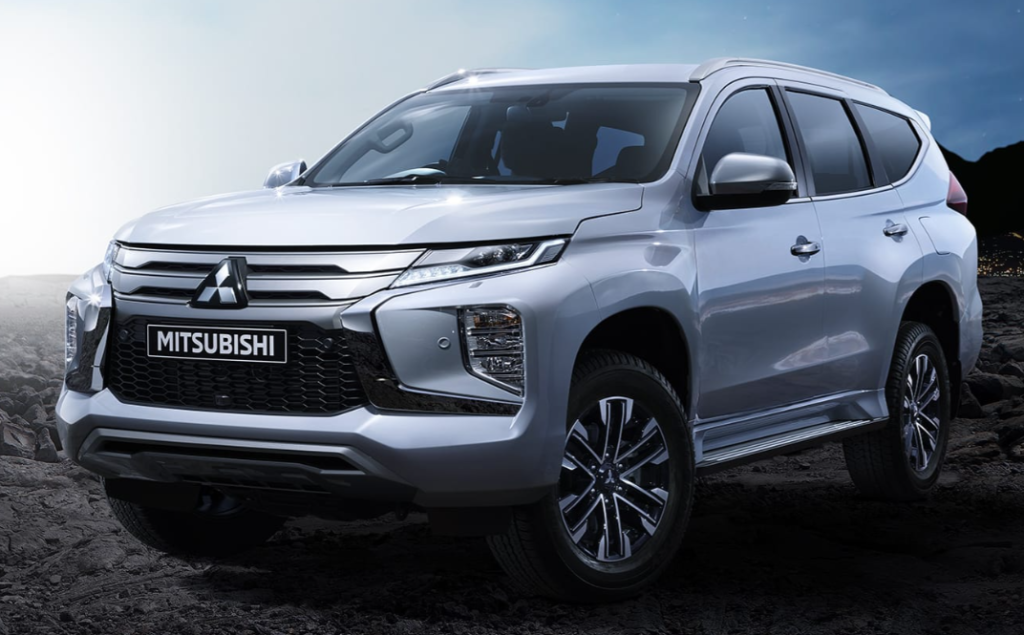
Buying a used Mitsubishi Pajero Sport can feel a little like choosing a hiking partner. Most examples are tough, dependable, and willing to go almost anywhere, but pick one that has spent its life being abused, neglected, or poorly maintained and the adventure can become expensive very quickly.
So, what are the Mitsubishi Pajero Sport years to avoid?
If we want the short answer, 2015 and 2016 models deserve the closest inspection, particularly early examples of the third-generation Pajero Sport. They arrived at the beginning of a completely redesigned generation and fall within several documented Australian recall campaigns. That does not mean every 2015 or 2016 Pajero Sport is unreliable. In fact, properly maintained examples can be excellent vehicles.
Older second-generation models can also become risky purchases, but their age, mileage, maintenance history, towing use, and off-road treatment now matter considerably more than their particular model year.
Later third-generation vehicles—especially after the model had spent several years in production—are generally the easier used-car proposition.
Let's dig deeper, because simply publishing a list of "bad years" doesn't tell us enough to buy the right SUV.
Content in this publication
- Mitsubishi Pajero Sport Years to Avoid: Quick Answer
- Why Model Year Alone Doesn't Tell the Whole Story
- 2015–2016 Pajero Sport: The Years We'd Inspect Most Carefully
- 2017–2018 Pajero Sport: Better Territory for Used Buyers
- Is the 2017 Pajero Sport a Year to Avoid?
- 2019 Pajero Sport: An Appealing Used-Car Sweet Spot
- 2020–2022 Pajero Sport: Should We Avoid Them?
- 2023–2024 Pajero Sport: Fewer Age Concerns, Higher Prices
- What About 2008–2014 Mitsubishi Pajero Sport Models?
- The Most Important Pajero Sport Problems to Check
- How to Buy a Pajero Sport Without Buying Someone Else's Problems
- Which Mitsubishi Pajero Sport Years Are Best to Buy?
- Should You Avoid the First Year of the Third Generation?
- What Is the Biggest Red Flag When Buying a Used Pajero Sport?
- Pajero Sport Buying Checklist
- Final Verdict: Mitsubishi Pajero Sport Years to Avoid
- Frequently Asked Questions
Mitsubishi Pajero Sport Years to Avoid: Quick Answer
For shoppers wanting a fast overview, we'd divide the used Pajero Sport market like this:
| Model years | Our used-buying approach | Main reason |
|---|---|---|
| 2008–2014 | Buy very carefully | Age, mileage, diesel wear, previous off-road use |
| 2015–2016 | Highest scrutiny | Early third-generation production and recall exposure |
| 2017–2018 | Generally worth considering | More mature third-generation examples |
| 2019 | Strong used-car candidate | Late pre-facelift production |
| 2020–2022 | Generally attractive | Facelifted third generation, newer vehicles |
| 2023–2024 | Low age-related risk | Newer examples, usually higher purchase prices |
Remember that Pajero Sport specifications vary significantly by country. The vehicle is also sold as the Montero Sport in some markets, while predecessor models have carried different names in countries such as Australia.
The current third-generation Pajero Sport originally debuted in 2015, while Mitsubishi introduced a significant refreshed version in 2019 with exterior, interior, technology, and convenience updates.
That timeline matters when we're shopping second-hand.
Why Model Year Alone Doesn't Tell the Whole Story
Here's the trap.
Someone sees a forum post saying, "Avoid the 2016 Pajero Sport," then immediately excludes every 2016 from their search.
That's too simplistic.
Imagine two identical 2016 Pajero Sports.
The first has travelled 90,000 km, received every scheduled service, had applicable recalls completed, never towed anything heavier than a garden trailer, and has spent most of its life on highways.
The second has covered 180,000 km, dragged a three-tonne caravan around the country, missed transmission-fluid changes, spent weekends climbing muddy trails, and comes with three missing service receipts.
They're technically the same year.
They are definitely not the same purchase.
For a body-on-frame diesel 4WD, vehicle history frequently matters more than the number printed next to "year."
That's why our list should be understood as a guide to where extra caution is justified—not a command to reject every vehicle from a particular year.
2015–2016 Pajero Sport: The Years We'd Inspect Most Carefully
If we're looking for the closest thing to Mitsubishi Pajero Sport years to avoid, the earliest third-generation vehicles belong at the top of the inspection list.
Mitsubishi introduced the completely redesigned generation globally in 2015. It brought a 2.4-litre MIVEC turbo-diesel in many markets and paired it with a newly developed eight-speed automatic transmission.
Being first-year vehicles doesn't automatically make them problematic. However, early production models naturally have less accumulated real-world development than vehicles produced several years into a generation.
Why 2015 and 2016 Require Extra Attention
One concrete reason is recall history.
In Australia, 2015–2016 QE Pajero Sport vehicles were included in a campaign concerning towbar flange-head bolts that could loosen, potentially allowing the towbar to detach.
Another Australian campaign covering vehicles including the Pajero Sport across the 2010–2016 model-year range concerned insufficient anti-corrosion coating on the tailgate gas-spring end caps. Corrosion could potentially cause an end cap to fail.
Neither recall proves that the basic vehicle is unreliable.
What it does tell us is that when shopping for one of these early vehicles, checking the VIN for completed recall work isn't optional homework—it should be part of the purchase process.
Would We Automatically Reject a 2016 Pajero Sport?
No.
A well-maintained 2016 with complete dealer or specialist servicing could easily be preferable to a neglected 2020 model.
Interestingly, available owner reviews are not uniformly negative either. Carsales' small sample of 2016 owner reviews includes owners describing strong reliability experiences. Because the sample is tiny, however, we shouldn't treat those reviews as statistical proof of reliability.
That's an important distinction.
Internet horror stories attract attention. Quietly dependable vehicles rarely inspire someone to write a 2,000-word forum post titled, "My SUV Worked Normally Again Today."
2017–2018 Pajero Sport: Better Territory for Used Buyers
By 2017 and 2018, the third-generation Pajero Sport had already accumulated more production time.
That's generally something we like when buying used.
Manufacturers refine manufacturing processes, dealerships become familiar with recurring service concerns, software evolves, and owners generate more real-world information about what needs monitoring.
These years therefore sit in an interesting sweet spot.
They're old enough to have experienced meaningful depreciation but young enough that finding sensible-mileage examples with documented maintenance is still realistic.
What Should We Check on 2017–2018 Models?
Pay particular attention to:
- Eight-speed automatic transmission behaviour
- Complete transmission servicing
- Engine noises during cold start
- Diesel service history
- Electric parking-brake operation
- Four-wheel-drive engagement
- Cameras and parking sensors
- Suspension noises
- Driveshaft boots
- Signs of extensive towing
- Underbody damage from off-road use
A Carsales used-vehicle guide covering 2015–2018 Pajero Sports specifically recommends inspecting the underbody and driveshaft boots and notes owner reports of harsh low-speed transmission downshifts. It also highlights the importance of transmission-fluid maintenance.
These are inspection points, not evidence that every vehicle suffers from those faults.
That difference matters enormously.
Is the 2017 Pajero Sport a Year to Avoid?
We wouldn't classify 2017 as a blanket avoid year.
You'll certainly find unhappy owners online. Carsales, for example, currently displays two particularly negative owner reviews for the 2017 model year. But two reviews cannot establish a meaningful failure rate across an entire production year.
Instead, a 2017 Pajero Sport should be judged on its individual mechanical condition.
If the transmission shifts smoothly, the engine is quiet when cold, there are no suspicious dashboard warnings, the Super Select 4WD system behaves correctly, maintenance is documented, and a professional inspection finds nothing significant, we wouldn't walk away merely because the registration certificate says 2017.
2019 Pajero Sport: An Appealing Used-Car Sweet Spot
The 2019 model year deserves particular attention because it sits around an important transition.
Mitsubishi officially revealed the refreshed third-generation Pajero Sport in Thailand in July 2019. The revised vehicle received substantial styling changes plus technology and convenience improvements including an 8-inch digital instrument display and available power tailgate functionality.
Depending on your country and registration timing, a vehicle advertised as a "2019" may therefore belong to different specifications.
Always identify the exact build date and generation specification rather than relying entirely on registration year.
Why Late Pre-Facelift Models Can Be Attractive
Late-production vehicles from an established platform often appeal to us because they combine several advantages:
They have had years of production maturity.
Their depreciation can be greater than that of the newer facelift.
Parts and servicing knowledge are widespread.
The vehicle remains fundamentally modern.
And you're less likely to pay a premium simply for newer styling.
A clean late-2018 or 2019 Pajero Sport with documented servicing can therefore make more sense than stretching the budget for the cheapest facelifted vehicle available.
2020–2022 Pajero Sport: Should We Avoid Them?
There's little basis for treating 2020–2022 as broad "avoid" years.
These vehicles belong to the updated phase of the third generation and benefit from several years of platform development.
There was an Australian recall covering multiple Mitsubishi vehicles, including certain 2020–2022 Pajero Sports, but it concerned missing warning information for button/coin batteries associated with vehicle keys rather than a major engine, transmission, chassis, or drivetrain defect.
That's a good example of why simply counting recalls isn't a sensible way to judge reliability.
A recall involving a potentially catastrophic mechanical component and a recall involving consumer warning labels both appear as "one recall" in a database. The number alone tells us very little.
The Biggest Risk With 2020–2022 Vehicles
Our attention shifts increasingly toward how the vehicle has been used.
A relatively young Pajero Sport may already have spent years towing a large caravan.
It might have crossed corrugated outback roads.
It might have been modified with suspension lifts, larger tyres, bull bars, roof loads, auxiliary batteries, towing equipment, or engine tuning.
You may be interested in reading Mitsubishi Pajero Sport Reliability: Is It a Dependable SUV?
None of those automatically makes it a bad vehicle.
But modifications and severe-duty use change the inspection equation.
A pristine-looking SUV can have lived a much harder mechanical life than its odometer suggests.
2023–2024 Pajero Sport: Fewer Age Concerns, Higher Prices
Newer Pajero Sports naturally have less accumulated age-related wear.
By the 2024 model year, the familiar Australian-market vehicle continued using the 2.4-litre turbo-diesel and eight-speed automatic, with Mitsubishi listing 133 kW, 430 Nm, and up to 3,100 kg braked towing capacity for relevant 4WD versions.
For used buyers, these newer vehicles usually present a different question.
It's less:
"Will this old vehicle become a mechanical money pit?"
And more:
"Is the price difference over a 2019 or 2020 example actually worth paying?"
If reliability risk is your overriding concern and the budget comfortably allows it, newer examples logically reduce exposure to age-related deterioration.
But value-conscious buyers shouldn't automatically assume newer means better value.
What About 2008–2014 Mitsubishi Pajero Sport Models?
Here's where things become complicated because specifications and model names vary substantially across markets.
The second-generation Pajero Sport was sold across Asia, Latin America, the Middle East, Russia, and other regions with different engines and equipment configurations.
By now, these vehicles are old enough that we hesitate to describe individual model years as inherently good or bad.
A 2010 vehicle may be sixteen years old in 2026.
At that point, maintenance history overwhelms model-year theory.
Age Becomes the Real Enemy
Rubber deteriorates.
Bushings wear.
Cooling systems age.
Suspension components develop play.
Turbochargers accumulate enormous operating hours.
Injectors don't stay young forever.
Automatic-transmission fluid gets neglected.
Electrical connectors encounter years of moisture, dust, vibration, and heat cycles.
Even a famously durable drivetrain can't negotiate with physics indefinitely.
Think of an older Pajero Sport like a solid pair of hiking boots. Great construction helps enormously, but after thousands of kilometres through mud and rocks, we're still going to inspect the soles.
High Mileage Isn't Automatically Bad
We'd rather buy a 180,000-km Pajero Sport with a thick folder of maintenance invoices than a suspiciously cheap 110,000-km vehicle whose owner says:
"The previous guy serviced it, I think."
Mileage tells us distance.
Service history tells us care.
We want both pieces of information.
The Most Important Pajero Sport Problems to Check
Rather than obsessing over individual model years, let's inspect the systems capable of turning an affordable used SUV into an expensive project.
Eight-Speed Automatic Transmission
The eight-speed automatic was an important feature of the third-generation Pajero Sport.
During a test drive, we want shifts to feel predictable and consistent.
Look for:
- Delayed engagement when selecting Drive or Reverse
- Harsh low-speed downshifts
- Unusual flaring between gears
- Shuddering under acceleration
- Transmission warnings
- Evidence that fluid servicing was ignored
Used-vehicle reporting has specifically noted harsh downshift complaints among some owners of early third-generation vehicles.
Don't diagnose a transmission from a ten-minute drive, though. If something feels questionable, have a Mitsubishi specialist investigate it.
Diesel Engine and Emissions System
Modern turbo-diesels reward correct maintenance and punish neglect.
We'd check for unusual smoke, rough starting, excessive engine noise, oil leaks, coolant problems, warning lights, and evidence of poor servicing.
If the vehicle has spent most of its life making extremely short urban trips, ask how it was driven and maintained.
Diesel emissions systems generally prefer reaching full operating temperature regularly.
A vehicle advertised as "one elderly owner, only driven two kilometres to the shops" can sound wonderful until we consider whether that usage pattern suited a modern diesel.
Timing Chain and Cold-Start Noise
The third-generation 2.4-litre diesel uses a timing-chain arrangement rather than a conventional rubber timing belt.
Chains are often treated online as lifetime components. That's an oversimplification.
Lubrication quality, maintenance, mileage, tensioners, guides, and general engine condition still matter. The Carsales used guide specifically advises listening for chain or tensioner noise in higher-mileage or neglected vehicles.
Listen to the engine from cold.
A seller who has conveniently warmed the vehicle before every viewing should make us curious.
Four-Wheel-Drive System
The Pajero Sport's 4WD capability is one of the biggest reasons to buy it.
So test it.
Don't accept:
"Oh, I've never used those settings, but I'm sure they work."
Make sure the relevant 4WD modes engage according to the owner's manual and that no warning indicators remain illuminated.
A 4WD system that has never been exercised isn't automatically healthier than one that has.
Suspension and Steering
A Pajero Sport can spend its life carrying family members to school—or spend years bouncing down corrugated roads with hundreds of kilograms of touring equipment aboard.
Check:
- Uneven tyre wear
- Steering vibration
- Clunks over bumps
- Worn bushes
- Leaking shock absorbers
- Vehicle sag
- Poor wheel alignment
- Aftermarket suspension modifications
Lift kits deserve particular attention.
A professionally installed, engineered setup can be excellent.
A collection of cheap parts installed in someone's driveway on Saturday afternoon is another story.
Underbody and Off-Road Damage
Get underneath the vehicle.
This is one of the most valuable Pajero Sport buying tips we can offer.
Carsales also recommends looking for damage around vulnerable underbody areas and inspecting driveshaft boots.
Scratches on protection plates aren't necessarily frightening. It's a 4WD, after all.
Heavy impacts, bent components, crushed sections, fluid leaks, or improvised repairs are different.
Mud trapped deep inside obscure chassis areas can also tell stories the polished paint doesn't.
How to Buy a Pajero Sport Without Buying Someone Else's Problems
The smartest used-car strategy isn't hunting for a magical flawless year.
You may be interested in readingMitsubishi Pajero Sport Reliability: Is It a Dependable SUV?You may be interested in reading
 Peugeot RCZ Engine Swap: Options, Costs, Compatibility, and What You Need to Know
It's eliminating risky individual vehicles.
1. Demand a Proper Service History
Look beyond stamps.
Invoices are even better because they reveal what was actually replaced.
Ask about:
- Engine-oil servicing
- Transmission-fluid servicing
- Differential oils
- Transfer-case maintenance
- Coolant replacement
- Brake fluid
- Fuel filters
- Suspension repairs
- Batteries
- Previous warning lights
A detailed history gives us a mechanical biography of the vehicle.
2. Check Outstanding Recalls by VIN
Never assume that because a recall existed, the repair was completed.
Use the vehicle identification number through Mitsubishi or the appropriate government recall service in your country.
This is particularly important with early third-generation examples because documented campaigns affected certain Pajero Sport vehicles.
3. Start the Vehicle Cold
A cold start can reveal things that disappear once the engine is warm.
Listen for rattles.
Watch the exhaust.
Observe starting speed.
Check warning lights.
Let the engine settle into idle without the seller immediately revving it.
4. Take a Long Test Drive
Five minutes around a dealership isn't enough.
We want urban traffic, higher speeds, acceleration, deceleration, parking manoeuvres, uneven roads, and—where practical and appropriate—operation of the 4WD system.
Pay attention to how the transmission behaves both cold and warm.
5. Get an Independent Pre-Purchase Inspection
This might be the best money we spend during the entire purchase.
Use someone familiar with diesel 4WDs and preferably the Mitsubishi Pajero Sport platform.
A competent inspection can reveal thousands of dollars' worth of future headaches before they become ours.
Which Mitsubishi Pajero Sport Years Are Best to Buy?
Rather than nominating one magical year, we'd focus on three groups.
2017–2019 models can offer strong value for buyers who want the third-generation platform without paying newer-model prices.
2020–2022 facelift models are attractive if we want newer technology, styling, and less age-related wear.
2023–2024 vehicles make sense for shoppers prioritising youth and remaining ownership confidence over maximum depreciation savings.
But we'd happily buy an excellent 2016 before a terrible 2021.
Condition wins.
History wins.
Inspection wins.
Every time.
Should You Avoid the First Year of the Third Generation?
Not automatically.
The third-generation Pajero Sport launched globally in 2015, introducing substantial changes including the newer diesel drivetrain and eight-speed automatic.
That makes early production vehicles worthy of extra scrutiny.
But "extra scrutiny" and "never buy one" are completely different statements.
If the price is attractive, recall work is complete, servicing is comprehensive, the transmission behaves properly, the 4WD system works, the vehicle hasn't been abused, and an independent mechanic approves it, an early Pajero Sport can still represent excellent value.
We simply wouldn't buy one blindly.
What Is the Biggest Red Flag When Buying a Used Pajero Sport?
For us, it isn't the year.
It's missing history combined with evidence of hard use.
Picture this advertisement:
"2018 Pajero Sport. 160,000 km. Lifted. Tuned. Used for touring. Tows beautifully. No books. Selling cheap."
Our wallet would remain firmly in our pocket until a specialist had inspected everything.
A Pajero Sport is tough, but toughness often encourages owners to ask a lot from it.
Caravans.
Boats.
Deep sand.
Mountain tracks.
Mud.
Heavy accessories.
Remote touring.
That's what these vehicles are designed to handle—but severe use still produces wear.
Pajero Sport Buying Checklist
Before purchasing, we'd confirm:
- Complete maintenance documentation
- VIN and recall status
- Cold-start behaviour
- Engine oil condition
- Coolant condition
- Smooth automatic-transmission operation
- 4WD engagement
- Differential and transfer-case condition
- Electric parking brake operation
- Parking sensors and cameras
- Air-conditioning performance
- Suspension condition
- Tyre wear
- Driveshaft boots
- Underbody damage
- Towbar condition
- Trailer-brake wiring
- Signs of water crossings
- Aftermarket modifications
- Accident-repair history
- Independent mechanical inspection
If several boxes remain questionable, walk away.
There will always be another Pajero Sport.
Final Verdict: Mitsubishi Pajero Sport Years to Avoid
So, which Mitsubishi Pajero Sport years should we avoid?
If we had to identify one period requiring the most caution, we'd choose 2015–2016 third-generation examples. They're early-production vehicles and overlap documented recall campaigns, making recall verification and detailed inspection especially important.
But calling them universally unreliable would go beyond the evidence.
We'd put 2017–2018 models in the "inspect carefully but consider" category, while 2019 and later third-generation examples often make especially attractive used-car candidates where price, condition, and specification line up.
Older second-generation Pajero Sports deserve increasingly thorough inspections simply because age and mileage are becoming major factors.
The central lesson is simple.
Don't buy a year.
Buy the history.
A meticulously maintained older Pajero Sport can be a far safer bet than a newer SUV that has spent its life dragging a giant caravan across corrugated roads while receiving bargain-basement servicing.
Check the paperwork. Check the recalls. Start it cold. Drive it properly. Look underneath it. And before money changes hands, let an independent specialist inspect it.
Do that, and the Pajero Sport can still be exactly what we want from a used 4WD: rugged, practical, capable, and ready for another chapter rather than its final one.
Frequently Asked Questions
What Mitsubishi Pajero Sport year has the most problems?
There isn't sufficient global evidence to declare one Pajero Sport model year definitively the "worst." However, 2015–2016 third-generation vehicles deserve particularly careful inspection because they are early-production examples and certain vehicles were covered by documented recalls. Maintenance history and individual condition remain more important than model year alone.
Should I avoid a 2016 Mitsubishi Pajero Sport?
Not automatically. A 2016 Pajero Sport with complete servicing, completed recall work, a smoothly operating transmission, functional 4WD system, and a clean independent inspection can still be a sensible purchase. We'd simply investigate an early vehicle more thoroughly before buying it.
Is a 2019 Mitsubishi Pajero Sport reliable?
A properly maintained 2019 can be an appealing used choice because the third-generation platform had already been in production for several years. Be aware that Mitsubishi introduced its refreshed Pajero Sport during 2019, so specifications depend on market, build date, and model-year designation.
You may be interested in readingMitsubishi Pajero Sport Reliability: Is It a Dependable SUV?You may be interested in reading
Peugeot RCZ Engine Swap: Options, Costs, Compatibility, and What You Need to KnowYou may be interested in reading
 Toyota Corolla AE86 Engine Swap – The Ultimate Guide
How many kilometres can a Pajero Sport last?
There is no reliable universal lifespan because longevity varies with servicing, environment, towing, off-road use, driving style, and engine specification. Instead of relying on an arbitrary kilometre target, examine maintenance records, oil consumption, drivetrain condition, transmission behaviour, cooling-system health, and overall wear.
What should I check before buying a used Mitsubishi Pajero Sport?
Prioritise service records, recall completion, cold-start engine noise, automatic-transmission behaviour, four-wheel-drive operation, suspension condition, driveshaft boots, underbody damage, towing history, electronic systems, and modifications. For any serious purchase, we recommend an independent pre-purchase inspection by a mechanic familiar with diesel 4WD vehicles.
If you want to know other articles similar to Mitsubishi Pajero Sport Years to Avoid: A Used Buyer’s Guide you can visit the category Blog.
Mitsubishi Pajero Sport Reliability: Is It a Dependable SUV?
Is Infiniti QX60 Reliable? A Complete Reliability Guide
Peugeot RCZ Insurance Group: Complete UK Guide
Peugeot RCZ Reliability: How Dependable Is This Stylish Coupé?

Mazda CX-8 Reliability: How Dependable Is This 7-Seat SUV?
Is Infiniti QX60 a Good Car? A Complete Buyer’s Guide
Leave a Reply
More content of your interest