
Mitsubishi Pajero Sport Weight: Kerb Weight, GVM, Payload and What It Really Means

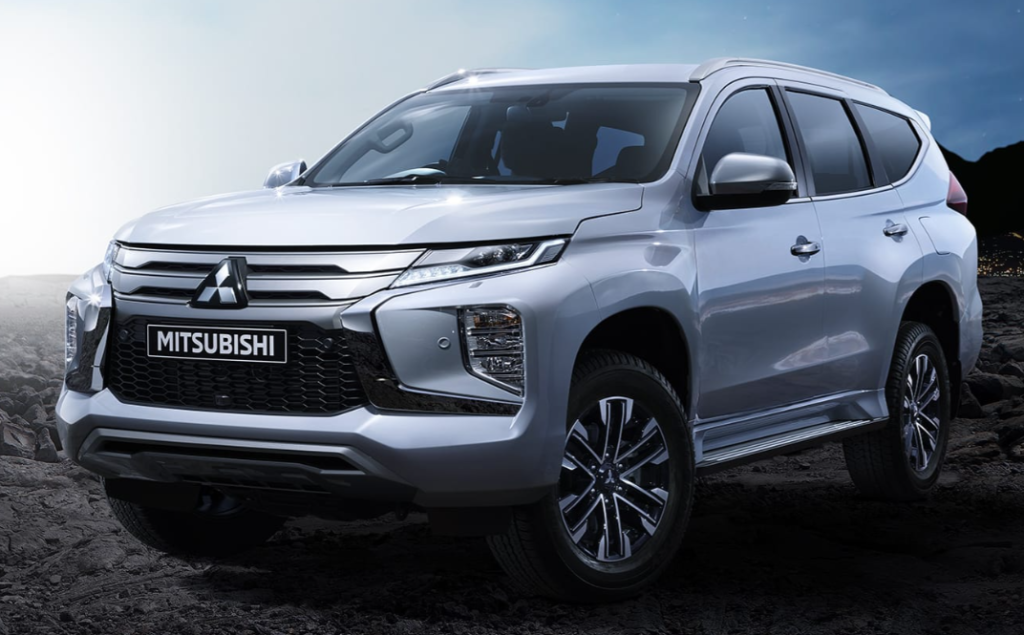
The Mitsubishi Pajero Sport weight is one of those specifications that looks simple until we start digging into it. Search for the figure online and we may find several different answers. One page says a little over 2,000 kg. Another pushes beyond 2,100 kg. Then somebody mentions 2,775 kg and suddenly we are wondering whether the SUV somehow gained the weight of a small hatchback overnight.
It did not.
The confusion comes from the fact that vehicle weight can mean kerb mass, gross vehicle mass, payload, gross combination mass, or even the actual loaded weight of the vehicle sitting on a scale. On top of that, Pajero Sport specifications vary by model year, trim, drivetrain, seating configuration, accessories, and country.
For a useful current reference, Mitsubishi Australia's 25MY Pajero Sport brochure lists a kerb mass of 2,130 kg (about 4,696 lb) for both the GLS and Exceed seven-seat automatic models. The same specifications show a 2,775 kg GVM, 645 kg maximum payload, and 5,565 kg GCM.
Those numbers tell us much more than simply how heavy the SUV is. They help us understand how much gear we can carry, how passengers affect payload, what happens when we hitch up a caravan, and why loading a Pajero Sport correctly matters just as much as choosing the right engine or tyres.
Let's unpack everything.
Content in this publication
- How Much Does a Mitsubishi Pajero Sport Weigh?
- Mitsubishi Pajero Sport Weight at a Glance
- What Does Kerb Weight Mean on a Pajero Sport?
- What Is the Pajero Sport Gross Vehicle Mass?
- What Is the Mitsubishi Pajero Sport Payload?
- Does the Pajero Sport Weight Change Between Models?
- Why the Pajero Sport Is Relatively Heavy
- How Weight Affects Pajero Sport Fuel Consumption
- How Mitsubishi Pajero Sport Weight Affects Braking
- Pajero Sport Front and Rear Axle Weight Limits
- Pajero Sport Weight and Towing Capacity
- What Is Pajero Sport Gross Combination Mass?
- How Accessories Increase Mitsubishi Pajero Sport Weight
- How Roof Loads Affect the Pajero Sport
- Does Pajero Sport Weight Help Off-Road?
- Mitsubishi Pajero Sport Weight vs a Typical Family SUV
- Does a Heavier Pajero Sport Feel Slower?
- Can We Reduce Pajero Sport Weight?
- How to Find the Exact Weight of Your Pajero Sport
- Why Online Pajero Sport Weight Figures Differ
- Is the Mitsubishi Pajero Sport Too Heavy?
- What We Should Remember Before Loading a Pajero Sport
- Closing Thoughts on Mitsubishi Pajero Sport Weight
- Frequently Asked Questions
How Much Does a Mitsubishi Pajero Sport Weigh?
A modern Mitsubishi Pajero Sport generally sits in the roughly two-tonne-plus category, although the exact figure depends heavily on specification.
As a concrete example, current Australian 25MY GLS and Exceed seven-seat 4WD versions have an official kerb mass of 2,130 kg. That's approximately:
- 2.13 tonnes
- 4,696 pounds
- About 47% heavier than a 1,450 kg compact SUV
- Still well below their 2,775 kg maximum legal vehicle mass
Earlier or differently configured Pajero Sport versions can weigh less. Mitsubishi Australia's 24MY specifications, for example, listed the five-seat GLX at 2,080 kg, while seven-seat GLS and Exceed versions were listed at 2,130 kg.
So if someone simply asks, "What is the Pajero Sport weight?" the most accurate response is:
Expect around 2,000-2,200 kg kerb weight for many modern versions, but always check the specification for the exact year, trim, drivetrain, and country.
That distinction matters more than it seems.
Mitsubishi Pajero Sport Weight at a Glance
Here is a practical snapshot using current Australian 25MY specifications as an example:
| Weight Specification | Pajero Sport Figure |
|---|---|
| Kerb mass | 2,130 kg |
| Approximate kerb mass in pounds | 4,696 lb |
| Gross Vehicle Mass (GVM) | 2,775 kg |
| Maximum payload | 645 kg |
| Gross Combination Mass (GCM) | 5,565 kg |
| Maximum front axle load | 1,360 kg |
| Maximum rear axle load | 1,600 kg |
| Maximum braked towing capacity | 3,100 kg |
| Maximum unbraked towing capacity | 750 kg |
| Maximum towball load | 310 kg |
| Maximum roof load | 80 kg |
These figures are taken from Mitsubishi Australia's 25MY Pajero Sport documentation and should not automatically be applied to older vehicles or versions sold in other markets.
Think of this table as our map. The kerb mass tells us where we begin. The GVM tells us where we must stop. Everything we add between those two points consumes payload.
What Does Kerb Weight Mean on a Pajero Sport?
Kerb Weight Explained Simply
Kerb weight, or kerb mass, is essentially the vehicle's ready-to-drive weight under the measurement definition used by the manufacturer and local regulations.
It includes the vehicle itself and its normal operating equipment, but it does not mean seven passengers, a boot full of luggage, camping equipment, a caravan hitch load, and half the garage thrown into the back.
That distinction is essential.
A Pajero Sport may leave the specification sheet at around 2.13 tonnes, yet after accessories, passengers, fuel assumptions, luggage, recovery equipment, and trailer download are considered, its actual road-going mass can be considerably higher.
Kerb Weight vs Curb Weight
Nothing mysterious is happening here.
Kerb weight is the spelling commonly used in Australia and the UK, while curb weight is the familiar American spelling. In casual automotive conversation, the terms refer to the same general concept.
However, exact regulatory definitions and what manufacturers include can differ slightly between jurisdictions. That's why we should avoid comparing two vehicles purely from a number pulled from unrelated regional websites.
What Is the Pajero Sport Gross Vehicle Mass?
Gross Vehicle Mass, normally shortened to GVM, is the maximum permitted loaded mass of the vehicle.
For the referenced Australian Pajero Sport specification, the GVM is 2,775 kg.
Imagine the Pajero Sport as a suitcase.
The empty suitcase has its own weight. We can then fill it with clothing, shoes, cameras, toiletries, and all the questionable "just in case" items we insist on packing. Eventually, however, the suitcase reaches its limit.
GVM works the same way.
Passengers, luggage, accessories, additional equipment, and trailer ball load can all contribute toward how heavily the vehicle is loaded.
Why GVM Matters More Than Many Owners Realise
Exceeding GVM is not simply a technical footnote. It can affect:
- Braking performance
- Steering response
- Suspension behavior
- Tyre loading
- Vehicle stability
- Component wear
- Legal compliance
- Insurance considerations
- Towing safety
A Pajero Sport is designed to carry serious loads, but "serious" does not mean unlimited.
What Is the Mitsubishi Pajero Sport Payload?
Payload is the useful difference between the vehicle's kerb mass and its maximum permitted loaded mass under the relevant specification.
Using the current Australian GLS/Exceed example:
2,775 kg GVM - 2,130 kg kerb mass = 645 kg
That gives us the published 645 kg maximum payload.
At first glance, 645 kg sounds enormous. Six hundred and forty-five kilograms is a lot of camping gear.
Except payload disappears surprisingly quickly.
A Realistic Pajero Sport Payload Example
Suppose we begin with 645 kg of available payload and add:
| Load | Approximate Weight |
|---|---|
| Driver | 85 kg |
| Front passenger | 70 kg |
| Two rear passengers | 120 kg |
| Luggage | 100 kg |
| Camping/recovery equipment | 70 kg |
| Accessories added after purchase | 40 kg |
| Trailer towball download | 120 kg |
| Total added load | 605 kg |
Suddenly, our comfortable-looking 645 kg allowance has shrunk to roughly 40 kg.
And that example does not represent every possible way payload is calculated. Actual accessory weights, fuel treatment, occupants, trailer setup, and vehicle configuration need to be checked against the relevant documentation.
That's why payload calculations are less like guessing how many groceries fit in the boot and more like balancing a household budget. Every kilogram has somewhere to go.
Does the Pajero Sport Weight Change Between Models?
Absolutely.
A single "Mitsubishi Pajero Sport weight" figure cannot accurately describe every Pajero Sport ever manufactured.
Five-Seat vs Seven-Seat Models
Additional seating hardware, interior components, and trim can change kerb mass.
For example, Mitsubishi Australia's 24MY brochure listed:
- GLX five-seat automatic: 2,080 kg
- GLS seven-seat automatic: 2,130 kg
- Exceed seven-seat automatic: 2,130 kg
That 50 kg difference may not sound dramatic, but remember what it means for payload. With the same 2,775 kg GVM, the lighter five-seat GLX was listed with a larger 695 kg payload, compared with 645 kg for the heavier seven-seat versions.
Less empty weight can mean more room for useful load.
2WD vs 4WD Weight
Where both drivetrain layouts are available in a market, four-wheel-drive models are typically heavier because a 4WD system requires additional drivetrain hardware.
We're talking about components such as transfer-case hardware, additional shafts, and related equipment. Those kilograms are not wasted—they provide the mechanical capability we bought the vehicle for—but they still count toward vehicle mass.
Trim Levels and Equipment
Higher specifications may add:
- Larger wheels
- Powered seats
- Additional cameras
- Leather-appointed interior components
- Extra electronic equipment
- Roof rails
- Powered tailgate hardware
- Additional sound insulation
- Driver-assistance hardware
One individual component may barely move the scales. Stack enough of them together and the difference becomes noticeable.
Why the Pajero Sport Is Relatively Heavy
At just over two tonnes in many configurations, the Pajero Sport is certainly no featherweight.
But that's hardly surprising.
It combines a substantial body with genuine four-wheel-drive equipment, three-row seating on many versions, diesel power, an automatic transmission, substantial suspension components, underbody hardware, safety systems, and the structural strength expected from a tow-capable off-road SUV.
The Australian-market Pajero Sport also combines a 2.4-litre MIVEC turbo-diesel, eight-speed automatic transmission and Super Select 4WD-II in the current GLS and Exceed range. Mitsubishi lists maximum braked towing capacity at 3.1 tonnes.
In other words, we cannot expect the physique of a mountain goat and the mass of a house cat.
The Pajero Sport's job description requires some muscle.
How Weight Affects Pajero Sport Fuel Consumption
Weight and fuel economy are old rivals.
Every time we accelerate, the engine needs energy to move the vehicle's mass. Increase that mass with passengers, equipment, a roof rack, larger accessories, or towing load, and the engine generally has to work harder.
City Driving
Urban driving magnifies the effect because we repeatedly:
- Accelerate the vehicle.
- Slow it down.
- Stop.
- Accelerate again.
A heavily loaded SUV therefore tends to pay a larger fuel penalty around town than it might during relaxed, steady-speed highway cruising.
Highway Driving
At highway speed, aerodynamic drag becomes increasingly important. Weight still matters, particularly on hills, but bulky rooftop equipment may hurt economy through both extra mass and extra drag.
A loaded roof rack can be a double punch.
Towing
Once a caravan or trailer enters the picture, its aerodynamic resistance, mass, tyres, gradient, speed, and driving conditions all become major factors.
So don't assume an unloaded fuel-consumption figure will survive a towing holiday untouched. It probably won't.
How Mitsubishi Pajero Sport Weight Affects Braking
More mass brings more kinetic energy.
That means a heavily loaded Pajero Sport needs its brakes and tyres to manage more energy when slowing down than the same vehicle running relatively light.
This does not mean the Pajero Sport's brakes are inadequate. It means the laws of physics remain stubbornly unimpressed by the badge on the grille.
When heavily loaded, we should allow extra space, keep tyres correctly inflated for the load and conditions, and ensure brakes and suspension are in proper working order.
Weight Distribution Matters Too
Total mass is only half the story.
Where the weight sits matters.
Pile excessive equipment behind the rear axle and the vehicle may behave differently than if the same mass were positioned low and closer to the center of the wheelbase.
A balanced load generally gives the chassis an easier job.
Pajero Sport Front and Rear Axle Weight Limits
The Australian 25MY specification lists:
- Maximum front axle load: 1,360 kg
- Maximum rear axle load: 1,600 kg
These numbers are important because being under the overall GVM does not automatically guarantee that every individual axle remains within its permitted load.
This can become particularly relevant when towing.
Towball download acts through the rear of the vehicle. Add passengers, luggage, drawers, a fridge, recovery gear, and other equipment toward the back, and rear-axle loading deserves attention.
Why a Public Weighbridge Can Be Worth the Trip
For a heavily modified touring Pajero Sport, a weighbridge can replace assumption with measurement.
Depending on the facility, we may be able to check:
- Total vehicle mass
- Front axle mass
- Rear axle mass
- Trailer mass
- Combined mass
Numbers beat guesses every time.
Pajero Sport Weight and Towing Capacity
The relationship between vehicle weight and towing is where things become especially interesting.
The Australian 25MY Pajero Sport is rated for up to 3,100 kg of braked trailer towing, with a published maximum towball load of 310 kg. Its GCM is listed at 5,565 kg.
But here's the catch: towing capacity is not the only number we need to respect.
GVM, GCM and Trailer Mass Work Together
We need to consider several limits simultaneously:
- Vehicle GVM
- Vehicle axle limits
- Trailer ATM/GTM requirements
- Towbar limits
- Towball download
- Gross Combination Mass
- Tyre limits
- Any jurisdiction-specific towing requirements
It is possible for a setup to appear fine when we look at only one headline number yet encounter a problem elsewhere.
Towball Weight Uses Vehicle Capacity
A trailer does not float weightlessly behind the bumper.
The downward force at the towball is carried by the tow vehicle and affects its loading. That means towing a heavy caravan can reduce how much additional equipment or passenger weight we can sensibly carry in the Pajero Sport.
This is why tow ratings should never be treated as one isolated number printed in large font.
What Is Pajero Sport Gross Combination Mass?
Gross Combination Mass, or GCM, refers to the permitted combined mass of the loaded tow vehicle and loaded trailer under the applicable manufacturer's specification.
The 25MY Australian Pajero Sport figure is 5,565 kg.
Let's imagine our Pajero Sport is loaded to 2,700 kg and we're pulling a trailer contributing another 2,700 kg to the combination.
Combined:
2,700 + 2,700 = 5,400 kg
That's below 5,565 kg.
But we still aren't finished.
We must separately confirm the vehicle GVM, trailer limits, axle loading, towbar rating, towball mass, tyre ratings, and other applicable requirements.
Weight calculations are a web, not a single straight line.
How Accessories Increase Mitsubishi Pajero Sport Weight
This is one of the easiest details to overlook.
An owner buys a Pajero Sport, checks the official kerb weight, then adds:
- Bull bar
- Winch
- Bash plates
- Driving lights
- Roof platform
- Awning
- Drawers
- Fridge
- Second battery
- Recovery equipment
- Towbar accessories
- Larger tyres
Individually, each addition seems reasonable.
Together, they can eat a surprisingly large slice of payload.
Accessories Do Not Create Extra GVM
This is the key idea.
If we bolt 100 kg of equipment onto a vehicle, we have not magically increased its carrying capacity by 100 kg. We have consumed 100 kg of the available capacity unless an approved modification changes the legal rating.
It's like installing heavier shelves inside a lift. The lift did not become stronger simply because the shelves look useful.
How Roof Loads Affect the Pajero Sport
Mitsubishi's Australian 25MY brochure lists a maximum roof load of 80 kg.
That deserves attention because roof weight sits high.
High-mounted mass can influence the vehicle's center of gravity more noticeably than the same mass placed low in the cargo area.
If we use roof racks, baskets, rooftop tents, spare wheels, or storage boxes, we should check:
- Vehicle roof-load limit
- Roof-rack system rating
- Dynamic versus static roof ratings where applicable
- Weight of the rack itself
- Weight of everything mounted to it
The weakest applicable limit is the one that matters.
Does Pajero Sport Weight Help Off-Road?
Sometimes. Sometimes not.
Weight is neither hero nor villain. It simply changes the game.
Where Extra Mass Can Feel Beneficial
A substantial SUV can feel planted on rough tracks and provide the structural foundation required for towing, carrying, and serious four-wheel-drive hardware.
The Pajero Sport's mass also accompanies equipment that makes it capable off pavement.
Where Weight Becomes a Disadvantage
Soft sand and mud are less forgiving.
A heavier vehicle asks the terrain to support more mass. Once it sinks deeply, those extra kilograms suddenly feel like relatives who said they would help move house but disappeared when the sofa reached the stairs.
Weight can also increase the forces involved during recovery.
That's why tyre pressures, momentum, recovery techniques, and equipment selection matter.
Mitsubishi Pajero Sport Weight vs a Typical Family SUV
A Pajero Sport often weighs more than a conventional crossover because the two types of vehicles are built around different priorities.
A lighter urban crossover may emphasize:
- Fuel efficiency
- Everyday maneuverability
- Lower mass
- Front-wheel-drive-based architecture
The Pajero Sport leans more heavily toward:
- Four-wheel-drive ability
- Towing
- Rugged-road use
- Seven-seat practicality
- Load carrying
- Touring
Comparing their weight alone is like comparing hiking boots with running shoes. The lighter option is not automatically "better." The question is what job we expect it to do.
Does a Heavier Pajero Sport Feel Slower?
Weight certainly affects acceleration, but vehicle performance depends on more than mass.
We also need to consider:
- Engine torque
- Transmission gearing
- Final-drive ratio
- Tyre size
- Load
- Gradient
- Altitude
- Driving mode
- Trailer mass
An empty Pajero Sport and one packed for a three-week expedition may technically be the same model, yet they can feel noticeably different when accelerating uphill.
The engine has the same output. It simply has more work to do.
Can We Reduce Pajero Sport Weight?
Yes, although we probably don't want to start removing seats and door panels in pursuit of a racing-SUV fantasy.
The smarter approach is reducing unnecessary carried weight.
Easy Ways to Save Payload
Before a big trip, we can:
- Remove equipment we genuinely won't use.
- Avoid carrying redundant tools.
- Empty unnecessary items from storage drawers.
- Remove roof racks when they aren't needed.
- Choose lighter accessories where practical.
- Carry appropriate water and fuel quantities rather than blindly maximizing everything.
- Weigh camping equipment instead of guessing.
- Know what aftermarket modifications actually weigh.
The objective is not to make a Pajero Sport light.
The objective is to make every kilogram earn its seat.
How to Find the Exact Weight of Your Pajero Sport
If we own a Pajero Sport and need accurate figures, generic internet specifications should only be the starting point.
1. Check the Vehicle Compliance Information
Look for the relevant compliance label or manufacturer identification information on the vehicle.
2. Read the Owner Documentation
The owner's manual and market-specific specification documents can explain applicable loading limits.
3. Find the Correct Mitsubishi Brochure
Match the document to:
- Model year
- Country
- Trim
- Drivetrain
- Seating configuration
4. Account for Accessories
An aftermarket-equipped Pajero Sport may weigh substantially more than its factory baseline.
5. Use a Certified Weighbridge
If actual loaded weight matters—especially for towing or touring—measure it.
A brochure tells us what Mitsubishi built.
A weighbridge tells us what we're actually driving.
Why Online Pajero Sport Weight Figures Differ
Different numbers online do not necessarily mean somebody is wrong.
The explanation may be as simple as one source describing kerb mass while another gives GVM.
Other differences can arise from:
- Different model years
- Different countries
- 2WD vs 4WD
- Five seats vs seven seats
- Manual vs automatic versions
- Different equipment packages
- Factory accessories
- Local regulatory definitions
That's why context should always sit beside the number.
A naked weight figure is not particularly useful.
Is the Mitsubishi Pajero Sport Too Heavy?
Not inherently.
A Pajero Sport is designed as a practical, tow-capable SUV with genuine four-wheel-drive hardware rather than an ultra-light city crossover.
Its roughly two-tonne-plus kerb mass reflects what it is built to do.
The more important question is whether we understand that weight and manage it properly.
For normal family use, the available payload may seem generous. Add seven people, touring accessories, a fridge, luggage, rooftop equipment, and a caravan, however, and the calculation changes dramatically.
Weight works quietly in the background. We may not notice it until we're near a limit.
What We Should Remember Before Loading a Pajero Sport
The easiest way to think about Pajero Sport weight is to separate the numbers into four boxes:
Kerb mass tells us approximately where the vehicle starts.
Payload tells us how much useful load can be added under the applicable specification.
GVM sets the maximum permitted vehicle mass.
GCM sets a limit for the loaded vehicle and trailer combination.
Once we understand those four terms, the specification sheet stops looking like alphabet soup.
Closing Thoughts on Mitsubishi Pajero Sport Weight
The Mitsubishi Pajero Sport weight is not one universal number carved into stone.
As a current example, Australia's 25MY GLS and Exceed seven-seat models are listed at 2,130 kg kerb mass, with a 2,775 kg GVM, 645 kg maximum payload, and 5,565 kg GCM. Older, lighter, differently equipped, 2WD, five-seat, or overseas versions can carry different specifications.
And that's the real takeaway.
Instead of asking only, "How much does a Pajero Sport weigh?" we should ask, "Which Pajero Sport weight am I looking at?"
Once we know the kerb mass, payload, GVM, axle limits and—when towing—GCM, we can make smarter decisions about passengers, accessories, luggage, caravans and touring gear.
Two tonnes may sound heavy, but for an SUV built to carry families, tackle rough roads and tow substantial loads, weight is part of the engineering equation. What matters is knowing where the boundaries are before we fill every seat, every drawer and every inch of the roof rack.
Frequently Asked Questions
1. What is the kerb weight of a Mitsubishi Pajero Sport?
The exact kerb weight depends on model year, market, trim and drivetrain. As one current example, Mitsubishi Australia's 25MY GLS and Exceed seven-seat 4WD automatic models are listed at 2,130 kg, or approximately 4,696 lb. Other Pajero Sport versions may be lighter or heavier.
2. What is the GVM of a Mitsubishi Pajero Sport?
For the Australian 25MY Pajero Sport GLS and Exceed specification, Mitsubishi lists a Gross Vehicle Mass of 2,775 kg. Owners should verify the figure that applies to their particular model and country rather than relying on a generic online specification.
3. How much payload can a Mitsubishi Pajero Sport carry?
The referenced Australian 25MY GLS and Exceed models have a published maximum payload of 645 kg. Payload can be consumed by passengers, luggage, accessories and trailer towball download, so the usable amount can disappear faster than expected.
4. Does adding a bull bar or roof rack affect Pajero Sport payload?
Yes. Added accessories increase the vehicle's actual mass and generally reduce the payload remaining before the vehicle reaches its permitted maximum weight. Bull bars, winches, drawers, roof platforms, fridges and recovery gear should therefore be included in realistic load calculations.
5. How can I find the actual weight of my Mitsubishi Pajero Sport?
Check the vehicle's compliance information, owner's documentation and the official Mitsubishi specifications for your exact model year and market. For the most accurate real-world figure—particularly when towing or heavily loaded—take the vehicle to a suitable certified weighbridge.
If you want to know other articles similar to Mitsubishi Pajero Sport Weight: Kerb Weight, GVM, Payload and What It Really Means you can visit the category Service and Parts.
Peugeot RCZ Engine Swap: Options, Costs, Compatibility, and What You Need to Know
Mitsubishi Pajero Sport Engine Size: Complete Engine Guide
Mitsubishi Pajero Sport Service Reset: Complete Step-by-Step Guide
Mitsubishi Pajero Sport Boot Space: Complete Cargo and Luggage Guide
Mitsubishi Pajero Sport Towing Capacity: Complete Towing Guide

BMW i7 Specs: Power, Range, Battery, Dimensions and More
Leave a Reply
More content of your interest