
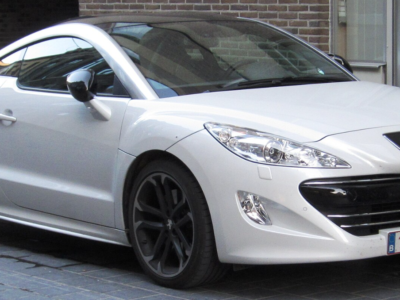
Peugeot RCZ vs 308 CC: Which Used Peugeot Is the Better Choice?

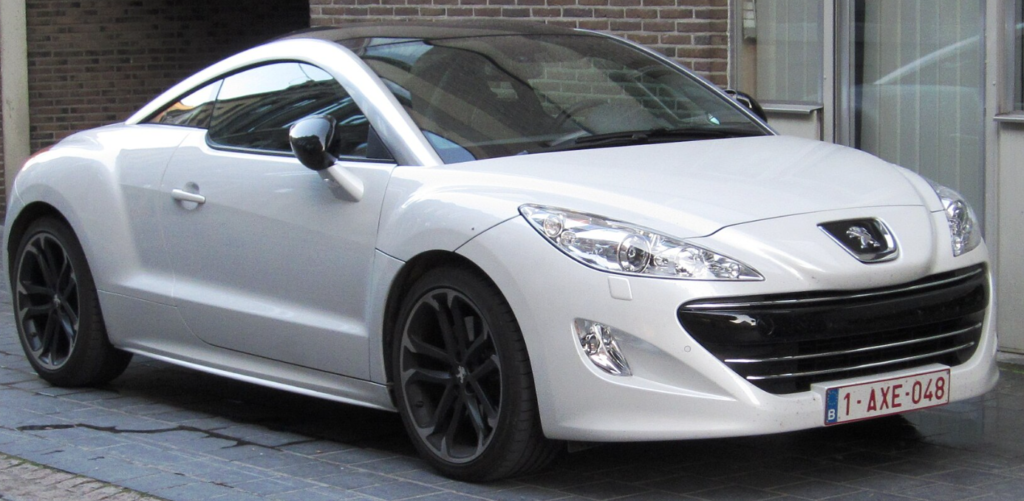
Put a Peugeot RCZ next to a Peugeot 308 CC, and the family resemblance is easy to spot. They come from roughly the same era, share some engines and mechanical DNA, and both tried to prove that Peugeot could build something more emotional than an ordinary family hatchback.
Yet these two cars have very different personalities.
The Peugeot RCZ is a low, dramatic 2+2 coupé designed to make us glance back after parking it. The Peugeot 308 CC, meanwhile, is a four-seat coupé-cabriolet with a folding metal roof, giving us the choice between a weatherproof coupé and an open-air cruiser.
So, which one makes more sense today?
That depends on what we actually want from the car. If driving enjoyment and styling dominate the wish list, the RCZ immediately looks tempting. If sunny-day motoring and greater rear-seat usability sound more appealing, the 308 CC has a persuasive argument of its own.
Let's dig much deeper into the Peugeot RCZ vs 308 CC comparison.
Content in this publication
- Peugeot RCZ vs 308 CC at a Glance
- Design: The RCZ Is the More Dramatic Car
- Interior Comparison
- Rear Seats: 308 CC Wins, but With Conditions
- Boot Space: A Surprisingly Interesting Battle
- Peugeot RCZ vs 308 CC Engine Choices
- Driving Experience
- 308 CC Driving Character
- Ride Comfort
- Refinement and Motorway Driving
- Running Costs and Fuel Economy
- Reliability: What Should We Check Before Buying?
- 308 CC Roof Reliability Deserves Special Attention
- Which Is More Practical Every Day?
- Peugeot RCZ vs 308 CC for Daily Driving
- Which One Feels More Special?
- Which One Is Better for Summer Driving?
- Peugeot RCZ vs 308 CC for Long Trips
- Which Peugeot Should Enthusiasts Choose?
- Which One Should Convertible Buyers Choose?
- Used Prices and Value
- Peugeot RCZ vs 308 CC: Which One Would We Choose?
- Final Thoughts
- Frequently Asked Questions
Peugeot RCZ vs 308 CC at a Glance
Before getting into the details, we can summarize their characters quite simply: the RCZ behaves more like a dedicated sports coupé, while the 308 CC behaves more like a comfortable grand tourer with a convertible roof.
| Feature | Peugeot RCZ | Peugeot 308 CC |
|---|---|---|
| Body style | 2+2 coupé | 4-seat coupé-cabriolet |
| Production era | 2010–2015 | 2009–2015 |
| Roof | Fixed double-bubble roof | Retractable metal roof |
| Length | Around 4.29 m | Around 4.44 m |
| Height | Around 1.35 m | Around 1.43 m |
| Typical boot capacity | About 309 L | Up to 403–465 L roof up, depending on measurement/source |
| Rear seats | Very small | More usable, but still tight |
| Character | Sporty and distinctive | Relaxed and versatile |
| Best suited to | Coupé enthusiasts | Convertible fans |
The RCZ is notably lower and shorter. Peugeot gave it the famous double-bubble roof, aluminium-style roof arches and an active rear spoiler, helping distinguish it substantially from the conventional 308 on which much of its underlying architecture was based.
The 308 CC is larger and more upright. Its major party trick is its electrically folding hardtop, which transforms it from a closed coupé into a convertible in roughly 20 seconds.
Design: The RCZ Is the More Dramatic Car
There is little subtle about the RCZ.
Even many years after production ended, it still looks unusual. The sweeping roof, muscular rear haunches and double-bubble rear glass give it proportions unlike almost anything else carrying a Peugeot badge.
Walk around one and there is almost a concept-car quality to it.
The 308 CC takes a different approach. Its front end clearly resembles the regular 308 of its generation, while the rear bodywork becomes noticeably bulkier because Peugeot needed somewhere to store that substantial folding metal roof.
That creates one of the fundamental differences between these cars.
The RCZ was shaped around being a coupé.
The 308 CC was shaped around becoming two cars.
Why the RCZ Has Aged Particularly Well
The RCZ's proportions help it enormously. At approximately 4,290 mm long and only around 1,352 mm high in common versions, it sits visibly lower than the 308 CC.
Those proportions give the car presence without requiring exotic dimensions.
There is also relatively little visual connection between an RCZ and an ordinary Peugeot once we move beyond certain interior components. That matters because distinctive cars often age better visually than vehicles designed around whatever styling trend was popular at the time.
The 308 CC Has a Different Kind of Appeal
The 308 CC will appeal to somebody who values elegance and versatility more than aggression.
With the roof closed, it looks like a substantial two-door coupé. Press the roof button, however, and suddenly the entire character changes.
That transformation is the reason to buy one.
On a warm evening, driving beside the coast or through quiet country roads with the roof tucked away, performance statistics suddenly seem rather unimportant. The experience becomes the product.
Which Looks Better?
Purely from a design perspective, the RCZ is the more radical machine.
The 308 CC's roof mechanism inevitably influences its proportions, whereas the RCZ's fixed-roof architecture allows its body to flow much more naturally from nose to tail.
People who want a car that looks sporty even while standing still are likely to gravitate toward the RCZ.
People dreaming of summer drives with nothing above them but sky will probably forgive the 308 CC's heavier rear end immediately.
Interior Comparison
Step inside and the relationship between the cars becomes more obvious.
The RCZ looks exotic from outside, but its dashboard shares considerable DNA with Peugeot's contemporary 308. Contemporary reviews frequently pointed this out, although higher-specification RCZ models could receive leather upholstery, upgraded trim and other touches that lifted the cabin atmosphere.
The 308 CC's cabin feels less sports-car-like from the outset. Its seating position is higher and the ambience more conventional.
That isn't necessarily bad.
For everyday driving, the 308 CC can actually feel easier to live with.
Driving Position
The RCZ places us noticeably lower.
The windscreen feels shallower, the roof is closer and the seating position encourages the impression that we're sitting inside the car rather than simply on one of its seats.
It suits the vehicle perfectly.
The 308 CC feels more like a conventional Peugeot from behind the wheel. Visibility can therefore feel less intimidating, and getting in and out may also be easier for drivers who dislike low coupés.
Material Quality
Neither car should be confused with a contemporary Audi TT when we're discussing interior materials.
There are soft-touch areas and attractive details, particularly in higher specifications, but there are also switches and plastics reminding us that both vehicles ultimately came from a mainstream manufacturer.
Still, a well-kept leather-equipped RCZ can feel surprisingly special.
The analogue clock positioned prominently in the centre of the dashboard is a particularly charming detail. It adds a little theatre without shouting for attention.
Rear Seats: 308 CC Wins, but With Conditions
Here we find one of the biggest practical differences.
The RCZ technically has four seats, but describing it as a genuine four-seater requires optimism.
Rear legroom is extremely limited, while the low roof restricts headroom. Contemporary reviewers regularly treated those back seats as occasional accommodation or additional luggage space rather than proper adult seating.
For children on short journeys? Possibly.
For two adults during a three-hour motorway journey? We'd rather not volunteer.
Are the 308 CC Rear Seats Better?
Yes.
Perfect? No.
Independent measurements show limited second-row room in the 308 CC as well, including around 49 cm between the seat backs under the methodology used by km77.
Nevertheless, its rear compartment feels considerably more believable than the RCZ's.
This is important if the car occasionally needs to carry friends or family.
The RCZ is essentially a two-seater with emergency chairs behind us.
The 308 CC is closer to an actual four-seater that happens to have compromised rear accommodation.
Boot Space: A Surprisingly Interesting Battle
Here's where things become unexpected.
The RCZ looks as though it should barely carry two backpacks, yet it offers around 309 litres of boot capacity, with significantly more room available once its rear seats are folded.
That's genuinely useful for a sporty coupé.
Weekend luggage? Easy.
Groceries? No problem.
Two people heading across Europe? Entirely plausible.
308 CC Boot Space Changes With the Roof
The 308 CC presents a more complicated situation because the roof needs somewhere to go.
Peugeot documentation for certain versions lists approximately 403 litres with the roof stored away from the luggage compartment and 226 litres in the minimum configuration, while other contemporary material quotes 465 litres roof-up and 266 litres roof-down. Differences can reflect specification and measurement conventions.
Either way, the principle remains identical.
Roof up: surprisingly generous.
Roof down: noticeably restricted.
That's the convertible tax.
Imagine packing the boot completely for a weekend away, then seeing perfect sunshine and deciding to lower the roof. Suddenly the luggage and roof are negotiating over the same piece of real estate.
The RCZ never has that problem.
Peugeot RCZ vs 308 CC Engine Choices
Another reason these cars make such an interesting comparison is the overlap in engines.
Depending on year and market, buyers could find variations of Peugeot's turbocharged 1.6-litre THP petrol engine as well as diesel alternatives.
The 308 CC range included versions such as 1.6-litre petrols, THP 156 and THP 200 derivatives, plus 1.6 e-HDi and 2.0 HDi choices in some European markets.
The RCZ offered 156 PS and 200 PS versions of the 1.6 THP, alongside a 163 PS 2.0 HDi. Later, Peugeot went much further with the RCZ R.
RCZ 1.6 THP 156
The 156 PS model is the sensible petrol RCZ.
You may be interested in reading Peugeot RCZ vs Toyota 86: Which Sports Coupe Makes More Sense?
Performance is perfectly respectable without becoming intimidating. It's suitable for somebody attracted primarily by the design rather than maximum speed.
It was also available with an automatic transmission in some markets.
The downside?
Once we've driven the stronger RCZ versions, the entry-level engine can feel as though the chassis is waiting for more.
RCZ THP 200
This is where the ordinary RCZ becomes much more interesting.
With around 200 PS, performance better matches the theatrical styling. Contemporary figures put the 0–62 mph sprint at roughly the mid-seven-second mark depending on source and specification.
It isn't violently fast by modern standards.
It doesn't need to be.
The appeal comes from having enough performance to enjoy the chassis without requiring ridiculous speeds.
The 2.0 HDi Option
A diesel sports coupé sounds slightly strange today, but the RCZ 2.0 HDi actually makes considerable sense for long-distance driving.
Its strong torque suits motorway overtaking and relaxed cruising. Peugeot's 163 PS diesel was also offered in the 308 CC, making it an interesting option for somebody intending to cover substantial annual mileage.
The soundtrack isn't exciting, though.
A diesel RCZ looks like it wants to wake the neighbourhood but sounds more interested in reaching another motorway service station 400 miles away.
RCZ R: The Version the 308 CC Cannot Match
Then we reach the RCZ R.
This changed the conversation.
Peugeot pushed the 1.6-litre turbo engine to approximately 270 PS and paired it with meaningful chassis upgrades. The R also received larger brakes, a lower suspension setup and other performance-focused changes.
Now the RCZ wasn't simply attractive.
It was properly quick.
The 308 CC never had an equivalent flagship with the same performance intent, which means anybody comparing the fastest versions of these cars will find the contest heavily tilted toward the RCZ.
Driving Experience
Numbers explain only part of the difference.
The RCZ feels lower and more focused. Its centre of gravity, seating position and suspension tuning create a stronger sense of connection to the road.
Turn into a sweeping bend and the car feels happy being there.
The 308 CC approaches the same corner with a different attitude. Its heavier roof mechanism and convertible structure mean outright agility was never the main objective.
It prefers flowing roads to attack-mode driving.
RCZ Handling
Despite being front-wheel drive, the RCZ can feel pleasantly composed.
The chassis communicates enough to make enthusiastic driving rewarding while maintaining good long-distance comfort.
It isn't an uncompromising sports car.
That's actually one of its strengths.
We can enjoy a winding road on Saturday and comfortably drive several hundred motorway miles on Sunday.
RCZ R Handling
The R tightens everything.
Responses become sharper, grip increases and the car feels significantly more serious.
If the normal RCZ is a stylish grand tourer wearing trainers, the RCZ R arrives wearing racing boots.
308 CC Driving Character
The 308 CC is happier when we stop asking it to imitate a sports car.
Drop the roof.
Turn on some music.
Follow a scenic road.
Suddenly it makes complete sense.
This car is about the pleasure of movement rather than chasing lap times.
The folding metal roof also gives the 308 CC an advantage over traditional fabric-roof convertibles when closed. The cabin can feel secure and substantial, making the car genuinely useful outside summer.
Ride Comfort
For everyday comfort, the 308 CC can have an advantage.
Its character encourages relaxed driving, and less aggressive wheel-and-suspension combinations can deal reasonably well with imperfect roads.
An RCZ on large wheels can feel firmer.
An RCZ R is firmer again.
Whether that's a disadvantage depends entirely on what we're expecting.
Someone buying a sporty coupé may welcome the tighter body control.
Someone wanting an effortless convertible cruiser might find it unnecessarily busy.
Refinement and Motorway Driving
Both cars can work surprisingly well as long-distance companions.
The RCZ's fixed roof naturally avoids the extra seals and mechanical joints involved with a retractable hardtop. That simplicity can help it feel structurally cohesive.
The 308 CC, however, is impressive for something capable of removing its own roof.
With the roof raised, it becomes a genuine all-weather car instead of the seasonal toy we might expect.
Roof-down motorway driving is another matter.
Wind noise inevitably increases, and passengers in the rear receive considerably more airflow than those sitting up front.
Running Costs and Fuel Economy
Running costs depend heavily on engine, transmission, condition and annual mileage.
A diesel may consume less fuel during high-mileage use, but diesel-specific components can erase those savings if we're mainly doing short urban trips.
The 1.6 THP petrol engines can deliver a satisfying balance between performance and economy, but maintenance history matters enormously.
And that's where buying either car changes from an emotional decision into a forensic investigation.
Reliability: What Should We Check Before Buying?
Condition matters more than badge reputation when dealing with cars of this age.
We would rather buy a meticulously serviced example with 90,000 miles than a neglected 55,000-mile car whose maintenance folder contains three old receipts and a takeaway menu.
Particular areas worth investigating include:
- evidence of regular oil changes and correct servicing on THP petrol engines;
- unusual timing-chain noise, warning lights, hesitation or rough running;
- cooling-system leaks and oil leaks;
- diesel particulate filter and EGR condition on diesel models;
- clutch and dual-mass flywheel condition where applicable;
- suspension knocks, uneven tyre wear and damaged large alloy wheels;
- functioning parking sensors, climate control, infotainment and electrical equipment;
- water ingress around doors, windows and seals;
- full operation of the 308 CC retractable roof, including sensors, latches and windows;
- accident repairs around the RCZ's body panels and roof arches.
A pre-purchase inspection is particularly sensible here.
These cars can be inexpensive to buy relative to their original price, but sophisticated components have not magically become inexpensive to repair simply because the vehicle has depreciated.
308 CC Roof Reliability Deserves Special Attention
This deserves its own section.
The electrically retractable roof is the 308 CC's greatest feature and potentially one of its biggest ownership concerns.
Operate it several times before buying.
Don't simply watch it complete one cycle and assume everything is perfect.
Listen for abnormal noises. Watch whether every panel moves smoothly. Make sure the windows drop and return correctly. Check that the boot opens normally afterward. Look for moisture around seals and carpets.
The mechanism itself is impressive: period Peugeot material described an opening or closing cycle of around 20 seconds.
But complexity means more potential failure points than the RCZ's beautifully straightforward fixed roof.
Which Is More Practical Every Day?
This isn't as simple as saying the 308 CC wins because it has better rear seats.
The RCZ has its own practical strengths.
It's shorter, its boot remains available regardless of weather, and the folding rear seats create useful additional luggage capacity.
You may be interested in readingPeugeot RCZ vs Toyota 86: Which Sports Coupe Makes More Sense?You may be interested in reading
 Test Drive Review: The Fiat 500 Abarth 0-60 Acceleration
The 308 CC provides genuinely better passenger flexibility, but its roof compromises luggage space when lowered.
We therefore need to ask a more useful question:
Practical for what?
For a couple travelling with luggage, the RCZ can actually be excellent.
For someone occasionally transporting three passengers, the 308 CC makes more sense.
Peugeot RCZ vs 308 CC for Daily Driving
The 308 CC is arguably the more conventional daily car.
Its seating position is friendlier, rear seats are more usable and the retractable roof adds a wonderful dimension when weather permits.
Yet we'd personally find the RCZ equally easy to use if rear passengers weren't important.
Its boot is much better than its shape suggests, while the cabin offers enough comfort for commuting and motorway travel.
The bigger challenge with the RCZ is visibility.
Its low driving position and muscular body can make parking harder than in an ordinary hatchback, although rear parking sensors were standard on many versions.
Which One Feels More Special?
RCZ.
This is probably the clearest distinction in the whole comparison.
The 308 CC feels like a stylish convertible version of a mainstream Peugeot.
The RCZ feels like its own model.
That's significant when we're buying an older enthusiast car.
We aren't merely purchasing transportation. A normal hatchback already handles that job better.
We're buying theatre.
We're buying the experience of opening the garage and seeing something interesting waiting there.
From that perspective, the RCZ has an advantage.
Which One Is Better for Summer Driving?
Now the answer flips toward the 308 CC.
No fixed-roof coupé can recreate the sensation of removing the roof entirely.
Even a beautiful panoramic windscreen or unusual glass canopy doesn't quite reproduce it.
On the right road, in the right weather, the 308 CC delivers an experience the RCZ simply cannot provide.
If open-top driving is something we've always wanted, choosing the RCZ and constantly wondering about the convertible probably makes little sense.
Buy the experience we actually want.
Peugeot RCZ vs 308 CC for Long Trips
For two people, we'd lean toward the RCZ.
The luggage area stays consistent, the fixed-roof body is straightforward and the seats in well-equipped models can make long journeys very comfortable.
For three or four travellers, the 308 CC becomes more attractive—but luggage starts complicating the equation.
Four people plus several large suitcases will test the car's practicality, particularly if we intend to lower the roof during the journey.
For a romantic European road trip involving two people and minimal luggage?
The 308 CC sounds rather wonderful.
Which Peugeot Should Enthusiasts Choose?
Enthusiasts are likely to prefer the RCZ, especially in THP 200 or RCZ R form.
Its design feels more deliberate.
Its driving position is sportier.
Its fixed roof avoids carrying around a complicated convertible mechanism.
And in R specification, its performance reaches a level the 308 CC simply wasn't intended to challenge.
That does not make the 308 CC inferior.
It just plays a different game.
Comparing them solely by cornering performance is like judging a speedboat against a sailing yacht using only acceleration. We would be missing half the point.
Which One Should Convertible Buyers Choose?
This one's easy.
The 308 CC.
If removing the roof is central to the dream, nothing else matters quite as much.
A perfectly maintained RCZ could be objectively sharper, prettier or faster, but none of those advantages creates an open sky above our heads.
Just make roof condition one of the most important parts of the inspection.
Used Prices and Value
Used prices vary enormously by country, mileage, specification and condition, so individual listings matter more than old guide prices.
However, the RCZ increasingly occupies an interesting position.
It is distinctive, discontinued and unlike anything Peugeot currently produces. Especially desirable versions such as the RCZ R naturally sit in a different category from ordinary examples.
The 308 CC usually appeals to a slightly different buyer: someone looking for an affordable hardtop convertible rather than a potentially collectible performance coupé.
That can make well-maintained 308 CC examples remarkably appealing if our priority is enjoyment per pound, euro or dollar rather than future collector interest.
Peugeot RCZ vs 308 CC: Which One Would We Choose?
For most enthusiasts comparing these two purely as used recreational cars, the Peugeot RCZ is the more compelling choice.
It looks more distinctive, feels more focused and has a stronger identity of its own.
The 308 CC answers back with something the RCZ cannot imitate: proper open-air driving.
Our decision would therefore look like this.
Choose the RCZ when the dream involves walking toward a dramatic coupé, sitting low behind the wheel and finding an empty road.
Choose the 308 CC when the dream involves lowering the roof on a warm evening and making the journey more important than the destination.
Both can turn an ordinary drive into something memorable.
They simply use different ingredients.
Final Thoughts
The Peugeot RCZ vs 308 CC battle isn't really about finding one universally superior car.
It's about choosing the experience we value most.
The RCZ is the more focused and distinctive machine. Its low stance, double-bubble roof and surprisingly practical boot make it far easier to live with than its dramatic styling suggests. Higher-output versions add genuine performance, while the RCZ R turns the formula into something genuinely serious.
The 308 CC is softer, taller and less aggressive, but then we press a button and its metal roof disappears.
That's its magic trick.
It offers something wonderfully old-school: a comfortable four-seat-ish coupé during miserable weather and an open-top cruiser when the sun arrives.
Whichever one we choose, condition should dominate the buying decision. These are now older cars with turbocharged engines, increasingly complex electronics and, in the 308 CC's case, an elaborate folding-roof mechanism.
Find a carefully maintained example, inspect it properly and resist the temptation to buy the cheapest car available.
Do that, and either Peugeot can deliver something increasingly rare in modern motoring: affordable character.
Frequently Asked Questions
1. Is the Peugeot RCZ better than the 308 CC?
It depends on what we want. The RCZ is generally the more sporting and distinctive choice, while the 308 CC provides a retractable hardtop and more usable rear seating. Drivers interested primarily in handling and coupé styling will probably prefer the RCZ; convertible buyers have an obvious reason to choose the 308 CC.
2. Do the Peugeot RCZ and 308 CC use the same engines?
Some engine families overlap. Depending on market and year, both could be found with versions of Peugeot's 1.6-litre THP petrol engine and 2.0-litre HDi diesel. The RCZ's range eventually went considerably further thanks to the 270 PS RCZ R.
3. Which has more boot space, the Peugeot RCZ or 308 CC?
The RCZ offers around 309 litres in standard configuration. The 308 CC can provide more luggage volume with its roof raised, but lowering the retractable roof substantially reduces usable boot capacity. Published figures vary by specification and measurement method, with period material commonly placing the 308 CC around 403–465 litres maximum and roughly 226–266 litres minimum.
4. Is the Peugeot RCZ a four-seater?
Technically, yes. Practically, we should consider it a 2+2. Its rear seats are extremely tight and work better for children, very short journeys or extra luggage than regular adult transportation. Contemporary reviews repeatedly highlighted the limited rear space.
You may be interested in readingPeugeot RCZ vs Toyota 86: Which Sports Coupe Makes More Sense?You may be interested in reading
Test Drive Review: The Fiat 500 Abarth 0-60 AccelerationYou may be interested in reading
 Customizing Your Ride: A Comprehensive Guide to the Fiat 500 Body Kit
5. What should we check when buying a Peugeot 308 CC?
Check the usual engine, suspension, transmission and electrical systems, but pay special attention to the retractable roof. Operate it repeatedly, inspect the seals for leaks, confirm the windows synchronize correctly and look for water inside the cabin or boot. A documented maintenance history is far more important than simply finding the lowest-mileage example.
If you want to know other articles similar to Peugeot RCZ vs 308 CC: Which Used Peugeot Is the Better Choice? you can visit the category Models.
Peugeot RCZ vs VW Scirocco: Which Coupe Makes More Sense?
Peugeot RCZ vs Toyota 86: Which Sports Coupe Makes More Sense?
Peugeot RCZ vs Audi TT: Which Stylish Sports Coupe Makes More Sense?
BYD Shark 6 2025 vs 2026: What Actually Changed?
BMW i7 vs Porsche Taycan: Luxury EVs With Very Different Personalities
BMW i7 vs 7 Series: Which BMW Flagship Makes More Sense?
Leave a Reply
More content of your interest