
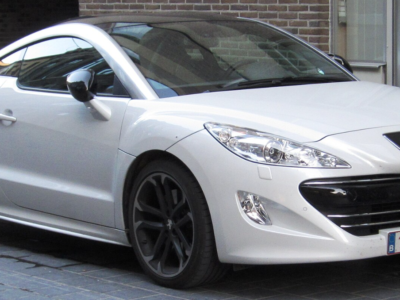
Peugeot RCZ vs Toyota 86: Which Sports Coupe Makes More Sense?

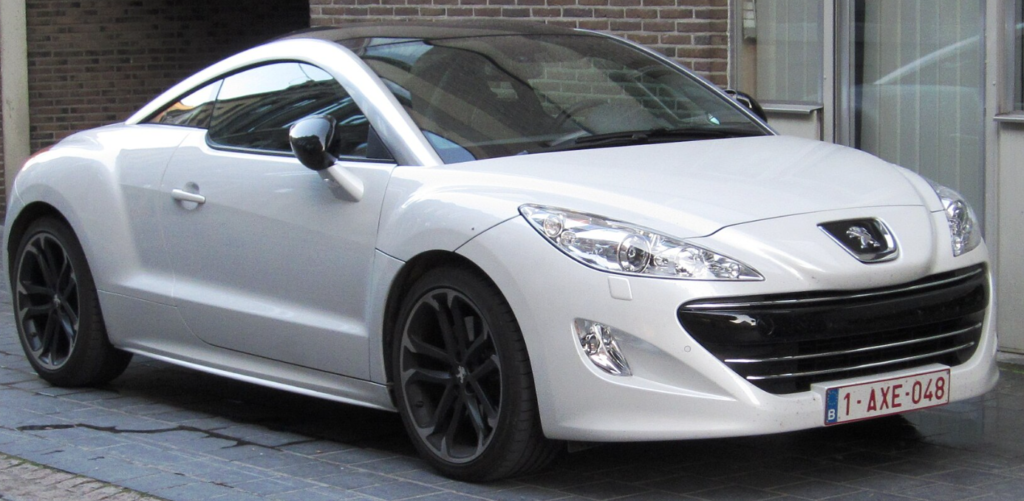
Put the Peugeot RCZ vs Toyota 86 side by side and we get one of those comparisons that looks straightforward until we actually start driving them.
Both are compact 2+2 sports coupes. Both attract enthusiasts searching for something more exciting than an ordinary hatchback or sedan. Both can now be interesting choices on the used market. Yet underneath their low roofs and sporty bodywork, they follow very different philosophies.
The Peugeot RCZ approaches the sports-coupe formula through turbocharged performance, dramatic styling, front-wheel drive, and a surprisingly practical cabin. The Toyota 86 takes a more traditional enthusiast route: naturally aspirated boxer engine, rear-wheel drive, low weight, and a chassis designed around balance rather than outright power.
So which approach works better?
That depends heavily on what we expect from our sports car.
If we want effortless torque, distinctive styling, and a coupe that still works surprisingly well in everyday life, the RCZ makes a convincing argument. If our idea of fun involves steering feedback, revs, balance, and the ability to adjust the car with the throttle, the Toyota 86 speaks an entirely different language.
Let's dig deeper.
Content in this publication
- Peugeot RCZ vs Toyota 86 at a Glance
- Two Sports Coupes With Completely Different Personalities
- Engine Comparison: Turbo Punch or Naturally Aspirated Response?
- Which Car Feels Faster?
- Peugeot RCZ R vs Toyota 86 Changes the Conversation
- Front-Wheel Drive vs Rear-Wheel Drive
- Handling: Where the Toyota 86 Comes Alive
- Is the Peugeot RCZ Still Fun in Corners?
- Steering Feel and Driver Connection
- Weight: The Toyota's Secret Weapon
- Design: The RCZ Still Turns Heads
- Interior Comparison
- Which Has Better Seats?
- Practicality: The Peugeot Delivers a Surprise
- Daily Driving: Which Is Easier to Live With?
- Manual vs Automatic
- Fuel Economy and Running Costs
- Reliability and Used-Car Buying Considerations
- Modification Potential
- Which One Is Better for Track Days?
- Which Is Better for Long Journeys?
- Which Feels More Special to Own?
- Peugeot RCZ vs Toyota 86: Strengths and Weaknesses
- The Question We Really Need to Ask
- Peugeot RCZ vs Toyota 86: Final Thoughts
- Frequently Asked Questions
Peugeot RCZ vs Toyota 86 at a Glance
Before disappearing down the rabbit hole, here's the basic difference between these two cars.
| Feature | Peugeot RCZ 200 THP | Toyota 86 |
|---|---|---|
| Engine | 1.6L turbo inline-four | 2.0L naturally aspirated boxer-four |
| Power | 147 kW / 200 hp | Around 147–152 kW depending on version |
| Torque | Up to 275 Nm with overboost | Around 205–212 Nm |
| Drivetrain | Front-wheel drive | Rear-wheel drive |
| Transmission | 6-speed manual | 6-speed manual or automatic |
| Seating | 2+2 | 2+2 |
| Character | Turbocharged GT-style coupe | Lightweight driver's sports car |
| Strong point | Torque and everyday usability | Handling and balance |
Peugeot quoted 147 kW/200 hp for the RCZ 200 THP, with 255 Nm and up to 275 Nm during overboost. Toyota's later first-generation Australian 86 specification listed 152 kW and 212 Nm for the manual, while the automatic produced 147 kW and 205 Nm.
Those numbers already hint at what happens on the road. Peak horsepower is surprisingly similar. Torque delivery is not.
Two Sports Coupes With Completely Different Personalities
This comparison is less about numbers than character.
Imagine two chefs cooking the same meal using completely different recipes.
Peugeot adds turbo boost, muscular mid-range torque, visual drama, and a touch of grand-tourer sophistication.
Toyota strips the recipe back. Lower weight. Rear-wheel drive. Naturally aspirated power. Low center of gravity. Simple ingredients, carefully balanced.
Neither approach is automatically superior.
They simply satisfy different appetites.
What the Peugeot RCZ Is Trying to Be
The RCZ was never merely a normal Peugeot wearing a flashy jacket.
Its double-bubble roof, wide stance, pronounced rear arches, aluminum-style roof rails, and active rear spoiler gave it genuine road presence. Peugeot itself has since described the RCZ's double-bubble design as one of the model's defining features.
It feels like something designed to make us glance backward after parking.
And sometimes that matters.
Cars aren't spreadsheets. Emotion plays a role.
The RCZ blends that visual theater with relatively easy everyday driving. The turbocharged engines produce useful torque without forcing us to chase the redline every time we want meaningful acceleration.
What the Toyota 86 Is Trying to Be
The Toyota 86 is much more transparent about its mission.
Driver first.
Everything else second.
The original car uses a horizontally opposed 2.0-liter engine, rear-wheel drive, MacPherson-strut front suspension, and double-wishbone rear suspension. Toyota gave it a long, low shape and deliberately kept weight modest.
The result isn't necessarily dramatic when we look at acceleration figures.
Drive one down a twisting road, though, and suddenly the mathematics make sense.
The 86 isn't screaming, "Look how fast I am."
It's whispering, "Try that corner again."
Engine Comparison: Turbo Punch or Naturally Aspirated Response?
Here's where Peugeot RCZ vs Toyota 86 becomes especially interesting.
The engines couldn't feel much more different.
Peugeot RCZ 1.6 THP
The 200-hp RCZ uses a 1.6-liter turbocharged four-cylinder engine producing 147 kW. Peugeot quoted 255 Nm at low engine speeds, temporarily rising to 275 Nm through overboost.
That torque changes the entire personality of the car.
Press the accelerator while cruising in the middle of the rev range and the RCZ responds quickly. We don't always need to drop two gears and wring its neck.
That makes overtaking easier and everyday driving feel punchier.
The RCZ Feels Stronger Than the Numbers Suggest
Turbo torque can play tricks on our senses.
Even where two cars have similar peak horsepower, the one delivering significantly more torque lower in the rev range often feels stronger during normal road driving.
That's the RCZ's trick.
We press the accelerator.
Boost arrives.
The scenery starts moving faster.
Simple.
Toyota 86 2.0 Boxer Engine
The Toyota follows the opposite recipe.
Instead of turbocharging, the first-generation 86 uses a naturally aspirated 2.0-liter boxer engine. In later Australian specification, the manual version developed 152 kW at 7,000 rpm and 212 Nm at 6,400–6,800 rpm.
Notice where that torque arrives.
High.
The Toyota wants revs.
If the RCZ behaves like someone giving us a shove in the back, the 86 is more like climbing a staircase: the higher we go, the more energetic things become.
Which Car Feels Faster?
Under normal road conditions, we'd expect many drivers to perceive the RCZ 200 THP as stronger in the mid-range because of its substantial torque advantage and turbocharged delivery.
Peugeot quoted 0–100 km/h in 7.5 seconds for the 200 THP.
But straight-line speed isn't really the reason enthusiasts buy an 86.
The Toyota's performance makes more sense when we're carrying momentum through corners, keeping the engine working, and using the manual gearbox properly.
That's more demanding.
It's also part of the fun.
Peugeot RCZ R vs Toyota 86 Changes the Conversation
There's one enormous asterisk attached to this comparison.
The RCZ R.
Treating the normal RCZ and RCZ R as identical cars would be misleading because Peugeot turned the R into something substantially more serious.
The RCZ R's 1.6-liter turbo engine produces 199 kW/270 hp and 330 Nm, while Peugeot quoted 0–100 km/h in 5.9 seconds. It also received a Torsen limited-slip differential and chassis changes aimed at improving performance.
Against a standard first-generation Toyota 86, the RCZ R therefore brings substantially more straight-line performance.
But horsepower alone doesn't erase the philosophical difference.
The Toyota remains rear-wheel drive.
The Peugeot remains fundamentally front-driven.
That shapes everything.
Front-Wheel Drive vs Rear-Wheel Drive
Forget badges for a moment.
This may be the most important section of the entire comparison.
How the RCZ Behaves
The RCZ sends its power through the front wheels.
For normal driving, that's hardly a problem. In fact, the layout contributes to predictable behavior and packaging advantages.
Drive harder and physics becomes more noticeable.
Those front tires have multiple jobs: steering, transmitting engine power, and handling a substantial proportion of the braking load.
The RCZ can still be quick and entertaining, but its personality revolves around front-end grip.
How the Toyota 86 Behaves
The Toyota splits the responsibilities.
The front tires steer.
The rear tires deliver engine power.
That matters enormously when we start exploring the chassis.
Throttle inputs can influence the car's attitude through a corner. We can feel the rear axle becoming part of the conversation rather than simply following along behind.
It gives the 86 an old-school sports-car quality that is increasingly difficult to find.
Handling: Where the Toyota 86 Comes Alive
If we're choosing purely for involvement on a twisting road, the Toyota's fundamental layout becomes hard to ignore.
The car was engineered around handling rather than horsepower bragging rights.
Toyota kept the engine low and used a boxer configuration, helping keep the center of gravity down. Rear-wheel drive then allows the chassis to respond naturally to throttle inputs.
There's a playful quality here.
Not intimidating.
Not absurdly fast.
Just communicative.
The Toyota Encourages Us to Participate
Some fast cars make the driver feel like a passenger supervising a computer.
The 86 doesn't.
It asks us to contribute.
Choose the gear.
Carry the speed.
Brake cleanly.
Turn deliberately.
Get back on the throttle.
You may be interested in reading Test Drive Review: The Fiat 500 Abarth 0-60 Acceleration
Do it well and the car rewards us.
Do it poorly and the lack of giant turbocharged torque makes the mistake obvious.
In a strange way, that's part of the appeal.
Is the Peugeot RCZ Still Fun in Corners?
Absolutely.
We shouldn't mistake front-wheel drive for boring.
Peugeot engineered the RCZ specifically as a sporting coupe, and the 200 THP received changes intended to sharpen its behavior. Peugeot described a reinforced front-end setup on the 200-hp model along with speed-sensitive electrohydraulic steering and larger front brakes.
The car feels planted, wide, and confident.
Where it differs from the Toyota is how it communicates.
The RCZ wants us to brake, point the nose toward the exit, find grip, and deploy that turbocharged torque.
The Toyota invites us to rotate the whole car.
Subtle distinction.
Huge difference.
Steering Feel and Driver Connection
Sports-car buyers often obsess about horsepower, yet steering probably changes our enjoyment more frequently.
The Toyota 86 generally feels like the purer driving instrument.
Its relatively modest tire sizes, low seating position, rear-wheel-drive layout, and chassis balance allow information to reach the driver without excessive filtering.
The RCZ feels more substantial.
More mature.
Perhaps more expensive.
Yet that polish puts a little extra distance between our fingertips and the asphalt.
For relaxed fast-road driving, some people may actually prefer that.
Weight: The Toyota's Secret Weapon
Power attracts attention.
Weight quietly wins arguments.
Toyota's 2019 Australian specifications placed first-generation 86 kerb weight at approximately 1,235–1,278 kg depending on grade and transmission.
Peugeot listed the RCZ 200 THP at around 1,372 kg in its original technical material.
That difference influences virtually everything.
Acceleration.
Braking.
Direction changes.
Tire workload.
Suspension behavior.
Driver confidence.
It's one reason the Toyota can feel lively without needing 300 horsepower.
Design: The RCZ Still Turns Heads
Now we reach the category where the Peugeot fights back hard.
The RCZ looks special.
Even years after its introduction, the double-bubble rear glass and roof create a silhouette unlike almost anything else at its price level.
It has concept-car energy.
Park one beside an ordinary hatchback and it looks as though someone accidentally drove a motor-show exhibit onto the street.
The Toyota 86 Looks Purposeful Rather Than Exotic
The Toyota isn't unattractive.
Far from it.
Its proportions are classic sports car: long bonnet, low roof, short rear deck, wheels pushed outward.
But the styling exists largely to communicate purpose.
The RCZ uses styling as part of the entertainment.
For buyers who want something uncommon sitting in the driveway, that can be a powerful advantage.
Interior Comparison
Inside, the two personalities remain visible.
The Peugeot aims for a more premium sensation.
Depending on specification, we can find leather upholstery, metallic trim, sports seats, and equipment intended to make the RCZ feel like more than a stripped-back weekend toy.
The Toyota is simpler.
Controls tend to emphasize function.
The driving position takes priority.
That's not necessarily criticism.
An 86 cabin says, "Where are we driving?"
An RCZ cabin asks, "Would you like to enjoy the journey?"
Which Has Better Seats?
This depends heavily on trim and individual body shape.
RCZ sports seats can feel impressively supportive while preserving a degree of long-distance comfort.
The 86 puts us low in the chassis, which immediately creates the sensation that we're sitting inside the car rather than on top of it.
For track-style positioning, we'd lean toward the Toyota philosophy.
For longer motorway journeys, plenty of drivers may appreciate the RCZ's more GT-like environment.
Practicality: The Peugeot Delivers a Surprise
Sports coupes aren't supposed to win arguments about luggage.
The RCZ didn't receive that memo.
Peugeot officially listed 321 liters of luggage capacity, expanding to 639 liters with the rear seats folded.
That's useful capacity for a coupe.
Weekend luggage?
Easy.
Shopping?
No drama.
A road trip for two?
Much easier than its bodywork suggests.
Rear Seats in Both Cars Require Realistic Expectations
Both are technically 2+2 coupes.
That doesn't make either one a family limousine.
The rear seats are far more useful for bags, jackets, occasional short journeys, or smaller passengers than for regularly carrying full-size adults.
Think of them as emergency seating with bonus storage potential.
That's the healthier expectation.
Daily Driving: Which Is Easier to Live With?
Here's where buying a sports car becomes real.
Monday morning doesn't care about heel-and-toe downshifts.
There's traffic.
Bad roads.
Groceries.
Parking.
Commuting.
And sometimes we simply want the car to behave.
Why the RCZ Works Well Every Day
The turbocharged torque reduces how often we need to work the gearbox.
The boot is generous.
The cabin feels more substantial than many stripped-out sports cars.
Highway cruising suits the car.
For someone using one vehicle for commuting, road trips, and weekend entertainment, the RCZ makes considerable sense.
Why the Toyota 86 Is Still Usable
The Toyota is hardly an uncompromising race car.
It has air conditioning, reasonable luggage capability for two people, usable controls, and enough refinement for ordinary life.
But everything reminds us that driving enjoyment came first.
Road noise, limited rear-seat usefulness, relatively modest low-rpm torque, and low seating can make the experience more involving even when we're not searching for involvement.
Some of us love that.
Others eventually get tired of it.
Manual vs Automatic
If we're buying either car because we want maximum interaction, the manual gearbox deserves serious attention.
You may be interested in readingTest Drive Review: The Fiat 500 Abarth 0-60 AccelerationYou may be interested in reading
 Customizing Your Ride: A Comprehensive Guide to the Fiat 500 Body Kit
This is particularly true with the 86.
The naturally aspirated engine makes us work through the rev range, and shifting gears becomes an important part of the experience.
Toyota did offer both six-speed manual and six-speed automatic transmissions, with official specifications varying slightly in output between the two.
The automatic can make commuting easier, but the manual better complements the vehicle's core philosophy.
The RCZ is slightly different.
Because turbo torque does more of the work, the driving experience relies less heavily on constantly shifting gears.
Still, a manual 200 THP can be an appealing combination.
Fuel Economy and Running Costs
Fuel consumption deserves some nuance because official test procedures, model years, transmissions, traffic, tires, modifications, and driving style all change the result.
Peugeot originally quoted 6.9 L/100 km under the applicable European test cycle for the 200 THP.
Toyota's later Australian specification listed 8.4 L/100 km for the manual 86 and 7.1 L/100 km for the automatic under its applicable test methodology.
We shouldn't compare historical laboratory numbers as though they guarantee identical real-world consumption.
Still, they demonstrate something useful: neither car necessarily requires supercar levels of fuel spending to deliver genuine sports-coupe character.
Reliability and Used-Car Buying Considerations
At this age, condition matters more than internet mythology.
A beautifully maintained example with complete records can be a far safer purchase than a supposedly "better" model that has spent ten years being neglected, modified badly, or driven hard from cold.
For either car, we'd inspect:
- Complete service history and documented oil changes
- Evidence of accident repairs or poor-quality paintwork
- Tire condition and whether all four tires are reputable and correctly matched
- Suspension knocks, uneven wear, steering alignment, and brake condition
- Clutch operation on manual cars
- Cooling-system condition and evidence of fluid leaks
- Oil leaks or abnormal consumption
- Warning lights and stored diagnostic faults
- Aftermarket modifications, especially engine tuning
- Signs of repeated track use or aggressive driving
On an RCZ THP, we'd be especially interested in the history of the engine, turbo system, timing-related maintenance, cooling components, and oil servicing.
With an 86, we'd pay particular attention to modifications, oil history, clutch condition, suspension changes, and signs that the car has spent its life sliding around race circuits.
A pre-purchase inspection from a specialist familiar with the specific engine and chassis is money well spent.
Modification Potential
The Toyota 86 has one enormous advantage for enthusiasts who view a standard car as merely the beginning.
The platform became incredibly popular with tuners.
Suspension.
Wheels.
Tires.
Brakes.
Exhaust systems.
Forced induction.
Track preparation.
The possibilities are extensive.
More importantly, the basic rear-wheel-drive chassis responds naturally to handling upgrades.
The RCZ Has Tuning Potential Too
Turbo engines naturally tempt us with additional boost and software tuning.
But chasing a horsepower number without considering cooling, fueling, transmission stress, traction, braking, and engine health is a recipe for expensive disappointment.
With an older RCZ, we'd prioritize making the car mechanically excellent before searching for additional power.
A healthy standard car is better than a badly tuned "stage whatever" example with mystery software and overdue maintenance.
Which One Is Better for Track Days?
For a standard enthusiast wanting to learn vehicle dynamics, the Toyota 86 is an extremely logical track-day platform.
Its rear-wheel-drive chassis, relatively low weight, predictable power delivery, and balanced handling encourage us to work on technique instead of merely managing horsepower.
Braking points matter.
Momentum matters.
Lines matter.
Throttle control matters.
The Toyota turns the circuit into a classroom.
The RCZ R Is the Exception
The ordinary RCZ is capable of spirited driving, but the RCZ R deserves separate treatment.
With 270 hp, 330 Nm, a Torsen limited-slip differential, firmer chassis tuning, and substantial braking hardware, it was developed as a much more focused performance model.
That makes an RCZ R versus Toyota 86 comparison much less straightforward.
The Peugeot brings serious pace.
The Toyota still counters with rear-wheel-drive adjustability.
Which Is Better for Long Journeys?
We'd generally expect the RCZ to suit the grand-touring role more naturally.
Why?
Turbo torque reduces effort.
The luggage area is useful.
The cabin can feel more luxurious.
The chassis remains sporty without demanding that every journey become a driving event.
It's the car we'd imagine taking across several countries with luggage in the back.
The 86 can certainly make the same trip, but we'd probably arrive remembering the road more vividly.
And perhaps our ears would remember it too.
Which Feels More Special to Own?
This question has no specification-sheet answer.
The Toyota earns its specialness dynamically.
We discover it after the first genuinely good sequence of corners.
The Peugeot delivers specialness before we've even started the engine.
Look at that roof.
Look at those rear arches.
Look at the shape of the rear window.
It's unusual.
For some owners, walking out of a supermarket and seeing an RCZ waiting across the parking lot will be part of the pleasure.
Peugeot RCZ vs Toyota 86: Strengths and Weaknesses
The RCZ makes a strong case through styling, mid-range torque, practicality, and long-distance usability. The Toyota responds with lighter weight, rear-wheel drive, chassis balance, and a more traditional sports-car experience.
Neither succeeds by copying the other.
And that's exactly why this comparison is interesting.
Choose the Peugeot RCZ If We Value...
We'd naturally gravitate toward the Peugeot when distinctive styling matters enormously, effortless turbocharged mid-range acceleration is more appealing than revving an engine hard, and the car needs to combine weekend entertainment with reasonable everyday practicality.
The RCZ also feels attractive for drivers who want their sports coupe to behave partly like a grand tourer.
Choose the Toyota 86 If We Value...
The 86 makes more sense when the process of driving matters more than effortless speed.
If rear-wheel-drive balance, steering involvement, chassis adjustability, manual shifting, track-day potential, and driver development rank high on our priorities, the Toyota's fundamental design is difficult to ignore.
The Question We Really Need to Ask
Which one is better?
That's probably the wrong question.
Instead, ask:
What do we want to feel when we drive?
If we want a surge of turbo torque while sitting inside something rare-looking and surprisingly practical, the Peugeot delivers.
If we want to approach a bend and immediately start thinking about braking points, weight transfer, gear selection, throttle position, and corner exit, the Toyota speaks our language.
The cars overlap in price and body style.
Emotionally, they live in different neighborhoods.
Peugeot RCZ vs Toyota 86: Final Thoughts
The Peugeot RCZ vs Toyota 86 comparison proves that there's more than one way to create an enjoyable sports coupe.
The RCZ is the charismatic one.
Its dramatic design immediately gets our attention, while the turbocharged engine gives it useful real-world punch. Add surprisingly good luggage capacity and an interior with a touch of grand-tourer flavor, and it becomes much easier to live with than its appearance suggests.
The Toyota 86 takes the purist route.
It's lighter, rear-wheel drive, naturally aspirated, and deliberately focused on handling. It won't necessarily pin us against the seat every time we press the accelerator. That's missing the point. Its magic happens when the road starts twisting and the chassis begins communicating.
So our decision shouldn't begin with horsepower.
It should begin with personality.
The RCZ turns ordinary journeys into an occasion.
The Toyota 86 turns ordinary corners into entertainment.
And depending on why we're buying a sports car in the first place, either philosophy can make perfect sense.
Frequently Asked Questions
Is the Peugeot RCZ faster than the Toyota 86?
A 200-hp RCZ can feel stronger during everyday acceleration because its turbocharged engine delivers considerably more mid-range torque than the naturally aspirated first-generation Toyota 86. Actual acceleration varies by model year and transmission. The RCZ R sits in another performance category, producing 270 hp and 330 Nm and officially reaching 100 km/h in 5.9 seconds.
Is the Toyota 86 better for handling?
The Toyota 86 has a particularly strong enthusiast-focused layout thanks to rear-wheel drive, relatively low weight, a low-mounted boxer engine, and independent rear suspension. Those characteristics make it highly responsive to driver inputs. The RCZ can still be quick and engaging, but its front-wheel-drive configuration creates a different handling experience.
Which is more practical, Peugeot RCZ or Toyota 86?
The Peugeot RCZ has a strong practical advantage for a coupe. Peugeot officially quoted a 321-liter boot that expands to 639 liters with the rear seats folded. Both vehicles offer a 2+2 seating arrangement, though rear-seat space should be considered occasional rather than truly adult-friendly.
Which is better for daily driving?
Drivers wanting strong low- and mid-range acceleration, useful luggage capacity, and a more GT-like experience may find the RCZ easier to integrate into daily life. Drivers who prioritize handling and interaction may prefer the Toyota even if its naturally aspirated engine requires more revs to produce its best performance.
You may be interested in readingTest Drive Review: The Fiat 500 Abarth 0-60 AccelerationYou may be interested in reading
Customizing Your Ride: A Comprehensive Guide to the Fiat 500 Body KitYou may be interested in reading
 A Trip Down Memory Lane: The 1977 Fiat 124 Spider
Should we buy a Peugeot RCZ or Toyota 86 used?
We should buy based on both personality and condition. The RCZ suits buyers prioritizing design, turbo torque, and practicality; the Toyota suits those prioritizing rear-wheel-drive handling and involvement. Whichever we choose, maintenance history, accident history, modifications, tires, brakes, fluids, and a specialist pre-purchase inspection matter enormously.
If you want to know other articles similar to Peugeot RCZ vs Toyota 86: Which Sports Coupe Makes More Sense? you can visit the category Models.
Peugeot RCZ vs VW Scirocco: Which Coupe Makes More Sense?
Peugeot RCZ vs 308 CC: Which Used Peugeot Is the Better Choice?
Peugeot RCZ vs Audi TT: Which Stylish Sports Coupe Makes More Sense?
BYD Shark 6 2025 vs 2026: What Actually Changed?
BMW i7 vs Porsche Taycan: Luxury EVs With Very Different Personalities
BMW i7 vs 7 Series: Which BMW Flagship Makes More Sense?
Leave a Reply
More content of your interest