
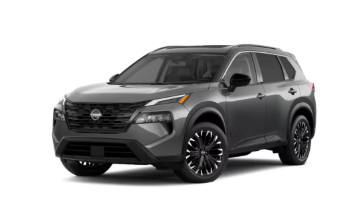
Nissan Rogue Weight: Curb Weight, GVWR, Trims, and Generations Explained

How much does a Nissan Rogue weigh? It sounds like a question that should have a one-line answer, yet the reality is a little more interesting.
Depending on the model year, trim level, drivetrain, and installed equipment, a Nissan Rogue can weigh anywhere from roughly 3,200 pounds in early models to more than 3,700 pounds in newer AWD versions. Current models sit comfortably in the middle of the compact-SUV world—not featherweights, but certainly not lumbering giants either.
For the current 2026.5 Nissan Rogue, Nissan lists base curb weights ranging from approximately 3,456 pounds for the Rogue S FWD to 3,761 pounds for some upper-spec AWD configurations.
But those numbers only tell part of the story.
Curb weight affects fuel consumption, acceleration, handling, payload, towing, tire requirements, and even the equipment needed if we ever need to transport the vehicle on a trailer. So rather than throwing one number at the wall and walking away, let's unpack Nissan Rogue weight properly.
Content in this publication
- How Much Does a Nissan Rogue Weigh?
- What Does Nissan Rogue Curb Weight Mean?
- 2026.5 Nissan Rogue Weight by Trim
- 2026 Nissan Rogue Weight
- 2025 Nissan Rogue Weight
- Nissan Rogue Weight by Generation
- Why Does Nissan Rogue Weight Change Between Trims?
- Does Nissan Rogue Weight Affect Fuel Economy?
- Does Weight Affect Nissan Rogue Performance?
- Nissan Rogue Payload vs Curb Weight
- Nissan Rogue Weight and Towing
- How Can We Find the Exact Weight of Our Nissan Rogue?
- Is the Nissan Rogue Heavy for a Compact SUV?
- Is a Lighter Nissan Rogue Better?
- Should Nissan Rogue Weight Matter When Buying One?
- Nissan Rogue Weight: What We Should Remember
- Conclusion: Understanding Nissan Rogue Weight
- Frequently Asked Questions
How Much Does a Nissan Rogue Weigh?
The short answer is that most modern Nissan Rogue models weigh approximately 3,400 to 3,800 pounds in curb-weight form.
For the current 2026.5 model lineup, Nissan's published specifications indicate the following general range:
| Nissan Rogue configuration | Approx. curb weight |
|---|---|
| Rogue S FWD | 3,456 lb |
| Rogue S AWD | 3,586 lb |
| Rogue SV FWD | 3,492 lb |
| Rogue SV AWD | 3,617 lb |
| Dark Armor Edition FWD | 3,588 lb |
| Dark Armor Edition AWD | 3,761 lb |
| Rock Creek AWD | 3,700 lb |
| Platinum AWD | 3,761 lb |
These are base curb-weight figures, and the actual vehicle sitting in our driveway can differ slightly because of factory equipment and other configuration details. Nissan's own vehicle documentation also distinguishes curb weight from the weight of occupants and cargo.
In other words, when we ask how much a Rogue weighs, we first need to decide which type of weight we mean.
What Does Nissan Rogue Curb Weight Mean?
Curb weight is essentially the vehicle's ready-to-drive weight before we climb inside and load the luggage.
Nissan defines curb weight as the vehicle's weight including standard and optional equipment, fluids, emergency tools, and the spare-tire assembly where applicable, but excluding passengers and cargo.
Think of it as the Rogue standing on a bathroom scale by itself.
That distinction matters because the moment we add:
- the driver,
- passengers,
- suitcases,
- groceries,
- bicycles,
- accessories,
- or trailer tongue weight,
the vehicle's actual operating weight increases.
Curb Weight vs Gross Vehicle Weight
Curb weight and gross vehicle weight sound similar, but they are not interchangeable.
Curb weight is essentially the unloaded vehicle.
Gross Vehicle Weight, or GVW, is what the vehicle actually weighs after passengers and cargo have been added.
A Rogue with a 3,500-pound curb weight does not remain a 3,500-pound vehicle when four adults and a trunk full of vacation luggage hop aboard.
At that point, perhaps we're closer to 4,200 pounds.
That is why knowing only the curb weight can be misleading when we're thinking about loading limits.
What Is Nissan Rogue GVWR?
GVWR means Gross Vehicle Weight Rating.
Rather than describing what the vehicle currently weighs, GVWR tells us the maximum allowable total vehicle weight specified for that particular vehicle.
Nissan explains that GVWR includes the unloaded vehicle plus passengers, luggage, hitch equipment, trailer tongue load, and other applicable equipment. The specific rating is shown on the certification label located around the driver's-side door area.
That door sticker matters more than a generic internet chart when we're calculating actual loading capacity.
Why We Should Not Guess the GVWR
Two Rogues that look almost identical can have different specifications because of drivetrain, wheels, packages, and equipment.
So if we're loading the SUV heavily or preparing to tow, the safest approach is simple:
Use the certification and Tire and Loading Information labels on the actual vehicle.
They are the final word for that particular Rogue.
2026.5 Nissan Rogue Weight by Trim
The modern Rogue lineup is a good demonstration of how equipment changes weight.
Nissan's 2026.5 specifications show the S FWD at approximately 3,456 pounds, while heavier AWD versions can reach 3,761 pounds.
That is a difference of more than 300 pounds within the same basic model family.
Nissan Rogue S Weight
The Rogue S represents the lighter end of the current lineup.
Its simpler equipment list and availability with front-wheel drive keep weight comparatively low.
The 2026.5 figures are approximately:
FWD: 3,456 pounds
AWD: 3,586 pounds
The AWD system therefore adds noticeable mass.
That does not necessarily make the AWD Rogue feel dramatically heavier from the driver's seat, but extra drivetrain hardware has to weigh something. Physics always sends us the bill eventually.
Nissan Rogue SV Weight
The Rogue SV adds comfort and technology while remaining fairly close to the S in overall mass.
Published 2026.5 figures are approximately:
FWD: 3,492 pounds
AWD: 3,617 pounds
For many shoppers, this is roughly the sweet spot of the lineup: more equipment without moving into the heaviest configurations.
Nissan Rogue Rock Creek Weight
The Rock Creek version leans toward a more rugged personality.
The 2026.5 Rock Creek is AWD, with Nissan listing a base curb weight of about 3,700 pounds.
Its additional hardware and specification naturally place it higher on the weight scale.
It is like comparing hiking boots with lightweight running shoes. Both get us down the road, but one brings a bit more material to the party.
Nissan Rogue Platinum Weight
The Platinum sits at the premium end of the regular Rogue family.
More equipment means more components, and more components usually mean more pounds.
For the 2026.5 model, Nissan lists the Platinum AWD at approximately 3,761 pounds, placing it among the heaviest regular Rogue configurations.
2026 Nissan Rogue Weight
There is also a useful distinction between the original 2026 Rogue specification and the later 2026.5 lineup.
For the 2026 model, Nissan's brochure listed curb weights of:
| 2026 Rogue | FWD | AWD |
|---|---|---|
| S | 3,477 lb | 3,607 lb |
| SV | 3,530 lb | 3,657 lb |
| Rock Creek | — | 3,713 lb |
| Platinum | — | 3,737 lb |
That means we should always check the precise model-year specification instead of assuming every vehicle sold during roughly the same calendar period carries identical numbers.
2025 Nissan Rogue Weight
The 2025 Rogue was also in roughly the same weight neighborhood.
Nissan listed the base curb-weight figures at approximately:
- Rogue S: 3,477 lb FWD / 3,607 lb AWD
- Rogue SV: 3,530 lb FWD / 3,657 lb AWD
- Rogue Rock Creek: 3,713 lb AWD
- Rogue SL: 3,565 lb FWD / 3,694 lb AWD
- Rogue Platinum: 3,603 lb FWD / 3,737 lb AWD
The broader pattern is easy to spot: FWD models are generally lighter, while AWD and higher equipment levels add weight.
Nissan Rogue Weight by Generation
The Rogue has changed considerably since it first appeared.
Technology, safety structures, infotainment equipment, engines, drivetrain systems, and interior features have evolved. Yet Nissan has generally kept the vehicle within a reasonably controlled weight envelope.
First-Generation Nissan Rogue Weight: 2008–2013
Early Rogue models were relatively light by modern crossover standards.
For the 2008 model year, published specifications show curb weights spanning roughly 3,267 to 3,460 pounds, depending on configuration.
That makes the earliest Rogue several hundred pounds lighter than some current versions.
Why?
Older vehicles typically carried less electronic hardware, fewer advanced driver-assistance systems, simpler interiors, and fewer comfort features.
You may be interested in reading Toyota Corolla AE86 Engine Swap – The Ultimate Guide
Yet the first Rogue was not dramatically smaller in every dimension. This highlights just how much unseen hardware modern vehicles carry beneath the skin.
Second-Generation Nissan Rogue Weight: 2014–2020
The second-generation Rogue arrived with a broader family-oriented mission.
A base 2014 Rogue S FWD, for example, had a published curb weight of approximately 3,393 pounds, while heavier configurations moved upward from there.
This generation's weight varied considerably according to trim and drivetrain.
A basic FWD vehicle could remain relatively lean, while AWD equipment and higher specifications pushed the figure toward the mid-3,000-pound range.
Third-Generation Nissan Rogue Weight: 2021–Present
The third-generation Rogue began with a surprisingly disciplined approach to weight.
For the U.S.-spec 2021 Rogue, published figures ranged from around 3,371 pounds for the S FWD to 3,633 pounds for the Platinum AWD.
Modern versions have gradually shifted upward depending on equipment and configuration, with current 2026.5 models reaching approximately 3,761 pounds at the heavier end.
The important thing is that the Rogue has not ballooned into full-size-SUV territory.
It remains very much a compact crossover.
Why Does Nissan Rogue Weight Change Between Trims?
We sometimes imagine trim levels as badges, leather seats, and bigger screens.
They are much more than that.
Every additional component has mass.
A premium trim can carry extra motors, wiring, glass, speakers, insulation, cameras, interior hardware, and electronic modules.
A few pounds here and twenty pounds there eventually become meaningful.
All-Wheel Drive Adds Weight
One of the biggest contributors is AWD.
An all-wheel-drive Rogue needs additional drivetrain components to send power toward the rear wheels.
That means more hardware beneath the vehicle.
Looking at current Nissan figures makes the effect obvious.
The 2026.5 Rogue S increases from about 3,456 pounds with FWD to 3,586 pounds with AWD—roughly a 130-pound difference.
Larger Wheels Can Influence Vehicle Mass
Wheel and tire packages also matter.
Larger wheels may look sharper, but they can be heavier than smaller combinations depending on their construction.
The difference is especially interesting because wheels are unsprung and rotating mass.
Ten pounds added to a decorative interior feature is not dynamically identical to ten pounds added to a wheel.
We probably will not transform a Rogue into a race car by changing wheels, of course, but vehicle engineers care about these grams and pounds for good reason.
Panoramic Roofs and Luxury Equipment Matter Too
Glass is heavy.
Electric seat mechanisms are heavier than basic manual assemblies.
Premium audio systems require more speakers.
Power liftgates need motors.
Sound insulation adds material.
Each upgrade may seem tiny on its own, but together they explain why the top Rogue can weigh substantially more than the entry model.
Does Nissan Rogue Weight Affect Fuel Economy?
Yes, although weight is only one part of the equation.
Moving more mass generally requires more energy.
Every time we accelerate from a stop, the engine must overcome inertia. The heavier the vehicle, the more energy that process requires.
But fuel economy also depends on:
- aerodynamics,
- engine efficiency,
- transmission programming,
- tires,
- gearing,
- drivetrain losses,
- speed,
- temperature,
- road conditions,
- and driver behavior.
This explains why we cannot simply say, "The lighter Rogue will always get exactly X more mpg."
Real vehicles are more complicated.
Still, all else being equal, reducing unnecessary weight usually helps efficiency.
That is one reason carrying 300 pounds of forgotten equipment in the cargo area year-round makes little sense.
Does Weight Affect Nissan Rogue Performance?
Absolutely.
Imagine two runners with equal strength, except one carries a backpack filled with bricks.
Which one accelerates faster?
Vehicles follow the same broad rule.
A lighter Rogue generally has less mass for its engine to move.
Acceleration
Lower curb weight can improve the power-to-weight relationship.
The difference between two trims might not feel dramatic during relaxed commuting, but weight influences how quickly a vehicle responds during acceleration.
Braking
More weight also means more kinetic energy for the brakes to manage.
That is especially important when the vehicle is carrying passengers, luggage, or trailer tongue weight.
This is one reason maximum-load limits should be treated as limits rather than friendly suggestions.
Handling
Weight placement matters almost as much as total weight.
A vehicle carrying heavy cargo high in the cabin behaves differently from the same vehicle carrying nothing.
Extra weight can affect:
- body roll,
- steering response,
- braking distances,
- suspension movement,
- and emergency handling.
The Rogue's suspension is designed around its approved operating range, not around our ability to play real-life Tetris with 1,000 pounds of random cargo.
Nissan Rogue Payload vs Curb Weight
Payload is often confused with curb weight.
They measure completely different things.
Curb weight tells us how much the vehicle itself weighs.
Payload capacity tells us how much weight we can add in occupants and cargo without exceeding the vehicle's limits.
Suppose, purely as an example, a particular Rogue had:
- a 3,550-pound curb weight,
- and a 4,650-pound GVWR.
The mathematical difference would be about 1,100 pounds before accounting for the precise vehicle-specific loading information.
Four 180-pound adults would already represent 720 pounds.
Add 200 pounds of luggage and suddenly we're at 920 pounds of added load.
This is why payload disappears faster than we expect.
Passengers Count as Payload
Yes, people count.
You may be interested in readingToyota Corolla AE86 Engine Swap – The Ultimate GuideYou may be interested in reading
 Does the Toyota Camry Have CVT Transmission?
It is surprisingly easy to think of payload as "whatever fits in the trunk."
That is wrong.
The combined weight of occupants and cargo matters.
So when Nissan provides a vehicle load limit on the door-area label, we must subtract passenger weight before deciding how much additional cargo can safely come along. Nissan's manuals specifically describe total load capacity as the combined weight of occupants and cargo.
Nissan Rogue Weight and Towing
Weight becomes even more important when trailers enter the conversation.
The current Nissan Rogue is rated to tow up to 1,500 pounds when properly equipped, according to Nissan's current specifications.
That does not mean we can simply hook up a 1,500-pound trailer and ignore everything else.
Trailer tongue weight contributes to the vehicle's load.
So passengers, luggage, accessories, and tongue weight all compete for available capacity.
Why Tongue Weight Matters
A trailer does not merely follow behind the Rogue.
Part of its weight presses downward on the hitch.
Nissan's towing guidance specifically notes that trailer tongue load must be considered as cargo when determining how much weight can safely be carried inside the vehicle.
That makes payload calculations particularly important during family road trips.
Four passengers + luggage + camping gear + tongue weight can add up surprisingly quickly.
How Can We Find the Exact Weight of Our Nissan Rogue?
For a specific Rogue, we have several options.
Check the Model-Year Specifications
Nissan brochures and official specification pages are useful for determining the published base curb weight of a particular trim.
We need to match:
- model year,
- trim,
- FWD or AWD,
- and major configuration differences.
Check the Driver-Side Door Labels
For loading limits, the driver's-side door area is more important.
The certification label contains vehicle-specific weight ratings, while the Tire and Loading Information label provides important occupant-and-cargo information.
Use a Vehicle Scale When Precision Matters
When towing or operating near a maximum weight limit, nothing beats an actual scale.
Nissan itself recommends weighing a fully loaded vehicle when determining actual gross vehicle weight for towing calculations.
Numbers from websites are useful.
Numbers from the vehicle itself are better.
A scale tells us what is actually happening.
Is the Nissan Rogue Heavy for a Compact SUV?
Not particularly.
A curb weight in the mid-3,000-pound range is normal territory for today's compact crossovers.
Modern vehicles need to balance competing demands.
We want:
- strong crash structures,
- quiet cabins,
- comfortable seats,
- large touchscreens,
- multiple cameras,
- driver-assistance technology,
- AWD capability,
- good fuel economy,
- and plenty of cargo room.
All of those features have to ride along somewhere.
The real accomplishment is fitting so much hardware into a vehicle without allowing curb weight to spiral completely out of control.
Is a Lighter Nissan Rogue Better?
Not automatically.
Lower weight has genuine advantages.
It can potentially help:
- efficiency,
- acceleration,
- braking response,
- tire wear,
- and agility.
But a heavier version may be heavier precisely because it contains features we actually want.
AWD adds weight—but it may be useful in snow or on loose surfaces.
A panoramic roof adds weight—but some owners love the airy cabin.
Power seats add weight—but they can make daily driving more comfortable.
The number on the scale is therefore not a quality score.
It is simply one engineering variable.
Should Nissan Rogue Weight Matter When Buying One?
For the average commuter, curb weight probably should not decide which Rogue to buy.
Instead, it becomes especially relevant if we plan to:
- tow regularly,
- carry several adults frequently,
- transport heavy cargo,
- use a vehicle trailer,
- choose towing or recovery equipment,
- compare FWD and AWD efficiency,
- or calculate how close we are to GVWR.
For normal grocery runs and school commutes, the difference between a 3,500-pound Rogue and a 3,700-pound Rogue is unlikely to dominate the ownership experience.
For towing and payload calculations, however, those numbers suddenly become much more interesting.
Nissan Rogue Weight: What We Should Remember
If we remember nothing else, let's keep four things straight.
First, there is no single Nissan Rogue weight.
Second, modern Rogue curb weight generally lands in the mid-3,000-pound range.
Third, AWD and additional equipment typically increase weight.
Fourth—and most importantly—curb weight, payload, GVW, and GVWR are different measurements.
Confusing them is like confusing the size of an empty suitcase with how much weight the airline allows us to put inside it.
Related? Certainly.
The same thing? Not at all.
Conclusion: Understanding Nissan Rogue Weight
The Nissan Rogue has stayed relatively disciplined in weight despite becoming more sophisticated over the years.
Early first-generation examples could weigh close to 3,267 pounds, while today's better-equipped AWD Rogues can approach 3,761 pounds.
For the current 2026.5 lineup, we are generally looking at approximately 3,456 to 3,761 pounds of curb weight, depending on trim and drivetrain.
But curb weight should be our starting point, not the end of the conversation.
If we're simply comparing trims, published curb weight is useful.
If we're calculating payload, towing, or maximum allowable vehicle weight, the labels on the actual Rogue become far more important.
So the next time somebody asks, "How much does a Nissan Rogue weigh?" our best answer is not just a number.
It is: Which Rogue?
Frequently Asked Questions
1. How much does a Nissan Rogue weigh?
Most modern Nissan Rogue models weigh roughly 3,400 to 3,800 pounds. The current 2026.5 lineup ranges from approximately 3,456 pounds for the S FWD to around 3,761 pounds for some AWD configurations.
2. How much does a Nissan Rogue AWD weigh?
It depends on the trim. Current AWD Rogue models generally weigh around 3,586 to 3,761 pounds, with additional equipment contributing to differences between versions.
3. Is Nissan Rogue curb weight the same as GVWR?
No. Curb weight describes the vehicle itself with normal equipment and fluids but without passengers or cargo. GVWR is the maximum allowable total vehicle weight once occupants, cargo, hitch equipment, and other loads are considered.
4. Does AWD make a Nissan Rogue heavier?
Yes. The extra drivetrain hardware normally increases curb weight. For example, Nissan lists the 2026.5 Rogue S at about 3,456 pounds with FWD and 3,586 pounds with AWD.
You may be interested in readingToyota Corolla AE86 Engine Swap – The Ultimate GuideYou may be interested in reading
Does the Toyota Camry Have CVT Transmission?You may be interested in reading
 Toyota Camry Trim Levels 2014: A Detailed Guide to Choosing the Best
5. Does Nissan Rogue weight affect towing capacity?
Vehicle weight is part of the broader towing equation, but towing capacity also depends on Nissan's specified limits, payload, tongue weight, and total vehicle load. Current Rogue specifications list towing capacity of up to 1,500 pounds when properly equipped.
If you want to know other articles similar to Nissan Rogue Weight: Curb Weight, GVWR, Trims, and Generations Explained you can visit the category Service and Parts.
Nissan Rogue Tire Pressure: The Complete PSI Guide
Nissan Rogue Wiper Blade Size: Complete Year-by-Year Guide
Nissan Rogue Oil Type: Complete Guide by Year, Engine, and Viscosity
Nissan Rogue Warning Lights: Meanings, Causes, and What to Do
Nissan Rogue Cargo Space: Dimensions, Capacity, and Everyday Practicality
Nissan Rogue Towing Capacity: How Much Can It Really Tow?
Leave a Reply
More content of your interest