

Nissan Rogue Generations: Complete Guide to Every Model Era

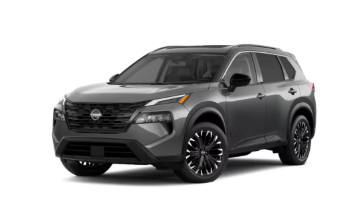
The Nissan Rogue generations tell a surprisingly clear story about how the compact crossover evolved from a fairly simple, car-like SUV into one of Nissan’s most technology-focused family vehicles. If we park an original 2008 Rogue beside a current model, the family resemblance is there, but the difference feels almost like comparing an early smartphone with one sitting in our pocket today.
The Rogue arrived in the United States for the 2008 model year. Since then, Nissan has launched three main generations: the original 2008 model, a completely redesigned second generation for 2014, and the third generation beginning with the 2021 model year. Nissan itself confirms those major milestones, including the fact that the latest conventional Rogue remains rooted in the third-generation design introduced for 2021.
Yet the timeline has a few twists. The first-generation model survived for two extra years as the Rogue Select, hybrid versions appeared during the second generation, the third generation switched to a turbocharged three-cylinder engine after launch, and Nissan is now introducing an all-new 2027 Rogue Hybrid alongside the continuing gasoline Rogue. So, yes, the history deserves a closer look.
Let’s break down every Nissan Rogue generation, the model years belonging to each one, the important redesigns, and what shoppers should know before choosing between them.
Content in this publication
- Nissan Rogue Generations at a Glance
- When Did the Nissan Rogue First Come Out?
- First-Generation Nissan Rogue: 2008–2013
- The 2011 Nissan Rogue Refresh
- What Is the Nissan Rogue Select?
- Second-Generation Nissan Rogue: 2014–2020
- Second-Generation Rogue Design Changes
- The Second-Generation Rogue Hybrid
- Late Second-Generation Rogue: More Driver Assistance
- Third-Generation Nissan Rogue: 2021–Present
- 2021 Nissan Rogue vs. 2022 and Newer Models
- The 2024 Nissan Rogue Refresh
- The Nissan Rogue Rock Creek Era
- What About the 2026 Nissan Rogue Plug-In Hybrid?
- Is the 2027 Nissan Rogue a Fourth Generation?
- Nissan Rogue Generations Compared
- Which Nissan Rogue Generation Has the Most Interior Space?
- Which Nissan Rogue Generation Looks the Most Different?
- How to Identify Nissan Rogue Generations Quickly
- What About the Nissan Rogue Sport?
- Which Nissan Rogue Generation Should We Buy Used?
- Why Model Year Matters Within Each Generation
- How the Nissan Rogue Has Evolved Over Three Generations
- Final Thoughts on Nissan Rogue Generations
- Frequently Asked Questions
Nissan Rogue Generations at a Glance
Here is the simplest way to understand the Rogue family tree:
| Nissan Rogue generation | Main model years | Key characteristics |
|---|---|---|
| First generation | 2008–2013 | 2.5L four-cylinder, CVT, compact dimensions, simple cabin |
| Rogue Select carryover | 2014–2015 | First-generation design sold beside the redesigned Rogue |
| Second generation | 2014–2020 | Larger cabin, modern styling, optional early third row, more safety technology |
| Third generation | 2021–present | Sharper design, upgraded interior, advanced driver assistance, VC-Turbo from 2022 |
| New Rogue Hybrid chapter | 2027 | All-new e-POWER hybrid sold alongside the continuing gasoline Rogue |
There is an important distinction here. The Rogue Select is not a separate generation. Likewise, we should be careful about casually labeling the new 2027 Rogue Hybrid as a fourth generation of the entire Rogue range. Nissan describes the 2027 Hybrid as all-new, while simultaneously continuing the existing VC-Turbo Rogue for 2027.
That makes the current family tree more interesting than a simple Generation 1, 2, 3, 4 sequence.
When Did the Nissan Rogue First Come Out?
The Nissan Rogue made its debut during 2007 and went on sale as a 2008 model. Nissan developed it at a time when compact crossovers were becoming increasingly attractive to families who wanted SUV practicality without the bulk, weight, and truck-like behavior traditionally associated with SUVs.
Rather than using a body-on-frame design, the Rogue employed unibody construction, helping deliver more car-like driving characteristics. Nissan says designers deliberately tried to combine SUV confidence with an interior that would feel familiar to buyers moving from sedans and coupes.
That philosophy became the foundation of the Rogue formula: reasonable dimensions, five-passenger usability, flexible cargo space, available all-wheel drive, and approachable everyday manners.
First-Generation Nissan Rogue: 2008–2013
How the Original Rogue Established the Formula
The first-generation Rogue looks relatively understated beside newer models, but that simplicity was part of its appeal.
Early Rogues featured rounded bodywork, a relatively low roofline, large headlights, and a cabin designed around the driver. Instead of pretending to be a rugged off-roader, the Rogue leaned heavily into the "crossover" part of the crossover-SUV equation.
Nissan marketed it toward younger households and small families. Available all-wheel drive added versatility, while the five-seat cabin and foldable rear seating made it practical enough for groceries, strollers, sports equipment, and weekend luggage.
Think of it as the basic Rogue recipe before Nissan started adding more layers of technology and luxury.
First-Generation Nissan Rogue Engine and Transmission
One major advantage when studying the first generation is simplicity: the powertrain remained familiar throughout the era.
The Rogue used a 2.5-liter four-cylinder engine producing 170 horsepower, paired with Nissan’s Xtronic continuously variable transmission. Front-wheel drive and available all-wheel drive were offered. Nissan’s 2011 documentation confirms the 170-horsepower engine and CVT combination.
That engine-output figure might seem modest compared with the 200-plus horsepower Rogue sold today, but expectations were different in the late 2000s.
What Defined the First-Generation Driving Experience?
Rather than chasing aggressive acceleration, Nissan focused on everyday usability. The Rogue was relatively compact, straightforward to maneuver, and lighter in personality than larger traditional SUVs.
There was no massive digital dashboard, elaborate selectable terrain system, or turbocharged variable-compression engine waiting beneath the hood. We got a conventional four-cylinder connected to a CVT, and that was essentially the point.
For used-car shoppers who prefer fewer technological layers, that simplicity can still be attractive.
The 2011 Nissan Rogue Refresh
A generation does not necessarily stay identical from beginning to end. Manufacturers frequently perform a mid-cycle refresh, sometimes called a facelift, without changing the fundamental generation.
The 2011 Rogue is a good example.
Nissan updated the front fascia and grille, revised exterior trim, modified spoilers, introduced updated wheel choices, and made interior and equipment changes. Importantly, the underlying 2.5-liter engine and Xtronic CVT remained.
So when comparing a 2008 Rogue with a 2012 or 2013 example, we are looking at different stages of the same first generation rather than two separate generations.
2008–2010 vs. 2011–2013 Rogue
For shoppers, we can divide Generation 1 into two useful periods:
- 2008–2010: original styling and earlier feature packages.
- 2011–2013: refreshed appearance and updated equipment.
- 2014–2015 Rogue Select: old-generation vehicle continuing as a lower-cost alternative.
That last point is where things become unusual.
What Is the Nissan Rogue Select?
When Nissan completely redesigned the Rogue for 2014, it did not immediately stop selling the older vehicle.
Instead, the company continued offering the first-generation design as the Rogue Select.
The strategy allowed Nissan to offer buyers a cheaper Rogue while introducing the more sophisticated second generation above it. Nissan’s 2015 model documentation describes Rogue Select specifically as the previous-generation Rogue, sold in a simplified configuration for more price-sensitive shoppers.
Is a 2014 Rogue Select a First- or Second-Generation Rogue?
It is mechanically and structurally part of the first generation.
This distinction matters enormously when shopping online. Someone searching for a "2014 Nissan Rogue" can encounter two vehicles that look dramatically different:
2014 Nissan Rogue: second generation.
2014 Nissan Rogue Select: first-generation carryover.
The model year alone therefore does not tell the entire story.
Second-Generation Nissan Rogue: 2014–2020
The arrival of the second generation for 2014 represented a far bigger leap.
Nissan redesigned the Rogue inside and out, moving away from the rounded, almost hatchback-like appearance of Generation 1 toward a taller, more substantial family-SUV shape.
Nissan officially described the 2014 model as a complete redesign and emphasized its larger, more configurable cabin and growing collection of driver-assistance technologies.
Why the 2014 Redesign Was So Important
The second-generation Rogue arrived as compact SUVs were becoming serious alternatives to sedans and even minivans.
Nissan responded by making the Rogue far more family-oriented.
The redesigned vehicle introduced features such as the Divide-N-Hide cargo system, a more versatile rear-seat arrangement, greater emphasis on interior space, and even available third-row seating on early models.
Yes, there was briefly a seven-passenger Rogue.
That makes early second-generation models rather unusual compared with the strictly two-row configuration most buyers now associate with the Rogue.
Second-Generation Rogue Engine
Despite the dramatic redesign, Nissan initially kept a familiar engine formula.
The 2014 Rogue used a 2.5-liter four-cylinder paired with an Xtronic CVT, producing 170 horsepower. Front-wheel drive and all-wheel drive configurations remained available.
So the visual transformation was greater than the mechanical one.
That is useful when understanding Nissan’s strategy: Generation 2 initially improved the Rogue mainly through packaging, design, technology, comfort, and efficiency rather than radically reinventing the engine.
Second-Generation Rogue Design Changes
Look at Generation 1 and Generation 2 side by side and the difference is obvious.
The 2014 Rogue received a more pronounced grille, sharper lighting, sculpted body sides, and a cabin that felt much more like a conventional modern SUV. Nissan says the second-generation model was primarily designed in Japan and became the first Rogue generation to turn the nameplate into Nissan’s best-selling U.S. model.
The Rogue was no longer simply an alternative choice in the crossover class. It had become one of Nissan’s central products.
Technology Became Much More Important
Available technology included features such as:
- Blind Spot Warning
- Lane Departure Warning
- Forward Collision Warning
- Around View Monitor
- NissanConnect features
- Navigation
- Additional advanced safety systems in later model years
These features illustrate one of the biggest philosophical differences between the first two Nissan Rogue generations.
Generation 1 was primarily about creating a useful compact crossover.
Generation 2 was about turning that crossover into a complete family vehicle.
You may be interested in reading Honda Passport Trims: Complete 2026 Guide to Every Model
The Second-Generation Rogue Hybrid
Another important event occurred during Generation 2: electrification entered the Rogue family.
Hybrid versions became available during this generation. By 2019, for example, the Rogue Hybrid combined an electric motor and lithium-ion battery with its gasoline engine for a net system output of 176 horsepower. Nissan offered both front-wheel-drive and all-wheel-drive Hybrid configurations in selected U.S. markets.
This model should not be confused with the dramatically different e-POWER system being introduced for the 2027 Rogue Hybrid.
They share the word "Hybrid," but the technology and vehicle generations are not the same.
Late Second-Generation Rogue: More Driver Assistance
By the end of Generation 2, the Rogue had become significantly more technologically sophisticated than the 2014 launch model.
For 2019, Nissan expanded features including lane-departure technology, automatic emergency braking with pedestrian detection, high-beam assistance, rear automatic braking on certain trims, and availability of ProPILOT Assist.
That evolution makes one lesson clear: model year matters almost as much as generation.
A 2014 Rogue and a 2020 Rogue belong to the same generation, yet their available technology packages can feel years apart.
Third-Generation Nissan Rogue: 2021–Present
Then came another major jump.
The 2021 Nissan Rogue launched the third generation with more upright styling, split lighting elements, a substantially modernized cabin, and a major expansion of safety and connectivity technology.
Nissan describes the third generation as having debuted in 2020 for the 2021 model year. Interestingly, although the vehicle looks more substantial, Nissan says it is actually about 1.5 inches shorter and 0.2 inches lower than its predecessor.
That is clever packaging at work: visually bigger without necessarily occupying dramatically more road.
The Third Generation Changed the Rogue's Character
Generation 3 feels less like a budget-focused compact crossover and more like Nissan wanted to move the Rogue slightly upscale.
The interior design became cleaner and more horizontal. Higher trims gained increasingly sophisticated displays, nicer materials, and advanced convenience features.
Rear doors capable of opening nearly 90 degrees reinforced the family-oriented approach, particularly when installing child seats or loading passengers. Nissan also made Safety Shield 360 standard across the 2021 lineup.
If Generation 2 made the Rogue more family-friendly, Generation 3 added a noticeable layer of refinement.
2021 Nissan Rogue vs. 2022 and Newer Models
Here is one of the most important details in the entire Nissan Rogue generations timeline.
The 2021 Rogue introduced the new body and interior, but the engine changed dramatically just one year later.
The 2021 Rogue Engine
The initial third-generation model used a naturally aspirated 2.5-liter four-cylinder.
That means we should not assume every third-generation Rogue shares the same engine.
The 2022 Rogue VC-Turbo Engine
For 2022, Nissan introduced its 1.5-liter three-cylinder VC-Turbo engine across the Rogue lineup.
The engine uses variable-compression technology and was rated at 201 horsepower and 225 lb-ft of torque in current specifications.
That marked one of the biggest mechanical shifts in Rogue history.
We went from a relatively conventional naturally aspirated four-cylinder recipe to a smaller turbocharged three-cylinder capable of varying its compression ratio.
Why the 2021 Model Is Unique
Therefore, anyone comparing used third-generation Rogues should mentally separate them into two categories:
2021: new-generation body with the 2.5-liter four-cylinder.
2022 onward: same basic generation but with the 1.5-liter VC-Turbo powertrain.
That distinction is easy to miss when browsing classified ads.
The 2024 Nissan Rogue Refresh
The third generation received its major visual refresh for 2024.
Rather than redesigning the entire vehicle again, Nissan revised the front and rear styling and expanded cabin technology.
One of the headline changes was available Google built-in on SL and Platinum trims, integrating Google Maps, Google Assistant, and apps through Google Play directly into the vehicle’s 12.3-inch infotainment system.
The 2024 update therefore represents another useful dividing line within Generation 3:
- 2021: original third-generation model with 2.5L engine.
- 2022–2023: VC-Turbo powertrain, original exterior design.
- 2024 onward: refreshed styling and newer infotainment features.
- 2025 onward: expansion with variants such as Rock Creek.
The Nissan Rogue Rock Creek Era
For 2025, Nissan broadened the Rogue’s personality with the Rock Creek edition.
Rather than transforming the Rogue into a hardcore off-road truck, Rock Creek gives the crossover a more adventurous flavor through model-specific styling and capability-oriented equipment.
Its arrival is significant because it shows how the Rogue has changed as a product.
The original vehicle essentially offered us one central personality: practical compact crossover.
Modern Rogue buyers can choose among more luxurious trims, mainstream configurations, or something styled for outdoor-oriented use. Nissan identifies Rock Creek as one of the continuing variants in its latest Rogue lineup.
What About the 2026 Nissan Rogue Plug-In Hybrid?
The Rogue story became even more complicated for 2026 with the arrival of a Rogue Plug-in Hybrid.
Nissan offers the 2026 Plug-in Hybrid in SL and Platinum AWD grades. It sits alongside the conventional VC-Turbo Rogue and serves as another electrified branch of the family.
This is worth mentioning because someone researching "Nissan Rogue generations" could understandably assume every Rogue bearing the same model year is simply another trim of the same basic vehicle.
That is no longer necessarily true.
Electrification is making the Rogue family tree branch outward rather than simply moving forward in a straight line.
Is the 2027 Nissan Rogue a Fourth Generation?
Here we need some nuance.
Nissan has unveiled an all-new 2027 Rogue Hybrid featuring e-POWER technology, with a fresh exterior, new interior, standard dual-motor electric all-wheel drive, and a gasoline engine that generates electricity while electric motors drive the wheels.
At the same time, Nissan is continuing to sell the conventional 2027 Rogue using the familiar VC-Turbo formula.
For that reason, we would not automatically describe the entire 2027 Rogue lineup as a conventional "fourth generation" without qualification.
2027 Rogue Hybrid e-POWER Explained Simply
The e-POWER arrangement differs from a typical hybrid because the gasoline engine does not mechanically provide the primary drive to the wheels in the traditional way.
Instead, the engine generates electricity, while electric motors provide wheel propulsion. Nissan says the new U.S.-market Rogue Hybrid uses standard dual-motor electric AWD.
Imagine carrying an onboard power station for an electric drivetrain rather than relying on plugging the vehicle into a charger after every trip.
It represents a major new chapter, even if the broader Rogue generation terminology becomes less tidy.
Nissan Rogue Generations Compared
First Generation: The Simple One
Choose Generation 1 if we are prioritizing a traditional, relatively straightforward used crossover and do not need modern infotainment or advanced driver assistance.
Its greatest historical significance is simple: it established what the Rogue was supposed to be.
Second Generation: The Family-Oriented One
Generation 2 dramatically improved packaging, cargo flexibility, available technology, and general versatility.
You may be interested in readingHonda Passport Trims: Complete 2026 Guide to Every ModelYou may be interested in reading
Honda Passport Years to Avoid: A Used Buyer’s Complete GuideFor many buyers, it represents the era when the Rogue matured from an interesting compact crossover into a fully developed family SUV.
Third Generation: The Technology-Focused One
Generation 3 brought the most premium-looking cabin, broader safety technology, sharper exterior styling, and—beginning in 2022—the VC-Turbo engine.
The refreshed 2024-and-newer versions add another layer of modern connectivity.
Which Nissan Rogue Generation Has the Most Interior Space?
Interior usefulness is not simply about which vehicle appears largest.
The second generation made a dramatic leap in family flexibility and even offered optional third-row seating during its earlier years. The third generation returned to a strong two-row focus but improves everyday usability through clever door openings, storage solutions, modern seat design, and family-oriented cabin features.
If we actually need seven seats, however, we should pay careful attention rather than assuming any Rogue can accommodate them.
Most Rogues are five-passenger vehicles.
Which Nissan Rogue Generation Looks the Most Different?
The biggest visual jump is arguably between Generation 1 and Generation 2.
The first Rogue has a low, rounded shape that clearly reflects late-2000s crossover design.
Generation 2 is noticeably taller and more SUV-like.
Generation 3 then adopts an even stronger stance, with its split-light arrangement, larger grille treatment, squared proportions, and increasingly sophisticated interior.
Seen together, the generations almost illustrate the evolution of the entire crossover market.
How to Identify Nissan Rogue Generations Quickly
We can often identify a Rogue without checking the VIN or model-year badge.
First Generation
Look for:
- Rounded headlights
- Small, simple grille
- Curved body shape
- More car-like stance
- Older dashboard architecture
Second Generation
Look for:
- Larger V-shaped grille treatment
- Conventional single-level headlights
- Taller and rounder SUV body
- More sculpted side panels
- Larger family-oriented cabin
Third Generation
Look for:
- Split front lighting
- More upright grille
- Sharper body lines
- Squared-off proportions
- Wide dashboard design and modern digital displays
The Easy Rule
If it looks almost like a tall hatchback, we are probably looking at Generation 1.
If it resembles a softer traditional crossover, Generation 2 is likely.
If it has the distinctive split-headlight face and a much more angular body, it is Generation 3.
What About the Nissan Rogue Sport?
The Nissan Rogue Sport is not another Rogue generation.
Despite the name, it is a separate, smaller model that was positioned below the regular Rogue. Nissan itself described the Rogue Sport as smaller, sportier, and more affordable than Rogue.
This matters when searching for parts, specifications, tire sizes, accessories, towing information, or replacement components.
"Rogue" and "Rogue Sport" should not be used interchangeably.
Which Nissan Rogue Generation Should We Buy Used?
There is no universal answer because age, mileage, condition, service history, trim, drivetrain, and price can matter more than the generation badge.
Still, each era suits a different kind of shopper.
A first-generation Rogue makes the most sense when affordability and simplicity dominate the decision.
The second generation gives us considerably more modern packaging while opening a very wide range of used-model years.
The third generation feels substantially more contemporary and is the obvious starting point for shoppers who prioritize modern driver-assistance technology, updated infotainment, and newer interior design.
Within Generation 3, remember that the 2021 powertrain differs from 2022-and-newer conventional models.
When buying used, we should inspect the exact model year rather than choosing purely by generation.
Why Model Year Matters Within Each Generation
Generation labels are useful shortcuts, but they are not the whole story.
Cars evolve constantly during a production cycle.
A refreshed grille may arrive one year. A safety feature may become standard the next. Infotainment may change after that. Engines and transmissions can even change without a new body generation—as the 2022 Rogue demonstrates perfectly.
Before buying, we should confirm:
- Exact model year.
- Trim level.
- FWD or AWD configuration.
- Engine type.
- Installed safety technology.
- Infotainment system.
- Maintenance history.
- Recall status.
- Accident history.
- Actual condition of the individual vehicle.
Two Rogues from the same generation can therefore be surprisingly different ownership propositions.
How the Nissan Rogue Has Evolved Over Three Generations
What makes the Rogue story interesting is not one dramatic reinvention. It is the steady expansion of the original idea.
Generation 1 asked: Can we make an SUV as easy to live with as a car?
Generation 2 asked: Can we turn that crossover into a better family vehicle?
Generation 3 asks: How much technology, comfort, efficiency, and refinement can we add without losing everyday practicality?
And the emerging electrified Rogues add another question: What should the Rogue powertrain become next?
That progression explains why today's Rogue has little mechanical resemblance to the 2008 original while still serving broadly the same purpose.
Final Thoughts on Nissan Rogue Generations
The history of Nissan Rogue generations becomes much easier once we separate true redesigns from facelifts and special variants.
The first-generation Rogue arrived for 2008 and established Nissan’s compact-crossover formula. Its refreshed version continued through 2013, while the old design lived briefly beside its successor as the Rogue Select.
The second generation arrived for 2014, bringing dramatically more family-focused packaging, modern styling, additional safety technology, and eventually a hybrid option.
The third generation began with the 2021 model year. It transformed the cabin and exterior again, adopted a 1.5-liter VC-Turbo engine for 2022, received a major refresh for 2024, and expanded into additional variants such as Rock Creek.
Now the story is branching again. Nissan is offering electrified Rogue models and has unveiled an all-new 2027 Rogue Hybrid e-POWER even as the conventional VC-Turbo Rogue continues.
So instead of asking only, "Which Rogue generation is best?", a smarter question is: Which stage of Rogue evolution gives us the features, powertrain, space, and technology we actually need?
That question leads to a much better purchase.
Frequently Asked Questions
1. How many Nissan Rogue generations are there?
The conventional Nissan Rogue timeline contains three clearly established main generations: 2008–2013, 2014–2020, and 2021 onward. Nissan has also introduced additional electrified branches, including an all-new 2027 Rogue Hybrid e-POWER, making future generation terminology more complex.
2. What years are the second-generation Nissan Rogue?
The second-generation Rogue begins with the 2014 model year and runs through 2020. It introduced a redesigned body, significantly more family-oriented interior packaging, increased safety technology, and eventually a hybrid powertrain.
3. Is a 2014 Nissan Rogue first or second generation?
A standard 2014 Nissan Rogue is second generation. However, Nissan also sold the 2014 Rogue Select, which used the older first-generation design. Always check whether the vehicle is labeled Rogue or Rogue Select.
4. When did the third-generation Nissan Rogue start?
The third-generation Nissan Rogue debuted for the 2021 model year. The 2021 vehicle initially used a 2.5-liter four-cylinder engine, while conventional 2022-and-newer models switched to Nissan's 1.5-liter VC-Turbo three-cylinder engine.
5. Is the 2027 Nissan Rogue a new generation?
Nissan describes the 2027 Rogue Hybrid e-POWER as all-new, with new styling, interior technology, and a different electrified drivetrain. However, Nissan also continues offering the existing VC-Turbo Rogue for 2027. Because the two vehicles coexist, it is more precise to describe the Hybrid as a new Rogue branch rather than casually labeling the entire 2027 lineup as a fourth generation.
You may be interested in readingHonda Passport Trims: Complete 2026 Guide to Every ModelYou may be interested in reading
Honda Passport Years to Avoid: A Used Buyer’s Complete GuideYou may be interested in reading
Honda Passport Competitors: The Midsize SUVs Worth Cross-ShoppingIf you want to know other articles similar to Nissan Rogue Generations: Complete Guide to Every Model Era you can visit the category Models.
Honda Passport vs Toyota 4Runner: Which SUV Is Better?
Honda Passport vs Ford Bronco: Which SUV Is Better?
Honda Passport vs Ford Explorer: Which SUV Is Better?
Honda Passport or Pilot: Which SUV Is Better?
Honda Passport vs Jeep Grand Cherokee: Which SUV Is Better?
Honda Passport vs Nissan Pathfinder: Which SUV Is Better?
Leave a Reply
More content of your interest