

Honda Passport Gas Tank Size: Capacity, Range, and Fuel Guide

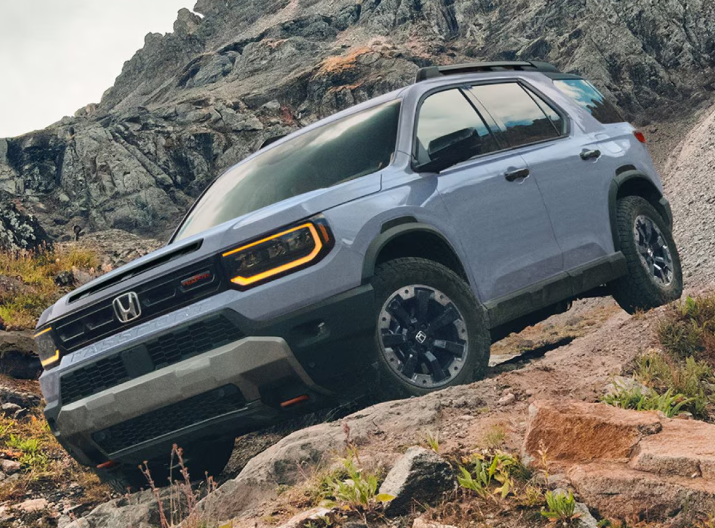
When we look at an SUV such as the Honda Passport, horsepower, cargo space, towing capacity, and off-road hardware usually steal the spotlight. Yet there is another number that can have a surprisingly large effect on everyday ownership: Honda Passport gas tank size.
A larger fuel tank can mean fewer stops on a road trip, more freedom when exploring remote areas, and less anxiety when the next gas station is miles away. But tank capacity alone doesn't tell the whole story. Fuel economy, driving conditions, trim level, terrain, and even tire choice determine how far we can actually travel between fill-ups.
For the 2026 Honda Passport, Honda lists an 18.5-gallon fuel tank across the Passport lineup. That is roughly 70 liters. Interestingly, the redesigned 2026 model holds slightly less fuel than the 2025 Passport, which carried a 19.5-gallon tank, or approximately 73.8 liters.
That one-gallon difference might sound significant, but the real-world story is more nuanced.
Let's dig into the numbers.
Content in this publication
- What Is the Honda Passport Gas Tank Size?
- Why Did the 2026 Honda Passport Tank Get Smaller?
- How Far Can a Honda Passport Go on a Full Tank?
- 2026 Honda Passport TrailSport Gas Tank Size
- 2025 Honda Passport Gas Tank Size
- 2024 Honda Passport Gas Tank Capacity
- 2020-2022 Honda Passport Gas Tank Size
- Does Every Honda Passport Trim Have the Same Gas Tank?
- What Fuel Does the Honda Passport Use?
- Why Can't I Put 18.5 Gallons Into My 18.5-Gallon Tank?
- Can You Overfill a Honda Passport Gas Tank?
- Honda Passport Capless Fuel Filler
- Honda Passport Tank Size vs. Fuel Economy
- Honda Passport Gas Tank Size for Road Trips
- Is the Honda Passport Fuel Tank Big Enough for Towing?
- How to Get More Miles From a Honda Passport Tank
- Should Tank Size Influence Which Passport We Buy?
- Honda Passport Gas Tank Size: Quick Reference
- Closing Thoughts: A Practical Tank for a Practical SUV
- Frequently Asked Questions
What Is the Honda Passport Gas Tank Size?
The answer depends on which model year we're talking about.
The current 2026 Honda Passport gas tank size is 18.5 U.S. gallons. Honda specifies the same capacity for RTL, TrailSport, TrailSport Elite, and their related equipment packages.
Older modern-generation Passports generally used a larger tank.
Here is the quick breakdown:
| Honda Passport Model Year | Fuel Tank Capacity | Approx. Liters |
|---|---|---|
| 2026 | 18.5 gallons | 70.0 L |
| 2025 | 19.5 gallons | 73.8 L |
| 2024 | 19.5 gallons | 73.8 L |
| 2022 | 19.5 gallons | 73.8 L |
| 2021 | 19.5 gallons | 73.8 L |
| 2020 | 19.5 gallons | 73.8 L |
Honda's official specifications confirm the 19.5-gallon capacity for 2020, 2021, 2022, and 2025 models, while the redesigned 2026 Passport moves to 18.5 gallons.
So if somebody simply asks, "How big is a Honda Passport gas tank?" we shouldn't automatically throw out one number without knowing the year.
2026 Honda Passport Fuel Tank Capacity
Honda's 2026 Passport specification sheet lists:
- Fuel tank capacity: 18.5 gallons
- Fuel type: Regular unleaded
- RTL EPA rating: 19 city / 25 highway / 21 combined mpg
- TrailSport EPA rating: 18 city / 23 highway / 20 combined mpg
The capacity remains 18.5 gallons regardless of whether we're looking at an RTL, TrailSport, or TrailSport Elite configuration.
That consistency makes things easier when comparing trims. We don't have to wonder whether choosing the tougher TrailSport means sacrificing fuel capacity.
It doesn't.
Its lower estimated driving range primarily comes from fuel economy rather than a smaller tank.
Why Did the 2026 Honda Passport Tank Get Smaller?
This is one of the more interesting details surrounding the redesigned Passport.
The 2025 Passport carries 19.5 gallons, while the 2026 model holds 18.5 gallons.
That's a reduction of exactly one U.S. gallon.
Why?
Honda's published specification sheets establish the capacity difference, but they do not present that change as a specific engineering decision made solely for one stated reason. So we'd rather not invent an explanation.
Vehicle redesigns involve a complicated jigsaw puzzle underneath the body. Fuel tanks share space with the exhaust, suspension, drivetrain, crash structures, emissions equipment, passenger compartment, and cargo area.
Sometimes moving one puzzle piece forces another to change shape.
Does One Gallon Make a Huge Difference?
Not really.
Suppose we could use every gallon and maintained 21 mpg.
One gallon represents roughly 21 miles of theoretical driving distance.
In practice, the difference becomes even less dramatic because we normally refuel before running the tank completely dry.
That means the move from 19.5 to 18.5 gallons isn't likely to transform the ownership experience.
It's noticeable on paper.
Behind the wheel? Much less so.
How Far Can a Honda Passport Go on a Full Tank?
Here's where gas tank size becomes useful.
Fuel capacity tells us how much gasoline the Passport carries. Fuel economy tells us how efficiently it uses that gasoline.
Combine the two and we get a rough theoretical range.
The basic formula is:
Fuel tank capacity × miles per gallon = theoretical driving range
Easy enough.
But don't treat that result like a countdown timer. Real cars aren't laboratory equations rolling down the highway.
2026 Honda Passport RTL Range
Honda rates the 2026 Passport RTL at:
- 19 mpg city
- 25 mpg highway
- 21 mpg combined
with an 18.5-gallon tank.
Using those numbers, theoretical full-tank range works out to approximately:
| Driving Type | EPA MPG | Theoretical Range |
|---|---|---|
| City | 19 mpg | 352 miles |
| Combined | 21 mpg | 389 miles |
| Highway | 25 mpg | 463 miles |
That highway figure catches the eye.
In ideal conditions, an RTL cruising efficiently on the interstate can theoretically cover a substantial distance between gas stations.
Why Real Range Will Usually Be Lower
Remember that multiplying tank capacity by EPA mpg gives us an illustration, not a guarantee.
Actual mileage changes with:
- Traffic
- Driving speed
- Temperature
- Elevation
- Wind
- Tire pressure
- Cargo
- Passengers
- Towing
- Acceleration habits
- Air-conditioning use
- Road surface
- Terrain
So consider these numbers a ruler, not a prophecy.
2026 Honda Passport TrailSport Gas Tank Size
Adventure-oriented trims don't get a larger tank.
The 2026 Passport TrailSport also carries 18.5 gallons. The same is true for TrailSport Elite and associated packages.
The difference appears in consumption.
Honda lists TrailSport versions at 18 mpg city, 23 mpg highway, and 20 mpg combined.
Theoretical range therefore looks approximately like this:
| Driving Type | MPG | Theoretical Range |
|---|---|---|
| City | 18 mpg | 333 miles |
| Combined | 20 mpg | 370 miles |
| Highway | 23 mpg | 426 miles |
Those numbers still give the Passport respectable road-trip legs.
But we're trading a little efficiency for hardware designed with more serious off-pavement driving in mind.
Why TrailSport Uses More Fuel
An adventure-focused SUV doesn't move through the air and roll along pavement under exactly the same conditions as a purely road-oriented version.
The 2026 TrailSport uses 275/60R18 all-terrain tires and an off-road-tuned suspension, among its distinguishing equipment.
All-terrain tires can bring advantages when pavement ends, but maximizing mpg isn't their entire mission.
Think hiking boots versus running shoes.
Both get us somewhere. They're simply optimized differently.
2025 Honda Passport Gas Tank Size
The 2025 Passport is an important model year because it sits immediately before the redesigned 2026 version.
Its tank is larger.
Honda lists a 19.5-gallon fuel tank for:
- Passport EX-L
- Passport TrailSport
- Passport Black Edition
All three trims are officially rated at 19 mpg city, 24 mpg highway, and 21 mpg combined.
That gives us a theoretical combined range of:
19.5 × 21 = 409.5 miles
Again, that's mathematical range rather than promised real-world range.
Nevertheless, it helps illustrate what that extra gallon means.
2024 Honda Passport Gas Tank Capacity
The 2024 Passport follows essentially the same fuel-capacity formula as the 2025 model.
We get 19.5 gallons, or roughly 73.8 liters.
For shoppers comparing used Passports with the redesigned version, this detail may be useful. A 2024 or 2025 model physically carries about one gallon more gasoline than a 2026 Passport.
Would we make an entire vehicle-buying decision around that?
Probably not.
Tank size is one ingredient in a much bigger recipe involving comfort, technology, capability, price, reliability, fuel economy, and how we actually plan to use the SUV.
2020-2022 Honda Passport Gas Tank Size
Earlier examples of the revived Passport follow the same 19.5-gallon theme.
Official Honda specifications show:
- 2020 Passport: 19.5 gallons
- 2021 Passport: 19.5 gallons
- 2022 Passport: 19.5 gallons
That consistency is helpful when shopping used.
We don't have to navigate a maze of dramatically different capacities among these model years.
Honda Passport Fuel Tank Size in Liters
American specifications naturally use U.S. gallons, but many drivers prefer liters.
The conversion is straightforward:
1 U.S. gallon = approximately 3.785 liters
Therefore:
- 18.5 gallons ≈ 70.0 liters
- 19.5 gallons ≈ 73.8 liters
Honda's own documentation for the earlier 19.5-gallon Passport lists the equivalent as 73.8 liters.
So when browsing international forums or comparing specifications that use metric measurements, don't be surprised if the numbers suddenly look much bigger.
The tank didn't grow overnight. The measuring cup changed.
Does Every Honda Passport Trim Have the Same Gas Tank?
Within the current 2026 lineup, yes.
Honda specifies 18.5 gallons across all listed versions, including RTL and TrailSport-based configurations.
Likewise, Honda lists the three 2025 trims with identical 19.5-gallon tanks.
That's good news when trim shopping.
You can focus on the equipment you actually care about instead of wondering whether the more expensive version secretly gives you a bigger fuel tank.
Does AWD Change Honda Passport Fuel Capacity?
Tank capacity and fuel economy aren't the same thing.
On Passport years where drivetrain configurations differ, a drivetrain can influence fuel consumption without necessarily changing physical tank capacity.
That's why it's better to separate two questions:
How much gasoline can it hold?
and
How quickly does it use that gasoline?
They sound similar, but they answer very different ownership concerns.
What Fuel Does the Honda Passport Use?
Here's some welcome news for anyone who doesn't enjoy paying premium prices.
Honda lists regular unleaded gasoline as the recommended fuel for the 2026 Passport.
Honda's documentation for the 2021 Passport further specifies unleaded gasoline with a pump octane rating of 87 or higher.
In other words, we don't need to feed the Passport champagne when regular fuel is what Honda calls for.
That matters because fuel-cost calculations aren't just about tank size.
They're about:
Tank capacity × price per gallon
How Much Does It Cost to Fill a Honda Passport?
Gas prices change constantly, so it's more useful to use a formula than an outdated fixed figure.
For a 2026 Passport:
18.5 × local gasoline price = approximate cost from completely empty
For example:
At $3.00 per gallon:
18.5 × $3.00 = $55.50
At $3.50:
18.5 × $3.50 = $64.75
At $4.00:
18.5 × $4.00 = $74.00
For a 19.5-gallon Passport at the same prices:
| Price per Gallon | 18.5-Gallon Tank | 19.5-Gallon Tank |
|---|---|---|
| $3.00 | $55.50 | $58.50 |
| $3.50 | $64.75 | $68.25 |
| $4.00 | $74.00 | $78.00 |
| $4.50 | $83.25 | $87.75 |
Of course, we almost never arrive at the station with literally zero fuel left.
So our actual receipt should normally be lower.
Why Can't I Put 18.5 Gallons Into My 18.5-Gallon Tank?
This question causes plenty of confusion.
Imagine the fuel gauge says "empty," we fill up, and the pump stops at 15 or 16 gallons.
Did Honda give us the wrong tank?
No.
A vehicle's rated tank capacity doesn't mean the driver is supposed to consume every last drop before refueling.
Fuel gauges, low-fuel warnings, tank geometry, fuel-system design, remaining usable fuel, and other variables mean the quantity dispensed at the pump can differ from the tank's published total capacity.
Don't Try to Prove the Tank Capacity
Trying to run an SUV completely dry just to see whether the brochure is correct is a lousy experiment.
The sensible approach is boring—but much cheaper.
Refuel when the vehicle tells us fuel is running low.
A gasoline tank is not something we need to "benchmark."
Can You Overfill a Honda Passport Gas Tank?
Once the fuel nozzle clicks off normally, don't make a habit of squeezing in extra gasoline simply to round the price to the next dollar.
Modern fuel systems include evaporative-emissions equipment designed to manage fuel vapors.
The pump's automatic shutoff exists for a reason.
We aren't packing a suitcase and trying to sit on the lid.
More isn't necessarily better.
Honda Passport Capless Fuel Filler
Modern Passport models have used Honda's capless refueling design.
Instead of unscrewing and reinstalling a traditional fuel cap, we insert the pump nozzle into the filler opening.
Honda documentation for the Passport instructs drivers to use the correct refueling procedure and identifies the vehicle's recommended fuel along with tank capacity.
It's a small convenience, but anyone who has ever left a gas cap dangling against the paint will understand the appeal.
What If You Need to Add Fuel From a Portable Container?
Capless systems require the proper funnel or filling procedure rather than forcing an unsuitable nozzle or random object into the filler mechanism.
If we're dealing with an emergency fuel container, the owner's manual for the specific Passport model year should be our first reference.
That last part matters.
Vehicle procedures evolve, and guessing around fuel-system hardware is rarely a clever shortcut.
Honda Passport Tank Size vs. Fuel Economy
Here's the distinction worth remembering.
Tank size determines how much fuel we carry.
Fuel economy determines how efficiently we use it.
A big tank attached to a thirsty vehicle might provide less range than a small tank attached to an efficient one.
That's why simply saying "19.5 gallons is better than 18.5 gallons" misses the point.
Range is the result we're really chasing.
What Affects Real Honda Passport Range?
If our Passport isn't matching a simple tank-size-times-MPG calculation, plenty of perfectly normal factors may explain the difference.
Common examples include:
- Lots of short trips
- Heavy stop-and-go traffic
- Aggressive acceleration
- High highway speeds
- Cold weather
- Mountain driving
- Towing
- Roof-mounted cargo
- Extra vehicle weight
- Underinflated tires
- Extended idling
- Rough terrain
A loaded Passport climbing a mountain while pulling a trailer isn't going to sip fuel like an empty SUV cruising across flat pavement at a steady speed.
Physics always sends the bill.
Honda Passport Gas Tank Size for Road Trips
This is arguably where the Passport's fuel capacity matters most.
An approximately 18.5- to 19.5-gallon tank gives the modern Passport enough capacity to cover meaningful distances before stopping, particularly during efficient highway travel.
For many road trips, bathroom breaks, food stops, and passenger fatigue will probably arrive before the physical tank capacity becomes a serious limitation.
Still, remote travel changes the equation.
Plan Fuel Stops Before Off-Road Trips
TrailSport owners are more likely to venture into places where fuel stations aren't glowing at every interstate exit.
Before heading into a remote area, we should consider:
- Distance to the destination.
- Distance to the next reliable fuel station.
- Expected terrain.
- Weather.
- Vehicle load.
- Expected mpg.
- A reasonable safety margin.
Never plan a remote journey around the absolute maximum theoretical range.
That's like planning a flight to land with fumes in the tank.
Technically optimistic. Practically unnecessary.
Is the Honda Passport Fuel Tank Big Enough for Towing?
The 2026 Passport is rated for up to 5,000 pounds of towing capacity in Honda's published specifications.
But towing range isn't the same as unloaded driving range.
Pulling a trailer increases the amount of energy required to move the vehicle—sometimes substantially.
Wind resistance becomes particularly important.
A tall trailer can behave like a parachute that forgot which direction it was supposed to pull.
So if we're towing, don't estimate our next gas stop using ordinary unloaded EPA mileage.
Leave more margin.
How to Get More Miles From a Honda Passport Tank
We can't magically enlarge the tank from the driver's seat, but we can make each gallon work harder.
Some practical habits include:
- Keep tires properly inflated.
- Accelerate progressively rather than aggressively.
- Anticipate traffic instead of constantly braking and accelerating.
- Remove unnecessary roof cargo when it's not needed.
- Avoid excessive idling.
- Maintain sensible highway speeds.
- Keep up with required maintenance.
- Use the correct engine oil.
- Avoid carrying unnecessary weight.
- Combine short errands where practical.
None of these tricks turns a Passport into a tiny hybrid.
But efficiency gains accumulate.
A few mpg over hundreds of miles can mean one less fuel stop—and on a long trip, that's a win.
Should Tank Size Influence Which Passport We Buy?
It can be part of the decision.
It just shouldn't dominate it.
For most buyers, the difference between a 19.5-gallon 2025 Passport and an 18.5-gallon 2026 Passport will matter less than the broader changes between the vehicles.
If we frequently drive across remote regions, towing or carrying outdoor equipment, fuel range deserves more attention.
For suburban commuting?
Probably less.
The smartest comparison looks at:
- Fuel tank capacity
- Realistic mpg
- Total driving range
- Fuel price
- Driving environment
- Towing requirements
- Maintenance
- Purchase price
- Features
- Comfort
Tank capacity is one chapter, not the whole novel.
Honda Passport Gas Tank Size: Quick Reference
If we want the answer without all the arithmetic, here it is.
2026 Honda Passport: 18.5 gallons, approximately 70 liters.
2025 Honda Passport: 19.5 gallons, approximately 73.8 liters.
2020-2022 Honda Passport: 19.5 gallons.
Recommended 2026 fuel: Regular unleaded.
2026 RTL EPA rating: 19 city / 25 highway / 21 combined mpg.
2026 TrailSport EPA rating: 18 city / 23 highway / 20 combined mpg.
That gives the modern Passport enough fuel capacity for roughly 350-400 miles of theoretical combined travel depending on model year, trim, efficiency, and driving conditions.
Real-world results will vary.
Closing Thoughts: A Practical Tank for a Practical SUV
The Honda Passport gas tank size is generous enough to suit the vehicle's mission.
Earlier modern Passports use a 19.5-gallon tank, while the redesigned 2026 Honda Passport moves to 18.5 gallons. Despite losing one gallon of capacity, the Passport remains capable of covering substantial highway distances between fuel stops.
For us, the more useful question isn't simply, "How many gallons does it hold?"
It's:
How far will those gallons take us?
That's where tank size, fuel economy, driving style, terrain, and vehicle configuration all meet.
If we're commuting, the difference may barely register. If we're towing across open country or pointing a TrailSport toward the middle of nowhere, range planning becomes considerably more important.
Either way, knowing the numbers means fewer surprises at the pump—and that's something every Passport owner can appreciate.
Frequently Asked Questions
1. How many gallons does a Honda Passport hold?
The 2026 Honda Passport holds 18.5 gallons of gasoline. The 2025 Passport has a larger 19.5-gallon fuel tank. Capacity therefore depends on model year.
2. How many liters is the Honda Passport fuel tank?
An 18.5-gallon tank equals approximately 70 liters. A 19.5-gallon Passport tank is approximately 73.8 liters.
3. How far can a Honda Passport travel on one tank?
A 2026 RTL rated at 21 mpg combined has a theoretical full-tank range of about 389 miles using its 18.5-gallon capacity. TrailSport models rated at 20 mpg combined work out to roughly 370 theoretical miles. Actual range varies substantially with driving conditions.
Honda specifies regular unleaded fuel for the 2026 Passport. Earlier Honda Passport documentation specifies unleaded gasoline with an octane rating of 87 or higher.
5. Is the Honda Passport TrailSport gas tank larger?
No. For 2026, Honda lists the RTL, TrailSport, and TrailSport Elite configurations with the same 18.5-gallon fuel tank. TrailSport's lower EPA fuel-economy figures—not a different tank size—are what reduce its estimated driving range compared with the RTL.
If you want to know other articles similar to Honda Passport Gas Tank Size: Capacity, Range, and Fuel Guide you can visit the category Service and Parts.
Honda Passport Key Fob Battery Replacement: Complete DIY Guide
Honda Passport Cargo Space: Dimensions, Capacity, and Real-World Usability

Nissan Rogue Weight: Curb Weight, GVWR, Trims, and Generations Explained
Nissan Rogue Tire Pressure: The Complete PSI Guide
Nissan Rogue Wiper Blade Size: Complete Year-by-Year Guide
Nissan Rogue Oil Type: Complete Guide by Year, Engine, and Viscosity
Leave a Reply
More content of your interest