

Honda Passport Reliability by Year: A Complete Guide From 1994 to 2026

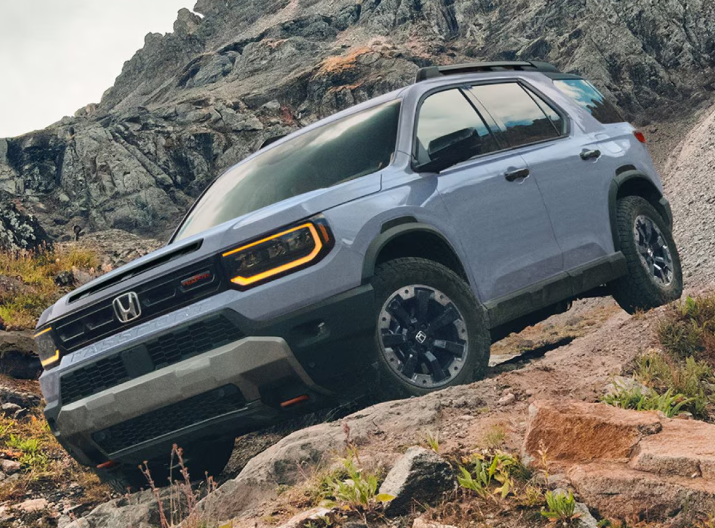
If we are shopping for a used midsize SUV, Honda Passport reliability by year matters far more than the badge sitting on the grille. Honda has a strong reputation for durable vehicles, but the Passport has a rather unusual family tree. Some Passport model years are genuinely old-school trucks. Others are modern Honda crossovers. And the newest version is practically a different animal again.
That means saying, “It’s a Honda, so it must be reliable,” is a little too simple.
The Passport originally arrived for the 1994 model year as part of Honda's collaboration with Isuzu. Those early SUVs were closely related to the Isuzu Rodeo. The name disappeared after 2002, then Honda resurrected it for 2019 as a modern two-row SUV. Honda identifies the 2026 Passport as the fourth generation of the nameplate.
So, which Honda Passport years have aged gracefully? Which years deserve a closer inspection? And does a newer Passport automatically mean a more dependable Passport?
Let's dig into every era.
Content in this publication
- Honda Passport Reliability by Year at a Glance
- Understanding the Three Very Different Passport Eras
- 1994 Honda Passport Reliability
- 1996 Honda Passport Reliability
- 1997 Honda Passport Reliability
- 1998 Honda Passport Reliability
- 1999 Honda Passport Reliability
- 2000 Honda Passport Reliability
- 2001 Honda Passport Reliability
- 2002 Honda Passport Reliability
- Why There Was No Honda Passport From 2003 to 2018
- 2019 Honda Passport Reliability
- 2020 Honda Passport Reliability
- 2021 Honda Passport Reliability
- 2022 Honda Passport Reliability
- 2023 Honda Passport Reliability
- 2024 Honda Passport Reliability
- 2025 Honda Passport Reliability
- 2026 Honda Passport Reliability
- Honda Passport Years We Would Inspect Most Carefully
- Which Honda Passport Years Look Most Attractive Used?
- Does Mileage Matter More Than Model Year?
- How Long Can a Honda Passport Last?
- What to Check Before Buying a Used Honda Passport
- Reliability Is About the Individual Passport, Not Just the Year
- Final Thoughts on Honda Passport Reliability by Year
- Frequently Asked Questions
Honda Passport Reliability by Year at a Glance
Before going year by year, here is our practical overview. These are not laboratory reliability scores. Instead, they represent a used-car buying perspective based on vehicle age, generation maturity, known recall history, mechanical complexity, and the amount of long-term information available.
| Model Year | Reliability Outlook | Main Consideration |
|---|---|---|
| 1994 | Fair for its age | Very old vehicle; condition dominates |
| 1995 | Fair | Age, maintenance and corrosion |
| 1996 | Fair | Mechanical wear now matters most |
| 1997 | Fair | Last first-generation year |
| 1998 | Caution | Second-generation launch; frame corrosion concern |
| 1999 | Caution | Frame condition is crucial |
| 2000 | Caution | Rust and age-related repairs |
| 2001 | Caution | Frame inspection essential |
| 2002 | Caution | Final old-generation year; corrosion risk |
| 2003–2018 | — | Passport was not produced |
| 2019 | Mixed | Modern generation launch; multiple campaigns |
| 2020 | Mixed | Fuel pump, mirror and other recall considerations |
| 2021 | Mixed | Several overlapping recall/service campaigns |
| 2022 | Good with inspection | Improved maturity, but several known campaigns |
| 2023 | Good with inspection | Mature platform; recall history still matters |
| 2024 | Strong used-buy candidate | Late-generation maturity |
| 2025 | Strong used-buy candidate | Final year of established generation |
| 2026 | Too early to judge | Completely redesigned generation |
That table gives us the map. Now let's drive the road.
Understanding the Three Very Different Passport Eras
1994–2002: The Isuzu-Based Passport
The original Passport was fundamentally different from today's crossover.
Honda entered the growing SUV market using a vehicle produced through its collaboration with Isuzu. The first Passport launched for 1994, and the second-generation version appeared for 1998. Production ended after the 2002 model year.
These were rugged, body-on-frame SUVs rather than the softer unibody family crossovers Honda later became known for.
Today, their reliability depends less on the original engineering reputation and more on what happened during the last quarter-century.
A perfectly maintained 1997 Passport may be a better ownership proposition than a neglected 2001. Once vehicles become this old, maintenance history can overpower model-year differences.
2019–2025: The Modern Honda Passport
After a long absence, the Passport returned for 2019.
This time Honda developed the SUV around its own modern architecture, with the Passport sharing significant engineering DNA with the Pilot. The revived version used a 3.5-liter V6 and nine-speed automatic transmission, while offering five seats instead of the Pilot's three-row layout.
This is the generation most used-Passport shoppers are considering today.
2026 and Beyond: Another Fresh Start
The 2026 Passport begins a completely redesigned generation.
Honda lists a 285-horsepower 3.5-liter V6, 10-speed automatic transmission and standard i-VTM4 all-wheel drive across the current range.
Those specifications sound promising, but reliability is a marathon rather than a 100-meter sprint. A vehicle that has been on sale for months simply cannot have the same long-term evidence as one that has accumulated five or six years of real-world mileage.
1994 Honda Passport Reliability
The 1994 Passport introduced Honda customers to a type of vehicle that looked nothing like the company's Civics and Accords.
At this age, reliability should be judged vehicle by vehicle.
A 1994 Passport has now survived more than three decades. Rubber seals, suspension bushings, cooling components, electrical connectors and drivetrain seals may all have deteriorated simply because time never takes a vacation.
We would focus less on the odometer and more on maintenance documentation.
A low-mileage example that spent years sitting can hide just as many surprises as one with considerably higher mileage.
1995 Honda Passport Reliability
The 1995 Passport benefits from being past the first model year, but age remains the elephant in the garage.
Look closely underneath the vehicle. Check for corrosion, fluid leaks, deteriorated suspension components and evidence of poor repairs.
If the engine runs smoothly, the transmission behaves properly and the chassis is structurally clean, one can still be an interesting enthusiast SUV. But we would not buy a 1995 Passport expecting modern-Honda ownership costs.
1996 Honda Passport Reliability
By 1996 the first-generation Passport was an established product rather than a brand-new experiment.
That can be positive from a historical reliability standpoint, but three decades of ownership matter more today.
Listen for drivetrain noises, inspect every fluid and check four-wheel-drive operation where equipped. Old SUVs often reveal their history through vibrations, clunks and steering play long before a warning light appears.
1997 Honda Passport Reliability
The 1997 Passport was the final model year before the major 1998 redesign.
Generally, late years of an established generation can be appealing because manufacturers have had several production cycles to smooth out early problems.
Still, we should not confuse maturity with immortality.
Today, the biggest question is not whether a 1997 Passport was reliable when new. It is whether the specific Passport in front of us has been cared for during the decades since.
1998 Honda Passport Reliability
The Second Generation Changes the Equation
The Passport was redesigned for 1998.
Unfortunately, this era has one particularly important issue that every prospective owner should understand: structural corrosion.
A federal safety recall covered certain 1998–2002 Passports because excessive corrosion could develop around the forward mounting point of the rear suspension lower link. Official recall documents identify all five model years in the affected range, with applicability ultimately depending on the individual vehicle.
Why Frame Condition Matters So Much
An old stereo can be replaced.
A tired shock absorber can be replaced.
Serious structural corrosion is another story.
If we are considering a 1998 Passport, getting underneath it is not optional. Structural condition should be one of the first things inspected.
1999 Honda Passport Reliability
Mechanically, a well-maintained 1999 Passport can still run faithfully. But once again, corrosion can turn an otherwise healthy truck into something we would walk away from.
Vehicles that spent their lives in regions using large amounts of road salt deserve particularly careful inspection.
A beautiful interior and shiny paint can distract us like stage lights. The important story may be underneath.
2000 Honda Passport Reliability
By 2000, the second-generation Passport had accumulated a few production years, but today's ownership concerns are dominated by age and structural integrity.
Check for:
- Serious underbody corrosion
- Fluid leakage
- Rough or delayed transmission operation
- Suspension looseness or clunks
- Cooling-system neglect
- Warning lights
- Four-wheel-drive problems
- Incomplete recall repairs
- Poor-quality previous rust repairs
A professional pre-purchase inspection can easily save more money than it costs.
2001 Honda Passport Reliability
The 2001 Passport follows roughly the same reliability pattern.
If the frame is clean and the mechanical condition is sound, there is nothing inherently magical about the 2001 model year that makes it unusable.
But these SUVs are now old enough that buying one without inspecting the chassis would be like buying a house after looking only at the curtains.
The foundation matters more.
2002 Honda Passport Reliability
The 2002 model closed the book on the original Passport era.
You may be interested in reading Toyota Corolla AE86 Engine Swap – The Ultimate Guide
As a final-year model, it had the benefit of a mature underlying design, but it remains included in the 1998–2002 corrosion recall population described by official documents.
For collectors or people who simply love old-school SUVs, a clean 2002 can be appealing.
For someone who just wants uncomplicated everyday transportation, however, a modern Passport usually makes more sense.
Why There Was No Honda Passport From 2003 to 2018
Honda discontinued the Passport after 2002.
The company then sold the Honda Pilot as its mainstream midsize SUV while the Passport name remained dormant. The nameplate eventually returned for the 2019 model year.
That explains the enormous jump we see in used-car listings: a 2002 Passport may appear beside a 2019 Passport even though the two vehicles have almost nothing in common.
2019 Honda Passport Reliability
The Return of the Passport
The 2019 Passport represented a completely different philosophy.
Rather than an Isuzu-based body-on-frame SUV, buyers received a modern Honda crossover with a 3.5-liter V6 and nine-speed automatic.
The basic mechanical package was not completely unfamiliar because of its relationship with other Honda products, but 2019 was still the first Passport production year of this generation.
And first years often deserve extra homework.
2019 Passport Recall History Matters
Certain 2019 Passports have been included in several safety campaigns over the years.
For example, Honda recalled certain 2019 Passports over a hood striker issue that could eventually allow the hood to open while driving.
Certain 2019–2020 Passports were also included in a fuel-pump recall involving an impeller that could deform and potentially cause the fuel pump to stop operating.
More recently, additional campaigns have affected portions of the early modern-Passport population.
That does not automatically make every 2019 Passport unreliable. It makes VIN verification especially important.
2020 Honda Passport Reliability
The 2020 Passport was no longer a launch-year vehicle, which normally makes it somewhat easier to evaluate.
Still, its recall history deserves attention.
Certain 2020 Passports were covered by the fuel-pump campaign, and 2020–2022 Passports were included in a recall involving side-view mirror heating pads that could allow the mirror glass to detach.
When test-driving one, we would pay particular attention to:
- Smooth transmission operation
- Infotainment stability
- Camera operation
- All dashboard warning lights
- Driver-assistance functions
- Power accessories
- Complete recall records
A serviced 2020 with documented history can still make plenty of sense. An unknown-history example deserves considerably more caution.
2021 Honda Passport Reliability
The 2021 Passport sits in an interesting position.
The underlying platform had matured, but this model year overlaps several Honda campaigns.
Honda issued a warranty extension concerning certain 2021–2022 Passports equipped with idle-stop functionality after vehicles could occasionally fail to restart automatically following an idle-stop event.
Certain 2021–2023 Passports were also included in a brake-booster-related recall because an improperly assembled fastener could potentially allow the brake master cylinder to separate from the booster.
In addition, certain 2019–2021 Passports became part of a 2026 recall concerning the front passenger occupant-classification seat-weight sensor.
The lesson?
Don't judge a 2021 solely by its model year. Check its VIN.
2022 Honda Passport Reliability
A More Mature Passport With a Fresh Face
The 2022 model year brought styling changes and introduced the TrailSport name to the Passport lineup.
Mechanically, however, the platform was no newborn.
That maturity is attractive for used buyers.
The 2022 model still intersects with several campaigns, including the side-view mirror recall and some vehicles covered by the brake-booster campaign. The 2021–2022 idle-stop warranty extension also applies to eligible vehicles.
So we would describe the 2022 as potentially appealing rather than automatically trouble-free.
2022 Passport Used-Buying Sweet Spot?
It can be.
Depreciation has had time to work, yet the vehicle remains modern enough to deliver current-feeling safety and convenience equipment.
Find one with consistent maintenance, a clean inspection and completed campaigns, and the 2022 becomes much more compelling.
2023 Honda Passport Reliability
The 2023 Passport benefits from a mature platform.
However, there are several recall items worth knowing.
Certain 2021–2023 Passports were included in the brake-booster assembly campaign. Separately, a small population of 2023 Passport and Ridgeline vehicles was recalled because an improperly secured inner ball-joint housing in the steering gearbox could potentially detach from the steering rack. NHTSA listed only 245 potentially affected vehicles across that steering campaign, illustrating why we should look at VIN applicability rather than assuming every vehicle from an entire model year shares the defect.
Certain 2023–2024 Passports were also included in a fuel-filler-pipe recall announced in late 2024.
A New 2026 Corrosion Recall Also Affects 2019–2023 Models
There is another important development for used buyers.
In June 2026, Honda recalled certain 2019–2023 Passports originally sold in designated salt-belt areas because corrosion at rear-subframe suspension mounting points could lead to rear suspension component failure. NHTSA's filing lists 89,674 potentially involved Passports.
This makes a VIN check particularly important for 2019–2023 vehicles that have lived in road-salt regions.
2024 Honda Passport Reliability
By 2024, the modern Passport's platform was thoroughly mature.
That is exactly the territory many used-car shoppers like: late in a generation, with years of production experience behind it.
The 2024 model still has a relevant recall to check. Certain 2023–2024 Passports were recalled over a fuel filler neck tube and pipe issue that could potentially create a fuel leak. Dealers were instructed to inspect and repair affected vehicles as necessary.
Once that and any other VIN-specific campaigns are verified, a properly maintained 2024 deserves serious consideration.
2025 Honda Passport Reliability
The Final-Year Advantage
The 2025 Passport represents the final model year of the outgoing modern generation before the complete 2026 redesign.
From a used-buying perspective, that is appealing.
Manufacturers generally understand a platform far better near the end of its life cycle than during its debut. Assembly procedures have matured, suppliers have accumulated experience and early production quirks have had years to surface.
That does not guarantee perfection.
It simply gives the 2025 an advantage that the completely redesigned 2026 cannot yet claim: maturity.
You may be interested in readingToyota Corolla AE86 Engine Swap – The Ultimate GuideYou may be interested in reading
 Does the Toyota Camry Have CVT Transmission?
Is the 2025 Honda Passport the Reliability Pick?
If our objective is a relatively new Passport while avoiding the uncertainty associated with the first year of a redesign, the 2025 deserves a place near the top of the shopping list.
We would still demand maintenance documentation and a VIN recall check.
Reliability should never be purchased by model year alone.
2026 Honda Passport Reliability
Promising, but Long-Term Reliability Is Unknown
The 2026 Passport is essentially the new kid walking into school wearing brand-new boots.
Honda equips it with a 285-hp 3.5-liter V6, a 10-speed automatic and standard i-VTM4 all-wheel drive. The range includes RTL, TrailSport and TrailSport Elite variants.
We like that Honda retained a naturally aspirated V6 rather than turning the Passport into an entirely unfamiliar powertrain experiment.
But new-generation reliability cannot be proven overnight.
The 2026 Passport Already Has a Recall to Check
In July 2026, Honda notified NHTSA of a recall involving certain 2026 Passport and Pilot vehicles whose rear subframe bolts may have been improperly tightened. NHTSA campaign 26V424 covered 3,933 potentially affected vehicles across the two models, with dealers instructed to inspect and replace rear-subframe bolts as necessary.
This does not establish that the entire 2026 generation is unreliable. Early recalls can involve a limited production population and be fully corrected.
It does reinforce why we are reluctant to declare a brand-new generation a long-term reliability champion after only one model year.
Honda Passport Years We Would Inspect Most Carefully
Rather than treating any year as an automatic rejection, we would increase our inspection intensity for certain groups.
The 1998–2002 models deserve careful structural inspection because of the rear suspension mounting-area corrosion recall.
The 2019–2021 models sit within several overlapping modern recall campaigns and represent the earlier portion of the revived generation.
The 2023 model is mechanically mature but intersects with brake, fuel-system, steering and rear-subframe campaign considerations depending on VIN.
The 2026 Passport is simply too new for long-term reliability conclusions.
Remember: recall coverage is VIN-specific. NHTSA explicitly allows owners and buyers to enter a VIN to identify unrepaired recalls, and repaired recalls may no longer appear as open campaigns in a VIN search.
Which Honda Passport Years Look Most Attractive Used?
For shoppers focused on the modern Passport, the 2024 and 2025 models deserve particular attention because they combine late-generation maturity with relatively young vehicle age.
The 2022 can also offer a compelling balance of depreciation, features and platform maturity if its service and recall history checks out.
Older vehicles can cost less upfront, but a cheap purchase price can quickly evaporate when deferred maintenance walks through the door carrying a toolbox.
Does Mileage Matter More Than Model Year?
Sometimes, yes.
Imagine two Passports.
One is a 2022 with 45,000 miles, complete service records, clean fluids and careful ownership.
The other is a 2024 with 25,000 miles but missed maintenance, accident repairs and four mismatched tires.
Which would we rather own?
Probably the older one.
Mileage is only one chapter of the story.
Maintenance tells us who wrote the rest.
How Long Can a Honda Passport Last?
There is no responsible mileage number that guarantees how long every Passport will survive.
A vehicle's life depends heavily on maintenance, climate, driving conditions, accident history and previous ownership.
What we can say is that preventive maintenance gives the Passport's naturally aspirated V6 platform a much better opportunity to age well.
Oil changes are obvious, but reliability also depends on transmission servicing, cooling-system condition, brake-fluid maintenance, drivetrain fluids, suspension inspection and addressing leaks before they become expensive.
Treat maintenance like brushing your teeth: boring today, valuable tomorrow.
What to Check Before Buying a Used Honda Passport
A used Passport deserves more than a five-minute loop around the dealership.
We recommend checking:
- VIN recall status: Search the exact 17-character VIN rather than relying on model-year recall lists.
- Service history: Regular records beat vague promises every time.
- Transmission behavior: Test it cold and warm, at low speeds and during highway acceleration.
- Underbody condition: Especially important for vehicles that lived in areas where road salt is heavily used.
- Electronics: Test cameras, infotainment, sensors, power tailgate, climate control and every switch.
- Warning lights: Make sure they illuminate during startup and then extinguish normally.
- Fluid condition: Look for leaks and signs of neglected servicing.
- Tire wear: Uneven wear may reveal alignment or suspension trouble.
- Cold start: Strange noises are easier to detect before the engine warms up.
- Independent inspection: A qualified technician can uncover problems that photographs and Carfax-style reports cannot.
Reliability Is About the Individual Passport, Not Just the Year
This may be the most important point in our entire Honda Passport reliability-by-year guide.
Model years help us narrow the field.
They do not choose the vehicle for us.
A recall that has already been properly completed may be far less concerning than years of neglected maintenance. Likewise, a theoretically desirable model year can become a terrible purchase if it has structural damage, skipped fluid changes or a mysterious ownership history.
We should use the year as the first filter, not the final verdict.
Final Thoughts on Honda Passport Reliability by Year
The Honda Passport has one of the strangest histories in Honda's lineup.
The 1994–2002 Passports belong to an entirely different automotive era and now need to be judged primarily on physical condition, maintenance and corrosion. The 1998–2002 models deserve particularly careful structural inspection because of the historical rear-suspension mounting-area corrosion campaign.
The 2019 Passport rebooted the name as a modern Honda crossover. Early examples offer plenty of capability but overlap with a greater number of recall considerations.
Moving toward 2022, 2023, 2024 and 2025, we gain the benefits of a more mature platform. For many shoppers, late-generation 2024 and 2025 examples provide an appealing combination of age and proven design maturity.
Then comes 2026, which resets the clock once again.
The redesigned Passport looks capable and retains a naturally aspirated V6, but long-term dependability simply needs time to reveal itself.
If we remember one thing, it should be this: the best Honda Passport is not necessarily the newest or the lowest-mileage example. It is the one with the right model year, documented maintenance, completed recalls and a clean inspection.
That combination is far more valuable than a shiny grille and a persuasive salesperson.
Frequently Asked Questions
1. What is the most reliable Honda Passport year?
Among recent used Passports, late-generation 2024 and 2025 models are particularly attractive because they benefit from several years of development before the complete 2026 redesign. Still, condition, maintenance records and VIN-specific recall history should determine which individual vehicle we purchase.
2. Is the 2019 Honda Passport reliable?
A properly maintained 2019 Passport can provide dependable service, but it was the first year of the revived generation and certain vehicles have been included in multiple safety campaigns. We would verify all recall work, inspect the vehicle carefully and test the nine-speed transmission thoroughly before purchasing.
3. Should we avoid a 2021 Honda Passport?
Not automatically. The 2021 overlaps several recall and service campaigns, including eligible vehicles affected by brake-booster, idle-stop and other issues. A 2021 with completed campaign work and excellent maintenance can be a much better purchase than a newer but neglected SUV.
4. Is the 2026 Honda Passport reliable?
There is not enough long-term evidence yet to make a confident durability judgment. The 2026 Passport begins a redesigned generation and certain vehicles were included in a rear-subframe-bolt recall. Buyers should verify the VIN and recognize that multi-year reliability data will take time to develop.
You may be interested in readingToyota Corolla AE86 Engine Swap – The Ultimate GuideYou may be interested in reading
Does the Toyota Camry Have CVT Transmission?You may be interested in reading
 Toyota Camry Trim Levels 2014: A Detailed Guide to Choosing the Best
5. How do we check a Honda Passport for recalls?
Use the vehicle's 17-character VIN with NHTSA's official recall lookup or Honda's recall system. A model-year recall list tells us which vehicles may be involved, while the VIN tells us whether a particular Passport has an applicable unrepaired campaign.
If you want to know other articles similar to Honda Passport Reliability by Year: A Complete Guide From 1994 to 2026 you can visit the category Blog.
Honda Passport Weight: Curb Weight, Trims, Towing, and What the Numbers Really Mean
Nissan Rogue Reliability: What Owners and Used-Car Buyers Need to Know
Is Peugeot RCZ a Good Car? A Complete Used Buyer’s Guide
Is Mitsubishi Pajero Sport a Good Car? A Complete Ownership Review
BYD Shark 6 Reliability: How Dependable Is This Hybrid Ute?
BYD Shark 6 Insurance Cost: What Should You Expect?
Leave a Reply
More content of your interest