
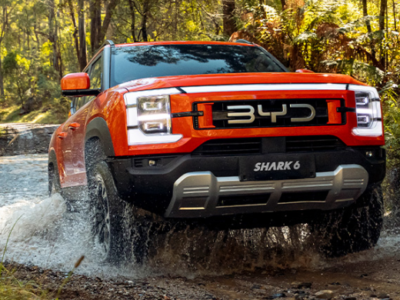
Is BYD Shark 6 a Good Car? An Honest 2026 Review

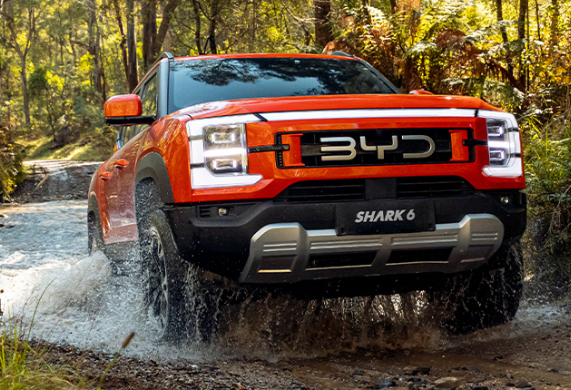
If you are wondering “is BYD Shark 6 a good car?”, the short answer is yes—for the right kind of driver.
The BYD Shark 6 is one of the more unusual vehicles in the dual-cab ute market because it does not follow the traditional diesel formula. Instead, BYD combines a petrol engine, a large plug-in hybrid battery, powerful electric motors, all-wheel drive, and a surprisingly luxurious cabin.
For 2026, the question has become even more interesting because the Australian Shark 6 range has expanded. The familiar Shark 6 Premium is now joined by a Dynamic Cab Chassis and a more powerful Shark 6 Performance. The Premium produces 321 kW and 650 Nm, while the Performance increases combined output to 350 kW and 700 Nm.
So, should we consider the Shark 6 a genuinely good vehicle, or is it simply an impressive specification sheet wrapped around an unproven idea?
Let's look at the things that matter in everyday ownership.
Content in this publication
- Is the BYD Shark 6 Actually a Good Car?
- BYD Shark 6 Specifications at a Glance
- What Makes the BYD Shark 6 Different?
- Is the BYD Shark 6 Good to Drive?
- Is the BYD Shark 6 Fuel Efficient?
- How Far Can a BYD Shark 6 Drive on Electricity?
- Is the BYD Shark 6 Good for Towing?
- Is the BYD Shark 6 Good Off-Road?
- Is the BYD Shark 6 Comfortable?
- Is the BYD Shark 6 Practical?
- What Is the BYD Shark 6 Payload?
- Is the BYD Shark 6 Safe?
- How Reliable Is the BYD Shark 6?
- BYD Shark 6 Pros and Cons
- Is the BYD Shark 6 Good for Families?
- Who Should Buy a BYD Shark 6?
- BYD Shark 6 Premium or Performance: Which Makes More Sense?
- Is the BYD Shark 6 Worth Buying in 2026?
- Final Verdict: Is BYD Shark 6 a Good Car?
- Frequently Asked Questions
Is the BYD Shark 6 Actually a Good Car?
For drivers who primarily use their ute for commuting, family trips, recreational activities, light off-roading, and occasional towing, the BYD Shark 6 is a very compelling package.
It feels less like a traditional work ute and more like a comfortable SUV that happens to have a tray behind the cabin.
That distinction matters.
Traditional diesel utes often make compromises in ride quality and refinement because they are designed around heavy-duty commercial work. The Shark 6 takes almost the opposite approach. Its independent double-wishbone suspension at both ends and electrically driven AWD system prioritize smoothness, acceleration, and everyday comfort.
Reviewers have repeatedly highlighted its comfortable road manners and high-quality interior, although they have also found limitations when the vehicle is pushed into serious off-road conditions.
In other words, the Shark 6 can be a very good car—and a very good ute—but its strengths are different from those of a traditional Toyota HiLux, Ford Ranger, or Isuzu D-Max.
BYD Shark 6 Specifications at a Glance
The 2026 Australian range illustrates how much the Shark lineup has evolved.
| Specification | Shark 6 Premium | Shark 6 Performance |
|---|---|---|
| Engine | 1.5L turbo petrol PHEV | 2.0L turbo petrol PHEV |
| Combined power | 321 kW | 350 kW |
| Combined torque | 650 Nm | 700 Nm |
| Battery | 29.6 kWh Blade Battery | 29.6 kWh Blade Battery |
| Drivetrain | AWD | AWD |
| 0-100 km/h | 5.7 seconds | 5.5 seconds |
| EV range | 100 km NEDC | 80 km WLTP |
| Braked towing | 2,500 kg | 3,500 kg |
| DC charging | Up to 55 kW | Up to 55 kW |
| AC charging | Up to 7 kW | Up to 7 kW |
| Fuel tank | 60 litres | 60 litres |
These figures come from BYD's current Australian specifications. Note that BYD quotes the Premium's electric range under the NEDC test cycle while the Performance figure is stated using WLTP, so those two range numbers should not be treated as a direct apples-to-apples comparison.
And yes, a ute weighing well over 2.7 tonnes reaching 100 km/h in around 5.5 to 5.7 seconds feels every bit as unusual as it sounds.
What Makes the BYD Shark 6 Different?
The heart of the Shark 6 is BYD's DMO Super Hybrid architecture.
Rather than simply putting an electric motor between a conventional engine and gearbox, the Shark has been developed around electrification from the beginning.
Electric motors provide much of the propulsion, while the petrol engine works alongside the hybrid system to support longer-distance driving.
The result is a driving experience much closer to an EV than many conventional hybrids.
Electric Power Changes the Driving Experience
Press the accelerator and there is no long wait for a diesel engine and automatic gearbox to organize themselves.
Electric torque arrives almost immediately.
That gives the Shark 6 an effortless quality around town. A conventional ute can occasionally feel like a pair of steel work boots. The Shark feels more like running shoes.
It is still enormous, of course, but it doesn't constantly remind us of its size and weight through the powertrain.
It Is Extremely Powerful for a Dual-Cab Ute
Even the 321 kW Premium has considerably more outright power than most mainstream diesel utes.
The 2026 Performance increases output to 350 kW and 700 Nm, while its claimed 0-100 km/h time drops to approximately 5.5 seconds.
Acceleration obviously isn't the main reason most people buy a ute.
But effortless power becomes useful when merging onto highways, overtaking, climbing hills, or carrying additional weight.
Is the BYD Shark 6 Good to Drive?
This may be the Shark's biggest strength.
On pavement, it behaves surprisingly well for something so large and heavy.
Independent suspension helps isolate the cabin from bumps, and electric propulsion removes many of the vibrations normally associated with diesel-powered pickups.
CarExpert described the Shark 6 as smooth and comfortable on the road and considered those characteristics among its main advantages as a daily driver.
City Driving
Urban driving is where the plug-in hybrid concept starts making a lot of sense.
If we charge regularly, many shorter journeys can be completed primarily using battery power.
That means quiet departures in the morning, smooth stop-and-go driving, regenerative braking, and potentially much less petrol consumption.
There is still one unavoidable issue: this is a large ute.
Parking garages, narrow streets, and compact parking spaces aren't suddenly going to become larger because our pickup is electrified.
Highway Driving
Highway performance is equally impressive.
There is plenty of power available for overtaking, and the cabin feels more relaxed than many traditional commercial vehicles.
However, owners need to understand how a plug-in hybrid works.
Its excellent efficiency figures depend heavily on maintaining battery charge. Once the battery's state of charge drops, the petrol engine has significantly more work to do.
That leads us to one of the most important parts of this review.
Is the BYD Shark 6 Fuel Efficient?
It can be exceptionally efficient—but the answer depends heavily on how we use and charge it.
BYD quotes 2.0 L/100 km for the Premium when battery state of charge is above 25 percent under its applicable test cycle, while the company quotes 7.9 L/100 km when charge falls below 25 percent. The Performance carries different WLTP figures of 1.3 L/100 km with higher battery charge and 10.5 L/100 km below 25 percent.
Those headline figures need context.
A plug-in hybrid isn't magic.
Charging Is the Secret
Imagine having two fuel tanks: one filled with electricity and another filled with petrol.
If we constantly refill the inexpensive electric one at home, the petrol engine may remain relatively quiet during everyday commuting.
If we never plug the vehicle in, we are carrying a large battery around without fully exploiting its biggest advantage.
That is why the Shark 6 makes significantly more sense for owners who can charge at home or work.
How Far Can a BYD Shark 6 Drive on Electricity?
BYD quotes up to 100 km of electric driving range on the NEDC cycle for the Dynamic and Premium models.
The Performance is rated at 80 km using the WLTP cycle. Again, because the test procedures are different, we should avoid directly interpreting that as the Performance losing precisely 20 km in identical conditions.
Actual electric range varies according to speed, weather, payload, terrain, driving style, climate control use, and other factors.
You may be interested in reading Mitsubishi Pajero Sport vs Ford Everest: Which 4WD SUV Makes More Sense?
Still, the battery is large enough to make electric commuting realistic rather than symbolic.
For someone whose normal round trip is 30 or 40 km, regular overnight charging could dramatically reduce how frequently the petrol engine needs to operate.
Can You Fast-Charge the Shark 6?
Yes.
The Shark 6 supports up to 55 kW DC charging and 7 kW AC charging.
Fifty-five kilowatts isn't particularly fast compared with modern dedicated electric cars, but DC charging on a PHEV is useful.
Most owners will probably get more value from plugging the vehicle into AC power overnight and beginning each morning with a charged battery.
Is the BYD Shark 6 Good for Towing?
This answer depends on which Shark 6 we are discussing.
The Premium has a 2,500 kg braked towing capacity, which remains lower than the 3,500 kg figure commonly associated with heavy-duty dual-cab utes.
The new 2026 Shark 6 Performance changes that dramatically.
BYD upgraded the Performance's powertrain, suspension and braking hardware, bringing maximum braked towing capacity to 3,500 kg.
If we rarely tow anything heavier than a small trailer, boat, or camper, the Premium's 2.5-tonne limit could be perfectly adequate.
For caravans and heavier trailers approaching 3 tonnes or more, however, the Performance is the obvious Shark 6 variant to investigate.
Early driving impressions of the Performance have also suggested that the additional towing capability does not ruin the Shark's comfortable road manners.
Owners should still calculate actual payload, towball mass, GVM and other legal weight limits rather than assuming that a 3,500 kg headline towing figure automatically means every combination is permissible.
Is the BYD Shark 6 Good Off-Road?
Here the answer becomes more nuanced.
The Shark 6 certainly looks ready for adventure.
The Premium offers around 230 mm of unladen ground clearance, a 31-degree approach angle, terrain modes for Mud, Sand and Snow, and a claimed 700 mm wading depth.
For gravel roads, beaches, campsites and moderate trails, that should provide plenty of capability.
Serious four-wheel-drive enthusiasts, however, may find its architecture less convincing.
Where the Shark 6 Falls Behind Traditional 4x4s
Unlike many traditional off-road utes, the Shark does not use a conventional drivetrain with low-range gearing and traditional locking differentials.
Independent testing of earlier Shark 6 versions found that this could become a disadvantage on demanding off-road terrain.
BYD has responded to some of those concerns.
The 2026 Performance introduces a Crawl Mode designed to improve low-speed traction and throttle control off-road.
That's a worthwhile improvement, but it doesn't magically turn the Shark into a traditional mechanically locked rock-crawler.
For most recreational owners, this distinction may barely matter.
For someone regularly crossing difficult remote terrain, it matters a great deal.
Is the BYD Shark 6 Comfortable?
Very.
In fact, comfort is one reason the Shark 6 stands apart from traditional pickups.
The double-wishbone suspension setup at both ends contributes to a more controlled and passenger-friendly ride, while electric propulsion reduces powertrain noise and vibration.
Reviews have consistently identified the interior and road comfort as important Shark 6 strengths.
For people who need a ute but spend 90 percent of their time driving without cargo, that characteristic can be more valuable than extreme off-road ability.
Interior Quality
The cabin doesn't feel as utilitarian as many work-focused pickups.
The Premium includes a large rotating 15.6-inch infotainment display, while BYD specifies a 12.8-inch unit for the work-oriented Dynamic Cab Chassis.
The presentation feels much closer to a contemporary SUV.
That gives the Shark particular appeal to families who want a ute without sacrificing the comfort and technology they would normally expect from a modern crossover.
Is the BYD Shark 6 Practical?
The regular pickup has a claimed 1,200-litre tray capacity, and its dimensions place it firmly in full-size dual-cab territory.
There is also another clever feature that deserves attention: vehicle-to-load.
Vehicle-to-Load Could Be Genuinely Useful
V2L allows energy stored in the battery to power external electrical devices.
That can be useful when camping, working remotely, running tools, powering appliances, or dealing with certain emergency situations.
Rather than carrying a separate generator simply to power equipment, we effectively have a giant mobile battery with us.
For the right owner, V2L could move from being a technological party trick to one of the vehicle's most useful features.
What Is the BYD Shark 6 Payload?
The Shark's hybrid hardware comes with a weight penalty.
The Premium itself weighs around 2,710 kg, while the Performance rises to approximately 2,775 kg.
Earlier Premium specifications put payload around 790 kg, below the roughly one-tonne payload commonly associated with many conventional work utes.
That isn't necessarily a problem for recreational owners.
But tradies who routinely carry large quantities of tools or heavy materials should calculate their expected load carefully.
This is one area where asking whether the Shark is a “good car” and asking whether it is a “good work truck” can produce two different answers.
Is the BYD Shark 6 Safe?
The Shark 6 has performed strongly in independent safety testing.
ANCAP awarded the model a five-star safety rating under its 2025 protocols, applicable to the rated Australian and New Zealand variants from its introduction period.
Its results included 85 percent for adult occupant protection, 87 percent for child occupant protection, 74 percent for vulnerable road-user protection, and 86 percent for safety assist.
Standard safety equipment includes technologies such as autonomous emergency braking, lane-support systems and advanced speed assistance.
You may be interested in readingMitsubishi Pajero Sport vs Ford Everest: Which 4WD SUV Makes More Sense?You may be interested in reading
 Toyota Corolla AE86 Engine Swap – The Ultimate Guide
For families considering the Shark as a daily vehicle, that independent crash-test performance adds considerable reassurance.
How Reliable Is the BYD Shark 6?
Reliability is probably one of the hardest aspects of the Shark 6 to judge definitively.
Why?
Because it simply has not existed long enough in Australia to generate the decade-long ownership record we have for vehicles such as the HiLux or Ranger.
The Australian model arrived in early 2025, meaning even the oldest local customer vehicles remain relatively young.
That does not mean the Shark is unreliable.
It simply means long-term reliability remains less proven.
Battery Warranty Provides Some Reassurance
BYD Australia currently states a six-year/150,000 km vehicle warranty and an eight-year/160,000 km traction-battery warranty, subject to the company's terms and exclusions.
For someone planning to own the vehicle for five or six years rather than fifteen, warranty coverage helps reduce some of the uncertainty associated with adopting a newer drivetrain concept.
Long-Term Complexity Is Still Worth Considering
A plug-in hybrid contains a combustion engine, high-voltage battery, electric motors, charging hardware and sophisticated power electronics.
There are fewer traditional drivetrain components in some areas, but the overall system remains technically complex.
We would therefore judge long-term reliability using actual ownership data as the Shark fleet ages rather than confidently predicting today how examples will behave after 200,000 or 300,000 km.
BYD Shark 6 Pros and Cons
| Main advantages | Main disadvantages |
|---|---|
| Extremely strong performance | Heavy vehicle |
| Smooth, quiet driving experience | Premium towing limited to 2,500 kg |
| Significant usable EV range | Real efficiency depends heavily on charging |
| Comfortable suspension | Less proven long-term reliability record |
| High-quality, tech-rich interior | Not the ideal hardcore off-roader |
| AWD standard | Payload lower than some work-focused rivals |
| Useful V2L capability | Large dimensions can be awkward in cities |
| Performance model tows 3,500 kg | DC charging is relatively modest |
| Strong ANCAP safety performance | PHEV system won't suit every owner |
Is the BYD Shark 6 Good for Families?
Possibly more than we might expect.
This is where the Shark's SUV-like personality starts paying dividends.
We have five seats, a spacious dual-cab interior, strong acceleration, modern safety technology, a comfortable ride, and the ability to drive many short journeys electrically.
Meanwhile, the tray keeps dirty equipment, bicycles, camping gear or sports equipment outside the passenger compartment.
Parents who would normally buy a large SUV but also want open cargo space may find the combination particularly attractive.
Of course, its enormous exterior dimensions remain something to consider if school drop-offs involve narrow streets or cramped underground car parks.
Who Should Buy a BYD Shark 6?
The Shark 6 makes the strongest case for people who can regularly charge at home and want their ute to function as a daily vehicle first and a hardcore commercial machine second.
It is particularly interesting for drivers who commute during the week but tow, camp, cycle, surf, renovate, or explore on weekends.
For them, the Shark's combination of EV-like driving and pickup practicality fits beautifully.
A contractor regularly operating near maximum payload, someone towing very heavy trailers with a Premium, or an enthusiast tackling extreme 4WD tracks may be better served by a more specialized vehicle—or by examining the newer Performance version carefully.
The Premium remains arguably the sweet spot for buyers who want the Shark primarily as a lifestyle vehicle.
Its 321 kW output is already excessive by normal ute standards, while the plug-in hybrid system, comfortable cabin and 100 km NEDC electric-range claim deliver the characteristics that make the Shark unusual in the first place.
The Performance matters primarily because it addresses one of the original Shark's biggest weaknesses: towing.
It increases output to 350 kW and 700 Nm and raises braked towing capacity from 2,500 kg to 3,500 kg.
Australian pricing announced for the 2026 range placed the Premium at A$57,900 before on-road costs and the Performance at A$62,900 before on-road costs, making the additional towing capability a relatively modest step up in list price.
For someone who actually needs 3.5-tonne towing capacity, that difference fundamentally changes the equation.
Is the BYD Shark 6 Worth Buying in 2026?
For many drivers, yes.
But we would buy it because of what it does differently, not because we expect it to behave exactly like a diesel Ranger or HiLux.
The Shark's appeal comes from combining several categories.
It is part electric car.
Part family SUV.
Part powerful pickup.
Part mobile energy storage system.
And part traditional ute.
Trying to judge it exclusively by old-school ute standards misses the point.
Equally, ignoring its payload, weight, off-road architecture, or dependence on regular charging would make our assessment too generous.
The Shark 6 works best when its owner understands both sides of that equation.
Final Verdict: Is BYD Shark 6 a Good Car?
Yes, the BYD Shark 6 is a good car and a particularly impressive lifestyle ute, especially for drivers who can charge regularly and spend most of their time on paved roads.
Its strongest qualities are easy to appreciate: enormous performance, smooth electric-assisted driving, a comfortable cabin, useful electric range, strong safety technology, V2L functionality, and competitive equipment.
The expanded 2026 range makes the argument stronger because the Performance model addresses the original 2,500 kg towing limitation by increasing capacity to 3,500 kg.
But we shouldn't pretend it is perfect.
Its weight is substantial. Payload isn't class-leading. Serious off-road drivers may still prefer traditional low-range hardware, and long-term reliability remains less established than the decades of evidence available for some Japanese and American competitors.
Think of the Shark 6 as a Swiss Army knife rather than a sledgehammer.
A sledgehammer might be better at one demanding task. The Shark attempts to handle dozens of everyday jobs while remaining comfortable enough that we actually enjoy driving it when no work needs to be done.
For a growing number of ute buyers, that may be exactly the combination they have been waiting for.
Frequently Asked Questions
Is the BYD Shark 6 reliable?
It is too early to make a definitive long-term reliability judgment because the Shark 6 is still relatively new. BYD Australia backs the vehicle with a six-year/150,000 km vehicle warranty and an eight-year/160,000 km traction-battery warranty, subject to warranty conditions.
Is the BYD Shark 6 good for long trips?
Yes. Unlike a fully electric ute, the Shark 6 can continue travelling using its petrol-hybrid system when battery charge drops. BYD quotes up to 800 km combined range for the Dynamic and Premium under the NEDC test cycle, although actual range will depend on speed, load, terrain, weather and driving behaviour.
Can the BYD Shark 6 tow a caravan?
Yes, provided the caravan falls within the relevant weight limits. The Shark 6 Premium is rated to tow up to 2,500 kg braked, while the 2026 Shark 6 Performance increases braked towing capacity to 3,500 kg.
Is the BYD Shark 6 good off-road?
It is suitable for light-to-moderate recreational off-roading and includes AWD and dedicated terrain modes. However, demanding 4WD enthusiasts may prefer vehicles with conventional low-range gearing and locking differentials. The 2026 Performance adds Crawl Mode to improve low-speed off-road control.
You may be interested in readingMitsubishi Pajero Sport vs Ford Everest: Which 4WD SUV Makes More Sense?You may be interested in reading
Toyota Corolla AE86 Engine Swap – The Ultimate GuideYou may be interested in reading
 Does the Toyota Camry Have CVT Transmission?
Is the BYD Shark 6 worth buying over a diesel ute?
It depends on how we use the vehicle. Drivers who can charge regularly and prioritize comfort, performance, technology and short-distance electric driving may find the Shark 6 highly attractive. Owners focused primarily on maximum payload, remote-area simplicity or extreme four-wheel driving may still prefer a conventional diesel ute.
If you want to know other articles similar to Is BYD Shark 6 a Good Car? An Honest 2026 Review you can visit the category Blog.
How Does BYD Shark 6 Work? DMO Hybrid System Explained

Honda Passport Reliability by Year: A Complete Guide From 1994 to 2026
Honda Passport Weight: Curb Weight, Trims, Towing, and What the Numbers Really Mean

Nissan Rogue Reliability: What Owners and Used-Car Buyers Need to Know
Is Peugeot RCZ a Good Car? A Complete Used Buyer’s Guide
Is Mitsubishi Pajero Sport a Good Car? A Complete Ownership Review
Leave a Reply
More content of your interest