

Vauxhall Agila Automatic Gearbox Problems: Symptoms, Causes and Fixes

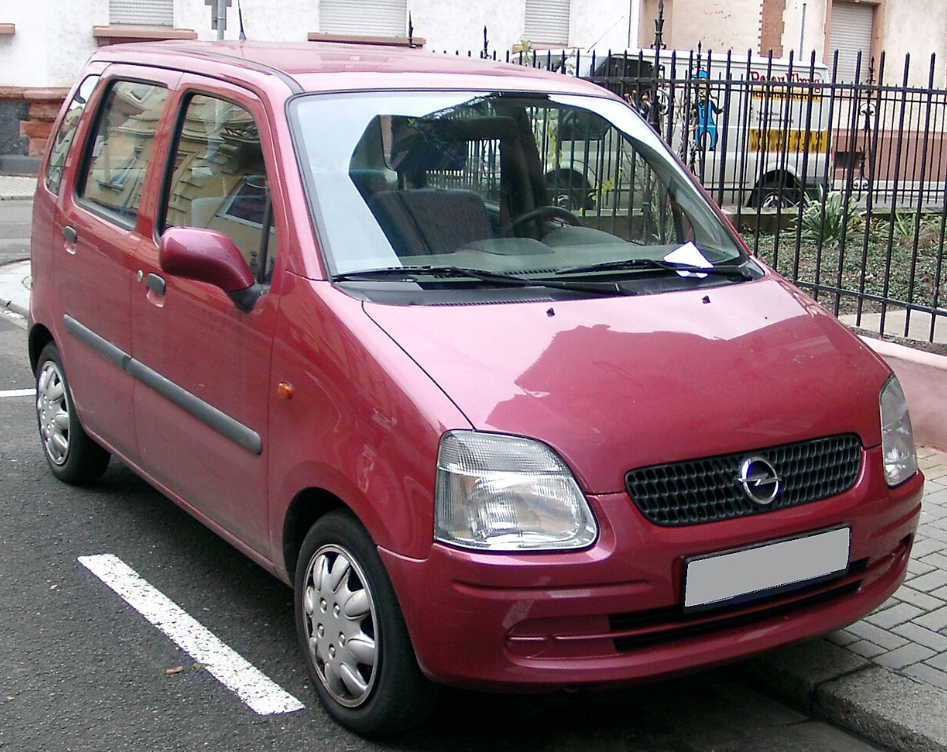
If we are considering buying a used Vauxhall Agila automatic, or we already own one that has started behaving strangely, gearbox problems can quickly become a concern. Symptoms such as delayed engagement, jerky gear changes, slipping, warning lights or a car that refuses to select Drive may suggest an automatic transmission problem.
However, there is an important detail that often gets overlooked when discussing Vauxhall Agila automatic gearbox problems: not every Agila automatic uses the same type of transmission.
Earlier Agila models can be associated with Vauxhall's Easytronic automated manual system, while the second-generation Vauxhall Agila 1.2 automatic uses a conventional four-speed automatic transmission. These systems work differently and therefore develop different faults.
The second-generation Agila, introduced for 2008 and closely related to the Suzuki Splash, was offered in the UK with a 1.2-litre petrol engine and four-speed automatic gearbox.
Understanding which transmission our car has should therefore be the first step before paying for repairs.
Content in this publication
- Are Vauxhall Agila Automatic Gearboxes Problematic?
- Which Automatic Gearbox Does the Vauxhall Agila Have?
- Most Common Vauxhall Agila Automatic Gearbox Problems
- Vauxhall Agila Easytronic Problems
- Easytronic Clutch Actuator Failure
- Easytronic Gear Selector Actuator Problems
- Easytronic Clutch Wear
- Battery and Electrical Problems
- Vauxhall Agila B 1.2 Automatic Gearbox Problems
- Vauxhall Agila Gearbox Warning Light: What Does It Mean?
- How to Diagnose Vauxhall Agila Automatic Gearbox Problems
- Can You Drive With an Agila Automatic Gearbox Problem?
- How Much Does a Vauxhall Agila Automatic Gearbox Repair Cost?
- Is It Worth Repairing an Automatic Vauxhall Agila?
- How to Prevent Vauxhall Agila Automatic Gearbox Problems
- Buying a Used Vauxhall Agila Automatic: What Should We Check?
- Is the Vauxhall Agila Automatic Reliable?
- Vauxhall Agila Automatic vs Easytronic: Which Is Better?
- Frequently Asked Questions
- Final Thoughts
Are Vauxhall Agila Automatic Gearboxes Problematic?
The Vauxhall Agila automatic does not have a universally poor reputation for gearbox reliability.
In fact, the later Agila performed strongly in historical reliability data. Honest John reported that Warranty Direct data published in 2015 identified the Agila as the most reliable European car over three years old among the vehicles included in that particular survey.
That does not mean gearbox failures never happen.
Most Agilas on UK roads are now older cars, and age, mileage, maintenance history and previous driving conditions can have a major influence on transmission condition.
A poorly maintained automatic Agila may develop problems even when the gearbox design itself is fundamentally sound.
| Problem | Typical symptom | Possible cause |
|---|---|---|
| Delayed engagement | Delay after selecting D or R | Fluid condition, hydraulic pressure or internal wear |
| Harsh changes | Noticeable thump between gears | Solenoid, valve body or fluid issue |
| Gear slipping | Engine revs rise without equal acceleration | Internal wear or hydraulic problem |
| Warning light | Transmission warning displayed | Electronic or mechanical transmission fault |
| No Drive or Reverse | Car will not move after gear selection | Serious hydraulic, electronic or internal fault |
| Easytronic F display | F appears instead of gear indication | Actuator, electronics or clutch control fault |
| Juddering | Shaking when moving away | Clutch-related issue on Easytronic or drivetrain fault |
| Transmission leak | Fluid underneath vehicle | Seal, gasket or transmission component leak |
Which Automatic Gearbox Does the Vauxhall Agila Have?
Before diagnosing a fault, we need to establish which generation of Agila we are dealing with.
Vauxhall Agila A 2000–2007
The first-generation Agila was closely related to the Suzuki Wagon R+. Some applications are associated with Vauxhall's Bosch Easytronic F13/F17 MTA system.
Technical transmission documentation lists the Vauxhall Agila A 2000–2007 among models using the Bosch Easytronic F13/F17 automated manual transmission.
Easytronic is not a conventional automatic.
It is essentially a manual gearbox in which electronics and actuators operate the clutch and select gears for us.
That distinction matters enormously when diagnosing faults.
Vauxhall Agila B 2008–2014
The second-generation Agila was developed alongside the Suzuki Splash.
The UK 1.2 petrol automatic was fitted with a four-speed automatic gearbox. Contemporary specifications list the Agila 1.2 automatic as a four-speed transmission, while the related Suzuki Splash automatic is described as using a four-speed torque-converter automatic.
For that reason, problems associated with the later 1.2 Auto should not automatically be diagnosed as Easytronic actuator failures.
Most Common Vauxhall Agila Automatic Gearbox Problems
There are several symptoms owners may encounter as an Agila gets older.
The exact cause depends heavily on the transmission fitted.
1. Automatic Gearbox Not Selecting Drive
One of the more alarming symptoms is selecting D while the car remains stationary.
Sometimes Drive eventually engages after a short delay. In more serious cases, it may not engage at all.
Potential causes include low hydraulic pressure, deteriorated transmission fluid, a faulty solenoid, valve-body problems or internal gearbox wear.
On an Easytronic-equipped car, failure to engage a gear may instead involve the clutch actuator, gear-selector actuator or transmission control electronics.
2. Delay When Selecting Reverse
We may move the selector into R and notice that nothing happens for a second or two.
A very slight delay can occur on an older automatic, particularly when cold, but a noticeable delay accompanied by a thump when Reverse eventually engages deserves investigation.
Ignoring the symptom can allow an initially manageable problem to become more expensive.
3. Jerky Automatic Gear Changes
A healthy Agila automatic should generally change gears without violent shocks.
If changes suddenly become noticeably harsh, possible explanations include transmission-fluid deterioration, hydraulic pressure problems, solenoid faults or wear inside the valve body.
Engine or drivetrain problems can occasionally imitate gearbox faults too, so proper diagnosis is preferable to replacing transmission parts based only on symptoms.
4. Gearbox Slipping
Transmission slipping typically feels as though the engine is producing more revs without a matching increase in road speed.
It may be especially noticeable while accelerating or climbing a hill.
Slipping should not be ignored because continued driving can create additional heat and accelerate internal transmission wear.
5. Automatic Gearbox Warning Light
The Vauxhall Agila owner's manual specifically describes an automatic-transmission fault condition.
According to Vauxhall, when a transmission fault occurs, the appropriate warning indicator illuminates and the transmission may stop shifting automatically. Vauxhall advises having the cause remedied by a workshop.
Therefore, if a gearbox warning light appears together with poor shifting, the vehicle should be scanned for fault codes rather than simply having codes erased.
6. Gearbox Stuck in One Gear
An automatic gearbox that remains in one gear may have entered a protective operating strategy commonly called limp mode.
This can happen when the transmission control system identifies a fault serious enough to limit normal shifting.
The cause could be electrical, hydraulic or mechanical.
Reading the stored transmission fault codes is normally the fastest route toward identifying the affected circuit.
7. Grinding, Whining or Unusual Transmission Noise
Not every gearbox noise means complete transmission failure.
However, whining that changes with vehicle speed, grinding during gear engagement or mechanical knocking should be investigated.
Bearing wear, internal gear damage, insufficient lubrication and differential components can all create transmission-related noise.
Vauxhall Agila Easytronic Problems
Easytronic deserves its own section because it works very differently from a traditional automatic.
Instead of using a torque converter to transfer power, Easytronic uses a conventional clutch that is operated electronically.
This means many Easytronic problems are actually clutch-control or actuator problems.
Easytronic Clutch Actuator Failure
The clutch actuator operates the clutch automatically whenever the vehicle moves away or changes gear.
As the actuator ages, its electronics or mechanical components can deteriorate.
You may be interested in reading Toyota Corolla AE86 Engine Swap – The Ultimate Guide
Possible symptoms include difficulty selecting gears, dropping into neutral, failure to start and an F appearing on the transmission display.
Specialist Easytronic documentation identifies symptoms including poor gear selection, an F display and unexpected selection of neutral when certain actuator or transmission-electronics faults occur.
Why the Actuator Matters
Unlike a normal manual car, the driver cannot compensate manually for a failing Easytronic actuator.
If the control system cannot determine or achieve the correct clutch position, normal operation may become impossible.
That is why replacing the clutch alone does not necessarily cure every Easytronic problem.
Easytronic Gear Selector Actuator Problems
A second actuator controls gear selection.
Failure can leave the vehicle stuck in a particular gear or unable to select one at all.
Codes associated with similar Vauxhall Easytronic gear-selector systems can include faults relating to shift motors, selector motors and communication between the actuator and transmission control system.
Proper diagnostic equipment is important because replacing an actuator without confirming the cause can become expensive.
Easytronic Clutch Wear
Although Easytronic feels like an automatic from inside the car, it still contains a conventional friction clutch.
That clutch eventually wears.
Frequent stop-start driving, hill starts and prolonged low-speed manoeuvring can increase clutch use.
Symptoms may include juddering when moving away, hesitation, poor engagement and irregular gear changes.
After certain clutch or actuator repairs, calibration or adaptation may also be necessary so that the control module knows the correct clutch biting position.
Battery and Electrical Problems
Automated transmissions rely heavily on stable electrical voltage.
A weak battery, charging-system problem, wiring fault or poor connection can therefore create symptoms that appear to be transmission related.
Before authorising expensive Easytronic repairs, it makes sense to check battery condition and charging voltage.
Specialist Easytronic guidance also notes that electrical issues can sometimes produce symptoms similar to a genuine transmission-control fault.
Vauxhall Agila B 1.2 Automatic Gearbox Problems
The later 1.2 automatic is simpler to understand because it uses a traditional four-speed automatic rather than relying on an automated clutch.
Its potential problems are therefore more typical of a conventional automatic transmission.
Old or Deteriorated Transmission Fluid
Automatic transmission fluid performs several important jobs.
It lubricates internal components, transfers hydraulic pressure and helps manage heat.
As the vehicle ages, degraded fluid can contribute to slower engagement or poorer shift quality.
However, we should avoid assuming that every shift problem will disappear after a fluid change.
If significant internal wear already exists, fresh fluid cannot rebuild worn components.
Automatic Transmission Fluid Leaks
An external fluid leak can eventually lower the fluid level sufficiently to affect gearbox operation.
Possible leak points can include seals, transmission joints and cooler connections depending on the transmission design.
Any unexplained transmission-fluid loss should be investigated.
Running an automatic gearbox with insufficient fluid can cause serious damage.
Shift Solenoid Problems
Automatic transmissions use electrically controlled solenoids to regulate hydraulic circuits.
A malfunctioning solenoid can cause incorrect or harsh gear changes, delayed engagement or a failure to shift normally.
The stored diagnostic code is particularly useful here because symptoms alone cannot reliably tell us whether the problem is a solenoid or a mechanical component.
Valve Body Problems
The valve body is responsible for routing transmission fluid through different hydraulic circuits.
Wear, contamination or sticking valves can alter shift quality.
Symptoms can include harsh changes, delayed shifts or incorrect gear engagement.
Valve-body faults do not automatically mean that the entire gearbox has to be replaced.
A transmission specialist may sometimes be able to repair the affected section.
Torque Converter Problems
The torque converter transfers engine power into the automatic transmission.
Torque-converter problems can potentially produce vibration, unusual noises, poor acceleration or slipping-type symptoms.
However, these symptoms overlap with other faults, which is why professional diagnosis is important before replacing it.
Internal Gearbox Wear
On a high-mileage or neglected car, internal friction components, bearings or other transmission parts can eventually wear.
At this point, a gearbox rebuild or replacement transmission may be required.
The overall condition and market value of an older Agila then become important factors when deciding whether the repair makes financial sense.
Vauxhall Agila Gearbox Warning Light: What Does It Mean?
A transmission warning light should be treated as a request for diagnosis rather than as proof that the gearbox itself is destroyed.
The fault may involve a sensor, solenoid, wiring circuit, actuator or internal transmission component.
Vauxhall's manual states that when an automatic-transmission fault is detected, automatic shifting can stop functioning normally.
Modern diagnostic equipment should therefore be used to read the transmission control module as well as the engine ECU.
How to Diagnose Vauxhall Agila Automatic Gearbox Problems
A good diagnosis usually begins before any components are removed.
We would normally want the technician to establish the exact gearbox fitted, reproduce the fault during a road test, scan all relevant control units, inspect wiring and connectors, check battery condition and examine the transmission for fluid leaks or obvious mechanical damage.
You may be interested in readingToyota Corolla AE86 Engine Swap – The Ultimate GuideYou may be interested in reading
 Does the Toyota Camry Have CVT Transmission?
For a conventional automatic, transmission-fluid level and condition may also need to be checked using the correct manufacturer procedure.
For Easytronic, actuator operation and clutch adaptation values can be particularly important.
Replacing parts based entirely on guesswork is usually the most expensive approach.
Can You Drive With an Agila Automatic Gearbox Problem?
That depends on the symptom.
A minor change in shift quality is different from a vehicle that is losing drive.
We should stop driving and arrange an inspection if the car repeatedly loses drive, refuses to engage D or R, produces severe grinding noises, has a major transmission-fluid leak or displays a gearbox warning together with serious shifting problems.
The RAC similarly advises against continuing to drive when a Vauxhall automatic-transmission warning light indicates a gearbox problem because additional transmission damage may result.
How Much Does a Vauxhall Agila Automatic Gearbox Repair Cost?
There is no single Vauxhall Agila gearbox repair price because the difference between an electrical repair and a complete transmission rebuild can be enormous.
UK gearbox-repair data published in 2025 suggested that general gearbox repairs can range from approximately £300 to £2,500, depending on the transmission and extent of damage. The same source reported an average Vauxhall gearbox-repair figure of around £421 at that time.
Those figures should only be treated as broad market guidance.
| Repair | Typical cost level |
|---|---|
| Diagnostic scan | Low |
| Wiring or electrical repair | Low to moderate |
| Transmission-fluid service | Low to moderate |
| Easytronic actuator repair | Moderate |
| Clutch replacement | Moderate |
| Solenoid repair | Moderate |
| Valve-body repair | Moderate to high |
| Torque-converter repair | High |
| Gearbox rebuild | High |
| Replacement transmission | High |
A specialist transmission garage may sometimes be considerably cheaper than replacing the complete gearbox through a main dealer.
Is It Worth Repairing an Automatic Vauxhall Agila?
We need to compare repair cost with the condition of the whole car.
An Agila with good bodywork, low mileage, a healthy engine and recent tyres, brakes and suspension may justify a significant gearbox repair.
The calculation changes if the car simultaneously needs an MOT-related suspension overhaul, exhaust work, brakes and substantial corrosion repairs.
A £700 gearbox repair on an otherwise excellent Agila may be sensible.
Spending several thousand pounds on a neglected example may not be.
How to Prevent Vauxhall Agila Automatic Gearbox Problems
The best approach is early attention rather than waiting until the vehicle completely loses drive.
Avoid ignoring fluid leaks, have sudden changes in shift quality investigated, maintain the battery in good condition and use the parking brake correctly instead of unnecessarily loading the transmission when parked on steep inclines.
For Easytronic models, avoiding prolonged clutch slipping during hill manoeuvres can also help reduce unnecessary clutch heat.
Most importantly, if the gearbox suddenly starts behaving differently, diagnose the fault early.
A relatively simple electrical or hydraulic problem can become far more expensive if the vehicle continues to be driven while slipping or overheating.
Buying a Used Vauxhall Agila Automatic: What Should We Check?
A long test drive is essential.
Start the car from cold rather than allowing the seller to warm it beforehand.
Engagement into Drive and Reverse should happen consistently. Gear changes should not produce major bangs or excessive flare in engine speed.
We should also check that no gearbox warning lights appear and that all selector positions operate correctly.
On an Easytronic model, pay particular attention to juddering when pulling away, F appearing on the display and intermittent failures to select a gear.
On the later conventional automatic, test both gentle and stronger acceleration.
The four-speed automatic was a genuine factory configuration of the 1.2-litre Agila, and period specifications list both 86 PS and later 94 PS 1.2 automatic versions.
Is the Vauxhall Agila Automatic Reliable?
Generally, a well-maintained later Agila automatic can still be a sensible small used automatic.
It is particularly important not to confuse its conventional four-speed gearbox with the automated-manual transmissions fitted to some small cars of the same era.
Contemporary recommendations from Honest John specifically included the Vauxhall Agila 1.2 Auto alongside the Suzuki Splash 1.2 Auto when readers were looking for a small conventional automatic.
Age is now arguably a bigger concern than the original gearbox design.
A 2009 or 2010 car has had many years in which missed servicing, incorrect repairs or general wear may have accumulated.
Service history and actual condition therefore matter more than simply reading that a certain model is considered reliable.
Vauxhall Agila Automatic vs Easytronic: Which Is Better?
For buyers wanting the driving characteristics of a traditional automatic, the later 1.2 four-speed automatic is usually the easier system to understand.
Easytronic attempts to automate a conventional manual gearbox and clutch.
That brings advantages in packaging and efficiency, but it also adds clutch and gear actuators that can create additional failure points.
The four-speed automatic uses a more traditional automatic-transmission layout.
Neither design is immune to age-related faults, but we should never assume that an Agila B automatic displaying a transmission problem needs an Easytronic clutch actuator.
Correct transmission identification comes first.
Frequently Asked Questions
What is the most common Vauxhall Agila automatic gearbox problem?
There is no single fault affecting every Agila automatic. Problems can include delayed engagement, harsh shifting, slipping and warning lights. Earlier Easytronic applications can additionally experience actuator and clutch-control faults.
Does the Vauxhall Agila have an Easytronic gearbox?
Some first-generation Agila applications are associated with Vauxhall's Easytronic automated manual system. Transmission documentation lists the 2000–2007 Agila A among Easytronic F13/F17 MTA applications. The later 1.2 automatic uses a four-speed automatic transmission.
Why is my Vauxhall Agila automatic not selecting gear?
Possible causes include an actuator or clutch-control fault on an Easytronic transmission, or hydraulic, solenoid, electrical or internal mechanical problems on a conventional automatic. Diagnostic fault codes should be read before parts are replaced.
Why is my Vauxhall Agila automatic jerking?
Jerking can result from transmission-fluid condition, hydraulic-control problems, solenoid issues or internal wear. On an Easytronic model, clutch wear or actuator calibration can also cause poor low-speed operation.
Is an automatic Vauxhall Agila worth buying?
It can be. The later Agila 1.2 Auto uses a conventional four-speed automatic and historically received recommendations as a practical small automatic. At this age, however, individual condition, maintenance history and gearbox behaviour during a test drive are more important than the model's reputation alone.
Final Thoughts
Vauxhall Agila automatic gearbox problems need to be approached differently depending on which generation we own.
The earlier Easytronic system is an automated manual transmission and can suffer from clutch, actuator and electronic-control problems. A failing actuator may produce poor gear selection, an F warning or even prevent the vehicle from driving normally.
The later Vauxhall Agila 1.2 Auto is different. It uses a conventional four-speed automatic transmission, so likely faults are more closely associated with transmission fluid, hydraulic control, solenoids, the valve body, torque converter or normal internal wear.
The good news is that gearbox symptoms do not automatically mean we need a complete replacement transmission.
You may be interested in readingToyota Corolla AE86 Engine Swap – The Ultimate GuideYou may be interested in reading
Does the Toyota Camry Have CVT Transmission?You may be interested in reading
 Toyota Camry Trim Levels 2014: A Detailed Guide to Choosing the Best
A diagnostic scan, correct gearbox identification and assessment by an automatic-transmission specialist can often distinguish a relatively manageable fault from genuine internal gearbox failure.
For anyone buying a used Agila automatic today, smooth engagement, clean shifting, no transmission warnings and a documented maintenance history should matter far more than mileage alone.
If you want to know other articles similar to Vauxhall Agila Automatic Gearbox Problems: Symptoms, Causes and Fixes you can visit the category Common Problems.
Honda Passport Issues: Common Problems, Symptoms, and What to Check

Nissan Rogue Transmission Problems: Symptoms, Causes, and Fixes
Nissan Rogue Issues: Common Problems, Warning Signs, and What Owners Should Know
BYD Shark 6 Problems: Common Issues, Faults, and What Owners Should Know
Mitsubishi Pajero Sport Touch Screen Not Working: Causes, Fixes, and Troubleshooting Guide
Mitsubishi Pajero Sport DPF System Service Required: Causes, Diagnosis, and Fixes
Leave a Reply
More content of your interest